
Dark Skies of Amrabad
Milky Way Photography & Timelapses from the Amrabad Tiger Reserve
Telangana, India
The modern world is drowning in a silent, glowing tide. For over eighty percent of humanity, the night sky is no longer a window into the infinite cosmos, but a washed-out shroud of amber and white artificial glare. Yet, deep within Telangana, cradled by the rugged folds of the Nallamala Forest range, exists a sanctuary where the ancient night remains unblemished. This is the Amrabad Tiger Reserve—the largest tiger reserve in the state and a crucial bastion for South India’s native biodiversity.
While travelers trek across the reserve’s deep valleys and gorges during the day, it is the transition into night that reveals Amrabad’s hidden treasure: a pristine, velvet-black canopy where the Milky Way galaxy burns with breathtaking brilliance.
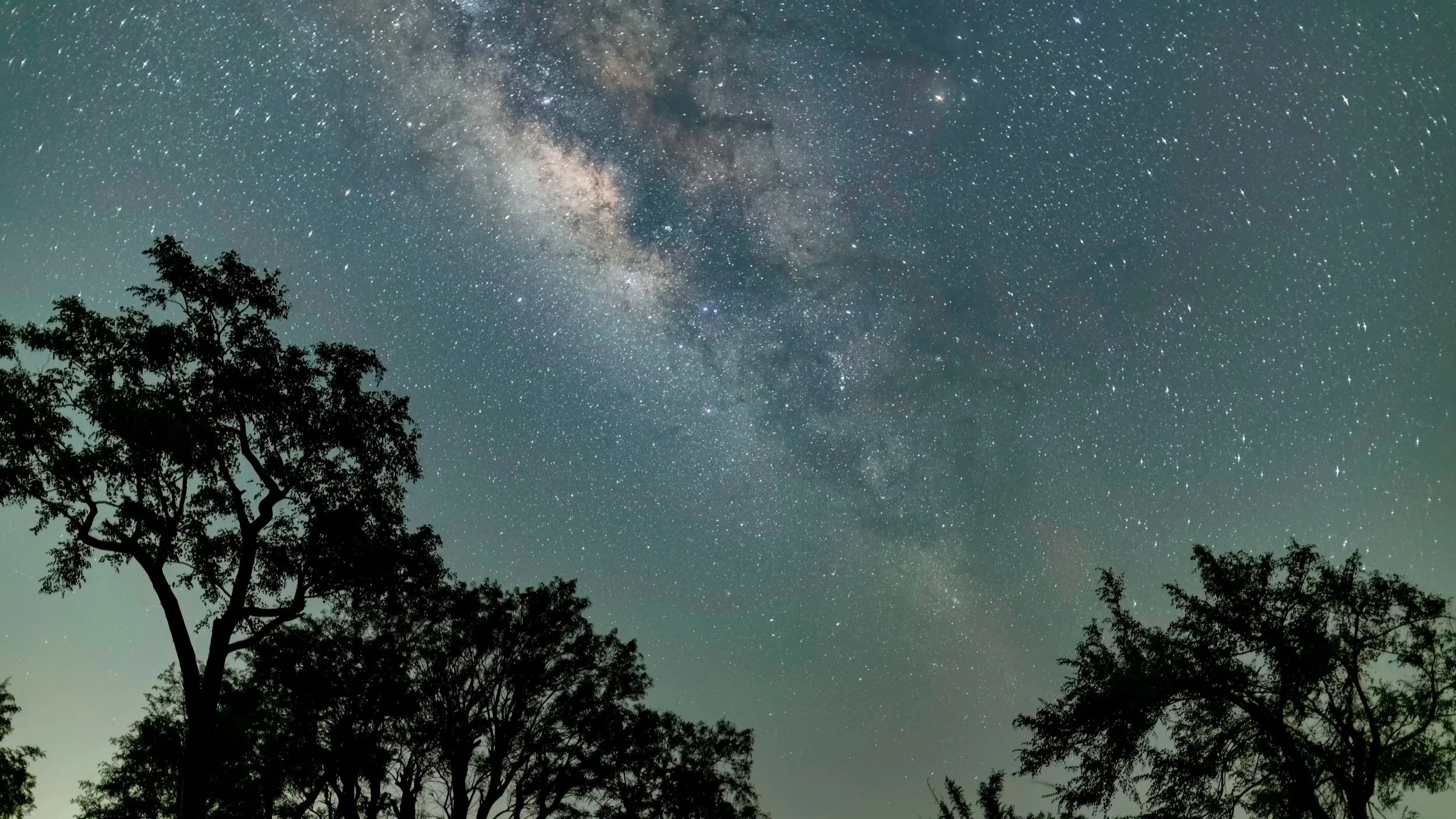
Exif: Canon R1 | EF 24mm f/1.4L II USM | f/1.4 | 15 seconds | ISO 6400 | Manually focused with WB set to Manual at 3800k | 35 Light Frames stacked with Starry Landscape Stacker. Note the Sagittal Astigmatism of the lens.
The Canopy of Diamonds: Whispers from Amrabad’s Nocturnal Realm
The sun dipped below the jagged horizons of the Nallamala Hills, pulling a curtain of bruised purple and deep indigo over the Amrabad Tiger Reserve. For a few moments, the forest held its breath. Then, as the last remnants of twilight dissolved, a transformation occurred. It did not happen all at once, but rather like a slow, magnificent awakening. One by one, silver points of light pierced the velvet canopy. Within an hour, the sky above this ancient landscape was no longer empty; it was alive, crowded with a million cosmic travelers whose light had journeyed across vast expanses of time and space to reach this specific patch of protected wilderness.
Amrabad, one of India’s largest tiger reserves, stretches across a rugged terrain of deep valleys, winding gorges, and dense deciduous forests. By day, it belongs to the apex predators—the majestic Bengal tiger moving silently through the dry bamboo brakes, the leopards stalking from rocky ledges, and the alarm calls of spotted deer echoing through the valleys. But by night, the reserve reveals its other, equally vital treasure: an uninterrupted, pristine stretch of primeval darkness. Standing beneath this celestial dome, the sheer scale of the universe presses down on the observer, offering a rare glimpse into a world that our ancestors took for granted, but which modern humanity has systematically erased. View the Timelapse.
The Creeping Shroud: The Tragedy of Light Pollution
To truly appreciate the sanctuary of Amrabad’s dark skies, one must understand the invisible crisis creeping across the rest of the planet. Light Pollution—the excessive, misdirected, or obtrusive artificial light produced by human civilization—is an environmental pollutant that grows more severe with each passing year. From sprawling cities to rural highways, artificial glow domes blot out the stars, turning the nocturnal sky into a hazy, washed-out grey. This phenomenon is not merely an aesthetic loss for stargazers; it is a profound ecological disruption. For billions of years, life on Earth evolved alongside a predictable, unyielding cycle of day and night. This biological rhythm, embedded deep within the genetic code of nearly every living organism, dictates behavior, reproduction, and survival.
The Disruption of Animal Behavior
In the animal kingdom, the consequences of breaking this cycle are catastrophic. Amrabad’s rich biodiversity relies heavily on the cover of darkness. Apex predators like the tiger and leopard utilize the shadows to stalk their prey, relying on their highly adapted night vision. When artificial light infiltrates their habitats from encroaching highways or tourist lodges, it compromises their camouflage and disrupts natural hunting patterns.
The impact is even more severe for smaller nocturnal creatures. Moths, beetles, and other night-flying insects use the distant, fixed light of the moon and stars to navigate. When confronted with a glaring artificial bulb, their navigational systems are short-circuited. They fly erratically around the light source until they die of exhaustion or are picked off by predators. This massive die-off ripples up the food chain, affecting insectivorous bats, birds, and amphibians. Furthermore, amphibians like frogs and toads use the cover of darkness to chorus and mate; artificial skyglow silences these vital reproductive calls, leading to population declines.
The Cost to Human Well-being
Humans are far from immune to the dangers of constant artificial illumination. Our bodies operate on a 24-hour internal clock known as the circadian rhythm, which heavily governs the production of melatonin—a hormone essential for sleep, immune function, and regulating cellular health.
When we expose ourselves to artificial light at night, particularly the short-wavelength blue light emitted by LEDs and digital screens, our brains are tricked into believing it is still daytime. Melatonin production drops sharply. The chronic suppression of this hormone leads to widespread sleep deprivation, which is directly linked to an array of human health crises:
Increased risk of clinical depression and mood disorders
Metabolic disruptions leading to obesity and diabetes
Elevated risks of cardiovascular disease
Weakened immune response and higher susceptibility to hormonal cancers
The two maps below illustrate the devastating extent of light pollution. The first map on the left is a light pollution map of the capital city of Hyderabad which is almost white indicating that the sky visible from within the city is a washed-out shroud of grey with almost no stars visible. The second map on the right illustrates the light pollution map of South India with almost no dark area left.
Light Pollution Map of Hyderabad, India
Light Pollution Map of South India
The Sanctuary of Shadow: The Benefits of True Dark Skies
Conversely, preserving natural dark sky environments yields immense benefits that extend far beyond ecological conservation. A true dark sky acts as an environmental stabilizer. It ensures that nocturnal ecosystems remain balanced, allowing natural selection and evolutionary processes to proceed without human interference. Plants receive the uninterrupted dark periods they require for proper growth, flowering, and dormant cycles.
For humanity, dark skies offer an irreplaceable cultural, scientific, and psychological refuge. Historically, the night sky was our first calendar, our first canvas, and our first temple. It inspired literature, navigation, science, and philosophy. In an age of hyper-connectivity and relentless urban noise, stepping into a completely dark environment provides a profound sense of psychological restoration. It induces a state of awe, humbles the ego, and fosters a deep, meditative connection to the cosmos. Economically, dark skies foster the sustainable growth of astrotourism, bringing low-impact revenue to local communities while incentivizing the preservation of natural heritage.
Decoding the June Solstice Darkness
The photograph above, captured on the night of June 15th, 2026, showcases Amrabad’s dark sky at its absolute zenith. The timing of this image was not a matter of chance; it was deliberately planned around a unique astronomical window. The nights of June 14th, 15th, and 16th rank among the most magnificent times of the year for deep-sky observation and photography. During this mid-June period, several astronomical factors align perfectly:
The New Moon Window: The lunar cycle ensures the moon remains well below the horizon during the prime observation hours, completely eliminating natural lunar glare.
The Core's Peak Elevation: As the Earth approaches the summer solstice, the dense, star-rich Galactic Center of the Milky Way rises exceptionally high into the southern and southeastern sky during the midnight hours.
Atmospheric Clarity: The atmospheric transition period just before the heavy monsoon rains often results in remarkably clean, dust-free air overhead, optimizing transparency for stargazers.
Anatomy of the Cosmic Ribbon: Analyzing the Photograph
Looking closely at the image captured on that mid-June night, the viewer is treated to a textbook display of pristine atmospheric clarity. Framing the bottom of the shot is the silhouetted boundary of the Amrabad forest—a jagged, dark horizon of native trees whose leaves claw upward into the starscape. These deep black silhouettes provide a powerful visual anchor, contrasting sharply with the luminous sky above. Arching diagonally across the frame is the magnificent spine of our galaxy, the Milky Way. This is not a faint, uniform smear of light, but a deeply textured, three-dimensional structure.
Key Visible Elements:
The Bright Galactic Core: The central bulge of the galaxy glows with a warm, golden-amber hue. This area is packed with billions of ancient stars, creating a dense concentration of light that pierces through the local atmosphere.
The Great Rift: Slicing clean through the golden glow of the core are striking, dark, venous tendrils. These are interstellar dust lanes—massive clouds of cold molecular gas and cosmic dust that block the light from the stars directly behind them. They form the dramatic, skeletal structure of the galaxy.
Nebulosities & Star Clusters: Faint pinkish and magenta hues are subtly visible within the brighter bands, indicating massive star-forming regions (emission nebulae) where new suns are actively being born.
The Background Starfield: Surrounding the main galactic band is an impossibly dense field of individual stars, ranging from bright, pinpoint beacons to a fine, silver dust that fades into a soft, greenish-blue atmospheric airglow near the horizon.
Masterclass: Photographing the Milky Way Using ETTR
Capturing an image and a timelapse of this quality requires a firm understanding of both astrophotography fundamentals and sensor physics. When shooting in ultra-dark environments like Amrabad, photographers rely on a technique known as Exposing to the Right (ETTR). The core philosophy of ETTR is to maximize the signal-to-noise ratio of the camera's digital sensor. In digital photography, shadow areas are inherently noisy. If an image is underexposed to keep the sky looking "dark" in the field, lifting those shadows later in editing software introduces severe, grainy digital noise and color artifacts.
To execute ETTR successfully for the Milky Way, follow these precise steps:
Equipment Selection: Use a camera body capable of clean performance at high ISO levels, paired with a fast, wide-angle lens (ideally \(f/1.4\) to \(f/2.8\)). The wide focal length allows for longer exposures without causing the stars to trail due to the Earth's rotation. But a wide-angle lens is not mandatory. If you plan well and the landscape permits you can even bump up the focal length. I have used the Canon EOS R1 for these photos. I have also used the Canon 1Dx Mark ii & the 7D Mark ii earlier. Find everything I use in my Kit.
The Exposure Settings
Aperture: Set the lens to its widest setting (\(f/1.8\) or \(f/2.8\)) to let in as much starlight as possible.
Shutter Speed: Use the "500 Rule" or "NPF Rule" to calculate the maximum exposure time before star trailing occurs. I almost always use the NPF Rule.
ISO Selection: Set a high native ISO, typically between 3200 and 6400. This usually depends on the prevalent light pollution of the area. At Amrabad I have used 6400 with the R1 simply to make the image brighter and capture more light information in each photograph.
Managing the Histogram: The crucial element of ETTR is monitoring the camera's histogram after a test shot. Push the exposure high enough so that the bulk of the data curve shifts toward the right-hand side of the graph, but stop just before the curve touches the absolute right edge (which would signify blown-out, unrecoverable highlights which are usually the stars). The resulting raw image will look surprisingly bright, almost like twilight.
Post-Processing Adjustments: Bring the bright raw file into your preferred editing software. Because the sensor captured a massive amount of light data ("signal"), you can cleanly pull down the black points and exposure levels. This darkens the sky back to its natural, deep appearance while completely suppressing digital noise, revealing a smooth, tack-sharp, and jaw-droppingly detailed Milky Way galaxy.
The Road Ahead: Declaring Amrabad a Dark Sky Sanctuary
Given its unique geographical isolation, minimal light signature, and profound ecological wealth, the Amrabad Tiger Reserve stands as a premier candidate to be formally declared an International Dark Sky Site by bodies like DarkSky International.
Protecting a dark sky site is not an instantaneous act; it demands a structured, community-led framework of policy adjustments and physical adaptations:
Conduct a Lighting Audit: Map out and inventory every artificial light source within the reserve’s boundaries, including forest offices, check posts, and tourist safari lodges.
Implement Structural Retrofitting: Replace all unshielded outdoor bulbs with fully shielded fixtures that direct light strictly downward toward the ground, ensuring no light spills upward or sideways into the canopy.
Enforce Color Temperature Caps: Ban harsh, blue-tinted lights. All necessary outdoor lighting must utilize warm-colored bulbs (2700 Kelvin or lower), which have a significantly lower impact on wildlife and human circadian rhythms.
Draft Municipal Ordinances: Collaborate with local governing bodies in peripheral villages to pass dark sky zoning laws, regulating commercial lighting and preventing urban glow from creeping toward the reserve boundaries.
The Rewards of Conservation
The advantages of attaining this status are monumental. For the local wilderness, it guarantees a permanent sanctuary where evolutionary rhythms can continue undisturbed, shielding endangered wildlife from the toxic pressures of modernization. For the surrounding human communities, it unlocks a massive, sustainable economic engine. Dark Sky status elevates a reserve into a global destination for astrotourists, scientists, and educators. This brings high-value, low-impact economic opportunities—such as night-sky guiding, homestays, and photography workshops—directly to indigenous and local communities. Ultimately, preserving the dark skies of Amrabad is an act of deep reverence. It ensures that as the world below grows increasingly frantic and artificial, there remains a sacred space where any traveler can look upward and remember their place among the stars.
‡‡‡‡‡
The Milky WayTimelapse
Timelapses of the Milky Way are a timeless way to capture the natural beauty of our galaxy as it moves across the sky. It helps provide a real sense of how large and beautiful the band looks as it crosses the night sky in video format. As we all know, the Milky Way is a barred spiral galaxy, it is a large object but is not as big as the closest galaxy to us (which, incidentally, is on a collision path with the Milky Way): the Andromeda Galaxy. We, as part of the Solar System, are at about half the distance from the center of the Milky Way galaxy to its outer edges. We are located in a smaller spiral arm – the Orion Arm – between two large arms. Read more.
But first things first, what exactly is a Time-Lapse? It is a technique that allows us to take a series of photos and put them together sequentially to create a video. The frames are taken with the same settings over an extended period of time and when put together show movement from the same perspective in a sped-up fashion. Basically speeding up the passage of time - Time Travel!
Timelapses can be created using almost any camera and off late most recent DSLR/mirrorless cameras have a "time-lapse mode" which allows one to create a time-lapse very easily without any editing. Once activated, one just has to point the camera to the the Milky Way, focus, and launch! Me - I prefer the old fashioned way because it gives me more control and especially over the flicker.
There are some additional pieces of gear required
A wide angle lens which will give a nice wide field of view of the Milky Way. In this case I have used 24mm.
An intervalometer which will help to control the intervals and exposure times. Some modern cameras have built-in intervalometers but I think an external one still provides more flexibility.
A sturdy tripod which is self explanatory as you need a stable base and avoid any shake caused by wind or uneven ground.
A Ball Head to get to the angle required.
Finally a star tracker which will allow to create a Timelapse that follows the Milky Way and will show the rotation of the earth. This, however, is not mandatory but a good to have. I have not used a star tracker for this TimeLapse.
Find all the gear used in my Kit Bag.
Pro Tip: Do not head north for a Milky Way time-lapse, instead, find a spot that is south of any major city. Why? Orientation matters. The Milky Way will pan across the southern half of the sky. Also, avoid light pollution caused by bright cities to the south and east that create light domes - the bane of astrophotography. Why?
The LED lights especially those used for street lighting are INTENSELY bright, much more so than the “old-fashioned” sodium lights. Looking up is like staring into the sun. If you have the opportunity, step under an orange sodium street light and then under an LED. You’ll be amazed at the difference in light intensity. Some time back, on a similar Milky Way hunt in Malaysia, to gauge the approximate difference in brightness between the two, I had pulled out my camera and taken a light meter reading on the pavement beneath an LED lamp and then under a high-pressure sodium lamp. The LED was brighter by more than one camera “stop” or more than twice as bright.
Another issue with LED ornamental and street lighting has to do with color. Although natural color LED lighting is available, high-efficiency LED lights emit a much bluer light than sodium vapor. Blue-rich light not only increases the amount of glare sensed by the human eye but also the amount of visible light pollution. Other effects of light trespass and glare include sleeping problems and even an increased risk for certain cancers. From an astrophotography perspective this LED glow is almost impossible to eliminate and believe me I have tried all the night filters available including dedicated narrowband Astro filters. Read about them here - Astrophotography Filters.
We humans need the night more than we know.
LEDs are only part of the problem of course. The real issue is the ever-increasing amount of light pollution worldwide and the potential for new LEDs to make it worse. True, we can take advantage of the ability to adjust and dim current lighting to more suitable levels. LEDs are also highly directional, making it easy to point them just where they’re needed. Finally, new high-efficiency more natural (less blue) LEDs are now available that can help reduce light pollution. There’s no question that LED lighting can be used wisely to make everyone happy – stargazers, drivers, shoppers and walkers. For help and more information, the International Dark-Sky Association (IDA) is a great place to start.
TimeLapse Exif: Canon R1 | EF 24mm f/1.4L II USM | f/1.4 | 15 seconds | ISO 6400 | Manually focused with WB set to Manual at 3800k.
Note: The EF 24mm f/1.4L II USM is a brilliant lens for astrophotography barring the sagittal astigmatism it exhibits in the corners. To understand more about the lens aberrations and how it affects the photos read this article on Lonely Speck.
Milky Way timelapses don’t need as much control as a day to night time-lapse. In day to night time-lapses, one will have to change the exposure so that the photos look consistent. Fortunately the light tends to be the same in Milky Way photography, so you don’t need to be as alert. The one thing that may get in the way is bad weather, though. Bad weather can make any shoot uncomfortable. It can force one to change the settings or even move the equipment resulting in shaky and unevenly exposed pictures.
A time-lapse interval determines how often the camera takes pictures. The more photos you take, the smoother the movements in your time-lapse will look. If you are going to be shooting for hours, the interval doesn’t have to be that short. The longer the interval is, the less overwhelmed the camera will be over a long period. Also keep your camera battery and memory in mind when you set an interval. For Milky Way Timelapses it isn’t always necessary to use short intervals. Stars don’t move fast, so the interval can be pretty long. It can be anywhere from 15-35 seconds long. It is basically dictated by the Lens and Camera combination and how much time they allow for stars to be sharp and maximum signal acquisition. Also it is best to shoot in RAW and Manual Mode although it isn’t necessary. It’s just that RAW and Manual modes give the maximum control over all variables. The shutter speed depends on one’s creative preferences. Slow shutter speed is ideal for star-trail timelapses.
The Milky-Way is stunning! It’s the perfect subject for nighttime time-lapse photography. When you take pictures, pay careful attention to the camera settings and don’t be afraid of high ISO numbers. You can experiment with a slow shutter speed if you want to create a star trail time-lapse. You can also elevate your Milky Way time-lapse photography by using special tools like motorised camera sliders. But most of all, enjoy the time under the stars!

Related Posts



The modern world is drowning in a silent, glowing tide. For over eighty percent of humanity, the night sky is no longer a window into the infinite cosmos, but a washed-out shroud of amber and white artificial glare. Yet, deep within Telangana, cradled by the rugged folds of the Nallamala Forest range, exists a sanctuary where the ancient night remains unblemished and the Milky Way galaxy burns with breathtaking brilliance.
#wildartworks, #Canon, #PromediagearTR424L, #MilkyWay, #MilkyWayPhotography, #Longexposure, #ETTR, #LightPollution, #MilkyWayTimelapse, #LongExposureTimelapse, #Timelapse, #timelapseplus, #AmrabadTigerReserve, #MaddimaduguRange, #TSFD