
Brown Rock Chat/ Indian Chat
Oenanthe fusca
An endemic of the vital ecological zone bridging the Western Ghats spur with the semi-arid Deccan plateau
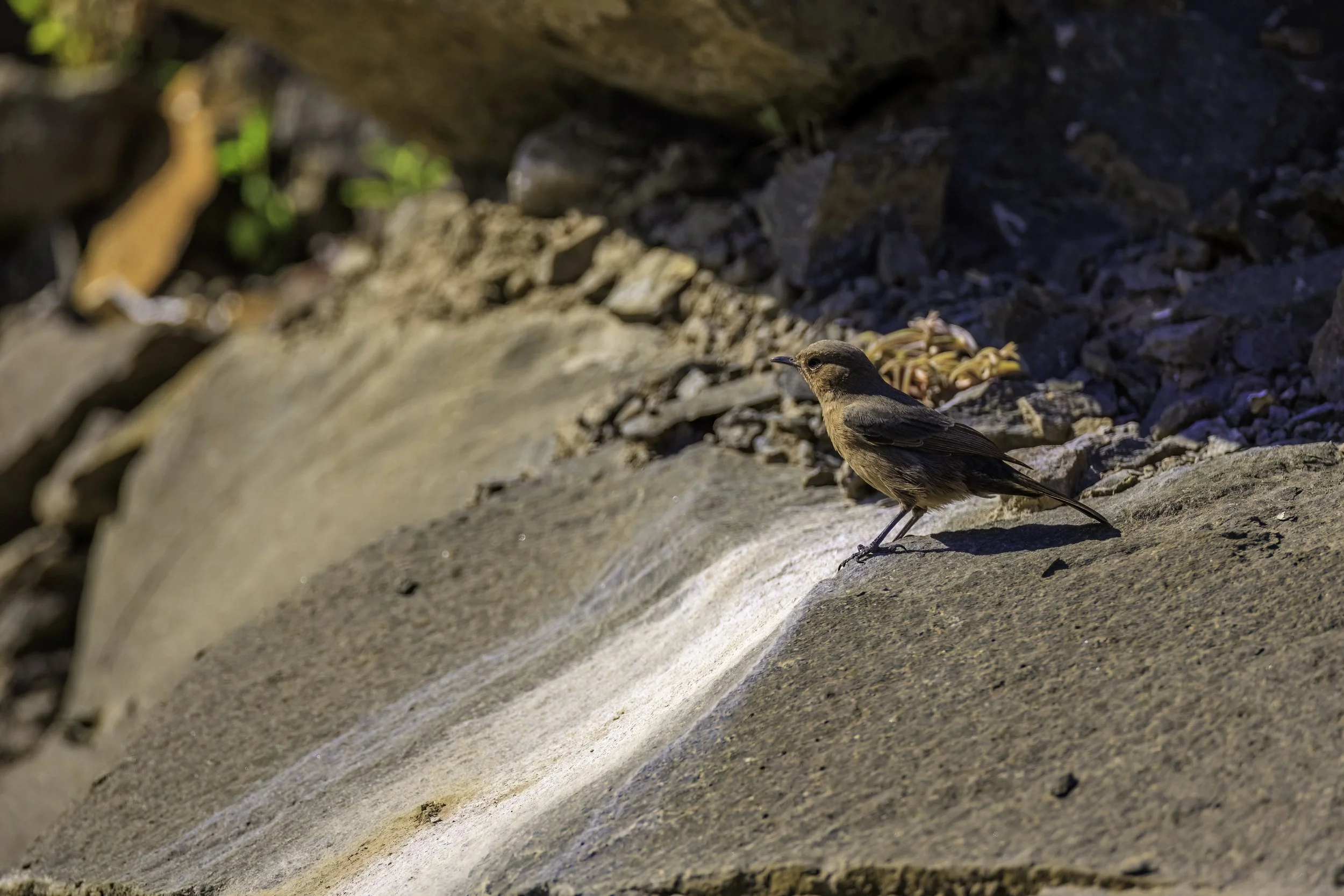
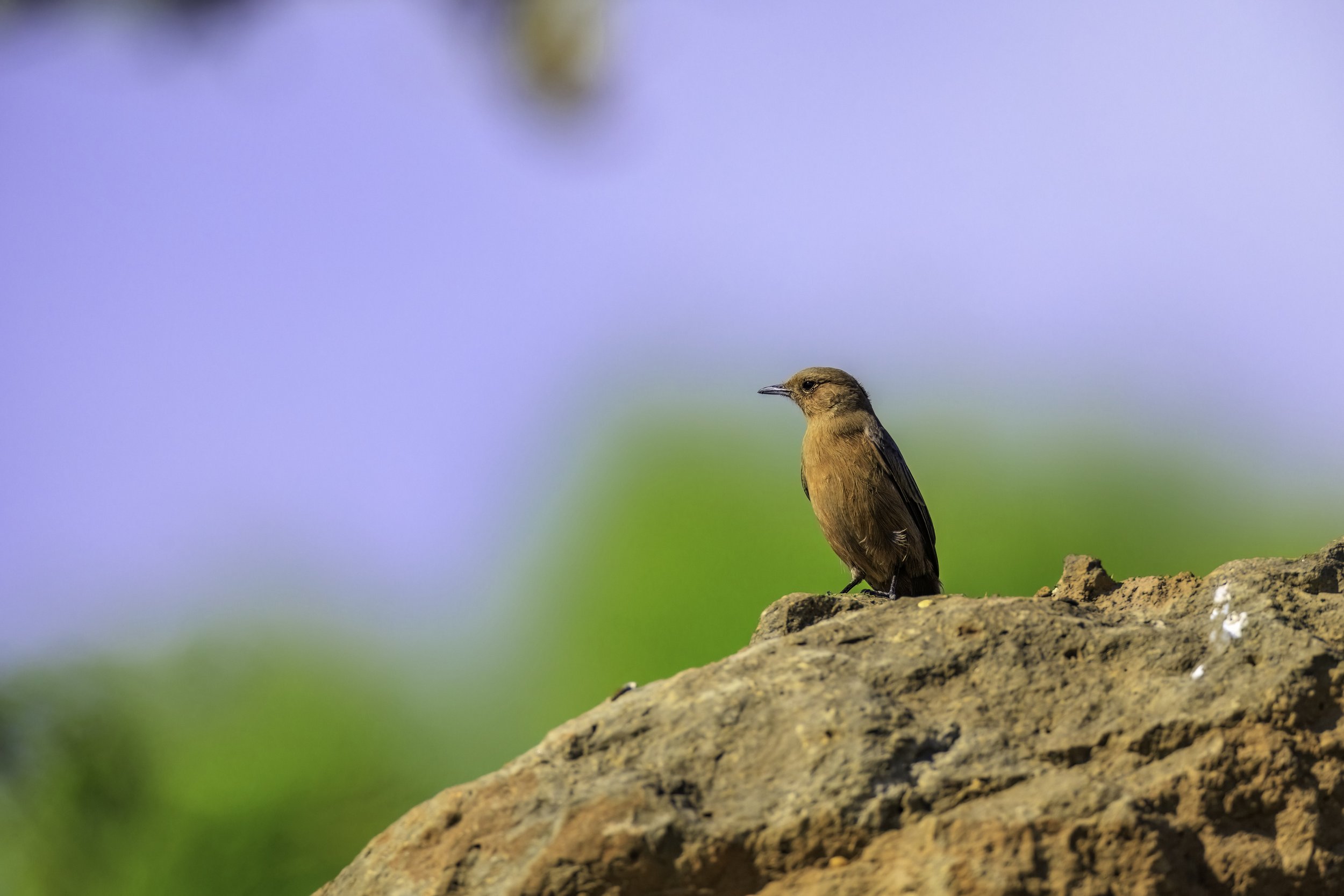
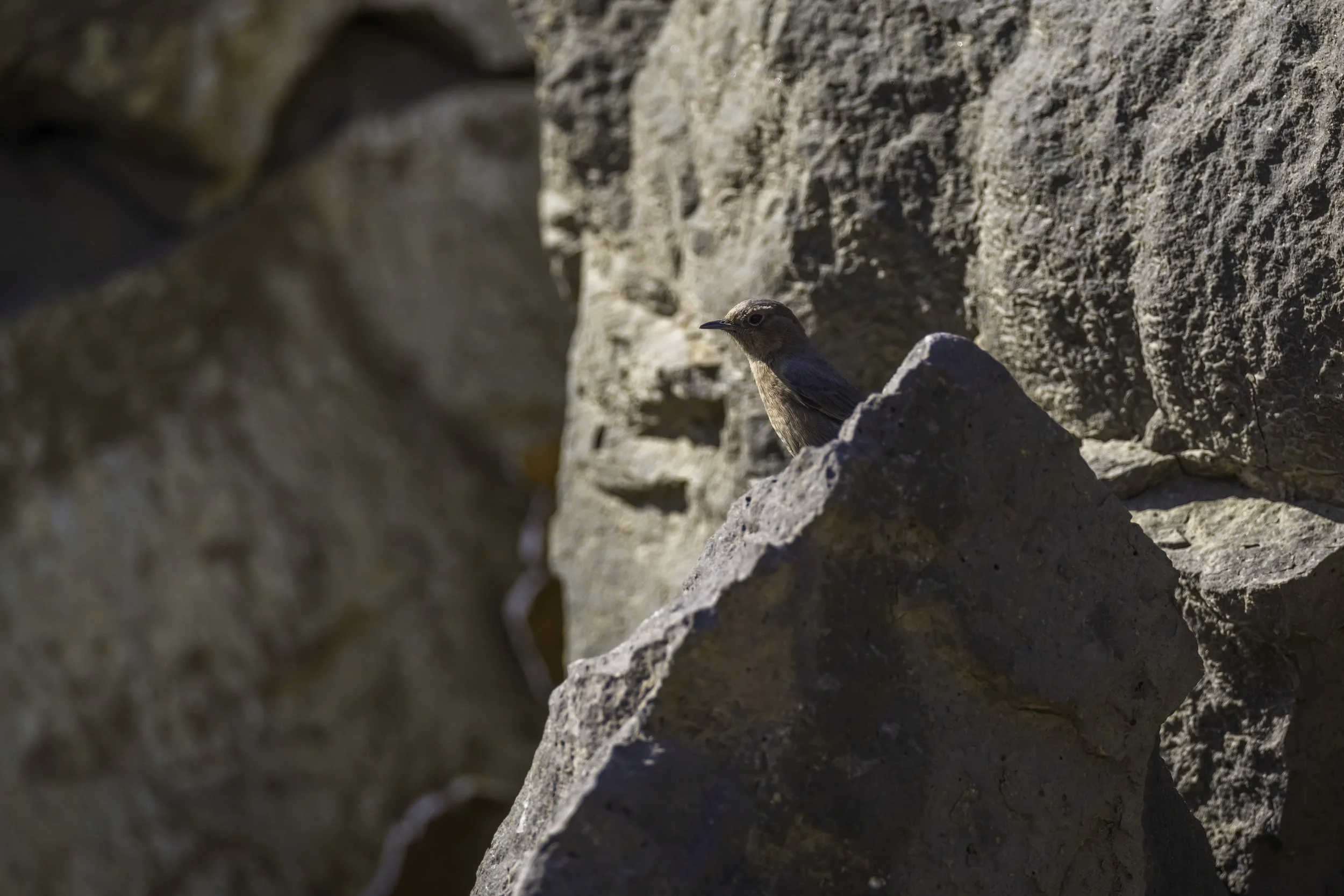
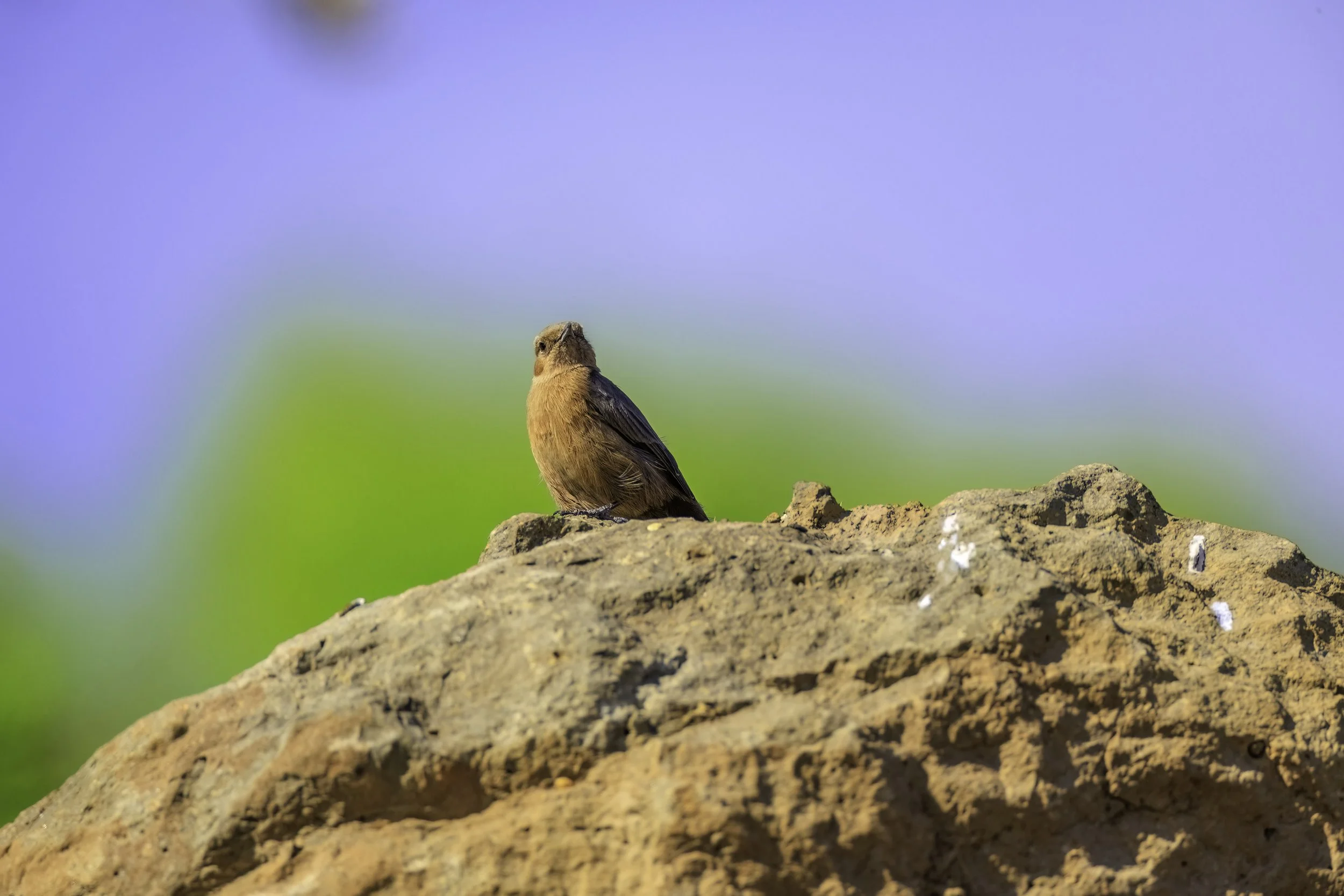
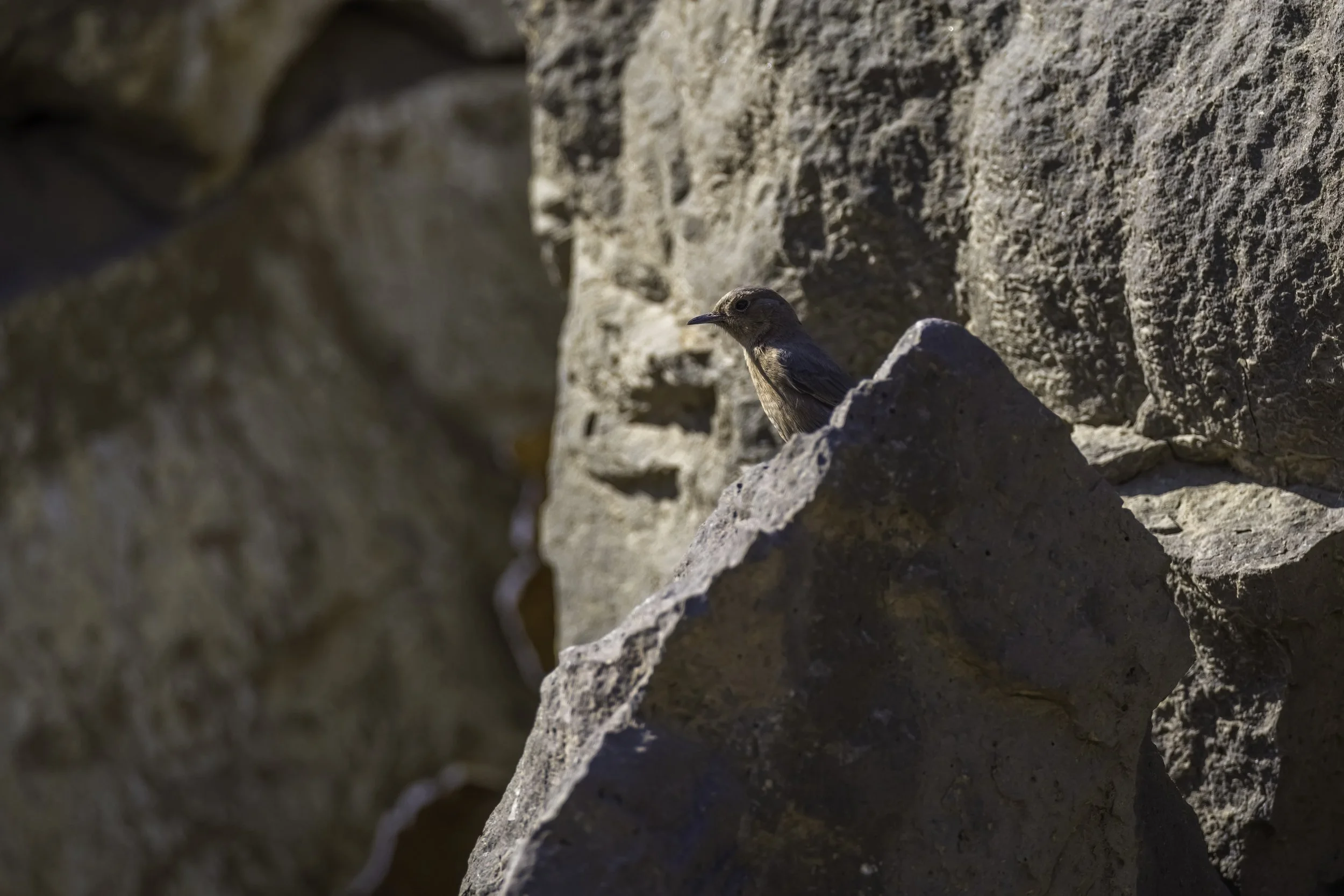
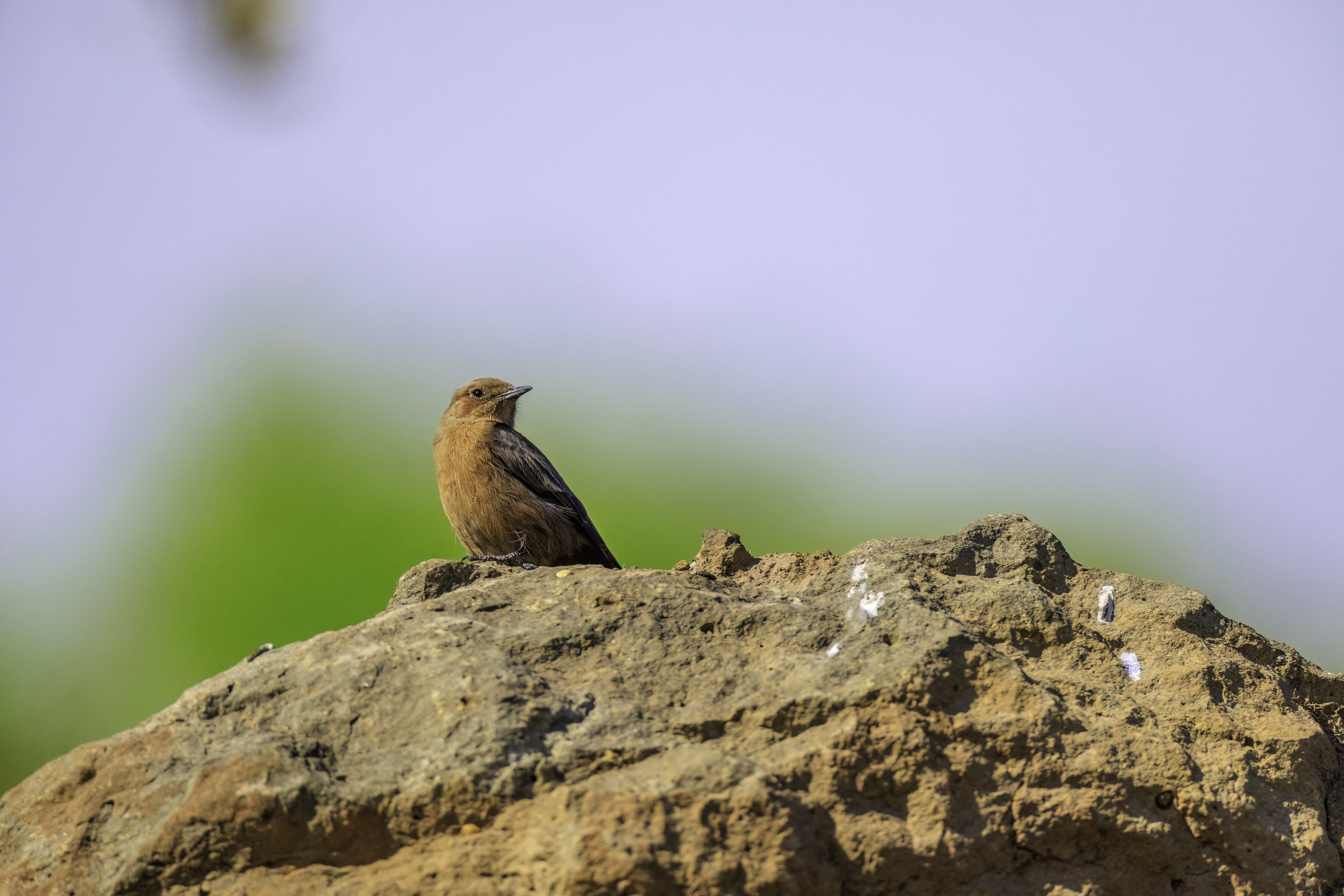
The first light of dawn over the Kaifnath Hills does not burst forth; it bleeds softly through a veil of hanging mist, painting the jagged contours of the extended Sahyadri foothills in shades of muted ochre and charcoal. To the untrained eye, this cracked, arid terrain appears desolate, a forgotten stretch of dry deciduous scrub and rocky outcrops spanning the Purandar and Haveli talukas just south of Pune. But as the sun clears the distant horizon, a sharp, down slurred whistle echoes across the gorge—a distinct “chee” that signals the presence of a true sentinel of the rocks. Perched proudly atop a jagged monolith, standing tall and square against the sky, is the Brown Rock Chat (Oenanthe fusca), historically known as the Indian Chat. Shot against the dramatic backdrop of the Bopgaon and Wadki ghats, this nearly endemic bird embodies the raw, rugged essence of an ecosystem under siege.
From Right: Ganesh, Sandip & yours truly
The Tapestry of the Tekdis: Biodiversity of the Kaifnath Foothills
The extended Sahyadri spur, encompassing the local hilltops, tekdis, and steep ghat regions near Bopgaon, Wadki, and Holkarwadi, constitutes a hyper-localized refuge of immense biological diversity. Far from being a barren wasteland, these dry basaltic slopes are carpeted with highly specialized flora tailored to survive the punishing seasonal shifts of the Deccan Plateau. Spiny Acacia thickets, patches of Anogeissus latifolia (Axlewood), hardy Euphorbia shrubs, and clusters of native Polytrichum moss cling tenaciously to the shifting scree and volcanic rock fissures. During the monsoon, this seemingly dehydrated landscape undergoes a breathtaking metamorphosis, exploding into a vibrant green carpet dotted with ephemeral wildflowers, native grasses, and terrestrial orchids that draw a massive influx of specialized insect life, providing a seasonal banquet for the avian residents.
This unique botanical foundation supports a surprisingly dense web of fauna that shares the rocky terrain with the chat. Stealthy Indian Leopards (Panthera pardus fusca) occasionally traverse these ridgelines under the cover of darkness, while Indian Foxes (Vulpes bengalensis) and Striped Hyenas (Hyaena hyaena) hunt along the edges of cultivation near Holkarwadi. The scrublands crawl with vibrant reptiles, including the Fan-throated Lizard (Sitana marathi), Saw-scaled Vipers, and Barking Geckos. Birdlife thrives in the diverse strata; the open skies are patrolled by Bonelli’s Eagles and Short-toed Snake Eagles, while the undergrowth hums with the melodies of the Yellow-eyed Babbler (Chrysomma sinense), Tickell’s Blue Flycatcher (Cyornis tickelliae), Rufous-tailed Larks (Ammomanes phoenicura), and the ubiquitous Indian Robin (Copsychus fulicatus). It is a complex, delicately balanced biome where every organism has evolved to exploit the narrow microclimates offered by the deep ravines and exposed rocky ledges.
I was hosted by & had the expert help of Sandip Nagare and his team of knowledgeable guides from the Agnipankha Bird Watcher group, especially Ganesh Bhoi, who went out of their way to ensure I had fantastic opportunities to explore, discover, observe & photograph my target species on this trip. As always, I was based at Sandip’s homestay and once again had the added pleasure of indulging in delectable home cooked food.
Read about my birds from Kumbhargaon & the Bhigwan Bird Sanctuary and watch the videos on my YouTube channel - WildArtWorks.
Kaifnath Hills, Holkarwadi, Pune
The extended Sahyadri foothills, locally prominent as the Kanifnath Hills (often referred to as the Kaifnath region), represent a vital ecological zone bridging the Western Ghats spur with the semi-arid Deccan plateau. Spanning across the Purandar and Haveli talukas to the south of Pune—encompassing the villages of Bopgaon, Wadki, and Holkarwadi—this region features a distinctive mosaic of dry deciduous woodlands, thorny scrublands, and open rocky grasslands. The vegetation is characterised by hardy, drought-resistant flora such as Acacia, Neem, and dense patches of native wild grasses that transform into a lush green expanse during the southwest monsoon. This varied landscape forms complex microhabitats along the slopes and ghats, serving as a critical watershed and a primary groundwater recharge zone for Pune's expanding southern periphery.
Despite its rugged, semi-arid appearance, the Kanifnath hill tract is a hotspot for diverse avifauna and native wildlife, drawing major attention from citizen science initiatives like the eBird Kanifnath Hotspot. The region is uniquely significant for harboring the Broad-tailed Grassbird, an elusive species endemic to the Western Ghats that thrives in the high-elevation hill grasses during the monsoon season. The scrub-covered slopes provide an ideal breeding and foraging ground for local specialists like the Sirkeer Malkoha, Striolated Bunting, Crested Bunting and Jungle Prinia. Raptors, including Black Kites and passing Kestrels, heavily rely on the thermal currents generated by the ghat topography for hunting. Furthermore, the area acts as a crucial corridor for monsoon and winter migrants; the arrival of the Pied Cuckoo and Fork-tailed Drongo-Cuckoo marks seasonal transitions, while mammals like the Indian Fox, Black-naped Hare, and the Bengal Monitor Lizard inhabit the deep rocky crevices.
In recent years, this fragile savannah-like ecosystem has experienced severe ecological stress due to rapid urban expansion and habitat fragmentation. The implementation of major infrastructural initiatives, such as the PMRDA Holkarwadi Town Planning Scheme, alongside unauthorized private hill excavations, has led to widespread deforestation and the flattening of local hillocks. Environmental groups, including the Save Hills Campaign, have flagged an unusual and alarming shift in the region's avian demographics: the historical open country and grassland specialists are being steadily replaced by generic woodland birds. This shift is exacerbated by the unscientific plantation of exotic tree species that choke out native flora, stripping endemic ground-nesting birds of their specific nesting niches. As citizen groups increasingly demand stricter Biodiversity Park (BDP) enforcement, the continuous loss of these hill slopes threatens to permanently erase the unique biodiversity that defines Pune’s southern ecological buffer.
Brown Rock Chat/ Indian Chat
The Brown Rock Chat/ Indian Chat is celebrated as a nearly endemic species to the Indian subcontinent. While it is a celebrated resident of the northern Western Ghats' rain-shadow spurs around Pune, its broader distribution spans a highly specific latitudinal belt across South Asia. The species is found primarily north of the Narmada and Tapti rivers, extending westward into the arid expanses of Gujarat—particularly the rugged landscapes of Kutch—and stretching eastward across Central India into Bihar and the western fringes of West Bengal. Its northern frontier is sharply bounded by the mighty outer Himalayas, where it ascends into the rocky foothills up to an elevation of approximately 1,300 to 1,800 metres, frequently documented making seasonal spring appearances in regions like Dehradun before retreating down-country ahead of the winter freeze.
Beyond the political borders of India, the chat’s footprint is highly restricted. It extends marginally into northern Pakistan, strictly bounded to the west by the natural barrier of the Chenab River, and has been recorded as an occasional breeder within the lower rocky terrains of Nepal. Strikingly, the Brown Rock Chat is completely absent from Southeast Asia and the extreme southern peninsula of India, making these isolated populations thriving along the Sahyadri tekdis of Purandar and Haveli an incredibly vital ecological benchmark. They represent the southwestern frontier of a species that refuses to cross into the deep humid zones, tethered fundamentally to the subtropical semi-arid zones of the Indian mainland.
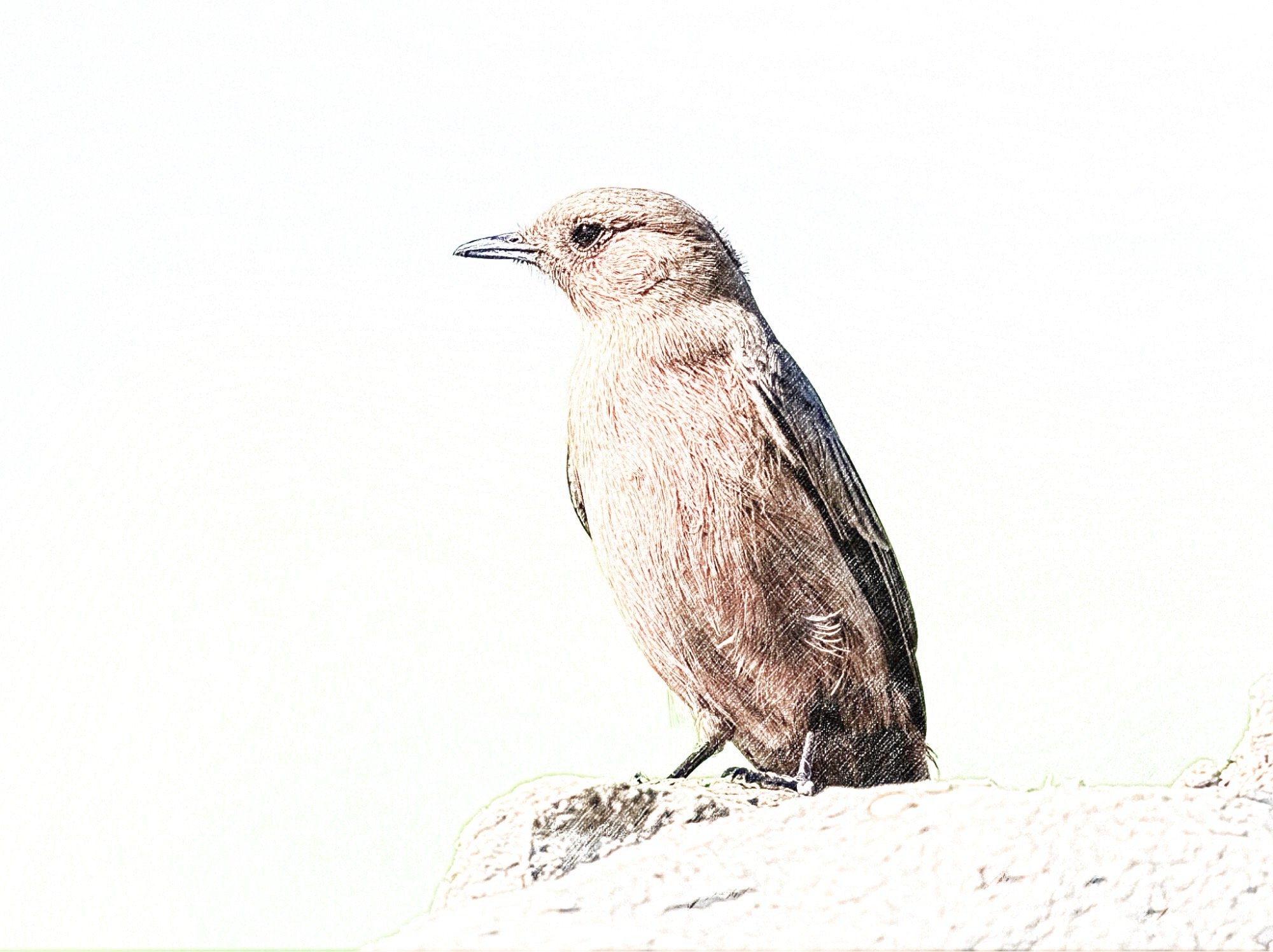
To appreciate the Brown Rock Chat is to appreciate the art of minimalist camouflage. Measuring roughly 16 to 17 centimetres in length and weighing a mere 13 to 15 grams, it is a stocky, robustly built passerine that possesses an air of quiet dignity. The bird is wrapped in a smooth, near-uniform coat of rich, plain chocolate-rufous brown. Its upperparts present a slightly darker shade, which deepens into an almost blackish tone along the flight feathers of the wings and its broad, squared-off tail. The underparts display a subtle, beautiful gradient, with the warm mid-brown chest gently fading into a distinct dark grey-brown vent and under-tail coverts. Its face features a faint, rufous-tinged eyebrow (supercilium) and matching ear-coverts that flank a slender, sharp beak that is stouter and straighter than many of its cousins, tipped with a minute, down-curved hook engineered for snatching armored beetles.
In the field, visual identification requires a keen eye for subtle structural nuances, as the sexes are entirely monomorphic (identical in plumage). The chat’s primary flight architecture is distinct: its second primary feather is noticeably long, providing the bird with a powerful, direct, low-gliding flight style that closely mimics a miniature female Blue Rock Thrush when crossing deep valleys. Its jet-black legs are proportionally short but incredibly strong, allowing the bird to spring effortlessly across jagged basalt boulders or stand completely vertical on sheer cliff faces, looking out over its territory with an unmistakable, proud posture.
Comparative Ornithology: Distinguishing the Chats
The most common error made by amateur birders in the Kaifnath Hills is confusing the Brown Rock Chat with the female Indian Robin (Copsychus fulicatus), which occupies overlapping territories. While both display brownish tones, the differences are stark upon closer inspection:
The Vent Test: The female Indian Robin sports a highly conspicuous, bright chestnut-rufous patch under its tail. The Brown Rock Chat completely lacks this, showing a dark grey-brown vent instead.
Tail Structure & Posture: The Indian Robin possesses a longer tail that it constantly holds cocked at a sharp, steep angle toward the sky. The chat exhibits a stockier build, with a much shorter, broader, squared-off tail that it holds uncocked or parallel to its body line.
Beak Architecture: The chat features a considerably stronger, straighter, and stouter bill compared to the finer, more curved needle-like bill of the robin, reflecting its preference for larger prey.
When evaluated against other rock chats & wheatears (Oenanthe species) migrating through or residing across South and Southeast Asia—such as the Desert Wheatear or the Rufous-tailed Rock Thrush—the Brown Rock Chat stands completely apart due to its total lack of high-contrast white rumps, black masks, or blue-grey mantle tones. It is the only member of its genus in the region that relies entirely on a monochromatic, earthy palette to survive.
The preferred microhabitats of the Brown Rock Chat are intrinsically tied to stone. In the Bopgaon and Wadki talukas, it gravitates to steep sandstone and basalt cliffs, deep dry ravines, boulder-strewn talus slopes, and abandoned stone quarries. However, the bird displays a highly adaptable synanthropic streak, willingly expanding into man-made structures that mimic its natural rocky domains: ancient hill forts, rural stone walls, old brickyards, and the rooftops of isolated concrete farm houses. Within these zones, it maintains a strictly solitary or pair-based territory, remaining largely sedentary throughout the year, unlike its highly migratory northern cousins.
It is in its behavioral display that the bird truly captivates the observer. While foraging on the ground for ants, termites, and beetles, the Brown Rock Chat performs a mesmerizing rhythmic ritual: it hops forward, suddenly freezes, slowly bobs its head, and then elevates its broad tail slightly, fanning it open in a dramatic, snapping gesture while simultaneously flicking its wings wide. This behavior is believed to flash-startle cryptic insects into moving, allowing the chat to pinpoint and snatch them instantly. Furthermore, its vocal repertoire is astonishingly complex. Beyond its sharp “chee-chee” and harsh, alarm-like “tchk-tchk” warnings, the chat is a brilliant vocal mimic. During the spring breeding window (February to August), males mount high rocks to deliver a sweet, rolling warble, seamlessly weaving accurate imitations of Yellow-eyed Babblers, Black-winged Cuckoo-shrikes, and Grey Francolins into their courtship songs to proclaim ownership over the vast ravines.
The Cost of Concrete: Habitat Loss and Anthropocene Shifts
The pristine basalt horizons of Bopgaon, Wadki and Holkarwadi are changing at a catastrophic pace. Rapid urbanization expanding from Pune, aggressive hill-cutting for roads, unmonitored soil and stone quarrying, and the conversion of native scrublands into massive residential plots are stripping the hillsides bare. This severe habitat fragmentation has forced the Brown Rock Chat into dangerous behavioral adaptations. As their ancient nesting ledges on natural cliffs are blasted away, the birds are migrating closer to human hazards, building their complex cup nests—constructed with a heavy foundation of clay and mud pebbles and lined with soft grass and animal hair—inside active construction sites, window panes of occupied buildings, and roadside drainage pipes.
This forced proximity to humanity has triggered a dramatic shift in their circadian rhythms and foraging windows. In places like Bikaner and now along the urbanizing fringes of Pune, scientists have documented an extraordinary phenomenon: unusual nocturnal foraging. Deprived of open scrub fields during the scorching, human-disrupted day, these diurnal birds are staying awake late into the night, using their dark plumage to remain completely invisible to predators while hunting insects attracted to artificial sodium streetlamps and high-intensity security lights. They have been recorded active as early as 3:00 AM and running as late as 9:00 PM, a grueling schedule driven by the high nutritional demands of feeding their clutches of three to four pale blue eggs in an increasingly impoverished environment.
Furthermore, as their natural open terrains shrink, their territories contract, sparking intense, aggressive border wars. The chats have become exceptionally pugnacious, spending massive amounts of energy launching furious aerial attacks against invading palm squirrels, garden lizards, and larger birds to protect their remaining nesting alcoves. These photographs captured at Kaifnath Hills are not merely a pretty portrait of a bird; it is a profound testament to survival. It stands as a silent plea to protect the rocky tekdis of the Sahyadri foothills before the final, beautiful song of this ancient rock sentinel is permanently silenced by the roar of the bulldozer.
‡‡‡‡‡

Related Posts

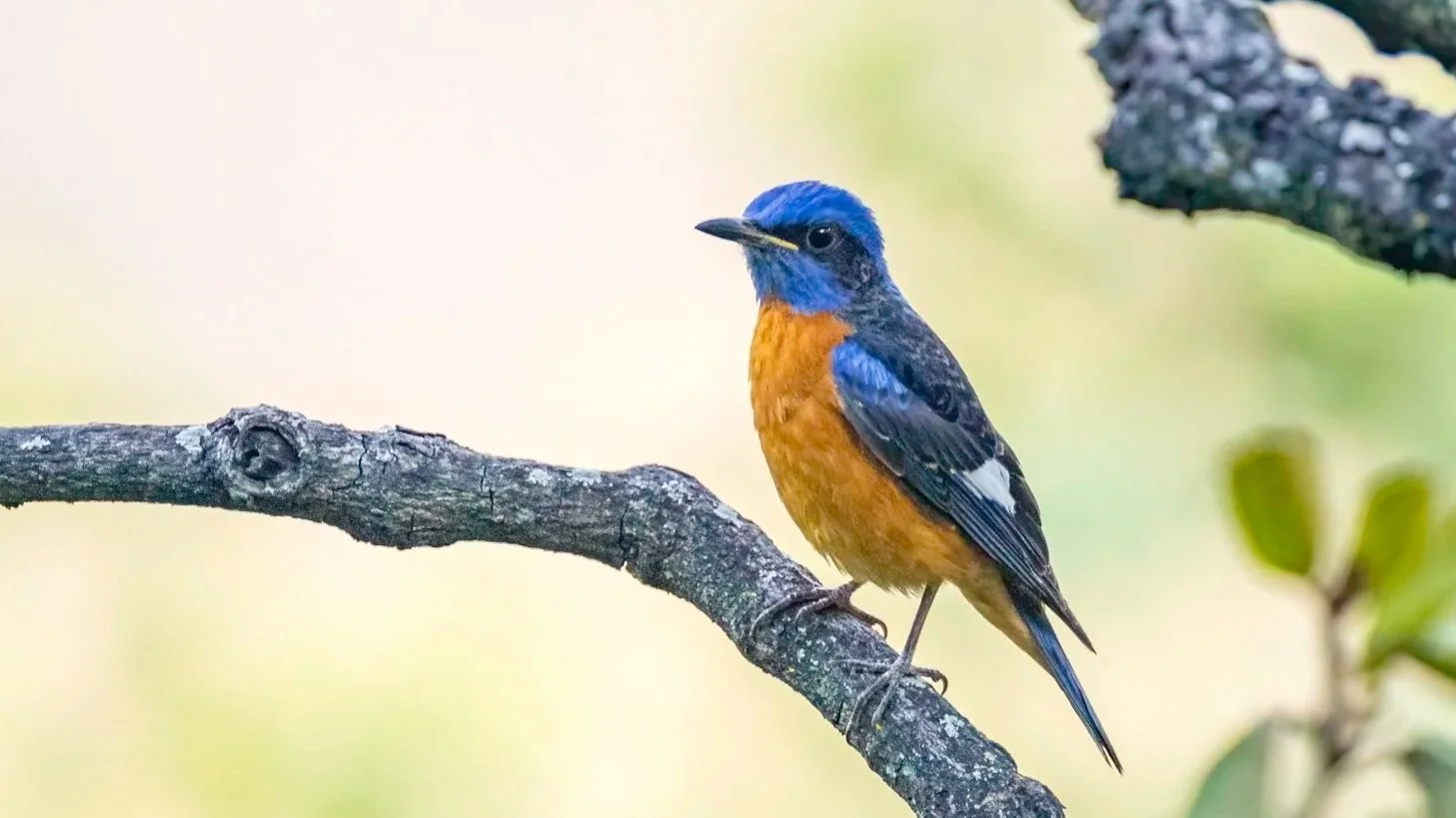

The Grey Bush Chat is a species of small songbird in the family Muscicapidae found in the Himalayas, southern China, Taiwan, Nepal and mainland Southeast Asia. Its natural habitats are subtropical or tropical moist lowland forest and subtropical or tropical moist montane forest. Seen in pairs or small flocks they are bold but not very active, usually seen perching for long periods on posts and overhead wires. Song is bright and melodious, but often has a somewhat faltering quality, trailing off towards the end.
#wildartworks, #Canon, #Bird, #Birdinginthewild, #BirdWatching, #Wildlife, #WildBirds, #naturephotography, #your_best_birds, #planetbirds, #earthcapture, #photo_pond, #earthpix, #naturyst, #conservationphotography, #yesbbcearth, #wildlifeonearth, #bbcearth, #natgeowild, #natgeoindia, #thailand, #greybushchat, #bushchat, #chat, #chiangmai, #fang, #doisanju, #doiluang,