
Tri-coloured Munia
Lonchura malacca
A resident of classic semi-arid, river-basin habitats across South India
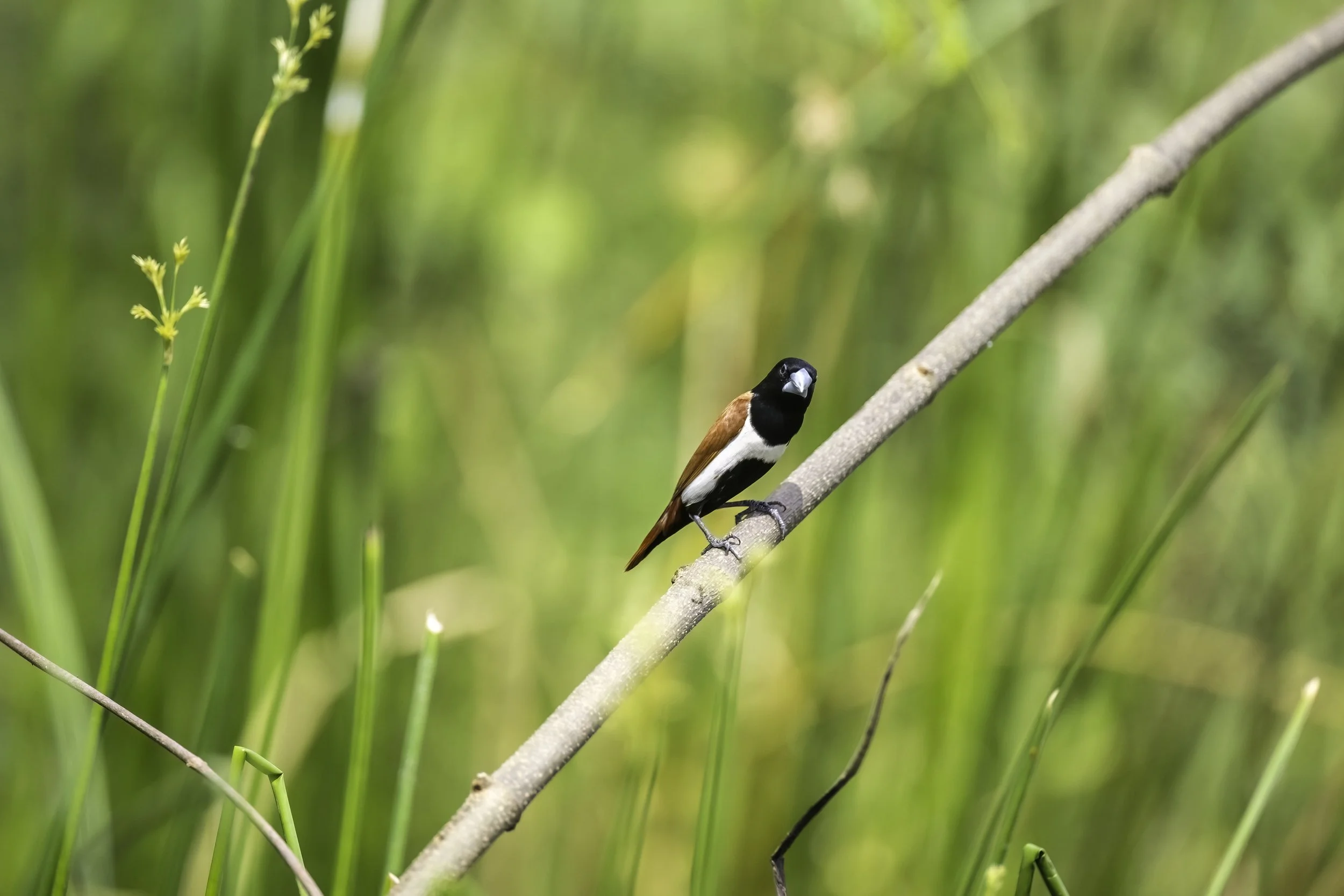
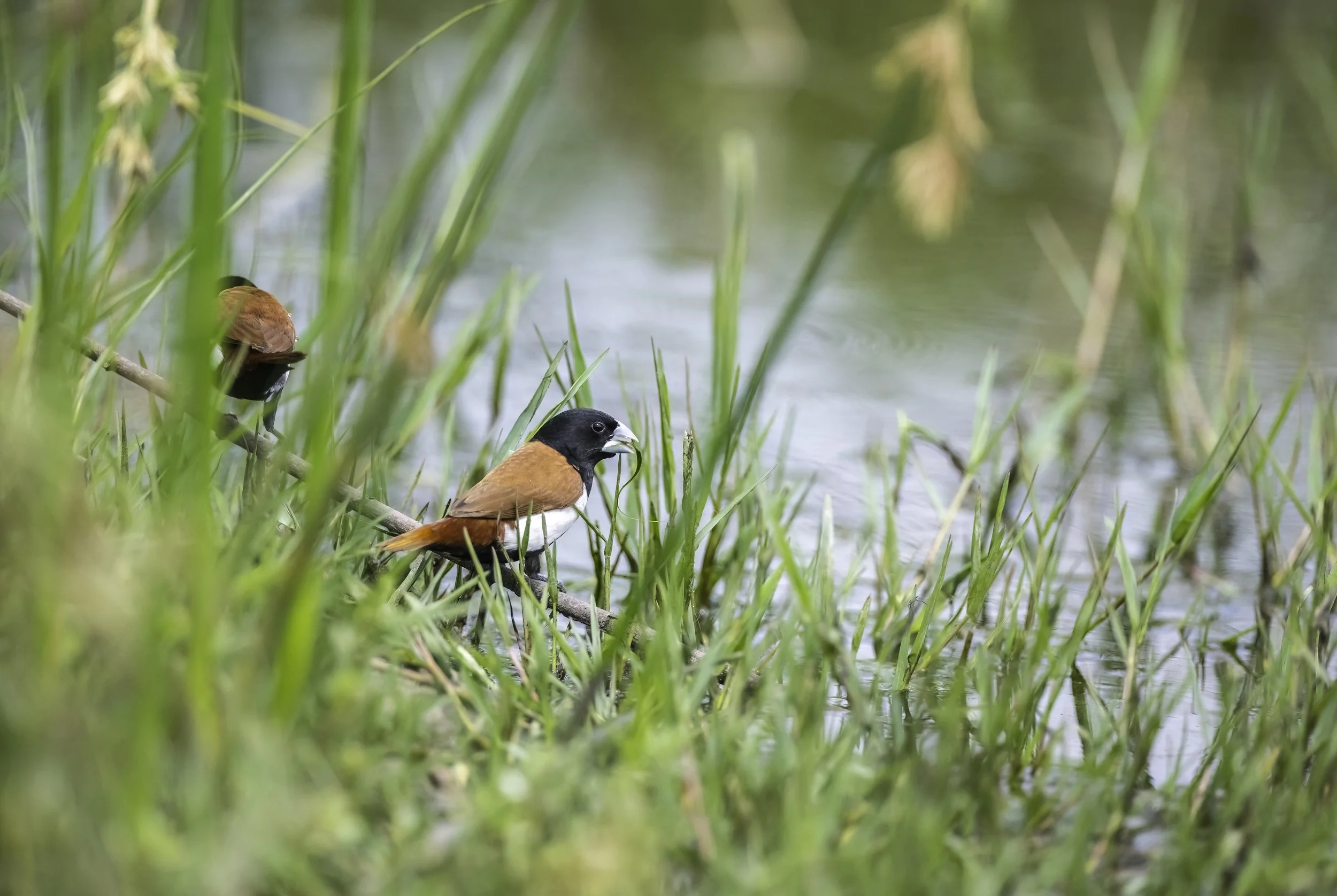
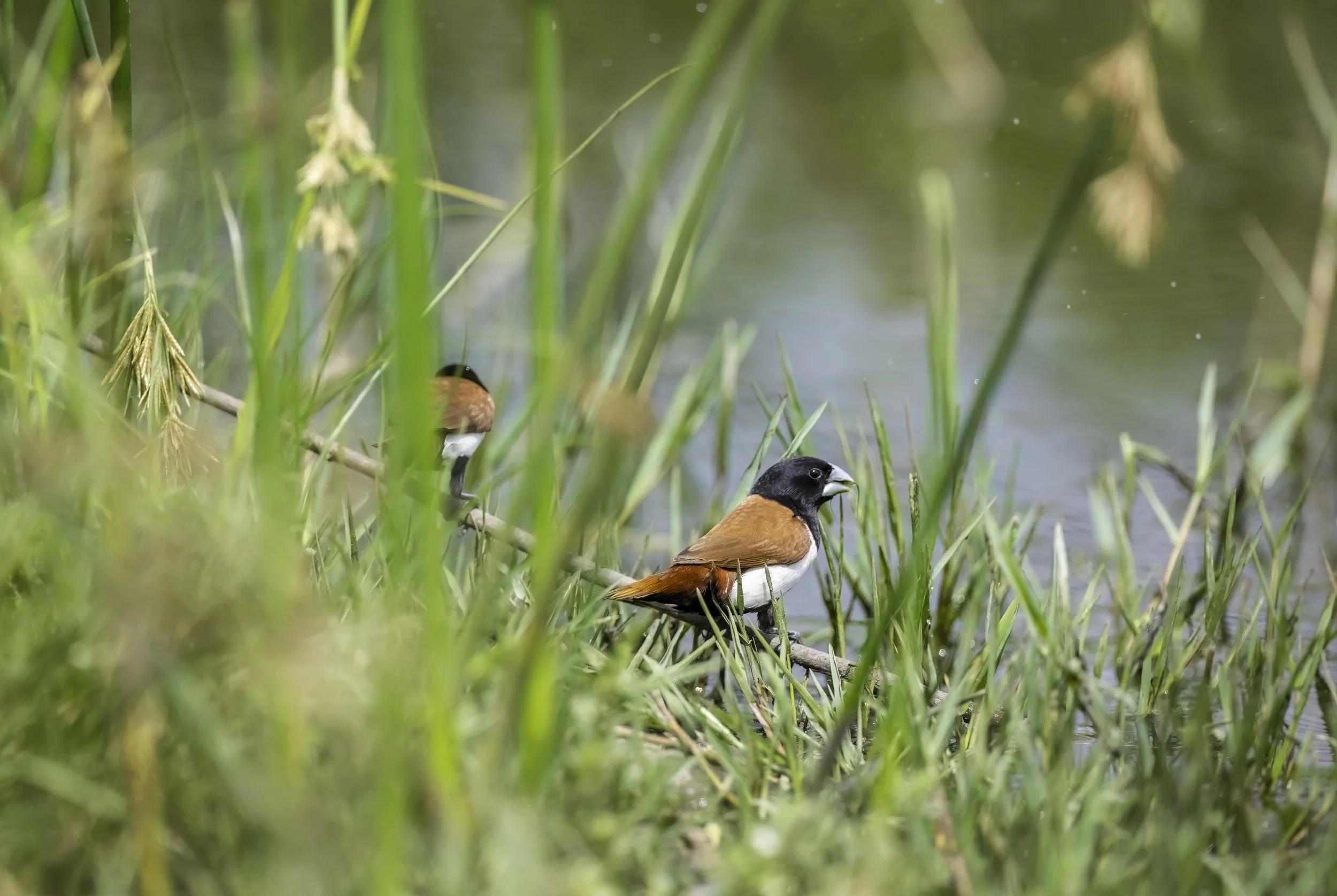
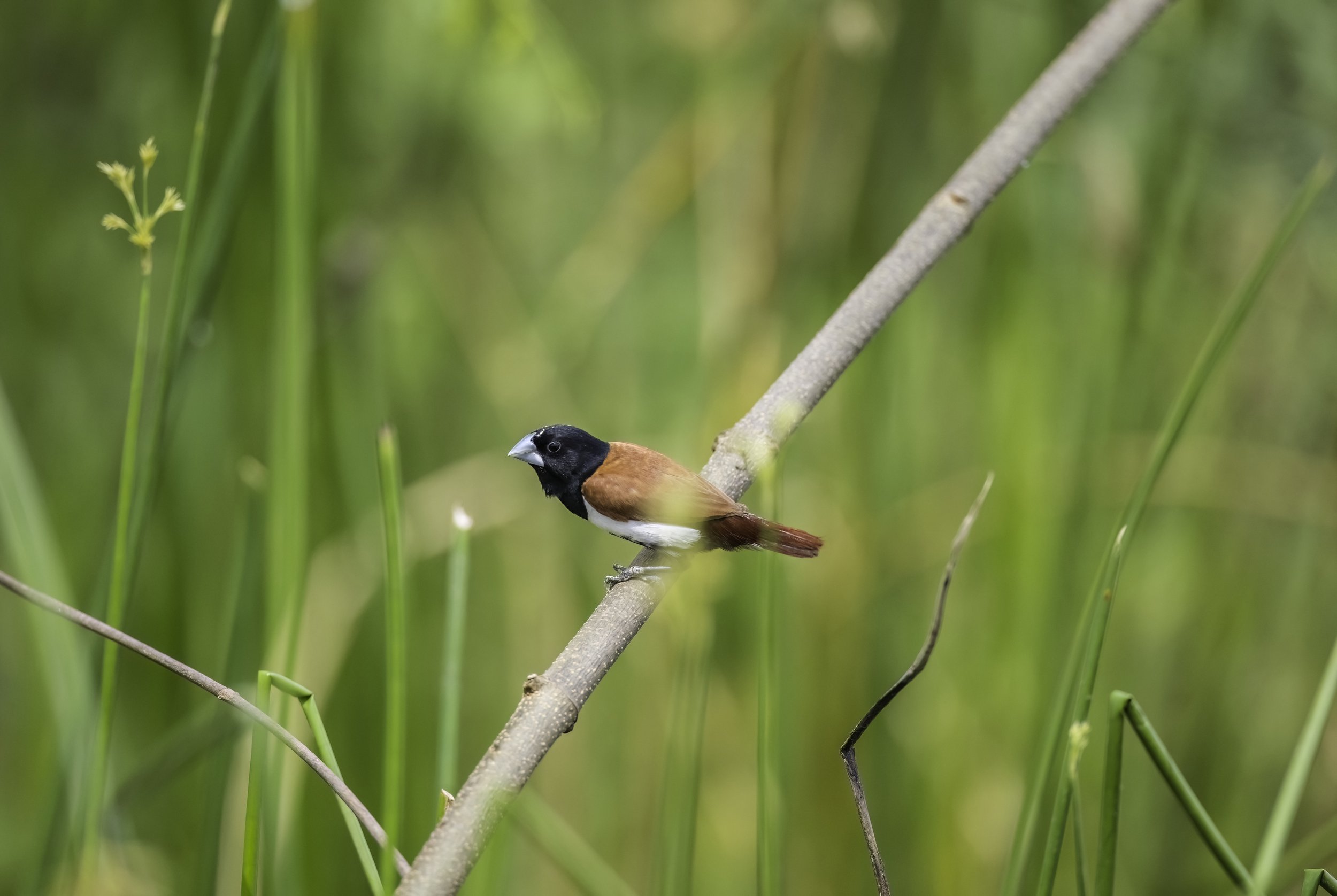
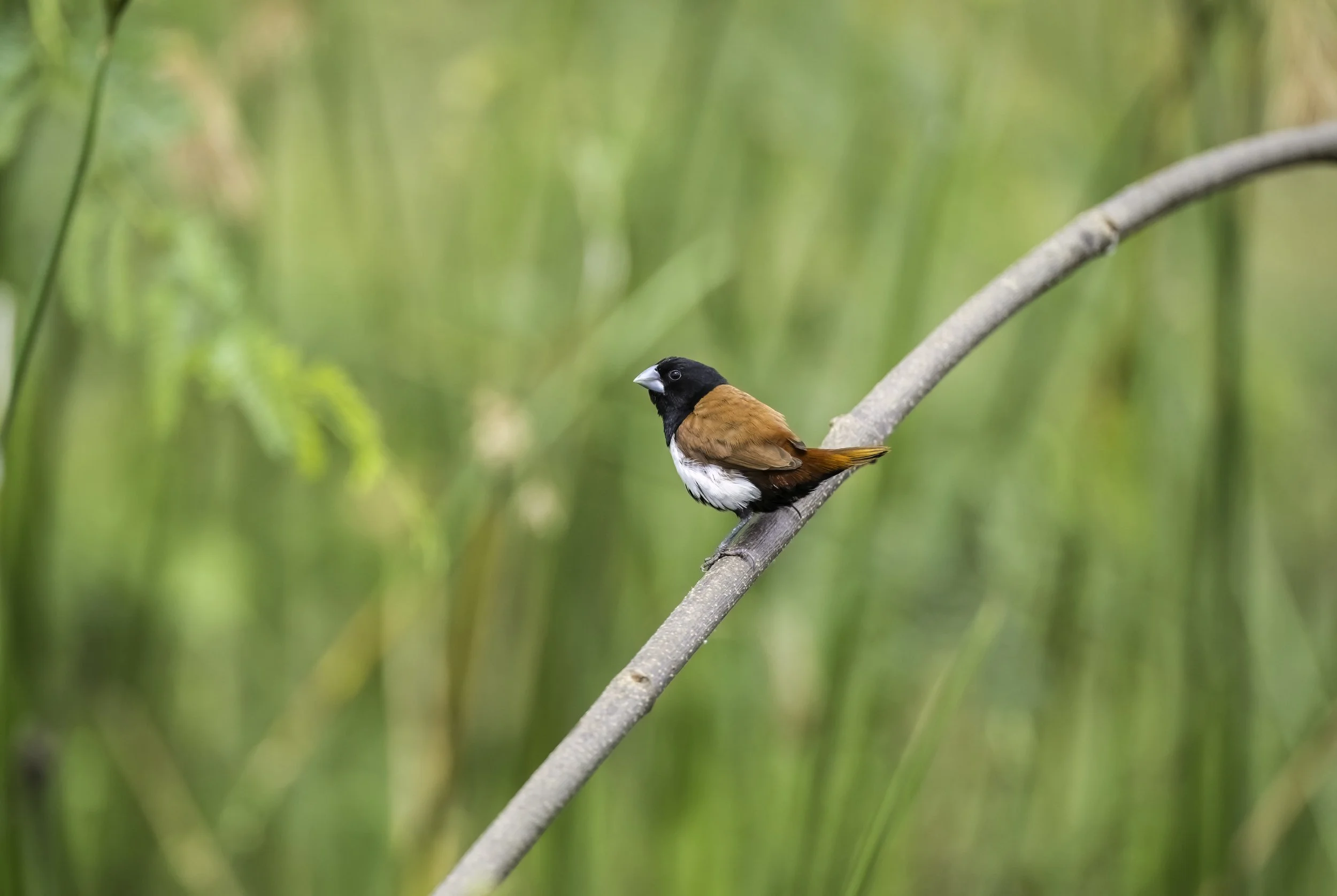
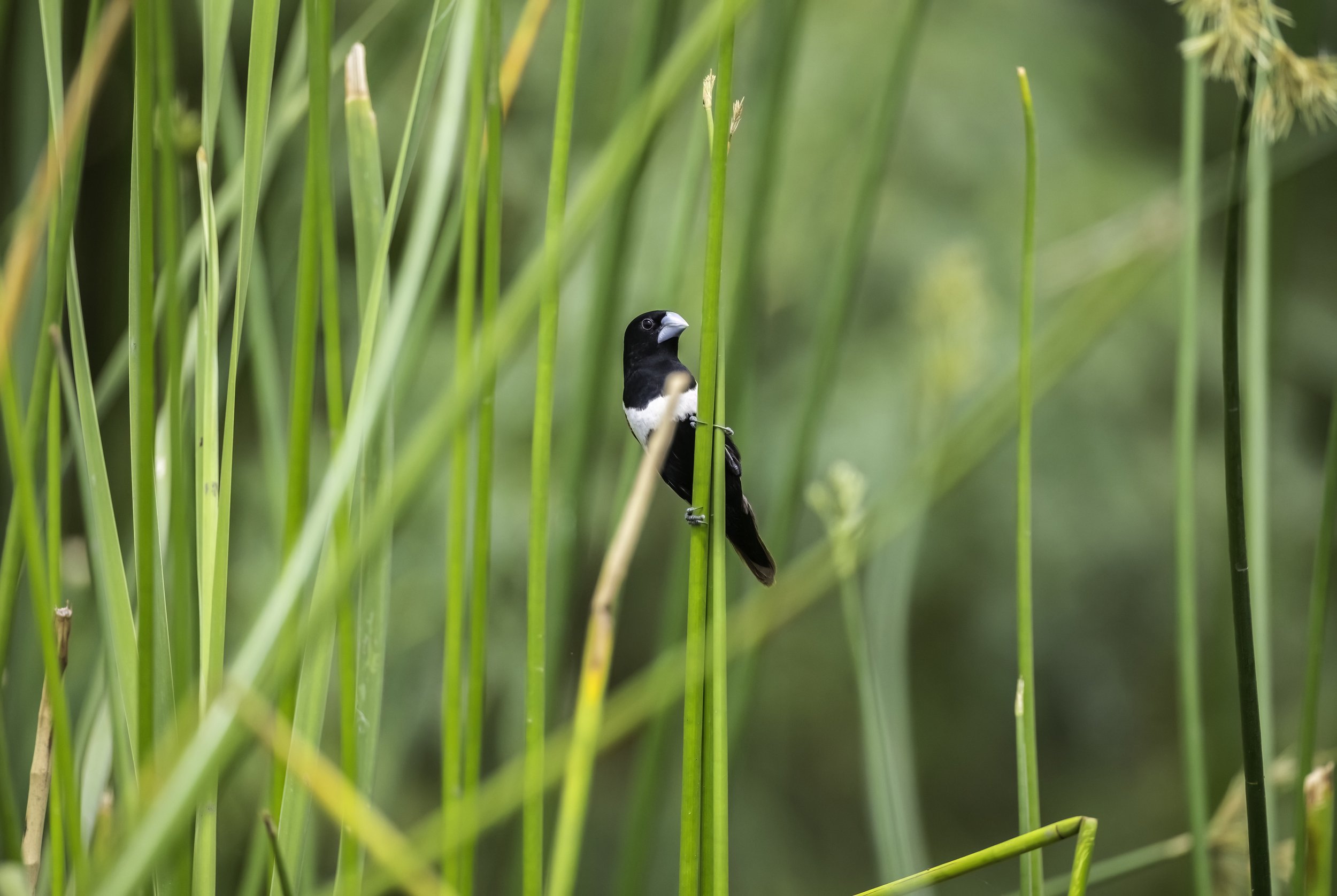
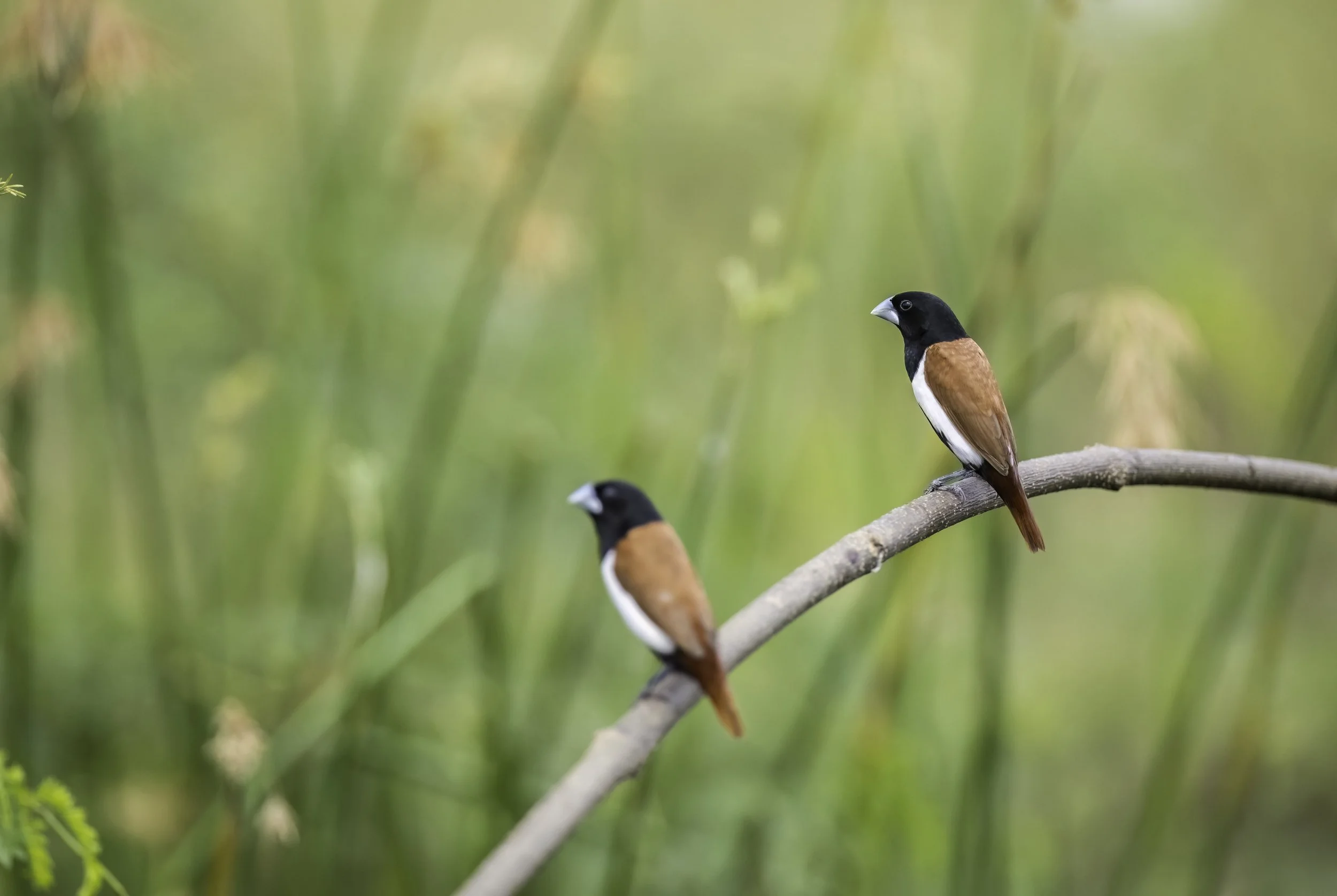
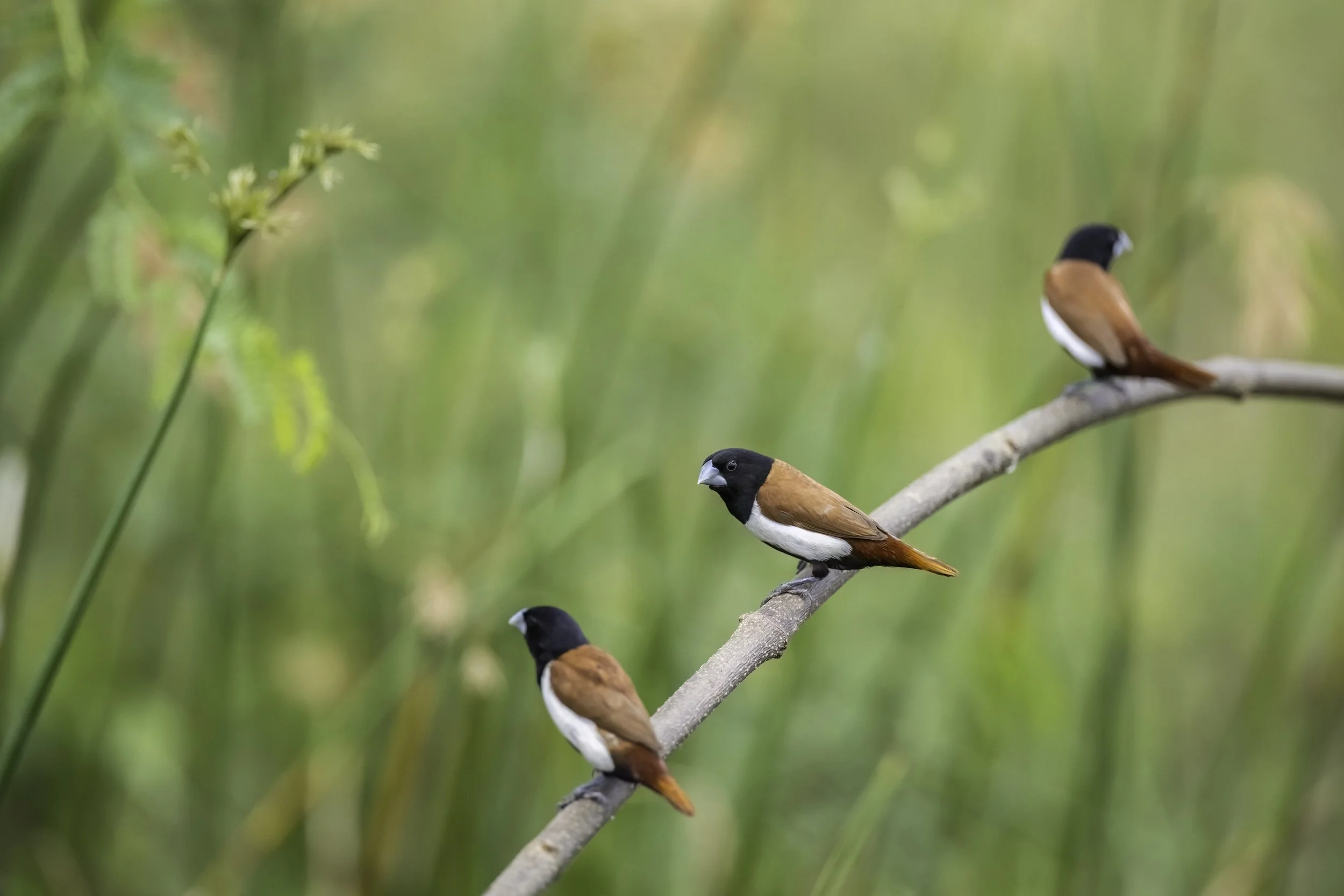
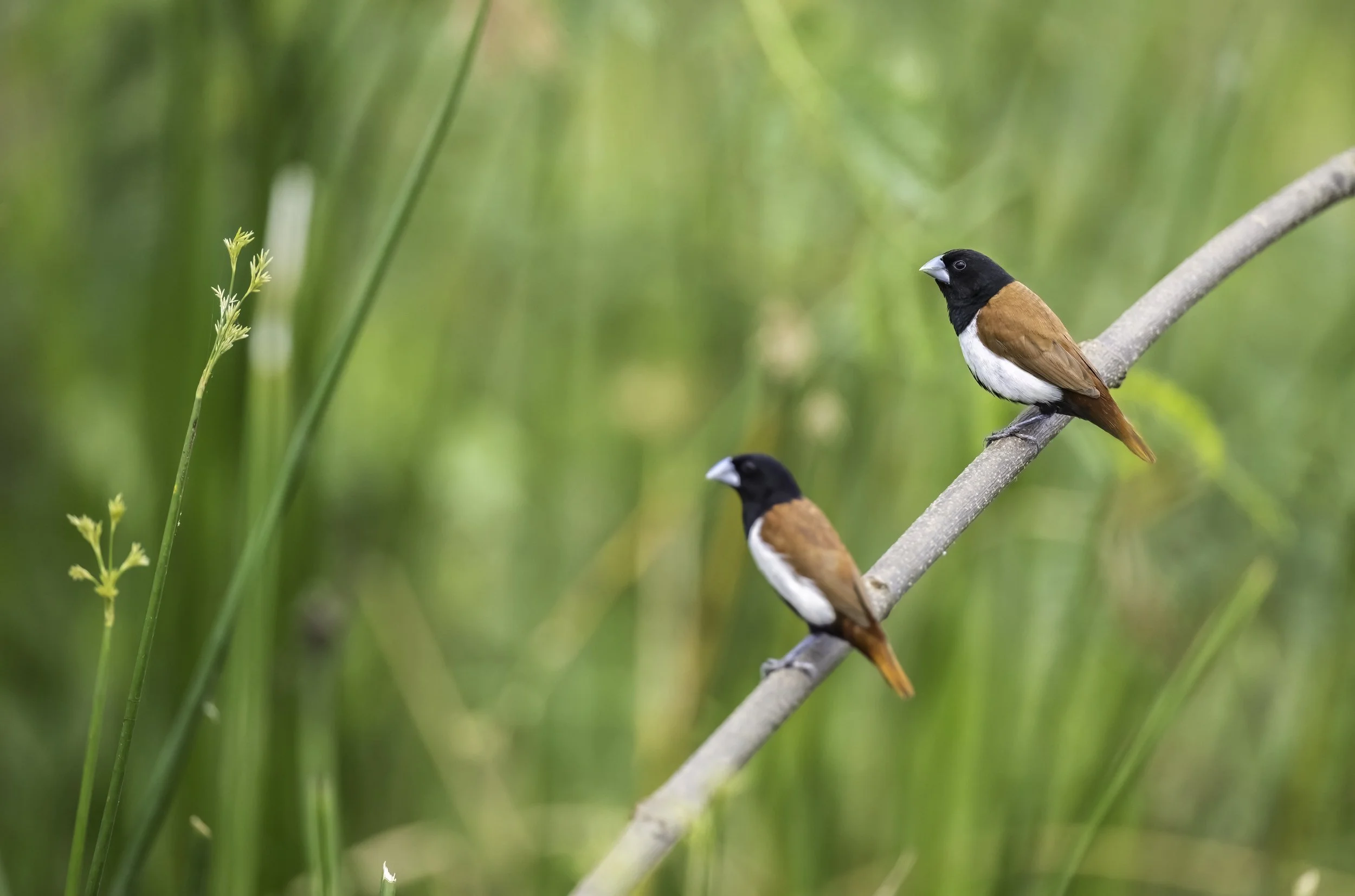
The late afternoon sun dipped low over the backwaters of the Ujni Dam, casting a golden-amber hue across the extensive reed beds of Kumbhargaon village near Bhigwan. A gentle breeze rippled through the tall grasses, making the reed heads sway in rhythmic unison. Hidden amidst this sea of stalks, a tiny avian jewel prepared for its evening routine. To the untrained eye, the marshy edges look quiet. But to the patient observer, the reeds came alive with frantic motion. Suddenly, a small, compact bird climbed up a slender grass stem. It balanced precariously, its sharp claws gripping the stalk as it bowed under the bird's minimal weight. The bird was captured for posterity in the warm, beautiful light of the golden hour—a perfect portrait of the Tri-coloured Munia (Lonchura malacca).
To the south of Bhigwan, bereft of any hills, lie the wide Ujni backwaters wetlands. A shallow waste water reserve formed by the discharge of water from the Pune region dams like Panshet, Pawna, Khadakwasla, Varasgaon, Temghar, etc. This semi waste water has created an excellent wetland based ecosystem supporting a large variety of water birds, both endemic and migratory, and also helped with the local agriculture. Nearly 300 species of endemic and migratory birds have been recorded here. The rainfall in the Pune region decides the water level in Ujni dam. Lesser the water, the shallower it is and therefore more birds make it their home in the winter.
From Right: Ganesh, Sandip & yours truly
The area around these backwaters are also unique with rich farmlands and dry deciduous scrub forest with interspersed grasslands which protect many mammals like the Chinkara, Indian Mongoose, Near Threatened Striped Hyena, the Endangered Indian Grey Wolf & Indian Fox and are also popular for grassland birds and the birds of prey, including some magnificent eagles & harriers. This time the focus was not on the mainstays of the grasslands like the Striped Hyena, Indian Grey Wolf and Jungle Cat. I went looking for the often ignored but equally important species like the Tri-coloured Munia.
These grasslands play host to some magnificent eagles and harriers too like the Endangered Steppe Eagle, the Vulnerable Greater Spotted Eagle, the rare and Vulnerable Eastern Imperial Eagle, Bonelli’s Eagle & harriers like the Pallid Harrier, Montagu’s Harrier & Eurasian Marsh Harrier. Apart from these there are other spectacular species like the Short-eared Owl, Spotted Owlets & the Indian Courser inhabiting the grasslands.
I was hosted by & had the expert help of Sandip Nagare and his team of knowledgeable guides from the Agnipankha Bird Watcher group, especially Ganesh Bhoi, who went out of their way to ensure I had fantastic opportunities to explore, discover, observe & photograph my target species on this trip. As always, I was based at Sandip’s homestay and once again had the added pleasure of indulging in delectable home cooked food.
Read about my birds from Kumbhargaon & the Bhigwan Bird Sanctuary and watch the videos on my YouTube channel - WildArtWorks.
The Ujni Wetland Ecotone: Ecodynamics, Avian Biodiversity & Anthropogenic Pressures at Kumbhargaon
The Ujni Dam and its contiguous backwaters near Kumbhargaon village constitute a critical, anthropogenically created lacustrine ecotone within the semi-arid landscape of Western Maharashtra. Fed primarily by the Bhima River, this vast hydrological infrastructure has inadvertently established a diverse microhabitat matrix comprising deep-water zones, dynamic mudflats, and seasonally inundated littoral shelves. The persistent moisture gradient within this lacustrine-terrestrial transition zone functions as a crucial buffering system, regulating regional microclimatic conditions and sustaining a highly productive food web. From an ecological standpoint, the Ujni backwaters act as "nature's kidneys," performing vital ecosystem services such as nutrient cycling, sediment trapping, and localized macro-invertebrate replenishment.
Adjoining this aquatic boundary, the structural complexity scales into native, hyper-productive grasslands and scrub savannahs that support a rich trophic hierarchy. These terrestrial buffers host stable populations of mammals, including the Indian Blackbuck (Antilope cervicapra), Indian Fox (Vulpes bengalensis), and Grey Wolf (Canis lupus pallipes). The low-lying vegetation and riparian margins concurrently offer optimal thermal niches for herpetofauna, notably the Indian Rock Python (Python molurus), Russell’s Viper (Daboia russelii), and the Bengal Monitor (Varanus bengalensis). This continuous grassland matrix provides vital nesting camouflage and foraging cover, preventing the fragmentation of critical corridors between terrestrial megafauna and the core wetland basin.
The ecological integrity of the Kumbhargaon zone is underscored by its status as a critical avian hotspot along the Central Asian Flyway, hosting over 250 species of resident and migratory waterbirds. The shallow, nutrient-dense littoral zones support significant congregations of the Greater Flamingo (Phoenicopterus roseus) and the globally Near Threatened Lesser Flamingo (Phoeniconaias minor). Extensive systematic surveys have identified Vulnerable and Near Threatened taxa on the IUCN Red List of Threatened Species, including the Painted Stork (Mycteria leucocephala), Black-headed Ibis (Threskiornis melanocephalus), Oriental Darter (Anhinga melanogaster), and crucial wintering raptors like the Osprey (Pandion haliaetus). These populations depend heavily on the benthic biomass, freshwater prawn diversity (Macrobrachium spp.), and indigenous teleost fish stocks characterizing the Ujni basin.
The rapid expansion of sugarcane farming around the Ujni backwaters has introduced a complex dynamic for the local wildlife, offering both unexpected sanctuary and severe survival challenges. The dense, tall stalks of sugarcane act as an artificial extension of the natural grasslands, providing excellent camouflage and breeding grounds for mammals like Leopards, Indian Foxes, and Jungle Cats, as well as nesting sites for various ground-dwelling birds. However, this high-yield agriculture demands intensive water use and heavy chemical fertilizers, which frequently run off into the backwaters, threatening the delicate aquatic ecosystem and the fish populations that migratory birds rely on. Furthermore, as harvesting seasons strip the fields bare, animals are suddenly exposed, leading to sharp spikes in human-wildlife conflict as displaced creatures venture closer to Kumbhargaon's residential areas in search of cover.
Despite its high biological valuation, the ecosystem faces severe ecological pressures driven by intensive agricultural encroachment along the reservoir’s periphery. The high fertility of the alluvial plains has catalyzed extensive land conversion for high-water-demand cash crops, specifically sugarcane (Saccharum officinarum). Runoff contaminated with organophosphates and synthetic nitrogenous fertilizers triggers localized eutrophication, compromising macro-invertebrate communities and accelerating the spread of invasive macrophytes. Unregulated cattle grazing, soil mining, and seasonal drawdowns disrupt the nesting habits of ground-nesting waders, demanding immediate integrated management strategies. Formally designating the Ujni backwaters under international frameworks like the Ramsar Convention is vital to implement 'Wise Use' protocols and mitigate long-term anthropogenically driven degradation.
Tri-coloured Munia
The late afternoon sun hung low over the vast, shimmering expanse of the Ujni backwaters, casting a deep amber glow across the reed beds of Kumbhargaon. A quiet village nestled near the birding hotspot of Bhigwan in Maharashtra, India, Kumbhargaon is famous for its wintering Greater Flamingos. Yet, if you turn your back to the open water and face the fringe of tall grasses, agricultural fields, and thorny scrub, a completely different world unfolds.
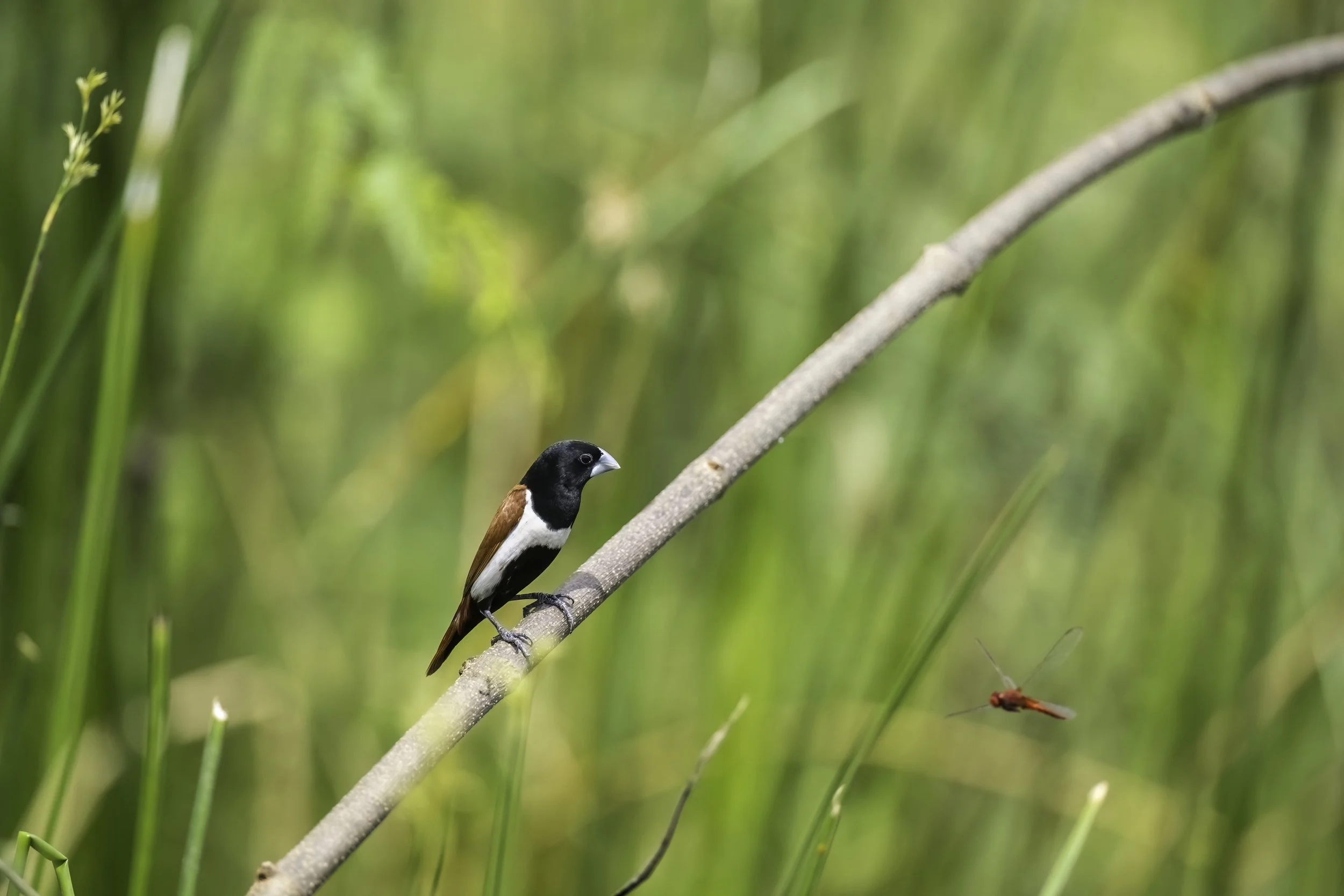
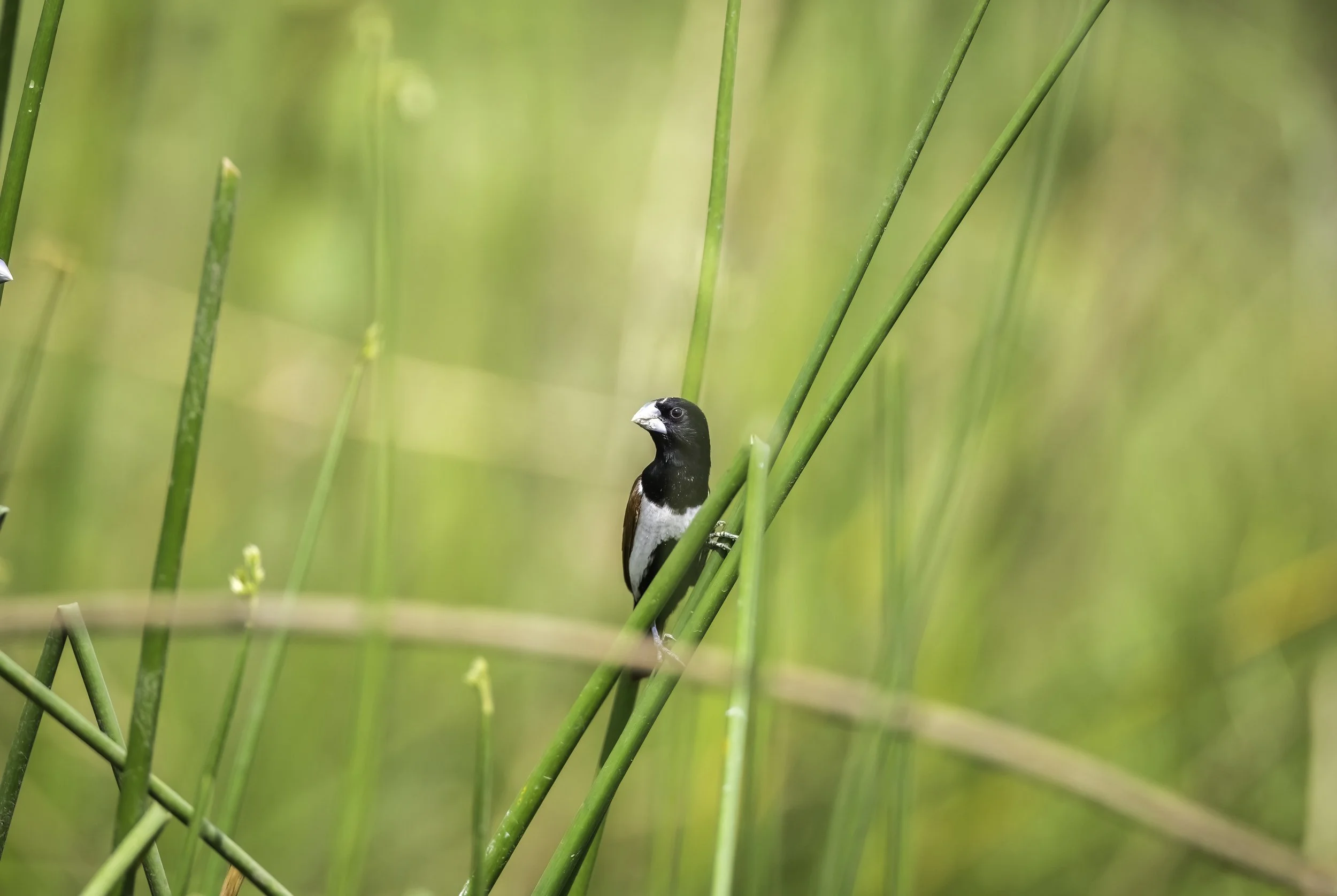
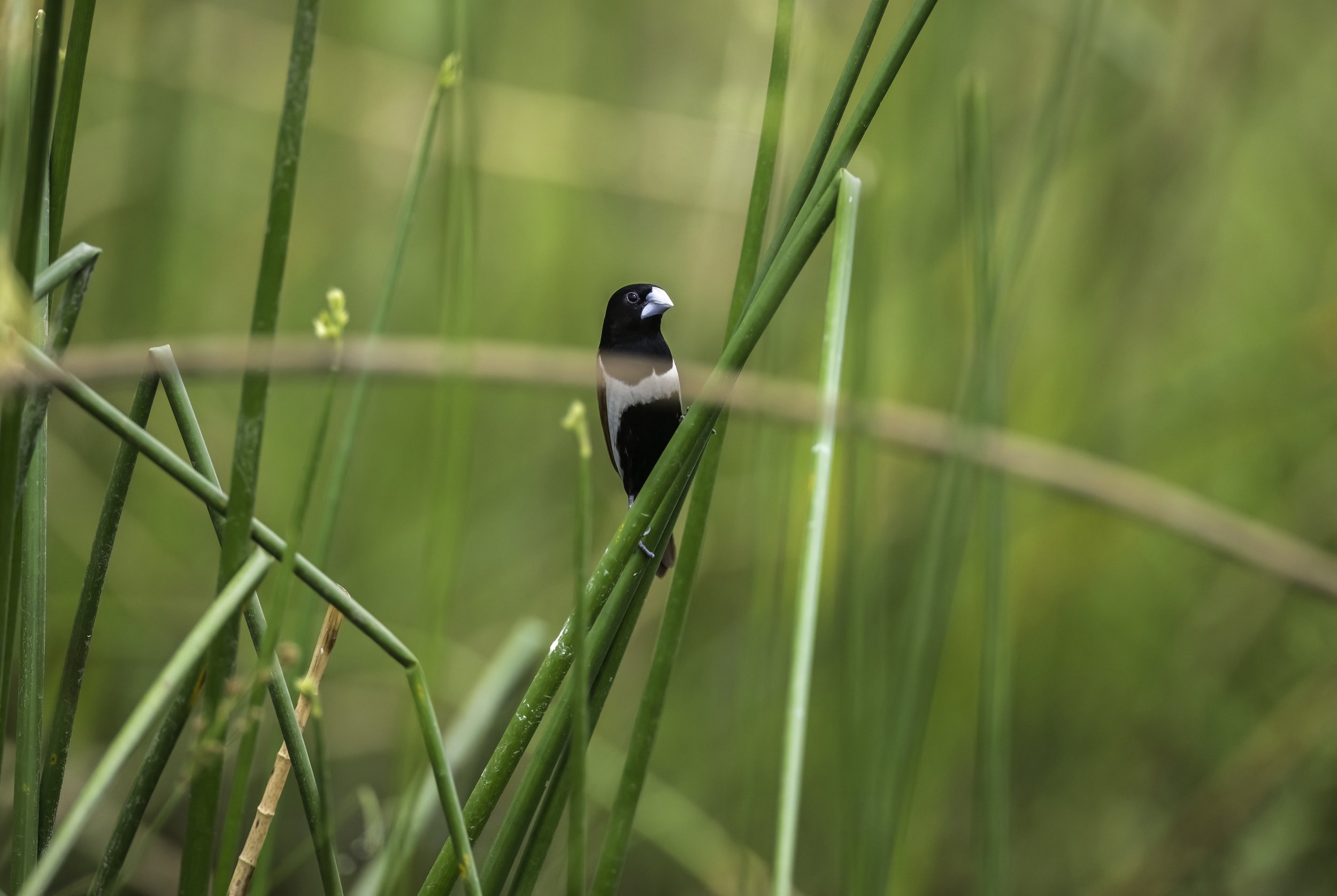
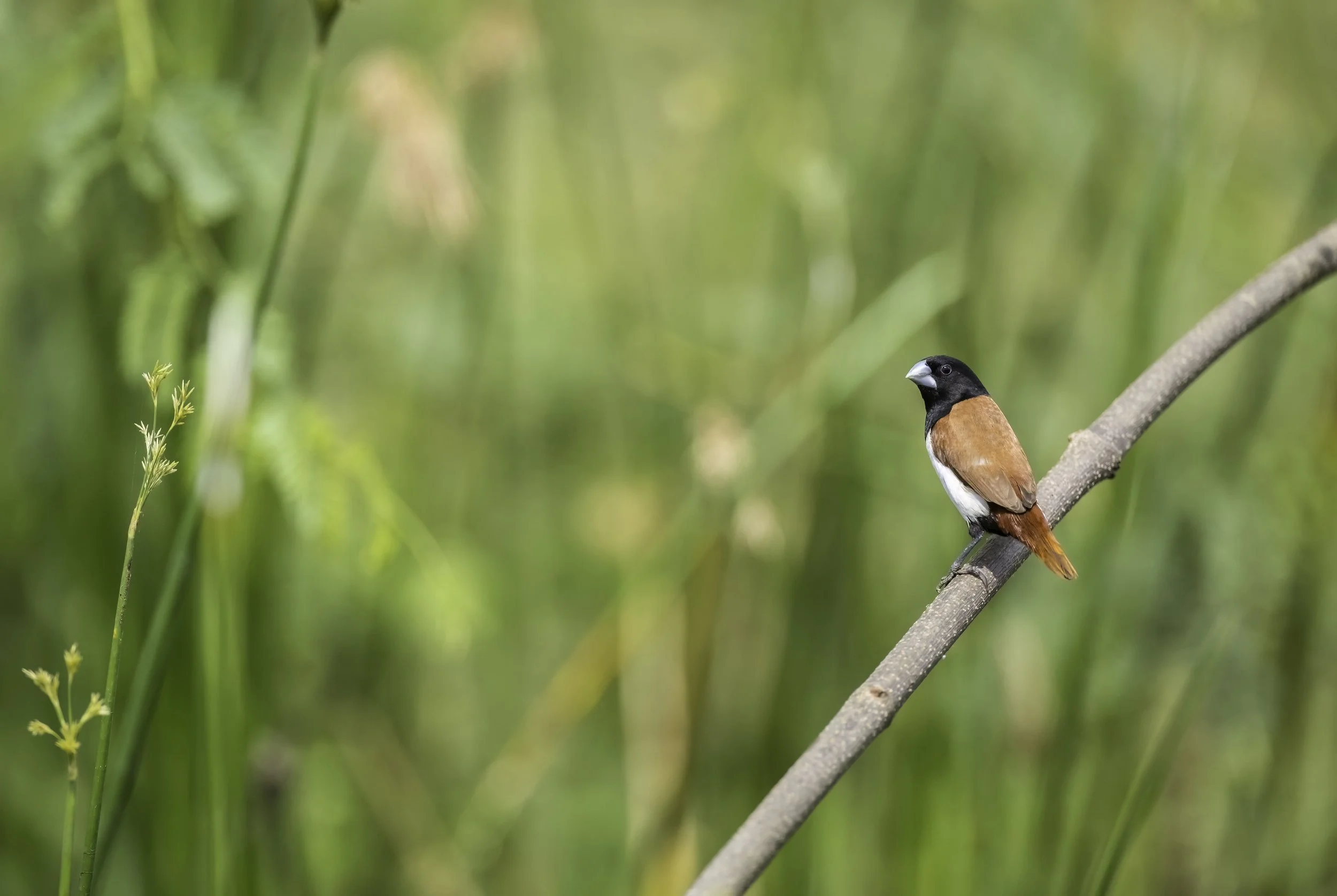
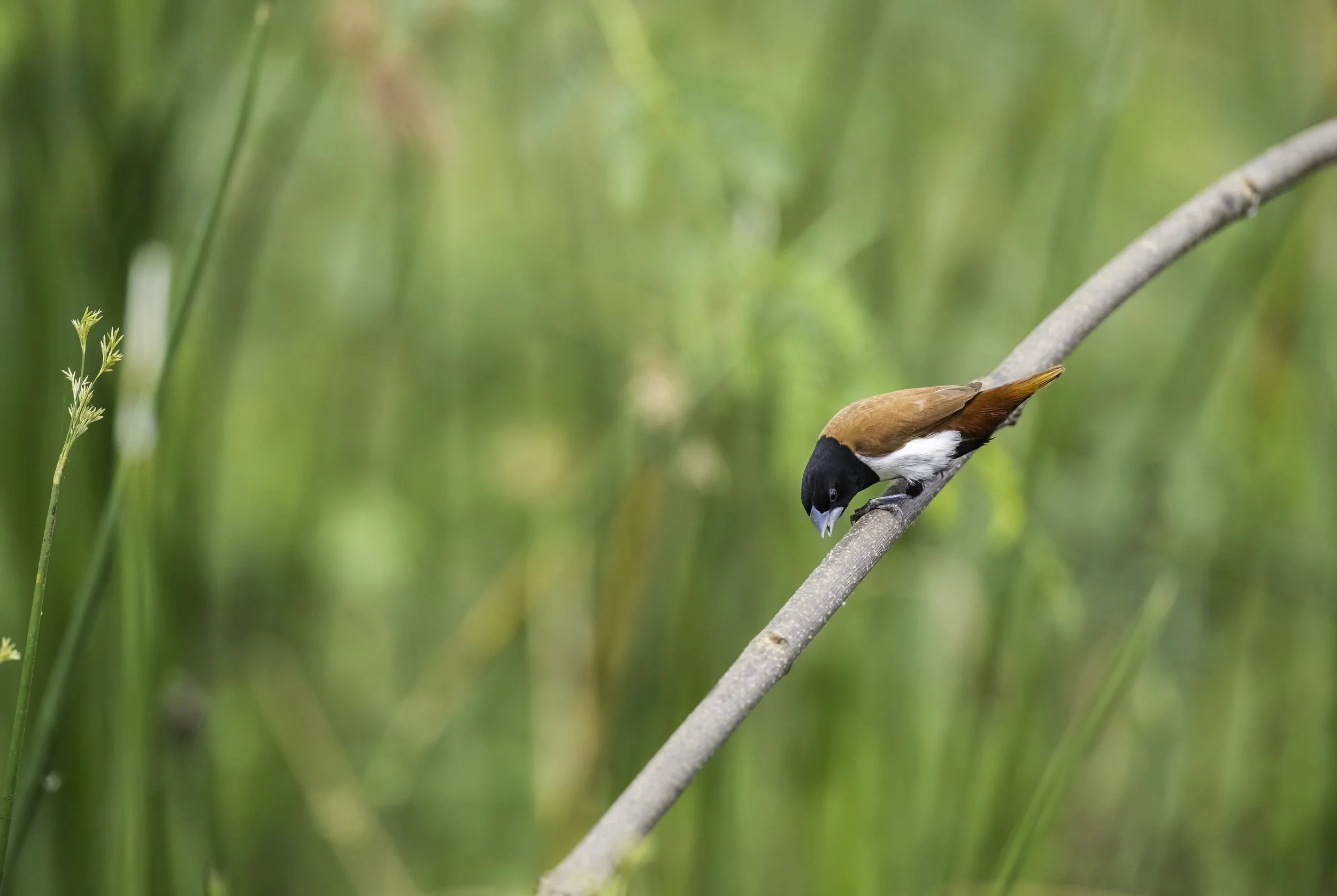
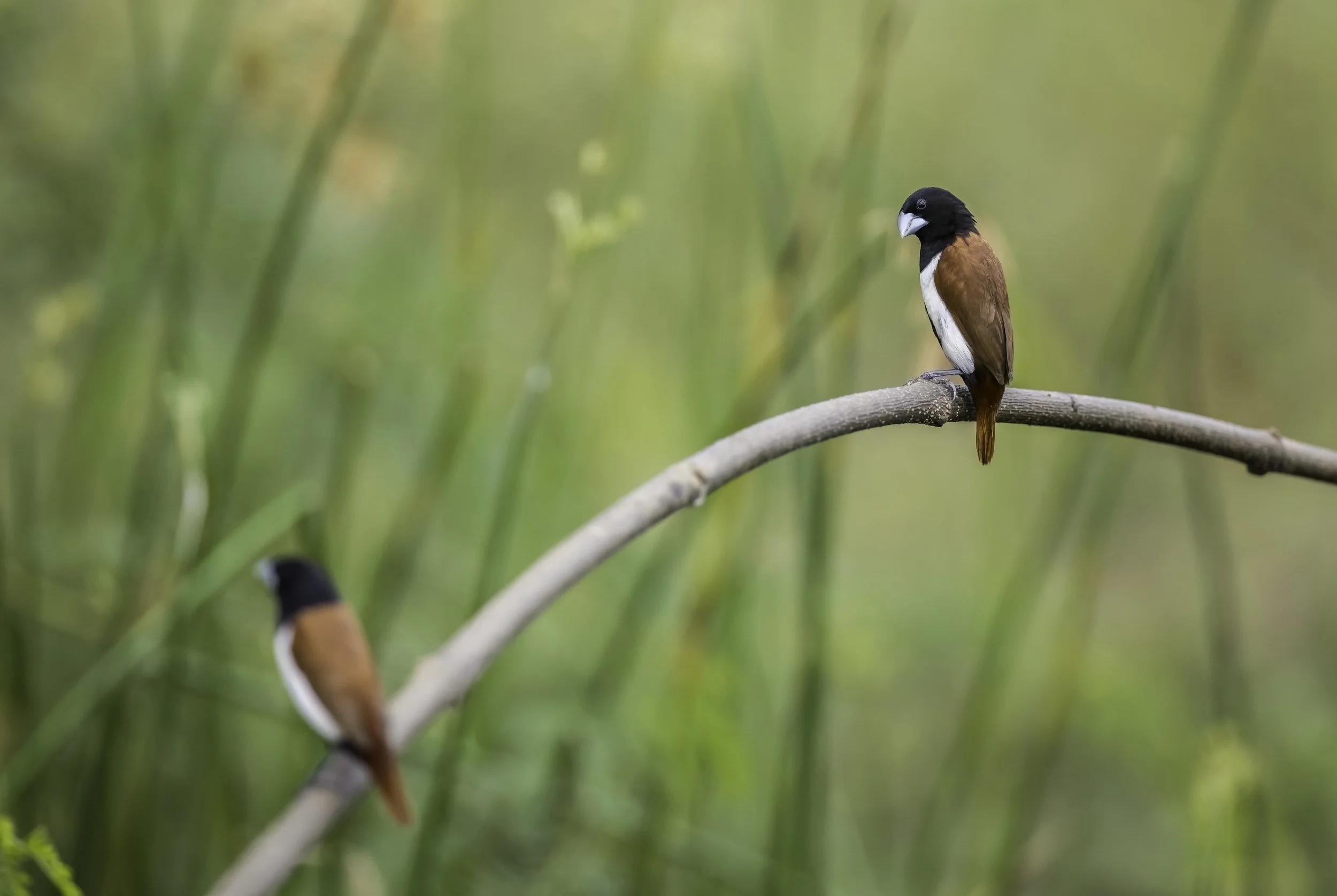
It was the legendary "golden hour" when the light turned thick and honey-coloured. I waited by a patch of tall grass. Suddenly, a tiny, explosive blur of motion shattered the stillness. A small flock of grass-finches descended onto the swaying seed heads, glowing like a polished gem in the late afternoon sun, was the star of the scrub: the Tri-coloured Munia (Lonchura malacca). The bird is a masterclass in stark, geometric color-blocking. The low-angled sunlight caught the intense, jet-black hood that completely enveloped its head, throat, and upper breast. This darkness contrasted sharply with a snow-white belly and flank, while its back and wings shone in a rich, warm chestnut-brown. For a few breathtaking seconds, the bird balanced effortlessly on a precarious blade of grass, plucking seeds with its heavy, pale blue-grey bill, before vanishing back into the thicket.
The Tri-coloured Munia belongs to the family of estrildid finches (Estrildidae). While it is heavily associated with the Indian subcontinent, understanding its exact distribution requires looking at its unique taxonomic and geographic history. For a long time, the Tri-coloured Munia (Lonchura malacca) and the Black-headed Munia (Lonchura atricapilla) were lumped together as a single species. However, modern ornithology treats them as distinct.
From a Core Range perspective the true Tri-coloured Munia is primarily a resident of peninsular India and Sri Lanka. It is widely distributed across the southern and western states, including Maharashtra, Karnataka, Tamil Nadu, and Kerala. The wetlands and surrounding agricultural fields of Bhigwan represent a classic semi-arid, river-basin habitat where they thrive. Isolated, resident populations can also be found in parts of Eastern India (like Odisha and West Bengal) and occasionally along the swampy foothills of the lower Himalayas.
While the Lonchura malacca species is native to India and Sri Lanka, it has been widely introduced to other parts of the world due to the caged bird trade. Escaped populations have successfully established themselves in places like Puerto Rico, Jamaica, and parts of Central America. Across the rest of Asia—stretching through Bangladesh, Myanmar, Thailand, Vietnam, Indonesia, and Southern China—its sister species, the Black-headed Munia, takes over. The Black-headed Munia looks remarkably similar but completely lacks the crisp white belly patch, featuring an all-chestnut body below its black hood.
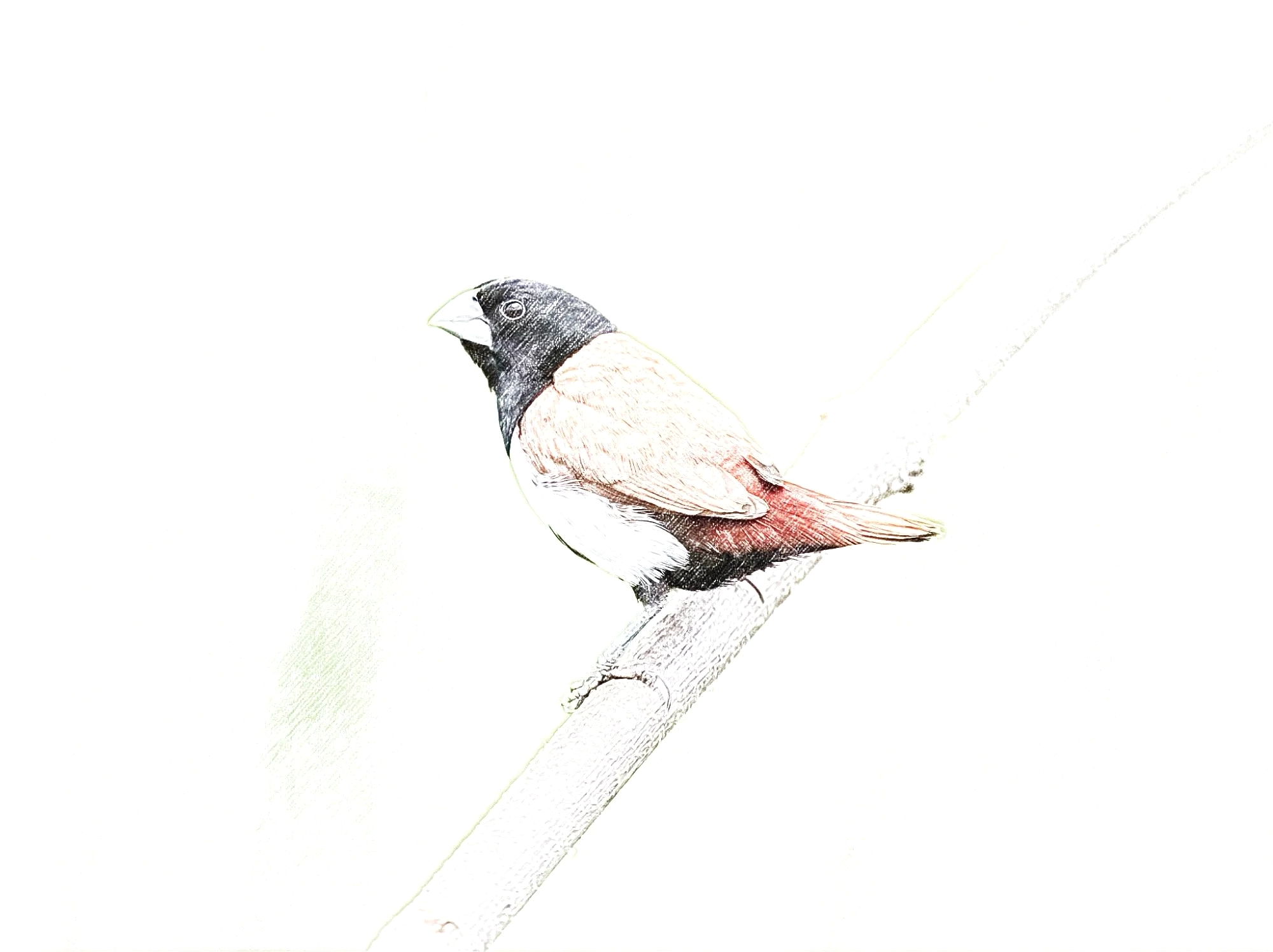
To see a Tri-coloured Munia up close is to appreciate a highly evolved, compact seed-eating machine. Its physical characteristics are finely tuned for life among dense grasslands: It is a remarkably small bird, measuring between 11 to 12.5 cm from the tip of its bill to the end of its tail. A healthy adult weighs a mere 13 to 14 grams. Its most prominent structural feature is a thick, conical, and exceptionally powerful conirostral bill. It is colored a striking, pale metallic lavender or powder-blue-grey. This bill acts like a heavy-duty nutcracker, designed to husk tough grass grains with immense crushing force relative to the bird's size. A deep, velvet-black hood covers the entire head, nape, chin, throat, and upper breast, ending in a sharp, clean horizontal line across the chest. The mantle, back, and wings are wrapped in a uniform, rich rufous-chestnut brown. In the late afternoon sun, this chestnut takes on a fiery, coppery sheen. The lower breast, sides, and flanks are a brilliant, spotless snowy white. This creates the "tri-colour" effect (Black, White, and Chestnut). Running down the exact center of its white belly to the vent is a hidden patch of black, variable in size between individuals. The lower rump and upper tail-coverts exhibit a glistening maroon or golden-yellow tint, while the short, rounded tail is dark brown edged with olive-yellow.
To fully appreciate the Tri-coloured Munia, one must contrast it with the other common estrildid finches that share its geographical neighborhood:
| Feature/ Species | Tri-coloured Munia (*Lonchura malacca*) | [Scaly-breasted Munia][1] (*[Lonchura punctulata][2]*) | [Indian Silverbill][3] (*Euodice malabarica*) | Red Avadavat (*Amandava amandava*) |
|---|---|---|---|---|
| Primary Colours | Black hood, white belly, chestnut back. | Cinnamon-brown upperparts; white underparts with dark scales. | Plain fawn-brown upperparts; immaculate white underparts. | Breeding males are crimson-red with white spots; females dull brown. |
| Bill Characteristics | Heavy, conical, powder-blue/grey | Stout, dark slate-grey to black bill. | Conical, silver-grey to bluish bill. | Small, conical, bright red bill. |
| Tail Structure | Short, rounded, dark brown/maroon. | Short, rounded, dark brown. | Distinctly pointed, elongated black tail. | Short, rounded, black tail. |
| Key Distinction | Bold, three-colored geometric blocking. | Intricate "scale" patterns on breast and flanks. | Lacks any black markings; highly nomadic and desert-adapted. | Only true red finch in the region; white body spotting. |
The Tri-coloured Munia is an obligate user of wet grasslands. It shuns dense forests and arid deserts alike, choosing instead to live on the ecotones—the boundaries where water meets land. Its absolute preference is for tall reed beds (Phragmites and Typha), marshes, swamp margins, and low-lying, waterlogged fields. The area around Kumbhargaon village perfectly mirrors this, where irrigation from the Bhigwan backwaters feeds local crop fields and fosters thick lakeside vegetation. They have adapted brilliantly to traditional agriculture, frequently visiting rice paddies, sugarcane plantations, and millet fields to feast on ripening grain.
Habitat Overlaps:
With the Scaly-breasted Munia: This is the most common overlap. Scaly-breasted Munias are highly adaptable and will forage side-by-side with Tri-coloured Munias in agricultural fields. However, Scaly-breasted Munias easily venture further into drier secondary growth and suburban gardens.
With the Red Avadavat: In the deep, wet reed beds along the water’s edge, Tri-coloured Munias forage alongside the Red Avadavat. The Avadavat, however, relies more heavily on tiny insects during the breeding season and prefers even denser, wetter ground cover.
With the Indian Silverbill: This overlap occurs strictly at the dry boundary of their habitats. The Indian Silverbill is a creature of dry, semi-arid scrub, acacia country, and desert fringes. When a marsh dries out or sits adjacent to a drought-prone field, you may see Silverbills and Tri-coloured Munias feeding on the same patch of ground, though they quickly retreat to their respective wet and dry sanctuaries.
Tri-coloured Munias are intensely social, gregarious birds. They are rarely seen alone, preferring to move in tight-knit flocks ranging from a dozen to several hundred birds outside the breeding season. Their flight is distinctive: low, rapid, and jerky, featuring highly undulating movements just above the tips of the grass blades. When a flock descends on a reed bed, they perform a behavior known as "clamber-feeding." Unlike sparrows that primarily forage on the ground, Tri-coloured Munias use their long, spindly toes to grip vertical grass stems. They slide up and down the reeds, hanging completely upside down to extract seeds directly from the grass heads.
During the monsoon breeding season (typically June to September in India), the large flocks split into pairs. They show a fascinating lack of strict territoriality; several pairs may build nests in the very same bush or reed patch just a few meters apart. Their nests are large, untidy, dome-shaped structures woven out of coarse grass blades and lined with finer flowering grass heads. These nests are deliberately placed low down—usually 1 to 2 meters off the ground—hidden inside thorny bushes, sugarcane blocks, or dense reeds.
While the Tri-coloured Munia is currently classified as a species of Least Concern by the IUCN, local populations are facing severe pressure due to rapid landscape changes. Unlike forest birds affected by classic deforestation, the Munia suffers from "grassland conversion" and wetland degradation.
The Loss of the Common Weed: Modern industrial agriculture relies heavily on chemical herbicides. These chemicals eliminate the wild, seed-bearing grasses and weeds along field margins that Munias depend on between crop harvests.
Wetland Drainage: Around villages like Kumbhargaon, the pressure to reclaim land for cash-crops like sugarcane leads to the burning or draining of natural reed beds. When these reeds are destroyed, the Munias lose both their primary nesting materials and their safe roosts from predators.
Forced Nomadism: When a habitat faces sudden destruction, Tri-coloured Munias exhibit an unusual behavior: forced erratic nomadism. Entire local populations will abruptly abandon an area, flying long distances across inhospitable terrains in search of unpolluted wetlands. If they cannot find suitable reed beds, they fail to breed entirely for that season, leading to silent, unnoticed crashes in local populations.
When observed alongside its peers in the field, the Tri-coloured Munia exhibits several distinct behavioral nuances:
The Silent Forager: Compared to the noisy, chirping flocks of Scaly-breasted Munias or the constant, high-pitched peep-peep contact calls of the Indian Silverbill, the Tri-coloured Munia flock is remarkably quiet while feeding. They move through the reeds like little ghosts, communicating only through incredibly faint, low-frequency churrs that are barely audible to human ears.
The Courtship Display: The breeding ritual of the Tri-coloured Munia male is unique and highly theatrical. The male will select a choice blade of grass or a feather, hold it firmly in his pale blue bill, and approach the female. He then stiffens his body, arches his neck, and performs a series of rhythmic, vertical bouncing movements on the perch—all while delivering a song that sounds like a series of low, soft clicks followed by a tiny, wheezy whistle. This structured, bouncing dance is far more rigid and formalized than the casual bowing displays seen in Scaly-breasted Munias.
The Water Rooster: Tri-coloured Munias have a much stronger relationship with water than other munias. While a Scaly-breasted Munia or an Indian Silverbill will happily drink from a muddy puddle or a dry cattle trough, as seen in some of the photos in the gallery below, the Tri-coloured Munia actively prefers communal bathing in shallow flowing water at the edge of reed beds. Every evening, just before sunset, the flock will gather at the water's edge, bathing in a frenzied explosion of splashes before retreating deep into the reeds to sleep.
As the sun finally dipped below the horizon at Kumbhargaon, turning the Ujni waters into a sheet of dark slate, the little flock of Tri-coloured Munias rose as one. With a collective, whirring heartbeat of tiny wings, they vanished into the safety of the dark reed beds. They left behind a magical memory of the golden hour—a vibrant reminder of why these fragile, overlooked grass-finches are true treasures of the Indian scrub.
‡‡‡‡‡

Related Posts



Golden hour at the extensive reed beds near the quaint village of Kumbhargaon. A gentle breeze rippled through the tall grasses, making the reed heads sway in rhythmic unison. To the untrained eye, the marshy edges look quiet. But to a patient observer, the reeds come alive with frantic motion as a tiny avian jewel - the Tri-coloured Munia - prepared for its evening routine.
#wildartworks #Canon #CanonC50 #C50 #kadbanwadi #Birdinginthewild #BirdWatching #conservationphotography #bhigwan #BhigwanBirdSanctuary #Kumbhargaon #munia #tricolouredmunia