
European Roller
Coracias garrulus
An extraordinary, long-distance voyager
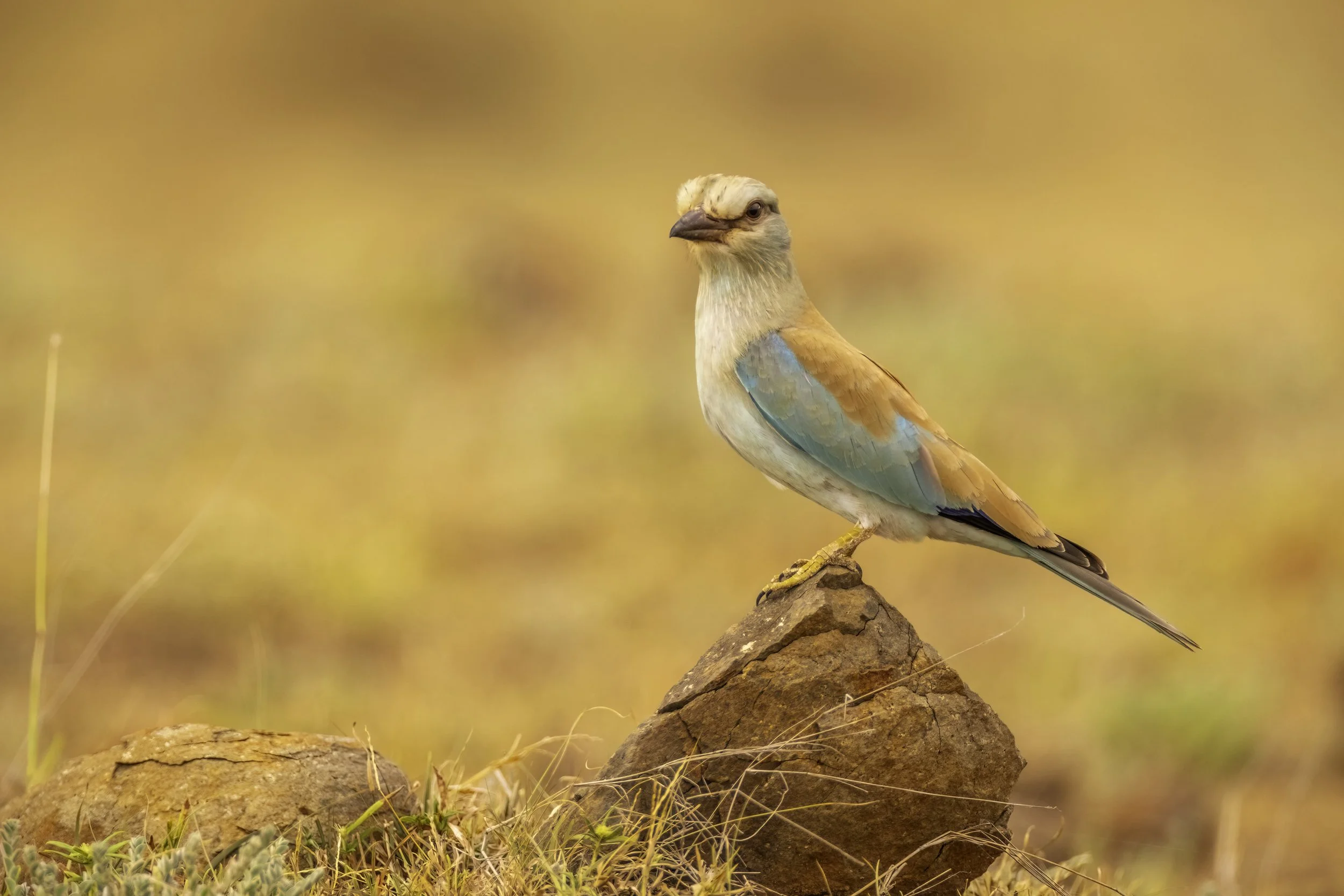
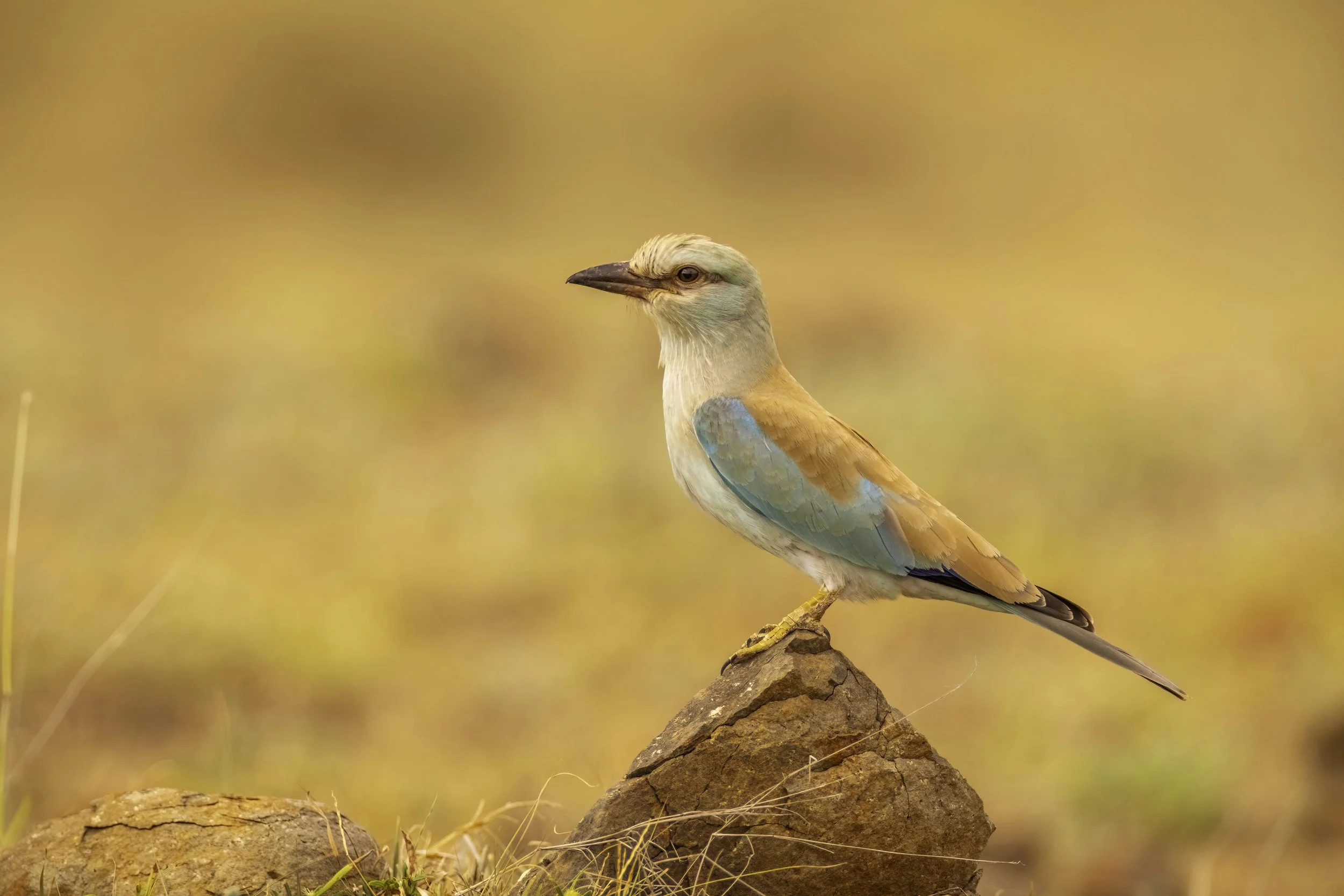
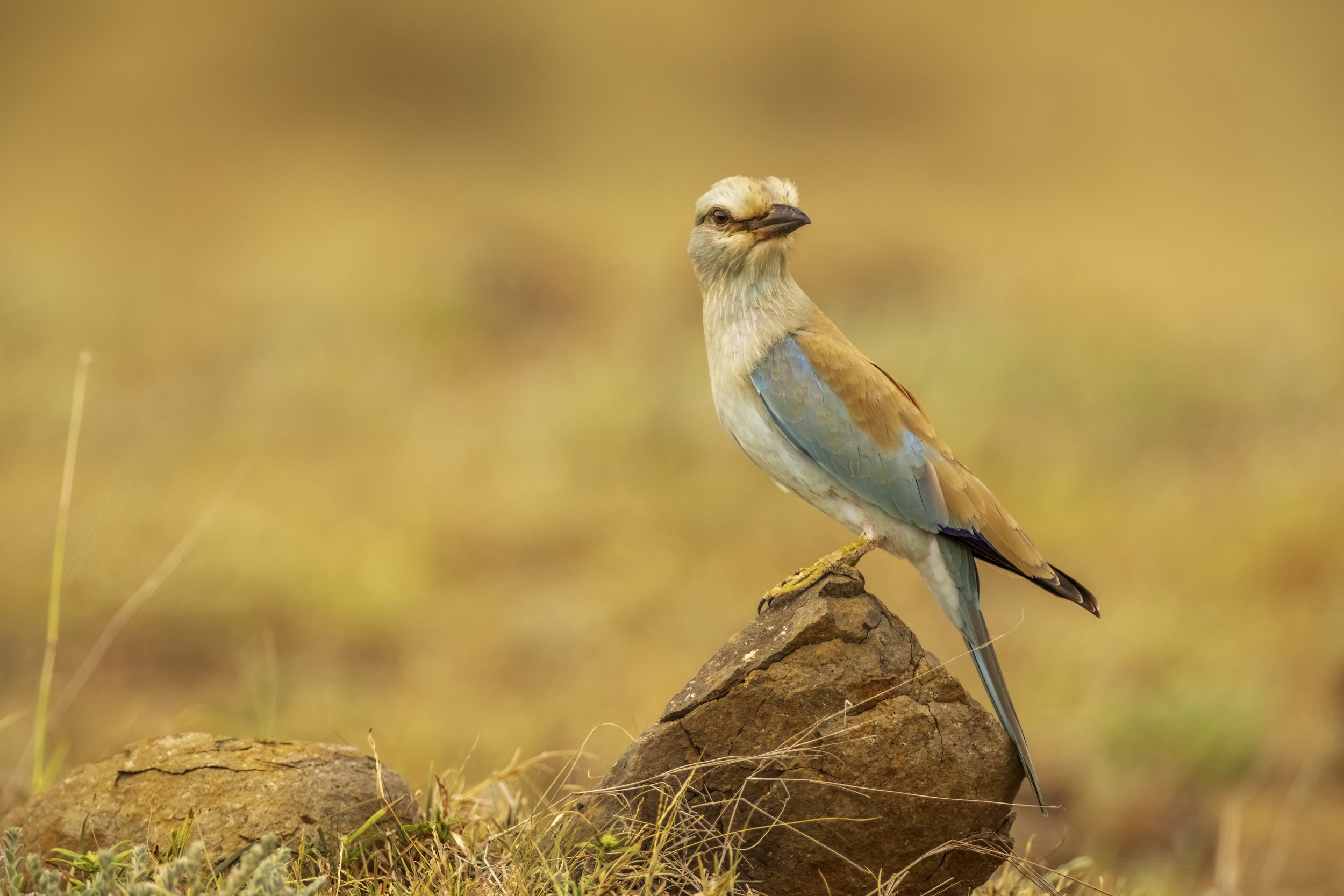
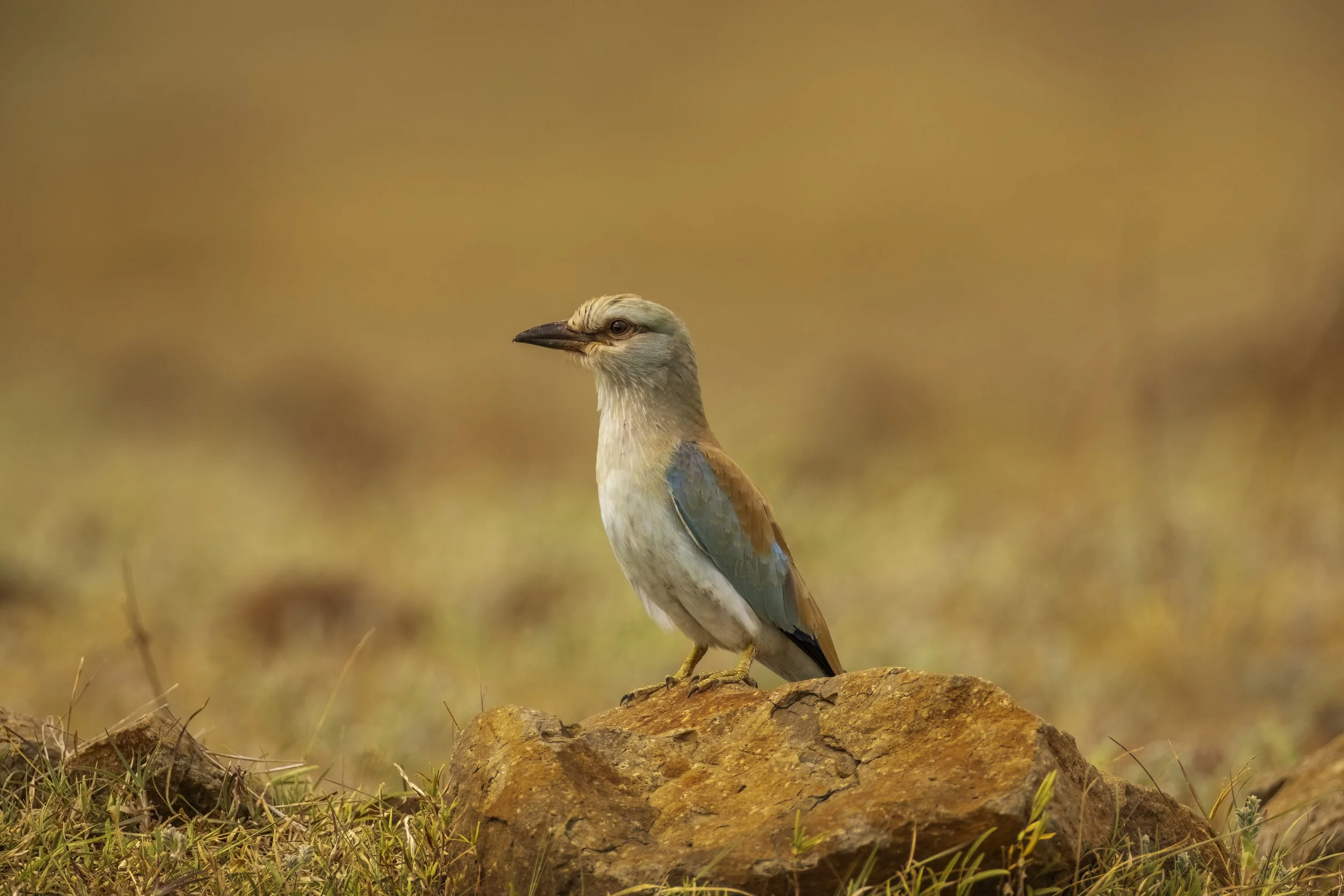
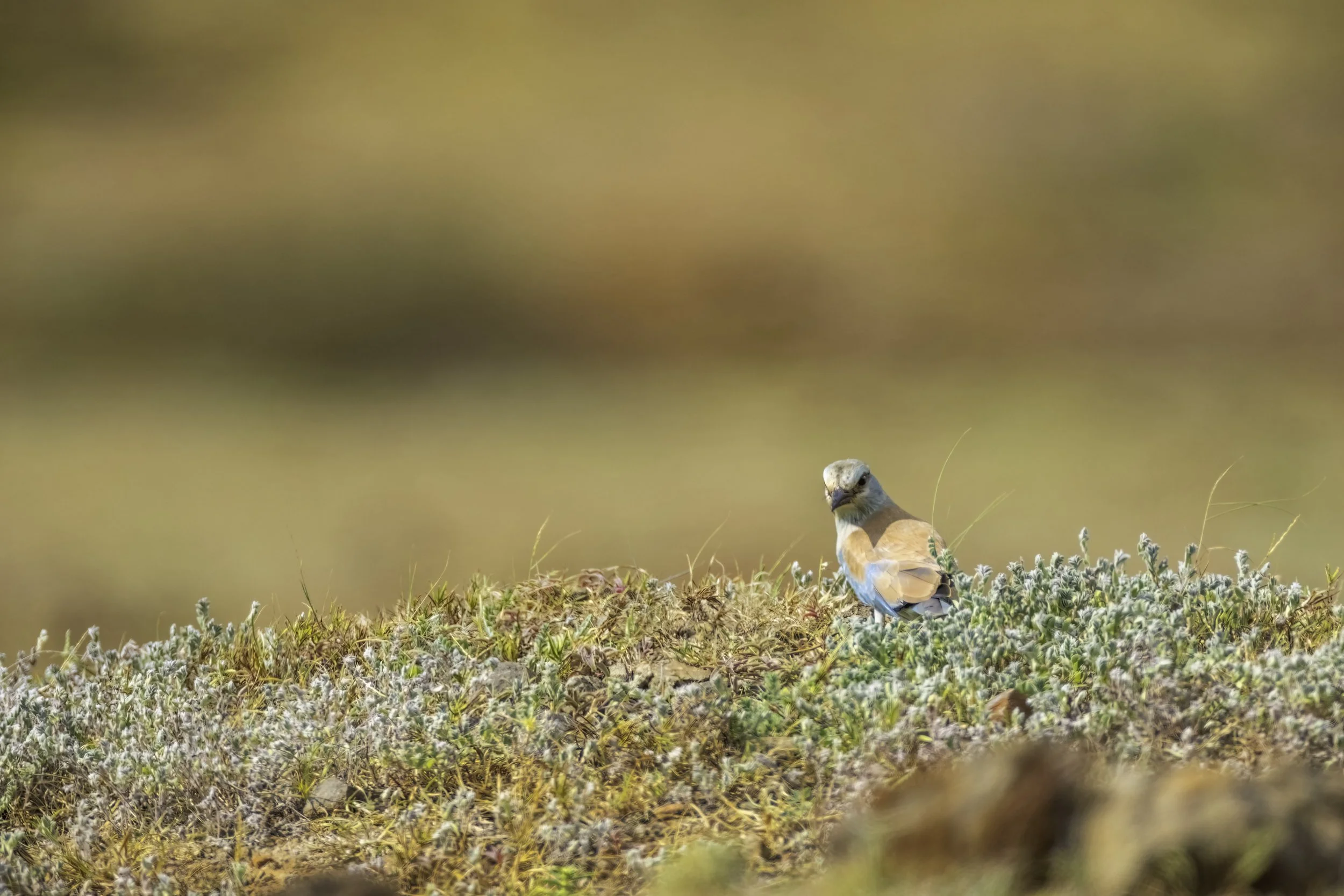
The golden morning sun cut sharply across the undulating, arid expanse of the Kadbanwadi Grasslands, an ecosystem lying on the outskirts of Bhigwan, Maharashtra. Known primarily for the winter influx of Greater Flamingos at the nearby Ujni backwaters, this scrubby, dry grassland holds its own secrets. For me, as I waited for the raptors, the dry autumn air was still. Then, a sudden flash of electric turquoise cut through the drab browns of the savanna. It was not the familiar resident Indian Roller, but an extraordinary, long-distance voyager: the European Roller (Coracias garrulus).
These unique grassland ecosystems of the Indapur tehsil - Kadbanwadi & Baramati - attract a number of birds and animals some of which I have photographed and written about in earlier blogs. I have detailed my memorable experiences with the Near Threatened Striped Hyena and the Endangered Indian Grey Wolf and today is about discovering the spectacular European Roller, a rare turquoise nomad migrating through the Kadbanwadi Grasslands near Bhigwan, India. This detailed wildlife story explores the bird's striking blue and cinnamon plumage, its incredible 10,000-km journey across Asia, unique behaviors, and field differences from the resident Indian Roller amid changing habitats. Perfect for birders and photographers!
Grasslands
UNESCO defines savannah grasslands as ‘land covered with herbaceous plants with 10 - 40% tree and shrub cover’ (White, 1983). Globally, they cover about 46% of the land surface and contribute to the livelihood of over 800 million people through supporting pastoralism, dairy sector and the agricultural economy (Murray et al., 2000, Sala et al., 2017). Tropical savannah grasslands support the highest diversity of wild herbivores and carnivores globally (Shankaran & Ratnam, 2013). Grasslands are also natural carbon sinks and therefore crucial to the global carbon cycle due to their high rates of productivity, enhanced carbon sequestration rates & geographical extent keeping global temperatures more or less in balance. They are also breeding grounds for many migratory and endangered species like the Indian Grey Wolf of which only about 3,000 are left in the wild. It is a common response from people to think forests when green cover is mentioned but grasslands are of equal import. These open natural ecosystems urgently need attention and government initiatives for protection and conservation.
In India, savannah grassland ecosystems cover various biomes (high-elevation Sholas in the Western Ghats, low-lying peninsulas, Himalayan plateaus, etc.) and occupy 17% of the geographical area of the country (White et al., 2000). In Maharashtra, these ecosystems (patches of >10 km²) take up over 8% of geographical area, including permanent pastures, grazing lands, and fallow land, according to a recent Open Natural Ecosystem (ONE) mapping study (Madhusudan & Vanak, 2021). Indian grasslands come under five categories based on grass species composition & climate (Dabadghao & Shankarnarayan, 1973); these are Sehima - Dichanthium grasslands (Peninsular India and the Aravalli range); Dichanthium - Cenchrus - Lasiurus grasslands (Sub-tropical arid and semiarid region); Phragmites - Saccharum - Imperata grasslands (Gangetic plains, Brahmaputra valley, and Punjab); Themeda - Arundinella grasslands (Himalayan foothills); and temperate/alpine grasslands (high altitude Himalaya).
From Right: Ganesh, Sandip & yours truly
Savannah grasslands in India support at least 46 different nomadic & settled pastoralist communities and greatly subsidise agricultural livelihoods (Kishore & Köhler-Rollefson, 2020). Pastoralism-based economies are the backbone of Indian agriculture, contributing 3% to the national GDP and providing employment and livelihood for 70% of the population in rural areas (Kishore & Köhler-Rollefson, 2020). The number of practising pastoralists is estimated to be close to 13 million in India (Kishore & Köhler-Rollefson, 2020), out of which at least 1-2 million are in Maharashtra. The latter includes communities like Hatkar Dhangar,
Grasslands are not wastelands. It is important to amplify scientific evidence that show ecological value of grasslands & address the identity crisis that is preventing effective interventions. Grassland patches in Maharashtra are found across Marathwada, Vidarbha, Solapur, Satara and other isolated patches along the Western Ghats. According to the Forest Survey of India, permanent pastures, grazing lands, and fallow land account for just 8% of the state’s geographical area. However, there is no estimation or study on how much of this falls within forest areas. Management of grasslands fall under different government departments. An inter-ministerial agency can enable more effective governance.
These grasslands play host to some magnificent eagles and harriers too like the Endangered Steppe Eagle, the Vulnerable Greater Spotted Eagle, the rare and Vulnerable Eastern Imperial Eagle, Bonelli’s Eagle & harriers like the Pallid Harrier, Montagu’s Harrier & Eurasian Marsh Harrier. Apart from these there are other spectacular species like the Short-eared Owl, Spotted Owlets & the Indian Courser inhabiting the grasslands.
I was hosted by & had the expert help of Sandip Nagare and his team of knowledgeable guides from the Agnipankha Bird Watcher group, especially Ganesh Bhoi, who went out of their way to ensure I had fantastic opportunities to explore, discover, observe & photograph my target species on this trip. As always, I was based at Sandip’s homestay and once again had the added pleasure of indulging in delectable home cooked food.
Read about my birds from Kumbhargaon & the Bhigwan Bird Sanctuary and watch the videos on my Youtube channel - WildArtWorks.
Kadbanwadi Grasslands
The Kadbanwadi Grasslands, located in the Indapur tehsil of Pune district near Bhigwan, Maharashtra, represent a vital savanna-type dry ecosystem. Spanning a significant reserve forest area, this lesser-known wilderness has gained prominence through organized eco-tourism initiatives like the Kadbanwadi Grassland Safari. Far from being empty terrain, it supports an incredibly specialized and dense concentration of open-country wildlife.
Situated within the semi-arid Deccan plateau rain-shadow region of Western India, it lies roughly 30 to 35 kilometres away from the famous Bhigwan wetlands (Ujni Dam backwaters), forming a crucial terrestrial-aquatic ecological continuum. The landscape matrix comprises rolling, low-lying open grasslands intermeshed with thorny scrublands, rocky outcrops, and sparse patches of native woodlands (such as Acacia and Neem). It is subject to highly seasonal variations, fluctuating from parched dry surfaces in the summer to flush green covers during the monsoon, offering brief seasonal waterholes that act as critical oases.
Despite its initial impression as a plain landscape, Kadbanwadi pulsates with an astonishing array of over 100 bird & unique mammal species.
Mammalian Apex Predators and Herbivores
Indian Grey Wolf (Canis lupus pallipes): Kadbanwadi acts as a critical refuge for this endangered apex predator. Moving in small packs, these wolves serve as the "guardians" of the landscape by naturally regulating the populations of smaller herbivores and mid-sized carnivores.
Other Carnivores: The habitat supports thriving populations of the Bengal Fox (Indian Fox), Striped Hyena, Golden Jackal, and various species of mongooses.
Ungulates and Herbivores: The Chinkara (Indian Gazelle) is the flagship herbivore here, showcasing immense agility as it navigates the scrub. Blackbucks and black-naped hares are also widely distributed.
Avian Richness (A Birdwatcher's Paradise)
Terrestrial & Dry-Grassland Specialists: The ground cover provides ideal nesting and camouflaging zones for the elusive Indian Courser, Chestnut-bellied Sandgrouse, Painted Francolin, Rock Bush Quail, and the Yellow-wattled Lapwing.
Larks & Pipits: Multiple specialized variations thrive here, including the Indian Tawny (Sykes's Crested) Lark, Rufous-tailed Lark, and Ashy-crowned Sparrow-Lark.
Raptors and Owls: The clear skies and abundance of rodents/small birds make it a premier hunting ground for migratory and resident raptors. Documented species include the Steppe Eagle, Tawny Eagle, Bonelli’s Eagle, Short-toed Snake Eagle, and Pallid Harriers. It is also highly famous for the Indian Eagle-Owl, which nests safely among the rocky ledges.
Importance & the Crucial Need for Protection
Grasslands like Kadbanwadi are not just empty spaces; they are fully functional, high-value ecosystems that require strict conservation efforts:
Biodiversity Reservoirs: They are home to species specialized exclusively for open plains—species that cannot survive in dense forests or agricultural fields.
Livelihood Support: The ecosystem underpins the rural economy by serving as traditional grazing grounds for pastoralist communities.
Carbon Sequestration: Grasslands act as highly efficient carbon sinks. Unlike forests that store carbon primarily in above-ground biomass, grasslands store the majority of their carbon underground in extensive root systems, making them highly resilient to wildfires.
Severe Ecological Threats: Protection is urgently needed because these lands face acute fragmentation from expanding agriculture (e.g., intensive sugarcane cultivation), urban encroachment, and the rising threat of feral dog attacks which spread deadly diseases like Canine Distemper Virus (CDV) to the native Indian grey wolf packs. Recently a cross between a wolf and a feral dog was documented in these grasslands and even more disheartening was the discovery of the previous wolf litter of 4 cubs which were all cross breeds with feral dogs. If this continues unabated, soon there will be no wolves left to roam these grasslands.
Rejecting the "Wasteland" Classification
For decades, official land-use policies in India have routinely misclassified semi-arid plains and grass savannas under the umbrella term of "wastelands". This categorization is ecologically illiterate and dangerously flawed for the following reasons:
| Why it is categorised as a "Wasteland" (Flawed Metric) | The ecological reality (Why it is a Thriving System) |
|---|---|
| Lack of Commercial Timber: Because it lacks tall trees & dense forest canopies, it is deemed unproductive by traditional forestry metrics. | Evolutionary Architecture: The lack of trees is a natural state. The flora is perfectly adapted to survive on low rainfall, providing the exact low-cover terrain needed by ground nesting birds and sprinting ungulates. |
| Seasonal Aridity: The dry, brown appearance during the summer months gives an illusion of a dead, barren landscape. | Resilient Adaptability: The ecosystem possesses a unique underground vitality. Perennial grass roots stay alive, waiting to rapidly regenerate and blossom with the very first drop of monsoon rain. |
| Target for Diverted Land-Use: Being labeled as a "wasteland" makes it vulnerable to being cleared for industrial plants, solar farms or inappropriate afforestation drives. | Ecological Disruption: Planting non-native trees (like Eucalyptus or Prosopis juliflora) in an attempt to "green" these spaces destroys the native biome, wiping out the habitat of endangered species like the Indian Grey Wolf. |
Recognizing Kadbanwadi as a rich, distinct ecosystem rather than a wasteland is the primary step toward saving its threatened wildlife and ensuring the survival of India's open-country species.
European Roller
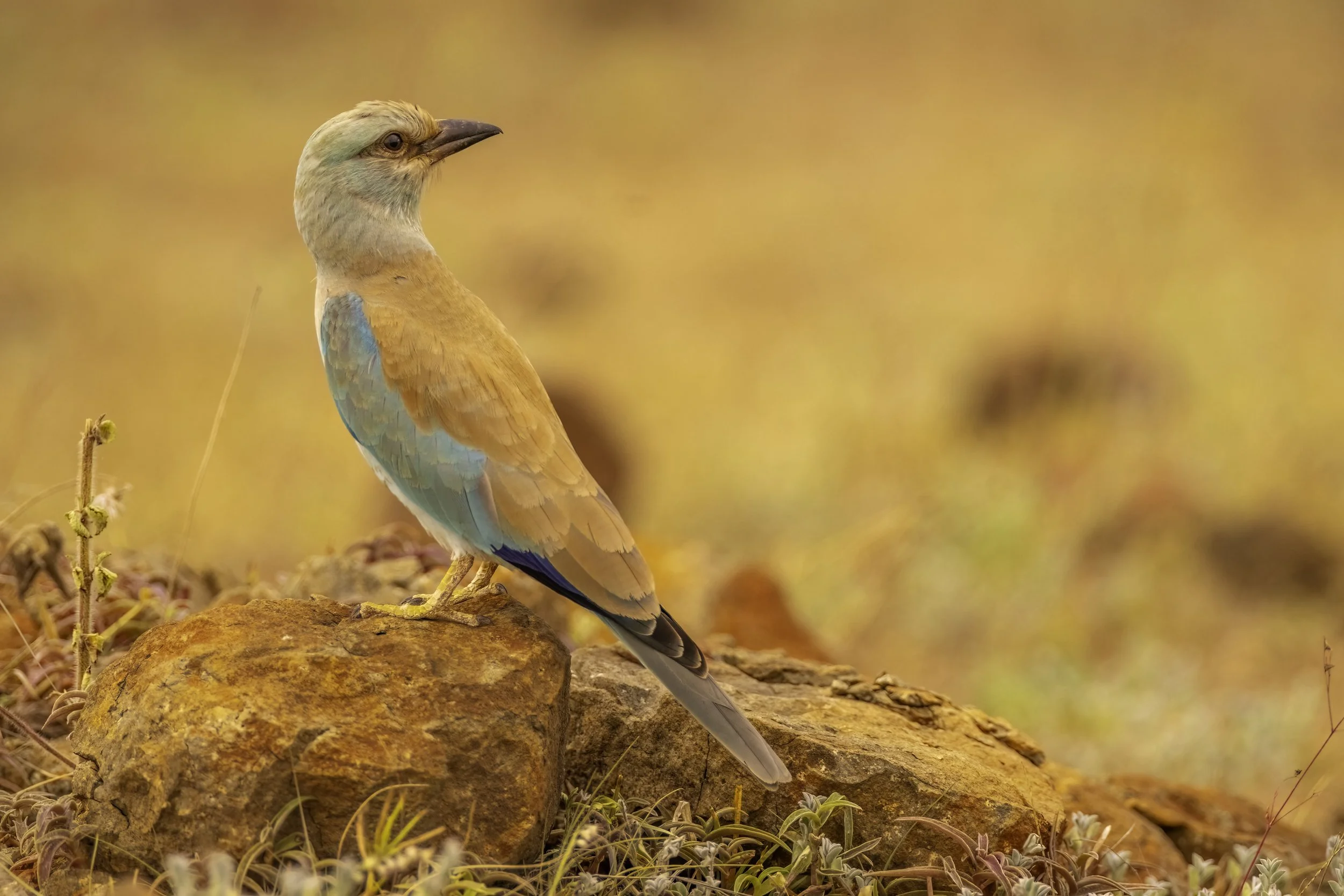
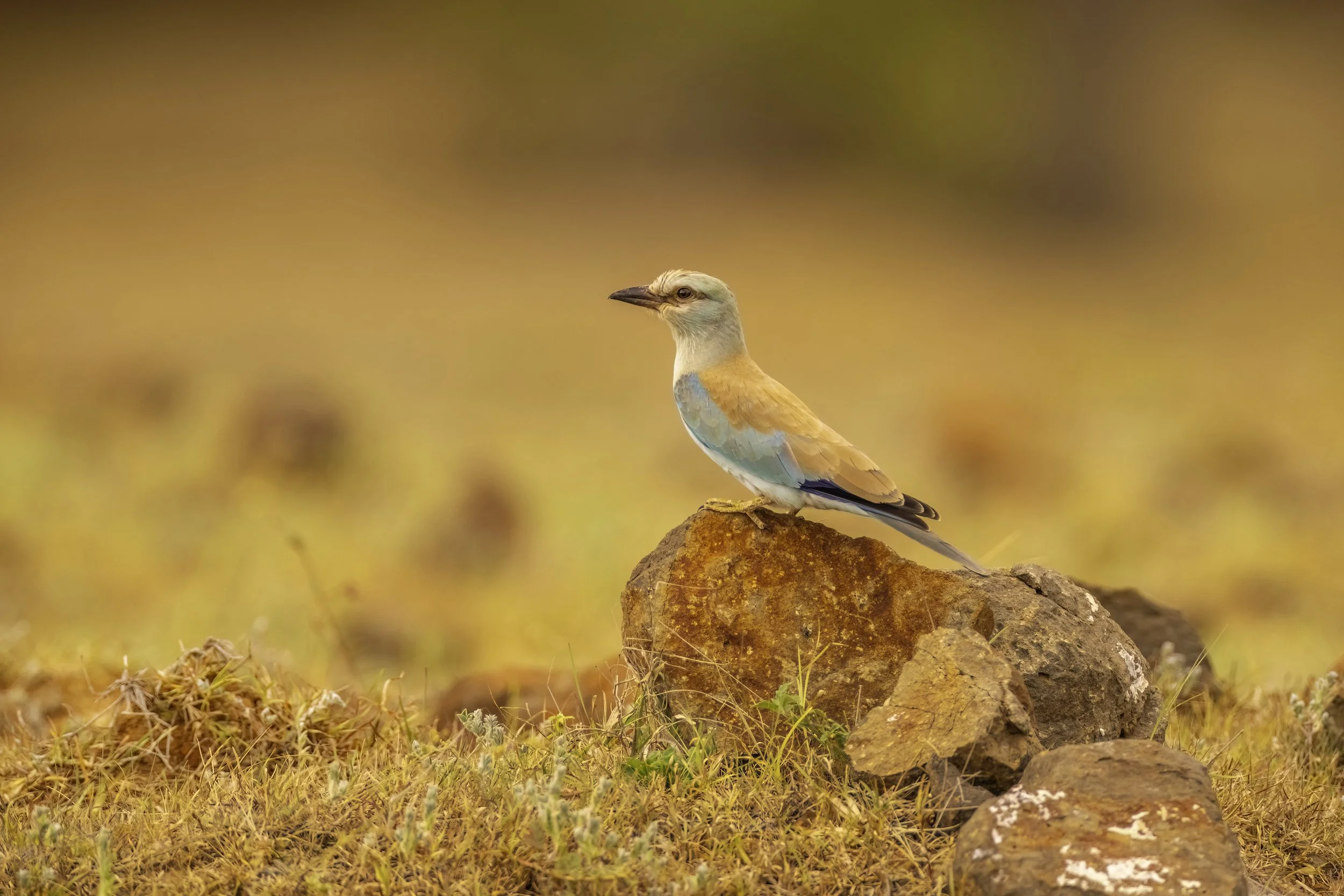
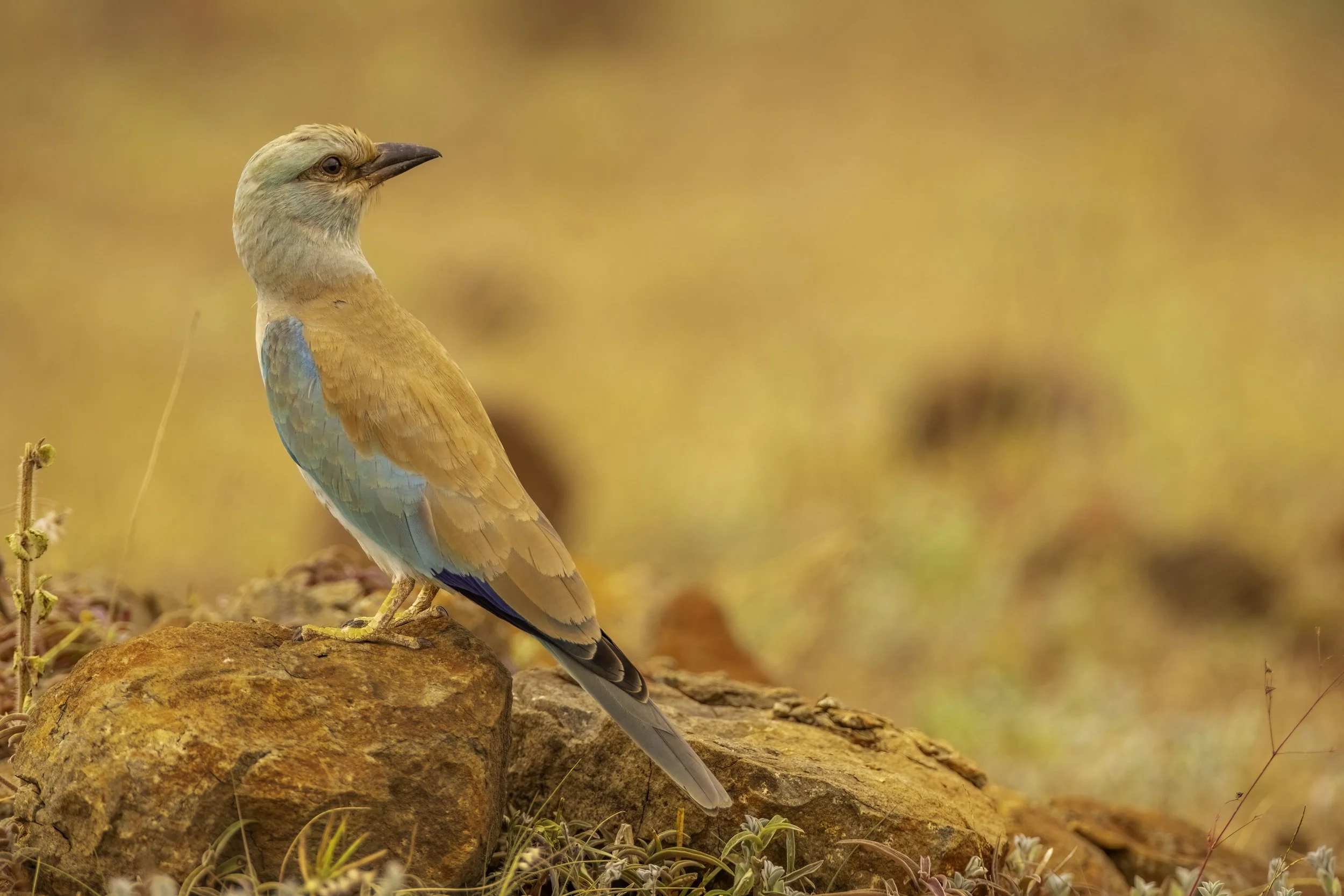
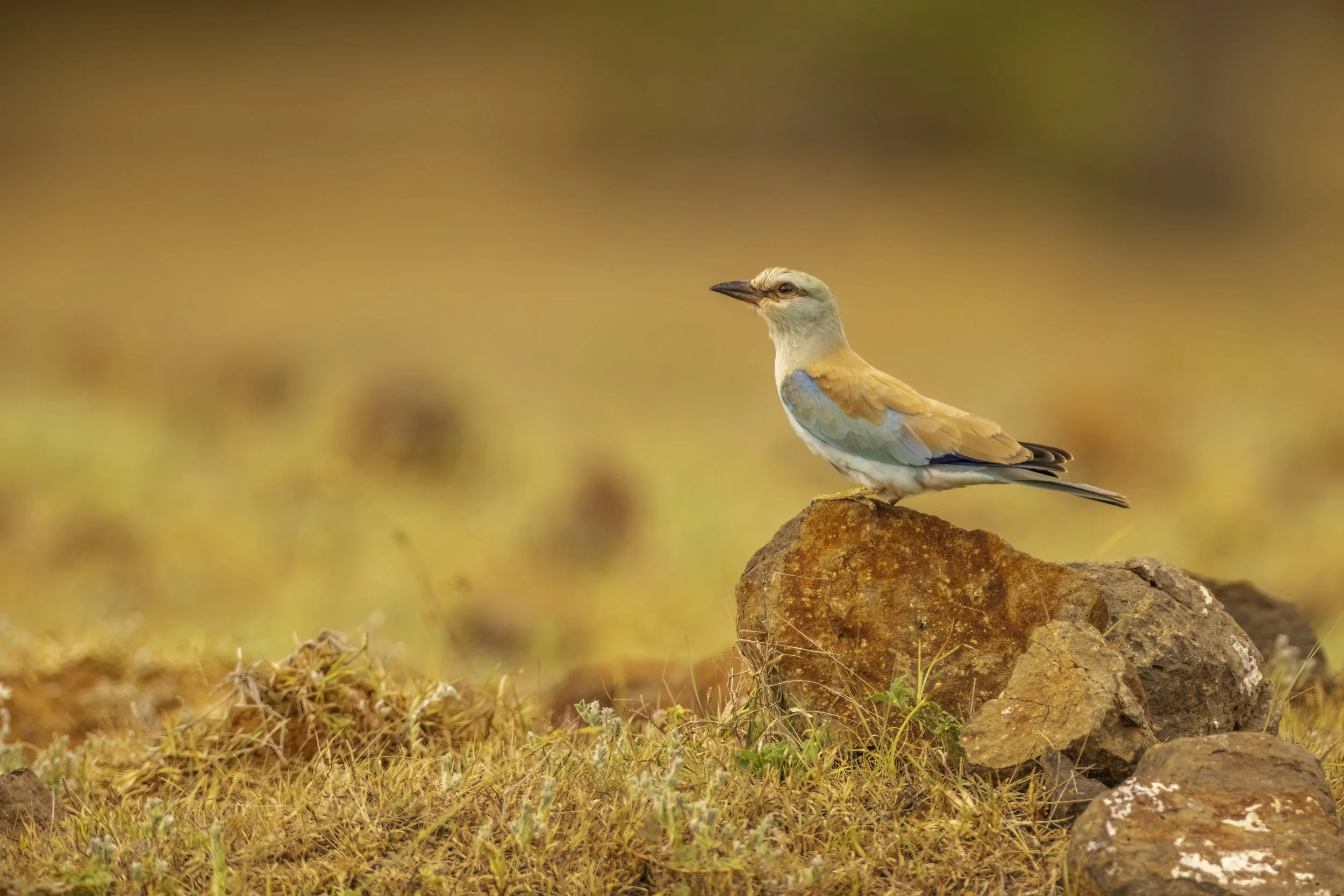
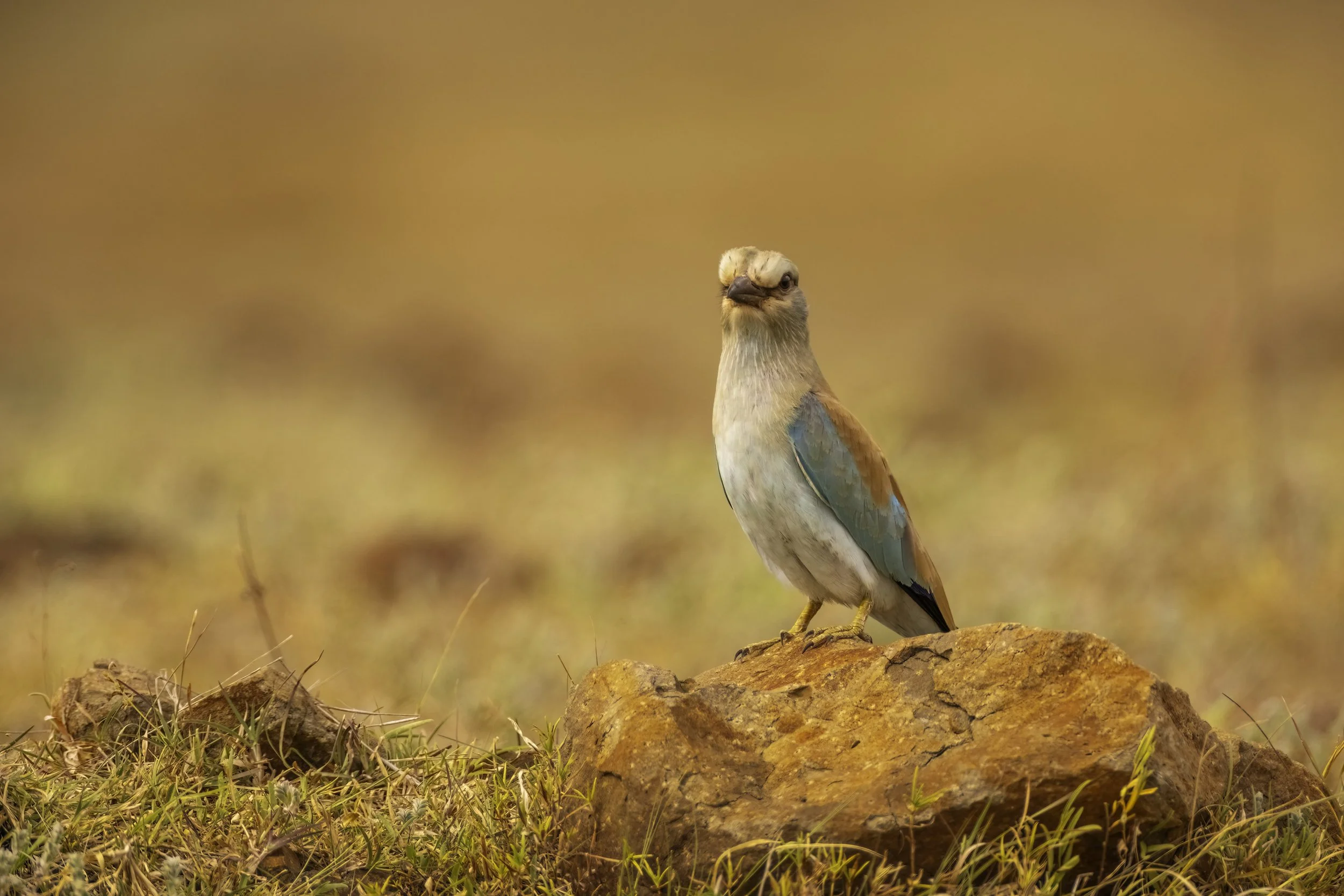
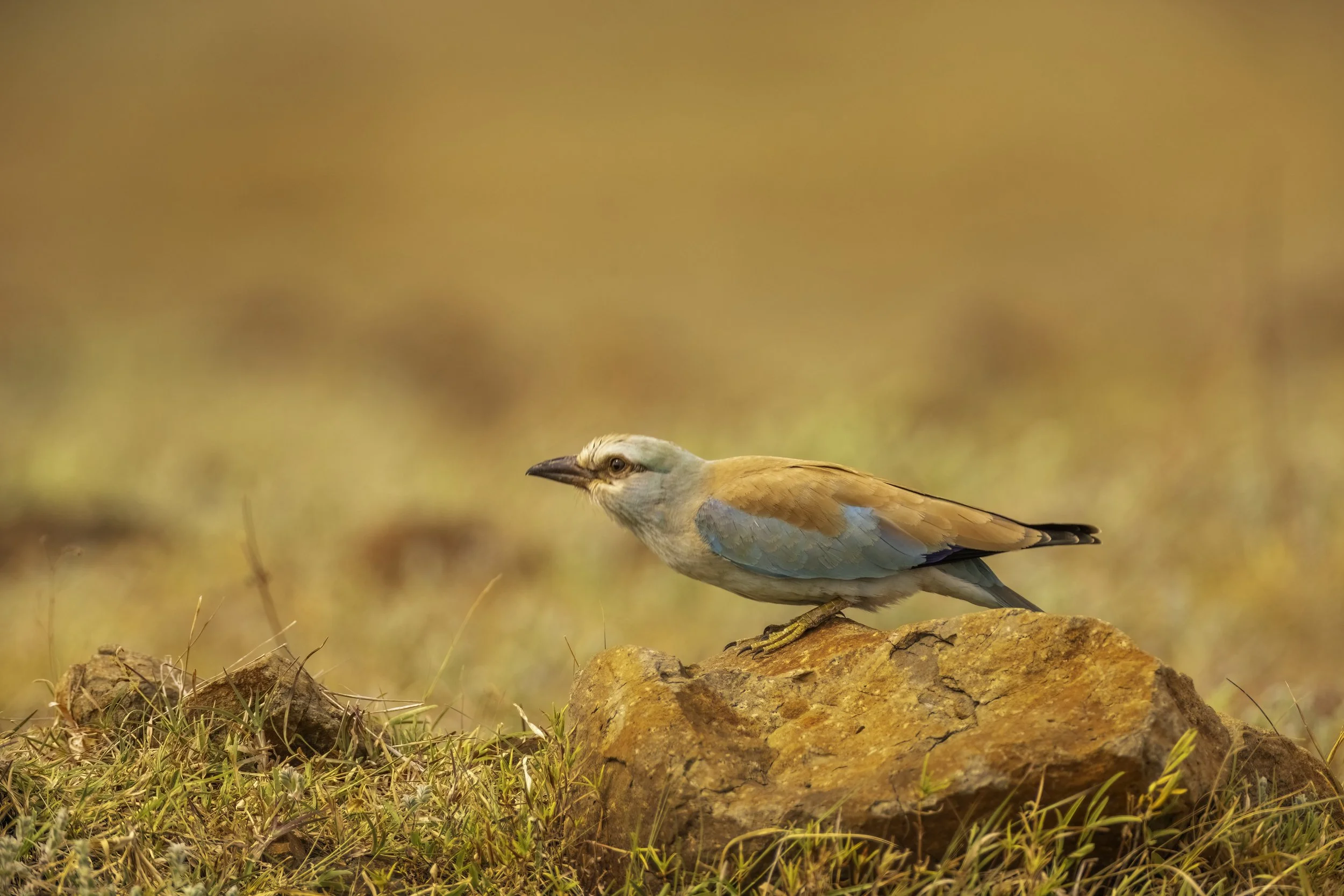
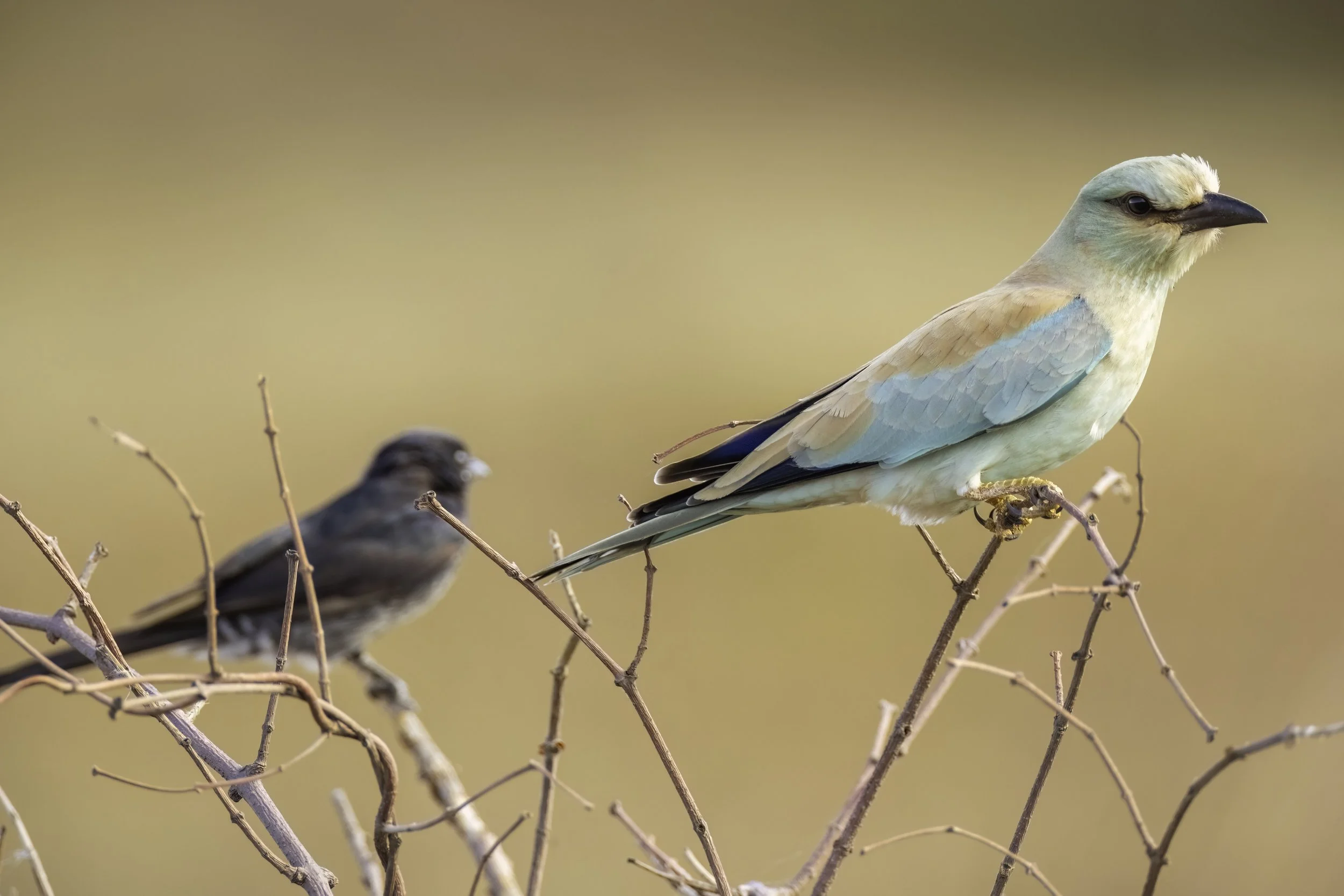
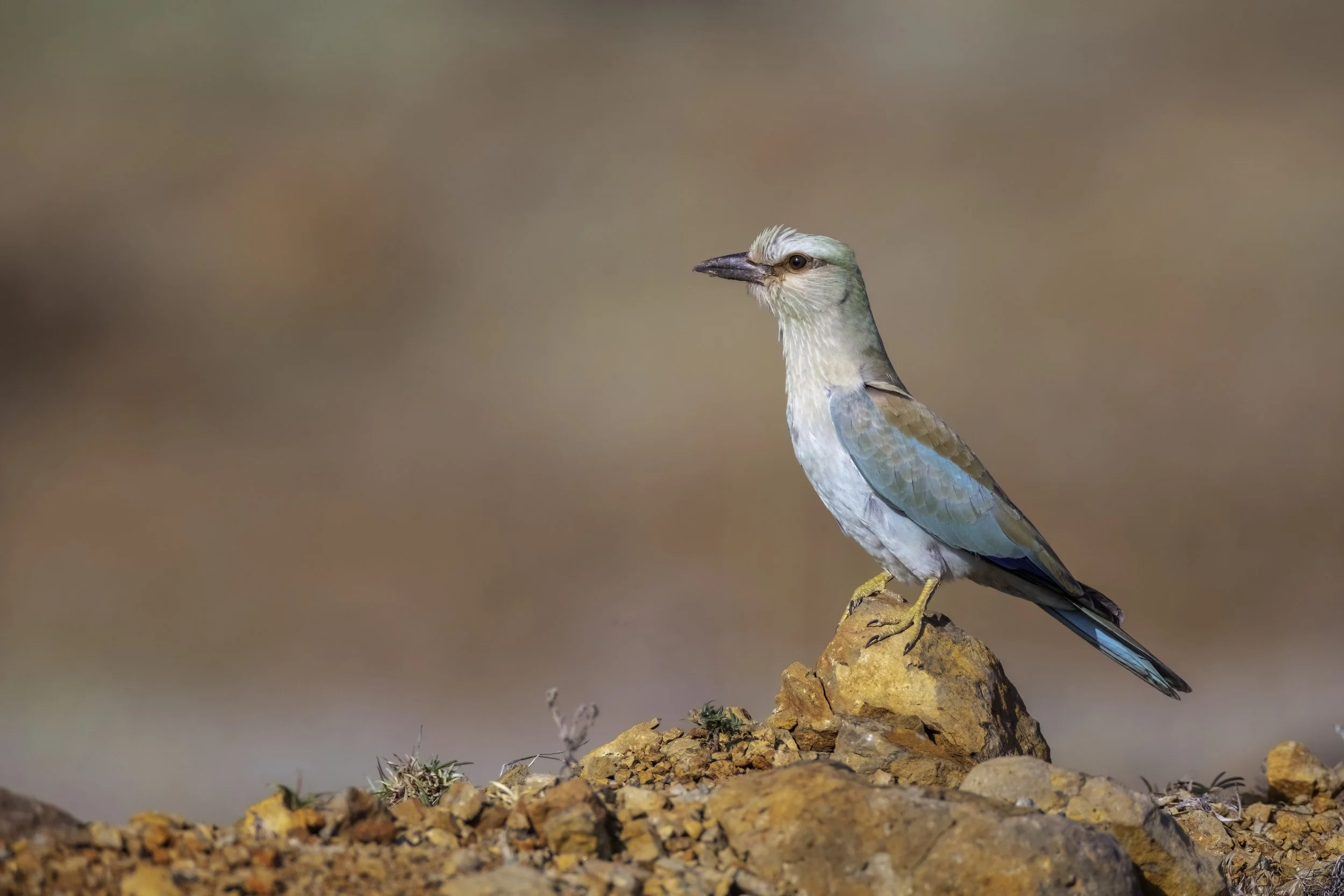
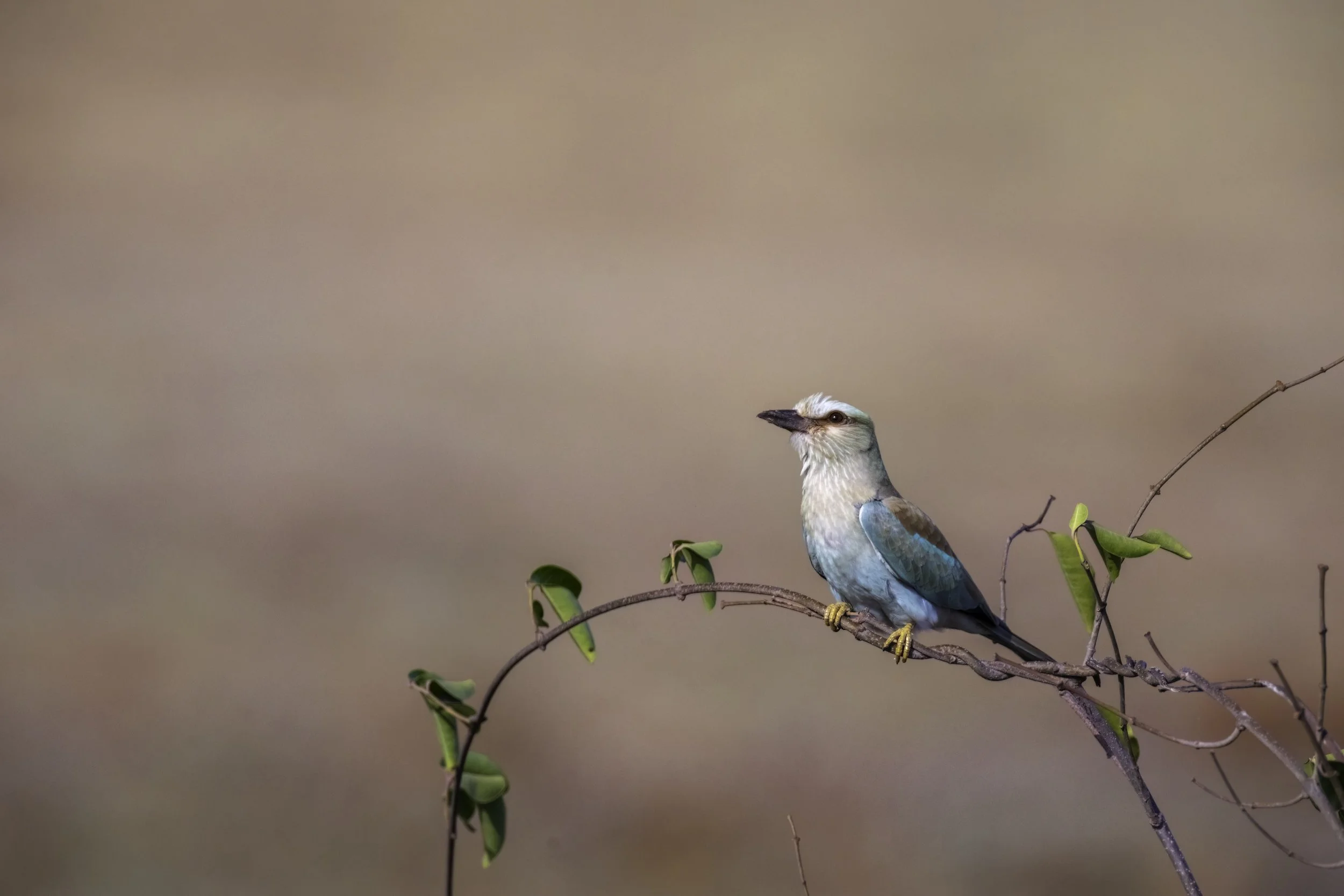
The European Roller (Coracias garrulus) is spectacular and distinctive - overall a brilliant blue, with a rusty back and a stout, crow like bill. It is the only member of the roller family Coraciidae breeding in Europe - the only Coracias that breeds in the Western Palearctic. Its range extends into the Maghreb, West Asia and Central Asia. It winters in southern Africa, primarily in dry wooded savanna and bushy plains occurring in a wide variety of habitats, but avoiding treeless plains. It usually nests in tree holes. A brightly colored, medium-large near-passerine of warm, open country. As is typical of rollers, the European Roller finds its food, mainly medium-large arthropods but also lizards, rodents, and small birds, from elevated perches like wires and large trees. It often picks up a prey item from the ground with its powerful bill and then flies back to its original perch. The European Roller uses cavities in sand banks, walls, large trees, and houses to breed. In some parts of its range, it also utilizes nest boxes. The impressive rolling and diving display flight is a spectacle to behold.
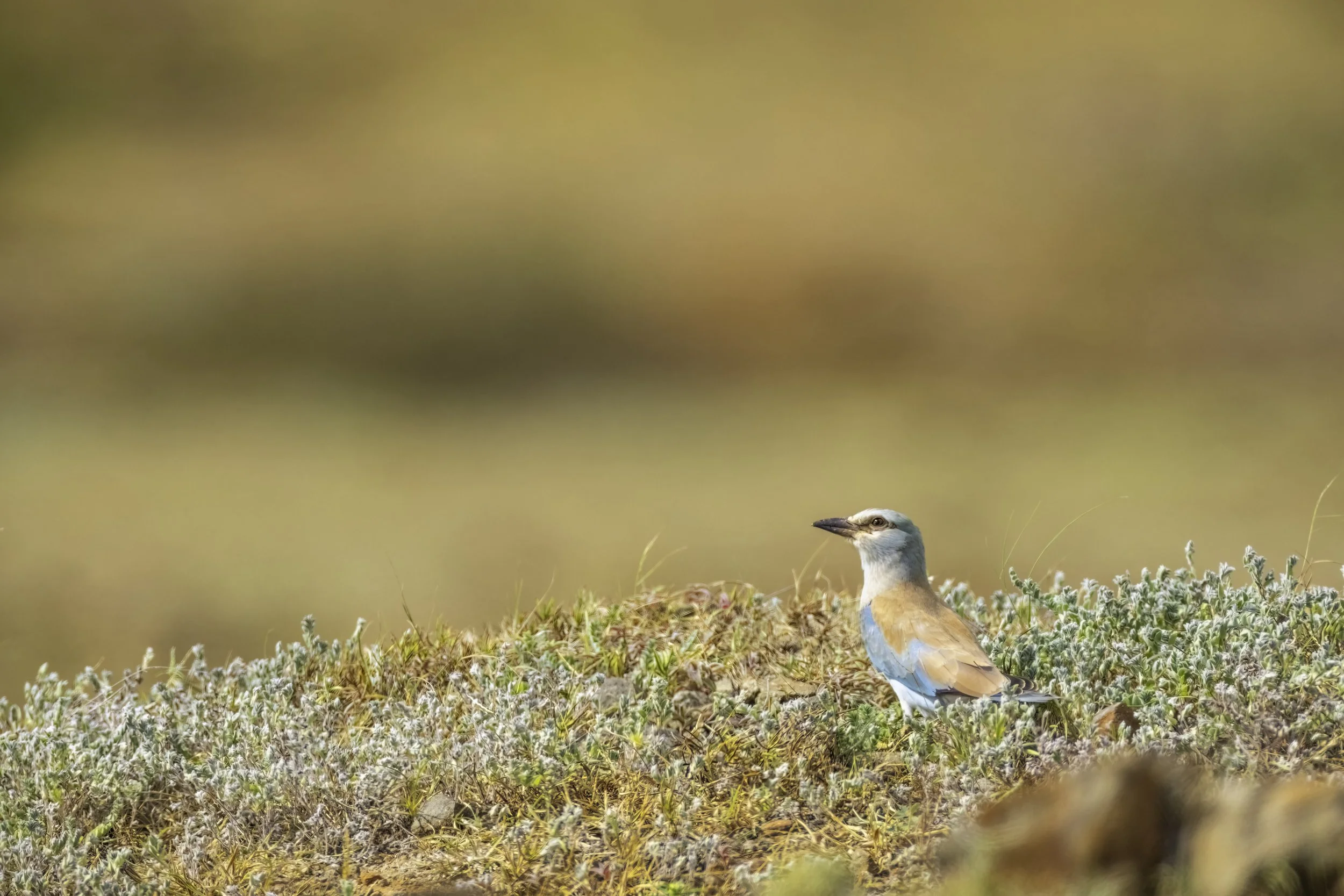
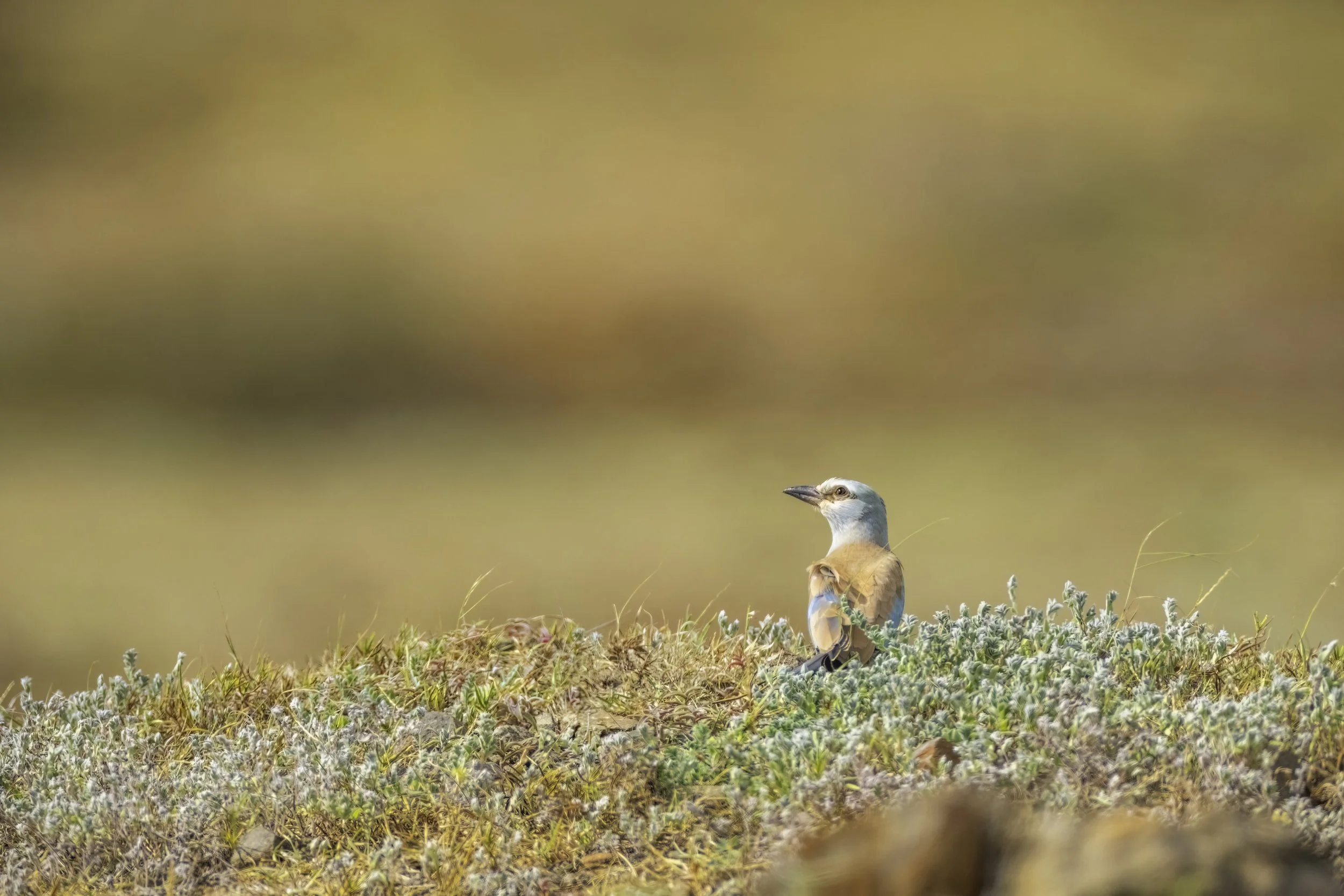
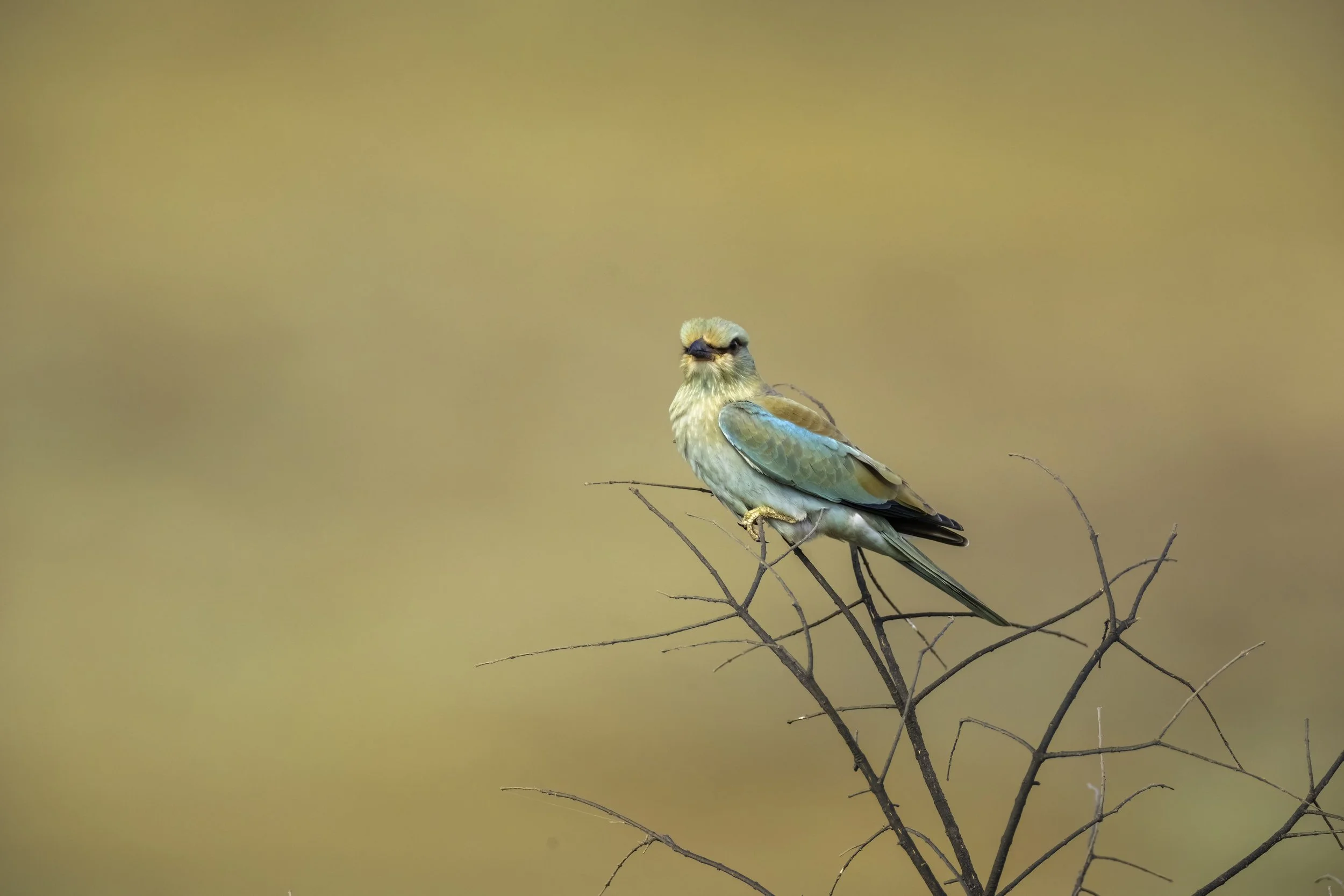
Every autumn, the European Roller arrives in the semi-arid grasslands of Kadbanwadi in Maharashtra, India, marking a spectacular stopover in its annual long-distance migration. Journeying thousands of kilometres from its breeding grounds in Europe and Central Asia, this striking, turquoise-blue bird finds a temporary sanctuary in Kadbanwadi's open scrublands. The vast, undisturbed habitat provides an ideal hunting ground rich in insects and small reptiles, allowing the birds to forage and replenish their energy reserves before continuing south. This seasonal arrival transforms the local landscape into a vibrant hub for birdwatchers and highlights Kadbanwadi's critical role as a vital conservation pocket along international migratory flyways.
The September Foliage: A Brief Post-Monsoon Surge
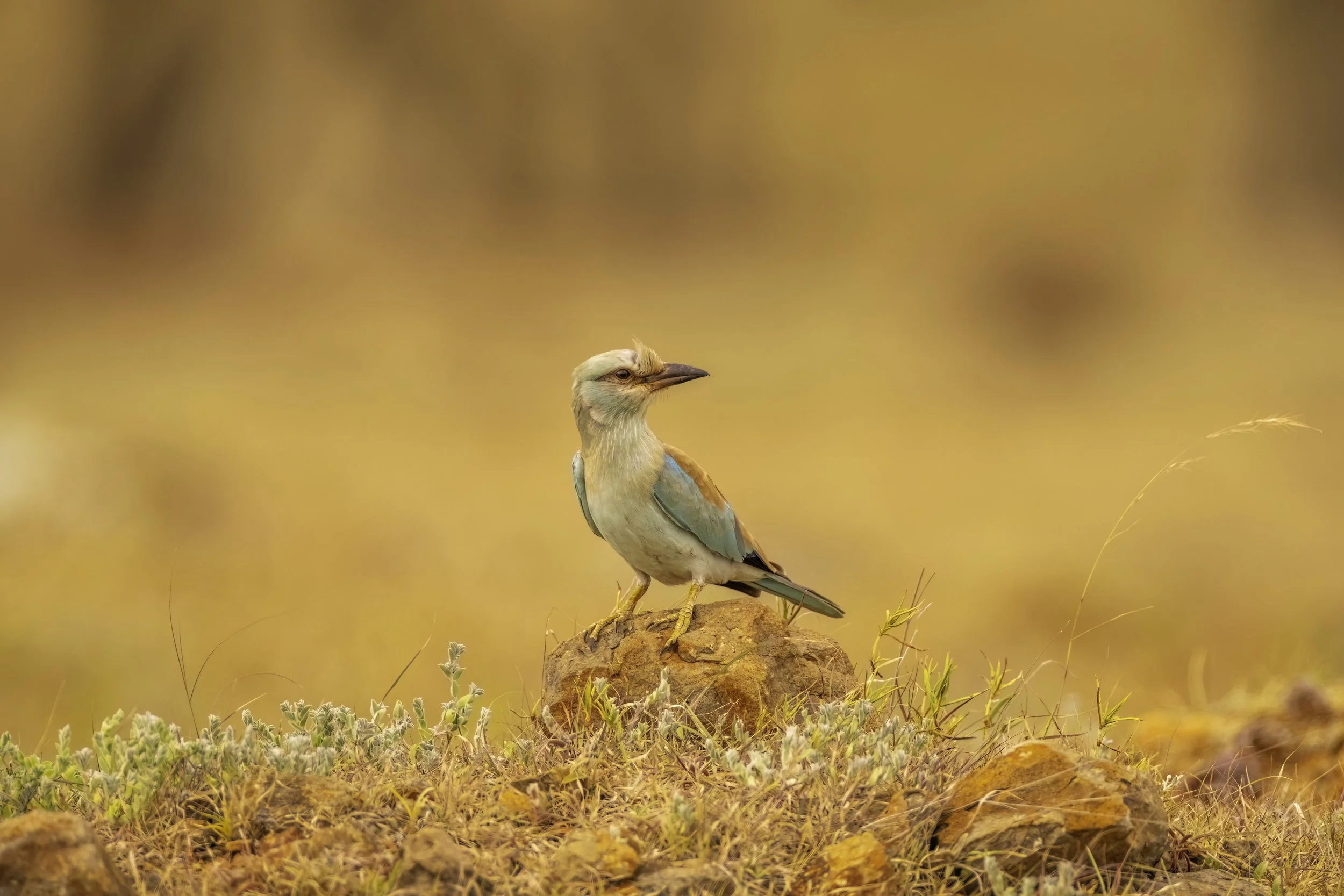
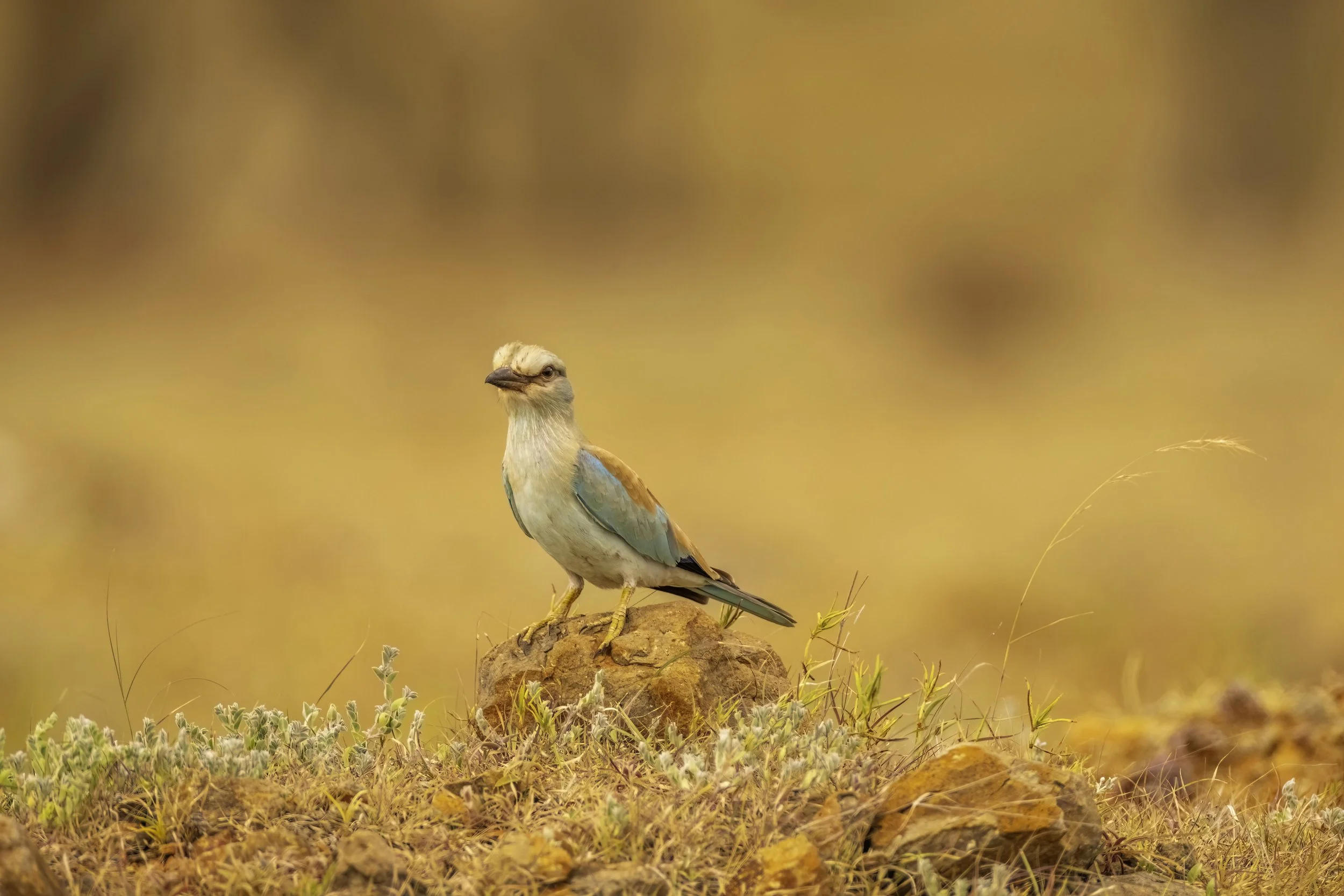
To understand the hunting ground the European Roller encounters upon arrival, one must look to the unique botanical landscape of Kadbanwadi in September. This period marks the tail end of the southwest monsoon, a time when this typically hyper-arid, cracked earth undergoes a dramatic, temporary transformation. The landscape is a vibrant mosaic of green, dominated by specialized, drought-resistant flora that has rushed to complete its life cycle. The ground cover is dominated by hardy, native grasses that thrive in the shallow, basaltic soil. Species like Sehima nervosum (Shedas grass) and Heteropogon contortus (Spear grass - as can be seen in some of my photos here) form dense, knee-high carpets across the plains. Interspersed among these are patches of Aristida (Three-awn grass), which begin to take on a silvery-golden sheen as they seed. This thick, texturized ground cover acts as a bustling nursery for the massive influx of grasshoppers, crickets, and mantises that the rollers rely on for food.
Rising above the sea of grass is a scattered, open canopy of scrub and thorny foliage. The dominant woody plants are the resilient Acacia species, particularly Acacia catechu (Khair) and Acacia nilotica (Babool). In September, these trees are flush with fresh, feathery green leaves and studded with bright yellow, puffball flowers. Alongside the acacias, architectural patches of Ziziphus nummularia (Jharber or wild jujube) and dense, fleshy thickets of Euphorbia antiquorum (Spurge) provide critical, elevated hunting perches and shade. This delicate balance of dense ground cover and scattered, thorny vantage points creates the ultimate tactical arena for a scanning apex insectivore.
A Spectacular Passage Migrant
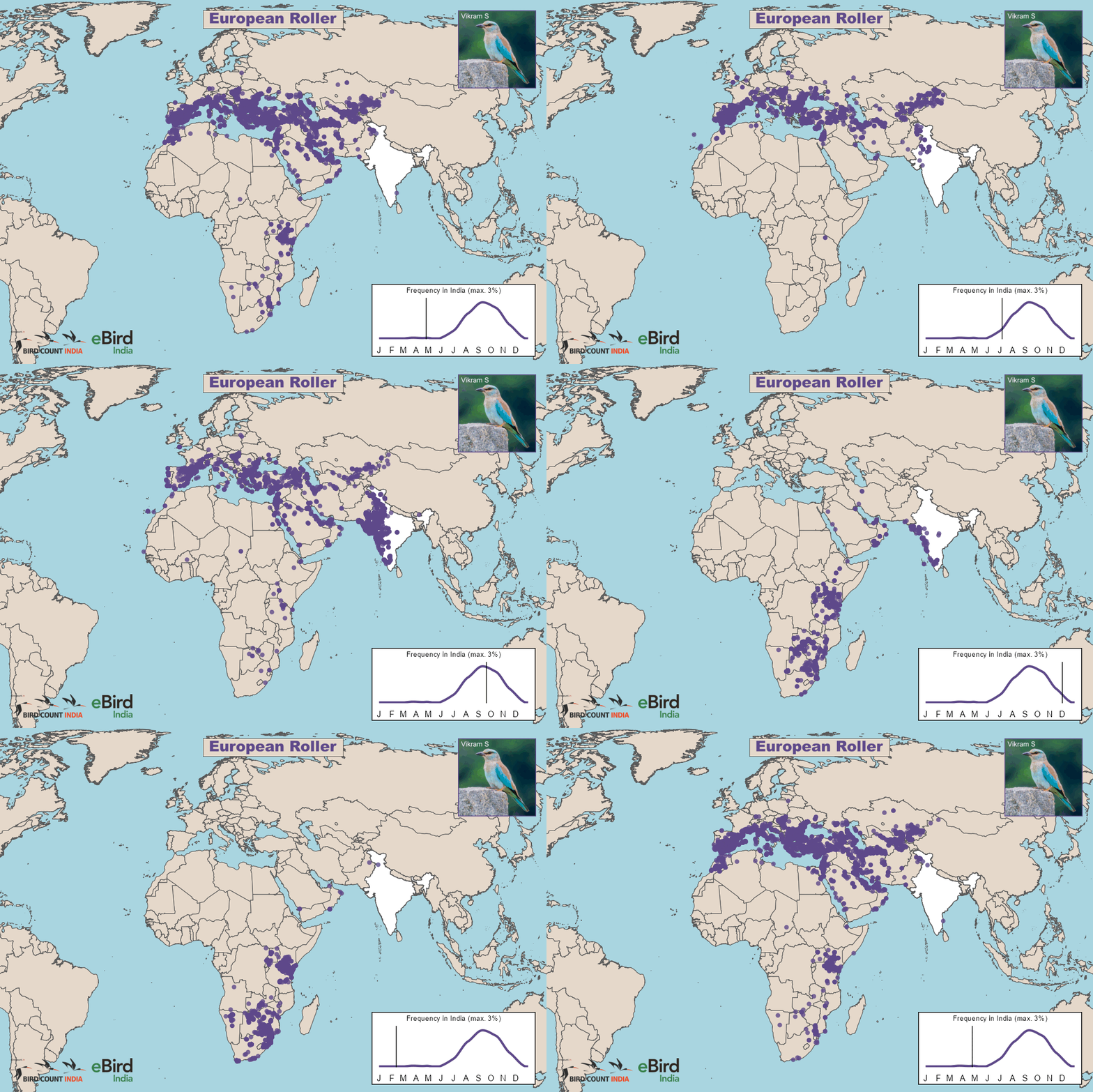
This animated migration map was created from observations uploaded to the citizen science platform eBird up until 2025. Where present, the inset graph depicts the seasonal likelihood of finding this species (i.e. the proportion of eBird checklists) within its range in India alone. We are grateful to the many birdwatchers around the world who have enabled the creation of this animation by sharing their observations on eBird.
To understand the presence of the European Roller in Bhigwan, one must map a journey that defies human imagination. The European Roller is a true passage migrant in India. Unlike winter visitors that remain in the subcontinent for months, this species breeds across the Western Palearctic—stretching from southern and eastern Europe through the Middle East and into the windswept steppes of Central Asia. As the autumn chill settles over Central Asia, the eastern subspecies (Coracias garrulus semenowi) begins a staggering 10,000-kilometre migration toward its wintering grounds in sub-Saharan Africa. Their flyway brings them down through northwestern and western India, crossing states like Gujarat (such as Nalsarovar and the Little Rann of Kutch) and Maharashtra before making an audacious crossing over the Arabian Sea. Environs like the Kadbanwadi Grasslands provide a perfect, insect-rich oasis where these nomads can refuel before their oceanic crossing. While the autumn passage (August to November) brings them noticeably closer to Indian birdwatchers, their spring return route largely bypasses the subcontinent, moving instead through the Arabian Peninsula. Beyond India, their footprint across Asia extends through Iraq, Iran, Kazakhstan and as far east as Xinjiang in China.
Physical Blueprint: A Study in Powder Blue and Cinnamon
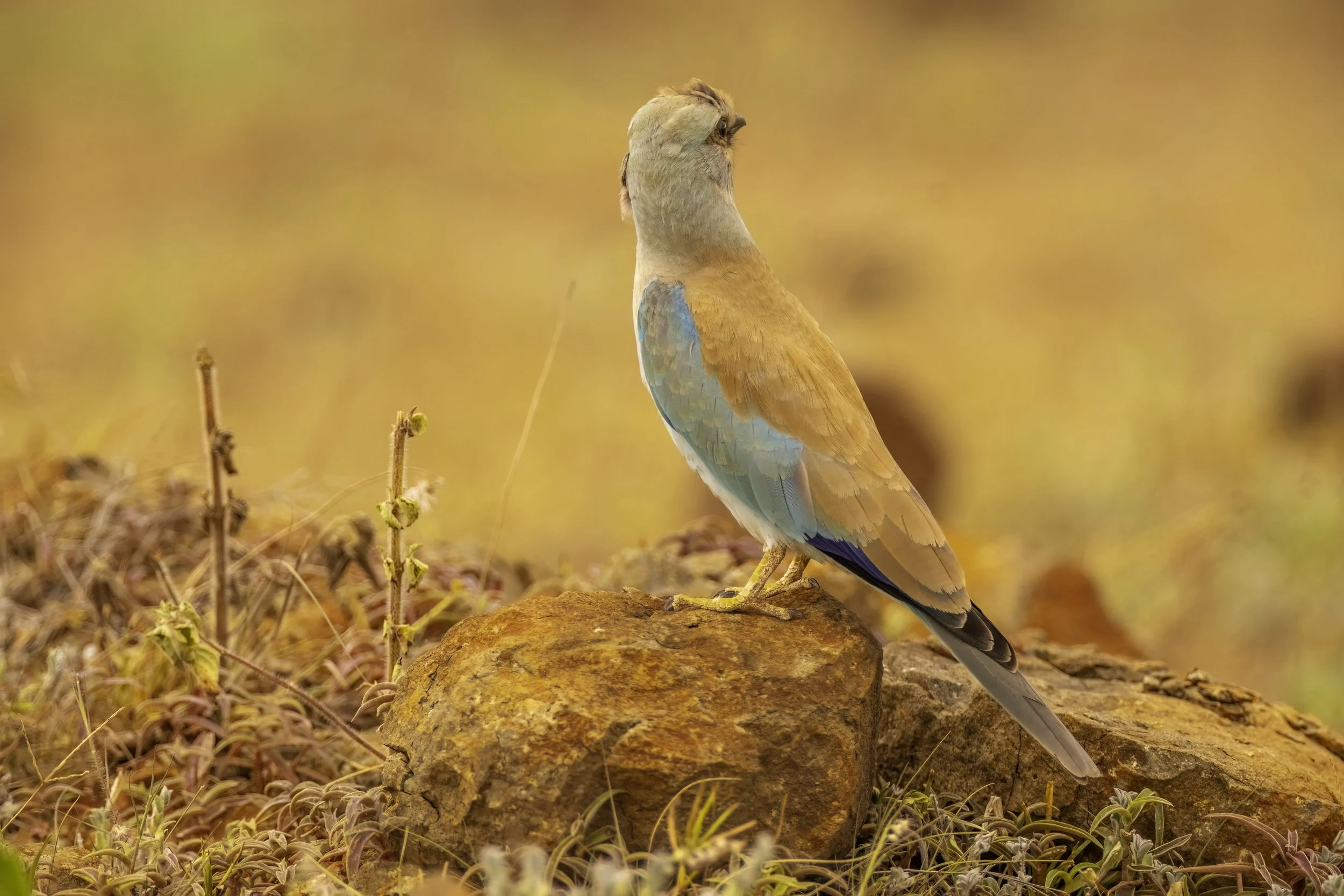
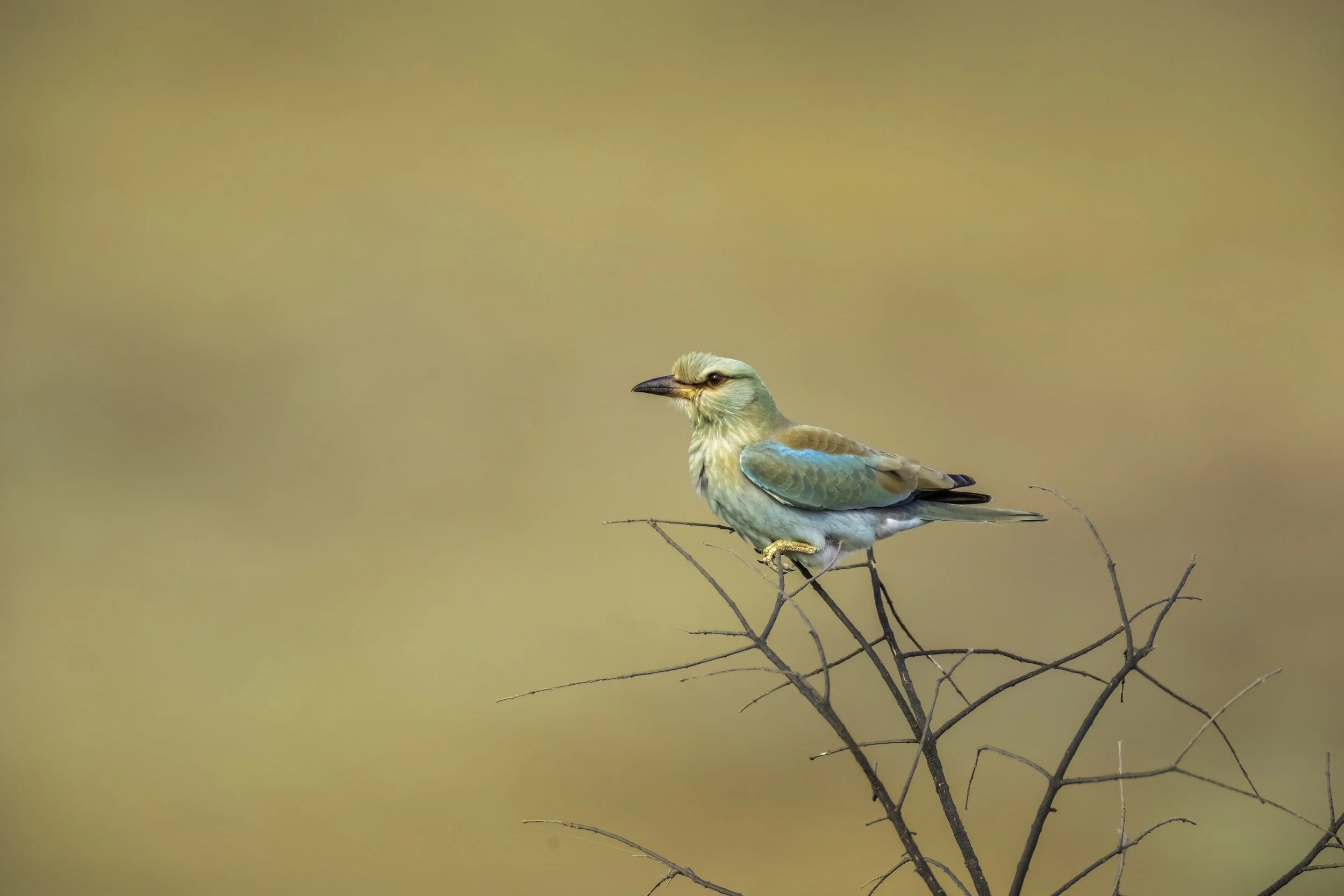
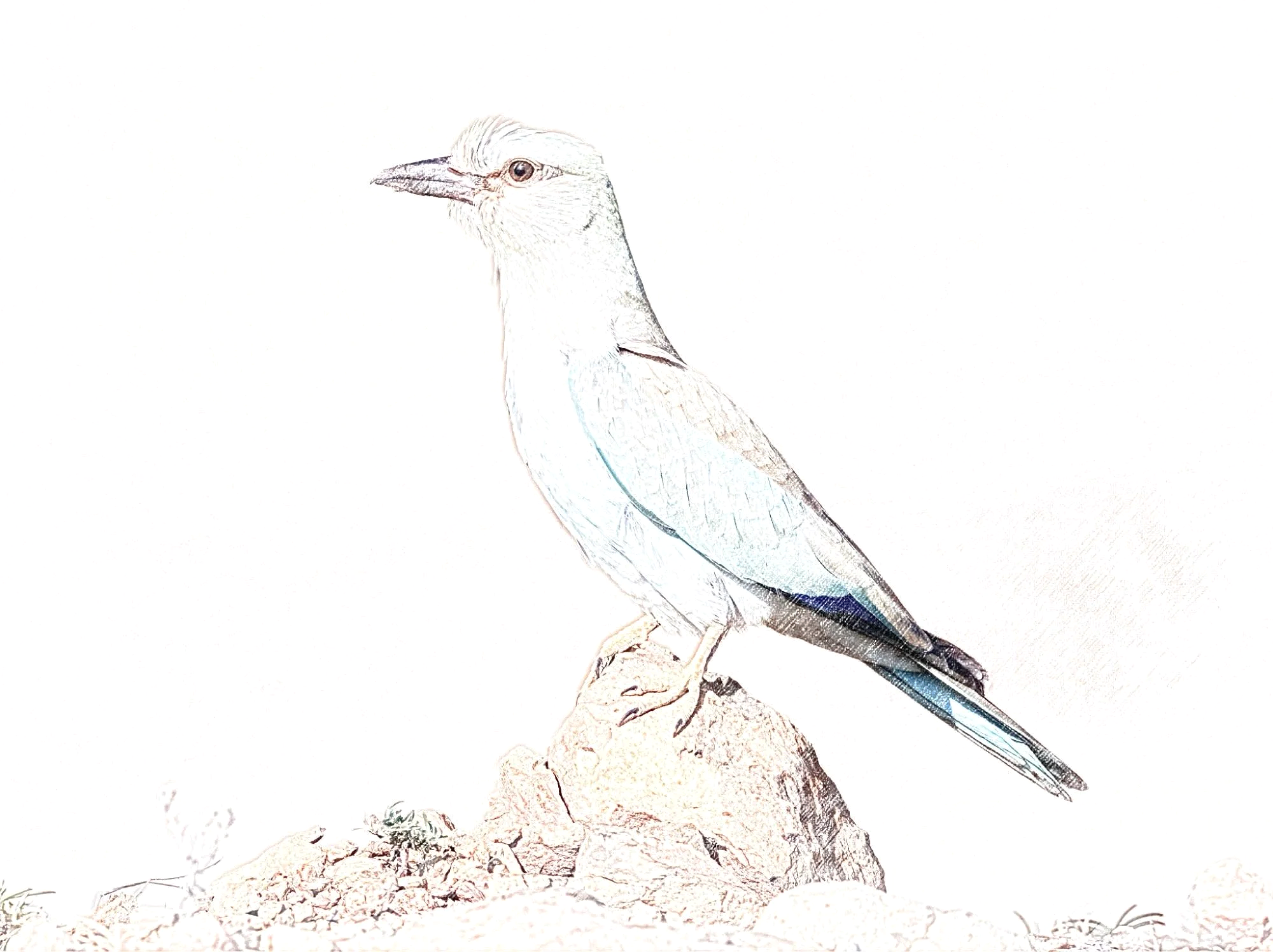
Up close, the European Roller photographed at Kadbanwadi reveals an astonishing palette. It is a stocky, robust bird, roughly the size of a Eurasian Jay or a small Crow, measuring 29 to 32 centimetres in length with a powerful wingspan of 52 to 58 centimetres. Adults weigh between 130 and 160 grams. The most defining feature of its plumage is the ethereal, uniform powder-blue or turquoise-aqua coloration that blankets its head, neck, underparts, and belly. This bright pastel hue contrasts beautifully with a rich, cinnamon or orange-brown mantle (back). Its bill is heavy, steel-grey to black, and slightly hooked at the tip—an optimized tool for crushing hard-shelled prey. When the bird takes flight, its true splendor is unlocked. The brilliant, glowing blue of its inner wings slams against jet-black primary flight feathers. In flight, it displays a longer neck and tail profile compared to other rollers, cutting a sharp, direct, and incredibly swift silhouette through the sky.
European Roller vs. Indian Roller: Field Identification
For an observer in South and Southeast Asia, distinguishing the European Roller from the ubiquitous Indian Roller (Coracias benghalensis) requires an eye for detail, as their ranges briefly collide.
| Feature | European Roller (Coracias garrulus) | Indian Roller (Coracias benghalensis) |
|---|---|---|
| Breast & Throat | Solid, uniform light pastel blue | Purplish-lilac or warm brown, heavily streaked with white shafts. |
| Head & Crown | Entirely uniform aqua-blue head. | Turquoise-blue crown contrasting with an ochre/ cinnamon face. |
| Flight Feathers | Jet-black primaries & outer flight feathers. | Deep purplish-blue primaries bisected by a brilliant, pale sky-blue band. |
| Size & Shape | Slightly more slender with a longer neck and tail in flight. | More stocky, compact with a shorter tail. |
Further east in Southeast Asia, the Indochinese Roller (Coracias affinis) replaces the Indian Roller, presenting a much darker, unstreaked purplish-brown breast and deep olive-green tones, completely removing it from the delicate pastel palette of the European visitor.
The European Roller is fundamentally a creature of warm, open, and semi-arid country. It thrives in lowland ecosystems consisting of dry wooded savannas, grasslands with scattered acacia or pine trees, scrub deserts, orchards, and traditional, low-intensity farmland. It studiously avoids entirely treeless plains, as it relies heavily on elevated perches to hunt. In the Kadbanwadi Grasslands, a fascinating temporal and spatial overlap occurs. The Indian Roller is a permanent, territorial resident of these open areas, often seen claiming high powerlines and prominent trees. When the European Rollers arrive in autumn, they share the same perches, fences, and insect resources. Because the European Rollers are just passing through, intense territorial warfare is generally minimized, though minor skirmishes over prime hunting perches do occur.
Behaviour: The Master of Air and Ground
The name "Roller" stems from an extraordinary courtship ritual. During the breeding season on the steppes of Central Asia, males perform spectacular, looping, topsy-turvy aerial-display flights, twisting and diving through the air while emitting harsh, raucous rasping calls. However, during their autumn stay in Bhigwan, they are remarkably quiet, solitary, and stoic, maintaining a strict watch-and-wait hunting strategy. Perched on a bare snag or a wire, the roller uses its telescopic vision to scan the grass. Once it spots movement, it drops steeply to the ground, snaps up its prey with its heavy bill, and returns to its perch to batter the insect before swallowing it whole. Their diet is predominantly insectivorous, focusing on large beetles, grasshoppers, crickets, and scorpions, but they will opportunistically hunt small lizards, rodents, and frogs. Perhaps one of the most unusual behaviours documented within the Coracias genus involves their nesting defense. While not witnessed during migration, European Roller chicks inside tree cavities or sand-bank burrows have a unique defense mechanism: when threatened by a predator, they vomit a foul-smelling, noxious orange liquid onto themselves. This deters predators and leaves a scent trail that alerts returning parents to the danger.
The Shadow of Habitat Loss
Despite its wide global distribution, the European Roller faces a steep and worrying decline across its historical range. The primary threat stems from habitat loss, agricultural intensification, and widespread deforestation. In Europe, the removal of old, hollow trees and the clearing of sand banks have stripped the bird of its primary nesting cavities, leading to local extinctions in countries like Sweden and Germany. Furthermore, the excessive use of chemical pesticides in modern farming has caused a catastrophic collapse in large insect populations—their primary food source. This forces the birds to alter their migratory stops or spend longer, exhausting periods searching for food. In passage landscapes like India, grasslands are often erroneously categorized as "wastelands," leading to their conversion into industrial zones, dense plantations, or urban sprawl.
The loss of open grasslands means fewer perches, less food, and a more perilous journey across the Arabian Sea. Additionally, the expansion of poorly insulated power grids across rural India has introduced a silent killer: electrocution on powerlines, a hazard that claims both resident Indian Rollers and migratory European Rollers alike.
As of 13 September 2025, the Indian Roller (Coracias benghalensis), the state bird of Telangana and locally known as the palapitta, has been moved to the ‘Near Threatened’ category on the IUCN Red List following a sharp population decline. The State of Indian Birds–2023 report and recent Hyderabad Bird Atlas survey highlight the species’ alarming drop. The species has most recently been assessed for The IUCN Red List of Threatened Species in June 2025 and its status has been updated to Near Threatened under criteria A2bc+4bc.
Notably, four species - the Indian Roller, Indian Courser, Rufous-tailed Lark & the Long-billed Grasshopper-warbler - that have been uplisted depend upon open natural ecosystems, which include habitats like grasslands, semi-arid landscapes, desert, croplands, hilly scrublands, and fallow lands. These ecosystems have been under pressure from the expansion of power infrastructure, intensification of agriculture, introduction of invasive species, and interestingly, conversion into woodlands through afforestation.The decline of bird species that rely on these ecosystems highlights the critical need to conserve such open habitats. The European Roller is considered as Least Concern by the IUCN. While the species is still declining across parts of Europe, the rates of decline appear to be slowing and do not justify a higher threat status. Conservation actions in different regions have contributed to the reduced rates of decline.
Conservation must extend beyond protected areas and embrace coordinated efforts across agencies to safeguard birds surviving in human-dominated landscapes.
As the sun began to dip below the horizon at Kadbanwadi, casting a deep amber hue over the scrub forest, the European Roller took flight. With a few powerful, rhythmic beats of its black-tipped, turquoise wings, it vanished into the dusk, continuing its epic journey across continents. Its brief stay serves as a reminder of how deeply connected our ecosystems are, and why fragments of wild grasslands like Bhigwan deserve our utmost protection.
‡‡‡‡‡

Related Posts



The Indian Roller is a brightly coloured bird with various shades of blue on the wings, tails, & belly that are more prominent in flight. There are longitudinal white streaks on the throat and breast. They are generally silent, but vocal in the breeding season with harsh calls. Preferring open areas, including agricultural landscapes, they sit on exposed perches including electric wires, occasionally pumping their tail slowly.
#wildartworks, #kabini, #jungle, #wildlifephotography, #nilgiribiosphere, #nagarholetigerreserve, #kabinibackwaters, #tipeshwar, #tipeshwarwildlifesanctuary, #tadoba, #pench, #littlerannofkutch, #kutch, #tadobaandharitigerreserve, #conservationphotography, #indian_wildlifes, #bluejay, #indianwildlifeofficial, #wildlifeonearth, #bbcearth, #natgeowild, #natgeoindia, #statebird, #IndianRoller, #Roller,