
Black-breasted Thrush
Turdus dissimilis
Doi Ang Khang, Chiang Mai, Thailand
The pre-dawn air at Doi Ang Khang, a jagged limestone massif rising near the northernmost tip of Chiang Mai Province, Thailand, is a freezing, shifting sea of mountain fog. For a wildlife photographer, waiting here is an exercise in both patience and sensory deprivation. Crouched low beside a moss-slicked logging trail flanked by high-elevation pine-oak forest, the lens remains frozen, trained on a small, damp patch of leaf litter. Then, as the first gold fingers of the sun pierce the canopy of the Royal Agricultural Station, a shape materialises. It moves with a rhythmic, springy hop unique to the genus Turdus. It is the Black-breasted Thrush (Turdus dissimilis). The Black-breasted Thrush is a true thrush belonging to the family Turdidae, which includes typical thrushes and is distributed globally, making it an Old World representative of the family found from northeastern India to Vietnam.
The “Old World” - a fascinating term seemingly like something out of the Lord of the Rings and Jurassic Park put together. But in our case the term "Old World" is used commonly to refer to Asia, Africa and Europe (Afro-Eurasia or the World Island), regarded collectively as the part of the world known to its population before contact with the "New World" (the Americas). In the context of archaeology & world history, the term "Old World" includes those parts of the world which were in (indirect) cultural contact from the Bronze Age onwards, resulting in the parallel development of the early civilisations, mostly in the temperate zone between roughly the 45th and 25th parallels, in the area of the Mediterranean, Mesopotamia, Persian plateau, Indian subcontinent and China. The concept of the three continents in the Old World, viz. Asia, Africa, and Europe, goes back to classical antiquity. Their boundaries as defined by Ptolemy and other geographers of antiquity were drawn along the Nile in what is now Egypt and the Don river in Russia. This definition remained influential throughout the Middle Ages and the Early Modern period.
Old World Thrushes are a diverse group of plump, small-to-medium-sized songbirds belonging to the family Turdidae. Though found across the globe, they exhibit their greatest evolutionary diversity within the Old World, particularly across Africa and Eurasia. Characterised by their full chests, upright postures, and long, strong legs, these birds are highly adapted for life on the ground, where they frequently hop through leaf litter to hunt for insects, earthworms, and snails. Their plumage is traditionally dominated by cryptic, earth-toned shades of brown, grey, and olive—frequently accentuated by beautifully speckled or spotted underparts that offer excellent camouflage in their preferred woodland and scrub habitats.
Beyond their physical traits, Old World Thrushes are globally celebrated for their extraordinary vocal abilities, possessing some of the most complex, flute-like, and melodic songs in the avian world. Species like the Blue Whistling Thrush are famous for their loud, clear, and repetitive musical phrases that ring out during dawn and dusk. In terms of behavior, many northern species are powerful long-distance migrants that travel immense distances to overwinter in warmer climates, while tropical and subtropical species tend to remain permanent residents. They are also meticulous builders, constructing sturdy, open cup-shaped nests out of twigs and grass, which they occasionally line with a smooth layer of mud to protect their typically pale blue, speckled eggs
About 685 kilometers to the north of Bangkok lies the former seat of the ancient Lanna Kingdom and is considered one of the most scenic provinces in the country given its mountain ranges, valleys, flora and fauna. A land of misty mountains and colourful hill tribes, a playground for seasoned travellers, and a delight for adventurers. Despite its relatively small size and blissful calm, Chiang Mai truly has it all, a city that is still firmly Thai in its atmosphere and attitude. It is the second-largest changwat (province) of Thailand. Bordered by Chiang Rai to the northeast, Lampang & Lamphun to the south, Tak to the southwest, Mae Hong Son to the west and the Shan State of Myanmar to the north. Located in a verdant valley on the banks of the Ping River, Chiang Mai was founded in 1296 as the capital of the ancient Lanna Kingdom. Today it is a place where past and the present seamlessly merge with modern buildings standing side by side with venerable temples. Of all the places I have visited in Thailand, Chiang Mai with its forests and mountains and the historic city of Ayutthaya are by far my favourites.
The word Chiang itself is from North Thai, or Lanna, meaning town or city and Mai means new making Chiang Mai the New City as it was founded later than Chiang Rai, the earlier capital of King Meng Rai. The districts in the province are called amphoe, and sub-districts are called tambon. Another twist is the use of Nakhon (or Nakorn or Nakhorn), derived from the Sanskrit word Nagara, also means city, though strictly speaking it refers to a capital city such as Nakorn Sri Ayutthaya (more on Ayutthaya later). Indeed to emphasise its former status you may sometimes see Chiang Mai referred to as Nakhon Ping. Other common names of geographical features include mae (river) and doi which is north Thai for mountain - for example Doi Inthanon and Mae Ping.
The four Dois we spent our time on were Doi Inthanon, Doi Ang Khang, Doi Luang and Doi SanJu.
Perched high in the Daen Lao Range of Chiang Mai province, Doi Ang Khang stands as one of Thailand’s ultimate birdwatching paradises. With altitudes reaching up to 1,900 meters, this mountainous sanctuary acts as a ecological island. The cooler highland microclimate forces a completely different avian world to emerge compared to the Thai lowlands, hosting dozens of unique Himalayan foothill species far south of their typical latitudinal ranges. Whether you are a seasoned twitcher aiming to tick off highly sought-after lifers or a nature photographer seeking vibrant mountain species, Doi Ang Khang offers an incredible mosaic of evergreen forests, pine-oak woodlands, scrubby ridges, and temperate agricultural lands.
The Crown Jewels of Doi Ang Khang
The mix of resident species and winter migrants makes every trail unpredictable. However, several target species define the Doi Ang Khang experience:
Mrs. Hume’s Pheasant: Shy, regal, and fiercely sought-after. This rare pheasant is a prime target for visitors, occasionally spotted foraging cautiously near quiet pine forest edges at the crack of dawn.
Giant Nuthatch: Boasting a heavily restricted global range, this oversized nuthatch depends on the large, old-growth pine trees scattered across the mountain ridges.
The Parrotbill Trio: Spot-breasted, Grey-headed, and Pale-billed Parrotbills all roam the dense bamboo stands and secondary scrub, moving in lively, chattering groups.
Vibrant Highland Residents: Flocks of brilliant Silver-eared Mesias, Spectacled Barwings, and the stunning Red-faced Liocichla bring sudden bursts of color and song to the dense foliage.
If you visit between November and March, the resident population swells dramatically with winter migrants fleeing colder northern latitudes. The mountain becomes a haven for wintering thrushes—including the Black-breasted Thrush, Eye-browed Thrush, and Grey-sided Thrush—which are often reliably spotted visiting local feeding stations. The undergrowth also fills with a complex and challenging array of wintering Phylloscopus warblers, alongside striking flycatchers like the Rufous-bellied Niltava and the Hill Blue Flycatcher.
To make the most of the trip, focus your efforts on these highly productive trails:
Km 21 & The Firebreak Trail: This is arguably the most famous stretch on the mountain. The dense canopy combined with open ridge views creates the perfect environment for mixed feeding flocks, warblers, and babblers.
Mae Phur Valley Trail: Following a stream through wetter, humid forest patches and bamboo groves, this trail offers great chances for secretive forest floor species like the Lesser Shortwing, White’s Thrush, and nocturnal specialists like the Mountain Scops Owl.
The Royal Agricultural Station: Originally established by King Bhumibol Adulyadej to replace opium cultivation with temperate fruits and flowers, the station's manicured gardens and blossoming cherry trees draw in a dazzling array of sunbirds, such as Mrs. Gould’s Sunbird, and various flowerpeckers.
Tips for a Successful Avian Adventure
Time it Right: Late November through February offers the highest species count due to the overlap of residents and winter migrants.
Prepare for the Cold: Because of the high altitude, early mornings can be remarkably chilly and crisp. Bring layers, a warm jacket, and prepare for thick morning mist that often blankets the valleys.
Drive Safely: The roads winding up to Doi Ang Khang are notoriously steep and winding. Ensure your vehicle is in excellent mechanical shape, and take the climbs slowly in low gears.
Doi Ang Khang is more than just a dot on a map; it is an immersive sensory experience where the morning mist carries the symphony of rare mountain birds. Pack your binoculars, grab your long lens, and get ready to experience one of Southeast Asia's greatest avian treasures.
These Dois of northern Thailand have been very kind to me from a birding perspective. There are so many I have already talked about and so many still remaining. I have written an overview here on the Birds of the Dois and have now started to break them up into individuals like the Gray-backed Shrike, Long-tailed Shrike, Spectacled Barwing, Siberian Rubythroat, the stunning Mrs. Gould’s Sunbird and the numerous other birds I have seen here.
The beautiful road to the top of Doi Angkhang.
Read about the other birds from these beautiful mountains. These are only a few of the huge number I have spotted and recorded there.
Black-breasted Thrush
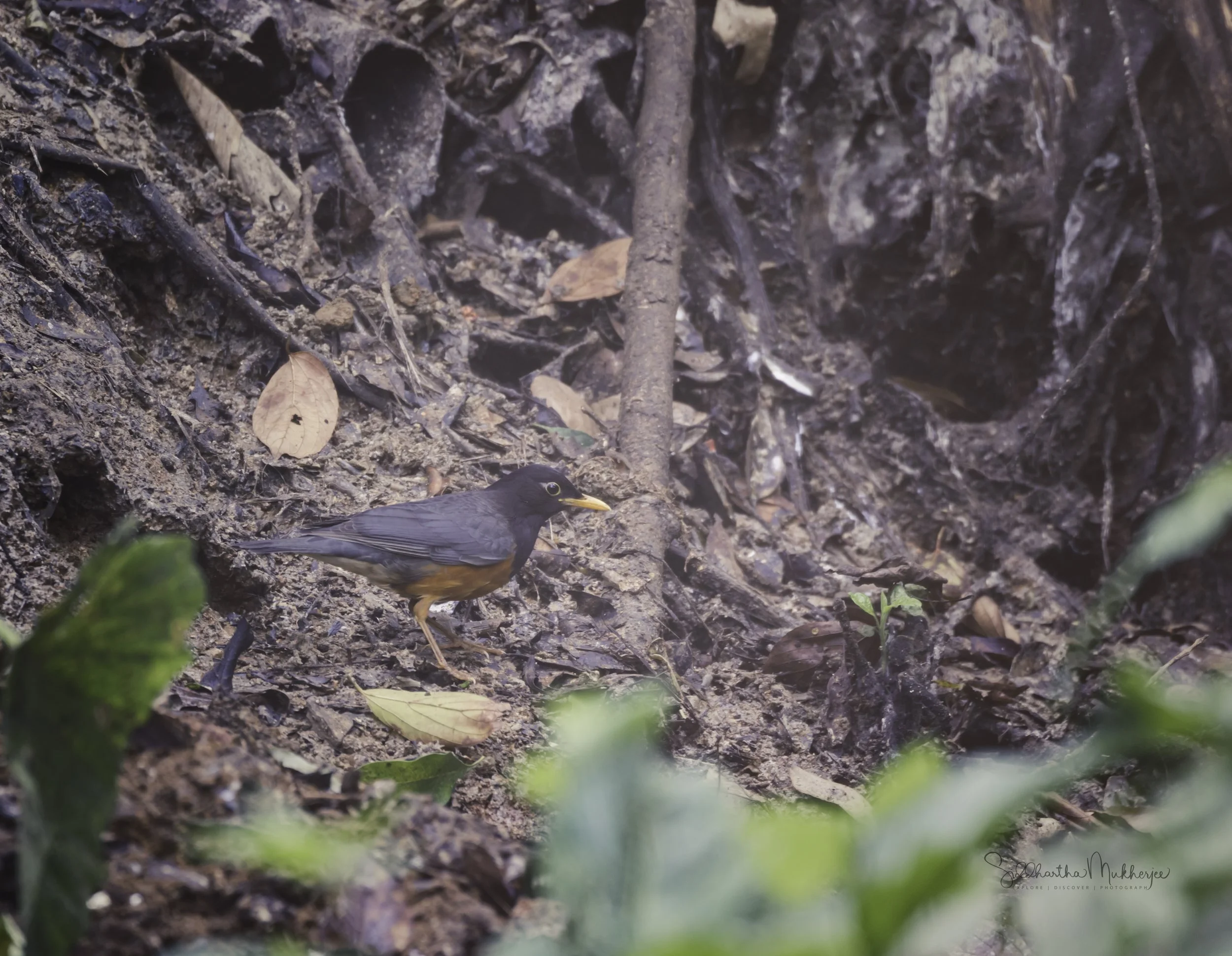
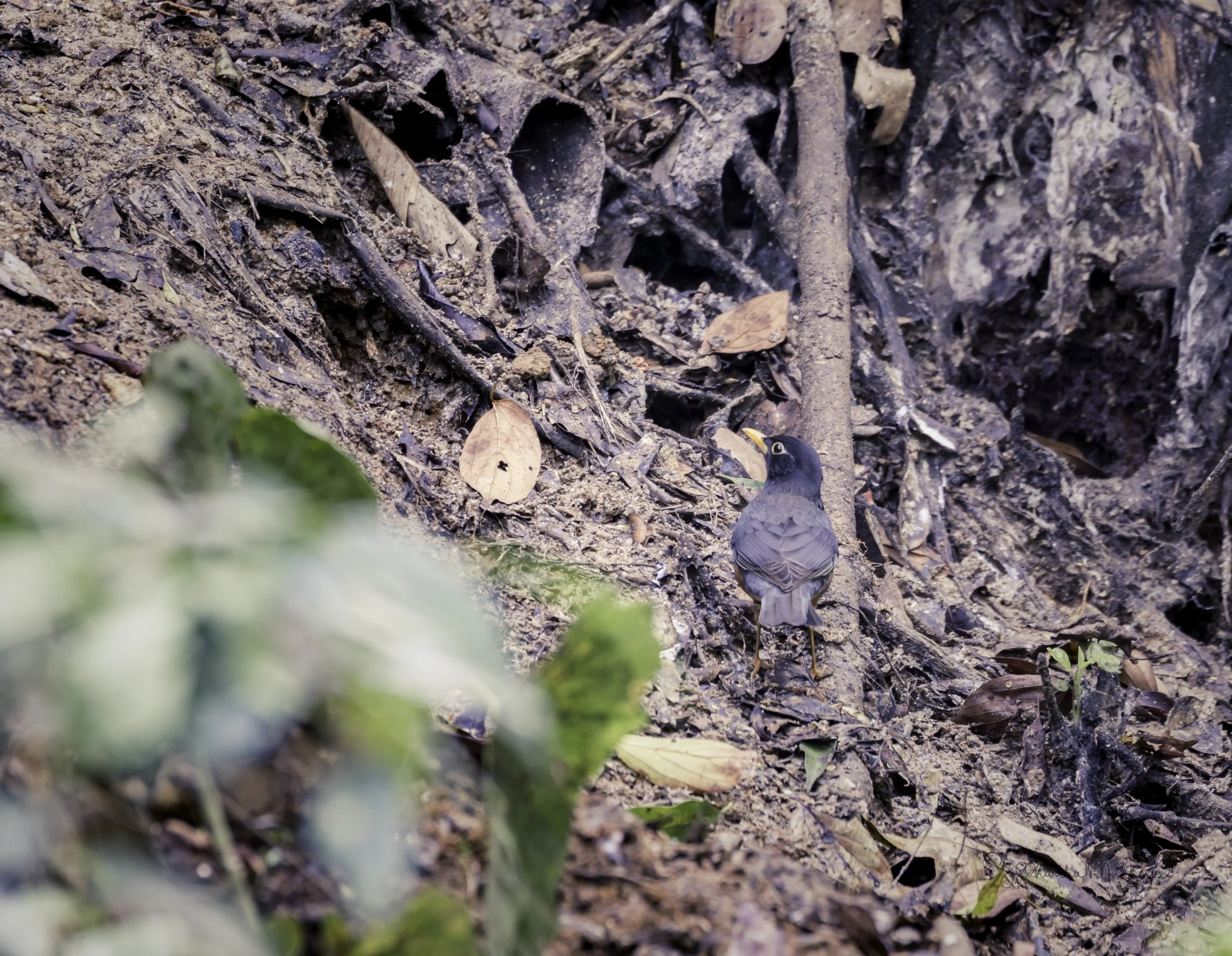
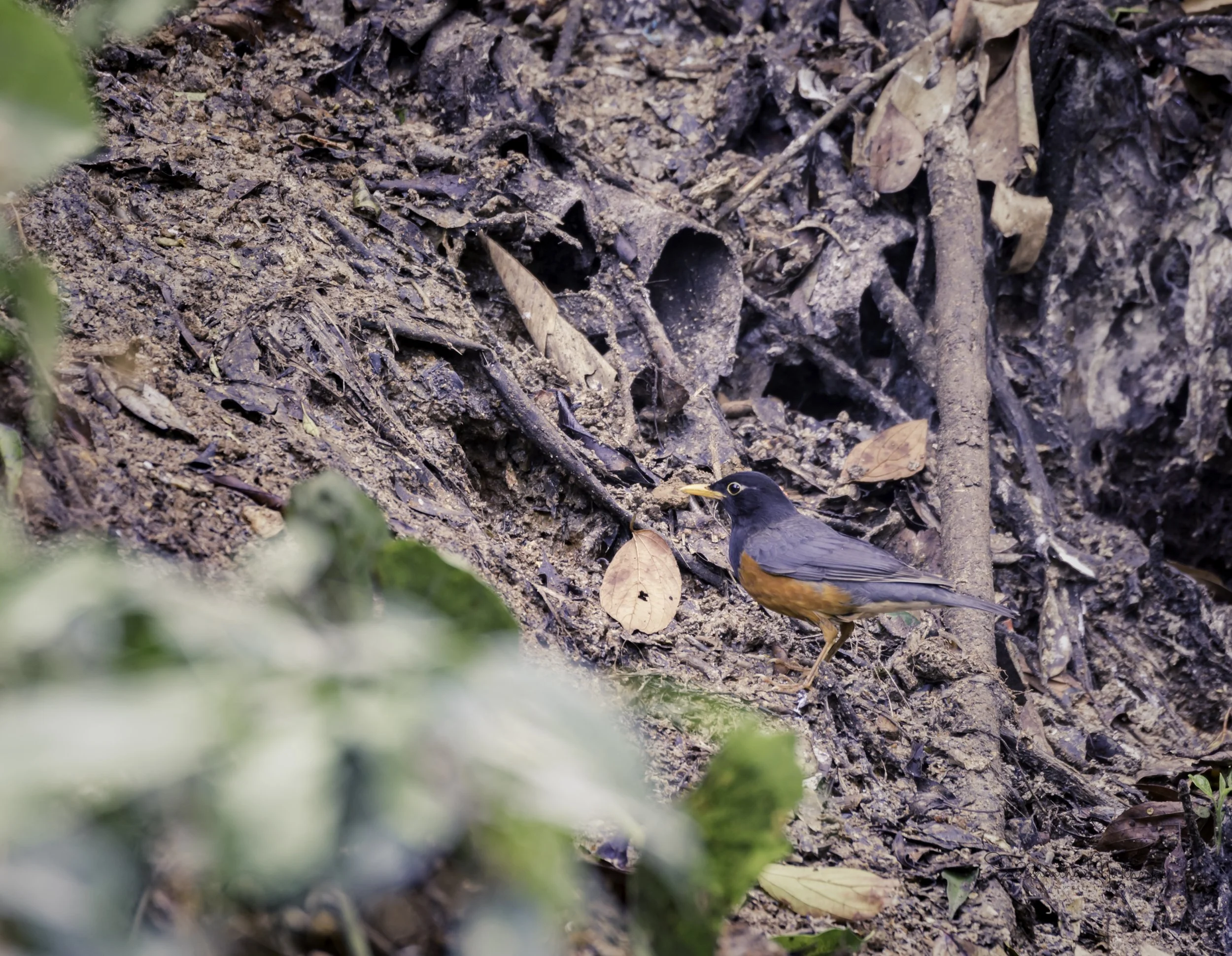
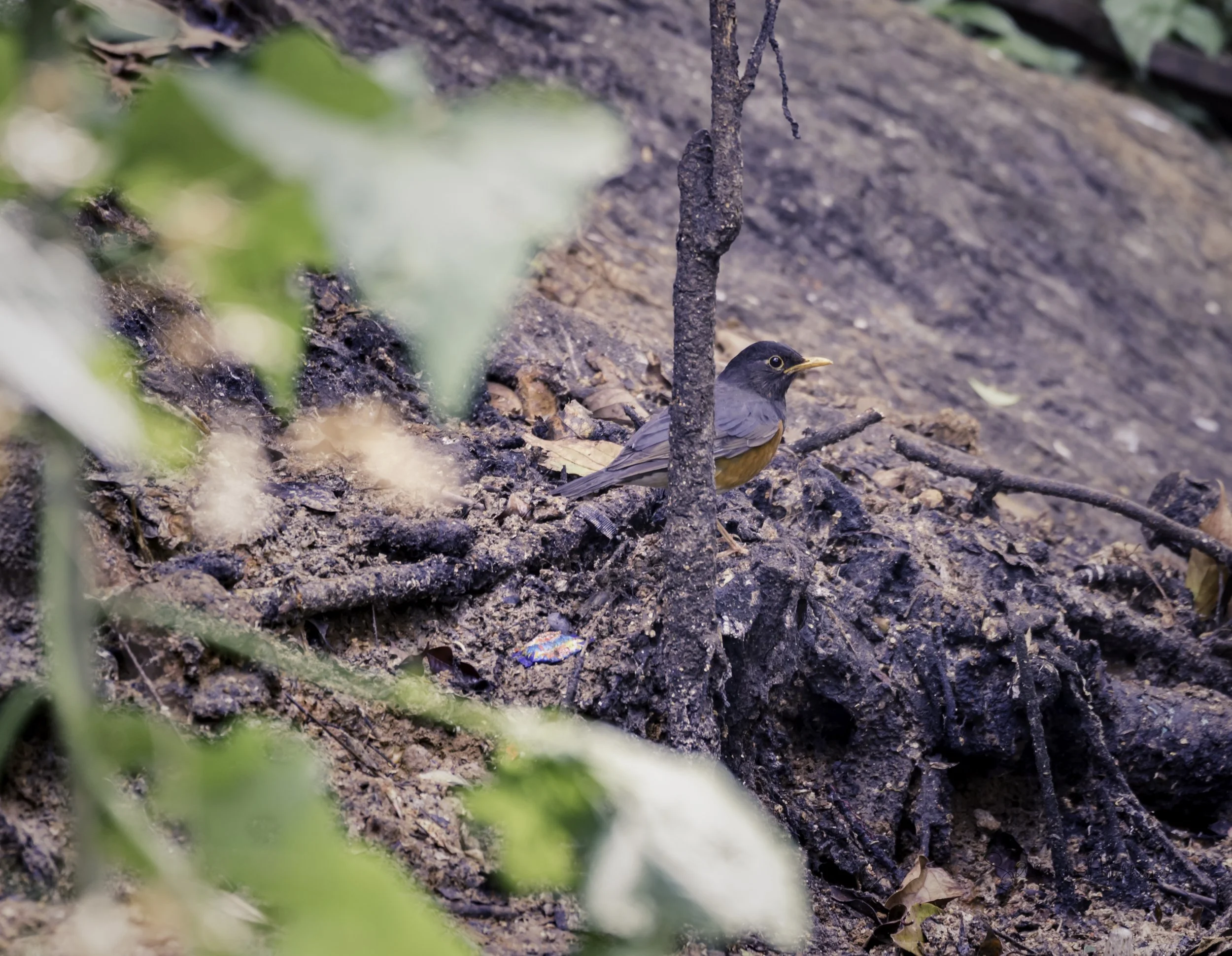
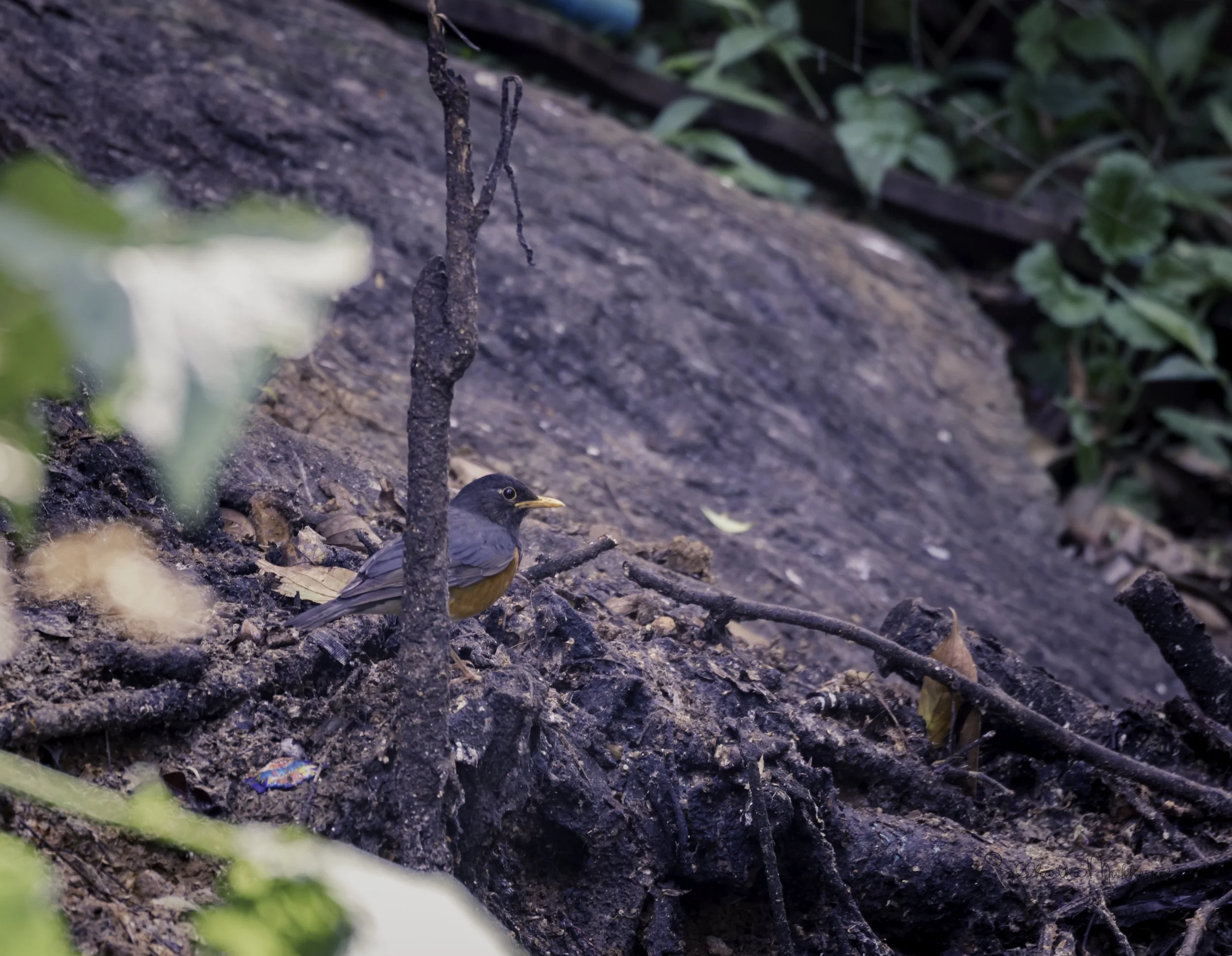
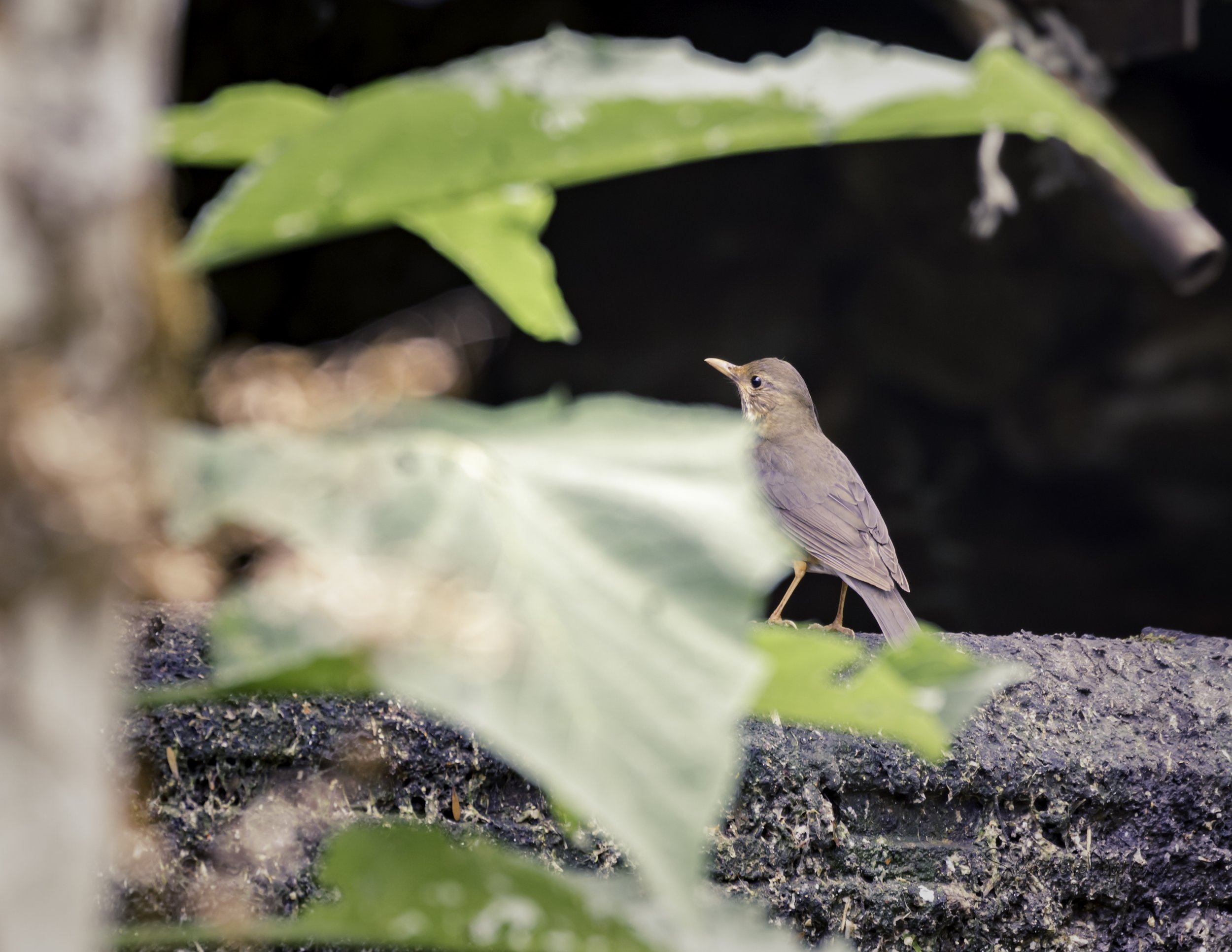
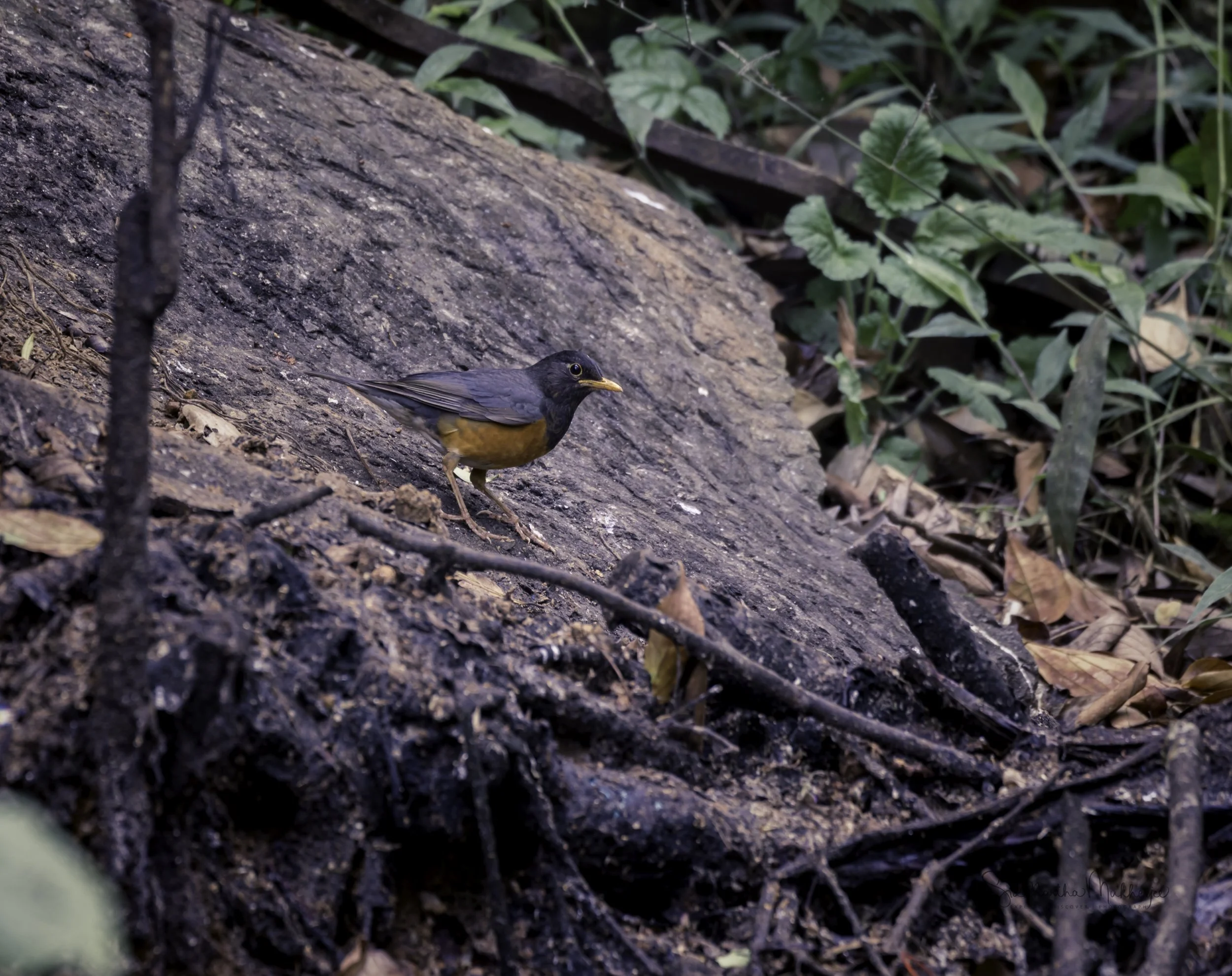
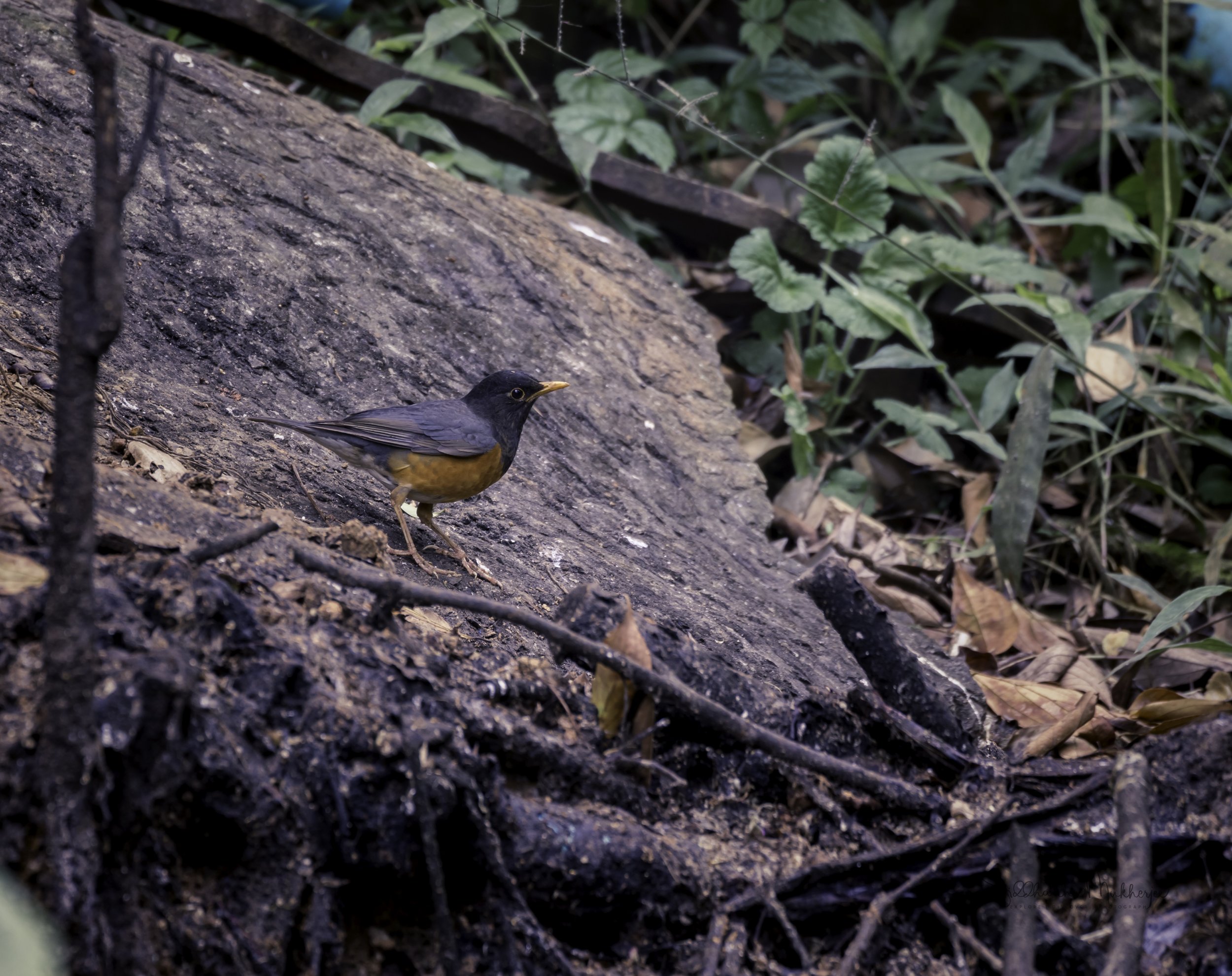
The Black-breasted Thrush is a species of bird in the family Turdidae. It is found from north-eastern India to northern Vietnam. Although both male and female birds have the same colour on their lower parts, the upper section of males is mostly black in colour, while females are mostly grey-brown. The male bird is a study in stark, jaw-dropping contrast. His head, neck, and upper chest are enveloped in a velvety, deep hood of obsidian black, which terminates abruptly in a clean, sharp line across his breast. Below this line, his flanks and belly erupt in a brilliant, fiery saffron-orange, glowing like embers against the wet ground. He tosses aside a rotting oak leaf with a flick of his sharp, bright yellow bill, tilting his dark eye to scan for subterranean prey. Captured in a single frame, this fleeting moment bridges a vast ecological narrative spanning the montane islands of Southeast Asia and the rugged valleys of the Eastern Himalayas.
While Doi Ang Khang serves as a vital southern stronghold where the species is a locally common breeding resident, the global footprint of Turdus dissimilis maps across a vast latitudinal arc. In India, the Black-breasted Thrush is primarily restricted to the North-Eastern states. It is a prized sighting in the primary montane evergreen forests of: Mizoram (specifically the high ridge lines of Phawngpui or Blue Mountain); Nagaland (along the pristine community forests of Khonoma); Manipur, Meghalaya and the southern foothills of Arunachal Pradesh. In these regions, it behaves largely as an altitudinal migrant, breeding in the high-elevation rhododendron and oak zones before dropping into lower valleys and dense scrub jungles during the harsh winter months.
Beyond India and Thailand, its distribution traces the contiguous mountain chains of South-East Asia and Southern China. It is found widely across the Chin Hills and Shan State, inhabiting damp, mossy ravines. In Southern China, it is a resident and breeding populations thrive in western and southern Yunnan Province, extending east into parts of Guizhou and Guangxi. In Indochina, it ranges into the rugged highlands of northern Laos and western Vietnam (such as the Hoang Lien Son range).
The Black-breasted Thrush is a medium-sized passerine, engineered elegantly for both terrestrial foraging and agile forest flight. It typically ranges between 22 cm and 23.5 cm (8.7 to 9.3 inches) in length and a healthy adult generally weighs between 55 to 80 grams. It possesses a compact, plump body, a medium-length tail, and long, robust legs with pale dull-yellow or flesh-coloured tarsi that provide excellent leverage for tossing heavy ground litter.
| Feature | Adult Male | Adult Female |
|---|---|---|
| Head, Throat & Upper Breast | Solid, velvety jet-black forming a distinct cowl/ hood. | Soft olive-brown to grey-brown; throat is white/ buff, heavily streaked with dark blackish-brown dashes. |
| Upperparts (Back/ Wings) | Deep slate-grey to dark charcoal, contrasting subtly with the black hood. | Uniform grey-brown or rich earthy olive-brown. |
| Underparts (Belly/ Flanks) | Vivid fiery orange to deep apricot on the flanks; central belly fades to clean white. | Rich buffish-orange on the flanks, slightly more muted than the male; central belly is cream-white. |
| Bare Parts (Bill & Eye-ring) | Bright, conspicuous chrome-yellow bill; narrow yellow orbital ring. | Dull yellowish-brown to yellow bill (lacks the intense saturation of the breeding male). |
Telling the Black-breasted Thrush apart from its regional cousins requires close attention to the underwing and breast demarcations.
Versus the Gray-backed Thrush (Turdus hortulorum): The Gray-backed Thrush frequently overlaps with the Black-breasted Thrush in its wintering grounds in South-East Asia and Southern China. Male Differences: The male Gray-backed completely lacks the black hood. Instead, it has a uniform blue-grey head and breast that transitions smoothly into orange flanks. Female Differences: The female Gray-backed possesses a much lighter, whitish-grey breast with spotting, whereas the female Black-breasted is distinctly brown above with heavily saturated orange flanks and intense throat streaking.
Versus the Black-throated Thrush (Turdus atrogularis): Common across northern India and the broader Himalayas, the Black-throated Thrush is noticeably larger (24 to 27 cm). Plumage Differences: The male Black-throated has a black bib that covers the throat and breast but its belly and flanks are dull off-white or heavily grey-streaked, completely lacking the vibrant, fiery orange underparts that define the Black-breasted Thrush.
Versus the Grey-sided Thrush (Turdus feae): Another winter migrant to Doi Ang Khang, the Grey-sided Thrush is much more uniform in colour. It lacks any fiery orange plumage entirely, showing a olive-grey wash across its upper body and flanks.
The Turdus dissimilis is a bird of the mountain mists. It primarily selects subtropical and tropical moist montane forests, preferring damp, dark ravines with a dense understory layer, thick moss accumulation, and rich leaf litter. During the spring breeding cycle, it holds territories between 1,220 metres and 2,500 metres above sea level. In the winter, many populations drop down to lower foothill valleys, secondary scrub-jungles, and occasionally coastal mangroves down to 200 metres. In sites like Doi Ang Khang, this brings them into direct spatial overlap with other migratory Turdid species. They manage this competition by partitioning micro-habitats; the Black-breasted Thrush often stays closer to the deeper, shaded forest edges, while other thrushes may exploit more open agricultural margins.
The behaviour of the Black-breasted Thrush is a mix of extreme, high-strung shyness and occasional bold curiosity. This species is heavily terrestrial. It utilizes a distinct "hop-pause-tilt" foraging strategy. It runs or hops quickly over the forest floor, stops dead, tilts its head to listen for the faint rustle of earthworms, beetles, snails, or pupae beneath the leaves, and then vigorously digs using its bill. During late autumn and winter, it supplements this insectivorous diet by flying up into the mid-canopy to feed on ripening wild berries, figs, and small fruits.
The vocal profile of Turdus dissimilis is incredibly beautiful. The song is delivered from a hidden perch high in a dense tree, the song is a classic, fluidly melodic thrush masterpiece. It consists of a series of unhurried, rich, sweet, and mellow phrases spanning 3 to 8 notes. When startled, it breaks the forest silence with a sharp, rapid, metallic “tup-tup-tup-tup” or a harsh, slurred “tock” as it dives head long into the nearest thicket.
The International Union for Conservation of Nature (IUCN) currently lists the Black-breasted Thrush as Least Concern. However, this designation hides localized vulnerabilities caused by severe deforestation, agricultural encroachment, and swidden (slash-and-burn) farming across its primary range in the Eastern Himalayas and Southeast Asia.
Disruption of Terrestrial Microclimates: Because the bird relies on damp, shade-cooled leaf litter to find its soft-bodied prey, canopy fragmentation is highly damaging. When the primary forest is logged or thinned, sunlight bakes the forest floor. This dries out the soil and drives earthworms and soil invertebrates deeper underground, making it impossible for the thrushes to forage efficiently during the critical nesting season.
Behavioral Adaptation and the "Ecotourism Shift": Interestingly, habitat loss has triggered a fascinating behavioral shift in specific locations. In pristine forests, the Black-breasted Thrush is incredibly reclusive and avoids humans. However, in heavily managed and modified landscapes like the Royal Agricultural Station of Doi Ang Khang, the birds have adapted by learning to exploit artificial food sources.
They have become accustomed to specific bird-feeding stations set up by photographers and park rangers. They step out of the shadows to feed on mealworms and discarded fruit right in front of human observers. This behavioral flexibility has allowed a localized population to transition from purely winter visitors to successful, common breeding residents in northern Thailand over the last two decades.
The photograph captured in the chilly morning light of Doi Ang Khang is more than just a beautiful image; it is proof of a wild creature's survival in a changing landscape. The Black-breasted Thrush remains a flagship species for the preservation of Asia's cloud forests. Ensuring that its melodious song continues to echo across the ridges of India, Myanmar, and Thailand requires strict protection of pristine montane ecosystems. This will keep the delicate, fiery balance of this extraordinary bird safe from the modern world.
‡‡‡‡‡

Related Posts
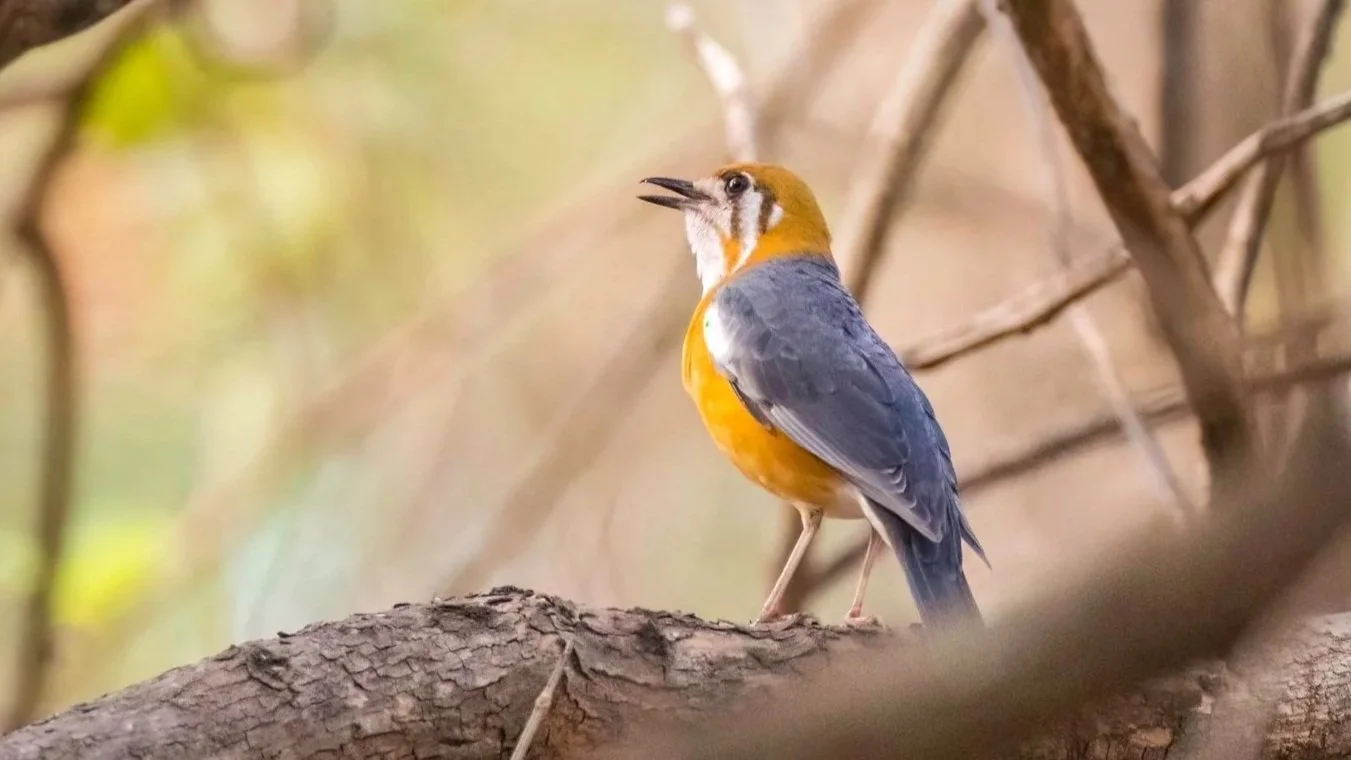
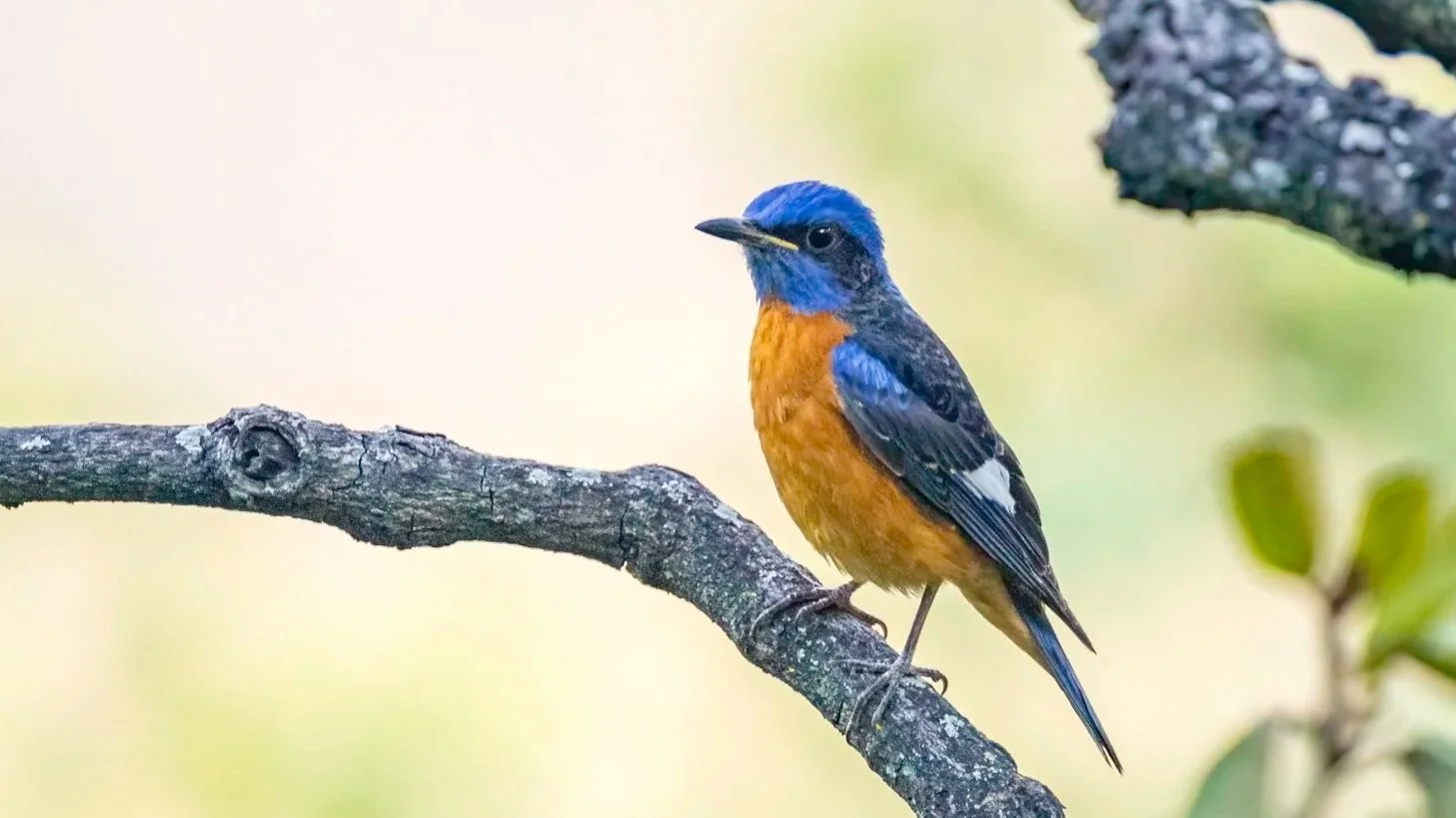
The Blue Rock Thrush (Monticola solitarius) is a species of chat. This thrush-like Old World flycatcher breeds in southern Europe, northwest Africa, and from Central Asia to northern China and Malaysia. The blue rock thrush is the official national bird of Malta (the word for it in Maltese being Merill).
#wildartworks, #Canon, #Bird, #Birdinginthewild, #BirdWatching, #Wildlife, #WildBirds, #naturephotography, #your_best_birds, #planetbirds, #earthcapture, #photo_pond, #earthpix, #naturyst, #conservationphotography, #yesbbcearth, #wildlifeonearth, #bbcearth, #natgeowild, #natgeoindia, @globalcapture, #india, #umamaheshwaramtemple, #achampet, #rockthrush, #bluerockthrush, #chat, #telanganabirds, #oldworldflycatcher, #nallamallaforest, #ananthagiri, #thrush