
Indian Pied Myna/ Asian Pied Starling
Gracupica contra
Amrabad Tiger Reserve
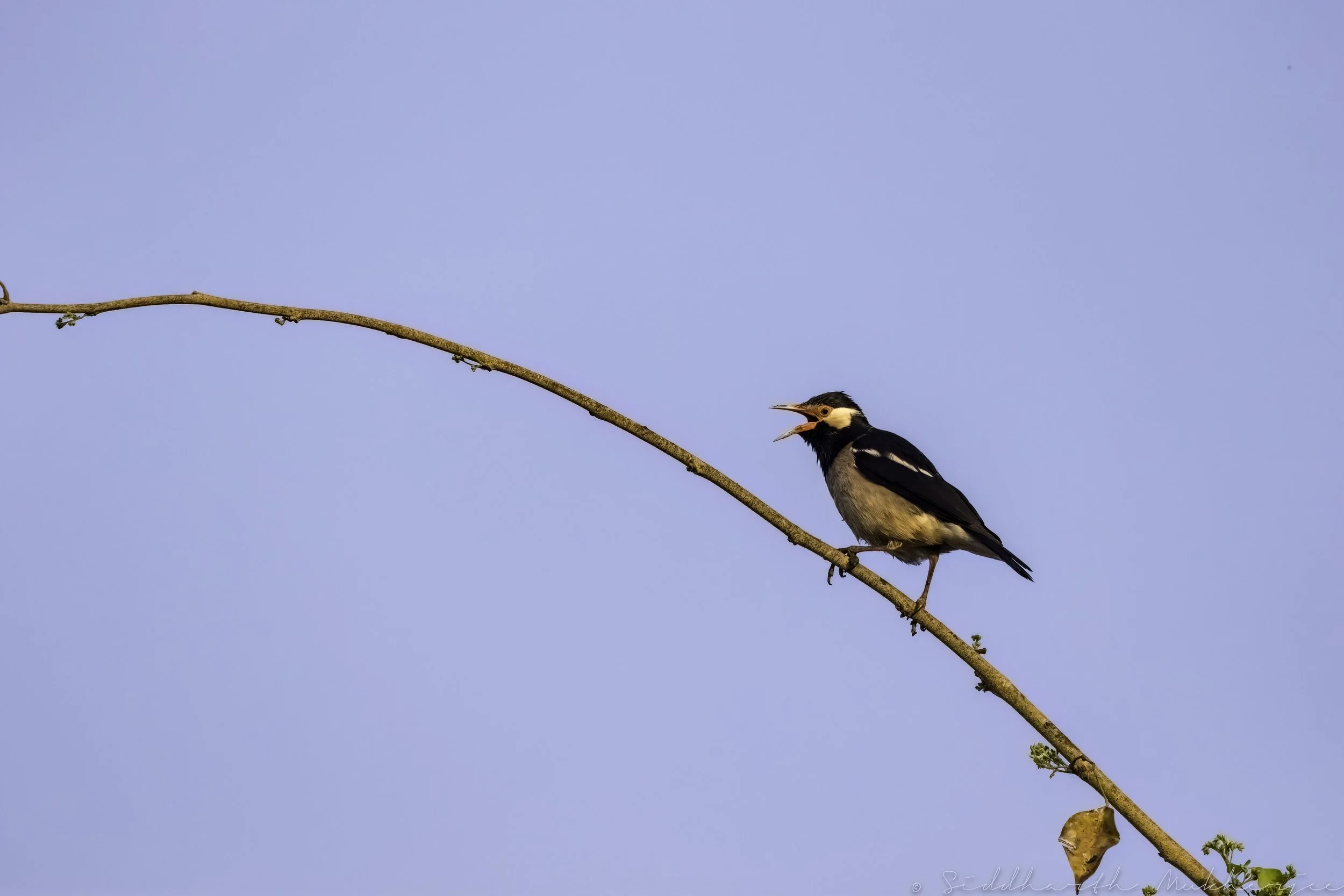
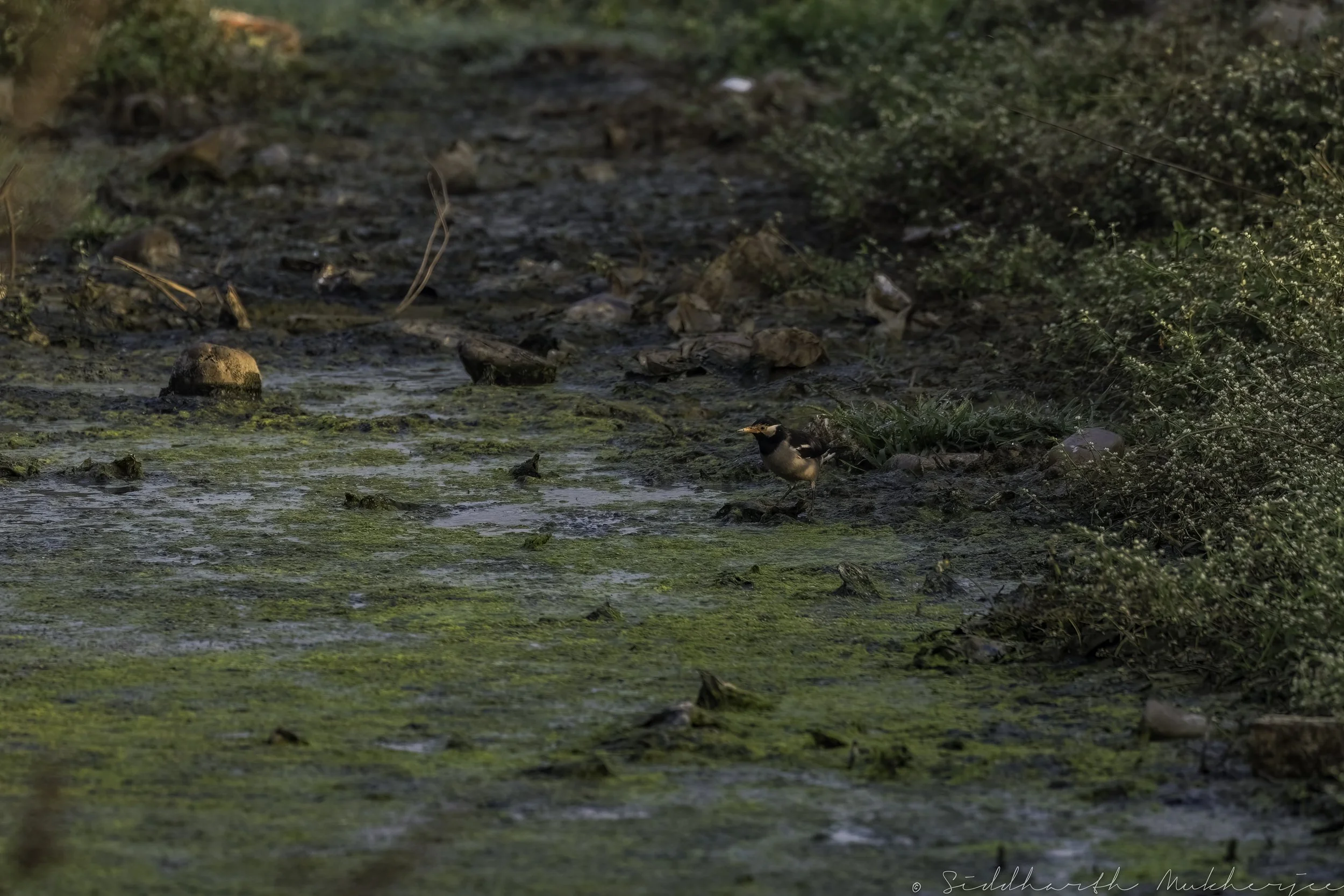
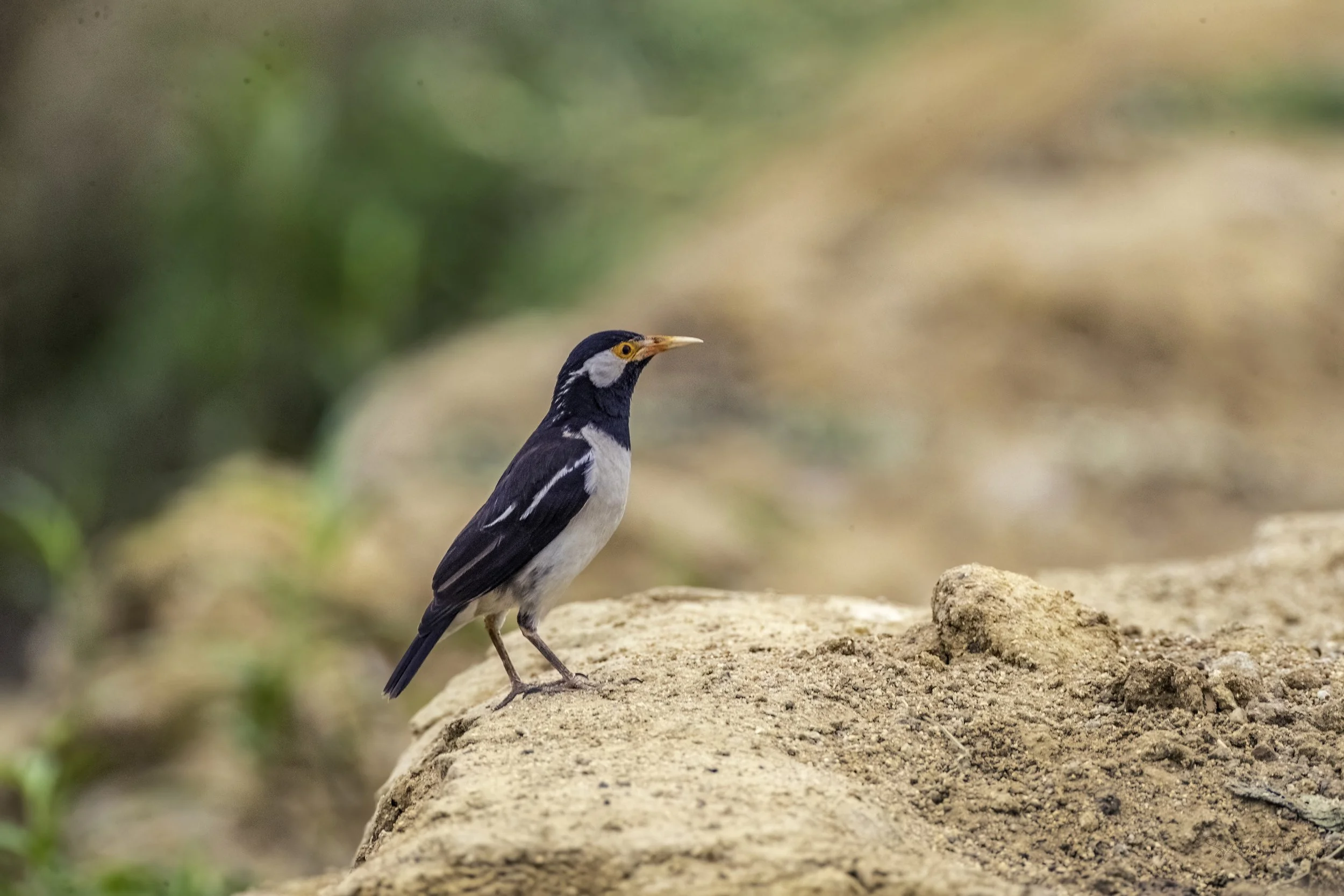
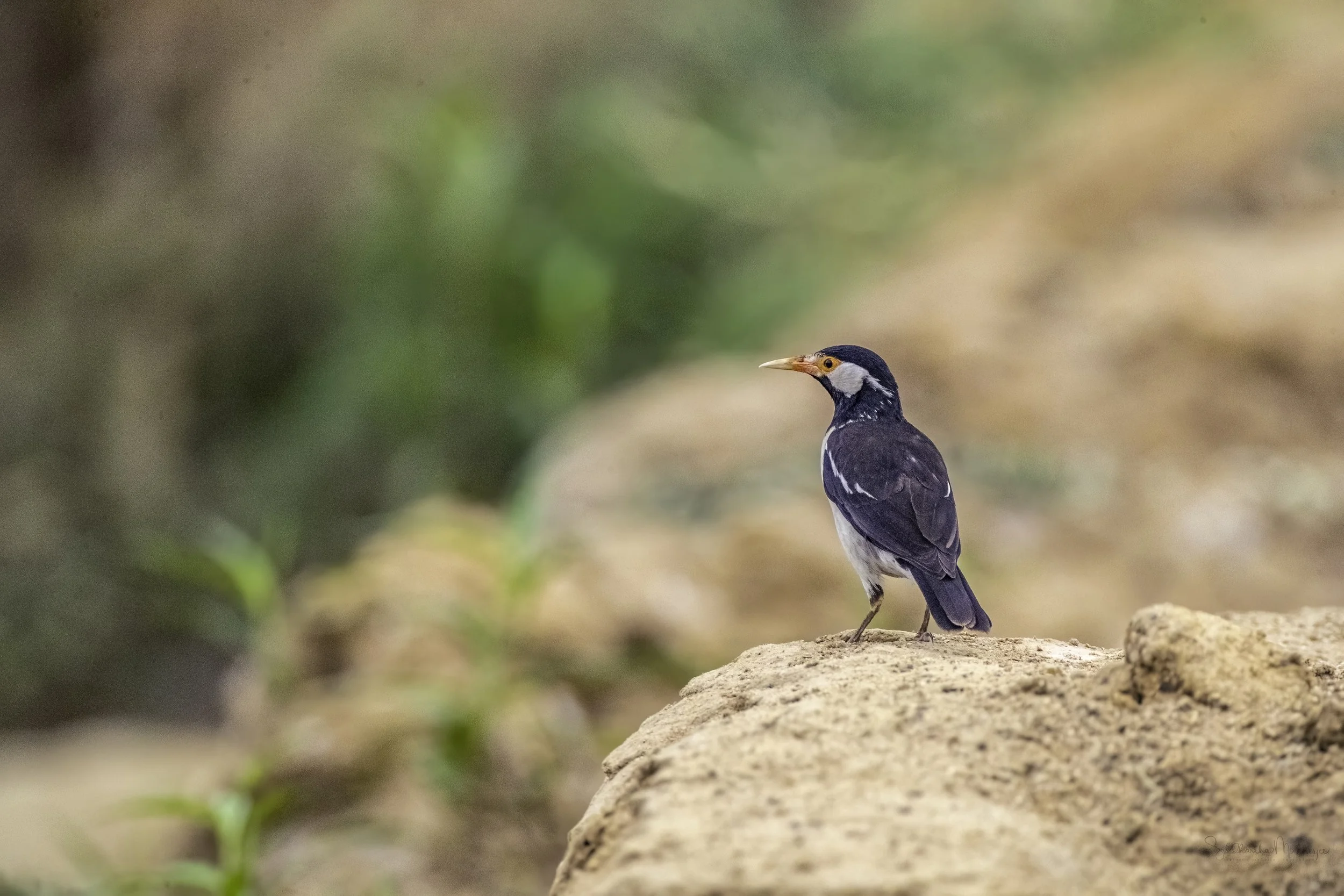
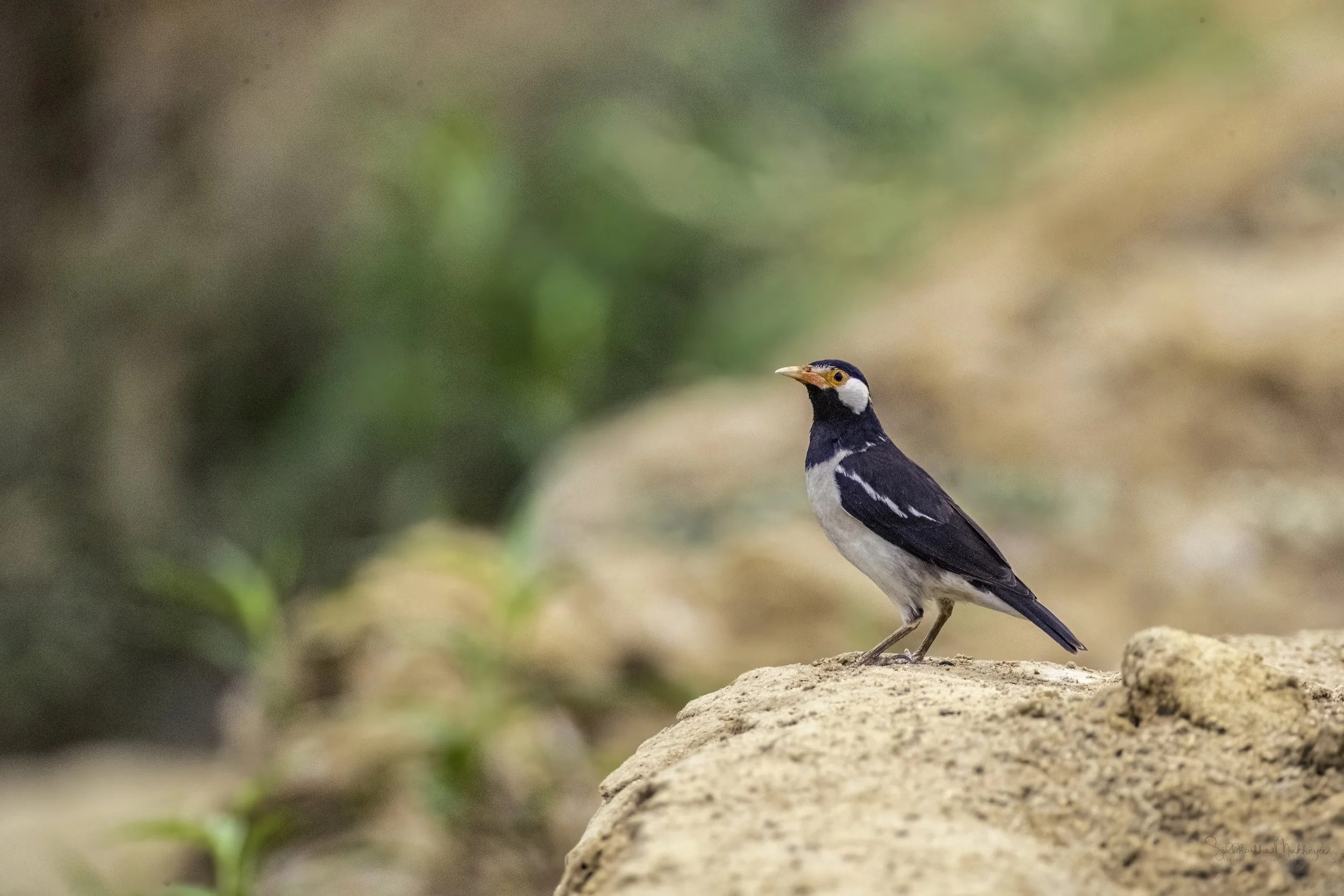
The morning air is thick and low over Mallucheruvu lake, a secluded water body tucked deep within the rugged fringe of the Amrabad Tiger Reserve. The Nallamala Hills rise in the distance like ancient, slumbering giants. Suddenly, a flash of stark black and white cuts through the dry deciduous canopy. It wasn't the majestic stride of a Bengal Tiger, nor the cautious leap of a chital. Instead, it was a sharp, dapper bird that landed gracefully on a little mound of earth. With its crisp plumage resembling a finely tailored tuxedo, the Indian Pied Myna (Gracupica contra) announced itself through a sudden burst of liquid, musical whistles.
This striking starling stands out against the wilderness of Amrabad. While the Amrabad Tiger Reserve is famed as the largest tiger habitat in Telangana, its expansive riverine ecosystems, fed by the mighty Krishna River, provide a vital refuge for over 303 avian species. Among these, the Indian Pied Myna—also widely known as the Asian Pied Starling—shines as a brilliant example of adaptability, ecological intelligence, and striking natural beauty.
Located in the central stretch of the Deccan Plateau, Telangana has sub-tropical climate and the terrain consists mostly of hills, mountain ranges, and thick dense forests covering an area of 27,292 km². The annual rainfall ranges between 1,100 mm to 1,200 mm and the annual temperature varies from 15°C to 45°C. The State is drained by a number of rivers which include Godavari and Krishna.
Telangana is endowed with rich diversity of flora and fauna. It has dense teak forests on the northern part along the banks of river Godavari. As per the Champion & Seth Classification of Forest Types (1968), the forests in Telangana belong to three Forest Type groups, which are further divided into 12 Forest Types. The Telangana Ku Harita Haram initiative aims at achieving the twin objectives of increasing the forest cover and reduce pressure on the existing forest resources, through massive community participation by Vana Samrakshna Samithis (VSS) and Eco-Development Committees (EDCs) in Protected Areas and Watershed Development Committees in the Watershed areas. Recorded Forest Area (RFA) in the State is 26,904 km² of which 20,353 km² is Reserved Forest, 5,939 km² is Protected Forest and 612 km² is Unclassed Forests. In Telangana, during the period 1st January 2015 to 5th February 2019, a total of 9,420 hectares of forest land was diverted for non-forestry purposes under the Forest Conservation Act, 1980 (MoEF & CC, 2019). As per the information received from the State during that last two years, 12,730 ha of plantations including avenue plantations in the State.
Three National Parks and nine Wildlife Sanctuaries constitute the Protected Area network of the State covering 5.08% of its geographical area and it is part of the Eastern Ghats. The Nagarjunsagar-Srisailam Tiger Reserve, the largest tiger reserve in India spread over the five districts of Kurnool, Prakasam, Guntur, Nalgonda and Mahabub Nagar falls in its precincts.
Achampet Forest Range, Amrabad Tiger Reserve
The Amrabad Tiger Reserve (ATR), sprawling across the rugged Nallamala Hills of the Eastern Ghats in Telangana, stands as one of India’s largest and most ecologically significant wildernesses. Central to the administration, protection, and ecological preservation of this pristine landscape is the Achampet Forest Range. Operating under the Nagarkurnool forest division, the Achampet range serves as a vital sanctuary for the region’s apex predators, a crucial watershed, and a vibrant cultural landscape where nature and ancient indigenous traditions intertwine.
Geographically, the Achampet Forest Range is defined by its highly dramatic and punishing terrain. The landscape features elevated plateaus—most notably the Farahabad plateau—broken up by sheer cliffs, deep gorges, and steep, winding valleys. This fractured topography acts as a natural fortress, isolating the deep interior areas from intensive human disturbance. The range experiences a warm tropical climate, receiving the majority of its life-giving rainfall during the Southwest monsoon. Crucially, the complex network of seasonal and perennial streams weaving through Achampet’s valleys empties directly into the Krishna River basin, forming a critical catchment zone that feeds the massive Srisailam and Nagarjuna Sagar dams.
The vegetation of the Achampet range is dominated by tropical dry deciduous forests mixed with dense undergrowths of bamboo and tall native grasses. The canopy includes valuable and sturdy tree species like teak, sal, and acacia, alongside a vast repository of rare, endemic medicinal herbs traditionally preserved by the local Chenchu communities.
This dense floral mosaic supports a thriving wildlife population. The Achampet division, particularly around the high Farahabad plateau, holds a major portion of the Royal Bengal Tiger population within Telangana. Alongside the tiger, the range protects co-predators such as Indian Leopards, Sloth Bears, and packs of endangered Wild Dogs (Dholes). These carnivores track a robust prey base of herbivores, including Sambhar, Chital (spotted deer), Nilgai, and the elusive and shy Four-horned antelope (Chousingha).
Furthermore, the skies and canopies of Achampet host over 300 avian species, making it a vital regional stronghold for bird conservation.
The Achampet Forest Range is unique for its deep anthropological roots. It is the ancestral home of the Chenchu tribe, an indigenous group that has lived symbiotically within the Nallamala forests for centuries. The Chenchus possess deep traditional knowledge of the forest's ecology and work closely with forest authorities in conservation and anti-poaching operations. Mechanically tied to the landscape are also deep historical and spiritual landmarks. The range houses the ancient Uma Maheshwaram Temple, a historic stone shrine built on a cliffside that is traditionally revered as the northern gateway to the sacred pilgrimage site of Srisailam.
Preserving the wilderness of Achampet requires a delicate balancing act by the Telangana Forest Department. The range faces continuous anthropogenic pressures, including forest fires, the spread of invasive weeds like Lantana camara, and habitat fragmentation caused by state highways slicing through the reserve. To mitigate these pressures and provide a legal economy for the Chenchu people, authorities have promoted regulated eco-tourism. Controlled jungle safaris, community-run stays, and environmental education camps around Farahabad allow visitors to witness the raw beauty of Telangana's wild heart without disrupting its ecological balance. Through strict management and local partnership, the Achampet Forest Range remains a defensive shield for India's natural heritage.
Read more about the Chenchu Sacred Groves.
Indian Pied Myna/ Asian Pied Starling
The Tuxedo of the Wetlands
The Indian Pied Myna (Gracupica contra) is a species of starling found in the Indian subcontinent. It is usually found in small groups mainly on the plains and low foothills. It is often seen within cities and villages although it is not as bold as the common myna. It produces a range of calls made up of liquid notes. The Indian Pied Myna is fundamentally a bird of the plains and low foothills, rarely venturing above an altitude of 700 metres.
In Telangana, while a dense forest interior is atypical for this species, the environs of the Amrabad Tiger Reserve provide a perfect mosaic of habitats: open savannah-like grasslands, cattle grazing zones used by the indigenous Chenchu tribes, and vast shorelines created by the Srisailam and Nagarjunsagar reservoirs. Beyond Amrabad, this bird is found in well-watered regions across Telangana, including the marshy outskirts and sewage farms of Secunderabad and Hyderabad, agricultural fields near the Kawal Tiger Reserve ecosystem and scattered rural and suburban pockets of Nalgonda, Warangal, and Nizamabad.
Across India, the historical heartland of the Indian Pied Myna extends across the Gangetic plains, stretching eastward to Assam and south to the Krishna River basin. However, the bird's range is dynamically expanding. It has successfully established thriving breeding populations further west into parts of Rajasthan, Punjab, and Pakistan. Across Asia, as a collective species, the Pied Myna complex spans deep into South and Southeast Asia. Taxonomic splits recognize distinct regional variations:
Gracupica contra (sensu stricto): Thrives across India, Nepal, Bangladesh, and Pakistan.
Gracupica floweri: Found primarily in Thailand and Laos.
Anatomy of a Dapper Forager
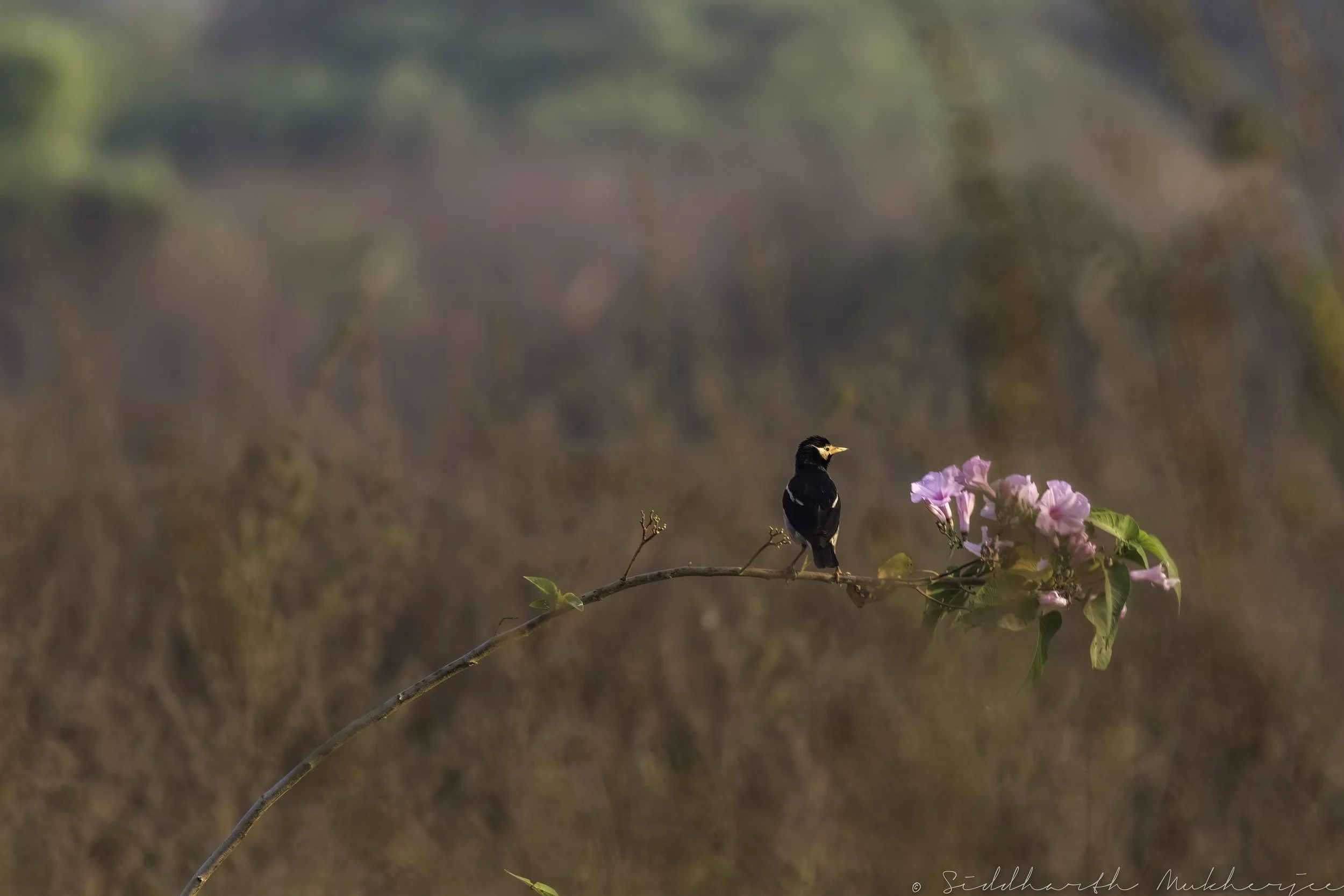
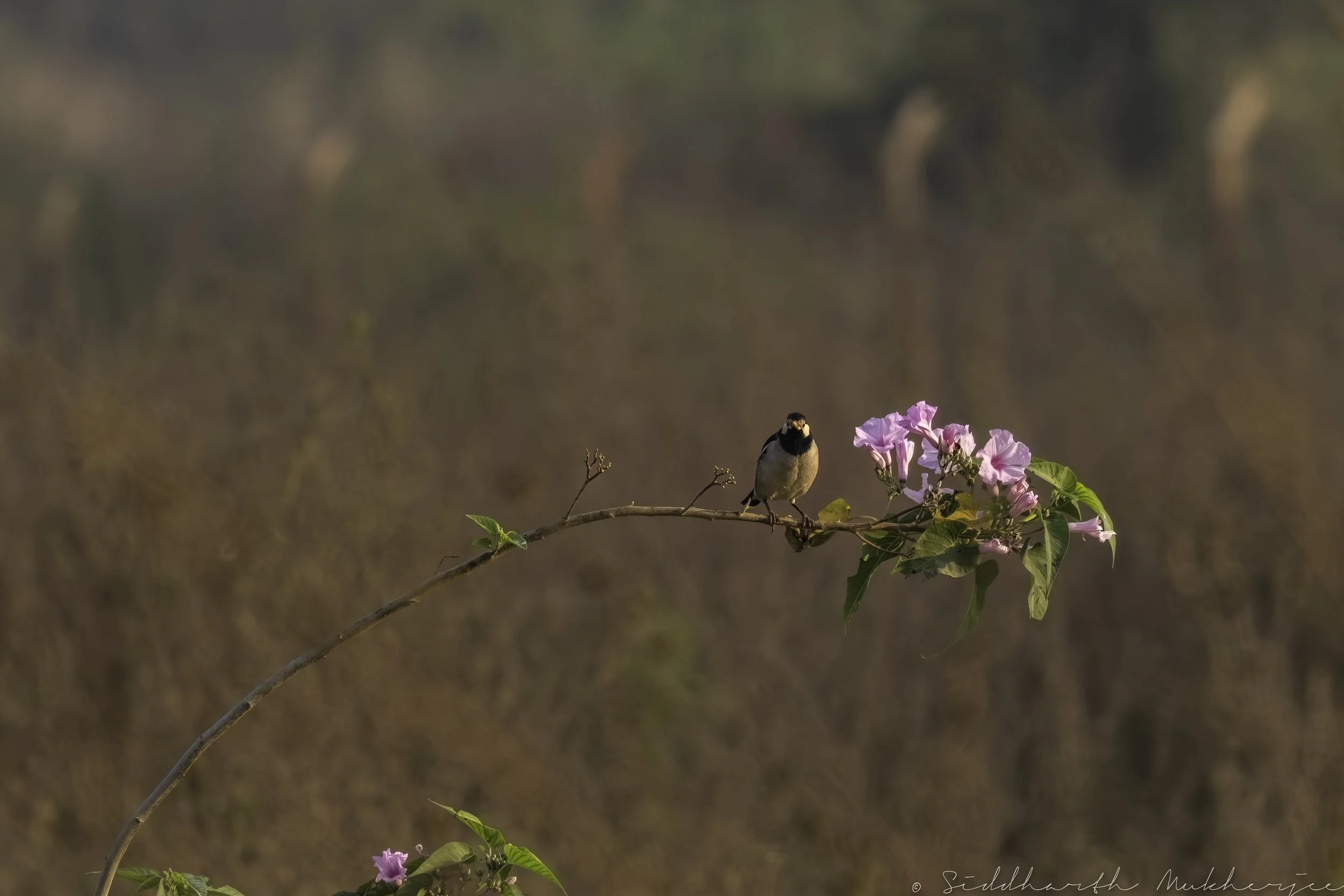
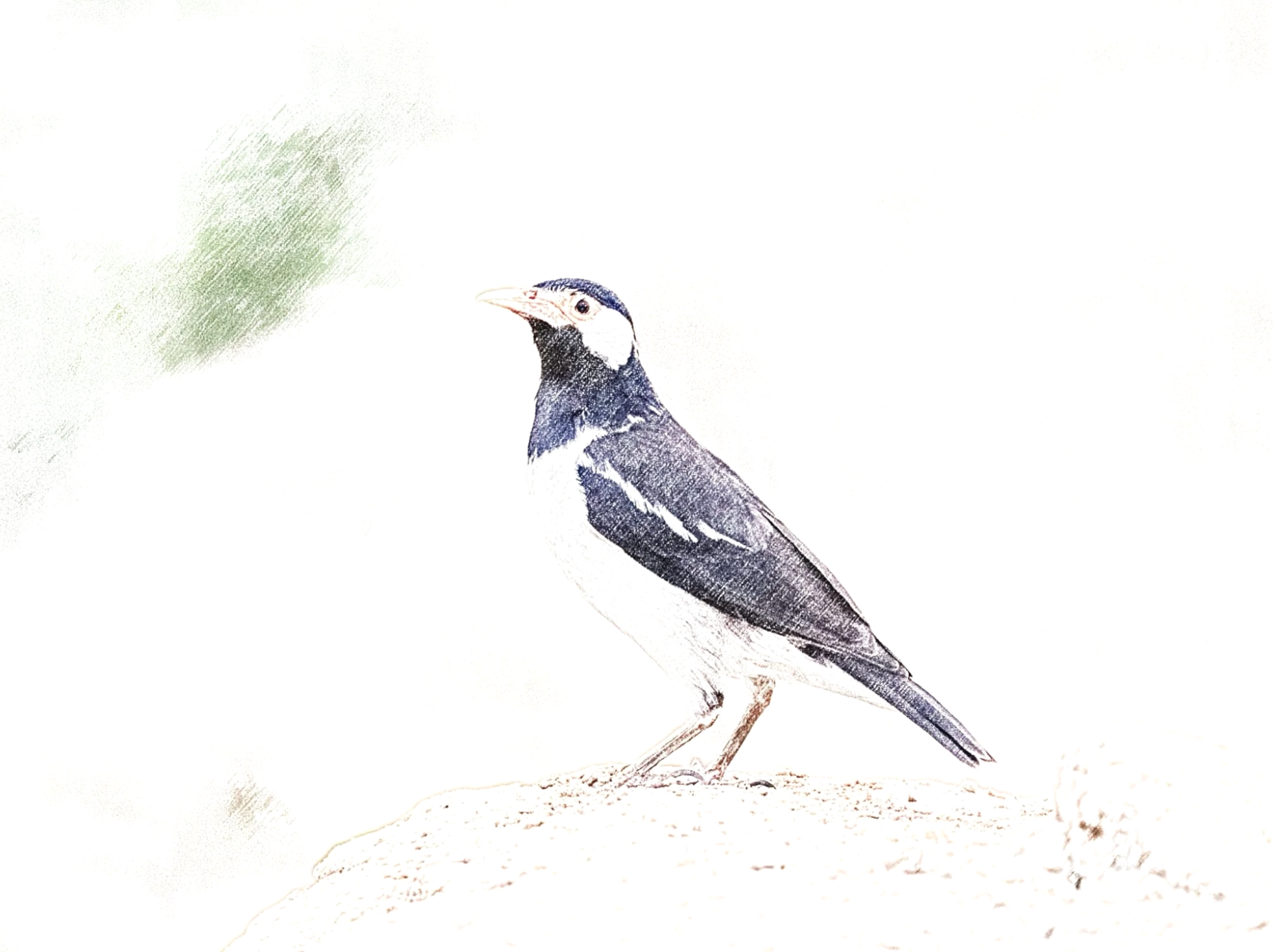
Measuring between 22 to 25 centimetres in length and weighing a modest 75 to 90 grams, the Indian Pied Myna is a medium-sized starling with a sharp, stream-lined profile. The bird wears a "tuxedo" pattern. The upperparts, head, throat, and upper breast are a rich, glossy black contrasting beautifully with clean white underparts, white cheeks, a white rump, and a distinct white wing bar visible during flight. Its most defining feature is the bare, vibrant orange-red skin around the eyes. This mask bleeds directly into the base of its long, pointed bill, which transitions from a bright orange-red at the base to a pale yellow or ivory horn colour at the tip. Immature birds lack the stark contrasts of adults. Their plumage is a duller charcoal brown, their facial skin is a muted yellow, and they lack the bright red base on their bills. When taking to the air, its flight is uniquely slow and butterfly-like, powered by broad, rounded wings.
Morphological Comparison: Pied Myna vs. Regional Cousins
To accurately identify the Indian Pied Myna, it helps to contrast its features with other common mynas found across India and Southeast Asia:
| Features | Indian Pied Myna (Gracupica contra) | Common Myna (Acridotheres tristis) | Bank Myna (Acridotheres ginginianus) | Black-Collared Starling (Gracupica nigricollis) |
|---|---|---|---|---|
| Primary Colours | Glossy black and stark white. | Rich vinous brown with a black head. | Blue-grey upperparts with a dark head. | White head and underparts; thick black collar. |
| Bill Shape & Colour | Long, slender; orange base with a yellow tip. | Short, stout; solid bright yellow. | Sharp, slightly curved; bright orange-red. | Thick, robust; solid blackish-horn. |
| Facial Bare Skin | Bright orange-red orbital patch. | Bright yellow patch behind the eye. | Deep brick-red or orange-red patch. | Large, pale yellow patch around the eye. |
| Geographic Realm | India, Pakistan, Nepal. | Global (Native to Asia; highly invasive worldwide). | North & Central India (River banks). | Mainland Southeast Asia (Thailand, Vietnam). |
The Indian Pied Myna is a species defined by its relationship with open water and damp soils. Its preferred habitats include marshlands, waterlogged crop fields (especially paddy), sewage farms, open lawns, and refuse tips. In a pristine wilderness like Amrabad, it strictly avoids the interior dry teak and bamboo blocks. Instead, it stays close to the moist riverine fringes and artificial water holes. This creates interesting geographic and ecological overlaps:
The Urban-Rural Overlap: In agricultural fields, it frequently shares foraging space with the Common Myna. While the Common Myna boldly hops onto veranda railings and urban doorsteps, the Pied Myna remains slightly more reserved, preferring the muddy margins of villages and suburban parks.
The Pastoral Overlap: It shares a symbiotic relationship with livestock. Flocks of Pied Mynas can be seen walking alongside domestic cattle or wild gaurs, snatching up grasshoppers, earthworms, and beetles dislodged by the heavy hooves of the mammals.
Pied Mynas are highly social, gregarious birds that travel in small, noisy flocks. They are incredibly vocal, producing a complex repertoire of whistles, trills, clicks and warbles.
The Gaping Action: When feeding on the ground, the Indian Pied Myna uses a highly specialized foraging technique known as prying or "gaping". Driven by strong protractor muscles in its skull, the bird drives its closed, pointed bill deep into the damp earth or turf. It then forcefully forces its beak open against the soil. This action parts the mat of roots and grass, exposing hidden grubs, earthworms, and small molluscs. Because its eyes are set forward on its head, it enjoys excellent binocular vision, allowing it to accurately strike prey inside the tiny gaps it creates.
The species possesses a remarkable talent for vocal mimicry, capable of perfectly replicating the songs of other birds and even ambient human sounds. Historically, this made them highly coveted as cage birds across the Indian subcontinent. Interestingly, some indigenous cultures hold deep reverence for this intelligence. The Sema Naga tribe of Northeast India traditionally avoids eating the Pied Myna, believing the bird to be a vessel for human reincarnation due to its expressive voice.
Ecological Shifts: Deforestation and Habitat Loss
As human activities alter landscapes, the Indian Pied Myna exhibits fascinating behavioral shifts. Unlike species that suffer a total population collapse due to deforestation, the Pied Myna acts as an "urban adapter". When primary dry deciduous forests are cleared or thinned out for agriculture, it actually creates new, highly favorable environments for this bird. The creation of artificial canals, open pastures, and rural settlements provides an abundance of foraging grounds.
However, this transition comes with hidden threats:
The Loss of Ancient Nesting Trees: Pied Mynas build large, untidy, dome-shaped nests out of twigs, dry grass, and recycled artificial waste. They require sturdy, mature trees or fork junctions to support these messy structures. Due to severe logging and urban clearing, the birds are experiencing a severe shortage of natural nesting sites.
Structural Behavioral Changes: In response to this habitat loss, the birds have begun adapting to man-made infrastructure. Flocks are now frequently documented building their massive communal nests directly onto electrical pylons, telephone poles, and lighting structures inside urban towns. While resourceful, this behavior frequently leads to accidental electrocutions and human-wildlife conflicts when utility workers clear out the nests.
Unlike its close relative, the Common Myna—which has caused widespread ecological damage across Australia, South Africa, and Madagascar—the Indian Pied Myna is not generally categorized as an aggressive, globally destructive invasive species. Within its native Asian range, it fits into its ecosystem naturally by controlling insect populations and dispersing seeds. However, when introduced to new territories outside its historical range (such as remote islands or heavily urbanized pockets of Western Asia), it can exhibit problematic urban exploiter behavior:
Resource Monopolization: Due to its highly social nature and tendency to forage in tightly coordinated flocks, it can quickly overwhelm and push out smaller, native insectivorous birds from urban parks and orchard edges.
Agricultural Nuisance: While their diet is heavily insectivorous during the breeding season, Pied Mynas eagerly pivot to grains, ripening sorghum, and soft orchard fruits during harvest periods. In areas where their population surges uncontrollably due to a lack of natural predators, they can cause localized damage to crop yields.
While watching a Pied Myna hunt along the damp edges of Mallucheruvu lake, one will invariably notice countless shimmering insects darting across the water: dragonflies and damselflies. These insects, belonging to the order Odonata, are key dietary targets for the Pied Myna. Though they look similar at a glance, they are separate suborders with clear physical and behavioral differences:
Wing Posture at Rest
Dragonflies (Anisoptera): Rest with their wings spread completely flat and open, perpendicular to their bodies like a miniature airplane. They cannot fold their wings backward over their abdomen.
Damselflies (Zygoptera): Typically fold their wings together vertically, holding them closed tightly along the length of their back when resting.
Body Shape and Dimensions
Dragonflies: Possess thick, robust, and heavily muscled bodies designed for high-speed pursuit.
Damselflies: Have exceptionally long, slender, and twig-like abdomens, giving them a delicate appearance.
Eyes and Head Structure
Dragonflies: Feature massive, bulbous compound eyes that wrap around their head, meeting or nearly touching at the top.
Damselflies: Have smaller, spherical eyes positioned on opposite sides of the head, with a distinct, wide gap separating them.
Flight Mechanics and Hunting Strategy
Dragonflies: Powerful, highly maneuverable aerial hunters. They actively patrol large territories over open water, capable of flying backwards, hovering, and capturing fast-moving prey directly out of mid-air.
Damselflies: Weaker, fluttering flyers. They operate primarily as ambush predators, perching quietly among reeds and dense aquatic vegetation, waiting to snap up tiny, slow-flying gnats or mosquitoes.
As the sun sets over the Amrabad Tiger Reserve, painting the sky in deep shades of amber and violet, the Pied Mynas gather in large communal roosts among the reeds. Their liquid notes continue to echo across the quiet water, a reminder of the incredible biodiversity thriving within this protected sanctuary. The story of the Indian Pied Myna is one of remarkable resilience. While human activities continue to reshape natural ecosystems, this striking black-and-white bird reminds us that nature always finds a way to adapt, bring beauty, and maintain its vital balance in our changing world.
‡‡‡‡‡

Related Posts



The Brahminy Starling or Brahminy Myna is a small fawn-colored starling with a long wispy crest that usually lies limp over the back of its head, but the feathers on its cheek and upper breast stand up and away from its cheek. Note the yellow bill with a blue base. Often seen in small family groups, feeding on fruits and nectar as well as insects on the ground or in the trees. They have a wide repertoire of calls and are also given to mimicking other species.
#wildartworks, #Canon, #Birdinginthewild, #BirdWatching, #WildBirds, #naturephotography, #your_best_birds, #planetbirds, #earthcapture, #photo_pond, #earthpix, #naturyst, #conservationphotography, #yesbbcearth, #indian_wildlifes, #indianwildlifeofficial, #wildlifeonearth, #bbcearth, #natgeowild, #natgeoindia, #NarsapurForest, #myna, #mynah, #starling, #TelanganaBirds, #brahminystarling, #brahminymyna, #brahminymynah,