
Magnificent Emperor Dragonfly/ Blue Darner
Anax immaculatifrons
Ananthagiri Forest Range, Vikarabad & Amrabad Tiger Reserve
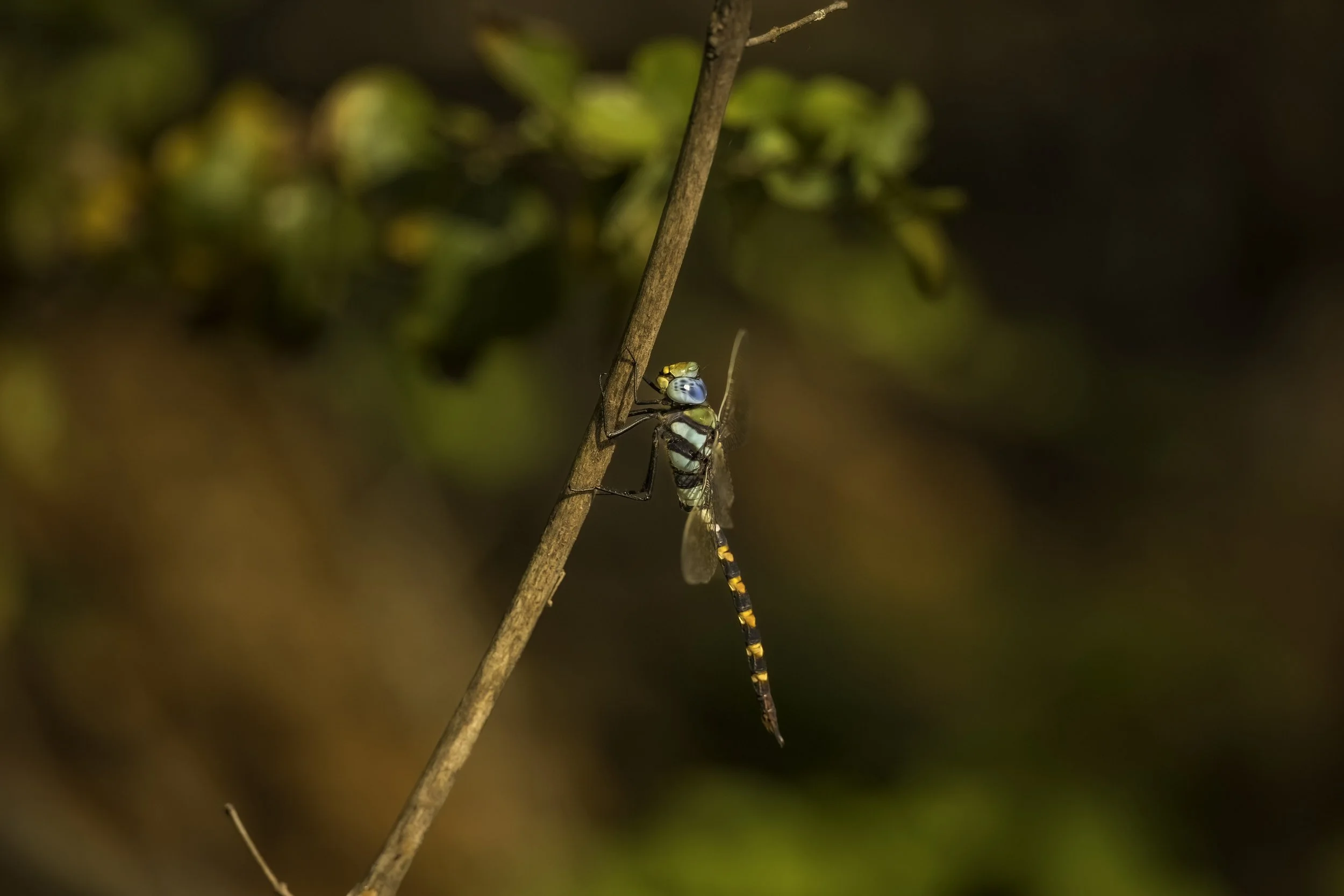
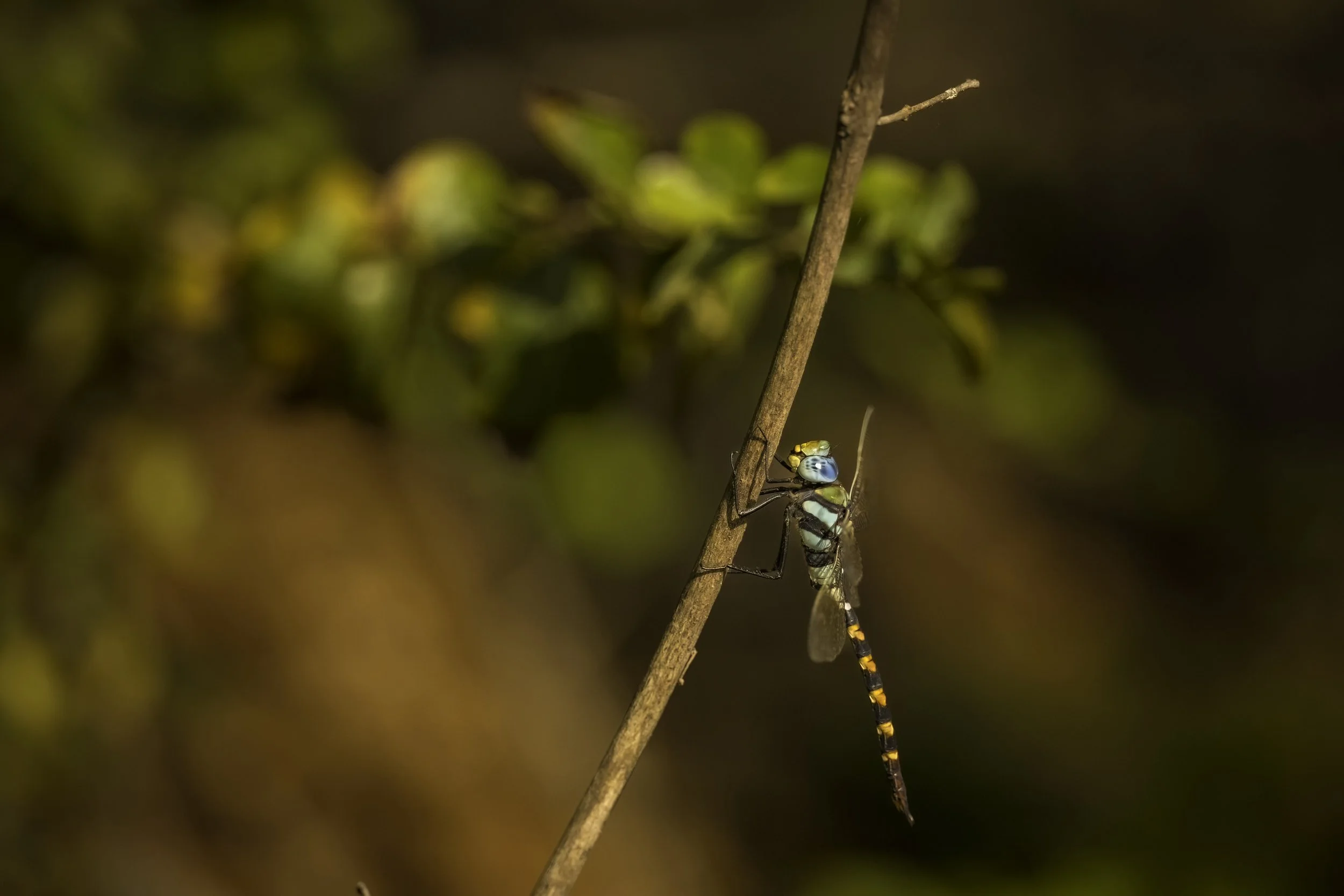
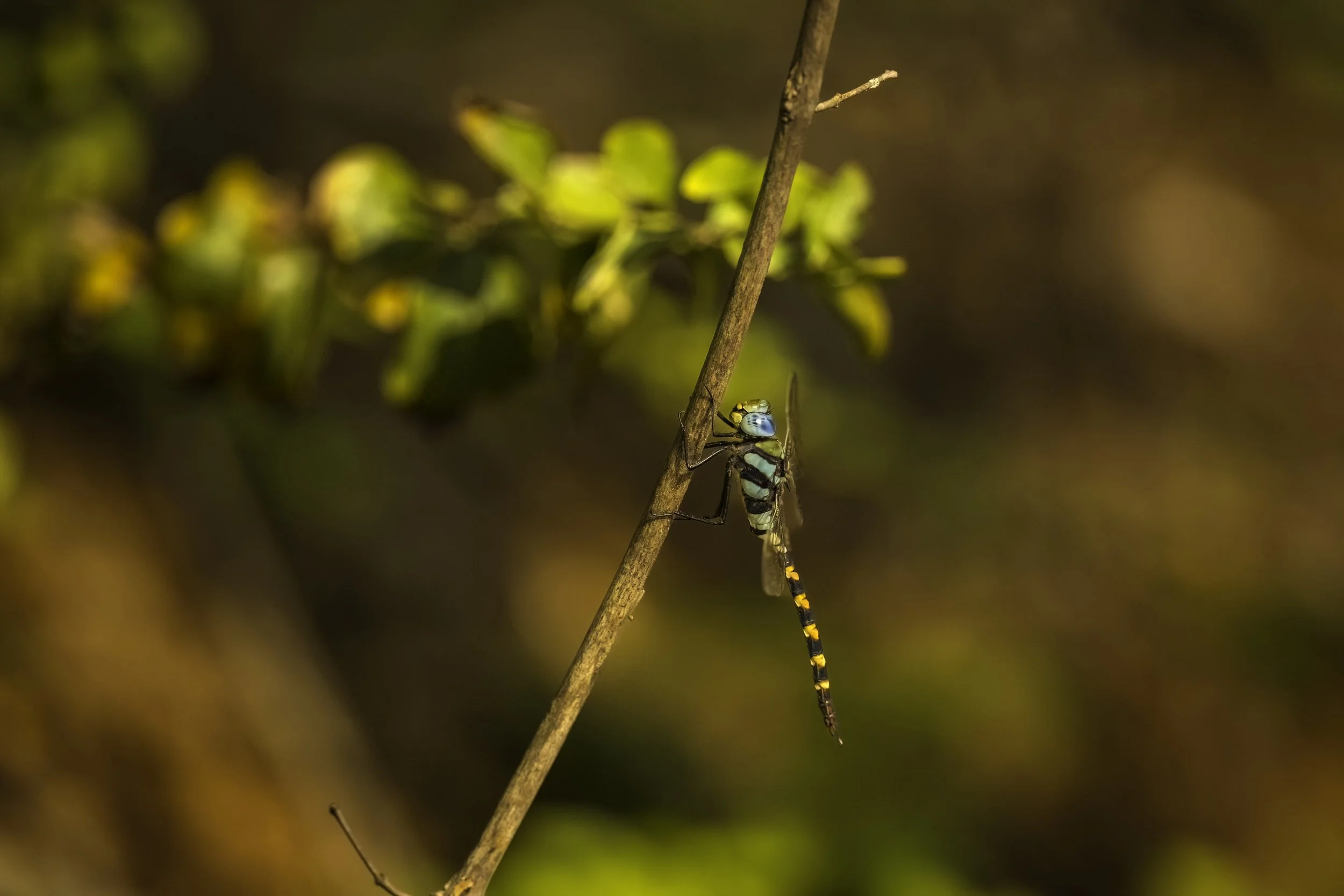
A metallic flash of electric blue and emerald green sliced through the heavy, humid air of the Ananthagiri Hills. It moved with an eerie, mathematical precision—hovering absolute, then vanishing in a blur that defied the physics of flight. Through the lens, the creature materialized on a overhanging twig. It was the Magnificent Emperor Dragonfly (Anax immaculatifrons), a titan among insects. Finding it here, in the deciduous pockets of Telangana, felt like unearthing a living gem. Weeks later, I would encounter the exact same iridescent specter hundreds of kilometres away, cutting through the rugged, dry-deciduous canopy of the Amrabad Tiger Reserve. This is the story of Asia’s apex aerial predator—a relic of ancient design navigating a rapidly changing modern world.
Now about these beautiful the forests of Telangana. Located in the central stretch of the Deccan Plateau, Telangana has sub-tropical climate and the terrain consists mostly of hills, mountain ranges, and thick dense forests covering an area of 27,292 km². The annual rainfall ranges between 1,100 mm to 1,200 mm and the annual temperature varies from 15°C to 45°C. The State is drained by a number of rivers which include Godavari and Krishna.
Telangana is endowed with rich diversity of flora and fauna. It has dense teak forests on the northern part along the banks of river Godavari. As per the Champion & Seth Classification of Forest Types (1968), the forests in Telangana belong to three Forest Type groups, which are further divided into 12 Forest Types. The Telangana Ku Harita Haram initiative aims at achieving the twin objectives of increasing the forest cover and reduce pressure on the existing forest resources, through massive community participation by Vana Samrakshna Samithis (VSS) and Eco-Development Committees (EDCs) in Protected Areas and Watershed Development Committees in the Watershed areas. Recorded Forest Area (RFA) in the State is 26,904 km² of which 20,353 km² is Reserved Forest, 5,939 km² is Protected Forest and 612 km² is Unclassed Forests. In Telangana, during the period 1st January 2015 to 5th February 2019, a total of 9,420 hectares of forest land was diverted for non-forestry purposes under the Forest Conservation Act, 1980 (MoEF & CC, 2019). As per the information received from the State during that last two years, 12,730 ha of plantations including avenue plantations in the State.
Three National Parks and nine Wildlife Sanctuaries constitute the Protected Area network of the State covering 5.08% of its geographical area and it is part of the Eastern Ghats. The Nagarjunsagar-Srisailam Tiger Reserve, the largest tiger reserve in India spread over the five districts of Kurnool, Prakasam, Guntur, Nalgonda and Mahabub Nagar falls in its precincts.
Ananthagiri Forest Range
Ananthagiri Hills is located in the Vikarabad district of Telangana. It is one of two major reserve forest blocks of the Vikarabad Forest Range the other one being the Damagundam Forest Reserve and each of these forest blocks is spread over a 10 km² area. While the limits of Damagundam begin from Manneguda, a small town about 60 kms from Hyderabad, Ananthagiri block begins where the limits of Vikarabad end near the railway tracks. The Ananthagiri hills and their dense forests host many wild species like the Nilgai, Sambhar, Black Buck, Chital, Chowsingha, Chinkara, Wild Goats and many more. The streams from these hills flows into Osman Sagar, also known as the Gandipet lake, and Himayath Sagar. It is one of the denser forests in Telangana and is the birthplace (about 5 kilometers from the town of Vikarabad) of the Musi river, also known as the Muchkunda River, which flows through the capital city, Hyderabad. The Musi River after originating in these Ananthagiri Hills, about 90 kilometers to the west of Hyderabad and flowing due east for almost all of its course joins the Krishna River at Wadapally in the Nalgonda district after covering a total distance of about 240 km. Also in these forests is the Sri Anantha Padmanabha Swamy Temple, a Hindu temple dedicated to the Lord Vishnu.
According to the Skanda Purana it is believed this temple was installed by Rishi Markandeya in the Dvapara Yuga. Attracted by the peaceful atmosphere of the Ananthagiri Hills Rishi Markandeya came here for yoga sadhana. It is believed that the Rishi, on the strength of his spiritual powers, would visit Kasi daily for a bath in the sacred Ganges through a cave. One day he was not able to visit Kasi because the Dwadasi was in the early hours of the morning. Because of this miss the Lord Vishnu appeared, gave Darshan, in a dream and arranged for the Ganges to flow so the Rishi could take his bath daily without having to travel.
About 400 years back the Nizams of Hyderabad used these forests as their hunting grounds. It is said that the lord Vishnu in the form of Sri Anantha Padmanabha Swamy appeared in a dream and asked the then Nizam, Mir Osman Ali Khan, to build a temple for him. About 20 kilometers from the temple lies the Nagasamudram Lake or Kotipally Reservoir, a masonry dam.
It is one of the earliest habitat areas with ancient caves, medieval fort structures and temples that illustrate the antiquity of this area.
I love these forests as they are home to innumerable bird species, some of which I have photographed and many more which I am yet to photograph. I only hope the so called “bird and nature lovers” who come here to photograph and achieve social media fame adhere to ethical birding practices and refrain from using calls, especially owl calls, and bait. Over the years I have seen the behaviour of the wildlife change in these forests. Birds like this nightjar were easily visible without having to venture deep into the dense brush but now the overload of wildlife enthusiasts has pushed these birds deep into the undergrowth. I think, in a way, it is good for the birds and animals because it requires time and patience to slowly approach them which the modern bird lover/ photographer lacks.
Read about the other lovely species I have photographed in the Ananthagiri Forests.
Magnificent Emperor Dragonfly/ Blue Darner
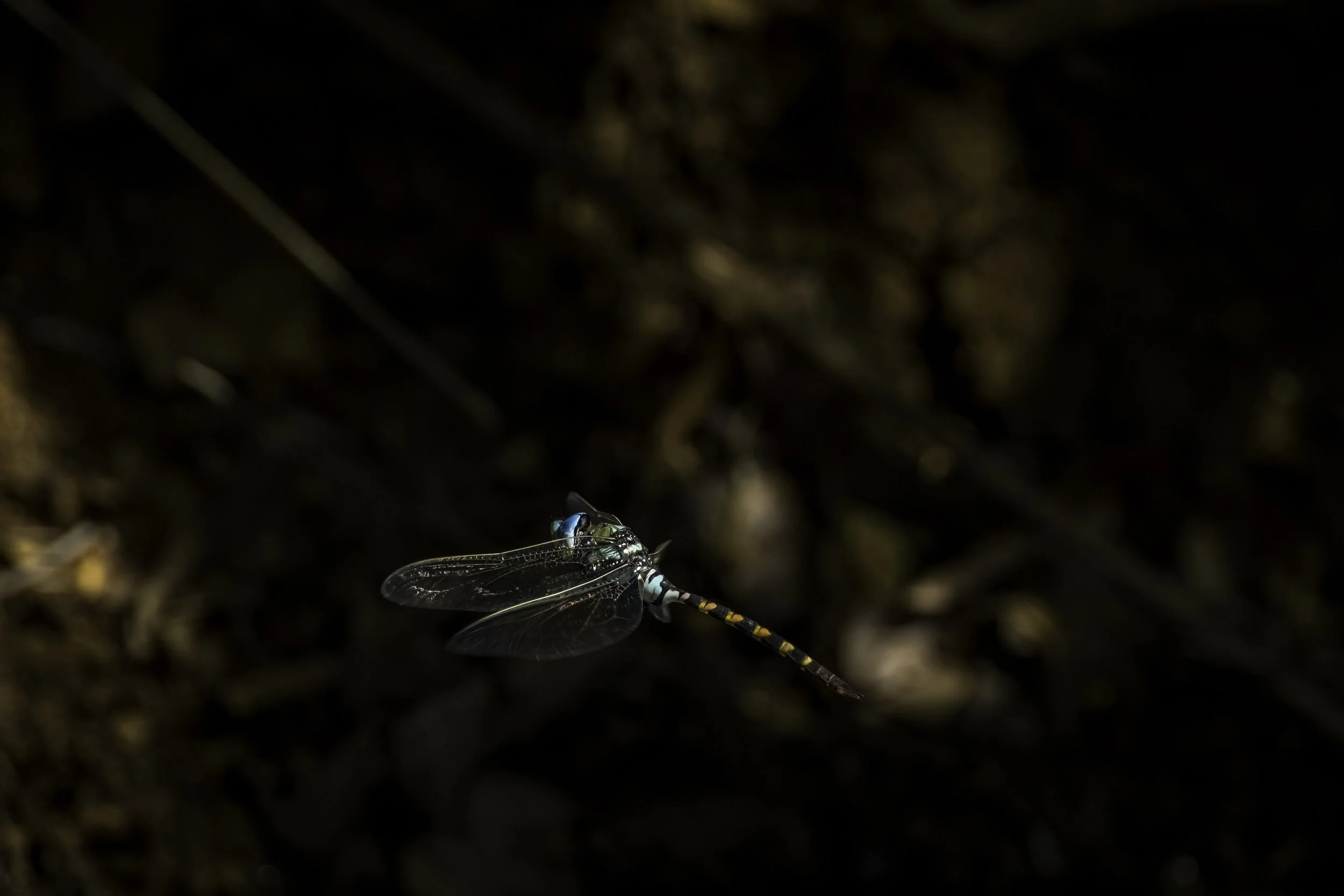
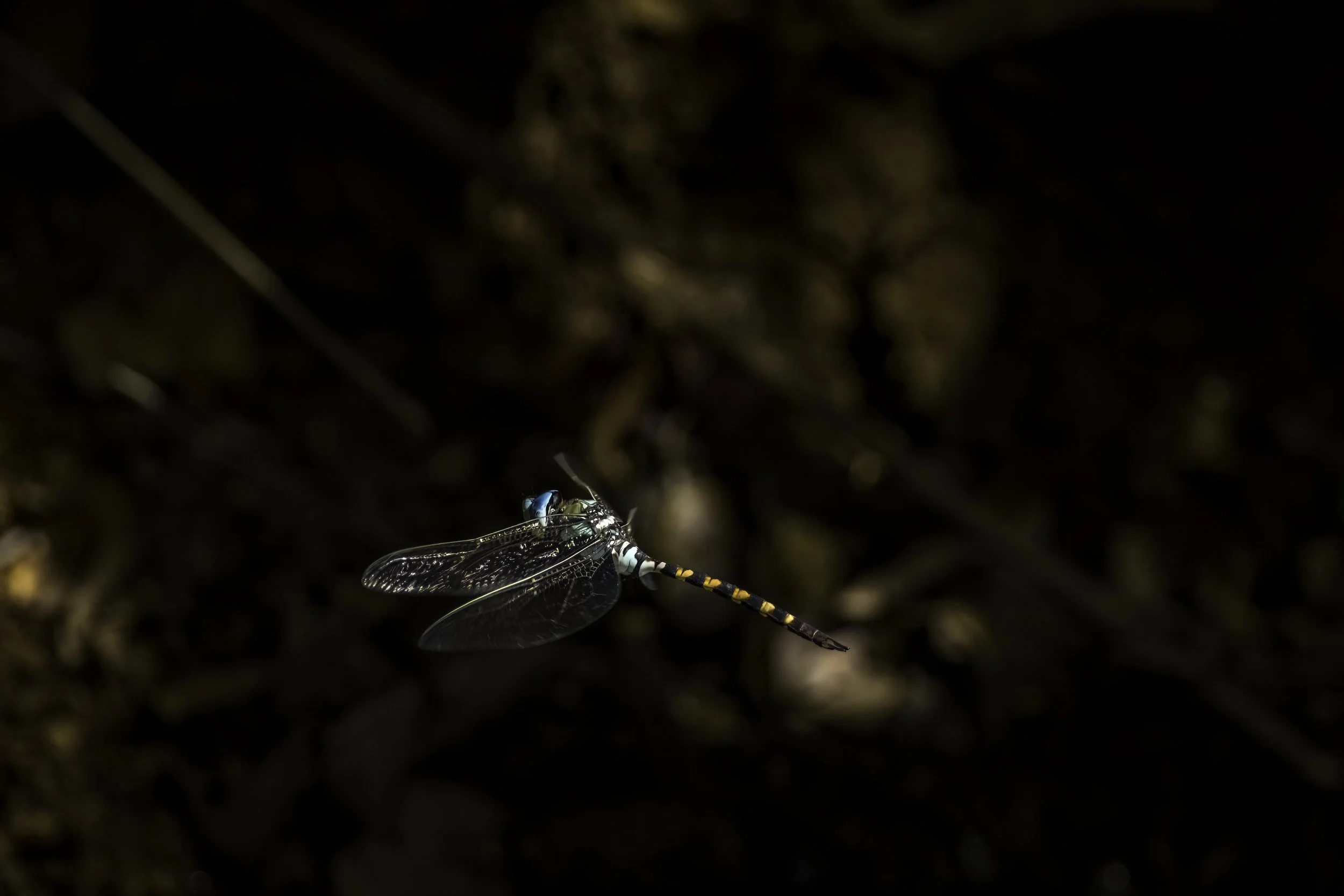
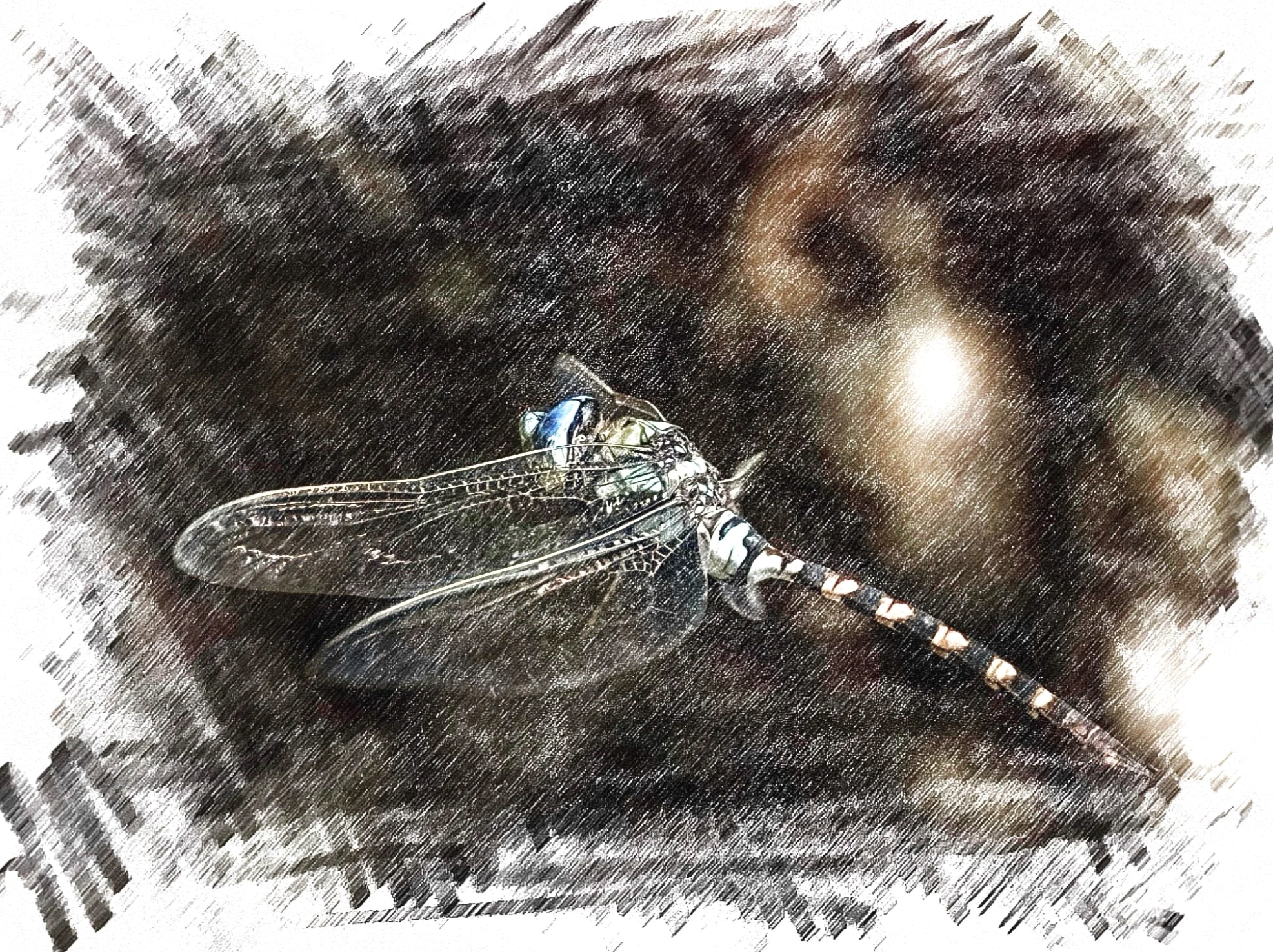
The Magnificent Emperor Dragonfly lives up to its regal name through its sheer scale and striking coloration. It is one of the largest dragonfly species in Asia, presenting a commanding presence. The wingspan of an adult can stretch between 110 mm to nearly 130 mm. Its total body length ranges from 80 mm to 95 mm, making it a formidable giant compared to standard garden insects. Its massive compound eyes are a brilliant, translucent sapphire blue in mature males, meeting seamlessly at the top of the head. These eyes grant a near-360-degree field of vision. The thorax is dominated by a vibrant, grass-green or apple-green hue, acting as perfect camouflage against forest foliage. The long, segmented abdomen is a striking tapestry of turquoise-blue and deep black rings. In females, these colours are slightly more subdued, leaning toward olive greens and rich browns to aid in camouflage during egg-laying. The wings are completely transparent, reinforced with a dense, amber-tinted network of veins. The leading edges (costa) are exceptionally strong, built to withstand high-velocity impacts during hunting.
This giant of the insect world is one of the most stunning members of the family Aeshnidae (the hawkers or darners). Photographed extensively across the protected ecosystems of Telangana—from the pristine forest streams of Ananthagiri Hills to the rugged, deep gorges of the Amrabad Tiger Reserve—this species stands as a critical indicator of pristine freshwater ecosystems.
The Magnificent Emperor Dragonfly commands a vast geographical territory across the Asian continent. Outside of the Ananthagiri Hills and the Amrabad Tiger Reserve, this species is patchily distributed across the country. It is frequently recorded along the fast-flowing hill streams of the Western Ghats (including Nilgiris and Wayanad) and parts of the Eastern Ghats. It also extends its range into the foothills of the Himalayas, from Himachal Pradesh through Uttarakhand and into Northeast India. On a global scale, Anax immaculatifrons is found stretching from the Middle East (including Cyprus, Iran, and Oman) across South Asia (Pakistan, India, Sri Lanka, Nepal) and deep into Southeast Asia and East Asia, including southern China, Thailand, Vietnam, and Malaysia.
The insect's colour palette blends striking visibility with tactical camouflage with massive compound eyes of deep, glowing sapphire blue that meet seamlessly at the midline of the head. A smooth, non-metallic pale bluish-green or apple green thorax, cut by a distinct blackish-brown mid-dorsal carina and structured black lateral stripes along its side sutures. The wings are fully transparent (hyaline) but bathed in a characteristic, delicate amber-yellow tint along the base and body. Their abdomen is a complex mosaic of segments. Segment 1 is matte black. Segment 2 is a vibrant turquoise-blue highlighted by a dark mid-dorsal mark mimicking a seagull in flight. Segment 3 transitions from turquoise to black. Segments 4 through 8 feature an earthy, pale reddish-brown base with thick black bands. Segments 9 and 10 terminate in solid black.
Distribution in India
The Western Ghats: Abundant in montane streams, from the misty heights of Wayanad and Coorg down to the Nilgiris and Anamalai ranges.
The Eastern Ghats & Deccan Plateau: Thrives in undisturbed pockets of the Nallamala Hills (within the Amrabad Tiger Reserve) and the Vikarabad plateau (Ananthagiri).
The Himalayas: Ranges across mid-elevation hill streams from Himachal Pradesh through Uttarakhand & into West Bengal and Sikkim.
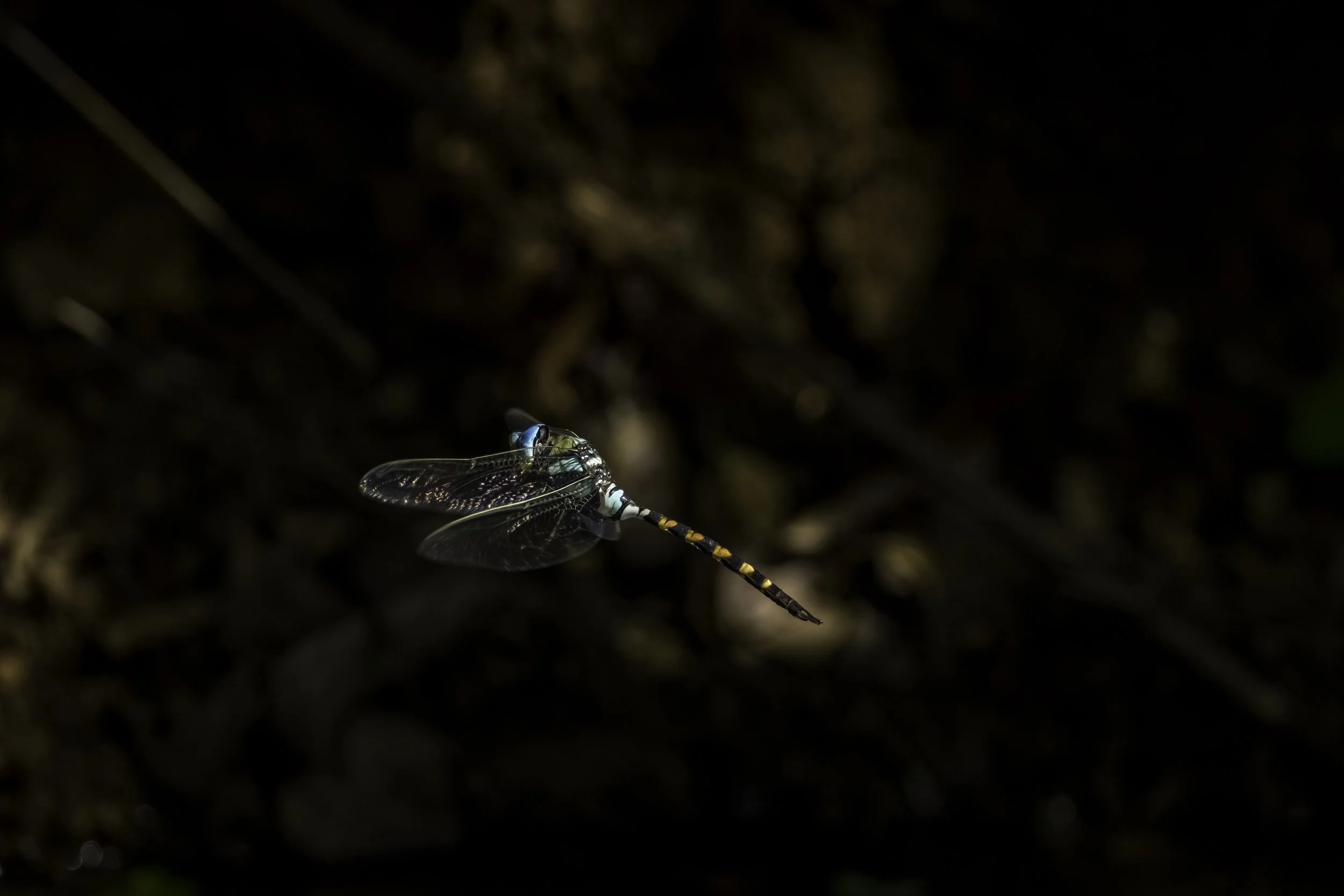
The male Magnificent Emperor is a tireless, aggressive, and highly territorial interceptor. It maintains a strict patrolling route ("beat") along a section of a stream, rarely choosing to rest. Utilizing four distinct flight modes—phased-stroking for slow cruising, synchronized stroking for sudden accelerations, counter-stroking for hovering, and effortless gliding—it can instantly pursue intruders or prey. It flies with such power that it easily intercepts and consumes large butterflies, midges, mosquitoes, and even smaller dragonflies in mid-air.
The Competition: Distinctions from Common Dragonflies
To appreciate the Magnificent Emperor, one must contrast it with the other common odonates darting across Telangana and Southeast Asian waters.
| undefined | Magnificent Emperor (Anax immaculatifrons) | Green Marsh Hawk (Orthetrum sabina) | Ditch Jewel (Brachythemis contaminate) | Asian Pintail (Acisoma panorpoides) |
|---|---|---|---|---|
| Size | Massive (80–95 mm length) | Medium (45–50 mm length) | Small (30–35 mm length) | Very Small (25–30 mm length) |
| Coloration | Electric blue, emerald green, black | Yellowish-green with black stripes | Bright orange/red (males) | Light blue with black marbled patterns |
| Flight Style | Continuous, high-altitude patrolling | Low to ground, short perching darts | Low, swarming over stagnant water | Weak, fluttering close to vegetation |
| Abdomen Shape | Uniformly robust, long cylinder | Distinctly swollen base, then very thin | Tapered, slightly flattened | Short, abruptly tapered "pintail" |
Green Marsh Hawk/ Slender Skimmer (Orthetrum sabina)
Ditch Jewel (Brachythemis contaminata)
In Southeast Asia, it is often confused with the Sultan Dragonfly (Camacinia gigantea). However, the Sultan possesses distinct dark, reddish-brown patches on its wings, whereas the Magnificent Emperor maintains clear wings with a vibrant blue-and-green body.
The Magnificent Emperor is a specialist of clean, perennial mountain streams and torrential hill rivers. They require clear, well-oxygenated water with overhanging riparian vegetation. The roots and fallen twigs provide crucial hunting and hiding spots for their aquatic larvae (naiads). In the Ananthagiri Hills, they inhabit seasonal and perennial forest streams. In Amrabad, they are found around deeper rock pools (gundams) and forest streams feeding into the Krishna River basin. Because they are highly territorial, they frequently clash with the Ditch Jewel and Green Marsh Hawk. While the smaller species occupy the stagnant, sunny edges of these water bodies, the Emperor claims the open, high-velocity air space directly above the running water.
The Phantom of the Stream
The behavior of Anax immaculatifrons is defined by aggression, dominance, and unmatched aerial mastery. Males establish strict territories along a 50-to-100-meter stretch of a stream. They fly relentlessly back and forth, rarely perching, defending their zone against rival males and other large insects. They are generalist predators. They hunt mid-air, capturing mosquitoes, butterflies, beetles, and even smaller dragonfly species. They lock their prey in a basket formed by their spiny legs and devour them while still airborne. When a female enters the territory, the male clasps her behind the head in a tandem link. Unlike many other dragonflies, the female Magnificent Emperor often oviposits (lays eggs) alone, slicing into submerged plant tissues to insert her eggs safely away from predators.
Habitat Loss and Behavioral Shifts
The pristine streams of Vikarabad and the dense forests of Amrabad are facing unprecedented anthropogenic pressures. Deforestation, tourism, climate change, and water pollution are altering the lifecycle of this magnificent insect. As forest canopies are thinned by logging, stream temperatures rise. The Magnificent Emperor, adapted to cool, shaded hill streams, is being forced to alter its hunting times. Photographers and researchers note that these insects are becoming increasingly crepuscular—shifting their peak activity to the cooler dawn and dusk hours to avoid the intense midday heat of exposed streams. Deforestation leads to soil erosion, silt up mountain streams, turning clear, flowing waters into murky, stagnant puddles. The Emperor’s larvae require high oxygen levels found only in moving water. As streams dry or silt up, reproductive success plummets. Agricultural runoff from fields surrounding the Ananthagiri Hills introduces pesticides into the aquatic ecosystem. Because dragonfly larvae are apex predators of the underwater micro-world, they suffer from bioaccumulation, leading to high mortality rates before they can even emerge into their winged adult forms.
‡‡‡‡‡

Related Posts


The Indian Giant Squirrel or Malabar Giant Squirrel (Ratufa indica) is a large herbivorous diurnal, arboreal rodent endemic to India’s forests. One of the three giant squirrel species found in the country, the Indian/ Malabar Giant Squirrel is characterised by its rufous-brown/purple colour and its ability to quickly jump from one tree to another. They can be seen either hanging down from the canopy, flat against the tree trunk, or scuttling about the branches, their tails bobbing as they do so.
#wildartworks, #canon, #CanonWildlife, #naturephotography, #TelanganaWildlife, #umamaheshwaram, #achampet, #AmrabadTigerReserve #indiangiantsquirrel, #malabargiantsquirrel, #squirrel, #rodent,