
Maisamma Madugu
A Chenchu Sacred Grove
Amrabad Tiger Reserve
In the dense, emerald shadows of the Nallamala Hills, where the ancient trees of the Amrabad Tiger Reserve whisper secrets to the wind, live the Chenchu people. As one of India’s oldest aboriginal tribes, they have navigated these rugged terrains for millennia, bound to the earth by a spiritual and ecological tether that remains unbroken by the march of modern time. For a Chenchu, the forest is never a resource to be exploited; it is a living family member to be revered, a sentiment anchored firmly in their Sacred Groves. These groves are not merely patches of trees, but living, breathing sanctuaries protected by community faith and tradition.
This is an homage to one of India's most profound, ancient, and vulnerable examples of biodiversity conservation, deeply intertwined with the spiritual and cultural identity of the Chenchu tribe.
Located in the central stretch of the Deccan Plateau, Telangana has sub-tropical climate and the terrain consists mostly of hills, mountain ranges, and thick dense forests covering an area of 27,292 km². The annual rainfall ranges between 1,100 mm to 1,200 mm and the annual temperature varies from 15 C to 45 C. The State is drained by a number of rivers which include the Godavari and the Krishna.
Telangana is endowed with rich diversity of flora and fauna. It has dense teak forests on the northern part along the banks of river Godavari and to the south along the banks of the Krishna. As per the Champion & Seth Classification of Forest Types (1968), the forests in Telangana belong to three Forest Type groups, which are further divided into 12 Forest Types. The State Government had taken up a massive greening programme, 'Telangana Ku Harita Haram' in the State to plant and protect 230 crore seedlings over a period of 4 years. This initiative aims at achieving the twin objectives of increasing the forest cover and reduce pressure on the existing forest resources, through massive community participation by Vana Samrakshna Samithis (VSS) and Eco-Development Committees (EDCs) in Protected Areas and Watershed Development Committees in the Watershed areas. Recorded Forest Area (RFA) in the State is 26,904 km² of which 20,353 km² is Reserved Forest, 5,939 km² is Protected Forest and 612 km² is Unclassed Forests. In Telangana, during the period 1st January 2015 to 5th February 2019, a total of 9,420 hectares of forest land was diverted for non-forestry purposes under the Forest Conservation Act, 1980 (MoEF & CC, 2019). As per the information received from the State during that last two years, 12,730 ha of plantations including avenue plantations in the State.
Three National Parks and nine Wildlife Sanctuaries constitute the Protected Area network of the State covering 5.08% of its geographical area and our focus area today is within the north western fringe of the Nallamalla forest - the Amrabad Tiger Reserve. The Amrabad Tiger Reserve is India's second-largest tiger reserve by core area (2,611 km²). Known for its rugged terrain, deep gorges, and dry deciduous forests, it hosts Bengal tigers, leopards, and over 300 bird species. The river Krishna flows through it, supporting rich biodiversity and the indigenous Chenchu tribes.
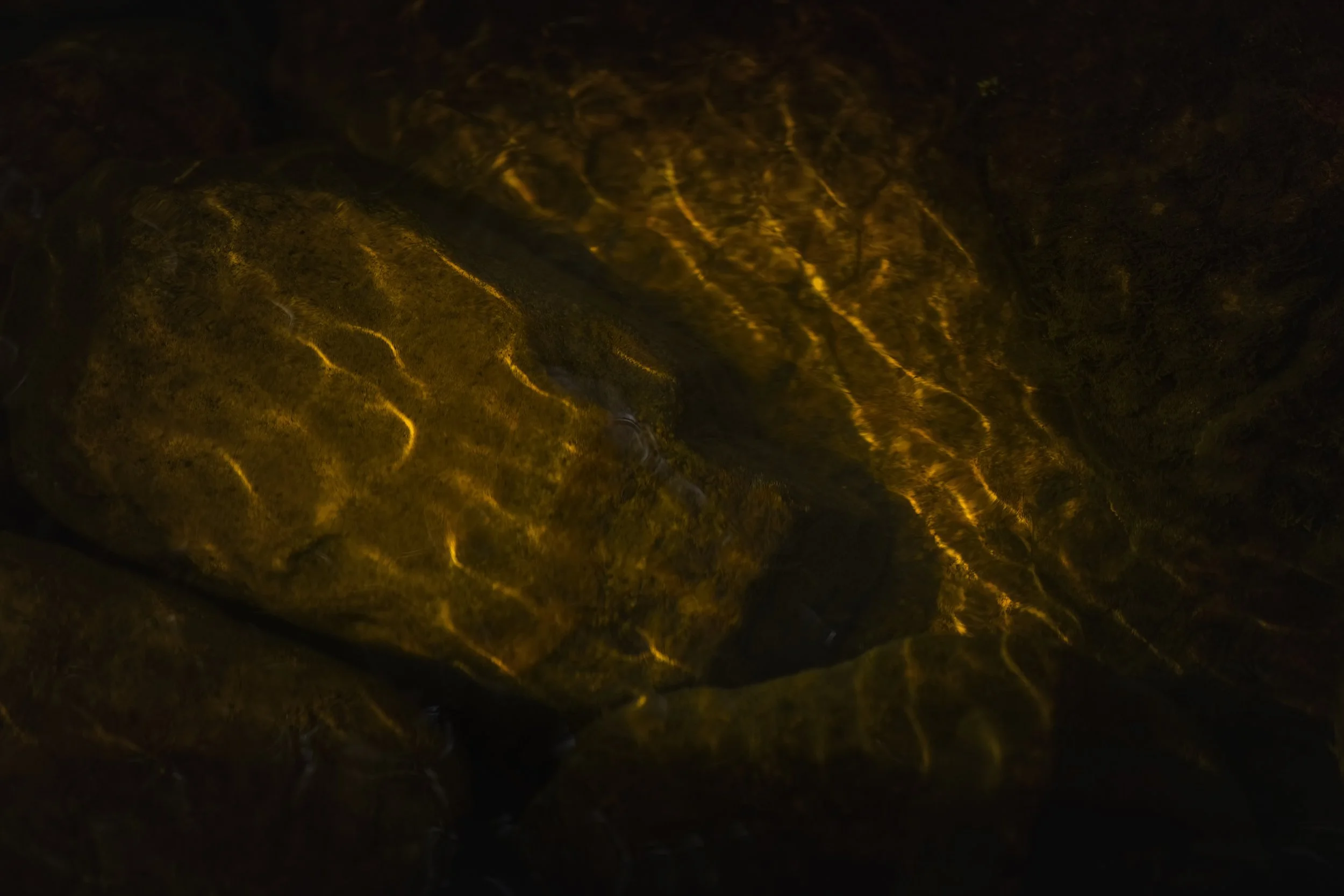
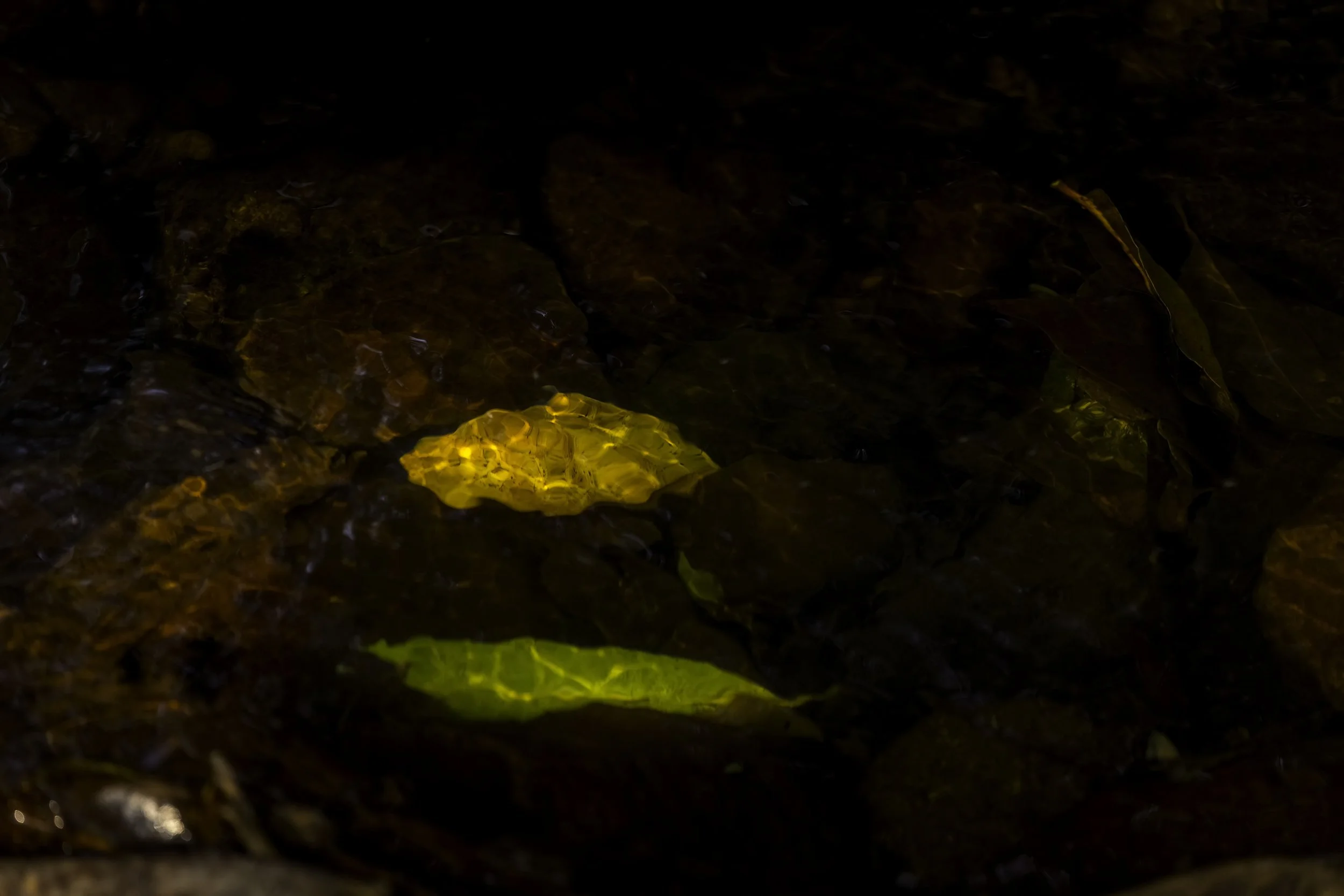
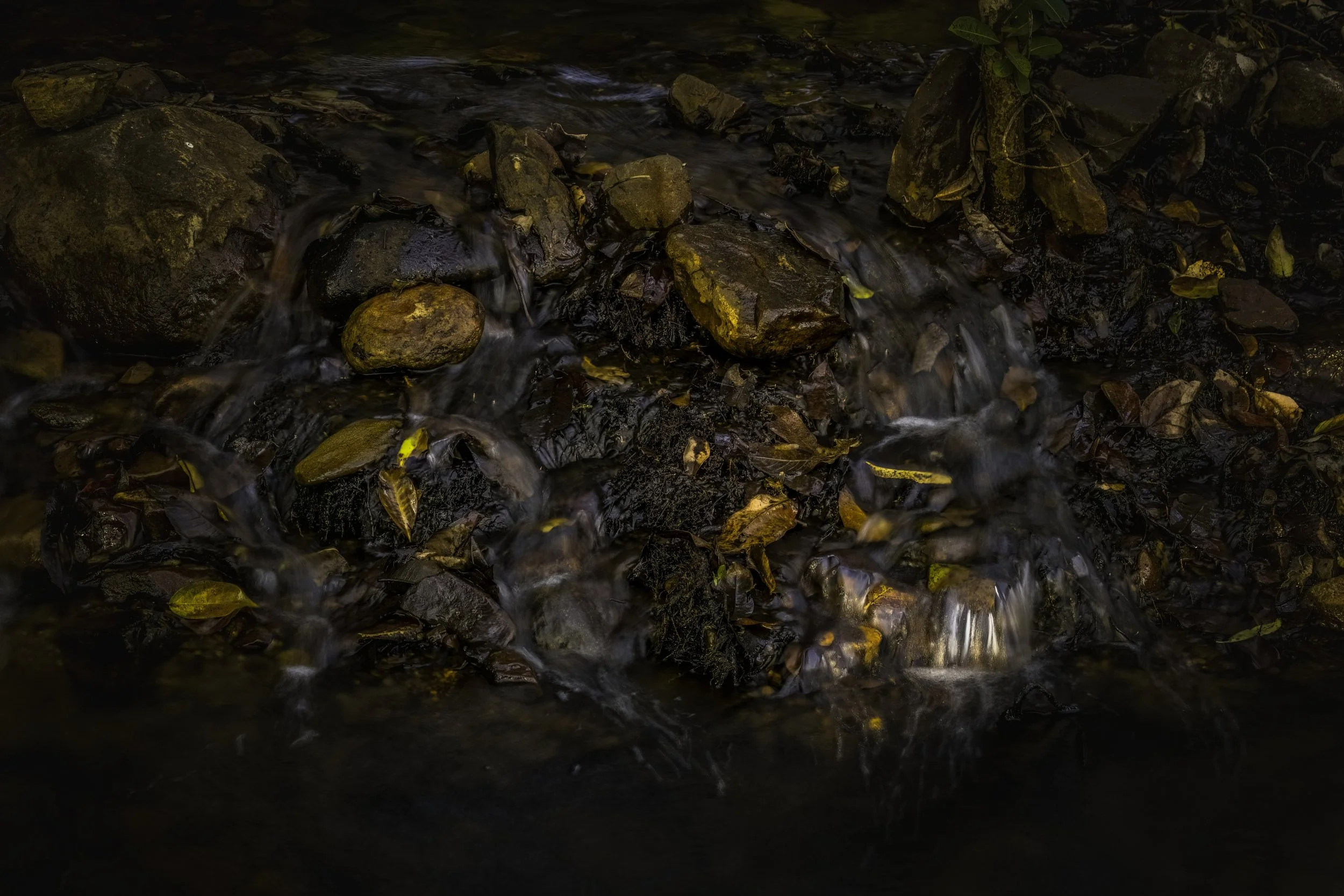
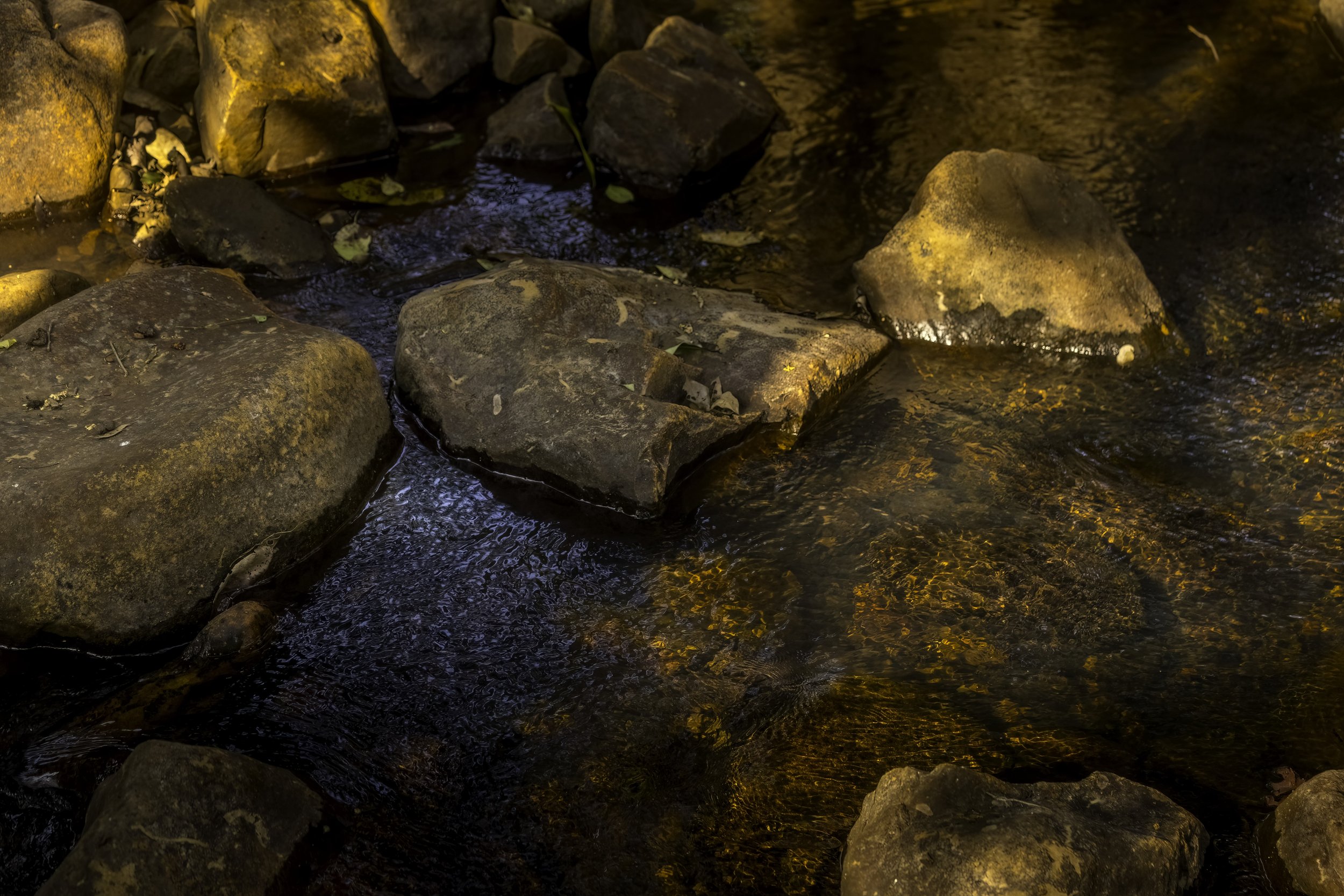
One of the crystal clear streams at Maisamma Madugu
The Chenchu - Guardians of the Nallamala
Deep within the emerald folds of the Nallamala Hills, where the Krishna River carves silver veins through the rugged earth, live the Chenchus, the "Children of the Forest". The Chenchu are a Particularly Vulnerable Tribal Group (PVTG) who have lived in harmony with nature for millennia. They possess a deep, innate knowledge of the forest, recognizing five different types of honey-producing bees and understanding the intricate cycles of the ecosystem. For the Chenchu, the forest is their breath and life, and they are its guardians. They have a symbiotic, non-exploitative relationship with their environment, often considering the tiger a brother and a god. In the heart of the Amrabad Tiger Reserve, their lives are a living echo of an ancient past, where every rustle of a leaf is a language and every ancient tree is a silent guardian. For a Chenchu, the forest is not a resource to be exploited, but a family to be revered; they believe that without them the forest would not survive, and without the forest, they would surely perish.
A traditional Chenchu penta (hamlet) - Rayaletipenta, Amrabad Tiger Reserve
Their world is punctuated by “Sacred Groves”, hidden "islands" of dense, untouched vegetation that serve as the spiritual anchors for their small, bee-hive shaped, traditional settlements, known as pentas—pictured here on the right. These groves are more than just clusters of old-growth trees; they are the spiritual sanctuaries of the tribe, acting as living temples where deities like Garelamai Sama, the goddess of the forest, are believed to dwell. The tribe, which has 26 distinct gotras (clans), performs rituals for deities like Garelamai Sama and Gangamma (the Water Goddess), often during the month of Shravan.
Because these patches of land are considered the residence of the divine, hunting and logging are strictly forbidden within their boundaries. This traditional belief system has created accidental but vital biodiversity hotspots, preserving rare flora and fauna that thrive under the tribe’s spiritual protection. The Chenchus live by a strict ethos of reciprocity—taking only what is necessary, such as leaving honey larvae behind to ensure the bees return, maintaining a perfect balance between man and nature. To step into a Chenchu Sacred Grove is to enter a space where human law bows to divine order. No axe is ever raised here & even the collection of fallen wood is often forbidden, ensuring these pockets remain pristine refuges for rare medicinal plants and the very wildlife the reserve seeks to protect.
The spiritual heart of these groves beats with the presence of specific, powerful deities. High above, watching over all of creation, is Bhagwan Taru, the sky god who commands the ultimate cycles of life and death (not to be confused with the legendary Gond chieftain who valiantly fought with a tiger). But it is Garelamai Sama, the goddess of the forest, who is most intimately woven into their daily survival. Before a Chenchu hunter-gatherer sets out to find honey or tubers, they offer a prayer to her, and upon a successful return, they offer their gratitude, for she is the one who shields them from the predators that stalk the shadows.
In the deeper, more shadowed groves, one might find the presence of Lingamayya, a native, wilder form of Lord Shiva. The Chenchus share a profound, familial bond with the great Srisailam Temple, believing that the goddess Brahmaramba was born a Chenchu girl. To them, Lord Mallikarjuna is not a distant deity, but a beloved son-in-law, a member of their tribe by marriage. This same story repeats at Ahobilam, where they believe Lord Narasimha was pacified by the beauty of a Chenchu girl named Chenchu Lakshmi, marrying her and becoming their "brother-in-law". Other guardians populate their pantheon, each with a specific duty to the penta.
Maisamma and Peddamma are the fierce mother goddesses - manifestations of Goddess Shakti - who protect the community from external enemies and evil spirits. When sickness threatens, they turn to Pochamma, the healer of ailments like smallpox, and when they cross the life-giving waters of the forest, they pay homage to Gangamma, the deity of the rivers. Together, these spirits form a divine tapestry that ensures the Chenchus remain the true stewards of Amrabad, living in a symbiotic balance that has endured for millennia.
The story of Maisamma is a foundational legend of the Nallamala Hills, where the Chenchu tribe has lived for millennia. While she is often seen as a manifestation of Shakti, her story is one of a fierce, independent protector of the forest and its people.
The Guardian of the Wild
Long ago, as the Chenchu tell it, the world was a chaotic place where the boundaries between the human world and the wild forest were thin. The Chenchu people, the "first dwellers" of the Andhra region, lived deep within the Nallamala. They faced constant threats from droughts, strange diseases like smallpox, and wild animals. It was during this turbulent and disturbed time that a powerful presence began to be felt in the forest. She was not a distant goddess but a motherly force that lived in the trees, the rivers, and the very soil. She became known as Maisamma, the "Supreme Mother".
Legend says Maisamma was one of seven divine sisters who divided the tasks of protecting the land. Each sister took a different realm:
Pochamma guarded the village gates and warded off diseases.
Yellamma protected the boundaries of the settlements.
Maisamma herself took the most vital role—she became the keeper of the waters and the guardian of the hunt.
Depending on her specific role or the location of her worship, she is known by various names:
Katta Maisamma: Guardian of water bodies, ensuring tanks and lakes remain full.
Panta Maisamma: Deity of agricultural fields, worshipped before and after harvests to ensure prosperity.
Nalla Maisamma: The "Black Mother," often worshipped under trees in a more primal, natural setting.
Bangaaru Maisamma: The "Golden Mother" who safeguards the overall wealth and well-being of the village
The Taming of the Tank
One of the most famous stories of her power is that of Katta Maisamma. During a great drought, a village tank (lake) was drying up, and the people were despairing. A local elder had a vision of Maisamma standing on the "Katta" (the embankment or bridge) of the lake. She promised that as long as they honoured her and respected the water she guarded, the tank would never run dry. The villagers placed a simple stone on the lake's edge to represent her. Soon, the rains returned, and the lake overflowed. From that day on, she was worshipped as the protector of water, ensuring that every living thing in the forest had enough to drink.
Water is the lifeblood of a forest ecosystem and the cornerstone of existence for forest-dwelling communities like the Chenchu and Gonds. It dictates biodiversity, regulates climate, and acts as the primary source of survival, livelihood, and spiritual practice for these tribal groups. I have done an earlier piece - Kuregad—A Tale of Water - which talks about how the lack of water influenced an entire village’s decision to abandon their ancestral site. The video, narrated by Sidam Lakshman, a gond from a neighbouring village of Gundala, can be viewed here.
The Healer in the Niche
In the homes of the Chenchu and local farmers, Maisamma’s story is a personal one. They tell of how she would walk through the cattle sheds at night, her golden skin glowing in the dark. To invite her protection, families began to whitewash a small niche in their cattle sheds, calling it the Maisamma Goodu (Maisamma’s Nest). They believed that if she rested there, their livestock would be safe from the "evil eye" and the plague.
A Living Legend
Today, her story continues through the Bonalu festival, where her devotees carry pots of cooked rice on their heads, dancing through the streets to the sound of drums. They are reenacting the ancient journey to her forest shrines, offering back a portion of the harvest she helped protect.
Rituals and Worship
Sacrifices: During festivals like Sankranti (on the day of Saddi pandaga), Chenchus perform animal sacrifices, typically chickens, to honor Maisamma.
Sacred Spaces: Her shrines are often found in nature, such as under trees (as in this video) or on the outskirts of settlements. In rural homes, a specific white-washed niche called the Maisamma Goodu may be dedicated to her in cattle sheds to protect livestock.
Community Festivals: The major festival associated with her in the Telangana region is Bonalu, where devotees offer cooked rice (Bonam) in brass or earthen pots to seek her blessings.
Maisamma Madugu (మైసమ్మ మడుగు)
This "madugu"—a deep, serene forest pool or stream in this particular case—is one of the most sacred sites for the Chenchu people. Here, the crystal clear water is not merely a resource but a living presence, guarded by the deity Garela Maisamma, the supreme mother of the wild. To the Chenchu, she is the "Goddess of the Forest", and this specific stream is her direct domain, where the boundary between the physical and divine worlds remains thin.
Near the banks of Maisamma Madugu, the deity is often worshipped in her traditional form as a small, vermilion-smeared stone tucked beneath a massive, ancient tree. Unlike the grand gopurams of city temples, her "shrine" is the forest itself. The Chenchu believe that she resides in the very blackness of the stones and the clarity of the water, acting as Katta Maisamma—the protector of water bodies. In a landscape like the Nallamalas, where water is the ultimate currency of survival, the sanctity of this stream ensures that no pollution or harm ever touches its flow.
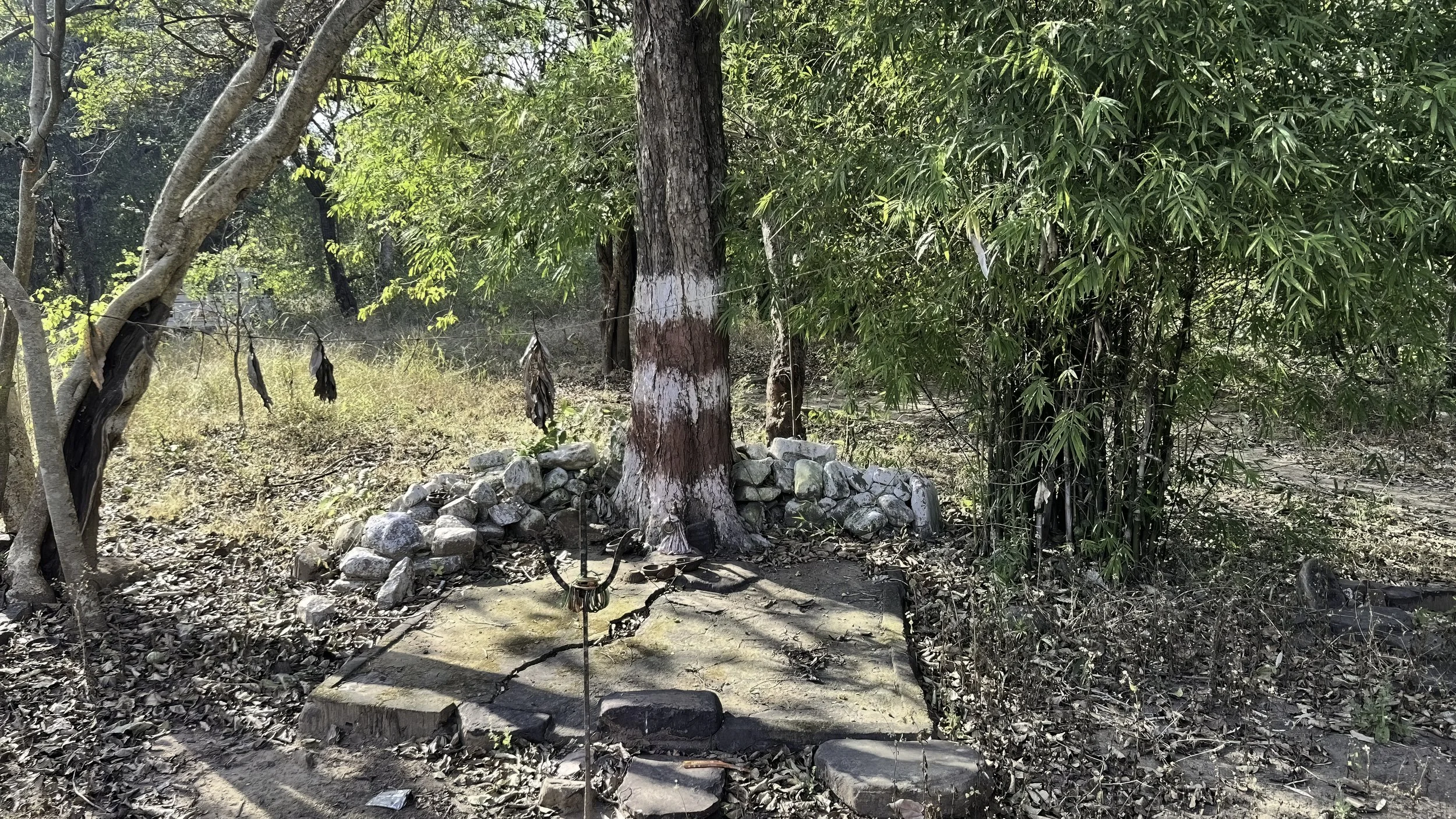
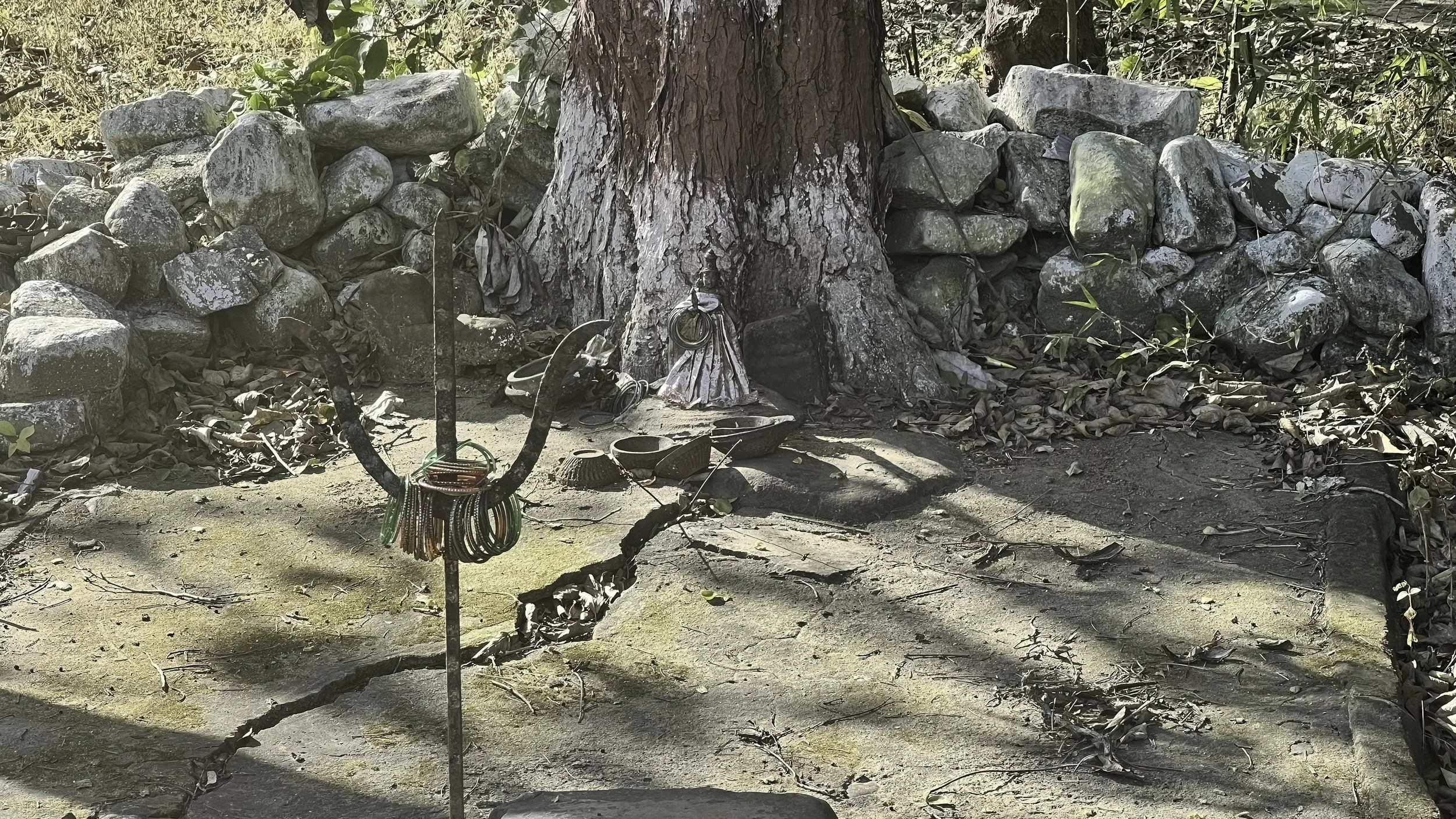
When the tribal trackers or honey-gatherers pass by Maisamma Madugu, they pause to offer a humble tribute of wild flowers or forest produce. They believe that without her permission, the forest’s hidden bounties will remain locked away, and the fierce predators of the Achampet range will not be stayed. This goddess is also the protector of their cattle and families from epidemics; she is a mother who is both nurturing and fiercely protective. The silence of the madugu is heavy with her presence, a reminder that in the Chenchu world, the most powerful gods are found not in books, but in the ripple of a stream and the shadows of the Nallamala hills.
At Maisamma Madugu, the seasonal rhythm of the forest dictates the timing of worship, transforming this quiet stream into a vibrant center of Chenchu spirituality during specific times of the year. The most significant celebrations occur during the Ashada Masam (July/August), coinciding with the onset of the monsoons that swell the forest streams. During this period, the Chenchu observe a form of the Bonalu festival, a thanksgiving ritual where the community gathers to offer "Bonam"—a meal of cooked rice, milk, and jaggery—to Garela Maisamma. They believe that as the life-giving rains return to the Achampet range, the goddess must be appeased to ensure the waters remain pure and the forest remains bountiful.
The atmosphere at the madugu during these festivals is one of deep communal bond and ancient tradition. Women from the nearby pentas carry earthen pots adorned with neem leaves, turmeric, and vermilion to the water's edge, singing folk songs that echo through the canopy. These rituals are not just religious acts but essential prayers for protection against the seasonal dangers of the tiger reserve—diseases brought by the rains and the increased activity of predators in the dense, wet undergrowth. By honoring Maisamma at her sacred pool, the Chenchu reinforce their role as the primary stewards of the Amrabad Tiger Reserve, seeking her divine sanction to move safely through her territory.
Another vital peak in the spiritual calendar is Maha Shivaratri, which often sees a "Chenchu Fest" or Jatara (tribal fair) that ripples through the entire reserve. While the grandest celebrations occur at Srisailam, the local shrines at places like Maisamma Madugu become focal points for smaller, intimate clan gatherings. During these times, the Chenchu perform the Mallanna Kalyanam, a ritual marriage ceremony for the deity, celebrating their ancestral link to Lord Shiva (Mallikarjuna). Even as they adopt broader regional traditions like Sankranti or Deepavali, the core of their worship remains tethered to these forest sites, where the seasonal blooming of the Mahua or the first ripening of wild fruits is first dedicated to the goddess of the stream.
During the vibrant Jataras and seasonal festivals at sites like Maisamma Madugu, the atmosphere of prayer often shifts into a display of survival skills through traditional archery competitions. These contests are not merely sports; they are a ritualistic honoring of their identity as the “Children of the Forest”. Since the Chenchus historically relied on the bow and arrow for both protection and sustenance, these competitions serve as a rite of passage for young men to prove their readiness to navigate the tiger-haunted depths of the Amrabad Tiger Reserve.
The bows, known as viltu, are handcrafted from sturdy bamboo or local wood, with strings traditionally made from twisted bark or animal sinew. During the festival, targets are often fashioned from the soft bark of a tree or a hanging fruit like a wild gourd. Participants compete in tests of both accuracy and distance, often shooting from significant lengths to mimic the stealth required to hunt small game or ward off a predator without being detected. The elders of the penta act as the judges, watching closely to see who possesses the steady hand and "forest eye" blessed by Garela Maisamma.
Winning an archery contest brings immense prestige to a hunter’s family and is often seen as a sign of divine favor. It is believed that the goddess herself guides the arrow of the most disciplined and respectful tracker. These gatherings also serve a practical purpose; they ensure that the ancient craft of fletching—the delicate art of balancing the arrow with feathers—is passed down to the next generation. As the sun sets on the festival day, the champions are celebrated with songs, often receiving simple rewards like extra portions of honey or a symbolic piece of ritual cloth.
The transition from the world of the grove back to the penta is marked by the shifting scents of the forest—the sharp tang of wild citrus giving way to the sweet, heavy aroma of Mahua flowers. For the Chenchu, these flowers are a gift from the deities, gathered with a reverence that mirrors their worship. In the sacred groves, the trees are not merely timber but ancestors; the Banyan and Peepal are seen as the physical manifestations of the divine, their sprawling roots anchoring the spirits of the forest to the soil of the Nallamalas. To harm a tree within these boundaries is to invite the wrath of Garelamai Sama, a risk no Chenchu is willing to take, for they believe the forest remembers every slight.
Beyond the major deities, the groves also house the Kula Devata, or clan spirits, who act as intermediaries between the families and the high gods. These spirits are often represented by simple, uncarved stones smeared with vermilion and turmeric, tucked away in the hollows of ancient trunks. During the Maha Shivaratri festival, the connection between the tribe and the land reaches a fever pitch. Thousands of Chenchus trek through the dense tiger reserve to Srisailam, not as mere pilgrims, but as kin welcoming a relative home. They bring with them offerings of wild honey and forest fruits, ensuring the first fruits of the season are shared with their "brother-in-law," Lord Mallikarjuna, before a single drop is tasted by the tribe.
This spiritual geography creates a natural sanctuary for the Bengal Tiger, the very creature the reserve aims to protect. The Chenchus view the tiger not as a competitor, but as a fellow guardian under the command of the gods. They believe that if the sacred groves are kept pure and the deities are properly appeased, the tiger—whom they often refer to with familial respect—will leave their livestock and children in peace. This ancient pact of coexistence is the invisible thread that holds the Amrabad ecosystem together; it is a conservation strategy born of faith rather than policy, where the survival of the forest is inextricably linked to the survival of its gods.
As the sun sets over the rugged ridges, the penta falls into a quiet hum of storytelling. The elders recount how Chenchu Lakshmi taught the gods the secrets of the forest, reminding the younger generation that their identity is carved into the very stone of the mountains. The sacred groves remain silent, dark, and vibrant, serving as the lungs of the hills and the soul of a people who have never known—nor wanted—a world outside the canopy’s embrace. In these small, protected pockets of green, the ancient world persists, shielded by the fierce devotion of the Chenchu to the spirits that dwell within the leaves.
‡‡‡‡‡


Related Posts


Hidden in the deep recesses of the Kawal Tiger Reserve are a number of Gond villages having a close relationship with nature and its management. Closely linked with each individual of the Gond clan is a lineage of Pardhans, bards and chroniclers, who play a vital role in the worship of the clan deity and many other ritual activities. Today is about one such village which depended on their solitary well for water but when the water started to make them sick, they left to settle at a different location. Life in the forest isn’t always a bed of roses.
#wildartworks, #Canon, #Kawal, #KawalTigerReserve, #hyticos, #wildtelangana, #telanganawildlife, #gondvillage, #waterscarcity, #lifeintheforest, #gondlife, #telanganagonds, #adilabad, #kumurambheemasifabad, #gundala, #kuregad,