

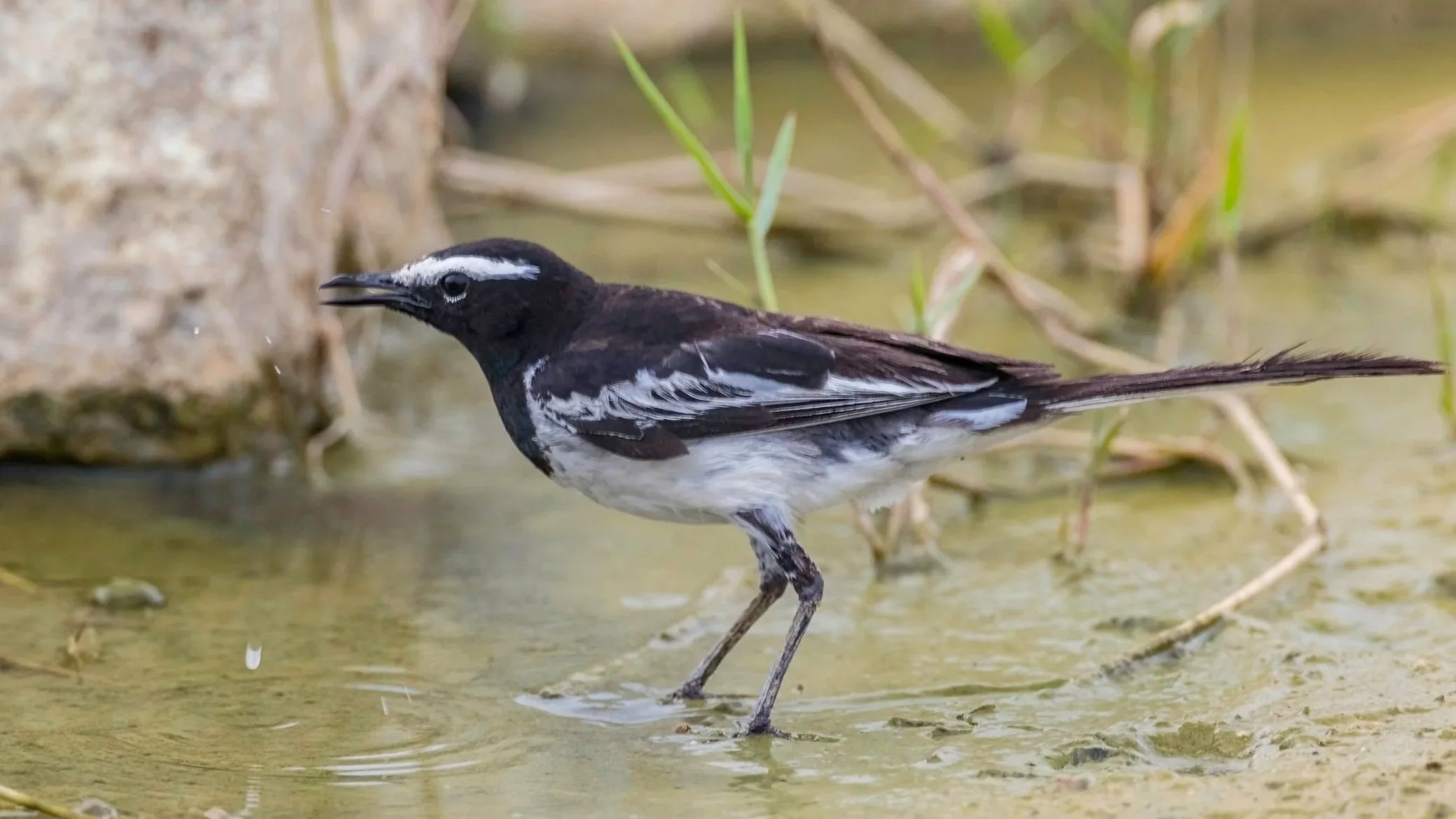
White-browed Wagtail
The morning mist over the Krishna River at the edge of the Amrabad Tiger Reserve does not lift so much as it dissolves, turning the water into a sheet of liquid pewter. Silence dominates the dawn, broken only by the distant, deep whoop of a langur. Then, a sharp, metallic chiz-zit rings out from a slick basalt boulder jutting from the current.
A small, starkly monochromatic bird drops from the overhanging bamboo canopy. It lands on the wet stone, its long tail immediately setting into a rhythmic, hypnotic up-and-down pumping motion. This is the White-browed Wagtail (Motacilla maderaspatensis), the largest of the Asian wagtails, and a permanent resident of the rugged riverine ecosystems of Telangana.
#WildArtWorks #AmrabadTigerReserve #TelanganaTourism #WildlifeConservation #NallamalaHills #EcoTourism #IndiaBiodiversity #UmaMaheshwaram #Kawal #whitebrowedwagtail #wagtail #largepiedwagtail
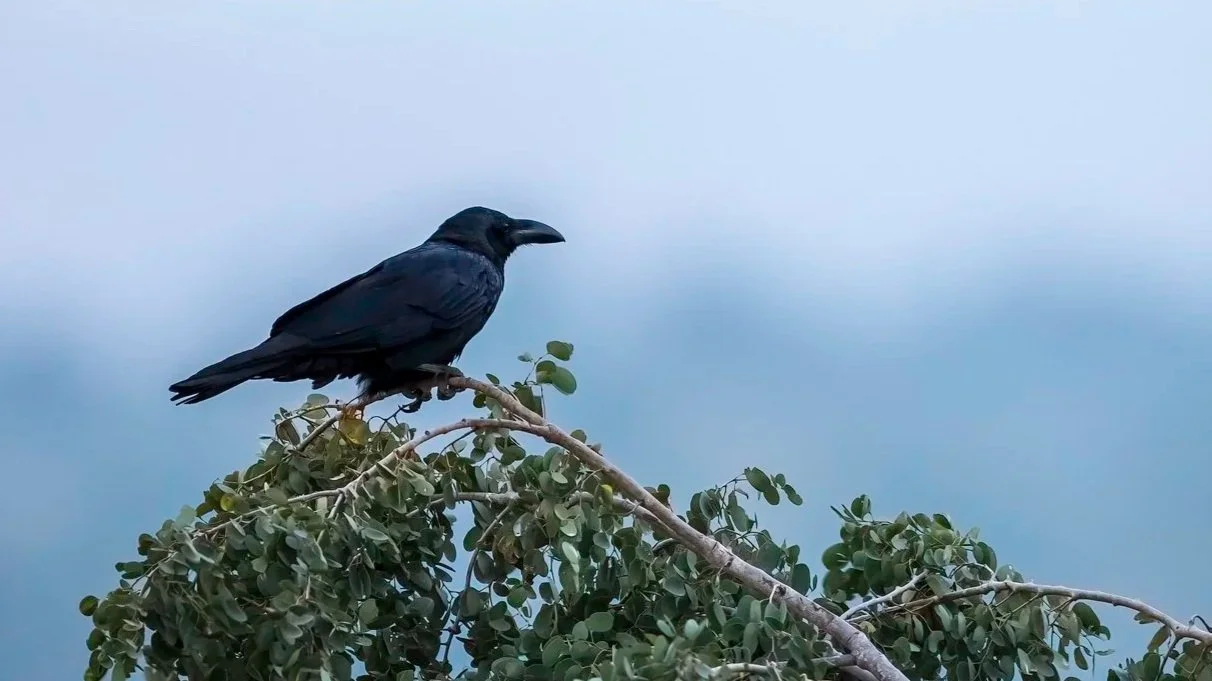
Indian Jungle Crow
The Indian Jungle Crow reminds us that every creature plays a vital role in our ecosystems. As human activity continues to change the landscapes of Telangana, the survival and adaptability of this intelligent bird will offer crucial lessons on how wildlife responds to a changing world.
#WildArtWorks #AmrabadTigerReserve #TelanganaTourism #WildlifeConservation #NallamalaHills #EcoTourism #IndiaBiodiversity #Panchgani #UmaMaheshwaram #Kawal #IndianJungleCrow #Crow #intelligentbird
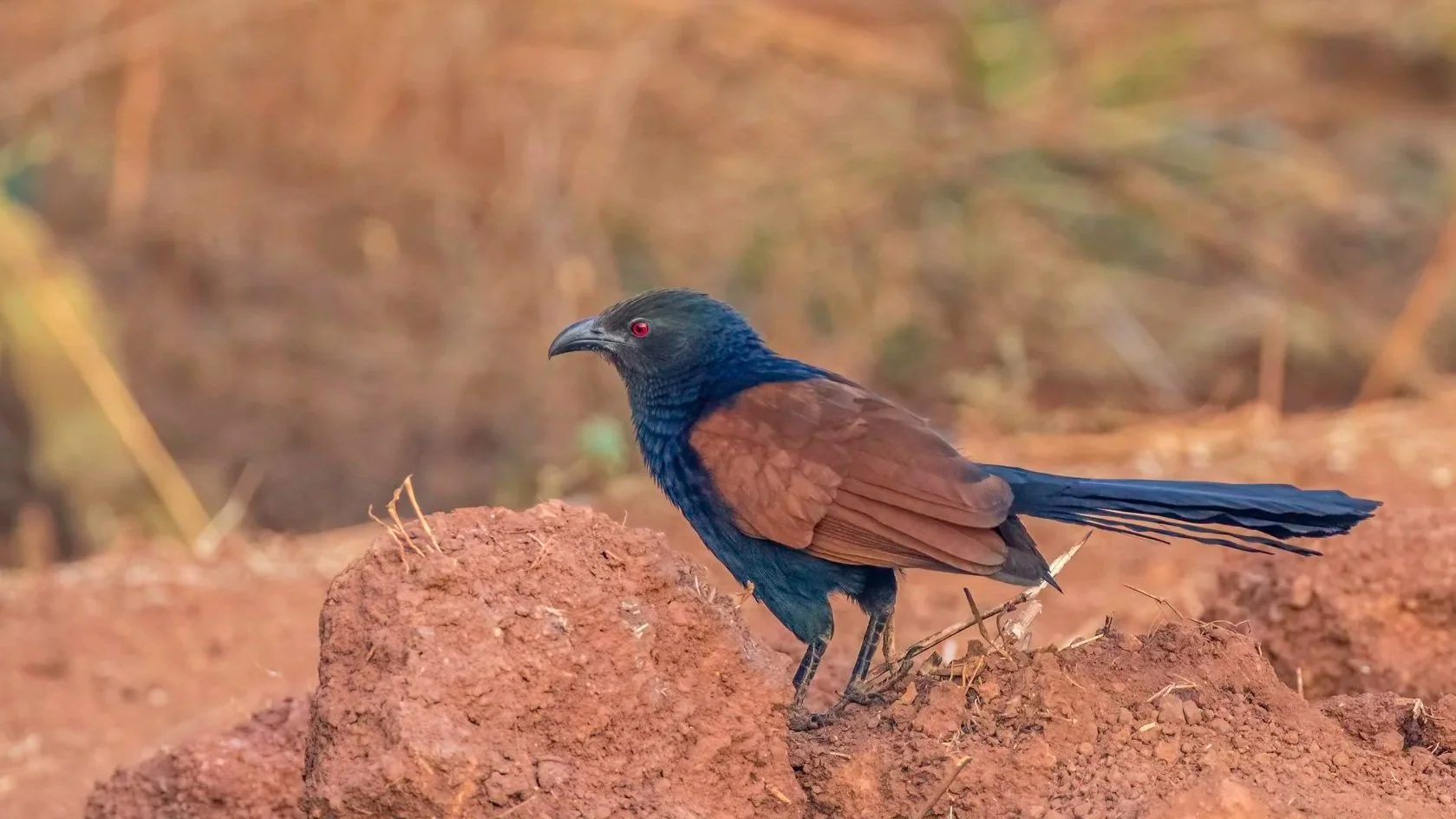
Greater Coucal
In the rich tapestry of Indian folklore, the Greater Coucal occupies a dual space as both a mysterious shaman of the forest and an omen of impending change. Across several rural communities in Telangana and central India, the bird is known as the Chemooka or Koti-pitta. It is deeply tied to traditional weather lore. Because its deep, resonant coop-coop-coopcalls intensify during periods of high humidity, local farmers view the bird as an infallible rain prophet. Hearing a coucal call repeatedly from the highest branch of a tree is considered a direct signal from nature that the monsoon is about to break over the dry Deccan fields.
#WildArtWorks #AmrabadTigerReserve #TelanganaTourism #WildlifeConservation #NallamalaHills #EcoTourism #IndiaBiodiversity #AchampetRange #GreaterCoucal #Coucal
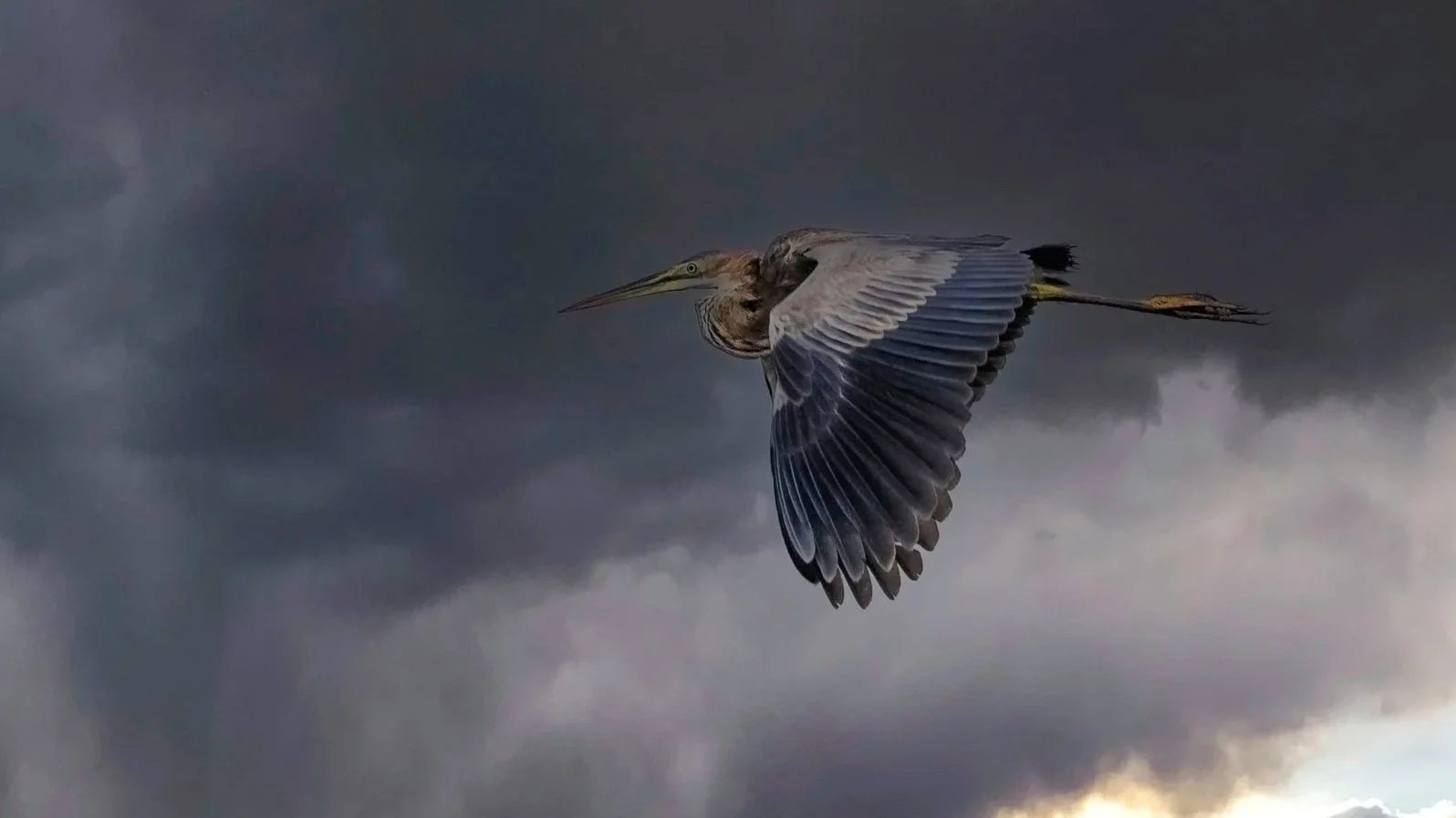
Purple Heron
In Telangana, finding the Purple Heron (Ardea purpurea) often requires patient observation in dense, freshwater wetlands like those near the Ameenpur Lake or the Manjeera Wildlife Sanctuary. Unlike the bolder Gray Heron, this species is a master of camouflage within reed beds.
#wildartworks #canon #Wildlife #birdphotography #natgeoindia #conservationphotography #indian_wildlifes #indianwildlifeofficial #wildlifeonearth #planet_untamed_magazine #bbcearth #natgeowild #birdsofthedeccan #manjeera #sungeibuloh #ranganathittubirdsanctuary #bhigwanbirdsanctuary #ammavaripetcheruvu #kudikuntalake #kantegaonlake #Boath #kistareddypetlake #purpleheron #heron #heronconservation

Plain Prinia
The Plain Prinia is a common prinia with drab gray-brown plumage that varies in tone across its range. Note the pale, wide eyebrow and the long tail that appears as if it is loosely attached to the body. Common in various habitats, especially farms and wetlands, but avoids woodlands with a canopy. A somewhat bold species, it often skulks in the undergrowth but sings from exposed perches.
#wildartworks, #Canon, #Birdinginthewild, #BirdWatching, #Wildlife, #WildBirds, #naturephotography, #your_best_birds, #planetbirds, #earthcapture, #photo_pond, #earthpix, #naturyst, #conservationphotography, #yesbbcearth, #wildlifeonearth, #bbcearth, #natgeowild, @globalcapture, #prinia, #plainprinia, #plainwrenwarbler, #whitebrowedwrenwarbler

Gray Heron
The Gray Heron (Ardea cinerea) is a long-legged wading bird of the heron family, Ardeidae, native throughout temperate Europe and Asia, and also parts of Africa. Generally quite common and conspicuous in wetland habitats from marshes and tidal flats to small ponds, ditches, and wet fields; nests colonially in tall trees. Mainly seen as singles or in small groups, standing quietly in or at the edge of water, less often hunting in fields. Plumage is mostly gray overall, with paler neck; the adult has white crown, black eyebrows, and a black shoulder patch. Like other herons and egrets, flies with neck pulled in to form a bulge.
#wildartworks #canon #Wildlife #wildlifephotography #natgeoindia #conservationphotography #indian_wildlifes #indianwildlifeofficial #wildlifeonearth #planet_untamed_magazine #bbcearth #natgeowild #birdsofthedeccan #manjeera #sungeibuloh #ranganathittubirdsanctuary #bhigwanbirdsanctuary #ammavaripetcheruvu #grayheron #greyheron #heron #heronconservation

Yellow-eyed Babbler
A passerine bird native to South & SE Asia inhabiting shrubland, grassland and wetland habitats. An odd-looking babbler which looks and behaves like a prinia on steroids. Brown above and white below with rufous wingtips with a unique red eyering. Scrambles about in reed beds, scrub, field edges, and grassy meadows in small flocks and pairs. Scales stems like a parrotbill and hangs acrobatically like a tit or leaf warbler. Strident, melodic song has a somewhat hoarse, nasal quality. Calls include repeated descending whistles, energetic chattering, and dry chittering.
#wildartworks, #Canon, #Bird, #Birdinginthewild, #BirdWatching, #Wildlife, #WildBirds, #naturephotography, #your_best_birds, #planetbirds, #earthcapture, #photo_pond, #earthpix, #naturyst, #conservationphotography, #yesbbcearth, #wildlifeonearth, #bbcearth, #natgeowild, #natgeoindia, #india, #telanganabirds, #ananthagiri, #ananthagiriforestrange, #vikarabad, #YellowEyedBabbler, #Babbler, @wildtelangana, #Damagundam, #chincholi,

Indian Nightjar
The Indian nightjar (Caprimulgus asiaticus) is a cryptically -coloured small nightbird which is a resident breeder in open lands across South Asia and Southeast Asia. Note the white “moustache” streak, golden-brown collar, and pointed buff-and-black feathers above the wing. The male shows bright white patches near the wingtips and on the tail-tips in flight. They are found in a range of wooded habitats, from hilly dry forest to garden edges.
Like most nightjars it is crepuscular and is best detected from its characteristic calls at dawn and dusk that have been likened to a stone skipping on a frozen lake - a series of clicks that become shorter and more rapid. There is considerable plumage variation across its range and can be hard to differentiate from other nightjars in the region especially in the field.
#wildartworks, #Canon, #Bird, #Birdinginthewild, #BirdWatching, #Wildlife, #WildBirds, #naturephotography, #your_best_birds, #planetbirds, #earthcapture, #photo_pond, #earthpix, #naturyst, #conservationphotography, #yesbbcearth, #wildlifeonearth, #bbcearth, #natgeowild, #natgeoindia, #india, #telanganabirds, #ananthagiri, #ananthagiriforestrange, #vikarabad, #IndianNightjar, #nightjar, @wildtelangana, #Damagundam, #chincholi,