
White-browed Laughingthrush
Pterorhinus sannio
Chiang Mai, Thailand
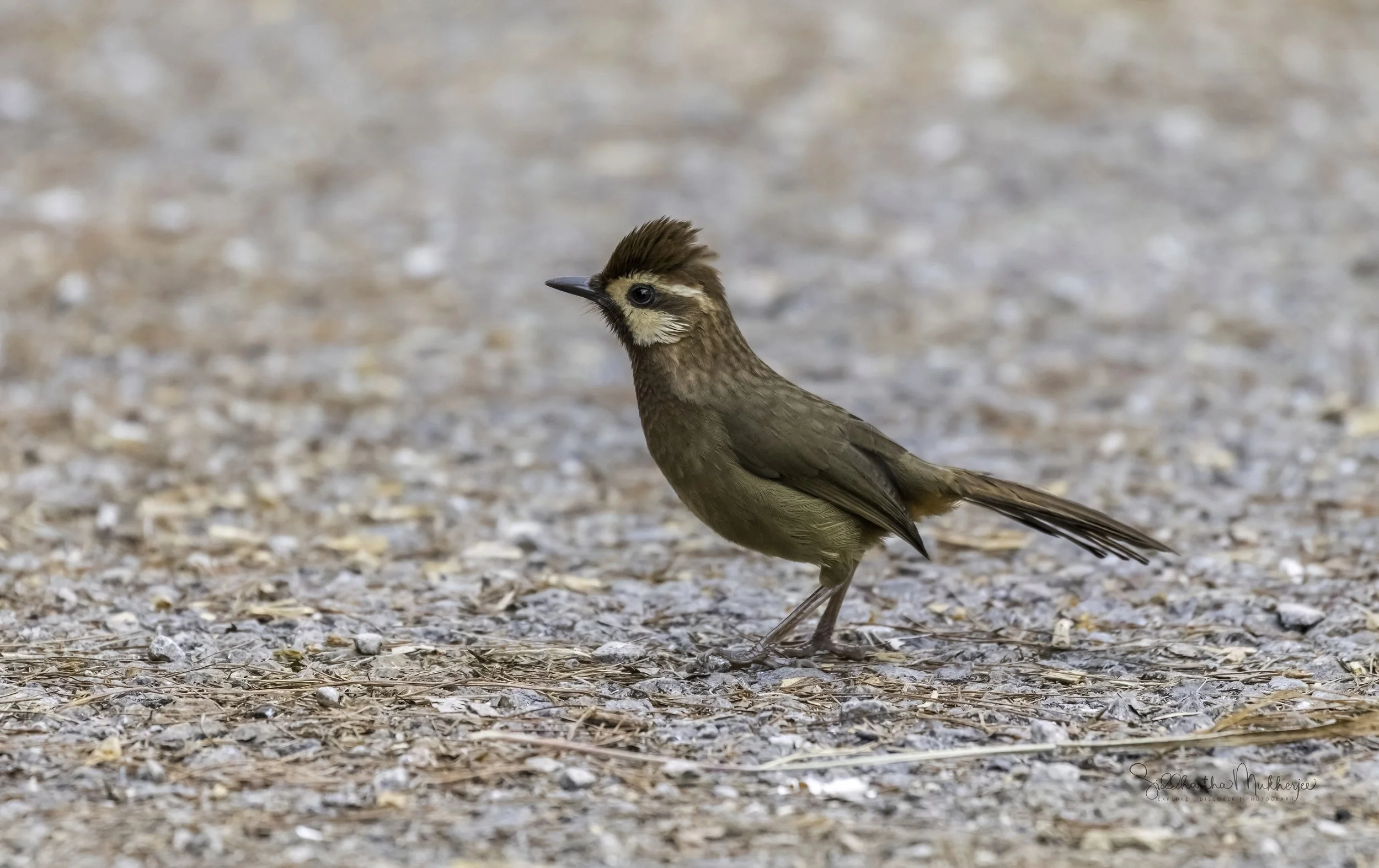
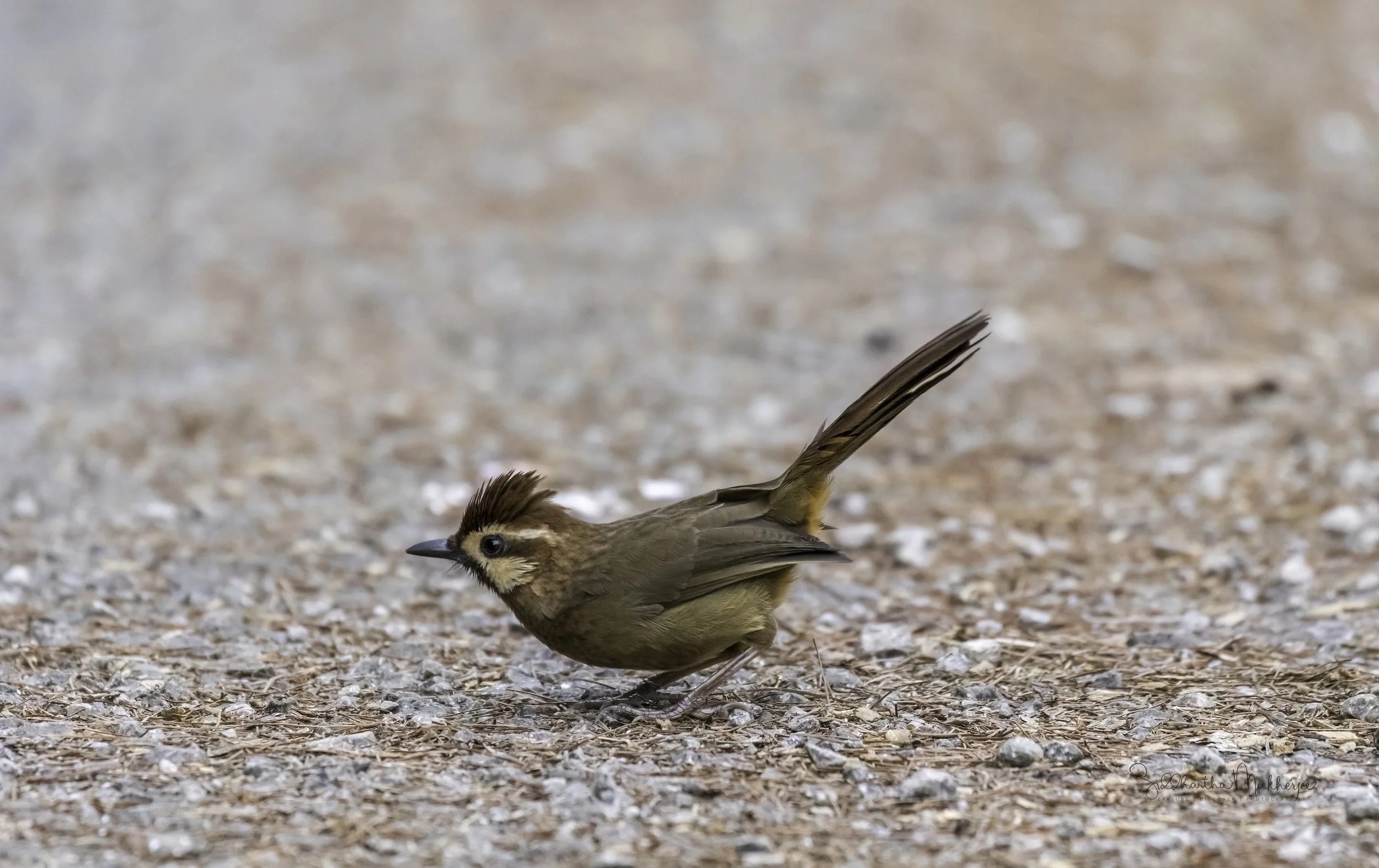
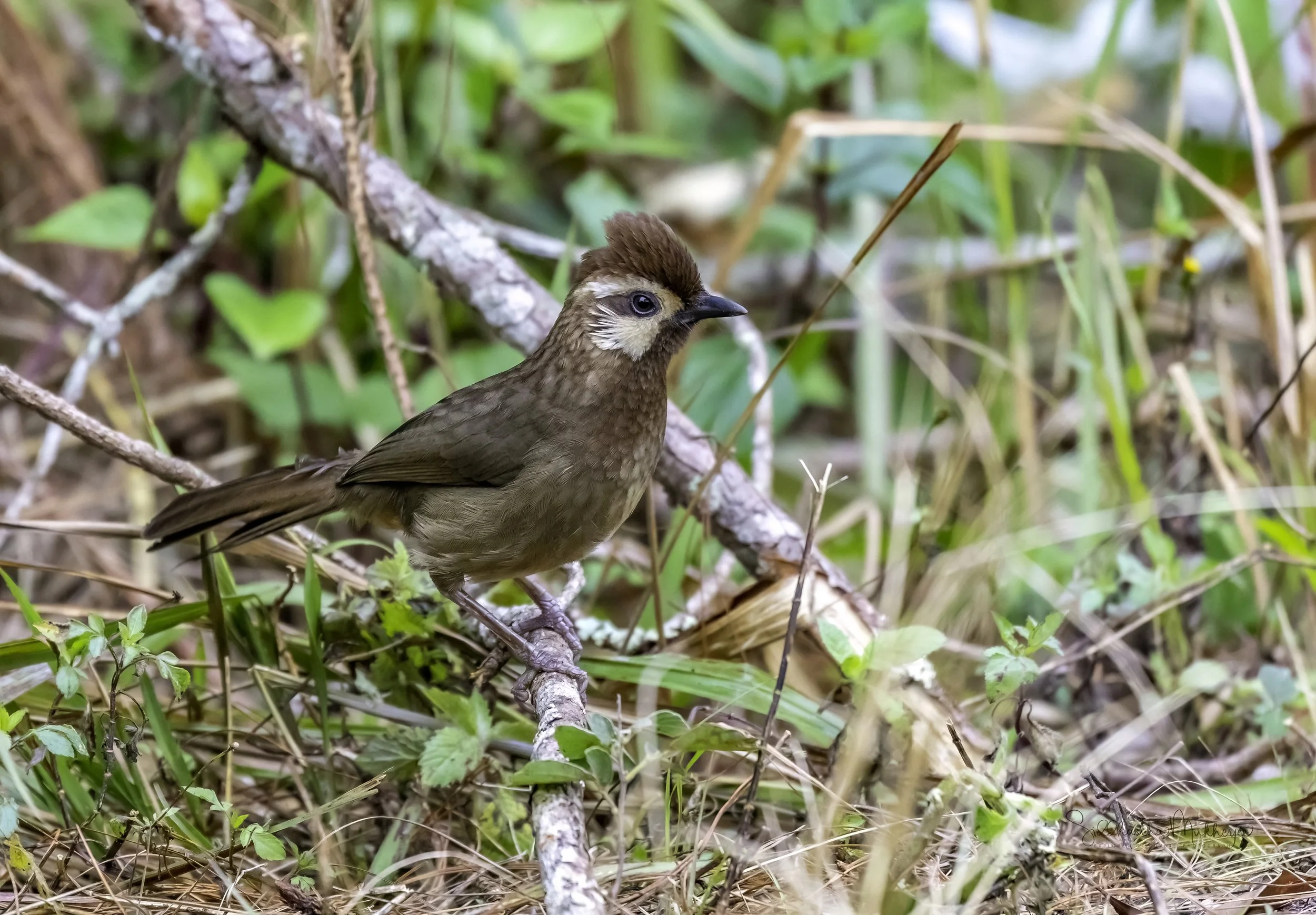
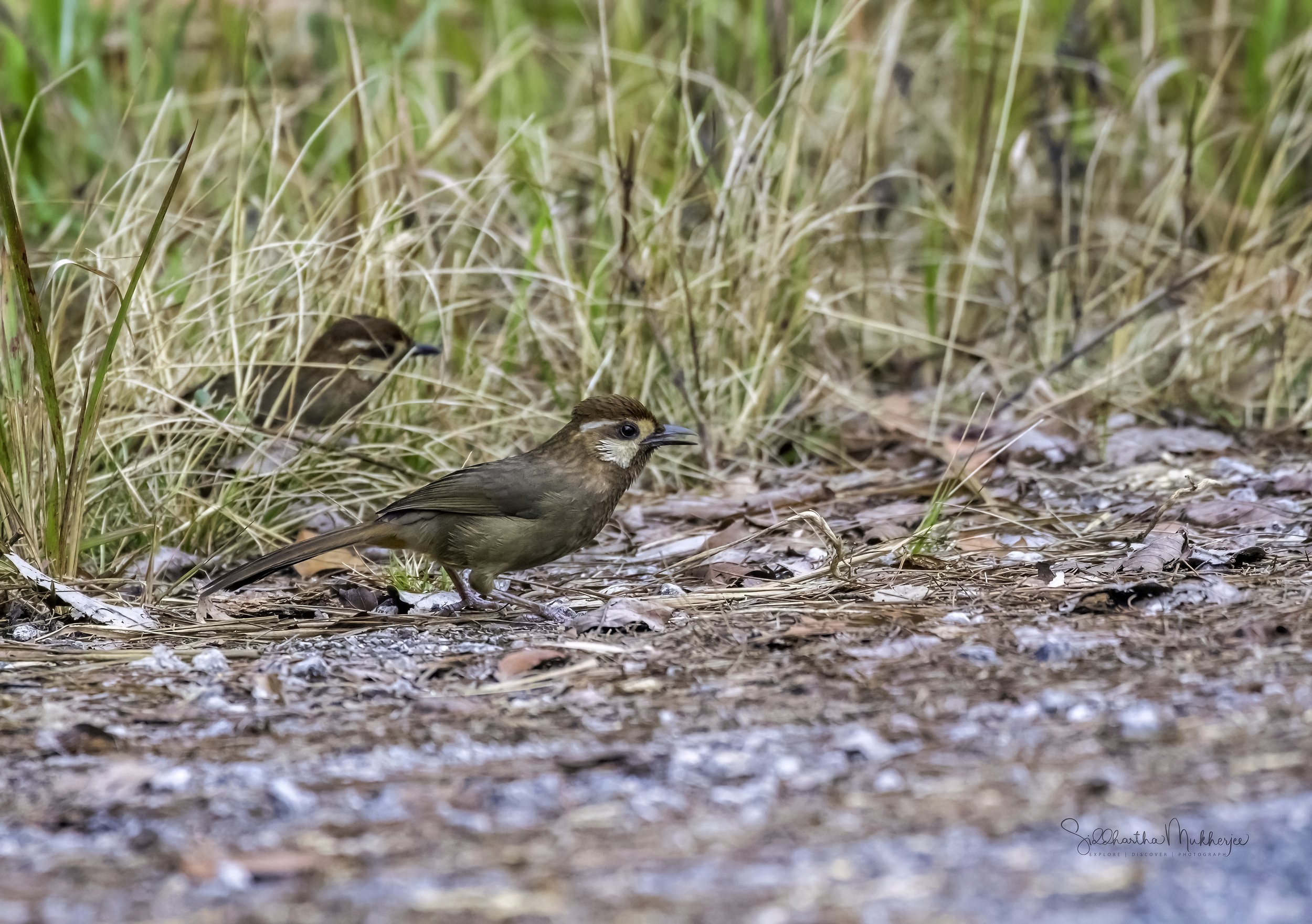
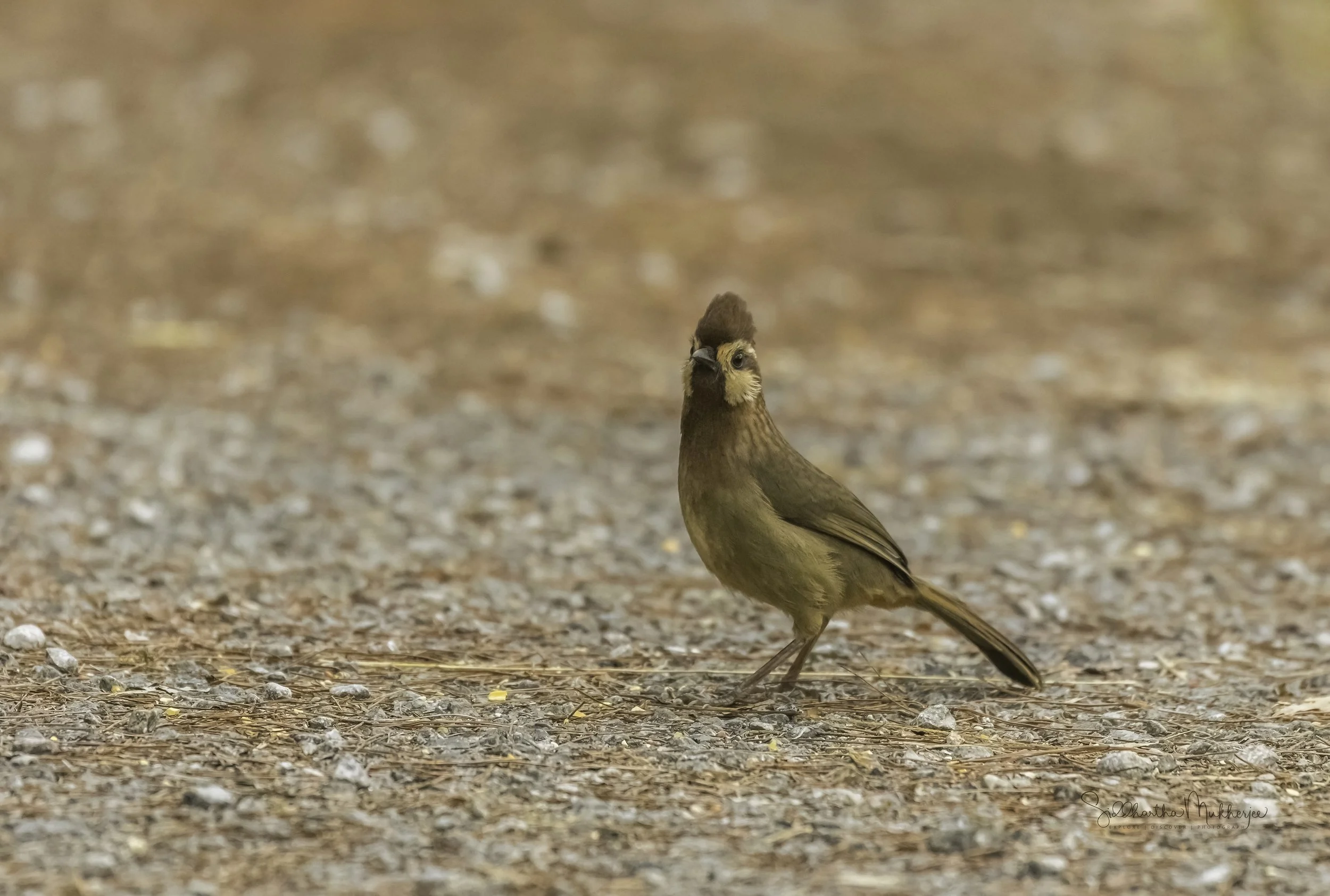
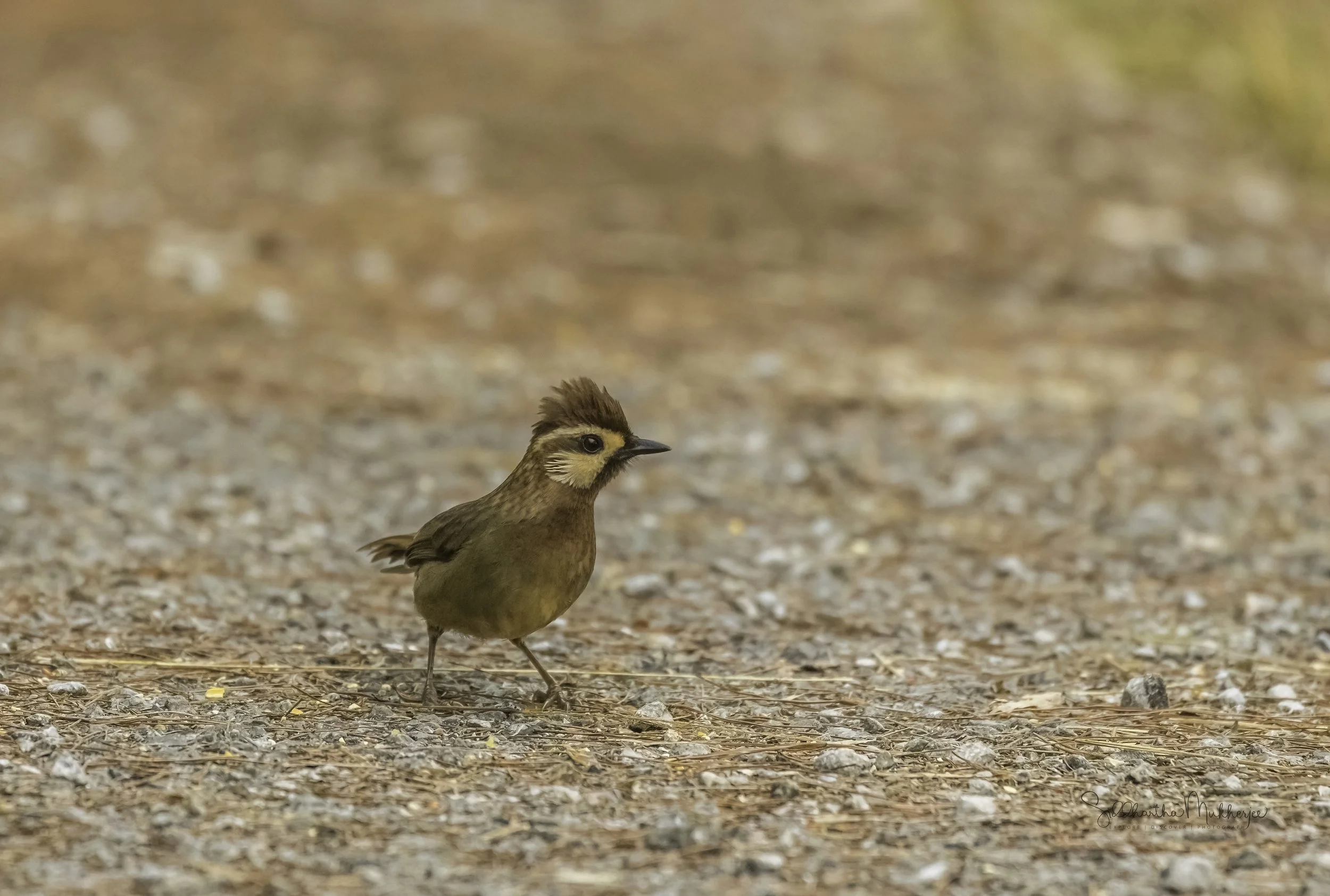
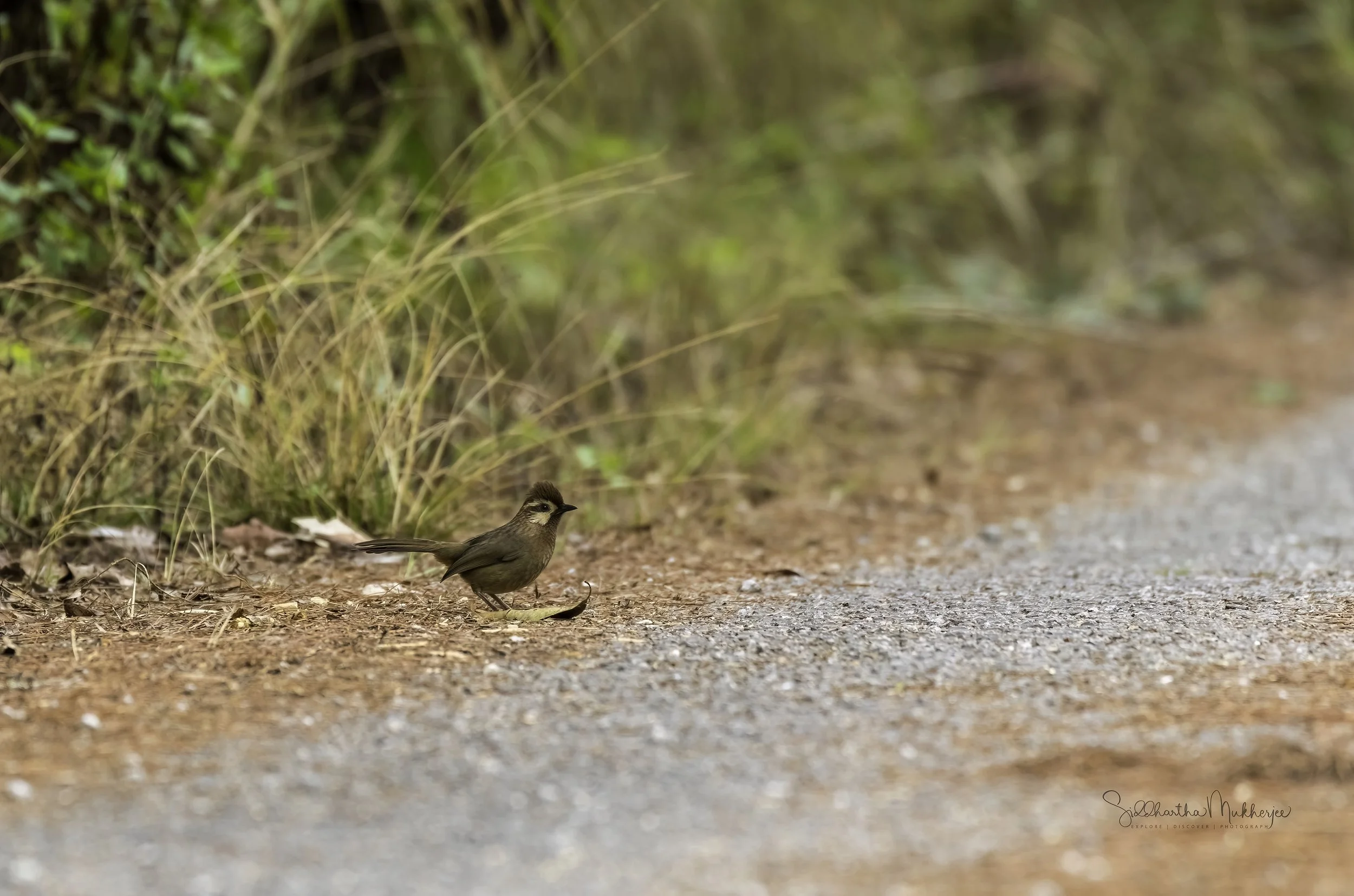
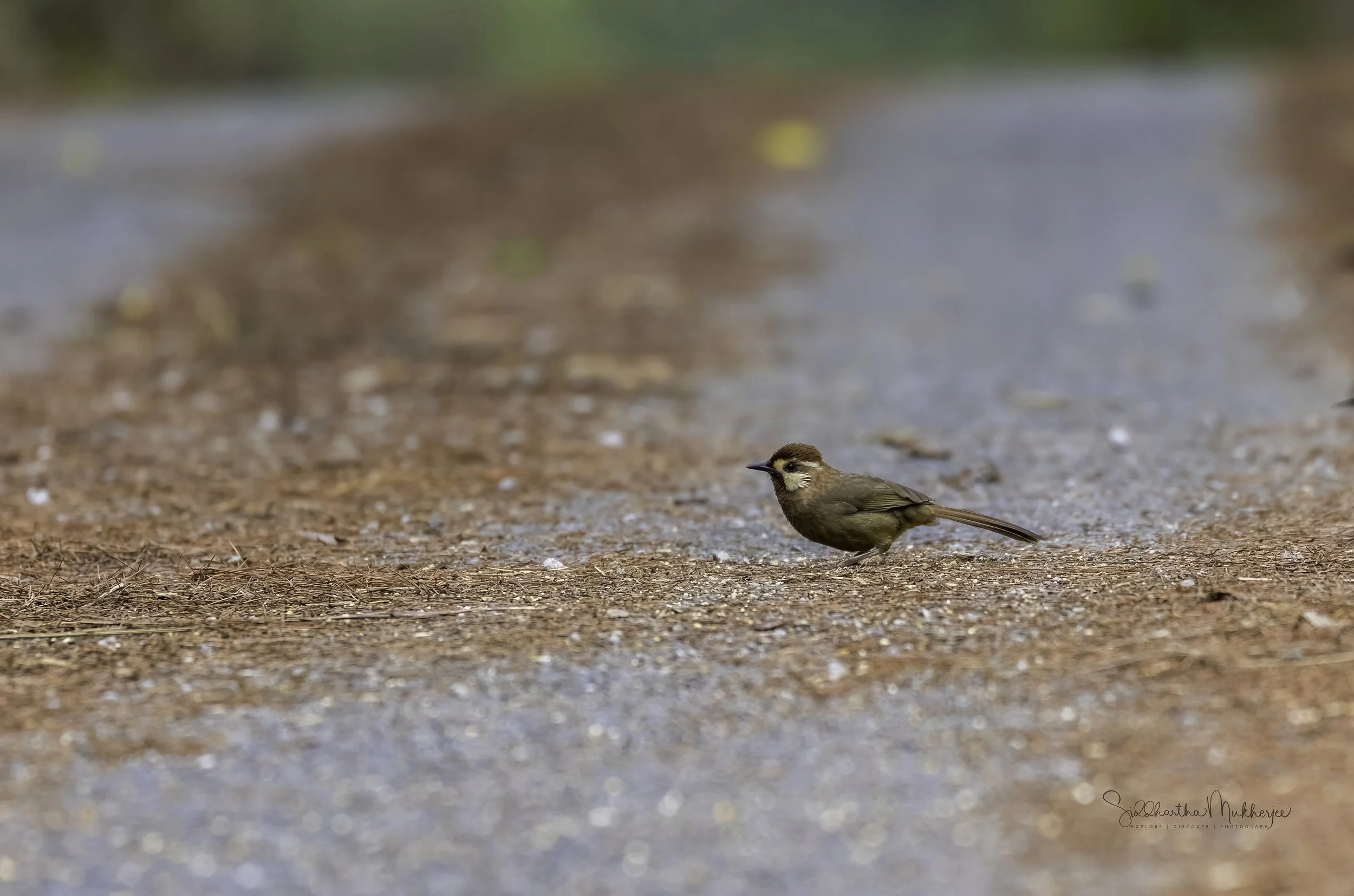
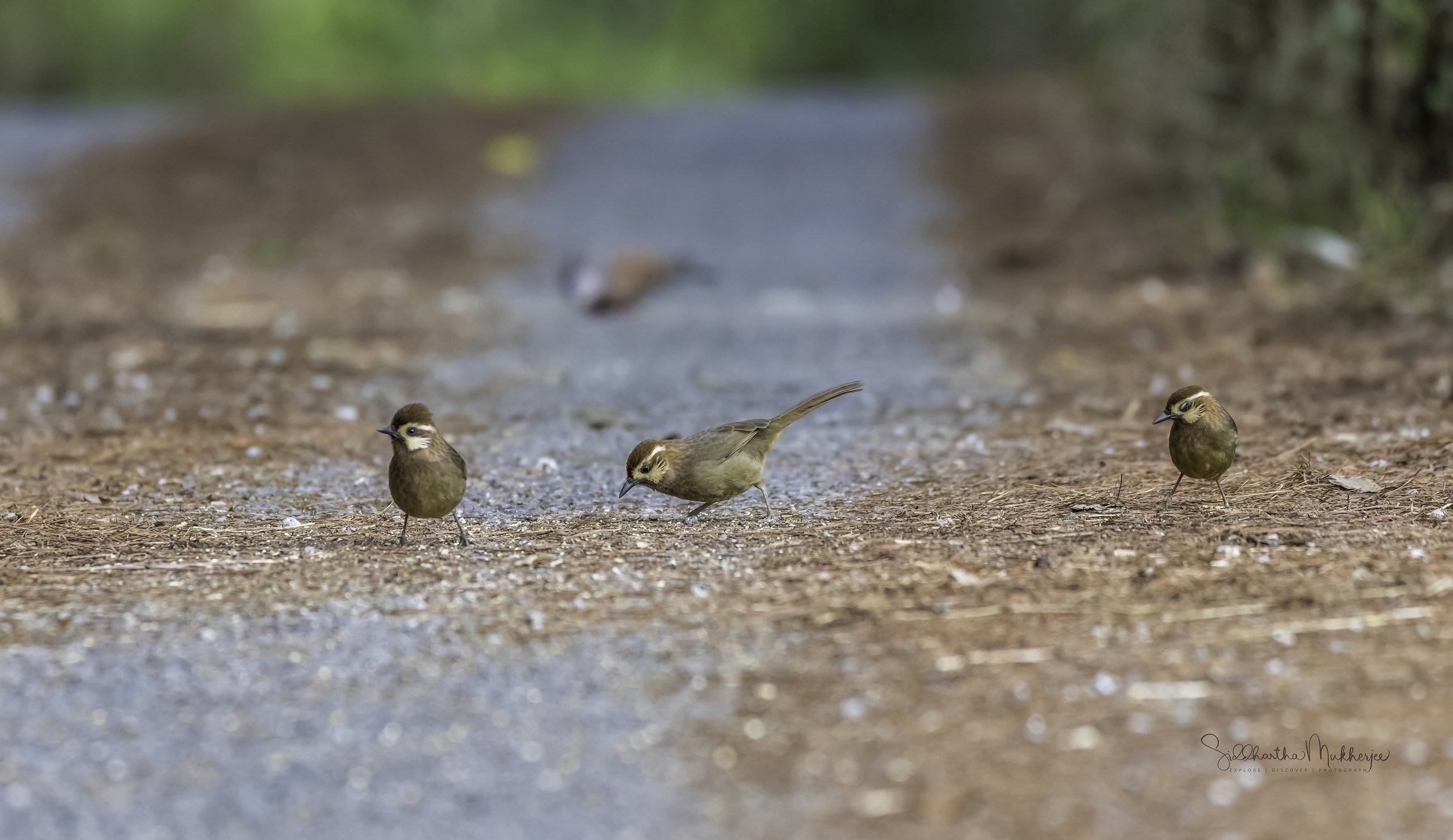
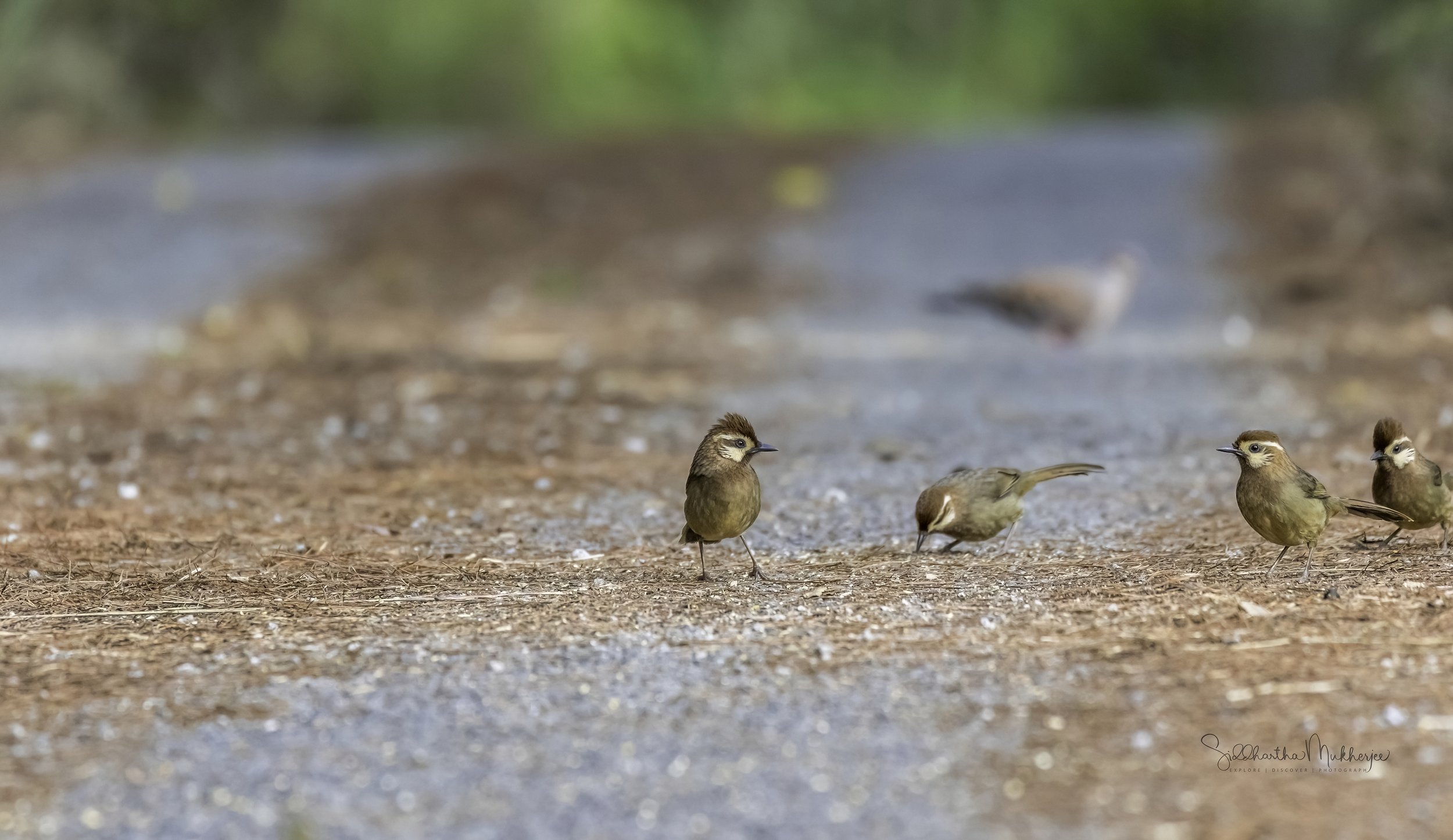
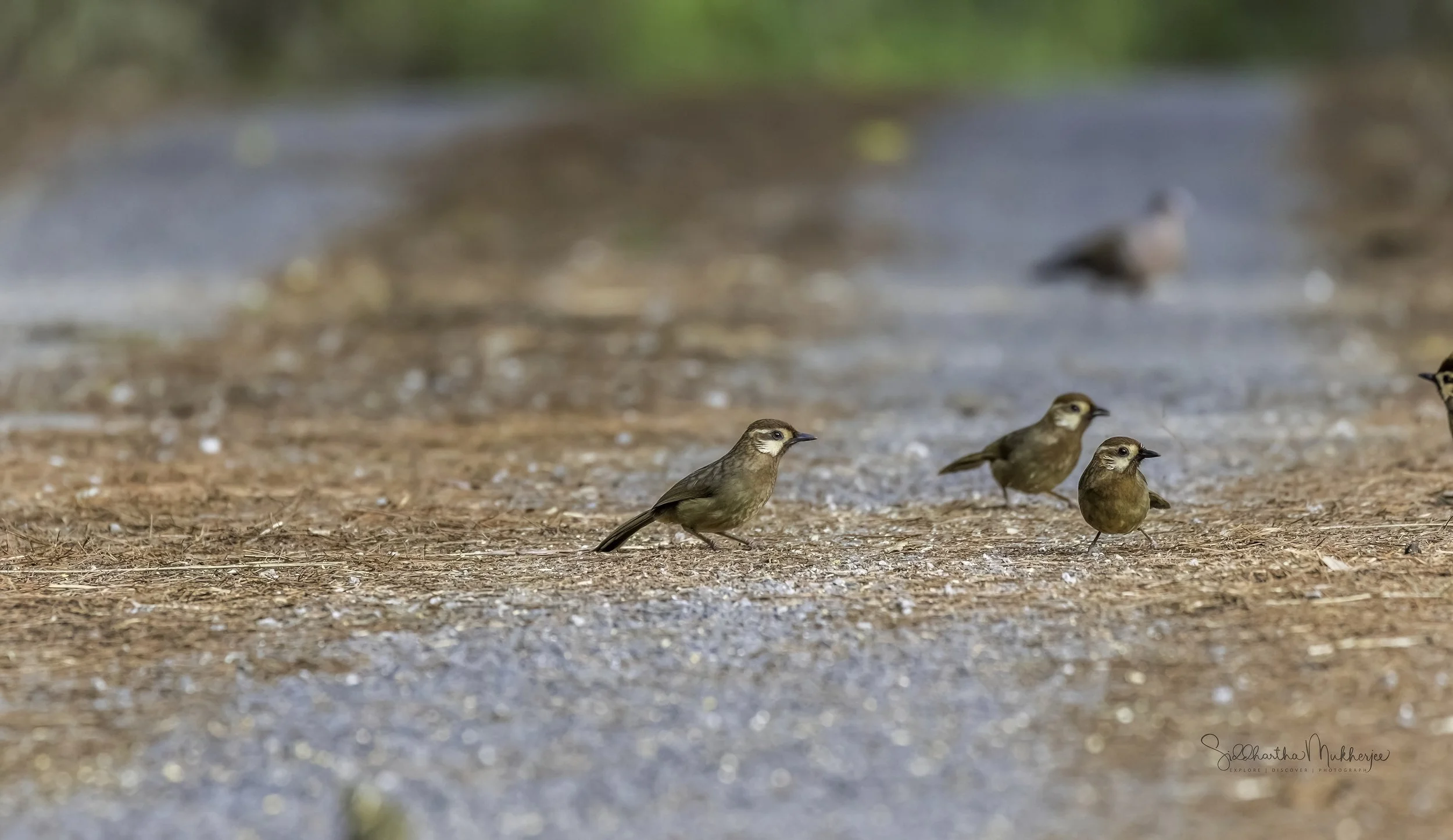
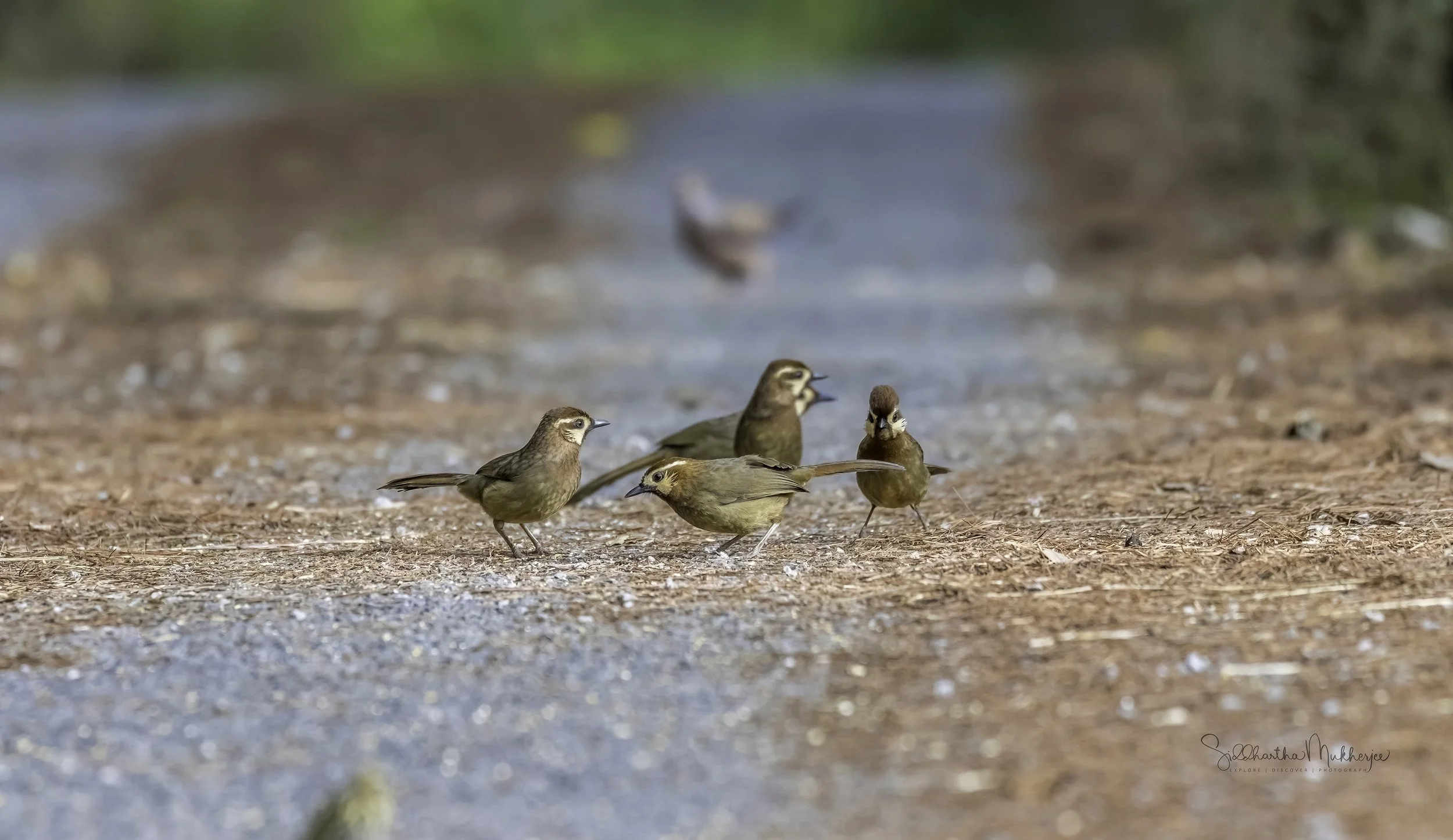
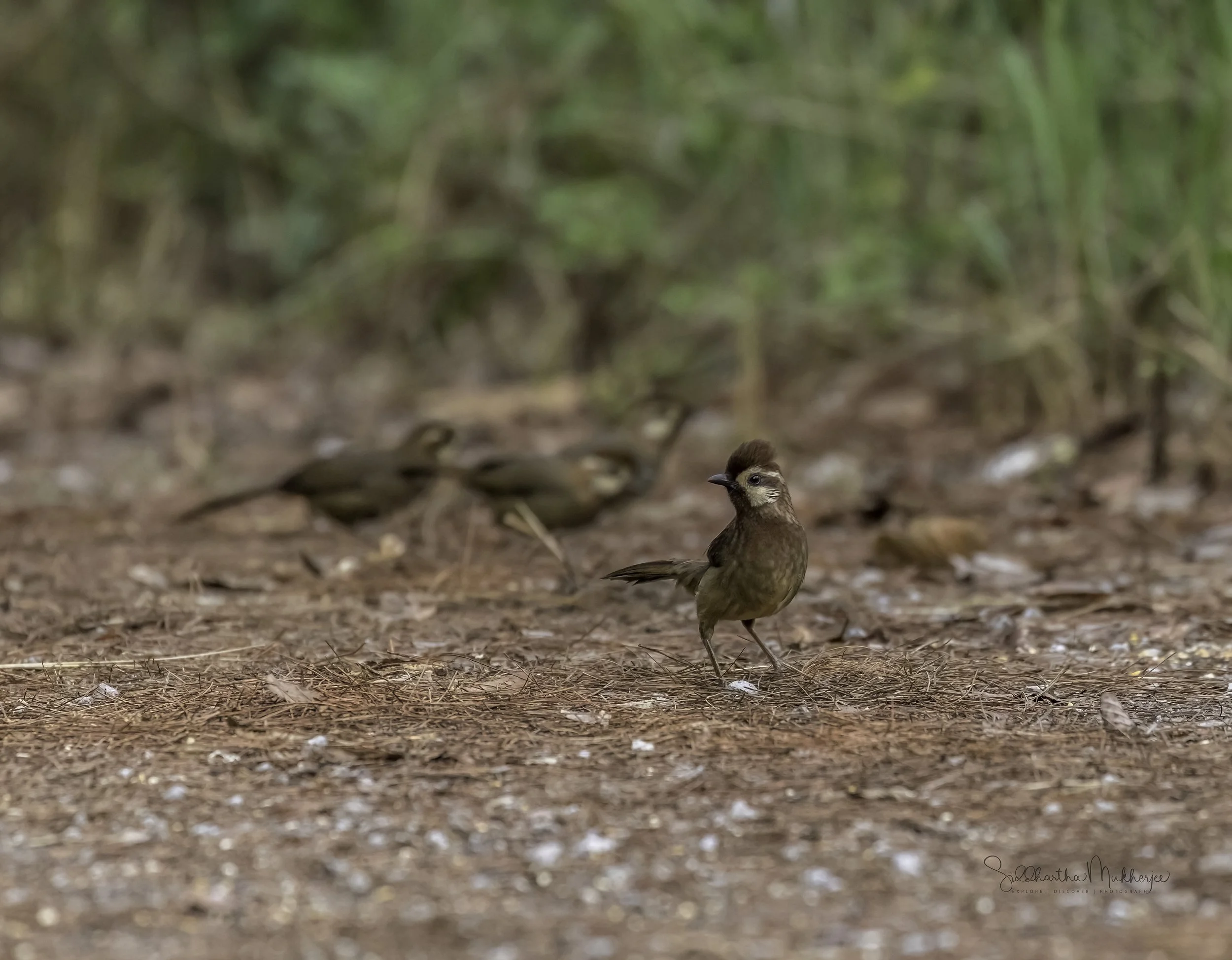
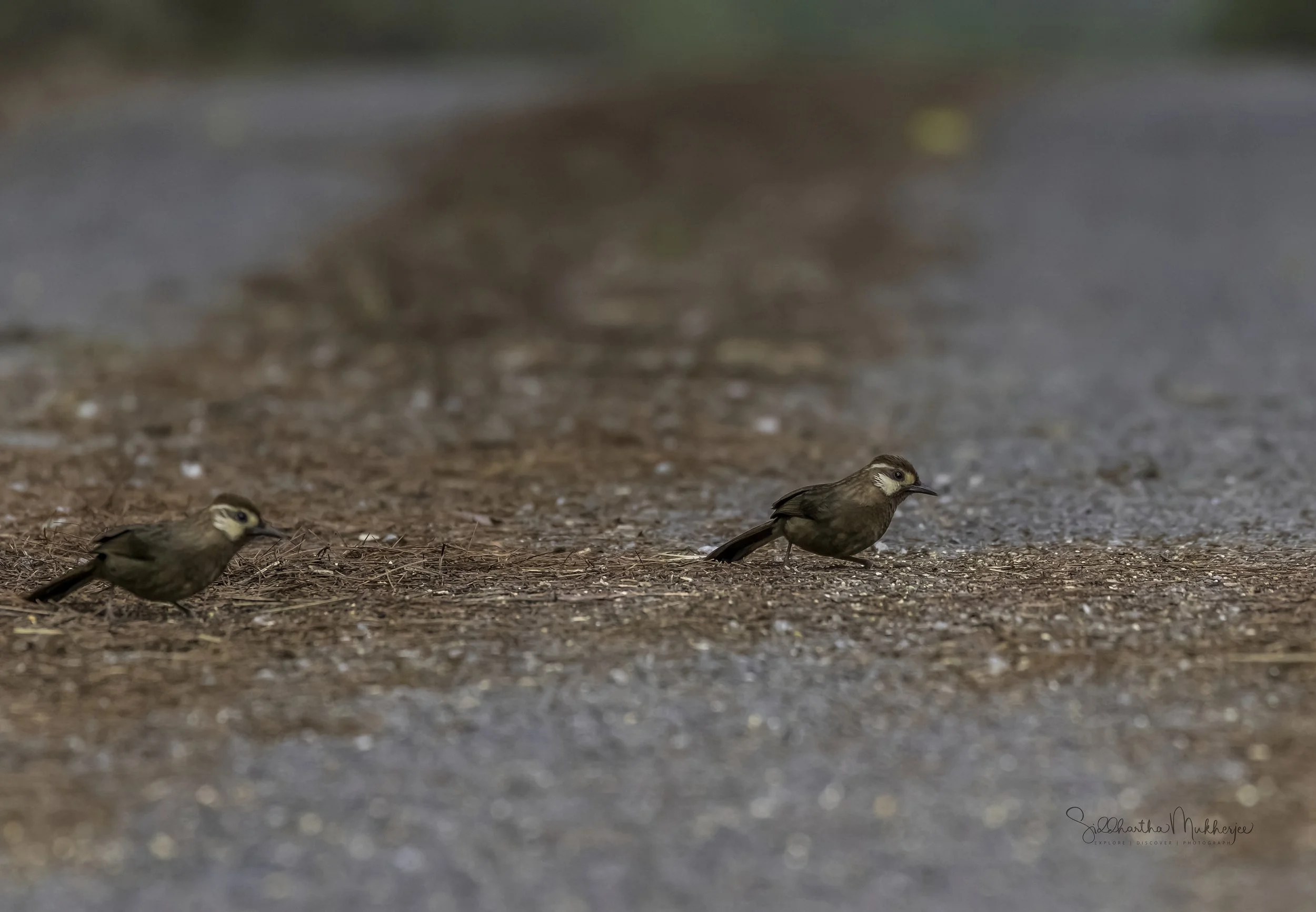
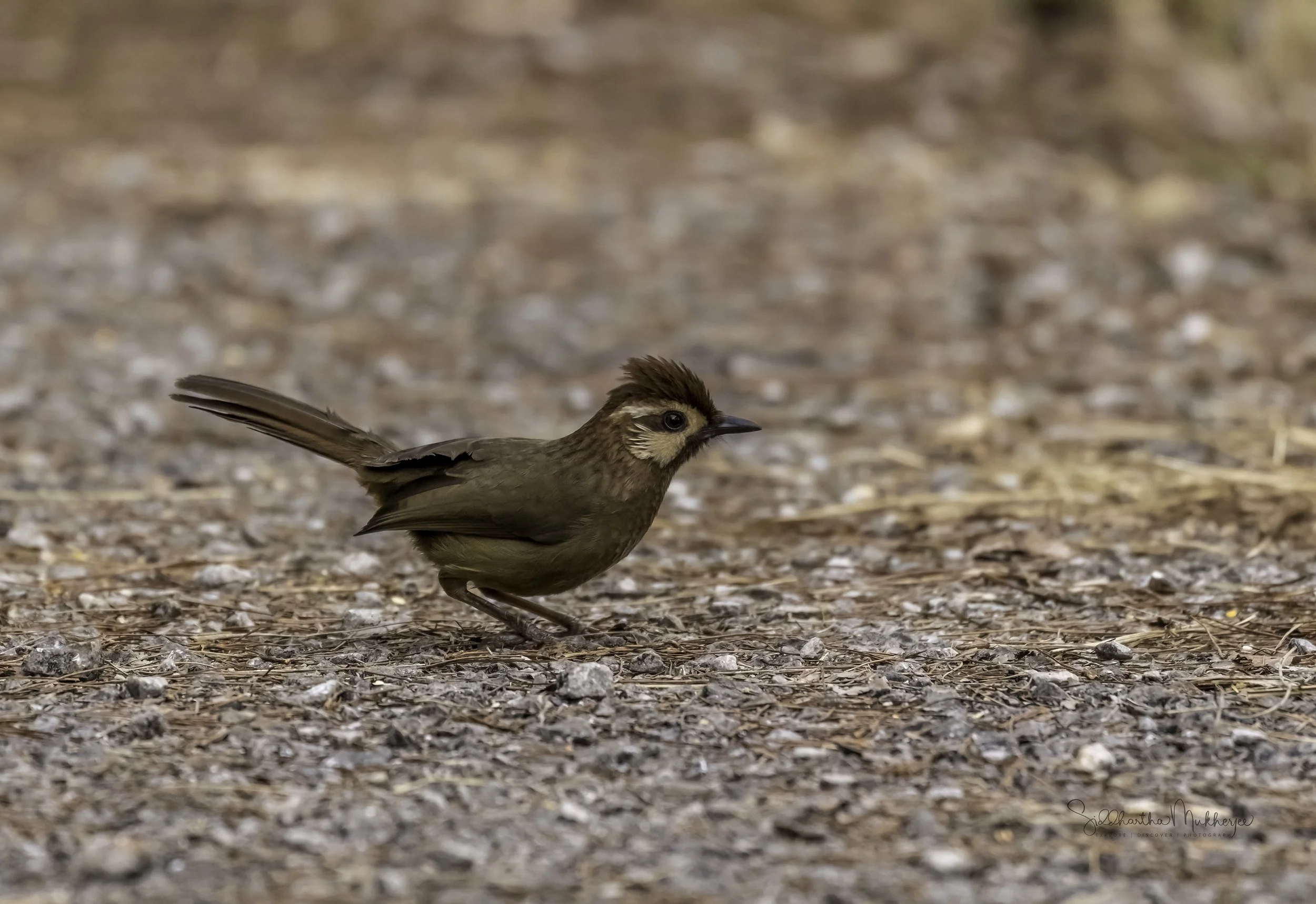
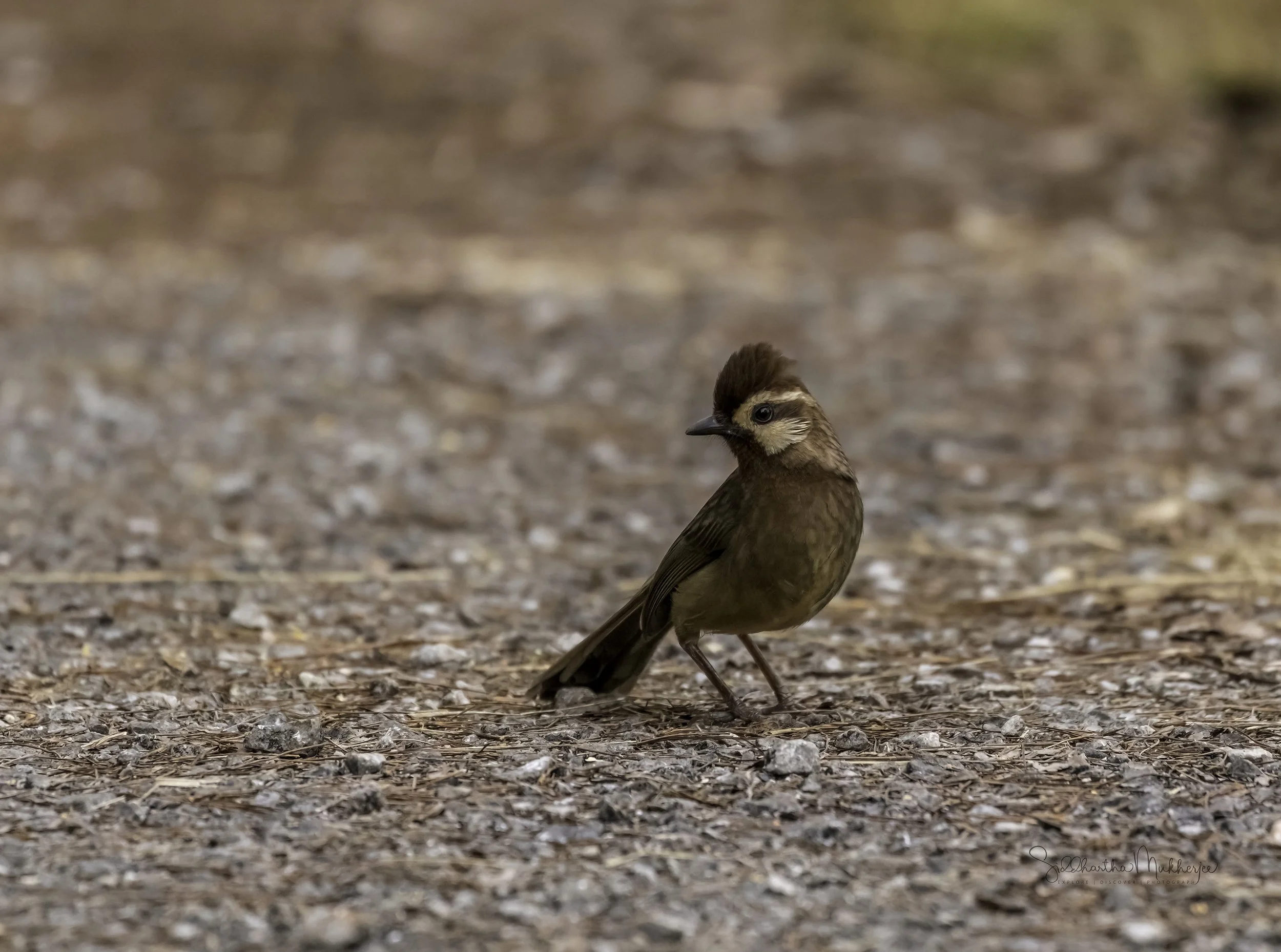
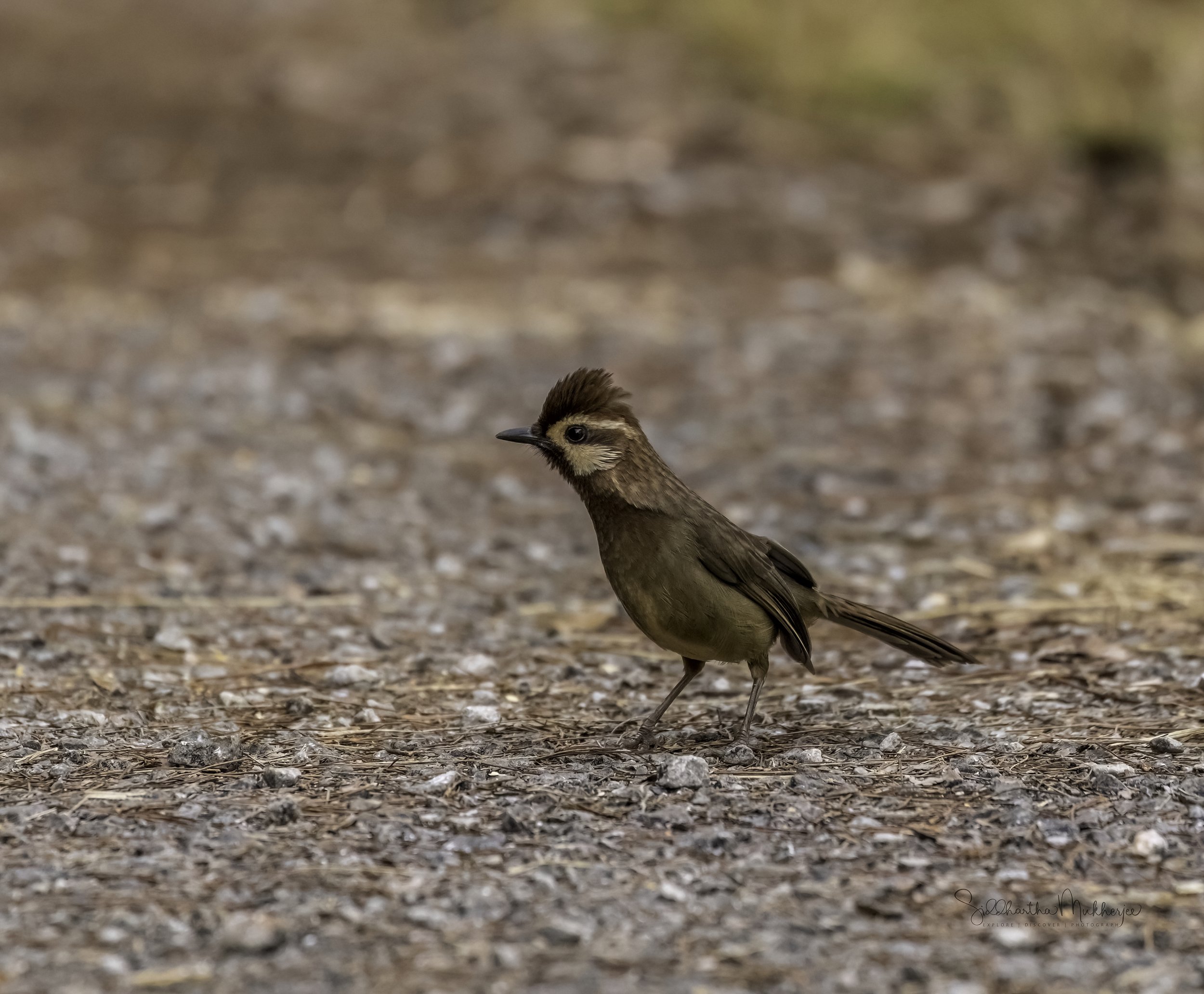
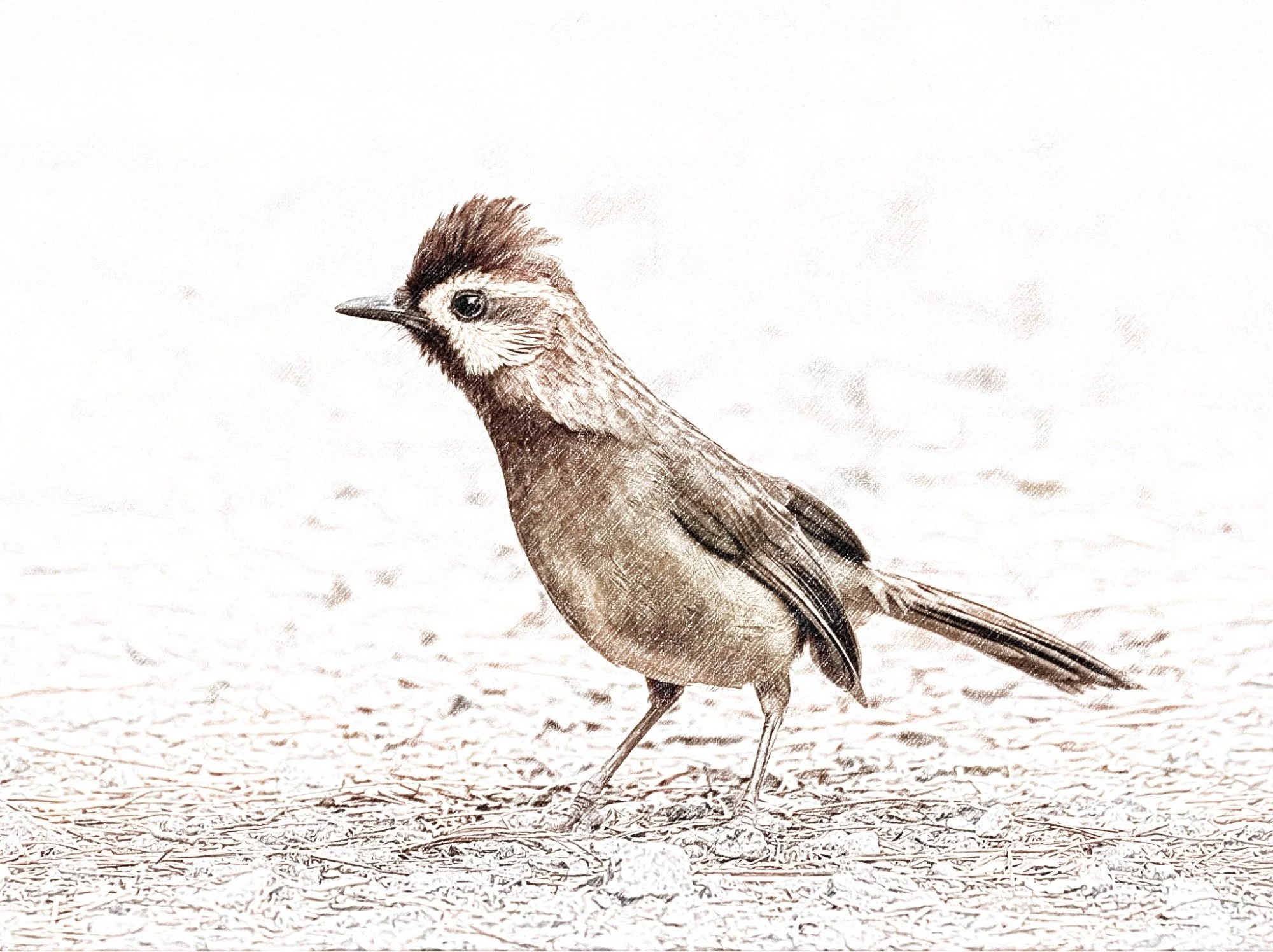
It has been a while since I talked about the beautiful birds of Chiang Mai especially some spectacular ones up on Doi AngKhang. Today is about a ground-hugging, long-tailed songbird of city parks, forests, and scrubby agricultural land. Brownish above, ochre below, with striking facial pattern: black throat and rear eyeline contrast with earth-brown crown and white cheek and supercilium. It forages in small to medium-sized flocks on the ground and in dense shrubbery with loud cackling contact calls used to communicate among flockmates. The White-browed Laughingthrush is an Old World Laughingthrush belonging to the family Leiothrichidae, which includes the Laughingthrushes and Old World Babblers.
The “Old World” - a fascinating term seemingly like something out of the Lord of the Rings and Jurassic Park put together. But in our case the term "Old World" is used commonly to refer to Asia, Africa and Europe (Afro-Eurasia or the World Island), regarded collectively as the part of the world known to its population before contact with the "New World" (the Americas). In the context of archaeology & world history, the term "Old World" includes those parts of the world which were in (indirect) cultural contact from the Bronze Age onwards, resulting in the parallel development of the early civilisations, mostly in the temperate zone between roughly the 45th and 25th parallels, in the area of the Mediterranean, Mesopotamia, Persian plateau, Indian subcontinent and China. The concept of the three continents in the Old World, viz. Asia, Africa, and Europe, goes back to classical antiquity. Their boundaries as defined by Ptolemy and other geographers of antiquity were drawn along the Nile in what is now Egypt and the Don river in Russia. This definition remained influential throughout the Middle Ages and the Early Modern period.
The Laughingthrushes of the family Leiothrichidae are also a family of Old World passerine birds diverse in size and coloration. These are birds of tropical areas, with the greatest variety in Southeast Asia and the Indian subcontinent. The entire family used to be included in the Timaliidae. These laughingthrushes are small to medium-sized birds with strong legs, and many are quite terrestrial. They typically have generalised bills, similar to those of a thrush. Most have predominantly brown plumage, with minimal difference between the sexes, but many more brightly coloured species also exist. This group is not strongly migratory, and most species have short rounded wings, and a weak flight. They live in lightly wooded or scrubland environments, ranging from swamp to near-desert. They are primarily insectivorous, although many will also take berries, and the larger species will even eat small lizards and other vertebrates.
The Dois of northern Thailand have been very kind to me from a birding perspective. There are so many I have already talked about and so many still remaining. I have written an overview here on the Birds of the Dois and have now started to break them up into individuals like the Gray-backed Shrike, Long-tailed Shrike, Spectacled Barwing, Siberian Rubythroat, the stunning Mrs. Gould’s Sunbird and the numerous other birds I have seen here.
About 685 kilometers to the north of Bangkok lies the former seat of the ancient Lanna Kingdom and is considered one of the most scenic provinces in the country given its mountain ranges, valleys, flora and fauna. A land of misty mountains and colourful hill tribes, a playground for seasoned travellers, and a delight for adventurers. Despite its relatively small size and blissful calm, Chiang Mai truly has it all, a city that is still firmly Thai in its atmosphere and attitude. It is the second-largest changwat (province) of Thailand. Bordered by Chiang Rai to the northeast, Lampang & Lamphun to the south, Tak to the southwest, Mae Hong Son to the west and the Shan State of Myanmar to the north. Located in a verdant valley on the banks of the Ping River, Chiang Mai was founded in 1296 as the capital of the ancient Lanna Kingdom. Today it is a place where past and the present seamlessly merge with modern buildings standing side by side with venerable temples. Of all the places I have visited in Thailand, Chiang Mai with its forests and mountains and the historic city of Ayutthaya are by far my favourites.
The word Chiang itself is from North Thai, or Lanna, meaning town or city and Mai means new making Chiang Mai the New City as it was founded later than Chiang Rai, the earlier capital of King Meng Rai. The districts in the province are called amphoe, and sub-districts are called tambon. Another twist is the use of Nakhon (or Nakorn or Nakhorn), derived from the Sanskrit word Nagara, also means city, though strictly speaking it refers to a capital city such as Nakorn Sri Ayutthaya (more on Ayutthaya later). Indeed to emphasise its former status you may sometimes see Chiang Mai referred to as Nakhon Ping. Other common names of geographical features include mae (river) and doi which is north Thai for mountain - for example Doi Inthanon and Mae Ping.
The four Dois we spent our time on were Doi Inthanon, Doi Ang Khang, Doi Luang and Doi SanJu.
Doi Ankhang is a mountain belonging to the Himalayan foot hill range, located at the Myanmar (Burmese) border. The highest point is 1,928 metres. Although chiefly deforested, this is still one of Northern Thailand’s most prominent bird watching areas, due to more and rarer bird species being in residence, as well as being a popular resting point for numerous migratory birds. Examples of rare and beautiful birds inhabiting this area include the Mountain Bamboo Partridge, Spot-breasted Parrotbill, Tickell’s Leaf Warbler and the Red-faced Liocichla. It is not so uncommon to spot the Red-tailed Laughing Thrush here. Around The Royal Agricultural Project Station you can find Brown, Burmese and Long-tailed Shrike and also Fire-capped Tits and Silver-eared Mesia, White – tailed Robin & Maroon Oriole.
We didn’t have the good fortune to see all the species on all the mountains, that would have been impossible, but we did rack up quite a number of species - about 95 of them.
The beautiful road to the top of Doi Angkhang.
Read about the other birds from these beautiful mountains. These are only a few of the huge number I have spotted and recorded there.
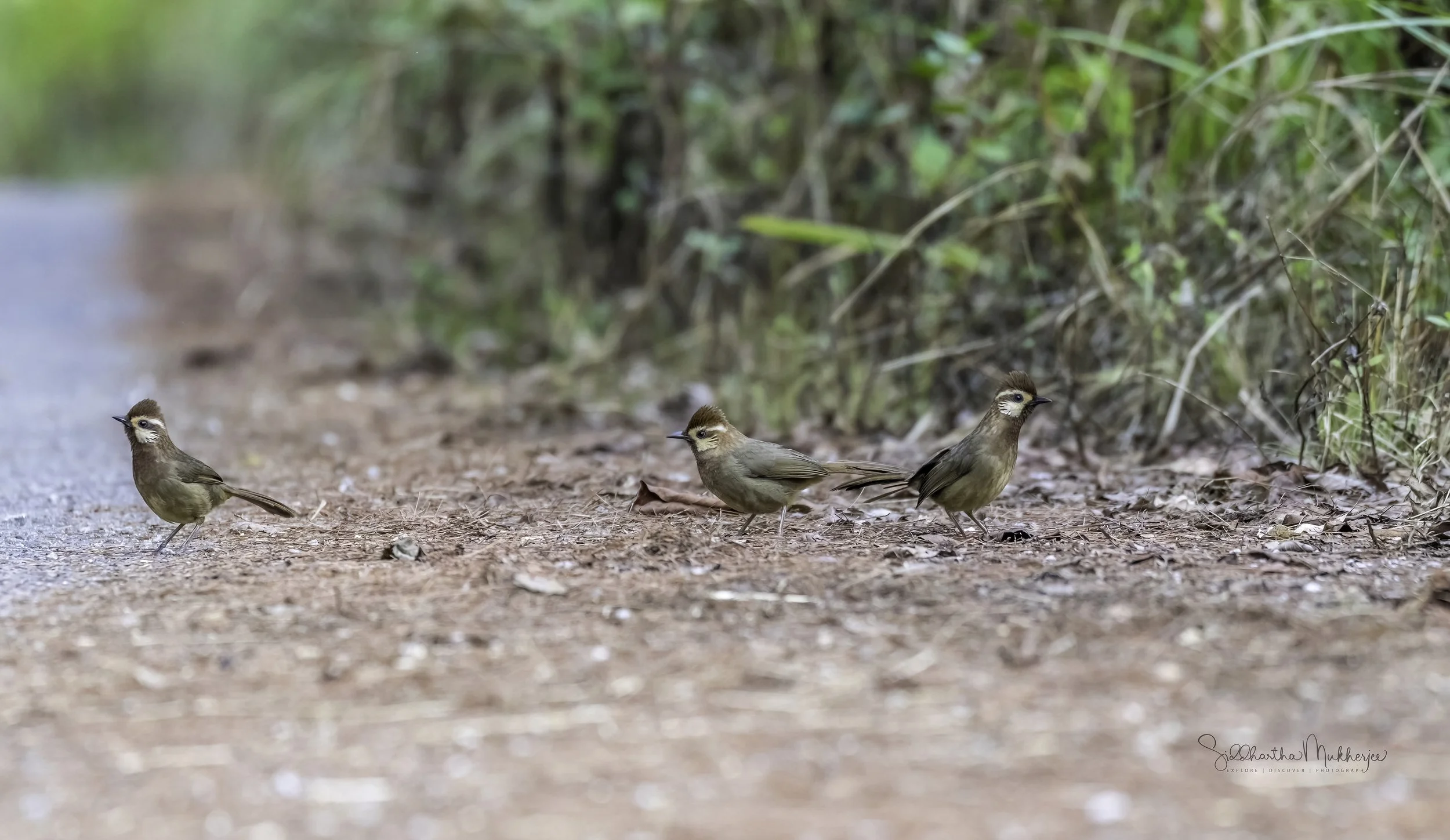
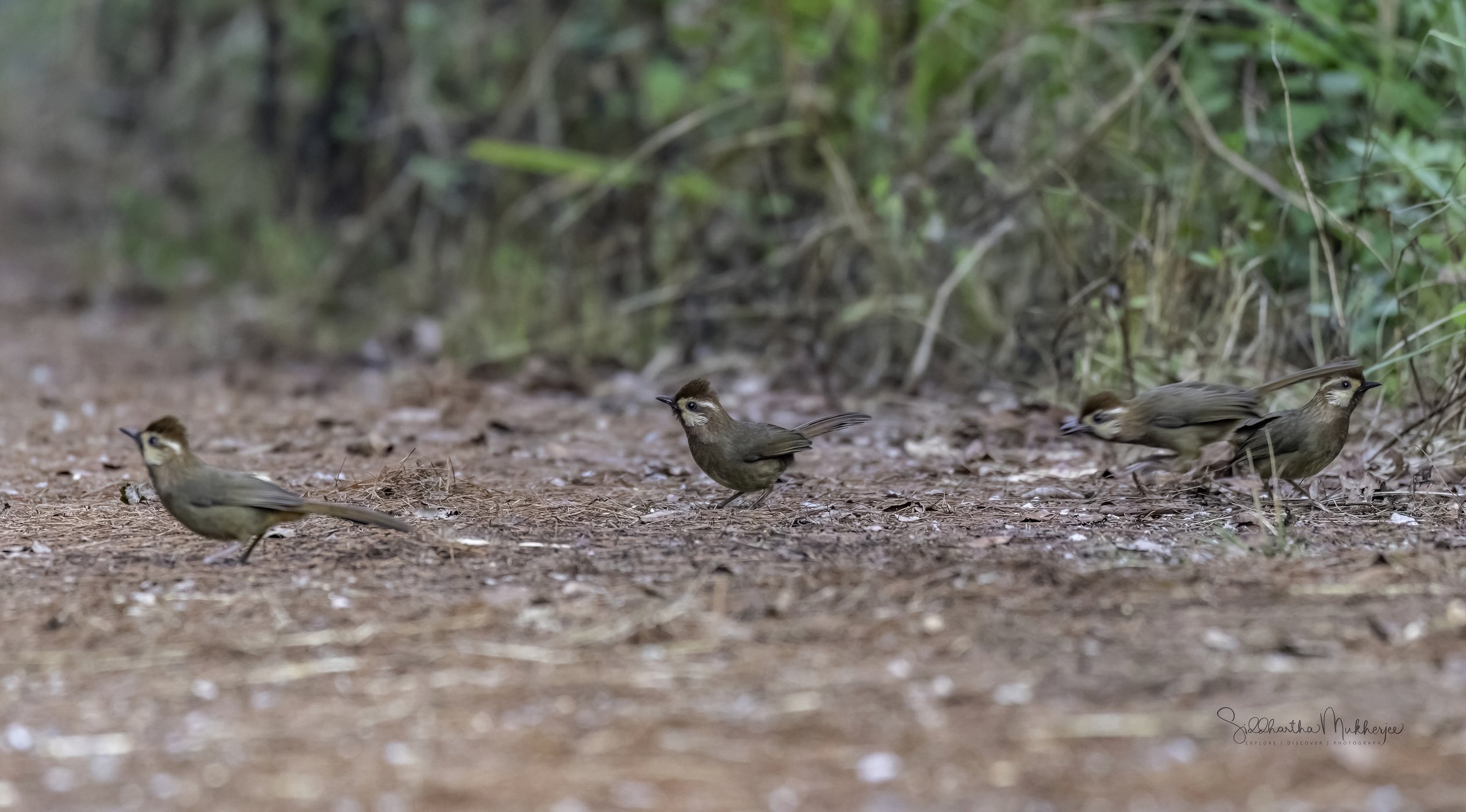
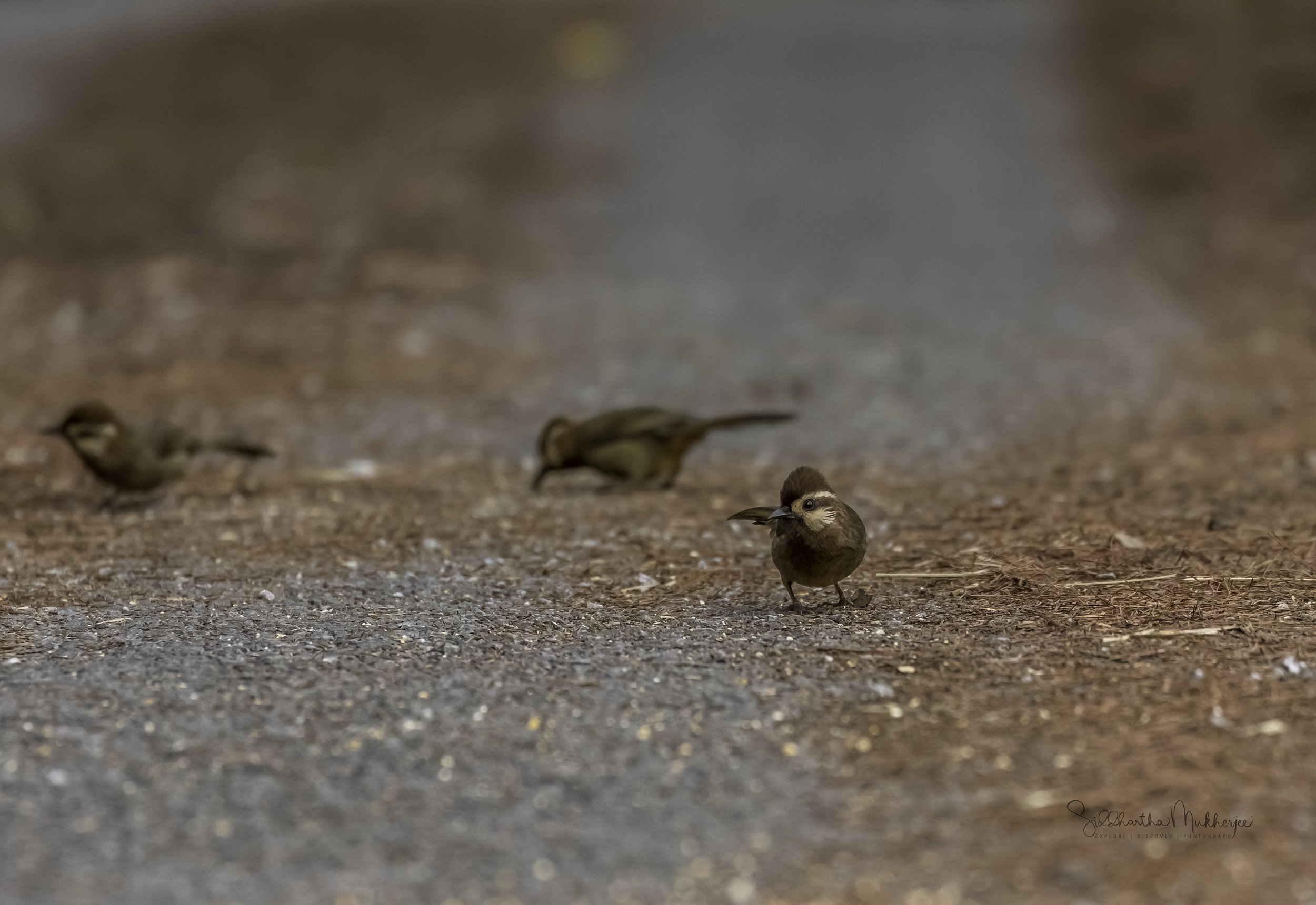
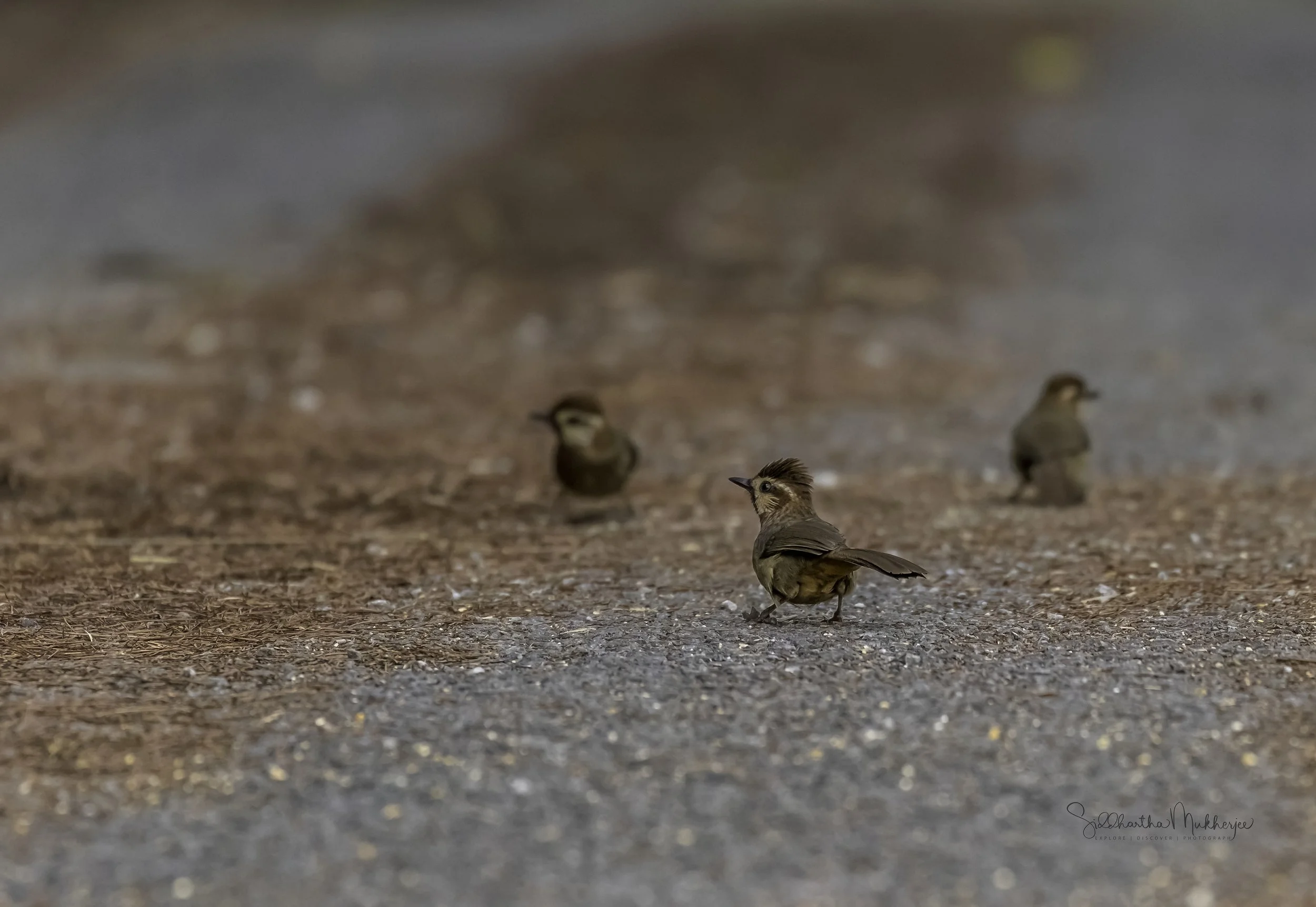
The White-browed Laughingthrush (Pterorhinus sannio) is a bird species in the family Leiothrichidae. It is found in China, Hong Kong, India, Laos, Myanmar, Thailand & Vietnam. This species was formerly placed in the genus Garrulax but following the publication of a comprehensive molecular phylogenetic study in 2018, it was moved to the resurrected genus Pterorhinus. These were photographed in the Doi Pha Hom Pok National Park on Doi Huamereng very close to the Thai border with Myanmar.
‡‡‡‡‡
White-browed Laughingthrush
The early morning mist hung heavy over the dense canopy of Chiang Mai’s evergreen rainforests, draping the ancient trees in a silver shroud. The forest floor was alive with the rustle of leaves, but nothing was visible through the thick green wall of ferns and bamboo thickets. Suddenly, a chaotic burst of sound shattered the silence—a chorus of raucous cackles, rhythmic whistles, and metallic twangs that echoed through the ravine. It was the unmistakable "laugh" of the forest’s most elusive troupe. A small, earth-brown figure stepped out onto the narrow path. The flash of a pristine, creamy-white line looping over its eye and spreading into a broad cheek patch caught the light. It was the White-browed Laughingthrush (Pterorhinus sannio), a master of mimicry and a ghost of the Asian understory.
The Geography of a Songbird: From Chiang Mai to the Himalayas
While this specific bird was immortalised in the cloud forests of Northern Thailand, the White-browed Laughingthrush boasts a vast, winding distribution across Asia. Its native territory spans a continuous belt across Southern China, Hong Kong, Laos, Northern Myanmar, Thailand, and Vietnam.
The Indian Footprint
In India, its presence is a prized encounter for birdwatchers. The species is restricted to the moist, subtropical montane forests and edge-habitats of the North-Eastern states. It can be found foraging in the dense secondary growth of Nagaland, Manipur, Mizoram, Assam, and parts of Arunachal Pradesh. Unlike its cousins that dominate the Western and Central Himalayas, Pterorhinus sannio anchors itself firmly in the Patkai hills and the Lushai hills, preferring the humid, dense undergrowth that mimics the bioclimatic zones of Southeast Asia.
Anatomy of a Forest Dweller: Physical Characteristics
The White-browed Laughingthrush is an elegant lesson in cryptic camouflage, designed perfectly for a life spent hopping along the dark forest floor.
Size and Weight: It is a rather small to medium-sized laughingthrush, with a total body length ranging between 22 to 24 centimetres. Adults typically weigh between 52 to 83 grams.
Plumage and Colouration: The upperparts are a dull, uniform mid-brown, occasionally showing extremely faint, subtle dark streaks. The crown is a rich, contrasting dark brown that extends into a dark, bronzy mask just behind the eyes.
The Facial Mask: Its most defining field mark is the striking white supercilium (eyebrow). This clean white line loops in front of the eye and bleeds directly into a broad, buffish-white cheek patch and moustachial area. This stark white paint job contrasts sharply with a dark throat and earth-brown crown.
Underparts: The breast is a warm, pale mid-brown, which gradually lightens into a buffish-olive or ochre belly. The flanks and thighs are clad in dull greyish-olive, leading to a vibrant cinnamon-buff vent underneath its long tail.
Soft Parts: The eyes feature a dull, brownish-maroon to rufous-chestnut iris set against flesh-grey orbital skin. The bill is robust, slightly down-curved, and horn-black, while the strong, terrestrial legs vary from slate grey to flesh-brown. Males and females are monomorphic, meaning they look identical in the field.
Comparative Taxonomy: Distinguishing the Troupe
Navigating the dense avifauna of India and Southeast Asia requires a sharp eye, as several laughingthrush species share similar names or geographic ranges.
| Feature | White-browed Laughingthrush | White-crested Laughingthrush | White-throated Laughingthrush |
|---|---|---|---|
| Size | Small-medium (22–24 cm) | Large and bulky (28–31 cm) | Large (28–30.5 cm) |
| Primary Identification | White eyebrow loop, broad white cheek patch, earth-brown body. | Snow-white, high, erectile crest; black eye-mask; rufous-chestnut body. | Pure white throat and upper breast; olive-brown upperparts; bright rufous belly. |
| Tail Pattern | Uniform brown, long, rounded. | Dark olive-brown to blackish. | Broad, distinct white tips on the outer tail feathers. |
| Vocalisations | High-pitched chattering, harsh "zhao-zhao" contact calls, complex mimicry. | Hysterical, booming, human-like communal laughter. | Quieter, low chattering, clear musical whistles. |
The White-browed Laughingthrush is primarily a resident of subtropical and tropical moist montane zones. However, it is not a bird of the high forest canopy. Instead, it reigns supreme in the vertical stratum between 0 to 2 metres above the ground. It prefers secondary growth, abandoned shifting cultivation lands (jhum fields), bamboo thickets, scrubby agricultural margins, and open hillsides choked with wild brambles (Rubus). It generally occurs at altitudes between 600 to 1,830 metres across Southeast Asia and North-East India, though it can venture up to 2,600 metres in China’s Yunnan province. In the lower valleys of Chiang Mai and the hills of Mizoram, its habitat directly overlaps with the White-crested Laughingthrush and the Lesser Necklaced Laughingthrush. While the White-crested prefers slightly more mature, interior forest tracts, the White-browed successfully colonises the more degraded, sunlit edges where forest meets scrub.
Behaviour: The Secret Lives of the Laughing Troupe
To observe a White-browed Laughingthrush is to witness an endless game of hide-and-seek. They are highly social, almost never seen alone, moving instead in skulking, tight-knit family flocks of 6 to 12 individuals. They are primarily terrestrial omnivores. They spend hours tossing damp leaf litter aside with their powerful bills to uncover beetles, ants, snails, and caterpillars. During the autumn and winter months, their diet shifts heavily toward berries, wild figs, and weed seeds gleaned from the edges of agricultural plots.
Due to their short, rounded wings, their flight is weak, jerky, and laboured. They rarely fly across open spaces, choosing instead to hop rapidly from one low branch to another, relying on their strong legs to escape danger by running through the grass rather than taking to the air. Their vocal behaviour is a structural defence mechanism. If one bird spots a predator—such as a Hodgson's Hawk-Cuckoo or a civet—it releases a sharp, cackling contact note. Within seconds, the entire flock joins in a deafening, coordinated choral melody of whistles, twangs, and mimicry. This confusing wall of sound disorients the predator and alerts all other fauna in the immediate vicinity.
Habitat Loss and Behavioral Adaptation: The Price of Survival
As the rainforests of Chiang Mai face fragmentation from encroaching resorts and orchards, and North-East India battles the impacts of unregulated logging, the White-browed Laughingthrush has thrown scientists a curveball. While many interior-forest specialists face rapid, catastrophic declines due to deforestation, Pterorhinus sannio is showing highly unusual, plastic behavioral changes.
Urban Colonisation and Habitat Plasticity
Because this species evolved to thrive in natural disturbances—such as landslides that created open scrub and bramble patches—it has begun treating human degradation as a substitute habitat. In parts of Southern China and Southeast Asia, populations have successfully shifted from wild montane valleys into city parks, suburban gardens, botanical reserves, and highly modified agricultural hedges. They now comfortably forage among ornamental flowerbeds and backyard compost heaps.
Shifts in Vocalisation and Alert Ranges
In fragmented forests near highways or towns, scientists have noted a shift in the acoustic structure of their calls. To overcome the low-frequency drone of human machinery and traffic, the birds have been observed singing at higher minimum frequencies and condensing their complex choruses into shorter, sharper, and harsher bursts to maintain flock cohesion without giving away their positions to feral dogs and cats.
Increased Terrestrial Risks
Deforestation forces these short-winged birds out of continuous undergrowth and onto open, cleared ground. This has altered their foraging schedules; flocks in disturbed areas have become hyper-vigilant, reducing their ground-foraging durations and spending more time hidden in invasive weed mats like Lantana camara. While they can tolerate a degree of forest thinning, complete canopy clearing and the removal of the scrub layer removes their nesting sites, rendering them highly vulnerable to local extinction.
I held my breath as the White-browed Laughingthrush delivered one final, clear whistle, and vanished instantly back into the green shadows. It left behind only the rustle of leaves and a reminder of nature's profound capacity to adapt, sing, and survive on the changing edges of our world.
‡‡‡‡‡

Related Posts


The Near Threatened Chestnut-capped Laughingthrush (Garrulax mitratus), also known as the spectacled laughingthrush, is a species of bird in the family Leiothrichidae. It is found in Sumatra (Indonesia) and the Thai-Malay Peninsula. Its natural habitats are subtropical or tropical moist lowland forests and subtropical or tropical moist montane forests.
#wildartworks, #Canon, #Bird, #Birdinginthewild, #BirdWatching, #Wildlife, #WildBirds, #naturephotography, #your_best_birds, #planetbirds, #earthcapture, #photo_pond, #earthpix, #naturyst, #conservationphotography, #yesbbcearth, #indian_wildlifes, #indianwildlifeofficial, #wildlifeonearth, #bbcearth, #natgeowild, #natgeoindia, @awpc.hk, @globalcapture, #laughingthrush, #chestnutcappedlaughingthrush, #Lanchang, #HuluLangat, #SungaiCongkak, #Congkak, #BukitFraser, #FrasersHill, #Malaysia, #NearThreatened, #thrush