
Yellow-vented Flowerpecker
Pachyglossa chrysorrhea
Kaeng Krachan National Park, Thailand
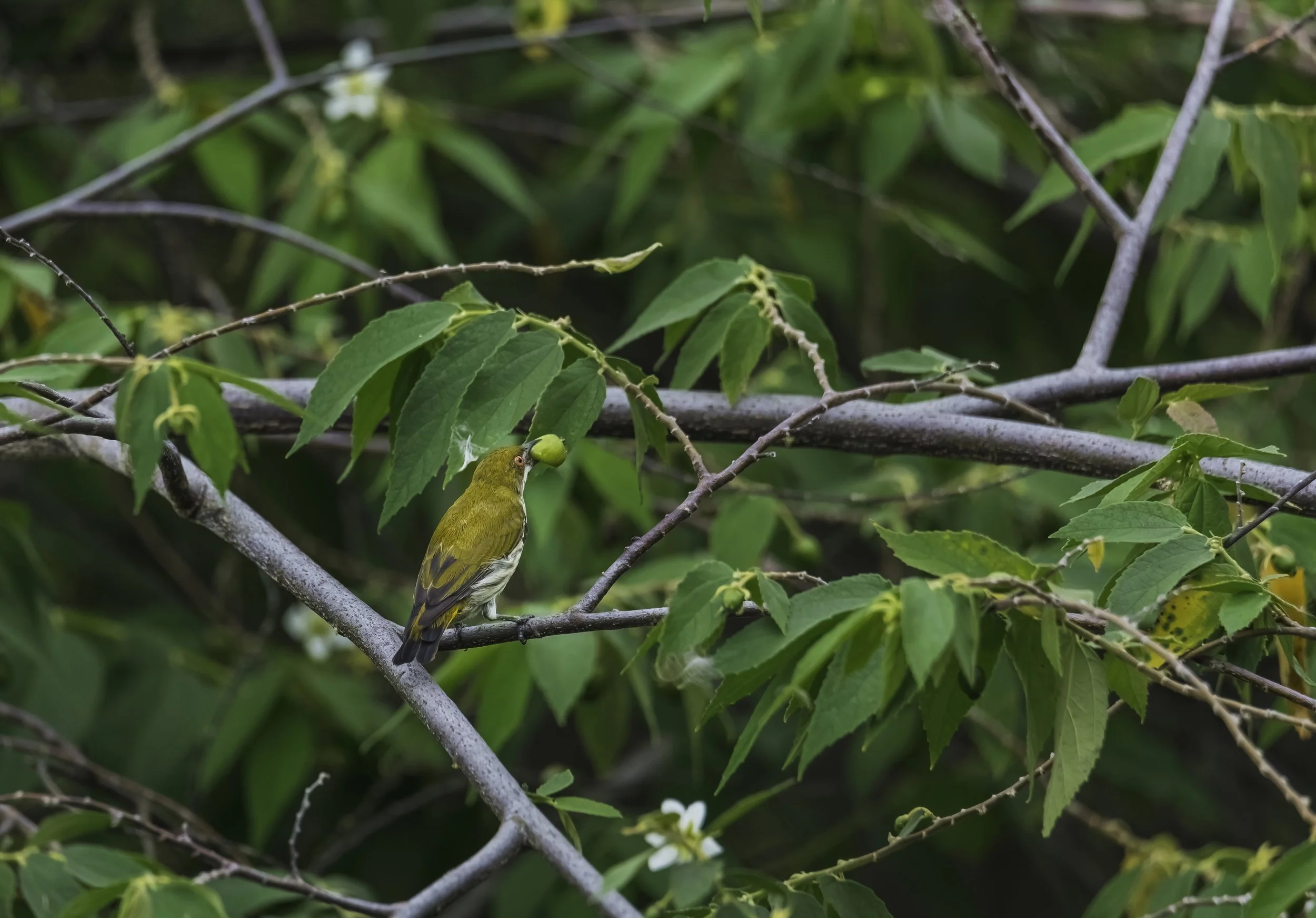
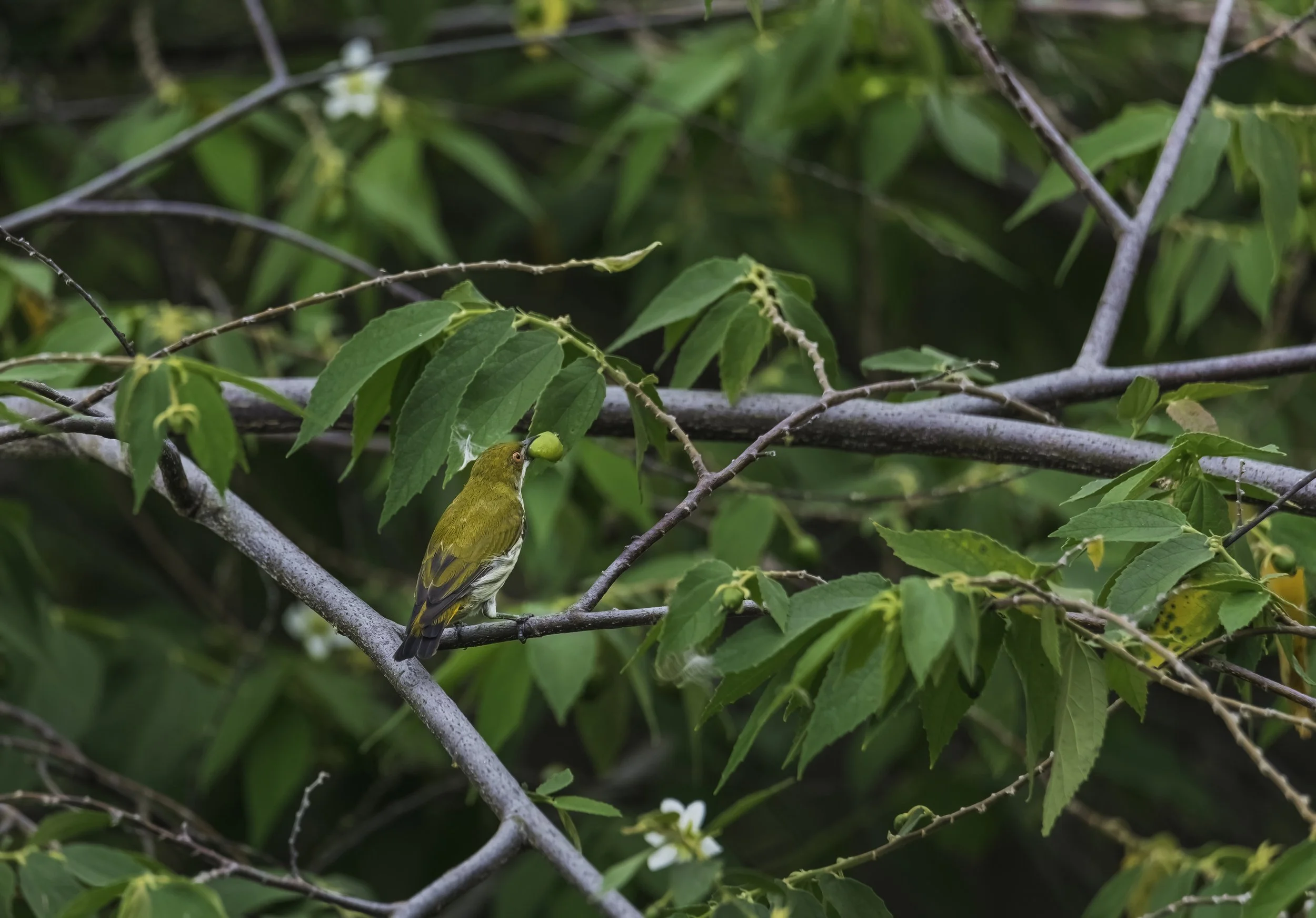
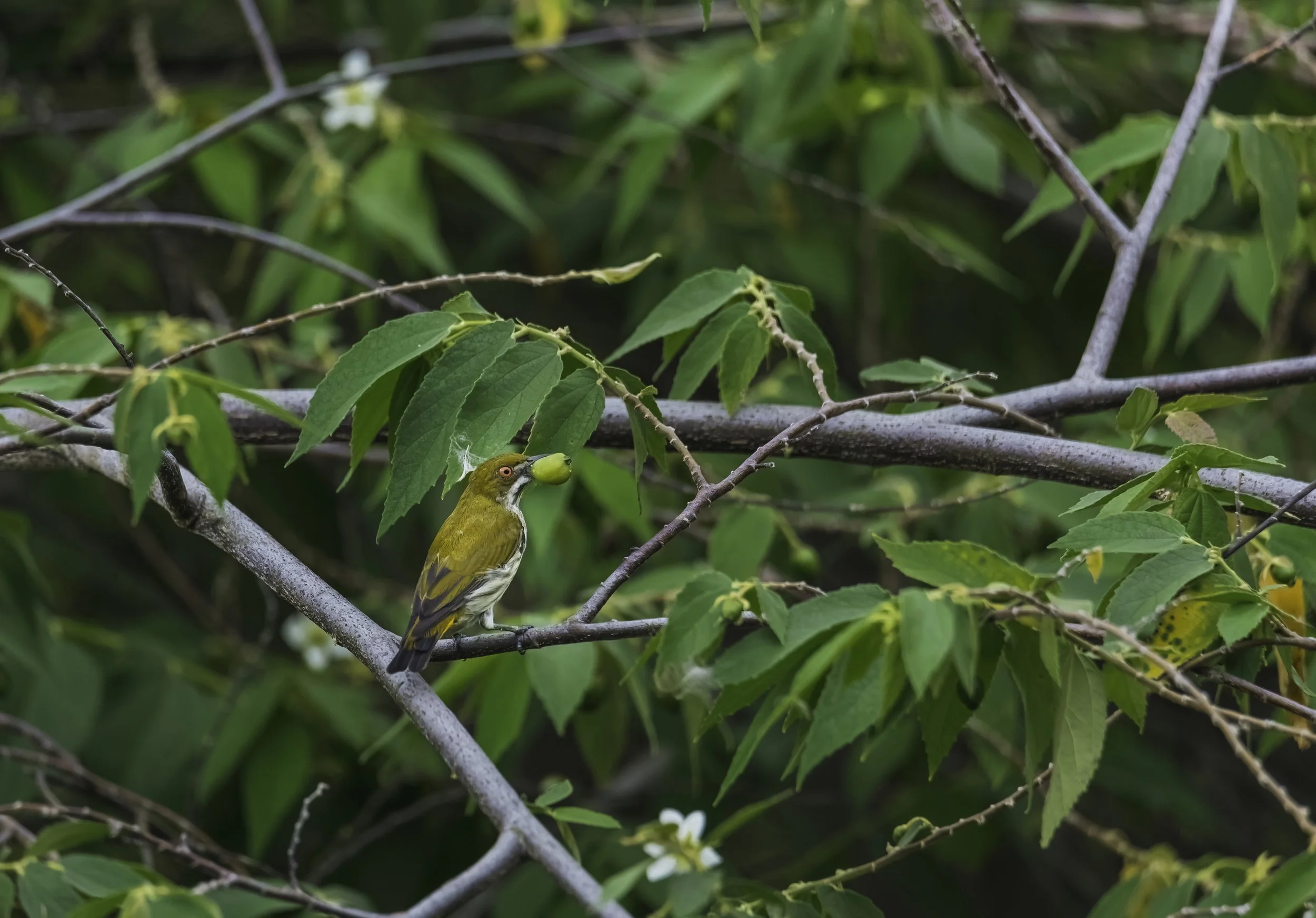
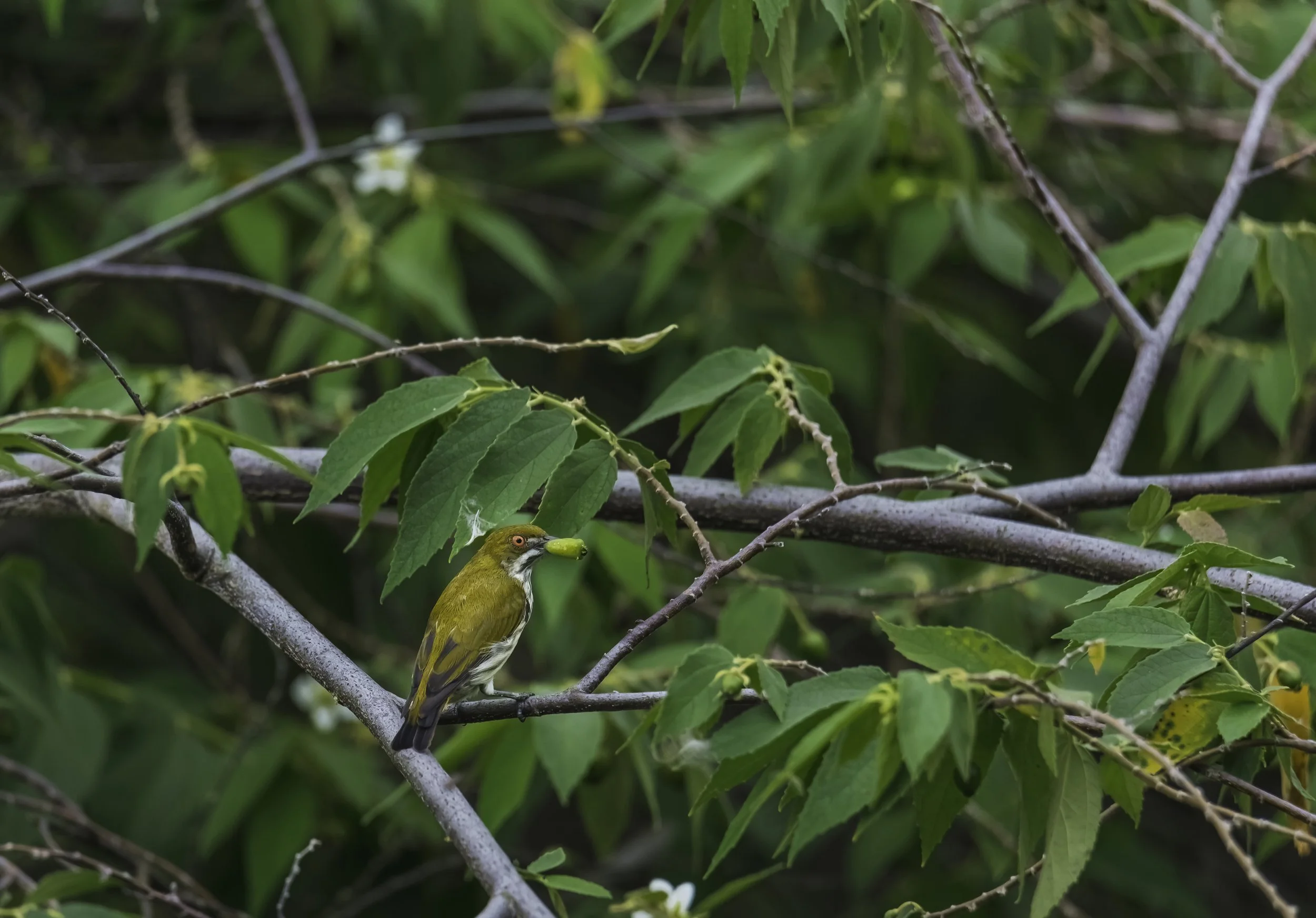
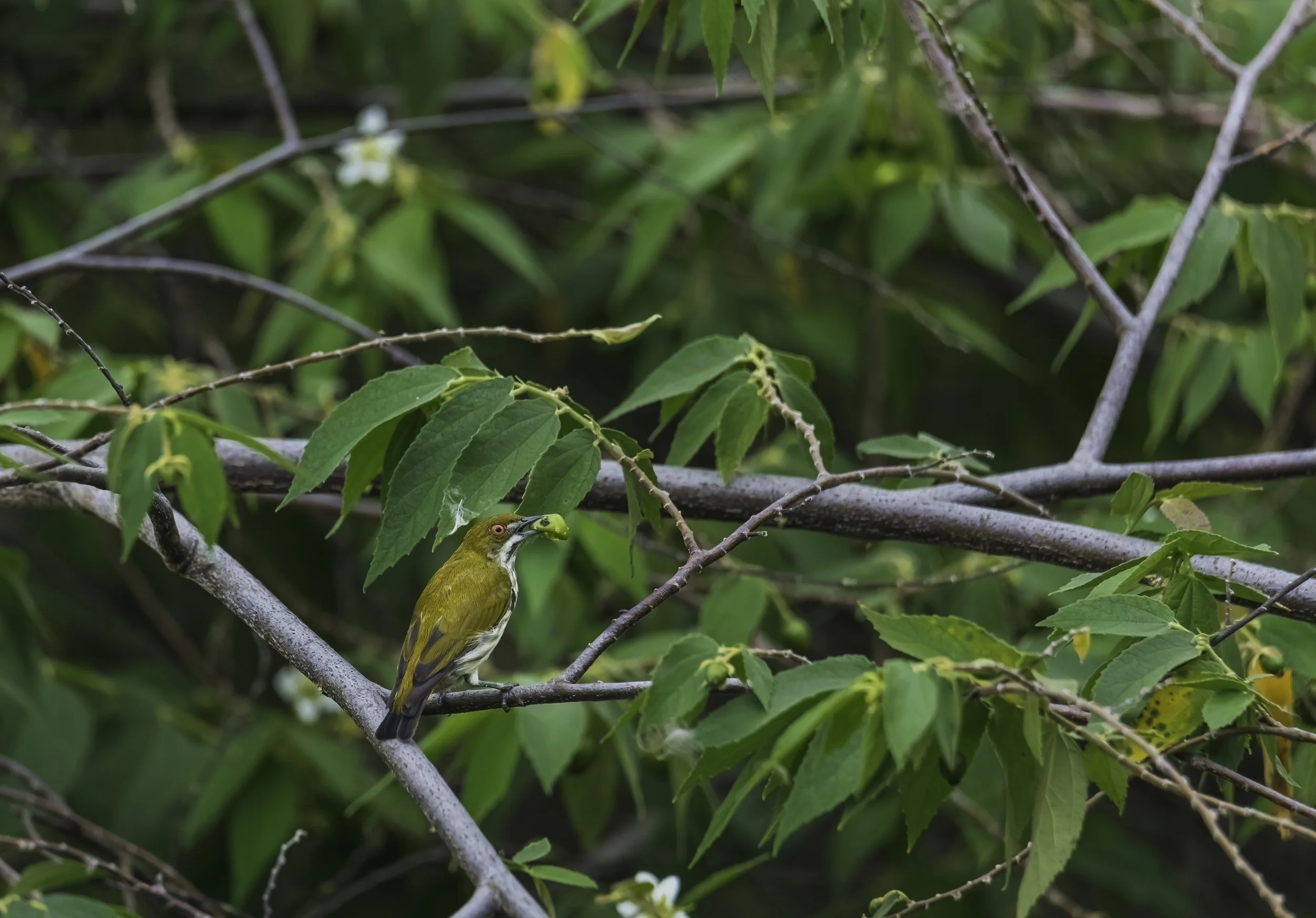
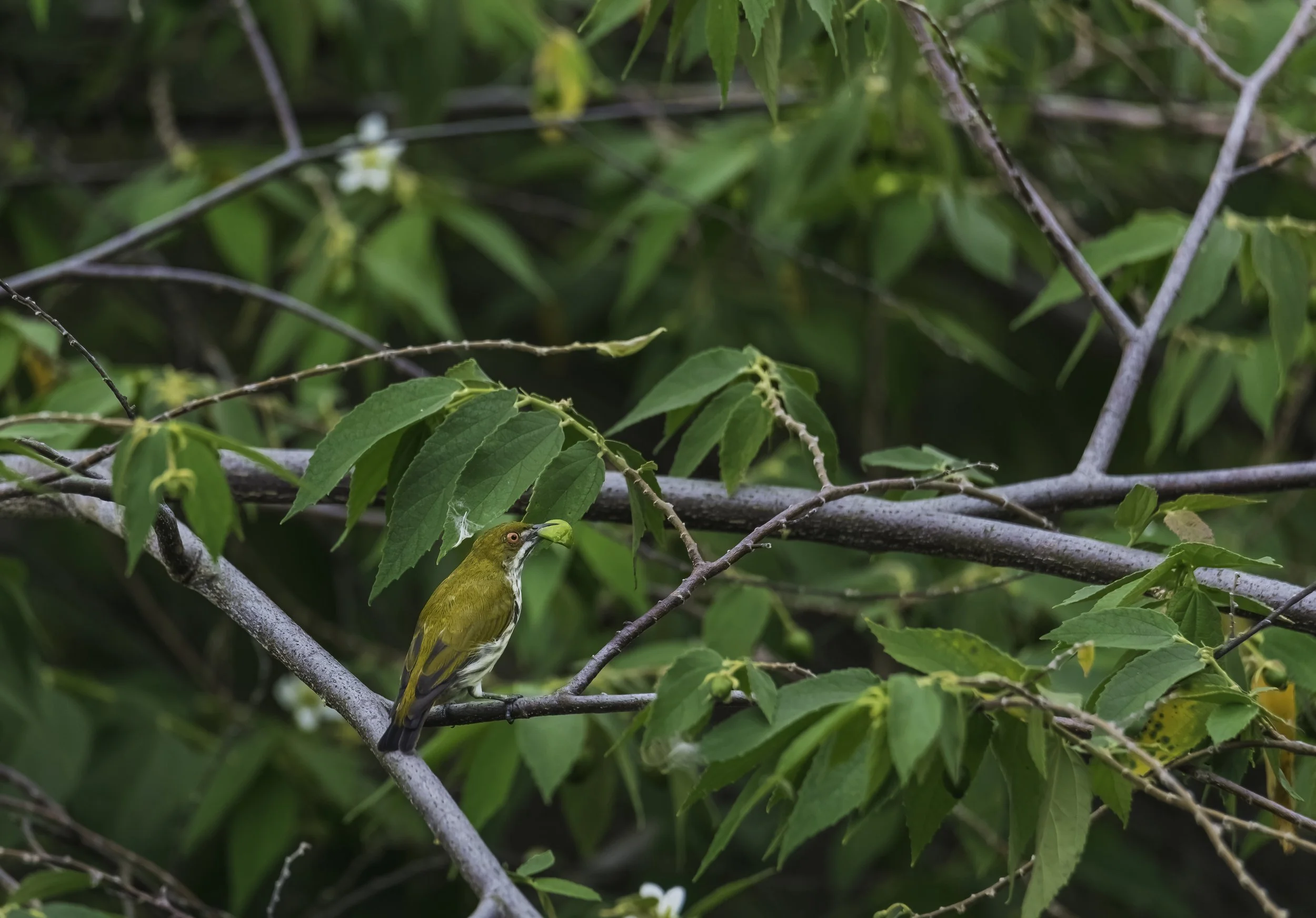
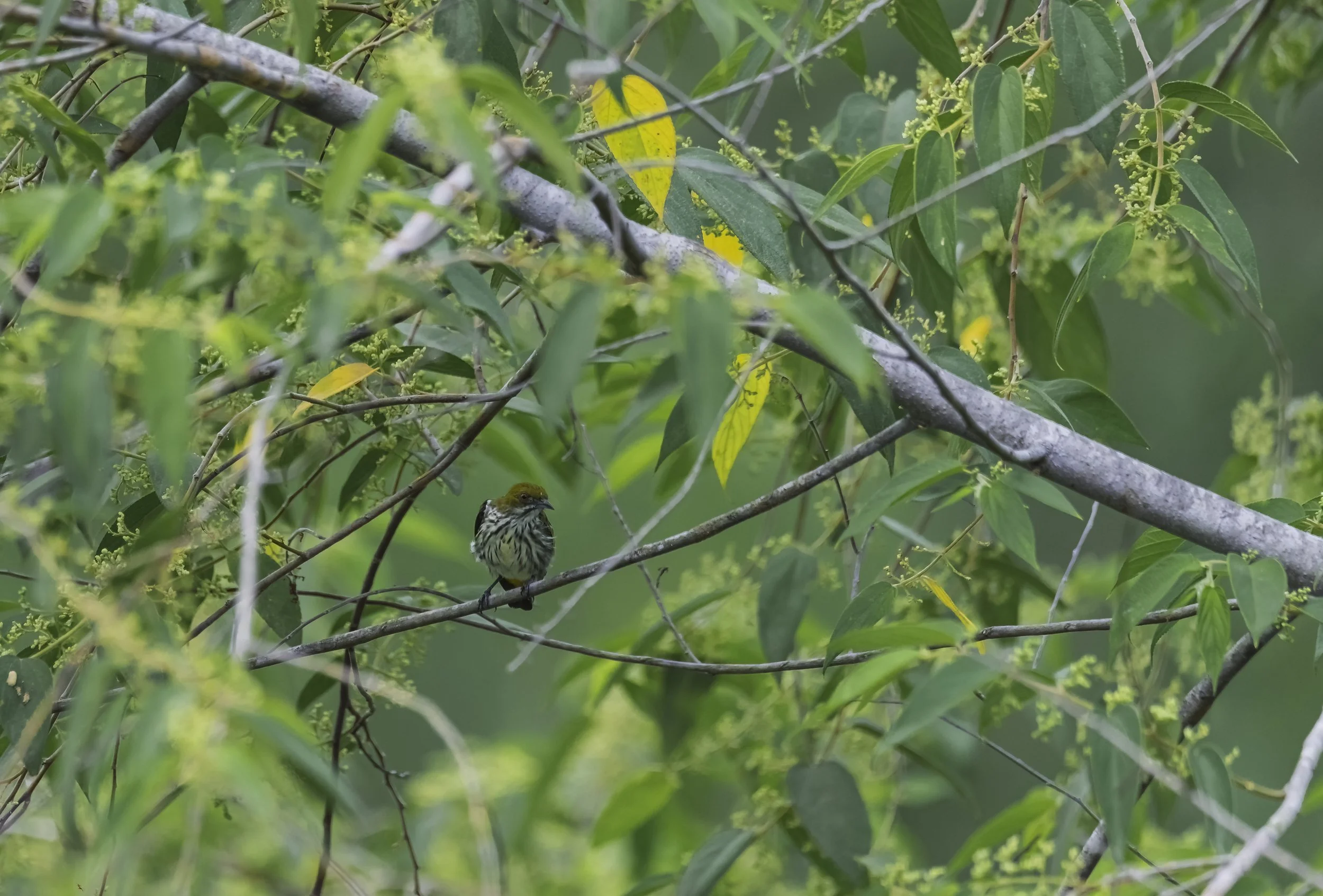
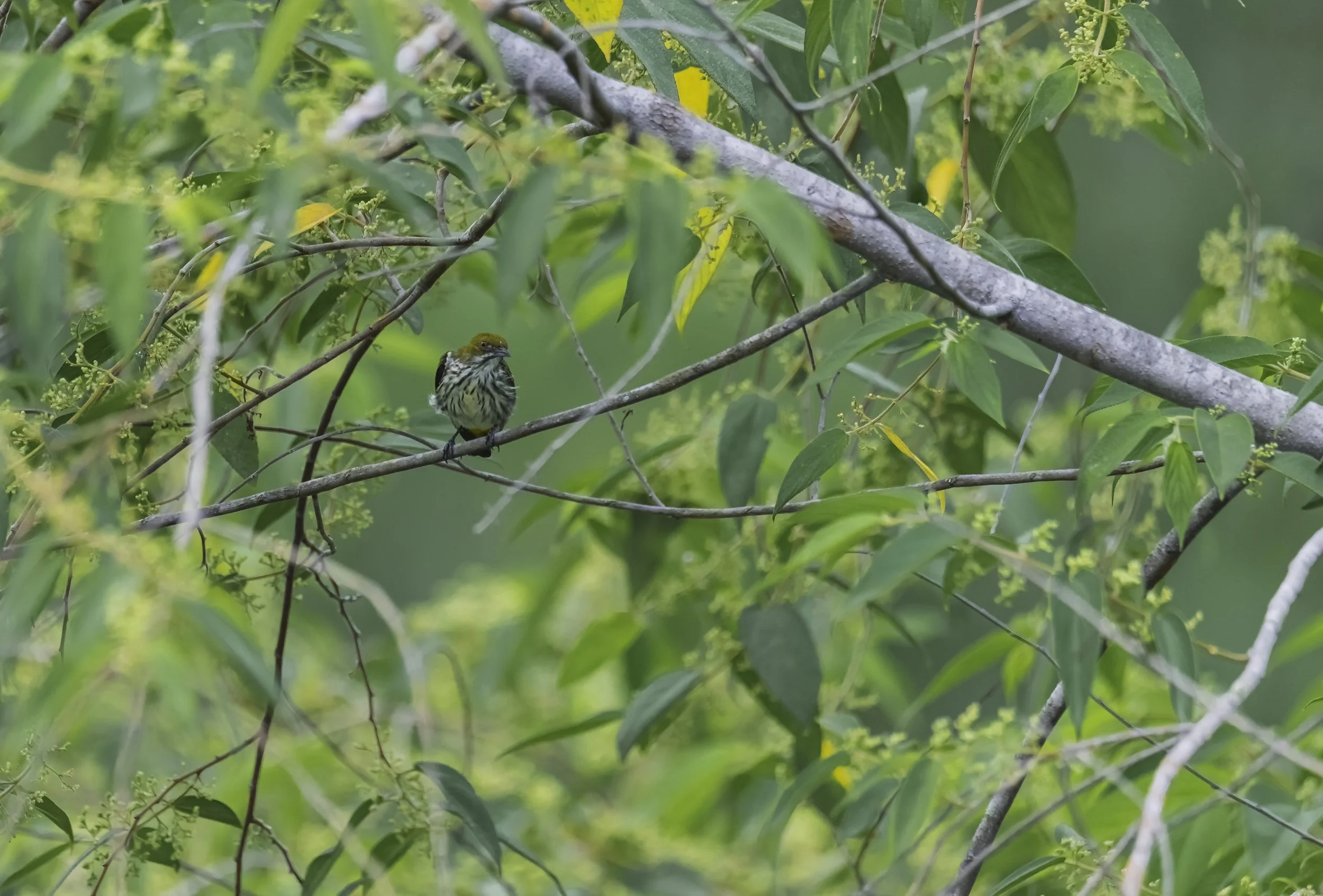
This week is special because it is my third flowerpecker - the Yellow-vented Flowerpecker. It is a tiny bird with a short, sharp bill and demonic red eyes. The namesake yellow vent is not as readily apparent as the golden-olive upperparts and the long black streaks on its snow-white breast and belly. It is known to inhabit lowland and foothill forests, gardens, and edges. And like many other flowerpeckers, most readily found hanging around mistletoe giving quiet chipping and buzzing notes.
But first about Flowerpeckers in general. They are a family, Dicaeidae, of passerine birds comprising of two genera - Dicaeum and Prionochilus - with 50 species in total. The family has sometimes been included as part of the sunbird family Nectariniidae. Incidentally, of all the birds I have written about till date, the gorgeous Mrs. Gould’s Sunbird and the Streaked Spiderhunter are among my absolute favourites. The berry pickers of the family Melanocharitidae and the painted berrypeckers of Paramythiidae were once lumped together as well. The family is distributed through tropical Southern Asia and Australasia from India east to the Philippines and south to Australia. They have a wide range and occupy diverse habitats from sea level to montane habitats.
Flowerpeckers are stout birds, with short necks and legs. These are small birds ranging from the 10-cm, 5.7-gram pygmy flowerpecker to the 18-cm, 12-gram mottled flowerpecker. These have short tails, short thick curved bills and tubular tongues. The latter features reflect the importance of nectar in the diet of many species. They also have digestive systems that have evolved to deal efficiently with mistletoe berries. Often dull in colour, in several species the males have brightly patterned crimson or glossy-black plumage.
Nectar forms part of the diet along with berries, spiders & insects. Mistletoes of 21 species in 12 genera have been found to be part of the diet of flowerpeckers, and it is thought that all species have adaptations to eat these berries and dispose of them quickly. Flowerpeckers may occur in mixed-species feeding flocks with sunbirds and white-eyes, as well as other species of flowerpecker.
Kaeng Krachan National Park
Kaeng Krachan National Park is located in Phetchaburi and Prachuap Khiri Khan Provinces, about 60 km from Phetchaburi and 75 km from Hua Hin. It is bounded by the Tanintharyi Nature Reserve along Myanmar's border to the west and part of the Western Forest Complex that covers 18,730 km² across 19 protected sites between Myanmar and Thailand. There are two main rivers in the park; Phetchaburi and Pran Buri Rivers. Both rivers originate from the Tanaosri Mountain Range. In the north, Phetchaburi River flows into Kaeng Krachan Dam and flows further east all the way out to the Gulf of Thailand. Pran Buri River flows south to Prachuap Khiri Khan Province, into Pran Buri Reservoir and out to the Gulf of Thailand.
As Thailand's largest national park (2,915 km²), Kaeng Krachan is a cornerstone of the Kaeng Krachan Forest Complex, a UNESCO World Heritage site. The park is a meeting point for Himalayan, Indochinese, and Sumatran faunal realms, resulting in exceptional species diversity. It is home to over 461 bird species, including 7 of Thailand’s 14 hornbill species and the rare Ratchet-tailed Treepie. The park supports healthy populations of Asian elephants, Gaur, and a full suite of eight wild cat species, including tigers, leopards, and clouded leopards. It serves as a sanctuary for the critically endangered Siamese crocodile, one of its last remaining wild habitats.
The highest elevation in the park is a peak along the Burmese border at around 1,500 meters. The park is popular for wildlife which doesn’t necessarily mean it is easy. The possibilities depend on the seasons and seasonal conditions for various types of animals. Mammals like leopards, clouded leopards, bears, stump-tailed macaques, sambhar, barking deer, elephants, dholes, golden jackal, gaur, serows, crab-eating mongoose and tapirs can be spotted in the park. There also used to be a significant tiger population in the park up until a decade ago, but only a few are left now.
Langurs, stump-tailed macaques, white-handed gibbons, sambar, mouse deer, porcupines, monitor lizards, civets and black giant squirrel are frequently seen. White-handed gibbons can be seen or heard nearly every day, often seen at the edge of the campsites.
Read more about the birds of the beautiful and dense Kaeng Krachan National Park.
Yellow-vented Flowerpecker
Finding and photographing the Yellow-vented Flowerpecker (Pachyglossa chrysorrhea) near the Kum Nangpaya hotel is a highlight for birdwatchers visiting the Kaeng Krachan National Park. Located just a 2-minute drive from the park entrance, Kum Nangpaya's lush gardens and proximity to the park’s diverse ecosystems make it a prime stakeout for this tiny, active bird. One can often find the Yellow-vented Flowerpecker in the hotel’s spacious gardens, particularly when mistletoe or fruiting trees like mango are in bloom. Despite its common status in Thailand, it is a challenging subject due to its rapid movements and preference for high canopy levels.
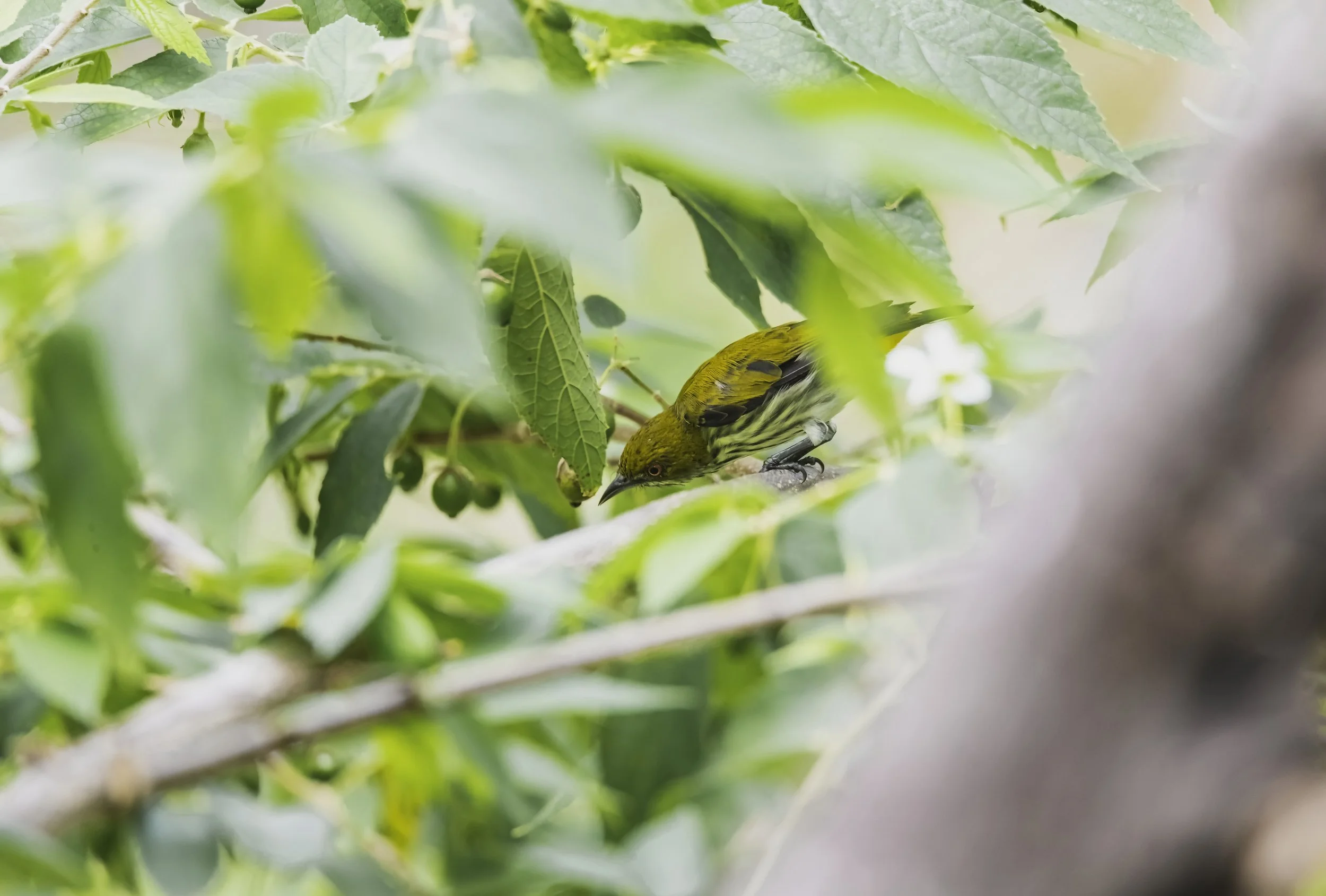
Look for a tiny bird with bright olive-green upperparts and bold black streaks on a creamy white breast. The namesake yellow or orange undertail-coverts(vent) and its "demonic" red eyes are diagnostic. It is often seen hanging from branches to forage or making quick, "snipping" calls that sound like scissors (tsit-tsit). Use the early morning light at the garden's edge before the bird retreats into the denser forest canopy as temperatures rise.
The Yellow-vented Flowerpecker is 9–10 cm in length and weighs between 9–10.1 grams. It is widespread across South and Southeast Asia, from Nepal and North East India through Thailand, Malaysia, and the Greater Sundas. Two subspecies are recognised.
Pachyglossa chrysorrhea chrysochloris: Found in Kaeng Krachan; features yellowish - white underparts with heavy streaking.
Pachyglossa chrysorrhea chrysorrhea: Found south of the Isthmus of Kra.
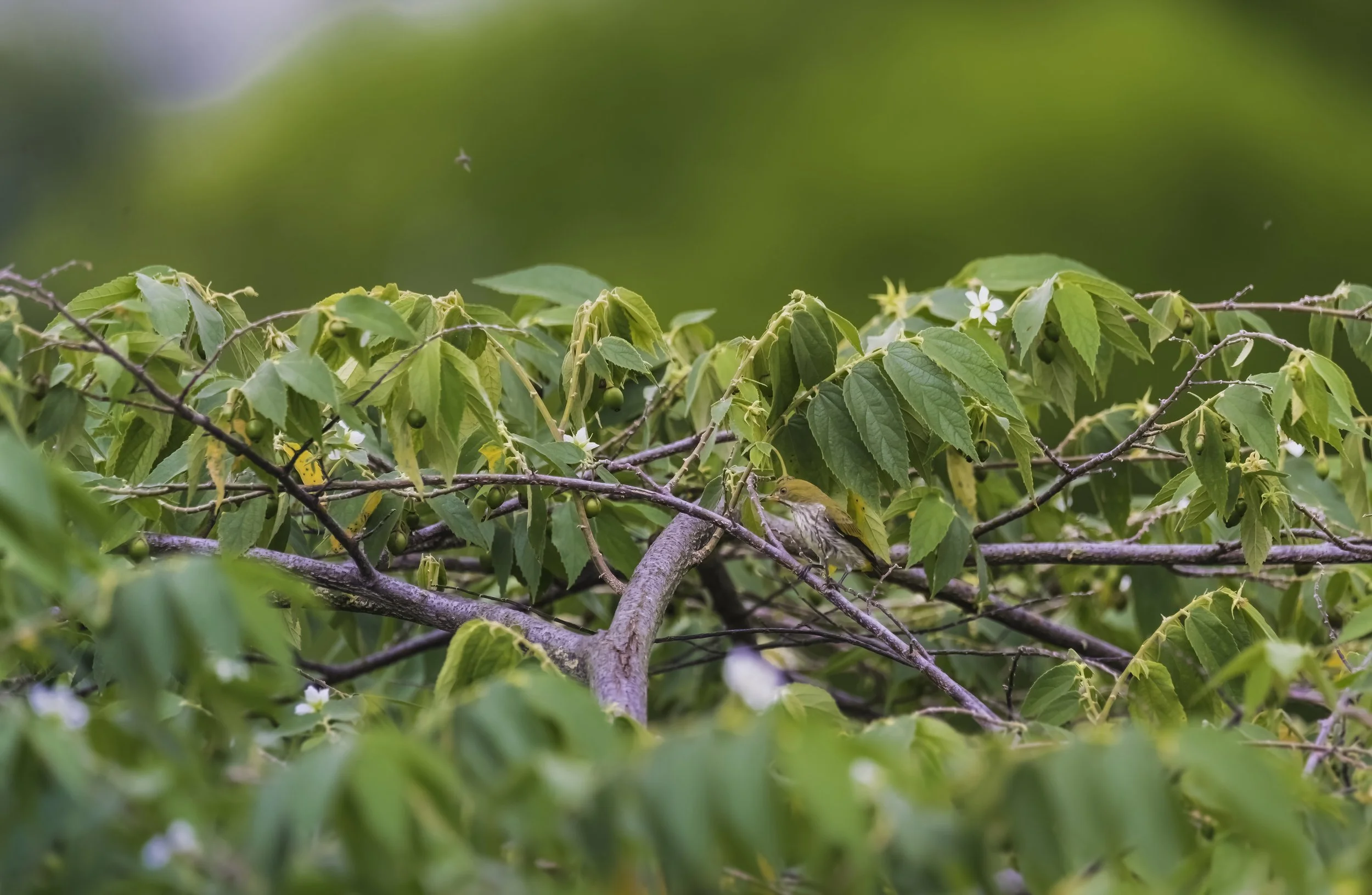
It prefers lowland and hill dipterocarp forests, secondary forests, and gardens, especially where mistletoes (Loranthaceae) are present. Primarily feeds on mistletoe fruits, small figs (Ficus), berries, and nectar. It also consumes small insects like beetles. It breed and lays eggs between April–August when both sexes build the pouch-like nest from moss and spider webs, usually below 8 meters. The species is primarily non-migratory but is known for short-distance dispersal movements, such as moving between Peninsular Malaysia and Singapore annually.
For a successful session, consider visiting during the high season in April, when the climate at Kum Nangpaya is ideal for observing active bird life around the hotel's lake and garden.
The IUCN Status is Least Concern although the population is tentatively decreasing due to habitat loss, it remains common in much of its range and is not globally threatened. It is common in India, but rare in Nepal, Bhutan and Bangladesh; uncommon in Myanmar and in Borneo; uncommon to common in Malay Peninsula; rare in Sumatra, Java and Bali. There is only one confirmed record for Bali, from Bali Barat National Park. It occurs in several other protected areas, e.g. Kaziranga National Park, in India, Khao Yai National Park, in Thailand, and Cat Tien National Park, in Vietnam and it is rare in the Danum Valley Conservation Area, in Borneo.
Field Photography Tips near Kum Nangpaya
Stake Out Mistletoe: This species is biologically tied to mistletoe. Locate any flowering or fruiting clumps within the hotel gardens or along the park's main road.
Anticipate the "Wipe": After eating a mistletoe berry, the bird performs a unique "vent-wiping" motion on branches to expel the sticky seed, providing a predictable second for a photo.
Use High Shutter Speeds: Due to their diminutive size and frantic movements, a shutter speed of at least 1/1600s is recommended to freeze action in the canopy.
Morning Advantage: The gardens near Kum Nangpaya often have lower-reaching branches than the deep forest, offering better lighting before the sun becomes harsh.
With that said, let’s move onto the gallery of this pretty flowerpecker.
‡‡‡‡‡

Related Posts
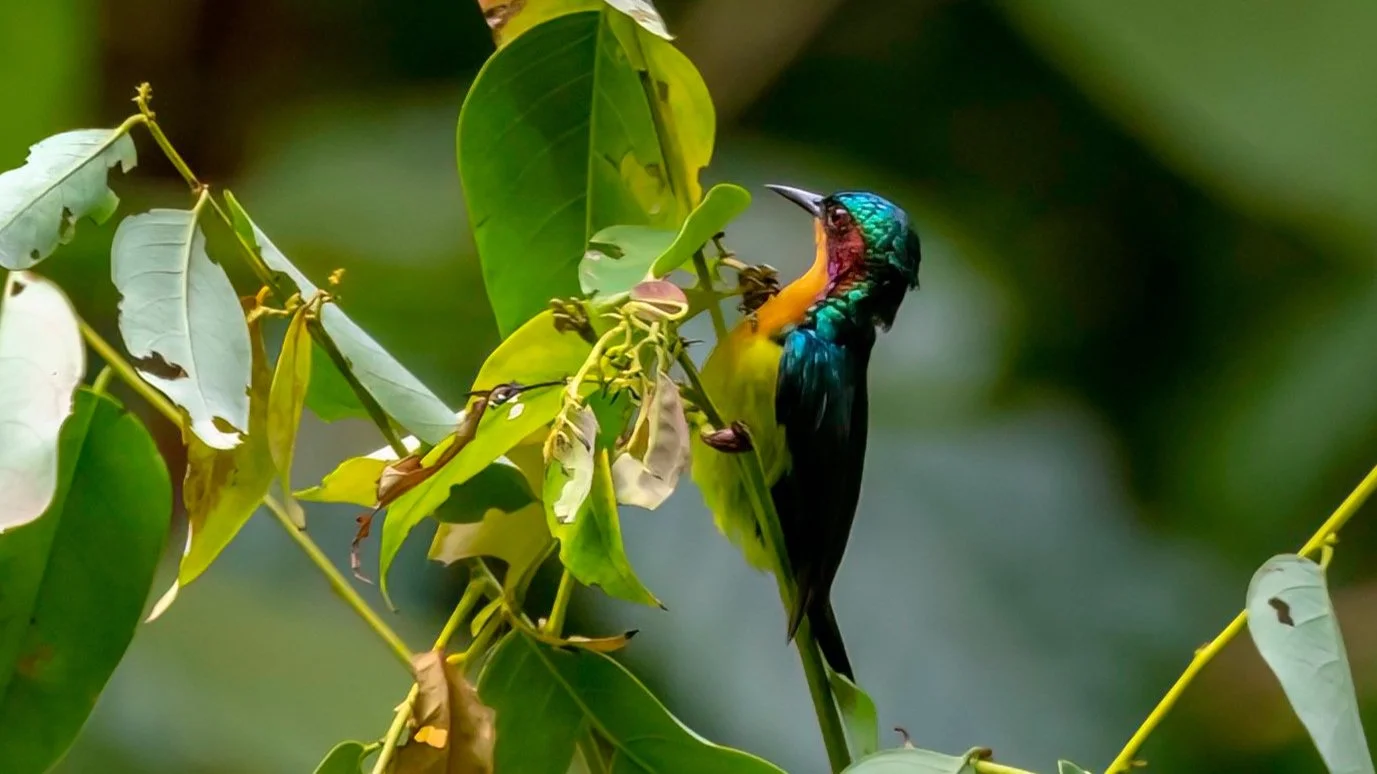


Early mornings over the scrub forests of the Amrabad Tiger Reserve provide a fantastic opportunity to study a tiny bird with iridescent feathers. High on a skeletal branch of a teak tree, a tiny silhouette shakes off the dawn chill. As the first ray of the Telangana sun cuts through the canopy, the drab, dark bird suddenly transforms. It erupts into an electric shimmer of metallic blues, deep purples, and glossy blacks. This is the male Purple Sunbird (Cinnyris asiaticus), a living gemstone of the Indian subcontinent.
From the wild, deciduous expanses of Amrabad to the bustling, urban wetlands of Hyderabad—like Ameenpur Lake and the suburban oasis of Kudikunta Lake—this resilient avian wanderer navigates a changing world. This is the story of its life, its identity, and its struggle against a vanishing landscape.
#wildartworks, #Wildlife, #naturephotography, #conservationphotography, #yesbbcearth, #wildlifeonearth, #bbcearth, #natgeowild, #natgeoindia, #india, #ananthagiri, #ameenpurlake #amrabadtigerreserve, #purplesunbird, #sunbird