
Iduna caligata
Sacred groves and a long distance pilgrim of the scrub
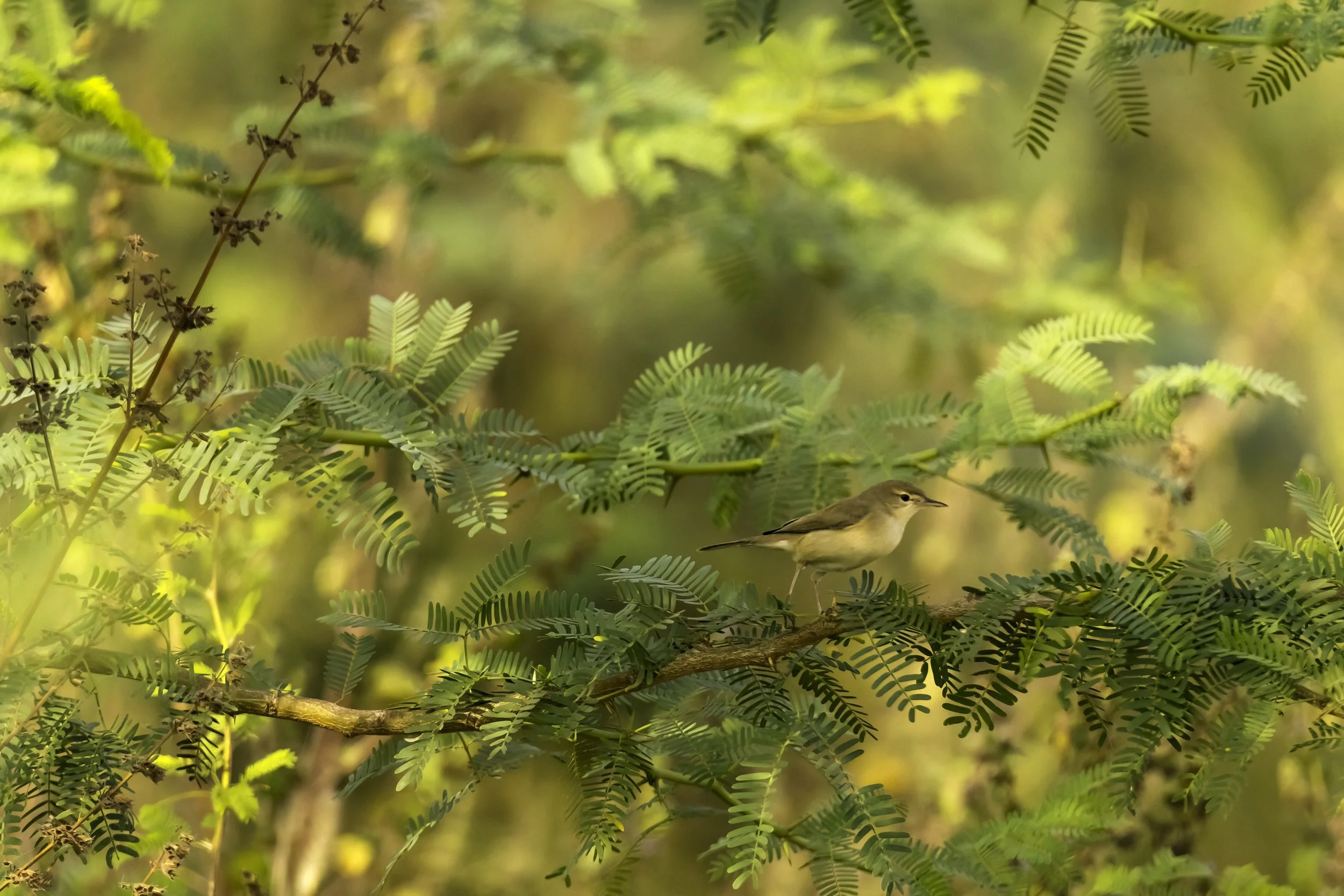
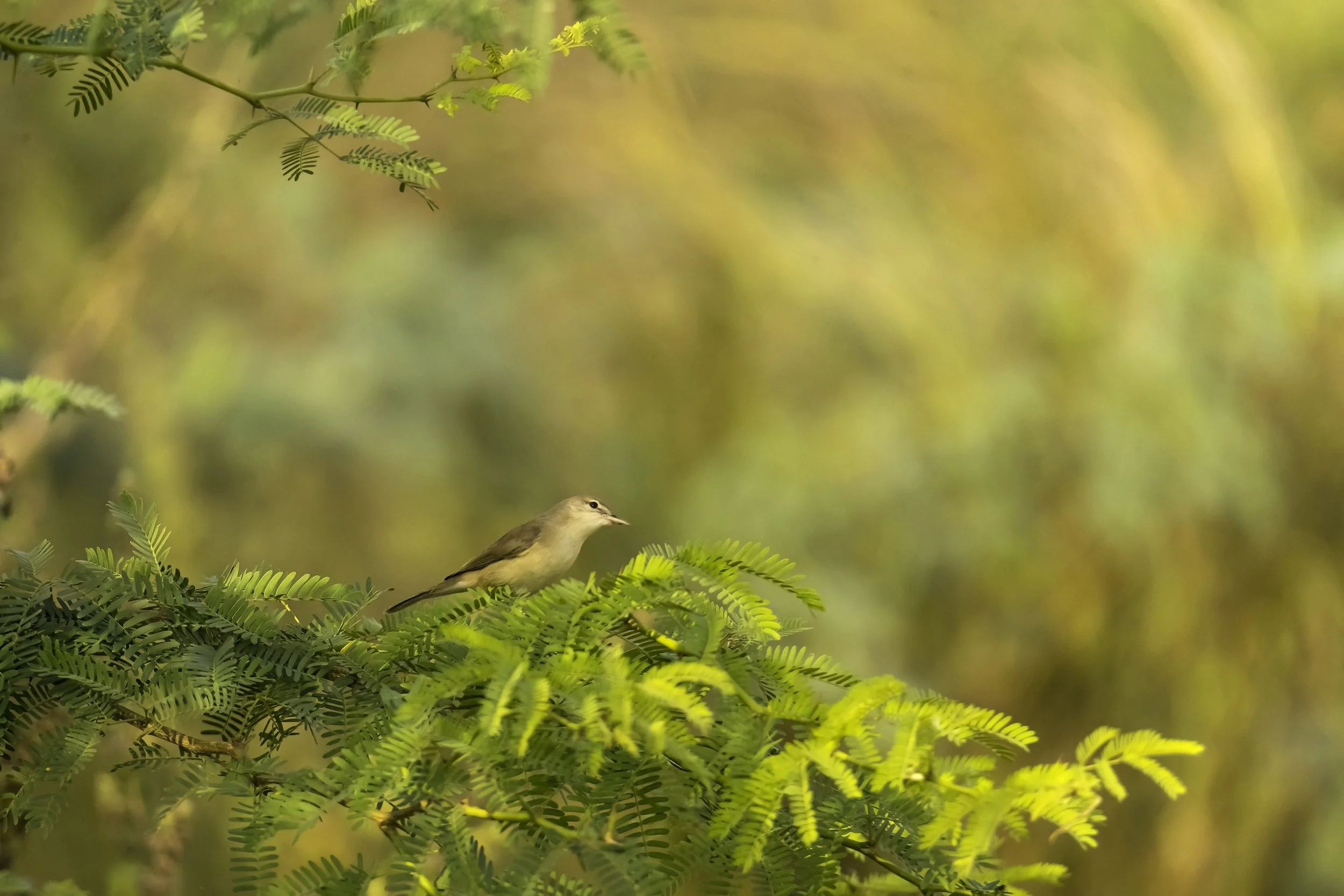
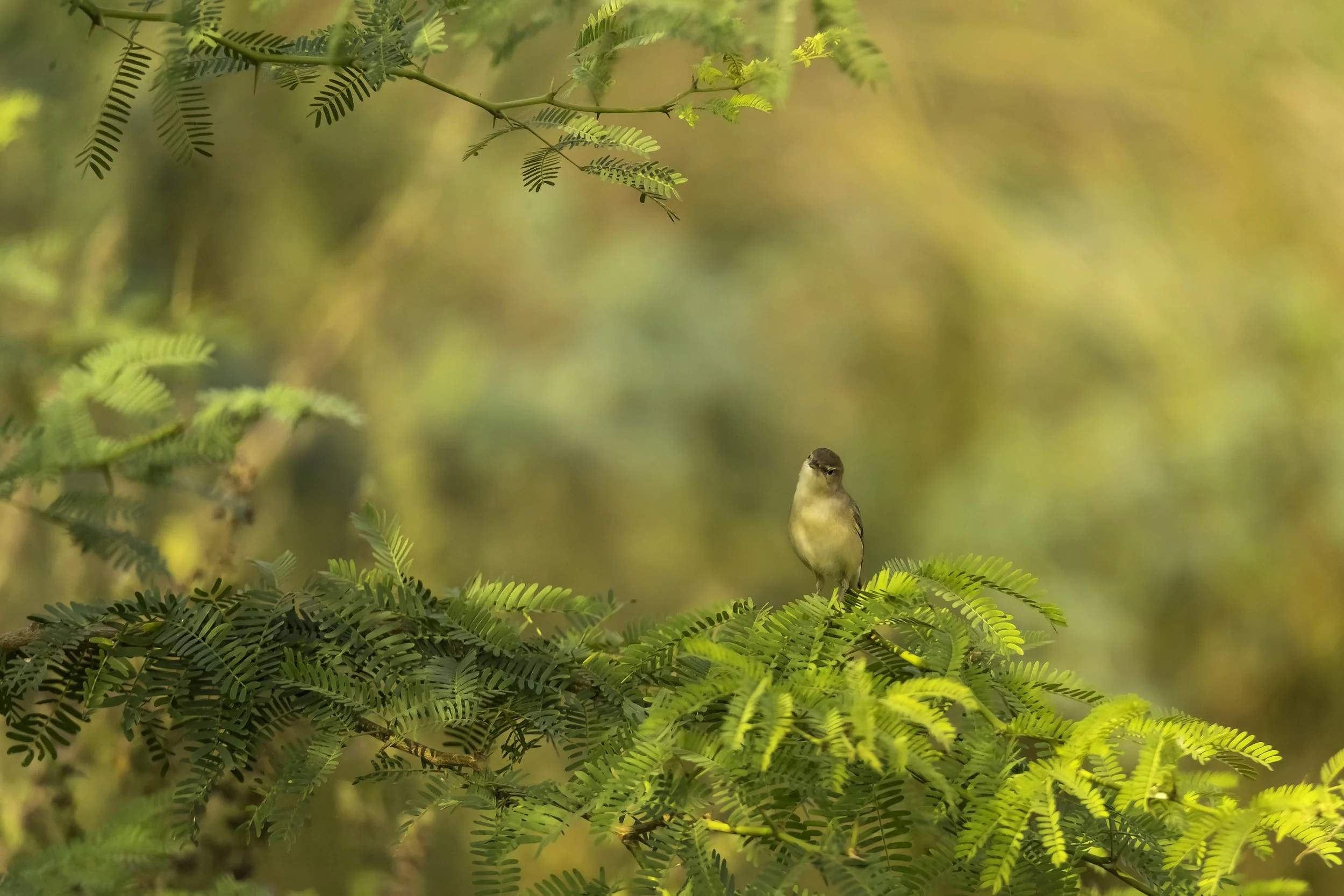
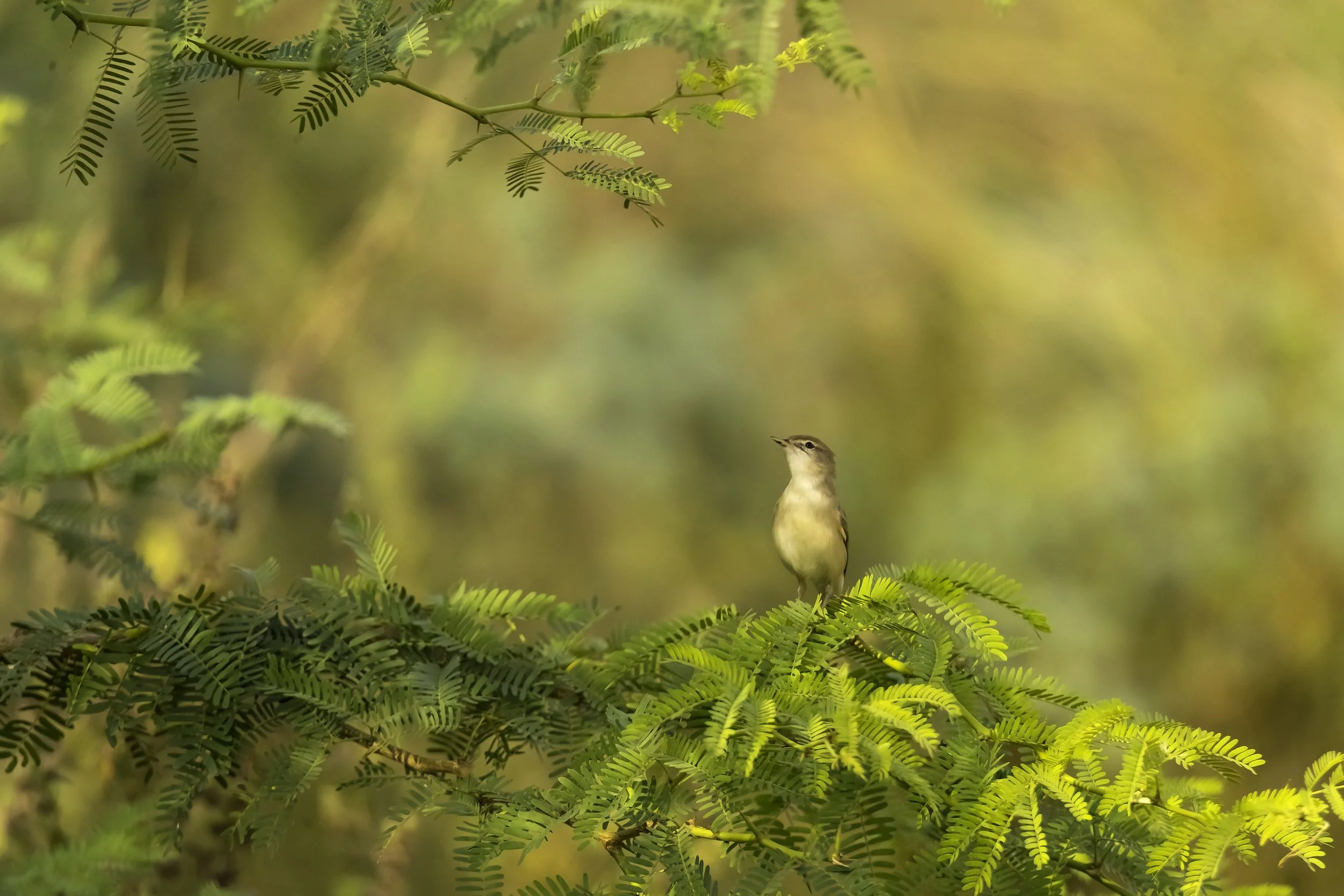
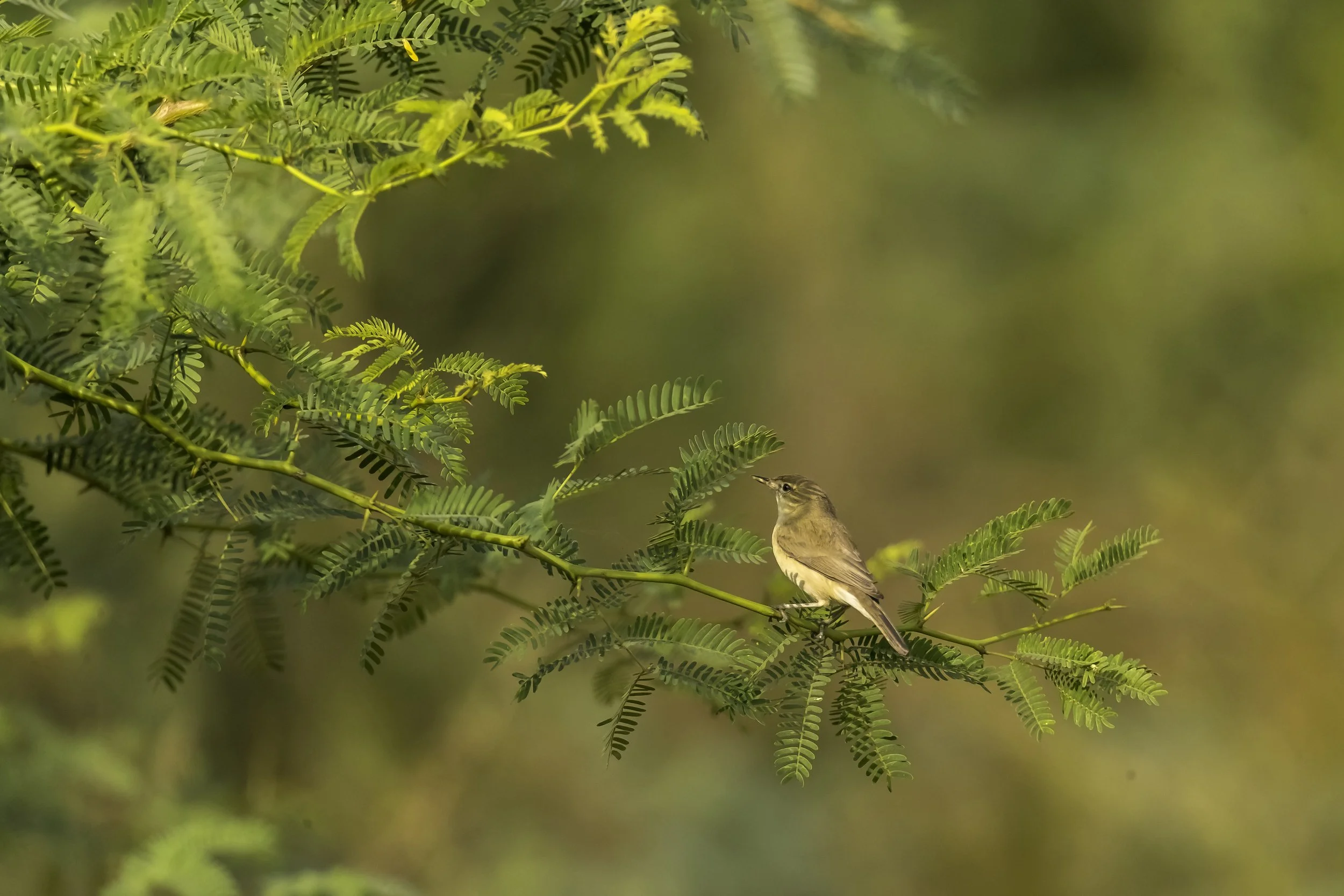
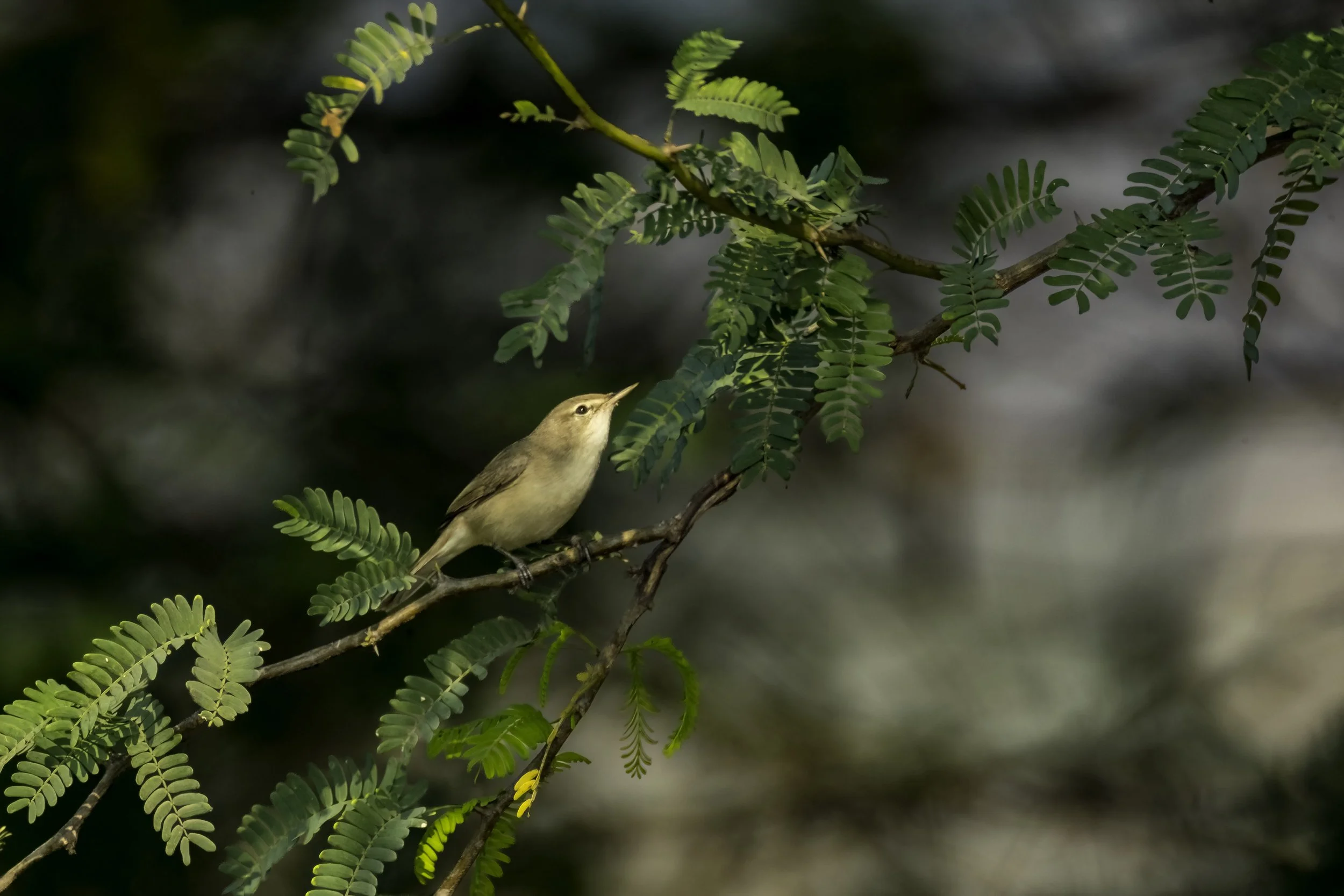
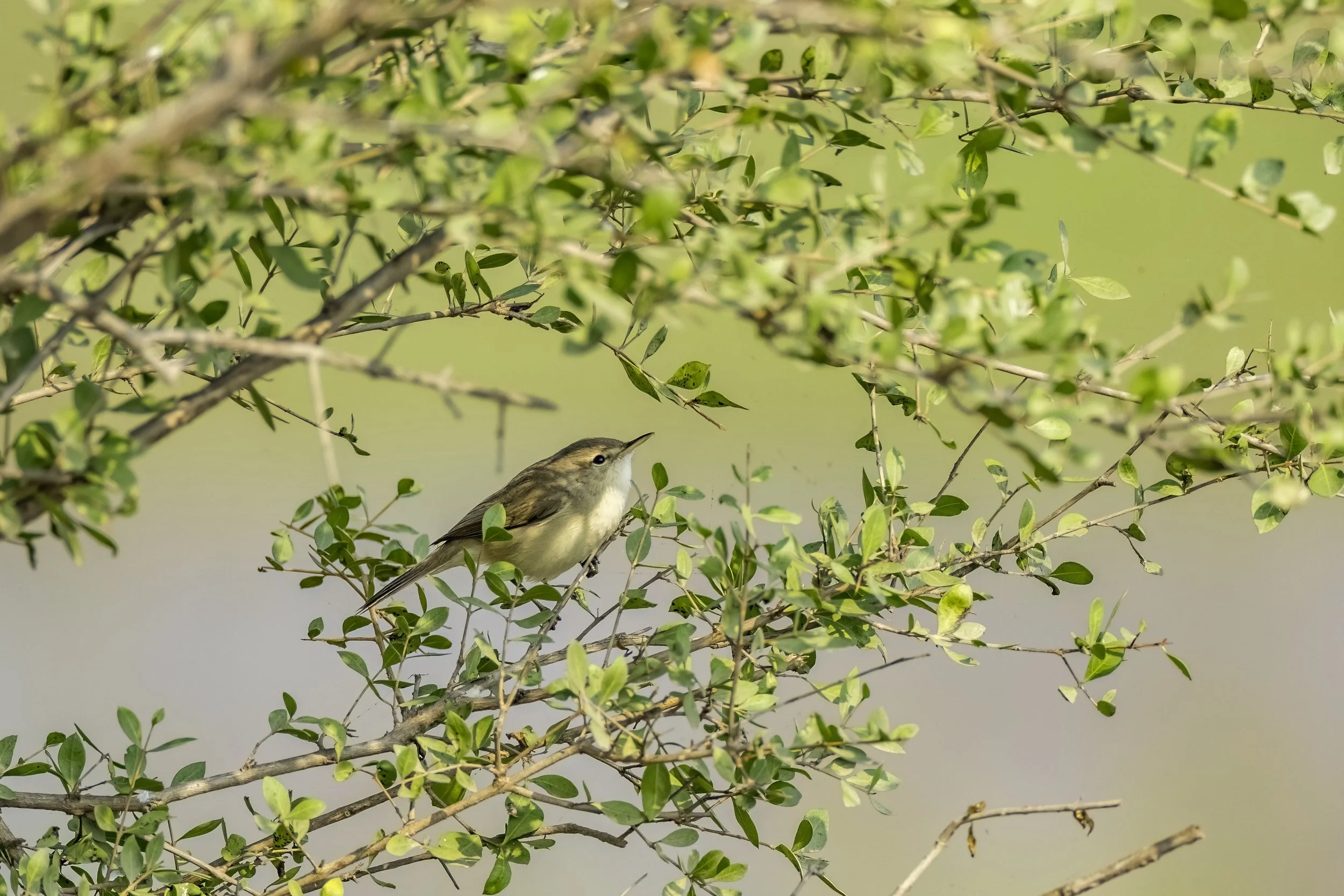
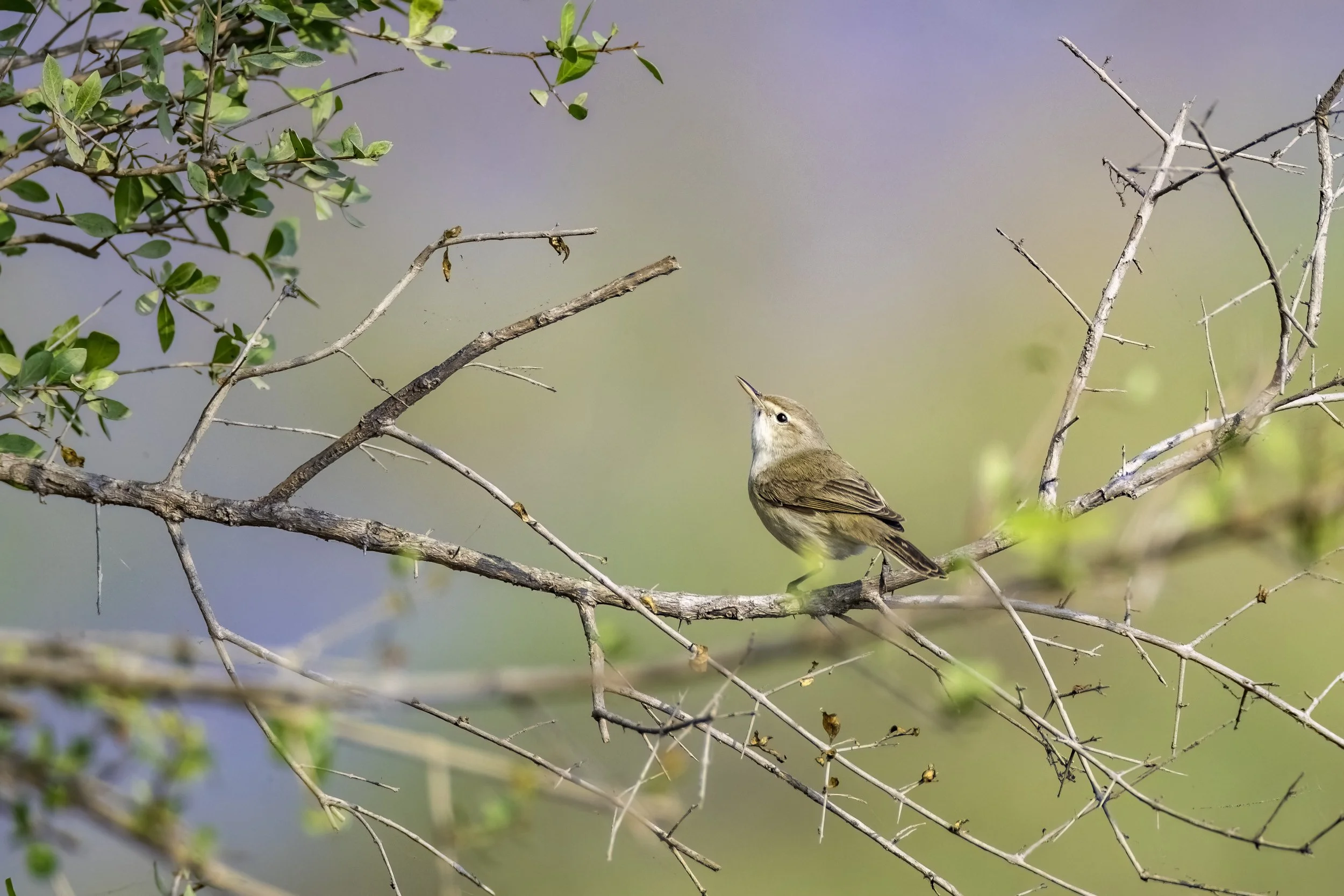
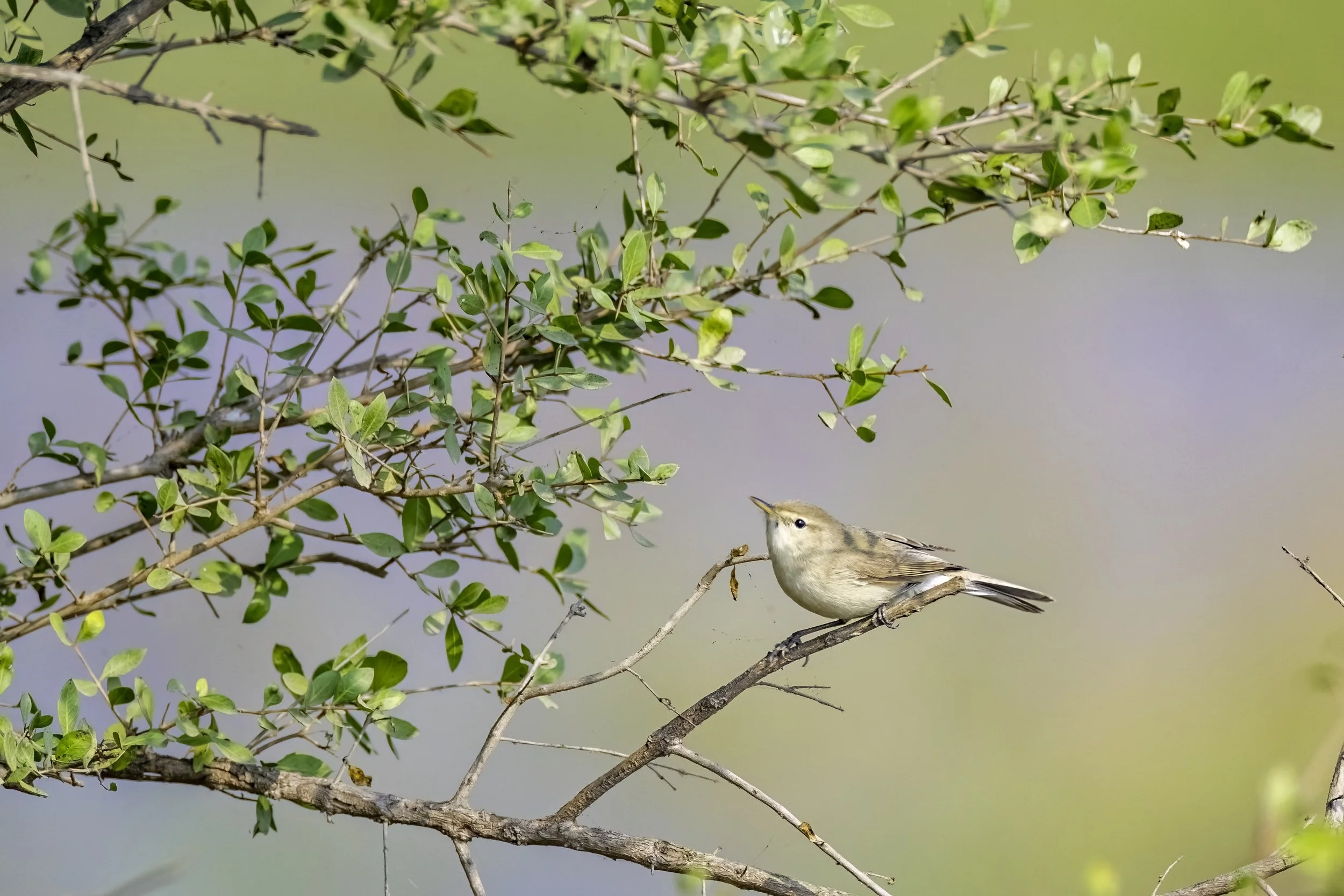
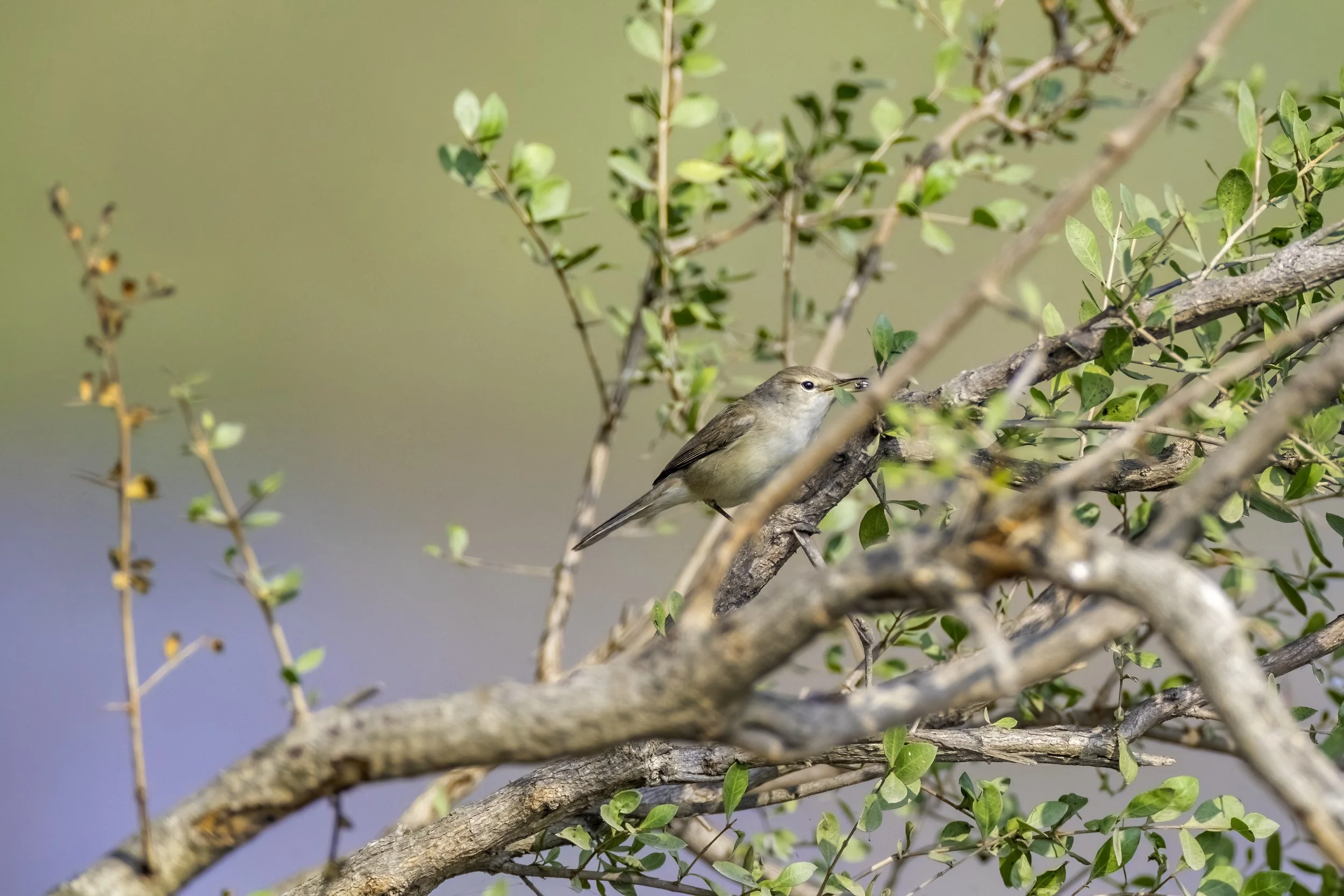
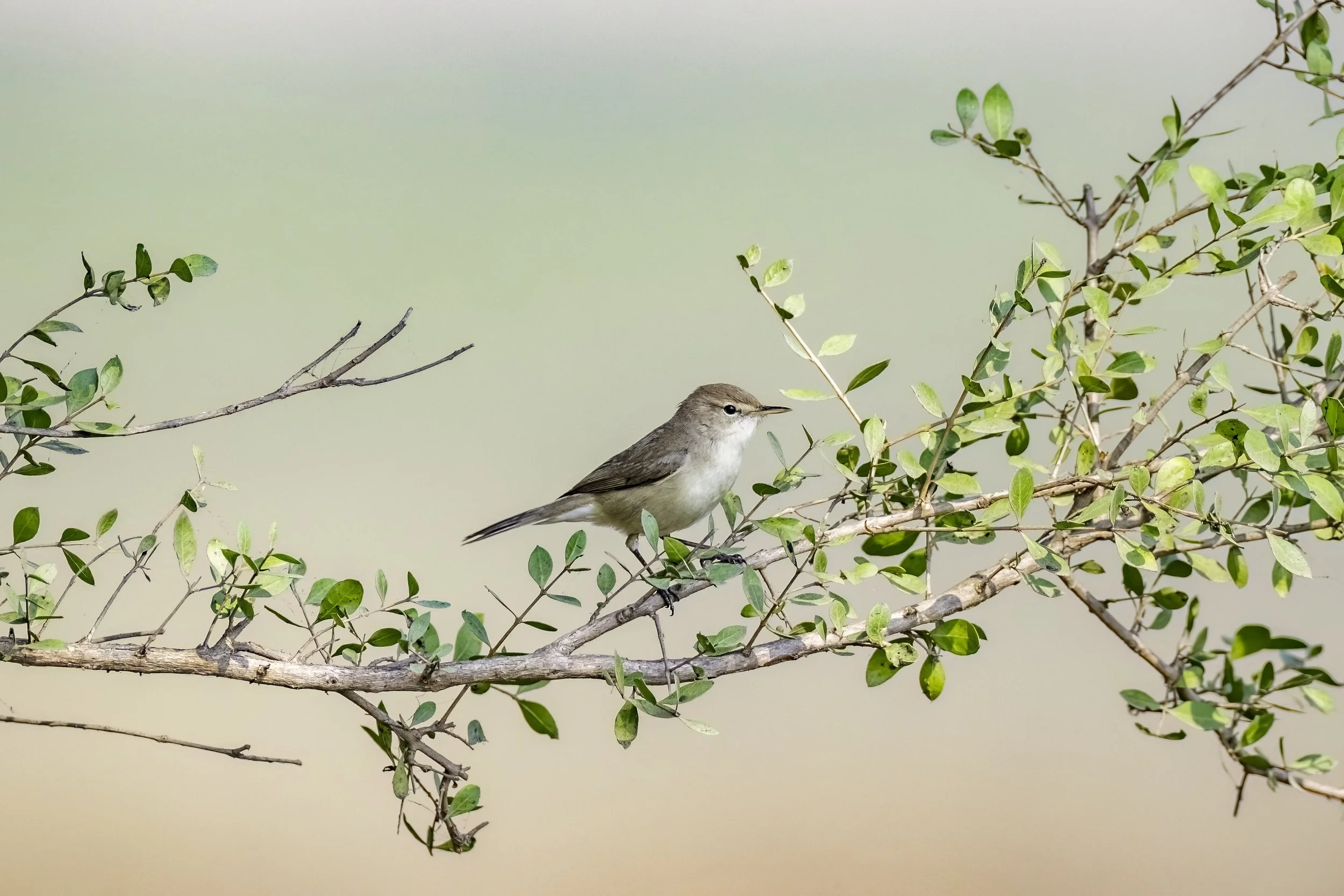
The winter mist clings low to the granite boulders of Kodakanchi, a quiet village roughly forty kilometres northwest of Hyderabad in Telangana’s Sangareddy district. Before the first temple bells ring out or the scent of camphor drifts across the courtyard, the ancient peepal tree beside the stepped temple tank stirs with life. In the thorny acacia and lantana scrub bordering the sacred hillock, a tiny, unassuming bird flits restlessly through the dew-laden twigs. To the untrained eye, it is merely a flash of dusty brown and pale cream. Yet, this four-inch traveller reveals itself to be the Booted Warbler (Iduna caligata)—a feathered pilgrim that has journeyed thousands of kilometres across the Himalayas to spend its winter beneath the protective shadow of an ancient Deccan sanctuary.
The warbler dips low into the undergrowth, snatching a dormant beetle from a dry leaf before vanishing into a tangle of wild grass. Here, at the intersection of timeless human devotion and resilient Deccan ecology, the bird and the temple share an unspoken covenant. The temple preserves the wild scrub that sustains the migrant, while the migrant’s annual return signals that this sacred patch of earth remains healthy and alive.
Telangana is a state in southern India with Hyderabad as its capital. Hyderabad is home to the Charminar, a 16th-century mosque with 4 arches supporting 4 towering minarets. The monument overlooks the city's long-running Laad Bazaar. Laad Bazaar or Choodi Bazaar is a very old market popular for bangles located on one of the four main roads that branch out from the historic Charminar. Laad meaning lacquer is used to make bangles, on which artificial diamonds are studded. In this 1-kilometre (0.62 mi)-long shopping strip, most of the shops sell bangles, sarees, wedding related items, and imitation jewellery. Once the seat of the Qutb Shahi dynasty, the sprawling Golconda Fort is a former diamond-trading center.
Located in the central stretch of the Deccan Plateau, Telangana has sub-tropical climate and the terrain consists mostly of hills, mountain ranges, and thick dense forests covering an area of 27,292 km². The annual rainfall ranges between 1,100 mm to 1,200 mm and the annual temperature varies from 15 C to 45 C. The State is drained by a number of rivers which include Godavari and Krishna.
Telangana is endowed with rich diversity of flora and fauna. It has dense teak forests on the northern part along the banks of river Godavari. As per the Champion & Seth Classification of Forest Types (1968), the forests in Telangana belong to three Forest Type Groups, which are further divided into 12 Forest Types. The State Government has taken up a massive greening programme, 'Telangana Ku Harita Haram' in the State to plant and protect 230 crore seedlings over a period of 4 years. This initiative aims at achieving the twin objectives of increasing the forest cover and reduce pressure on the existing forest resources, through massive community participation by Vana Samrakshna Samithis (VSS) and Eco-Development Committees (EDCs) in Protected Areas and Watershed Development Committees in the Watershed areas. Recorded Forest Area (RFA) in the State is 26,904 km² of which 20,353 km² is Reserved Forest, 5,939 km² is Protected Forest and 612 km² is Unclassed Forests. In Telangana, during the period 1st January 2015 to 5th February 2019, a total of 9,420 hectares of forest land was diverted for non-forestry purposes under the Forest Conservation Act, 1980 (MoEF & CC, 2019). As per the information received from the State during that last two years, 12,730 ha of plantations including avenue plantations in the State.
Three National Parks and nine Wildlife Sanctuaries, which include the Amrabad Tiger Reserve, Kawal Tiger Reserve, Pocharam Wildlife Sanctuary, Etunagaram Wildlife Sanctuary, Kinnerasani Wildlife Sanctuary, Manjira Wildlife Sanctuary and Pakhal Wildlife Sanctuary, constitute the Protected Area network of the State covering 5.08% of its geographical area.
Kodakanchi Temple & Lake
Nestled in the Jannaram mandal of Sangareddy district roughly 40 kilometres northwest of Hyderabad, the 10th-century Sri Adi Narayana Swamy Temple at Kodakanchi sits atop a rocky granite outcrop surrounded by agricultural fields, ancient sacred trees, a stepped pushkarini, and the expansive Kodakanchi Lake. Together, these interconnected micro-habitats—rocky Deccan scrub, wetland marshes, open water, and agrarian edges—form a vital peri-urban ecological refuge that sustains over 220 documented bird species alongside native reptiles, amphibians, and small mammals. The wetland and surrounding greenery act as a stabilizing buffer against the encroaching industrial and real estate sprawl of the Patancheru-ORR belt, regulating local groundwater recharge, moderating microclimates, and maintaining trophic balance through natural insect and rodent predation. Specifically, the lake and its fringing vegetation support rich resident and endemic populations such as Painted Storks, Spotted Owlets, Indian Pond-Herons, Jerdon’s Bushlarks, Rufous-tailed Larks, and Yellow-footed Green-Pigeons, while serving as a critical seasonal stopover along the Central Asian Flyway for long-distance winter migrants including Northern Pintails, Garganeys, Ospreys, Western Marsh Harriers, Eurasian Wrynecks, Common Sandpipers, and Blyth’s Reed Warblers. Remarkably, the ecological stability of this pocket has also yielded rare ornithological anomalies, such as the November 2026 sighting of an extraordinarily rare cream-yellow leucistic or xanthochroistic Coppersmith Barbet perched among normal crimson-and-green conspecifics, alongside infrequent regional vagrants like the Red Phalarope and Gray-headed Lapwing.
Importance of the Habitat and Its Influence on Local Biodiversity
The ecological significance of the Kodakanchi temple environs lies in its mosaic structure, where dry granite boulders meet moist riparian zones and cultivated paddy fields, creating overlapping ecological niches within a compact geographic footprint. In an increasingly fragmented Deccan plateau landscape, such temple-lake complexes function as biological stepping stones that allow wildlife to disperse, forage, and breed safely outside heavily urbanized zones. Ancient keystone flora on the temple grounds—most notably massive peepal and neem trees—provide cavity-nesting sites, year-round fruit, and roosting shelter for frugivores, raptors, and insectivorous birds, which in turn pollinate local crops and suppress agricultural pests. Simultaneously, the shallow margins and submerged aquatic vegetation of Kodakanchi Lake nurture diverse fish, macroinvertebrates, and amphibians that form the foundational food web for wading birds, kingfishers, and birds of prey. However, rapid deforestation, quarry expansion, unscientific bund alterations, and habitat loss across the outskirts of Hyderabad have begun triggering noticeable ecological shifts. As surrounding scrub forests and seasonal tanks disappear under concrete, displaced wildlife increasingly crowds into shrinking refuges like Kodakanchi, intensifying interspecies competition, altering foraging routines, and causing erratic fluctuations in migratory waterfowl arrivals whenever lake water levels or shoreline reedbeds are disturbed.
Preserving this delicate ecosystem requires harmonizing cultural devotion with strict environmental stewardship so that religious reverence does not inadvertently degrade the very nature that gives the shrine its serene sanctity. While traditional sacred groves and temple tanks historically protected biodiversity through cultural taboos against tree-felling and water contamination, modern surges in weekend tourism and major festivities—such as the ten-day annual Brahmotsavam—introduce severe threats from single-use plastics, non-biodegradable floral offerings, synthetic dyes, noise pollution, and sewage runoff into the pushkarini and adjacent lake. Retaining the ecological integrity of Kodakanchi demands clear zoning and community-led conservation: enforcing strict plastic-free perimeters, establishing dedicated composting pits for organic temple waste, prohibiting the immersion of synthetic materials or chemical-laden idols in the waterbodies, and maintaining natural vegetated buffer zones along the lake shoreline rather than paving them over for parking or commercial stalls. As demonstrated by past grassroots restoration efforts involving local villagers, farmers, and conservation groups, active local stewardship—paired with formal wetland protection—can curb waste dumping, safeguard nesting habitats, and ensure that Kodakanchi remains both a thriving sanctuary for endemic and migratory wildlife and a peaceful spiritual retreat for future generations.
‡‡‡‡‡
For a print of the beautiful birds from my various sojourns click on the button below to read my process and order a limited edition canvas from the catalog.
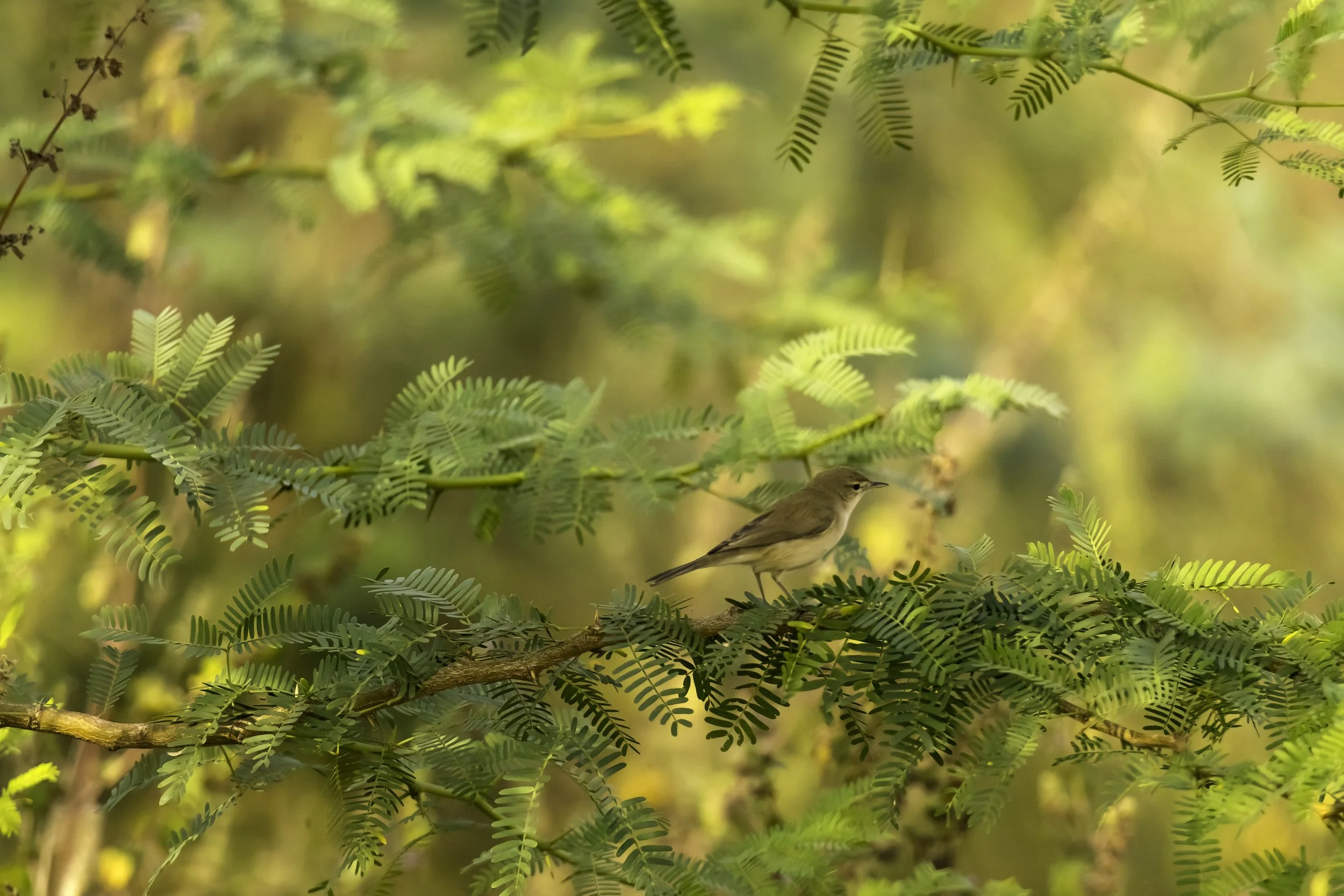
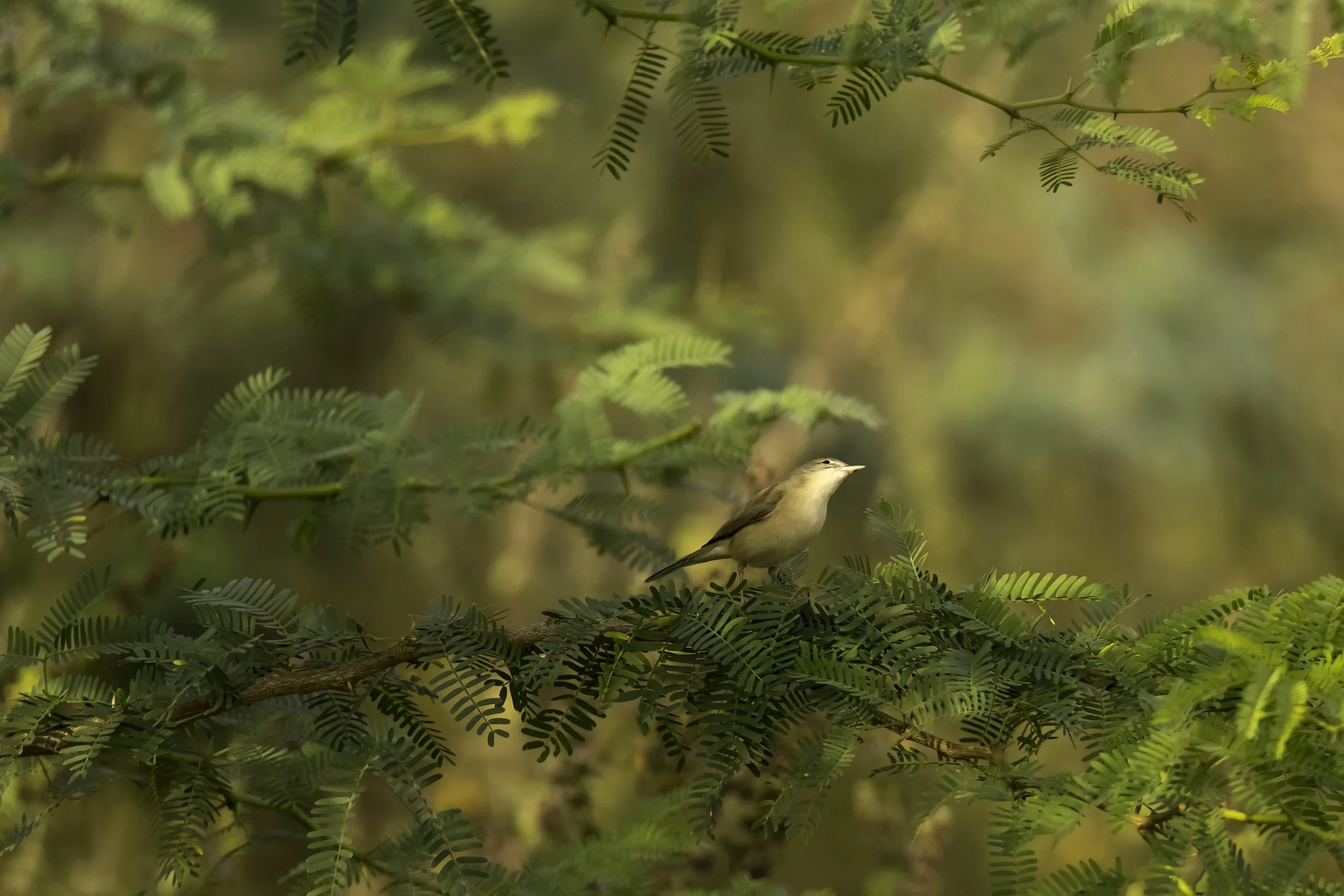
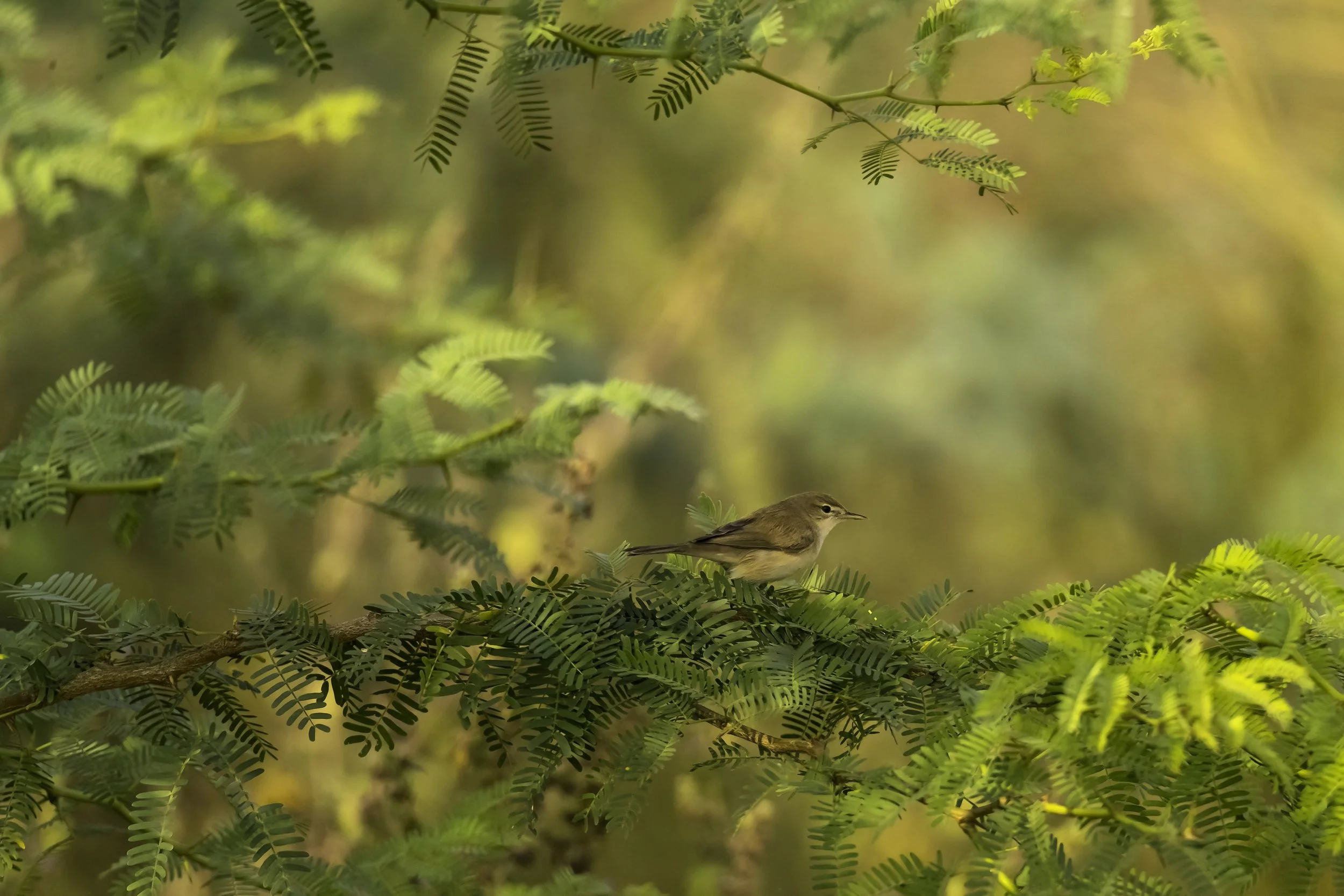
Booted Warbler
To understand why this small patch of greenery survives amidst rapid urban expansion around Hyderabad, one must look to the history of the shrine itself. Perched atop a natural granite outcrop in Jinnaram Mandal, the Sri Adinarayana Swamy Temple dates back to the 10th century CE. Locally revered as "Telangana Kanchi," the temple holds a storied place in regional folklore. According to local tradition, a devout ruler named Allani Ramoji Rao dreamt of Lord Vishnu, who revealed that his self-manifested (స్వయంభూ) idol lay hidden deep within the nearby Mambapur forest. Guided by a sacred Garuda, the Allani clan retrieved the deity and consecrated it upon the rocky hill of Kodakanchi, accompanied by his consorts Sridevi and Bhudevi.
For a millennium, the temple has served as a spiritual anchor for the region. Devotees believe that visiting Kodakanchi bestows the same spiritual merit as a pilgrimage to the famed Varadaraja Perumal Temple in Kanchipuram, Tamil Nadu—giving rise to the popular Telugu adage that those who cannot reach Kanchi in their lifetime should visit Kodakanchi. Carved onto the temple walls are reliefs of a golden lizard and a silver lizard, mirroring Kanchipuram; pilgrims touch these icons seeking relief from balli dosha (inauspicious omens associated with lizards). Every February, the quiet hillock transforms during the ten-day annual Brahmotsavam, drawing thousands of worshippers to its stone steps and sacred pushkarini (stepped water tank).
Sacred Groves and Ecological Preservation
Beyond its architectural and spiritual heritage, the Kodakanchi temple exemplifies how traditional Indian religious sites act as critical micro-reserves for biodiversity. Across Telangana and the wider Deccan plateau, agricultural intensification, industrial corridors, and urban sprawl have steadily fragmented native grasslands and thorn-scrub forests. Yet, around ancient temples, cultural reverence creates an invisible shield against encroachment.
Temple precincts and their surrounding Sacred Groves (పవిత్ర వనాలు) protect native flora and fauna in several vital ways:
Undisturbed Micro-Habitats. Out of respect for the deity, villagers historically refrain from felling trees, quarrying boulders, or clearing the thorny scrub immediately surrounding the temple hillock. This preserves multi-layered vegetation—from towering peepal and banyan trees down to dense native bushes and tall grasses.
Perennial Water Sources. Ancient temple tanks like the Kodakanchi pushkarini and adjoining village lakes harvest monsoon rainwater. These water bodies maintain local groundwater tables and sustain thriving insect populations throughout the dry winter months, offering an oasis for thirsty birds and pollinators.
Chemical-Free Buffer Zones. Because temple lands and immediate buffer zones are rarely subjected to heavy chemical pesticides or intensive ploughing, they serve as safe feeding grounds for insectivorous birds, reptiles, and small mammals that would otherwise perish in chemically treated farmlands.
A Long-Distance Pilgrim: Migratory Nature and Range
Unlike resident birds that spend their entire lives within a few square kilometres, the Booted Warbler is non-endemic to India and strictly migratory. Its name, caligata, derives from the Latin caliga (meaning "boot"), a nod to its dark-toned toes and sturdy legs, while its genus Iduna honors the Norse goddess of spring. During the northern summer from May to July, the Booted Warbler breeds across a vast belt stretching from Eastern Europe and European Russia through Central Asia, Kazakhstan, and southern Siberia into western China and Mongolia. Over recent decades, the species has notably expanded its breeding frontier westward and northward, now nesting as far as Finland and the Baltic region.
Source: Ogaclicks.com
As autumn chills the Eurasian steppes in August and September, populations embark on an epic southward migration. Crossing formidable mountain barriers and arid deserts, they funnel into South Asia via northwestern passage routes through Pakistan, Rajasthan, and Gujarat. A smaller fraction occasionally drifts off course during autumn, appearing as rare vagrants in Western Europe, Great Britain, and even North Africa.
By October and November, Booted Warblers settle across their primary wintering grounds in the Indian subcontinent. They are widespread winter visitors throughout peninsular India—from Maharashtra, Telangana, and Karnataka down to Tamil Nadu and Kerala—and reach as far south as the dry zones of Sri Lanka. By late March and April, fattened on Indian insects, they begin their long return journey north.
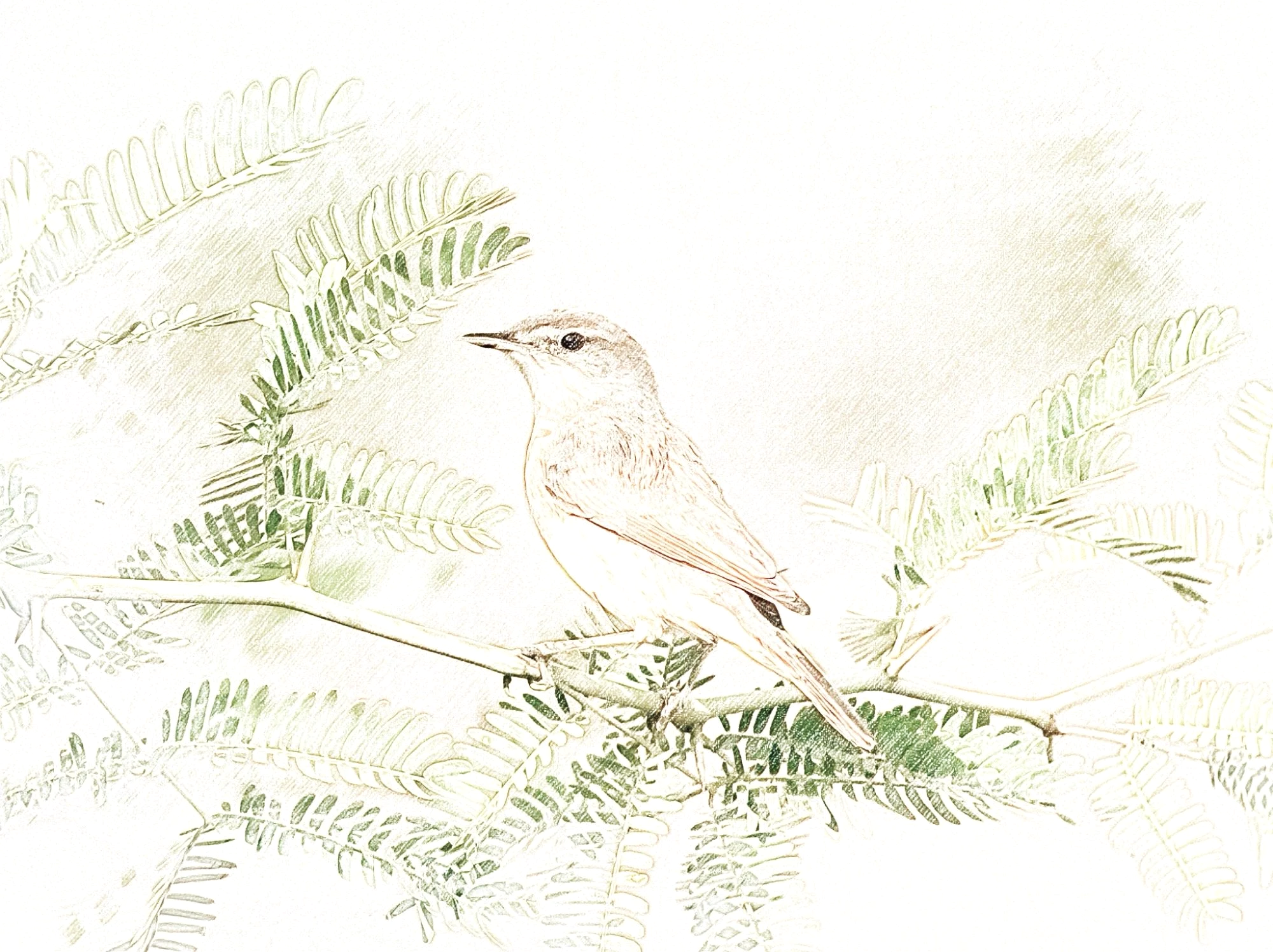
In the birding world, small brown warblers are affectionately—and sometimes frustratingly—known as "LBJs" (Little Brown Jobs). Spotting a Booted Warbler in the dappled shade of Kodakanchi requires careful attention to subtle proportions and plumage details: Measuring just 11 to 12.5 centimetres in length with a wingspan of roughly 17 to 20 centimetres and weighing between 7 and 11 grams, it is noticeably small and compact. Birdwatchers recognize its distinctive silhouette (jizz): a rounded crown, a slightly "pot-bellied" body, short wings with a short primary projection, and a relatively short, square-tipped tail. Its upperparts are a uniform, muted grey-brown or sandy "weak-tea" brown, completely lacking wing bars or bold streaks. Its underparts are creamy off-white, washed with a warm, rusty-buff tinge along the flanks and breast. The face shows a clear, pale whitish supercilium (eyebrow) that extends distinctly behind the eye, bordered above by a slightly darker brow line and accentuated by a small dark loral spot in front of the eye. It possesses a short, fine, pointed bill; the lower mandible is pale flesh-coloured with a characteristic dark tip. Its legs are pale pinkish-grey or brownish, contrasting with slightly darker toes that give the bird its "booted" moniker.
Distinguishing Similar Warblers in India and Southeast Asia
Separating the Booted Warbler from closely related tree and reed warblers wintering across India and Southeast Asia is one of the classic challenges of Asian ornithology. Field identification relies on comparing structure, bill shape, facial contrast, and voice.
| Species | Size & Structure | Bill & Facial Features | Legs & Tail | Habitat & Behaviour |
|---|---|---|---|---|
| Booted Warbler (Iduna caligata) | 11–12.5 cm; compact, pot-bellied, short-winged, rounded head. | Short bill with a dark tip on the lower mandible; clear pale eyebrow extending behind the eye. | Pale pinkish-grey legs with darker toes; short, square-tipped tail with pale outer edges. | Favours low scrub, thorny bushes, and ground cover; active, leaf-warbler-like movements. |
| Sykes's Warbler (Iduna rama) | 12–13.5 cm; larger, flatter-headed, sleeker, and less compact. | Longer, heavier, mostly pale bill lacking a crisp dark tip; supercilium rarely extends past the eye. | Pale legs; longer, more loosely attached tail. | Prefers taller acacia canopies and sparse woodland trees over low bushes. |
| Blyth's Reed Warbler (Acrocephalus dumetorum) | 12–14 cm; larger, longer-bodied with a flatter forehead and peaked crown. | Long, dagger-like bill; indistinct, short supercilium that stops at or just behind the eye. | Darker grey-brown legs; noticeably rounded, darker brown tail. | Skulks in denser thickets, reedbeds, and leafy tree canopies; heavier movement. |
| Paddyfield Warbler (Acrocephalus agricola) | 12–13 cm; warmer rufous-brown upperparts, especially on the rump. | Short, fine dark-tipped bill; bold white supercilium framed by a prominent dark upper border and dark eye-stripe. | Pale brown legs; long, graduated (rounded) tail often cocked upward. | Strongly tied to wet reeds, tall marsh grass, and flooded paddy fields. |
| Eastern Olivaceous Warbler (Iduna pallida) | 12–14 cm; colder grey-olive tones above, lacking warm buff flanks. | Broad, heavy, pale-based bill; weak facial contrast with an indistinct eyebrow. | Slate-grey legs; frequently dips or pumps its tail downward. | Rare vagrant/western edge visitor in South Asia; favours dry riverine scrub. |
In its wintering range across Telangana and southern India, the Booted Warbler is a specialist of open, dry thorn-scrub, fallow agricultural edges, acacia groves, and semi-arid grasslands dotted with low bushes. Around Kodakanchi, the rocky granite terrain interspersed with Prosopis, Acacia, and native lantana thickets provides an ideal winter territory.
Because multiple migratory warblers converge on peninsular India between October and March, significant habitat overlap occurs:
Vertical Niche Partitioning. At sites like Kodakanchi, Booted Warblers often share the same grove with Sykes's Warblers and Blyth's Reed Warblers. To minimize direct competition for food, they partition the habitat vertically. Booted Warblers stick predominantly to the lowest strata—foraging within a metre of the ground or hopping directly onto bare soil—whereas Sykes's Warblers patrol the upper canopies of small trees, and Blyth's Reed Warblers occupy dense mid-level foliage.
Wetland Edges. Along the margins of the Kodakanchi temple lake, Booted Warblers occasionally overlap with Paddyfield Warblers and Common Chiffchaffs, though Booted Warblers remain on the drier, scrubbier banks while Paddyfield Warblers stay over standing water and reeds.
Watching a Booted Warbler in the field reveals a fascinating blend of reed-warbler secrecy and leaf-warbler agility. Unlike heavy reed warblers that clamber deliberately up vertical stems, the Booted Warbler behaves remarkably like a Phylloscopus leaf warbler. It moves with brisk, nervous energy, flitting rapidly from twig to twig, hovering briefly to glean tiny caterpillars, aphids, beetles, and spiders from the undersides of leaves, and frequently dropping onto open ground to snatch insects. While foraging, it maintains a brisk, upright posture, frequently flicking its wings and occasionally twitching its square tail sideways, though it lacks the constant downward tail-pumping seen in Eastern Olivaceous Warblers. On its wintering grounds in India, the Booted Warbler is mostly silent, giving away its presence through a sharp, dry "tchak" or "chit" contact call, sometimes strung into a dry rattle when agitated. On its northern breeding grounds, however, males deliver a hurried, high-pitched chattering song interspersed with mimicry of neighbouring steppe birds.
Impacts of Habitat Loss and Changing Migration Patterns
Even though the Booted Warbler currently maintains a stable global population, rapid environmental changes across both its breeding and wintering ranges are reshaping its ecology and behaviour:
Scrubland Loss and Urbanization: Across peninsular India, open scrublands and fallow pastures are frequently misclassified as "wastelands" and cleared for real estate, highways, and solar parks. As native thorny scrub disappears around Hyderabad, wintering Booted Warblers are forced into fragmented urban edges, degraded weed patches, and surviving temple groves like Kodakanchi, increasing territorial density and competition with resident insectivores.
Pesticide-Driven Prey Depletion: Intensive monoculture farming around shrinking rural habitats reduces insect biomass. In response, Booted Warblers have been observed lingering closer to human habitations, village kitchen gardens, and temple water tanks where moisture sustains insect life through late winter.
Climate-Driven Range and Phenology Shifts: Warming temperatures across Eurasia have spurred a dramatic westward expansion of the species' breeding range into Finland and northwestern Russia over the last few decades. Simultaneously, shifting monsoon patterns and warmer winters in South Asia are subtly altering migration timing—with some individuals arriving later in November and departing earlier in March—while unseasonal weather systems have led to an uptick in autumn vagrancy across Western Europe and the Middle East.
As the morning sun finally clears the painted vimanam of the Sri Adinarayana Swamy Temple, the sanctuary awakens to the murmur of devotees and the rustle of the sacred peepal leaves. Hidden once more inside its thorny thicket, the Booted Warbler continues its quiet hunt—a living testament to the fragile ecological threads that bind ancient human heritage to the wild rhythms of the natural world.
‡‡‡‡‡

Related Posts
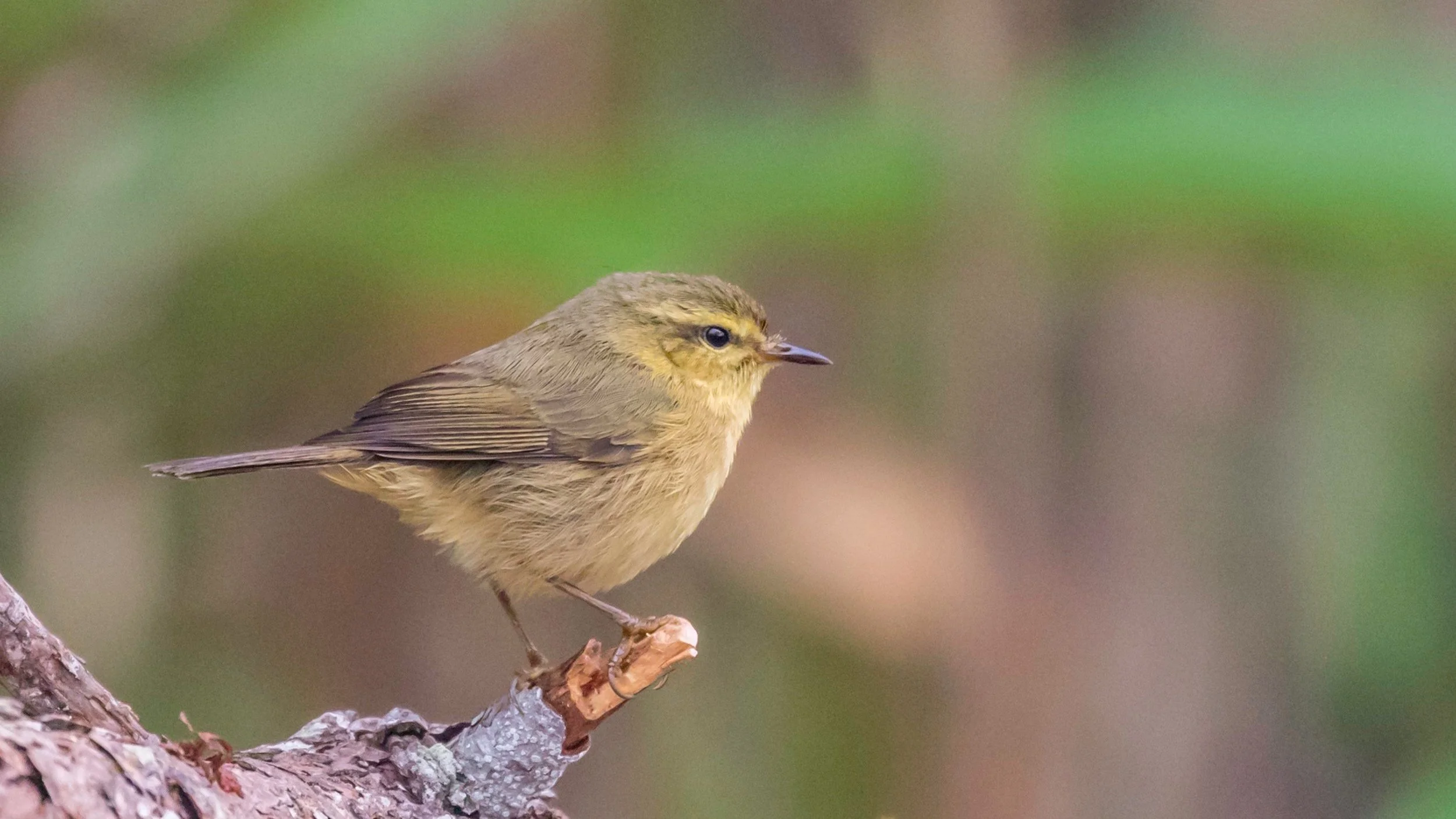
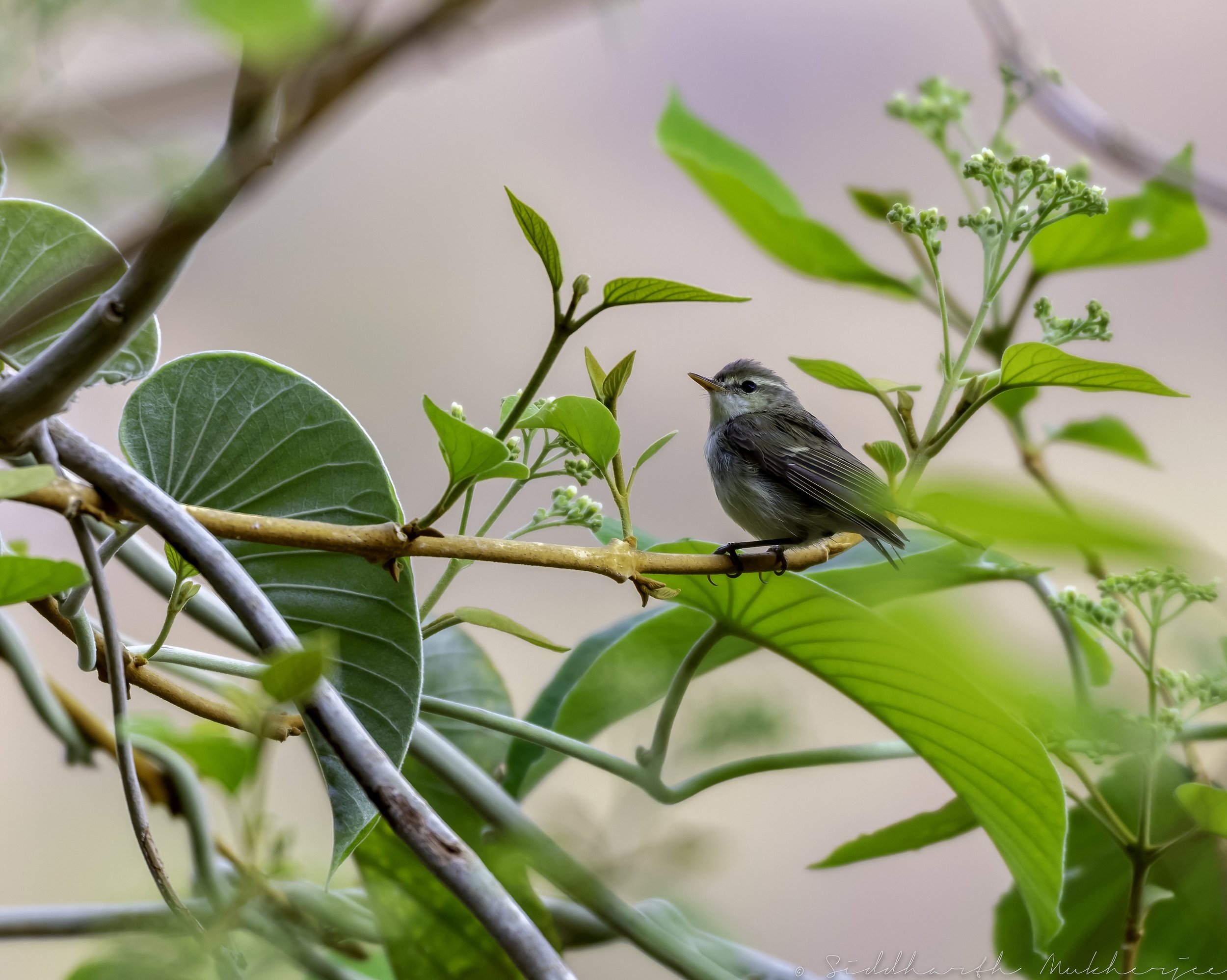

The Blyth’s Leaf Warbler is a fairly bright mid-sized leaf-warbler, yellowish-green above and white below with two wingbars, a broad yellow-suffused eyebrow, and a pale stripe across a gray crown. It breeds in broadleaf (often oak), coniferous, or mixed forests at middle to high elevations, and descends into lower foothill regions in the winter.
#wildartworks, #birdinginthewild, #birdphotography, #canon, #CanonWildlife, #BirdWatching, #WildBirds, #naturephotography, #TelanganaBirds, #umamaheshwaram, #achampet, #warbler, #blythsleafwarbler, #leafwarbler #oldworldwarbler