
Jungle Babbler
Argya striata
Woodlands of the Indian subcontinent
India is one of the world's 17 megadiverse nations, housing approximately 7-8% of all recorded species within just 2.4% of the Earth's land area. Its vast geography encompasses ten distinct biogeographic zones, ranging from the Himalayan mountain ecosystems in the north to the tropical rainforests of the Western Ghats and the arid deserts of the west. This remarkable diversity includes 18 biosphere reserves—including the recently highlighted Cold Desert Biosphere Reserve—and four global biodiversity hotspots: the Himalayas, the Western Ghats, the Indo-Burma region, and Sundaland. As of 2025, India ranks 9th globally in total forest area and 3rd in annual forest gain, supporting unique habitats like the Sundarbans and Coringa mangroves, high-altitude alpine meadows, and vibrant coral reefs. These ecosystems provide critical services, such as climate regulation and water security for millions, while harboring iconic wildlife like the Bengal Tiger, snow leopard, and Asian elephant.
Telangana is a state in southern India with Hyderabad as its capital. Hyderabad is home to the Charminar, a 16th-century mosque with 4 arches supporting 4 towering minarets. The monument overlooks the city's long-running Laad Bazaar. Laad Bazaar or Choodi Bazaar is a very old market popular for bangles located on one of the four main roads that branch out from the historic Charminar. Laad meaning lacquer is used to make bangles, on which artificial diamonds are studded. In this 1 kilometer-long shopping strip, most of the shops sell bangles, sarees, wedding related items, and imitation jewellery. Once the seat of the Qutb Shahi dynasty, the sprawling Golconda Fort is a former diamond-trading center.
Located in the central stretch of the Deccan Plateau, Telangana has sub-tropical climate and the terrain consists mostly of hills, mountain ranges, and thick dense forests covering an area of 27,292 km². The annual rainfall ranges between 1,100 mm to 1,200 mm and the annual temperature varies from 15°C to 45°C. The State is drained by a number of rivers which include Godavari and Krishna.
Telangana is endowed with rich diversity of flora and fauna. It has dense teak forests on the northern part along the banks of river Godavari. As per the Champion & Seth Classification of Forest Types (1968), the forests in Telangana belong to three Forest Type Groups, which are further divided into 12 Forest Types. The State Government has taken up a massive greening programme, 'Telangana Ku Harita Haram' in the State to plant and protect 230 crore seedlings over a period of 4 years. This initiative aims at achieving the twin objectives of increasing the forest cover and reduce pressure on the existing forest resources, through massive community participation by Vana Samrakshna Samithis (VSS) and Eco-Development Committees (EDCs) in Protected Areas and Watershed Development Committees in the Watershed areas. Recorded Forest Area (RFA) in the State is 26,904 km² of which 20,353 km² is Reserved Forest, 5,939 km² is Protected Forest and 612 km² is Unclassed Forests. In Telangana, during the period 1st January 2015 to 5th February 2019, a total of 9,420 hectares of forest land was diverted for non-forestry purposes under the Forest Conservation Act, 1980 (MoEF & CC, 2019). As per the information received from the State during that last two years, 12,730 ha of plantations including avenue plantations in the State.
Three National Parks and nine Wildlife Sanctuaries, which include the Amrabad Tiger Reserve, Kawal Tiger Reserve, Pocharam Wildlife Sanctuary, Etunagaram Wildlife Sanctuary, Kinnerasani Wildlife Sanctuary, Manjira Wildlife Sanctuary and Pakhal Wildlife Sanctuary, constitute the Protected Area network of the State covering 5.08% of its geographical area.
Nallamala Hills & forest range
The Nallamala Hills and forest range is a significant geographical feature within the Eastern Ghats of southern India, located in Telangana and stretching into Andhra Pradesh. This ~430 km long range, parallel to the Coromandel Coast, features rugged hills and deep valleys and hosts one of the largest contiguous forest areas in the region, encompassing a significant portion of the Nagarjuna Sagar Srisailam Tiger Reserve. The rugged, sparsely populated hills are composed for the most part of jumbled quartzites and slates and exemplify the mountain scenery of the Eastern Ghats. The range is known for its rich biodiversity, eco-tourism opportunities, and important religious sites like the Srisailam temple. It is bounded by the Krishna River to the north and the Pennar River to the south. The region includes important religious sites like the Srisailam Temple, one of the twelve Jyotirlingas. The Nallamala region has faced threats from proposed uranium mining projects, which would jeopardize the Tiger Reserve and the Chenchu's traditional way of life. Organisations like HYTICOS and local tribes have actively campaigned against these projects to protect the delicate ecosystem.
In the Nallamalla Hills and forest range the predominant vegetation is dry deciduous forest, with species such as Terminalia (తెల్ల మద్ది, అర్జున, ఎర్రమద్ది), Hardwickia (ఏపీ, నరేపీ), and Pterocarpus (ఏగిస, పెద్దగి and ఎర్ర చందనం). The forest also has a variety of medicinal plants. The forest is home to various mammals like Tigers, Leopards, Sloth Bears, Wild Boar, Sambhar, Blackbucks, and Pangolins. A variety of birds, including rare and migratory species, inhabit the sanctuary. Read about some of the species here. It is also host to diverse reptile species, including the King Cobra and Indian Rock Python and the forest is known for unique spider species like the critically endangered Gooty Sapphire Ornamental Tarantula (Poecilotheria metallica). The Chenchus, a forest-dwelling tribe, are the indigenous inhabitants of the Nallamala forest. They traditionally live a semi-nomadic, hunter-gatherer lifestyle and have remained largely cut off from modern society. The Chenchus have a unique, symbiotic relationship with the forest and play a key role in its conservation.
Uma Maheshwaram is the northern gateway to Srisailam — one of the jyotirlingas, on a hill surrounded by high trees. The Uma Maheshwaram temple is dedicated to the Hindu god Shiva located in the Nallamala Forest around 100 km from Hyderabad on the Hyderabad-Srisailam highway, about 4 kms from the village of Rangapur, Achampet. Nearby hills shield the temple and the 500-metre stretch to PapaNasanam (a mysterious spring of unknown source from which water can be drawn continuously through the year) from sunlight for most of the day, maintaining a temperature lower than the surroundings during the entire year. The area abounds in flora and fauna like the beautiful and Vulnerable Yellow-throated Bulbul.
‡‡‡‡‡
For a print of the beautiful wildlife from my various sojourns click on the button below to read my process and order a limited edition canvas from the catalog.
Jungle Babbler
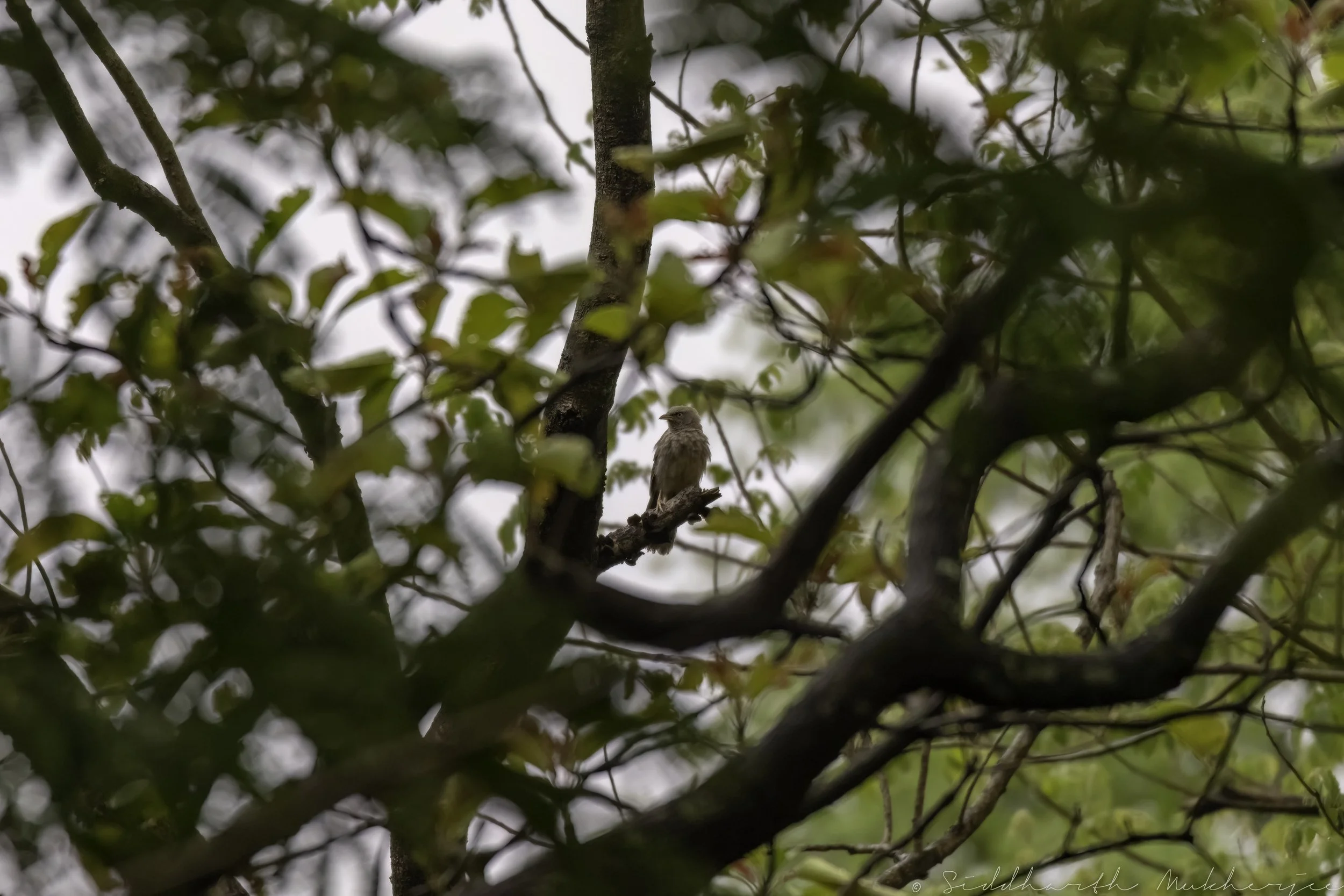
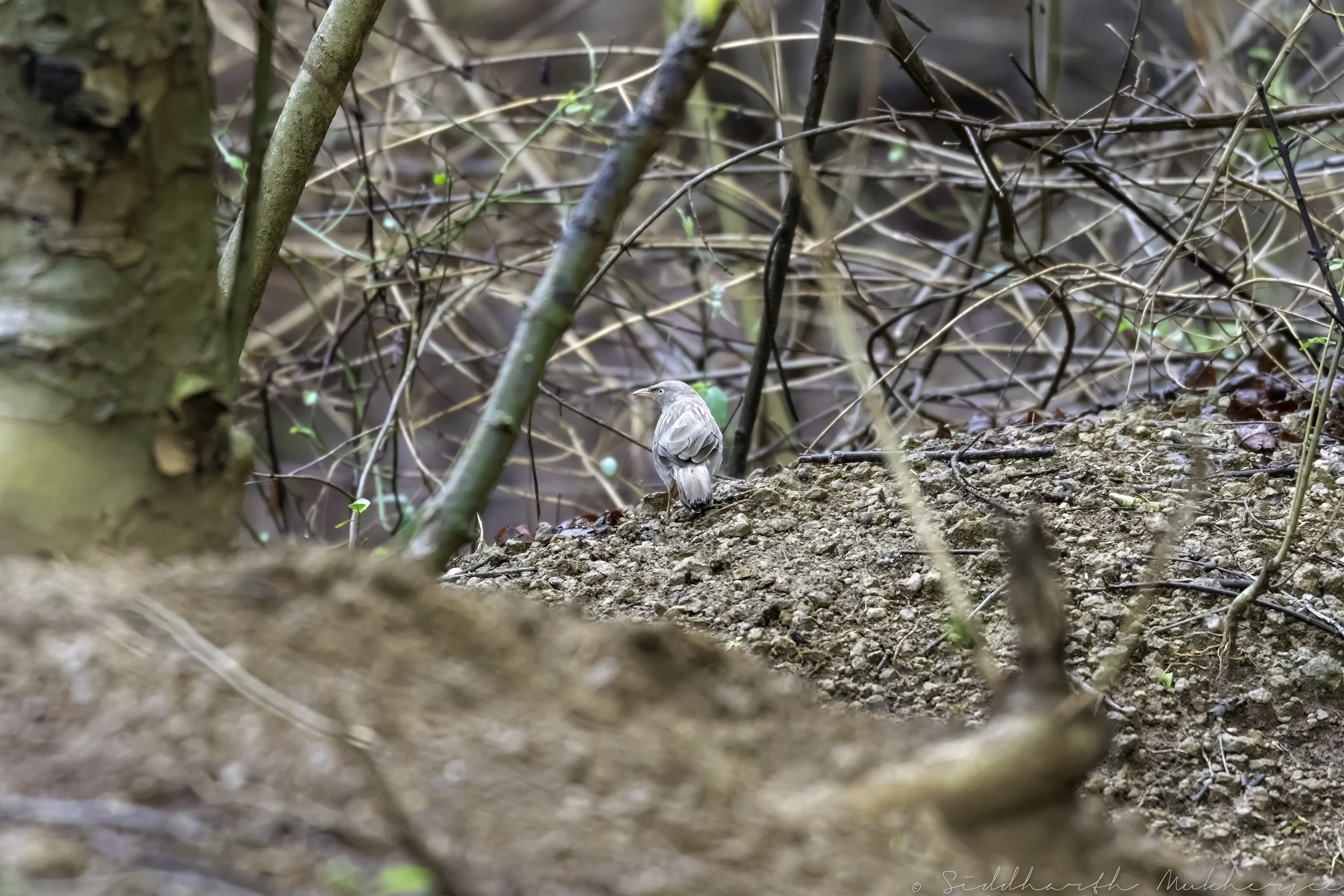
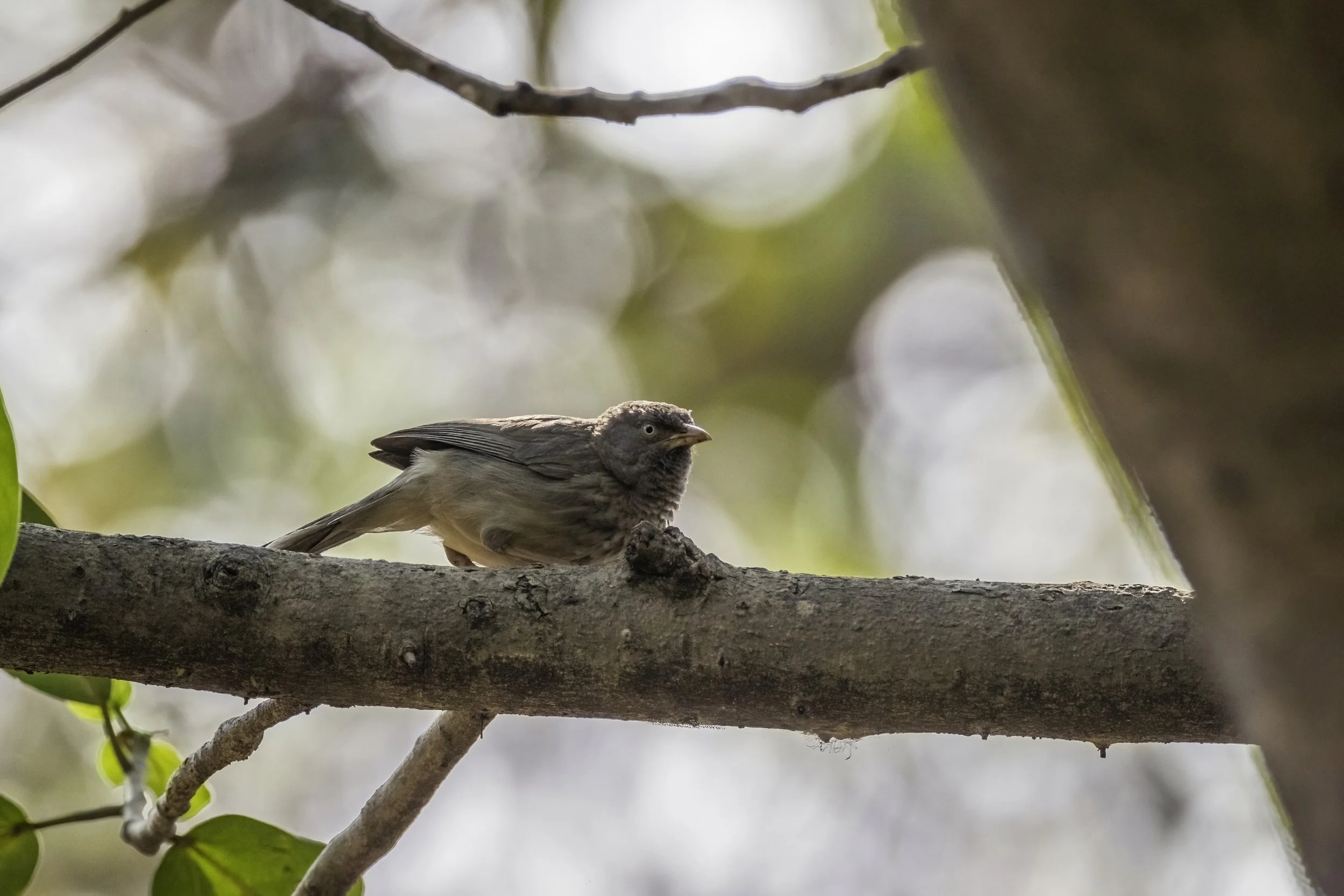
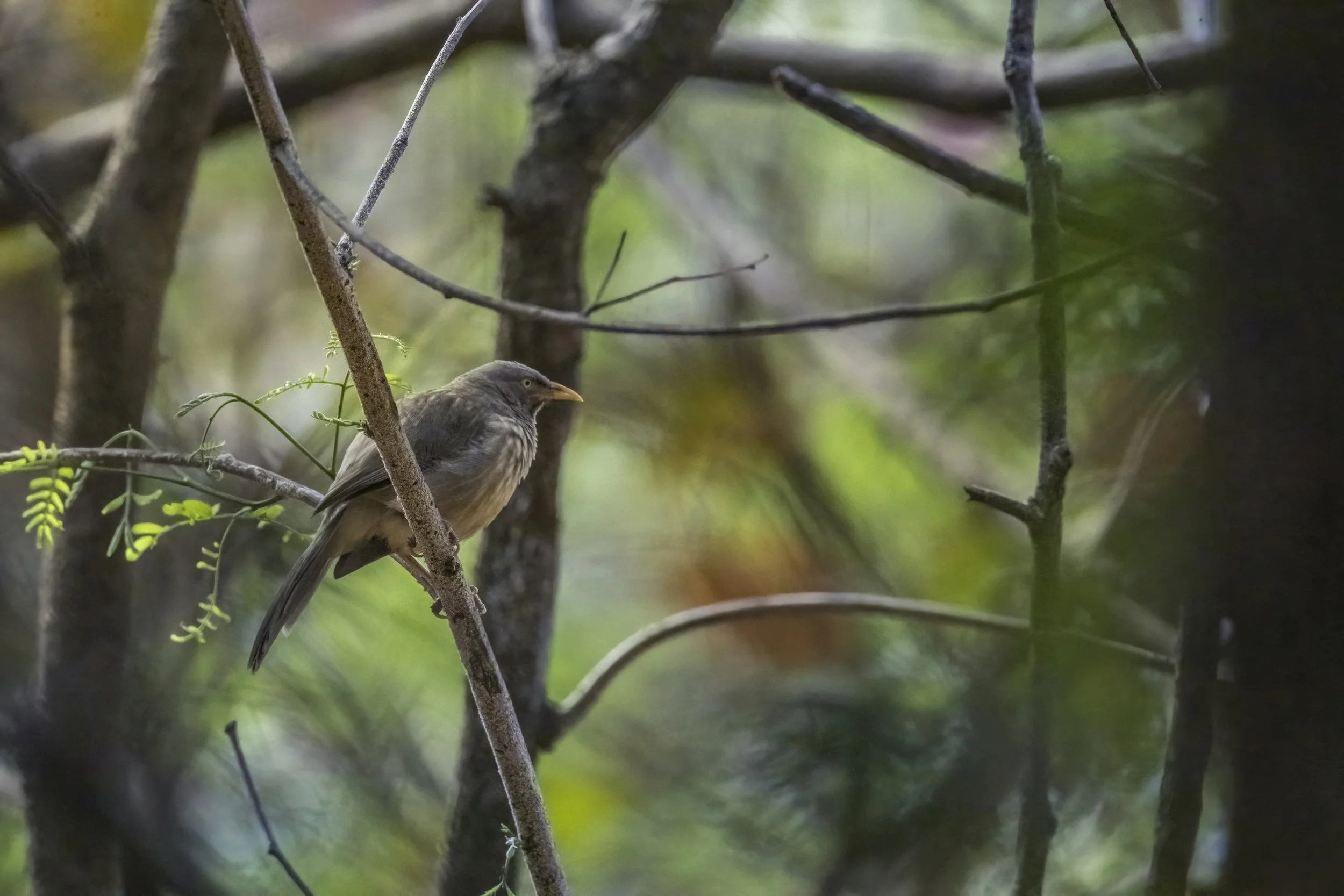
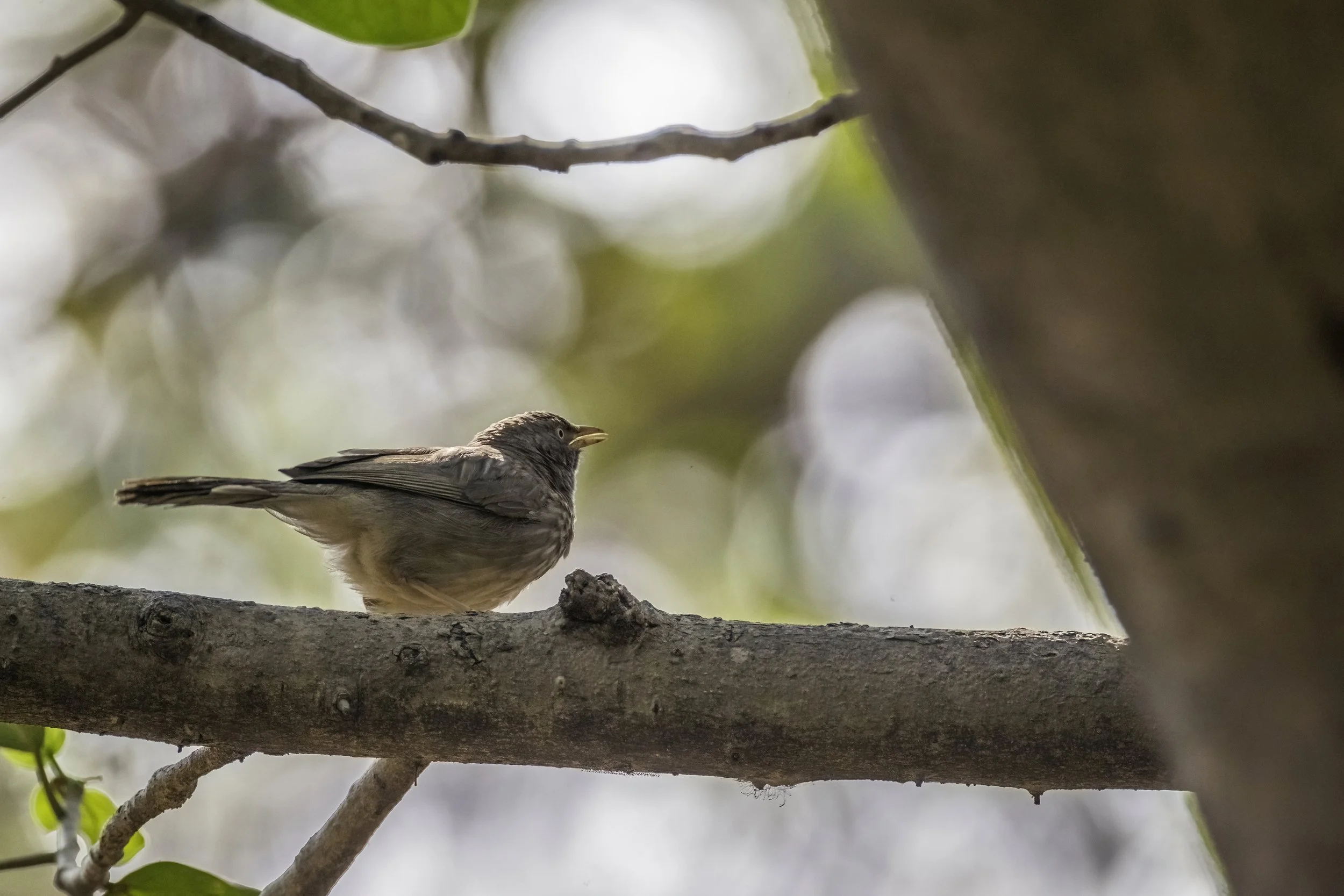
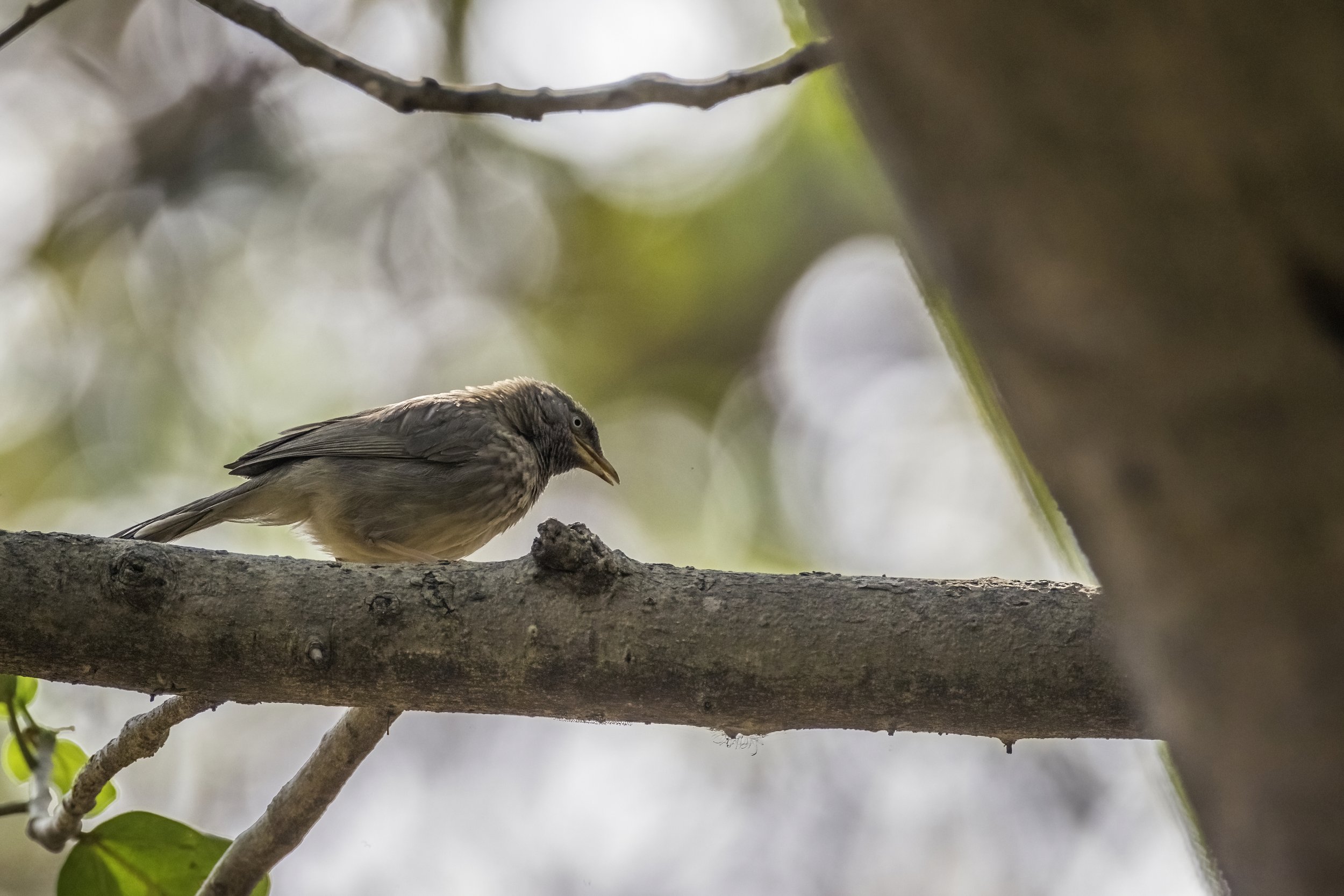
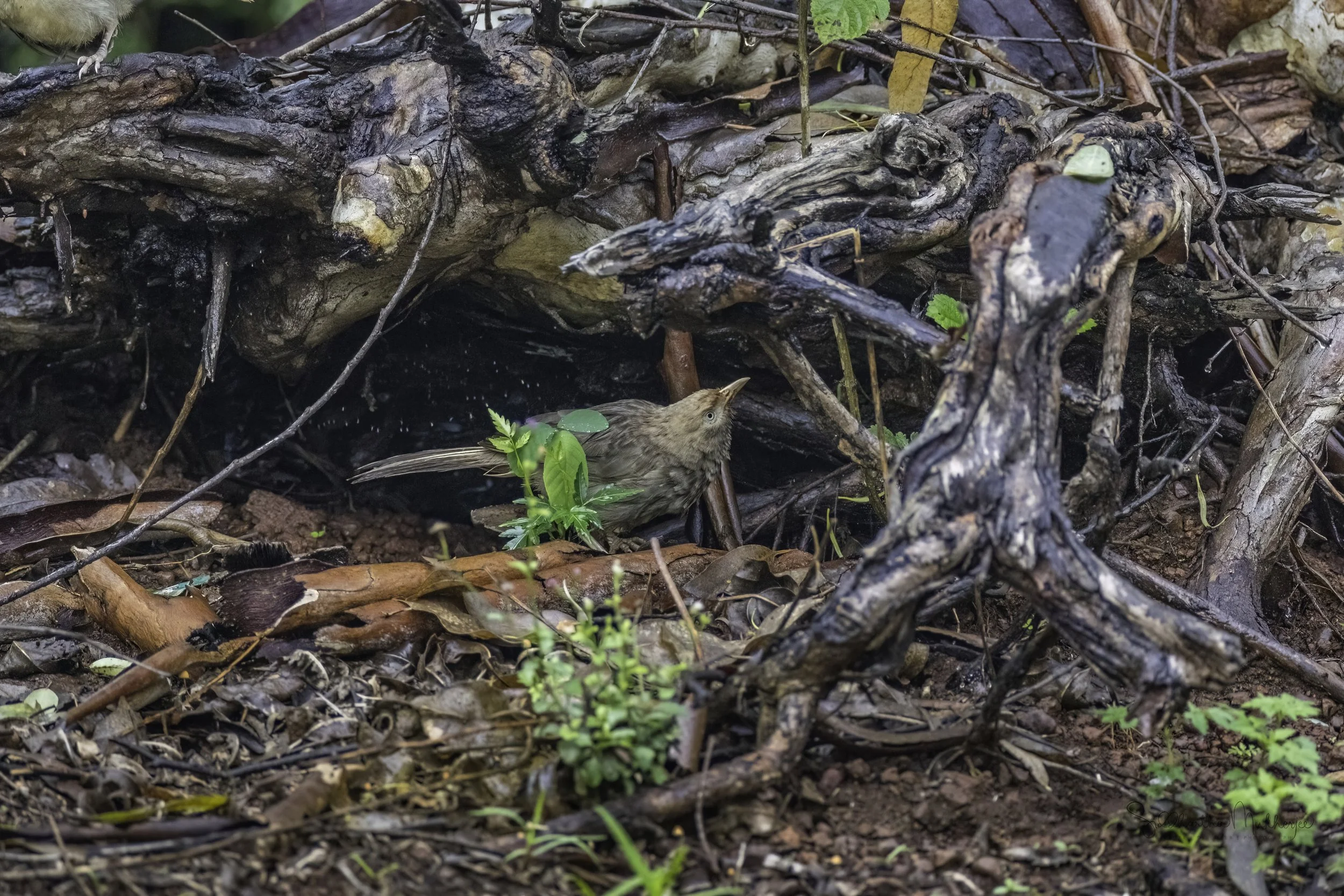
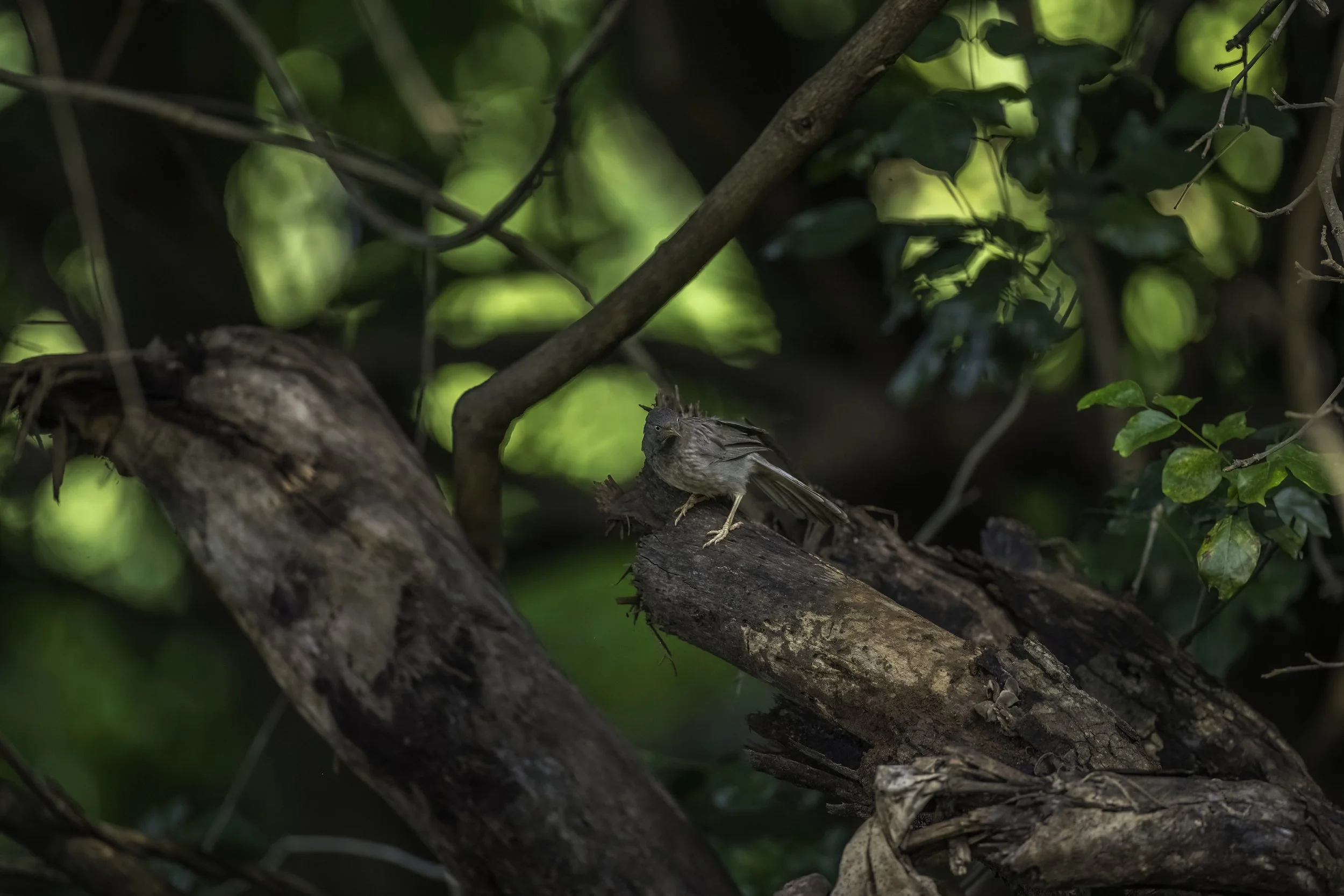
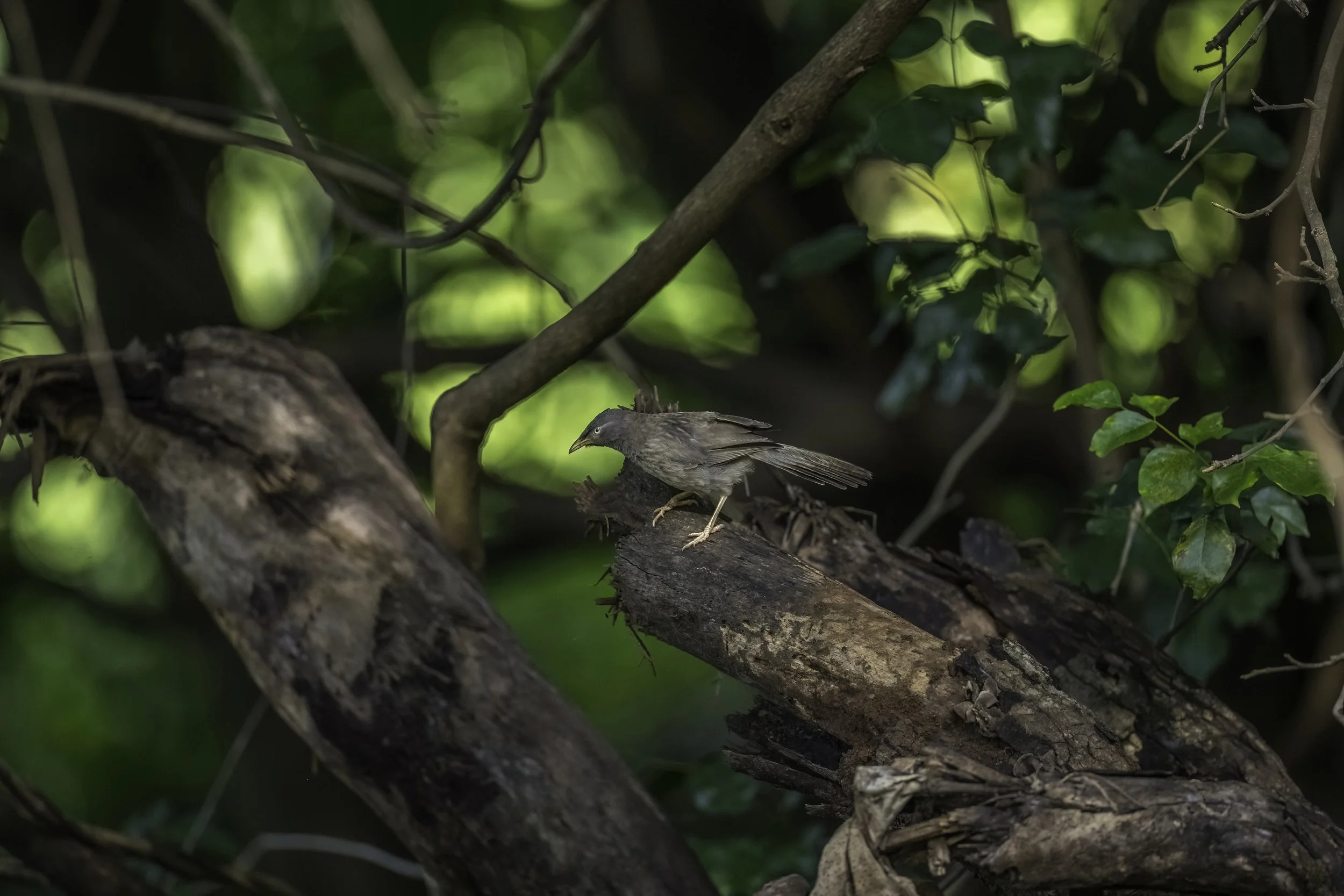
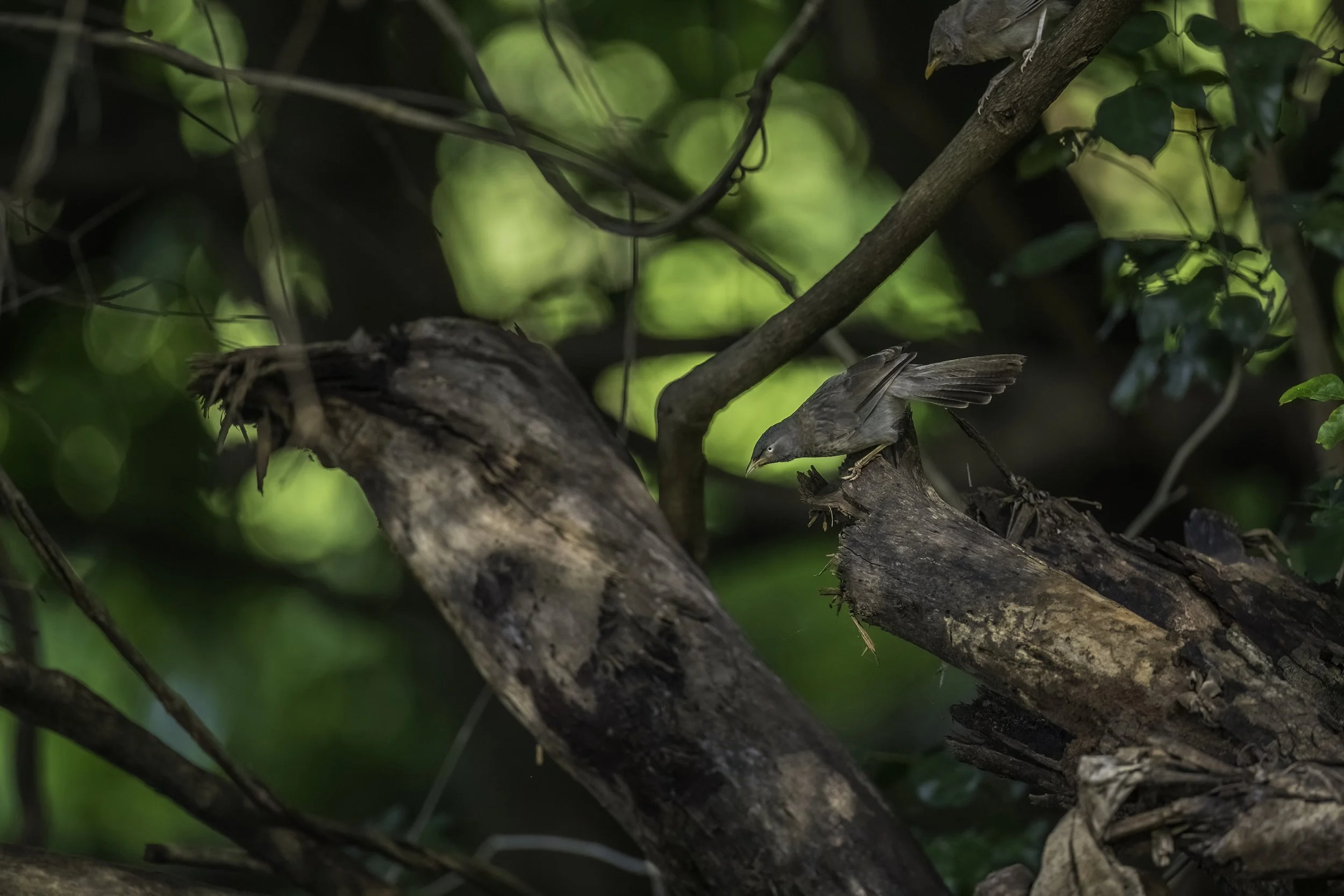
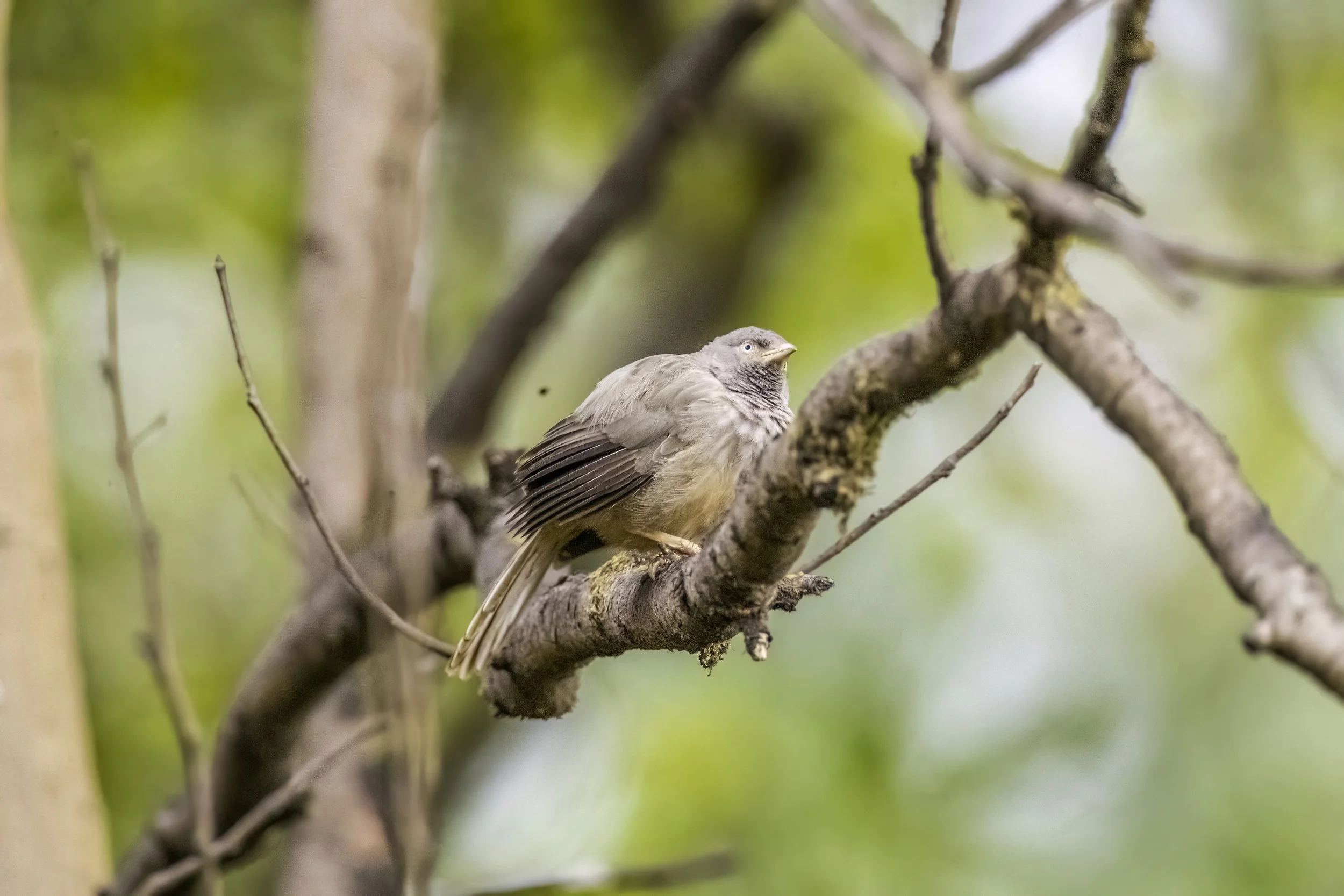
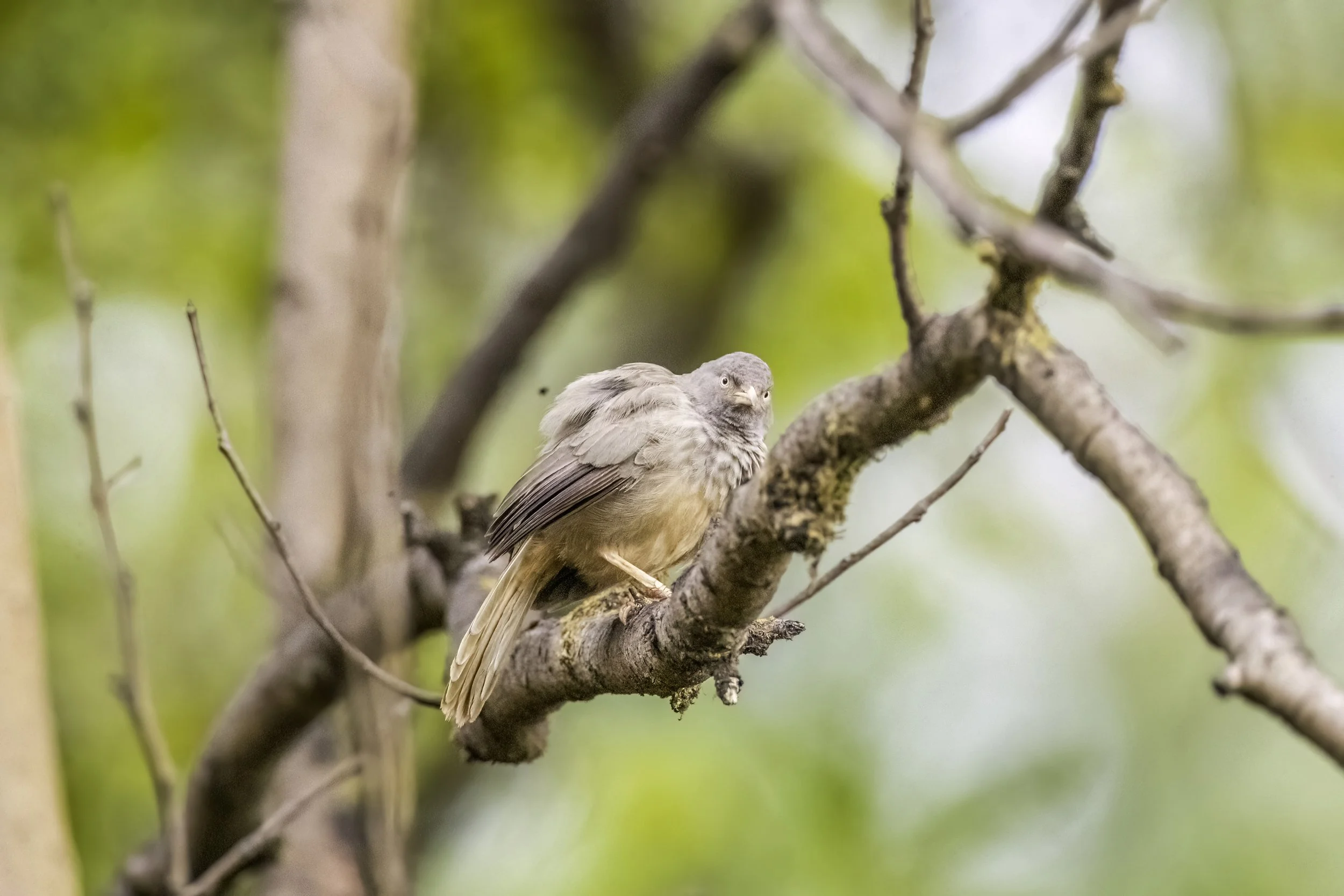
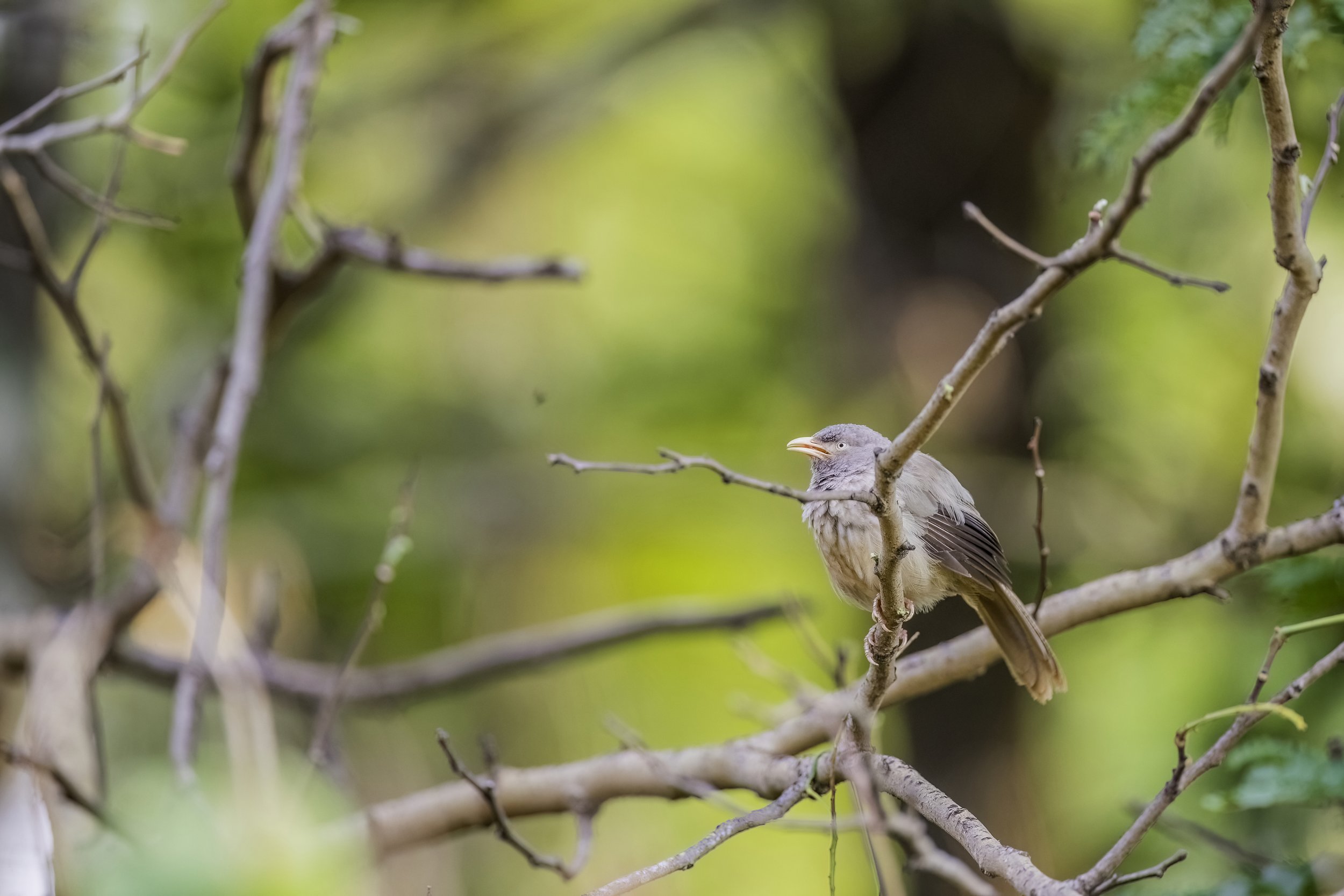
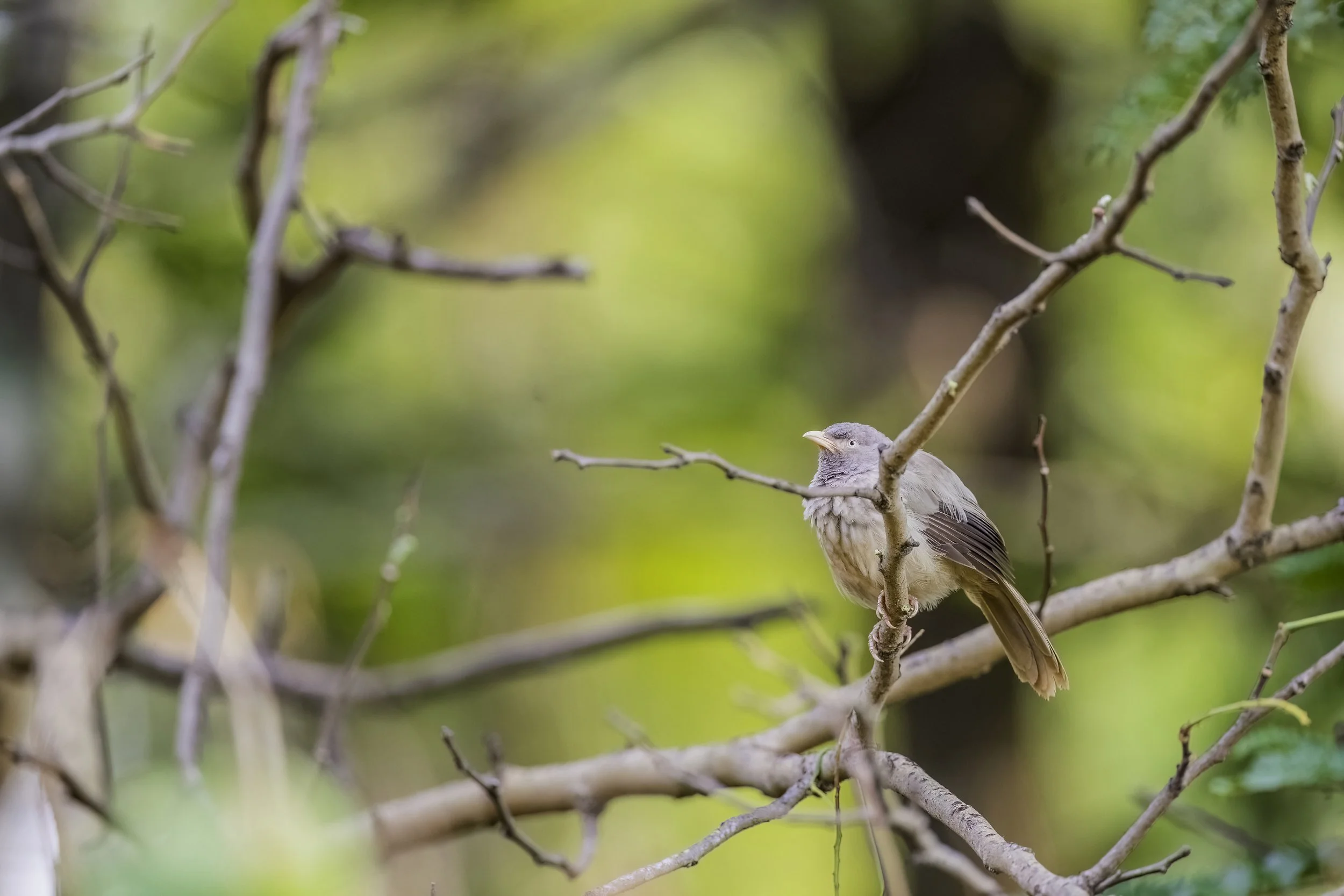
In the dry deciduous forests and urban fringes of Telangana, few avian encounters are as boisterous as a meeting with the Jungle Babbler (Argya striata). Locally known in parts of India as "Seven Sisters" (Sat Bhai), these gregarious birds are the soundtrack of the subcontinent's woodlands, characterized by their constant, wheezy chatter and bustling social structure.
The Jungle Babbler (Argya striata) is a member of the family Leiothrichidae found in the Indian subcontinent. Jungle Babblers are gregarious birds that forage in small groups of six to ten birds, a habit that has given them the popular name of "Seven Sisters" in urban Northern India, and (seven brothers) in Bengali, with cognates in other regional languages which also mean "seven brothers". The jungle babbler is a common resident breeding bird in most parts of the Indian subcontinent & is often seen in gardens within large cities as well as in forested areas. In the past, the Orange-billed Babbler, Turdoides rufescens, of Sri Lanka was considered to be a subspecies of Jungle Babbler, but has now been elevated to a species.
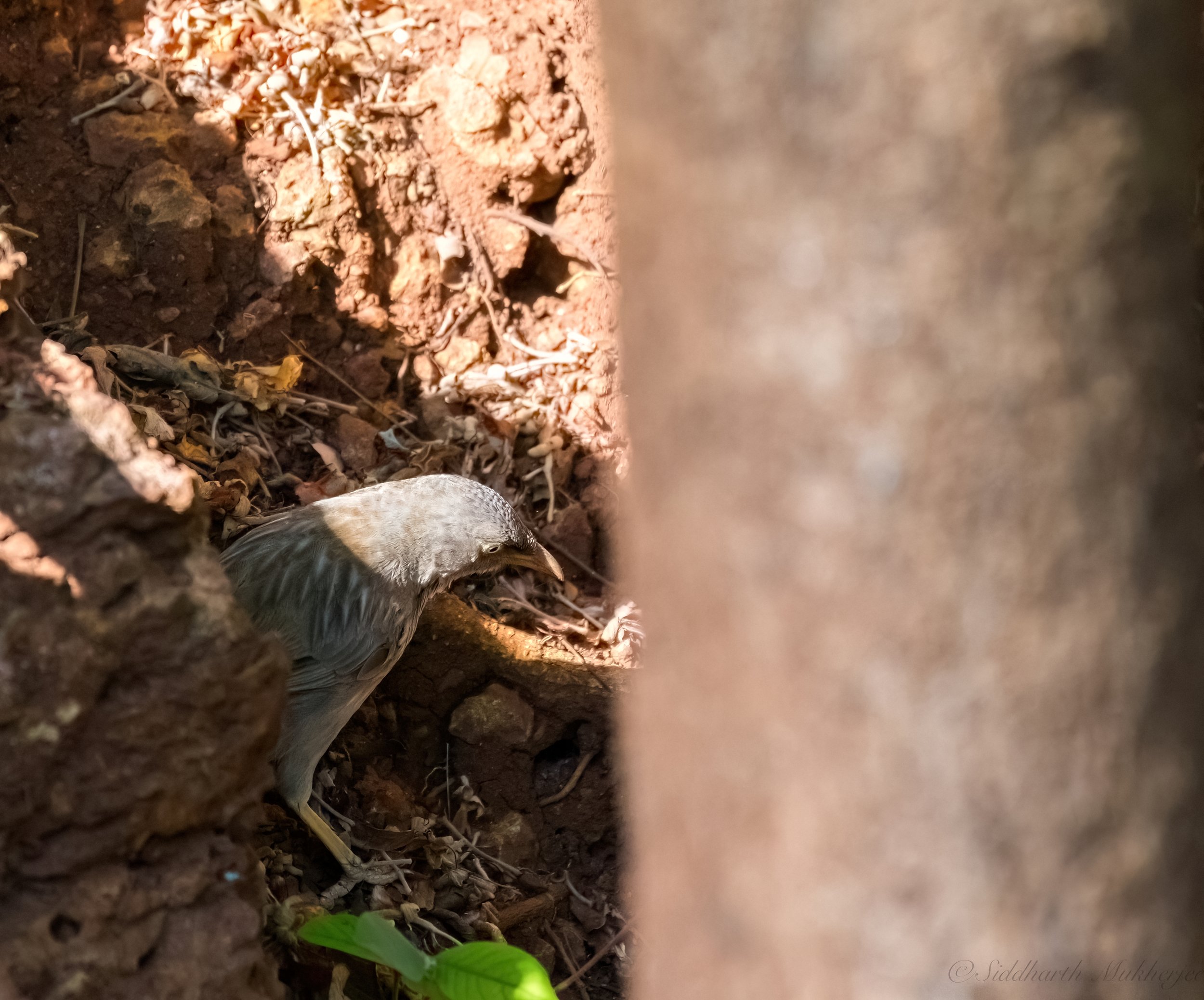
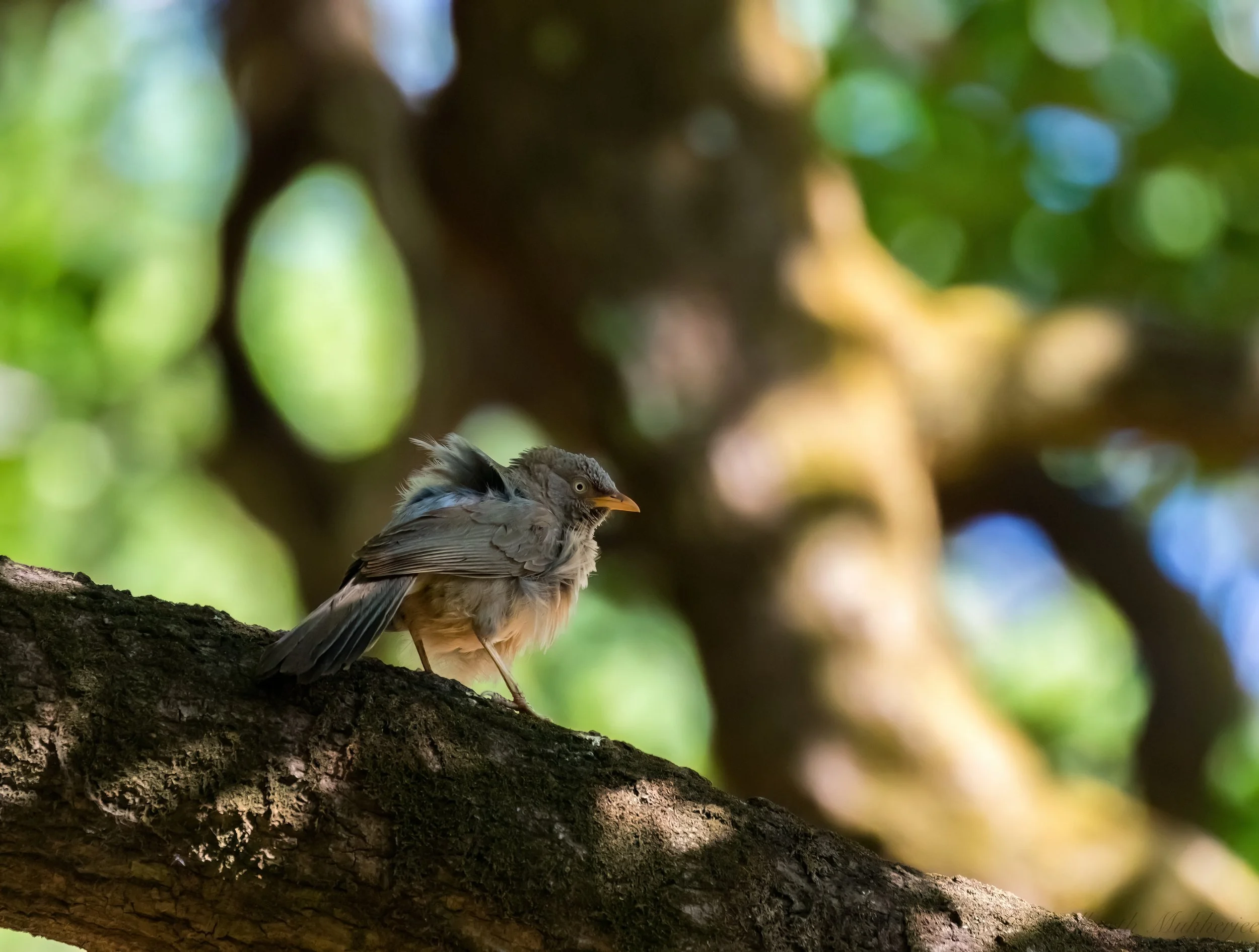
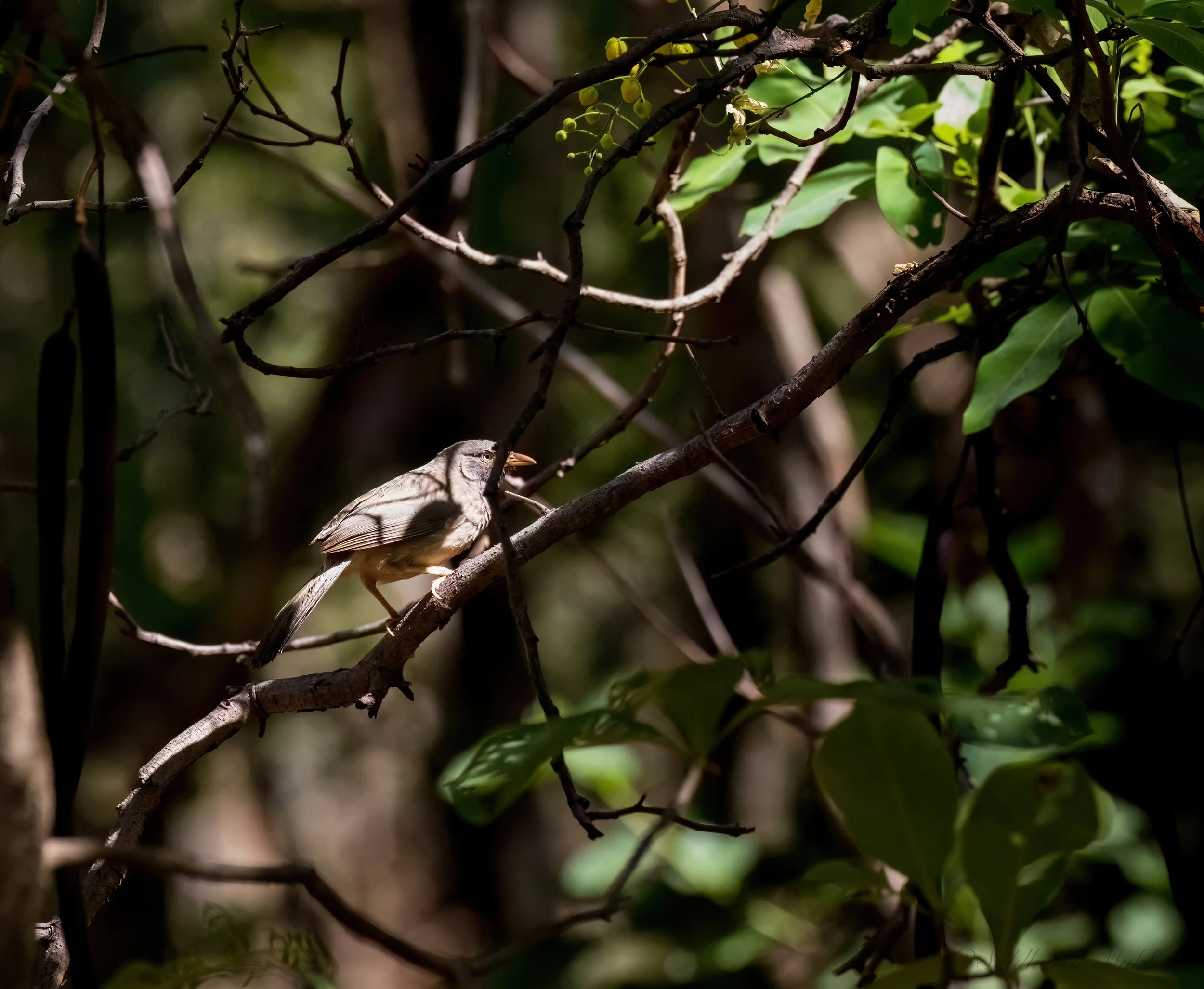
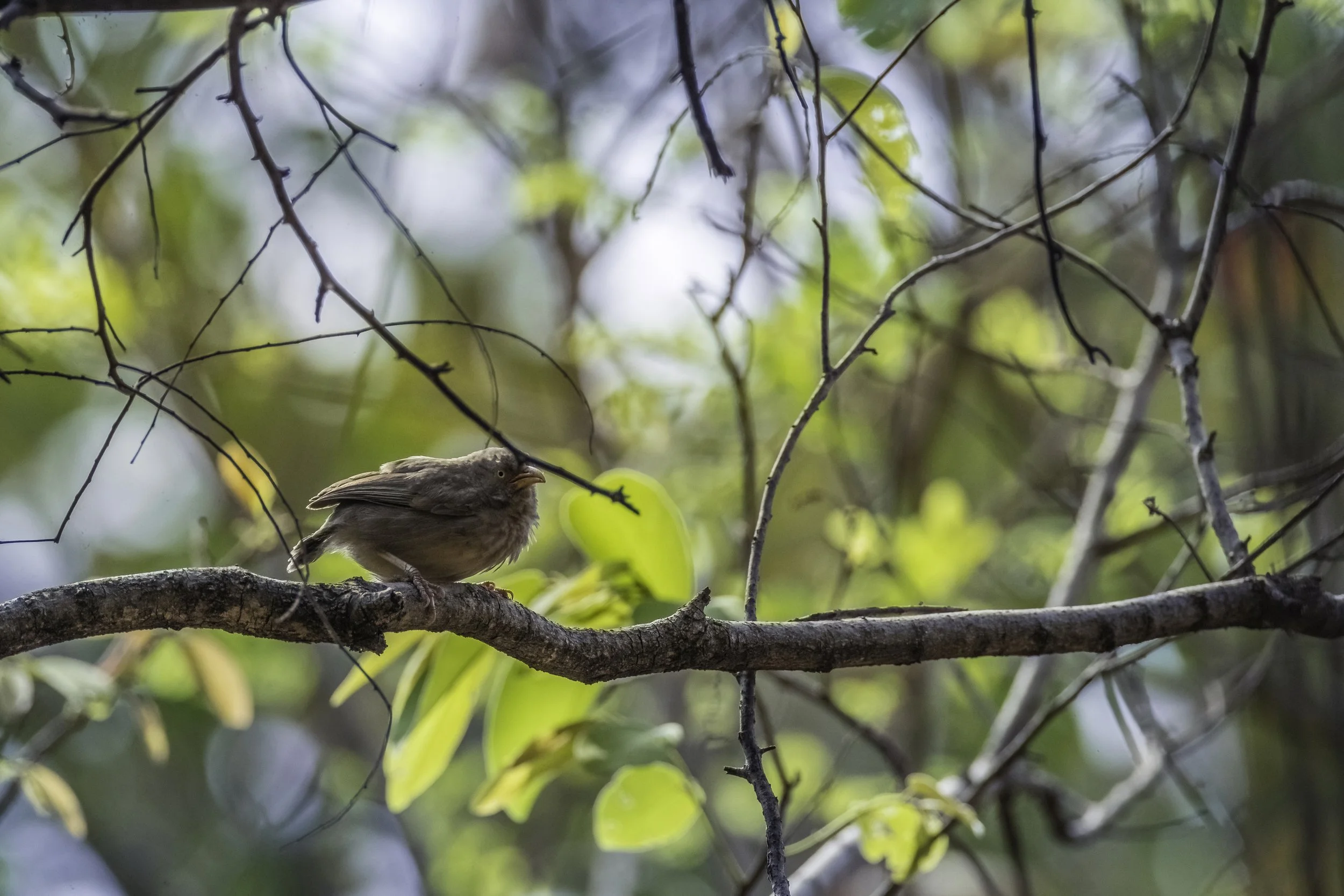
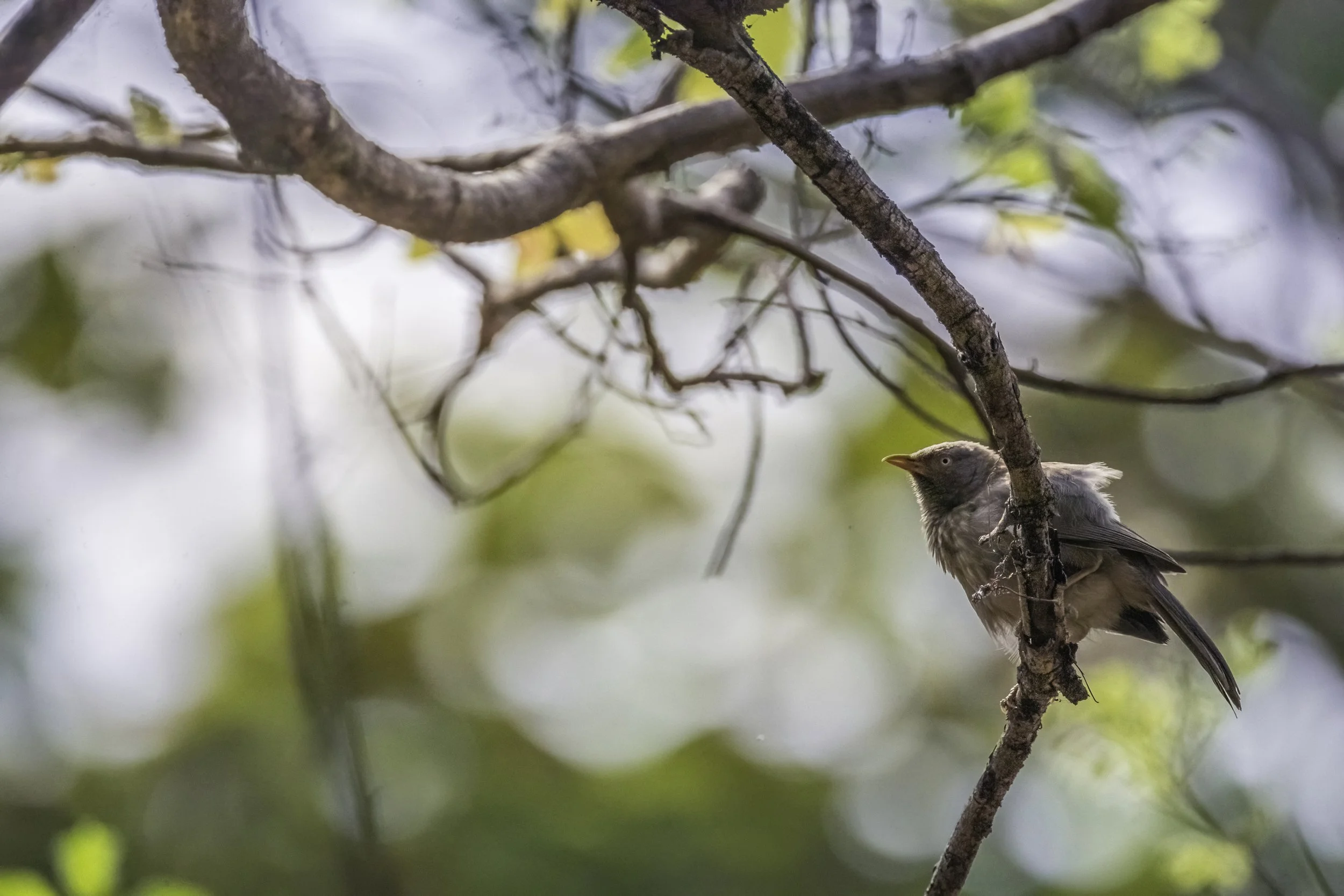
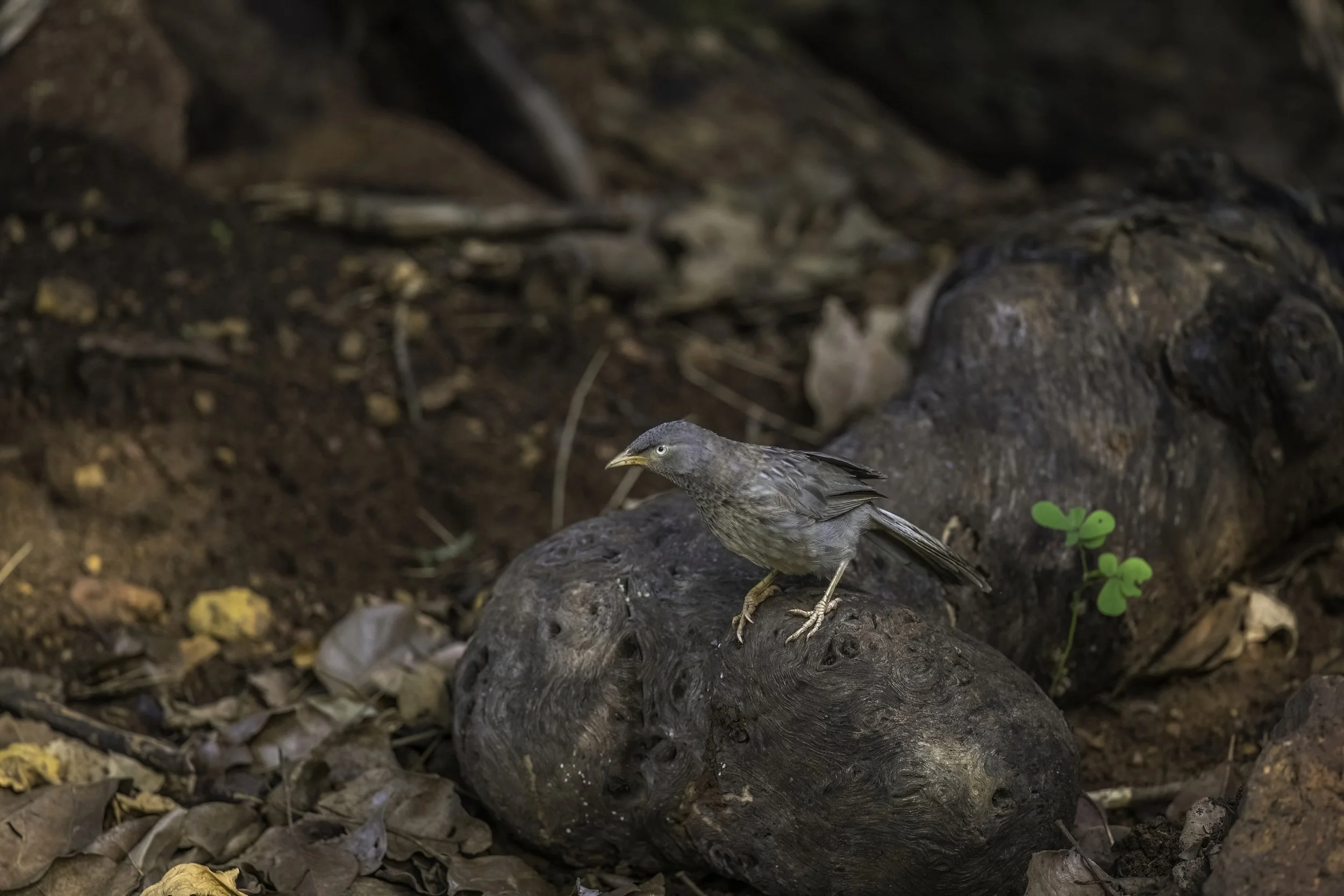
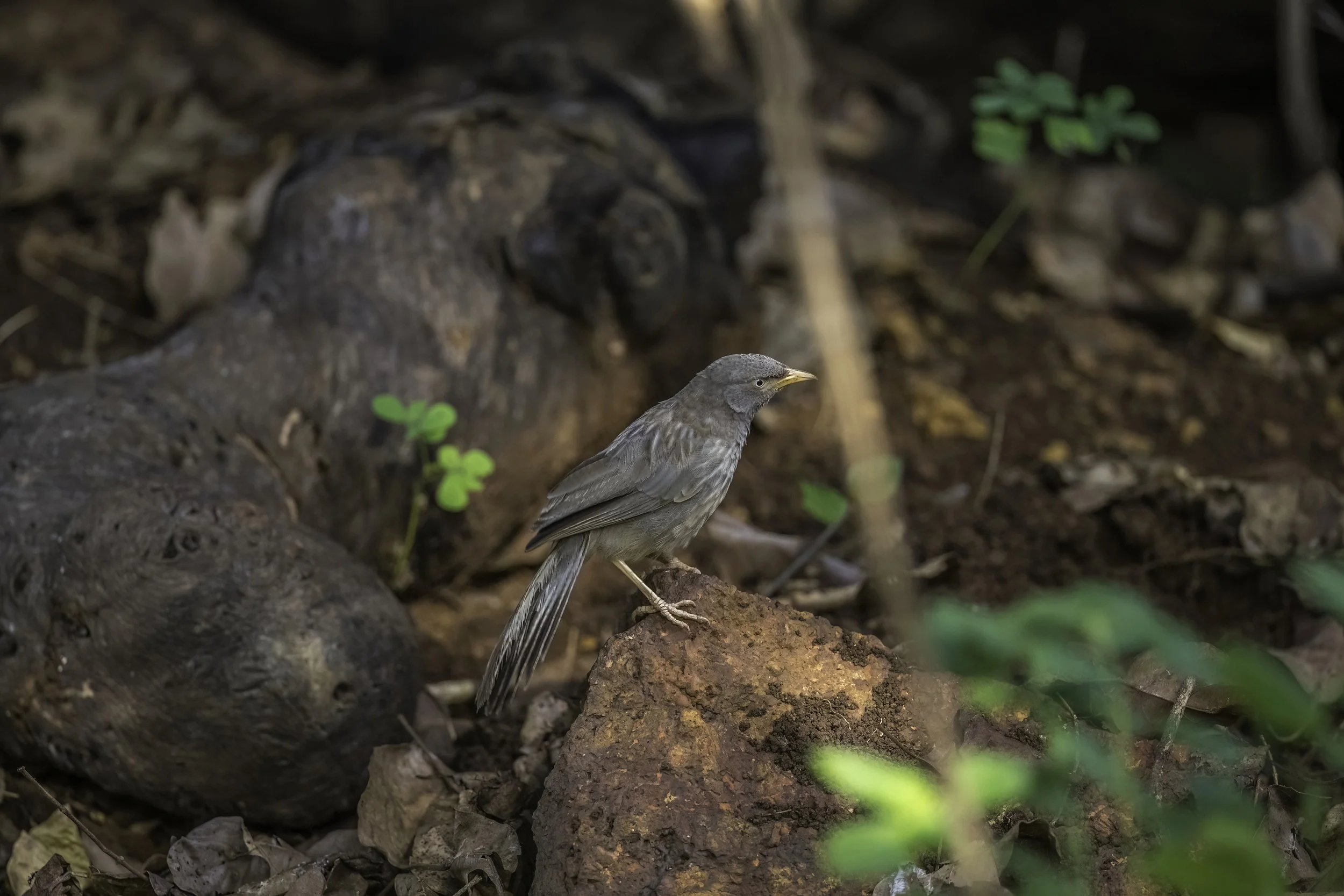
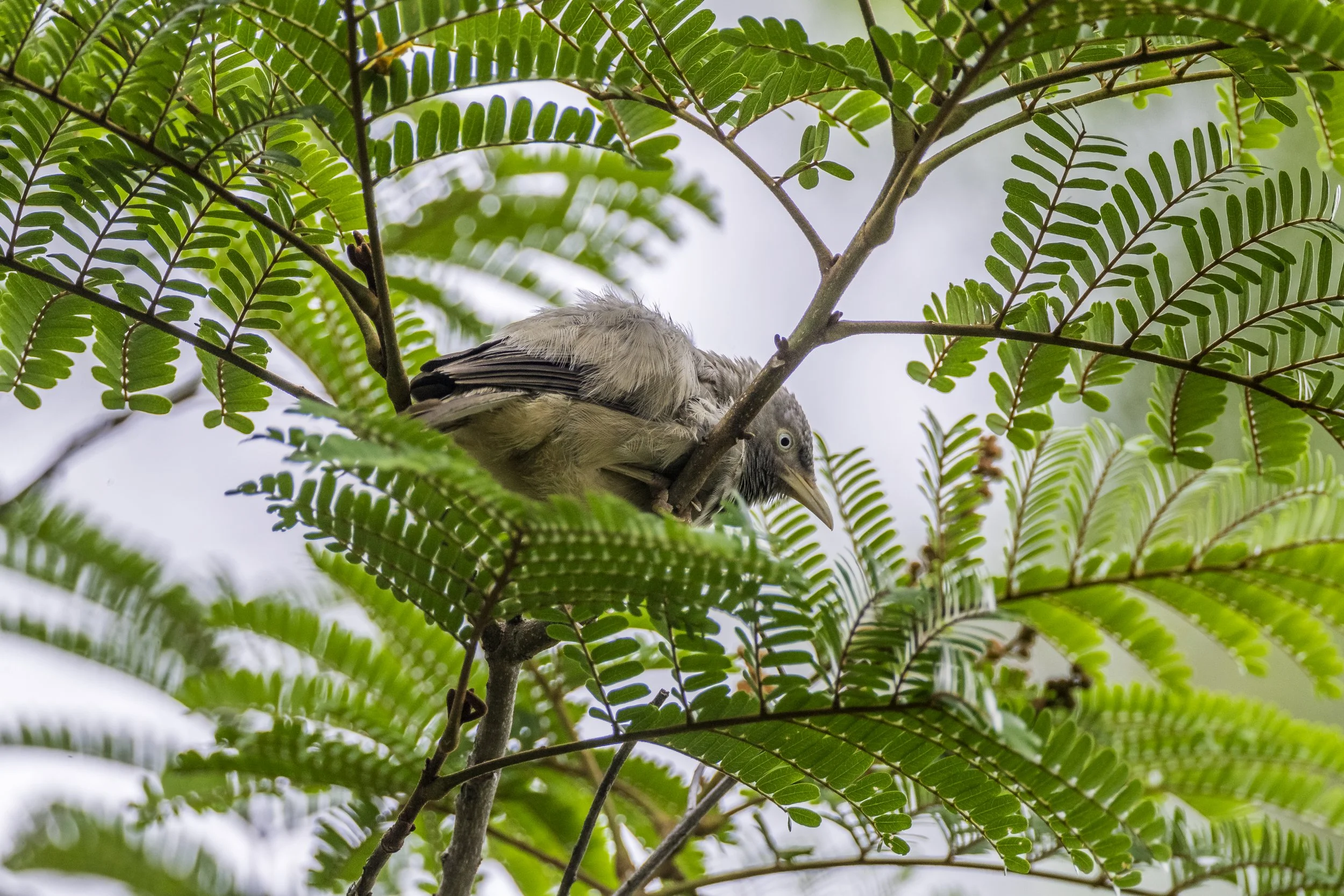
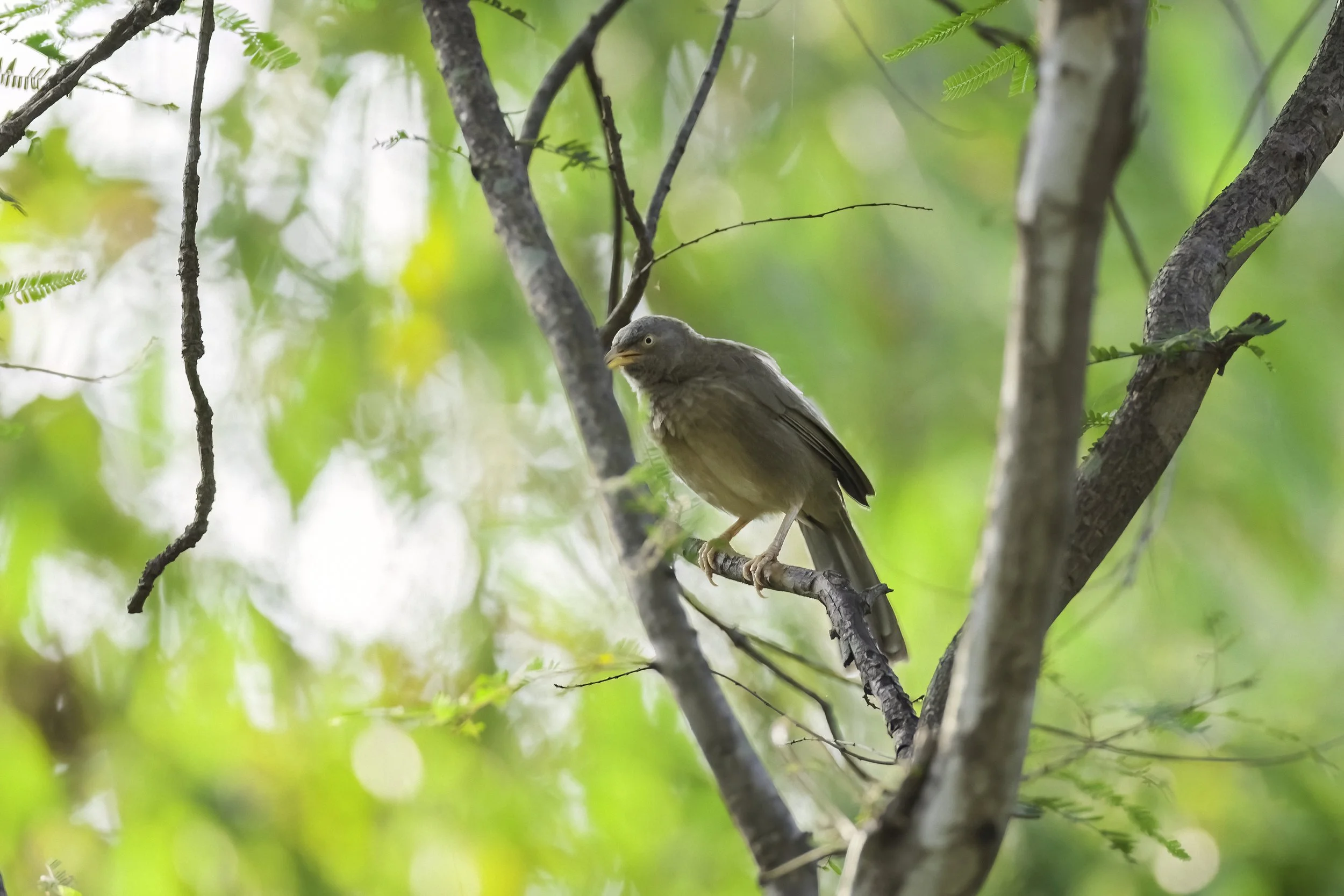
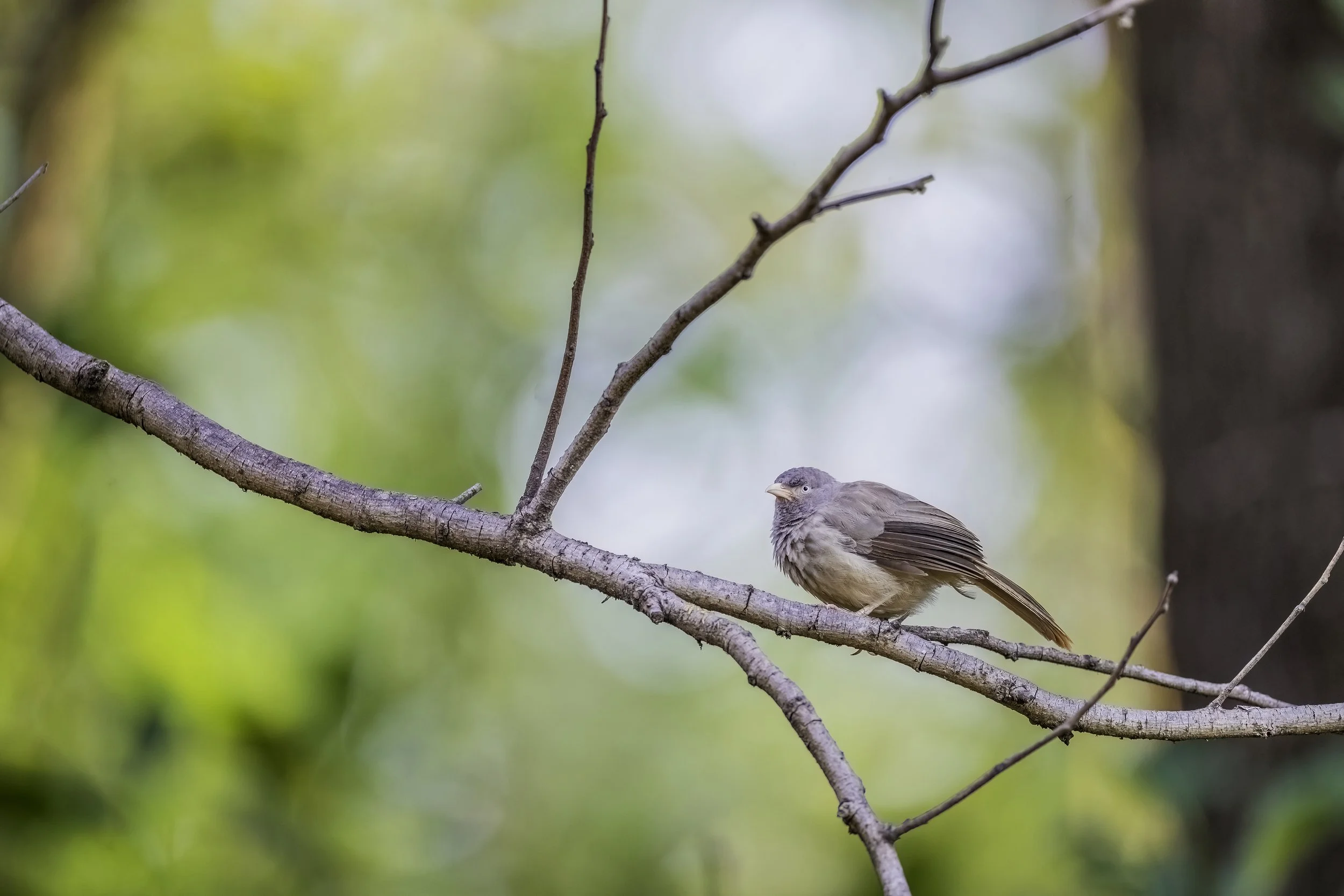
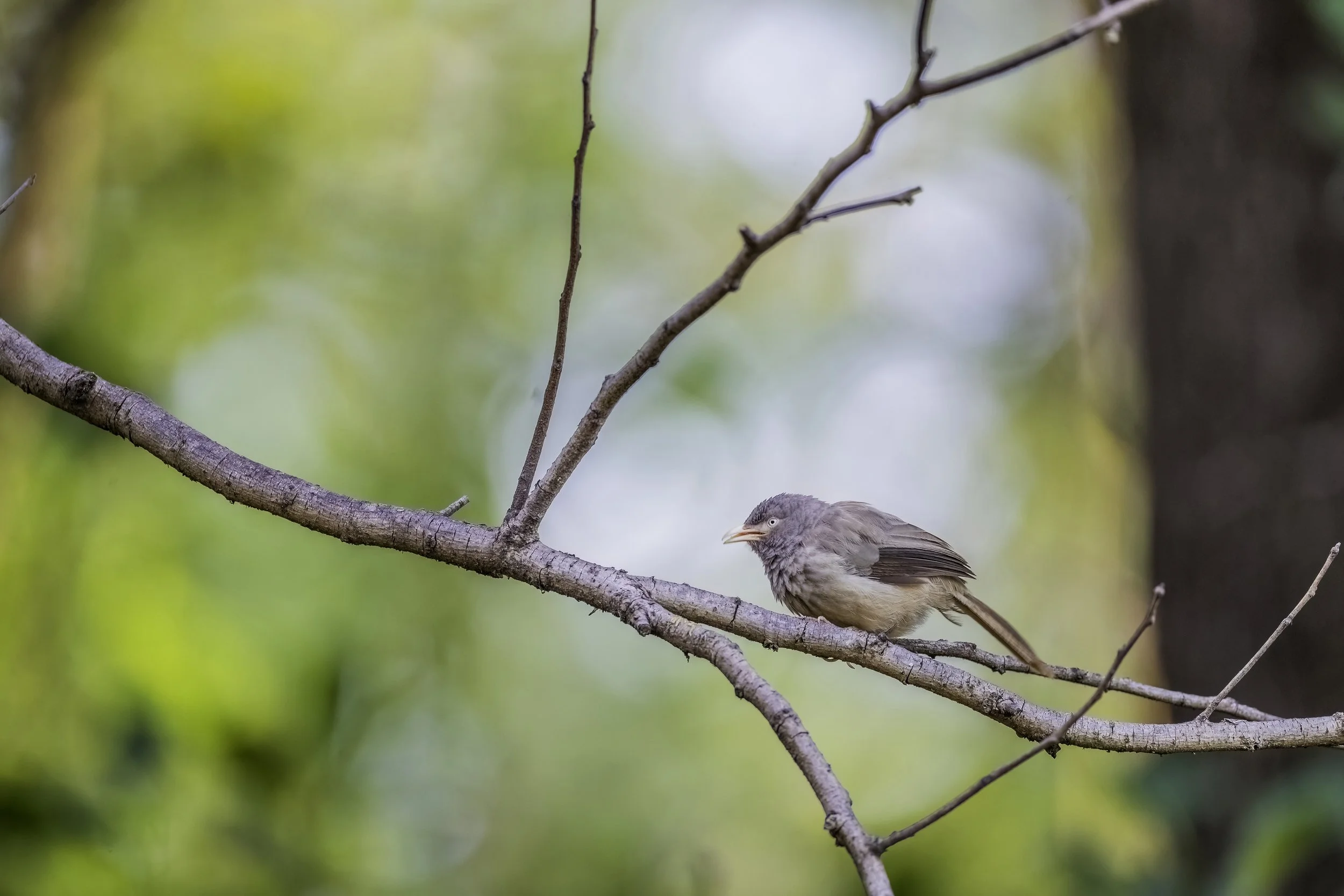
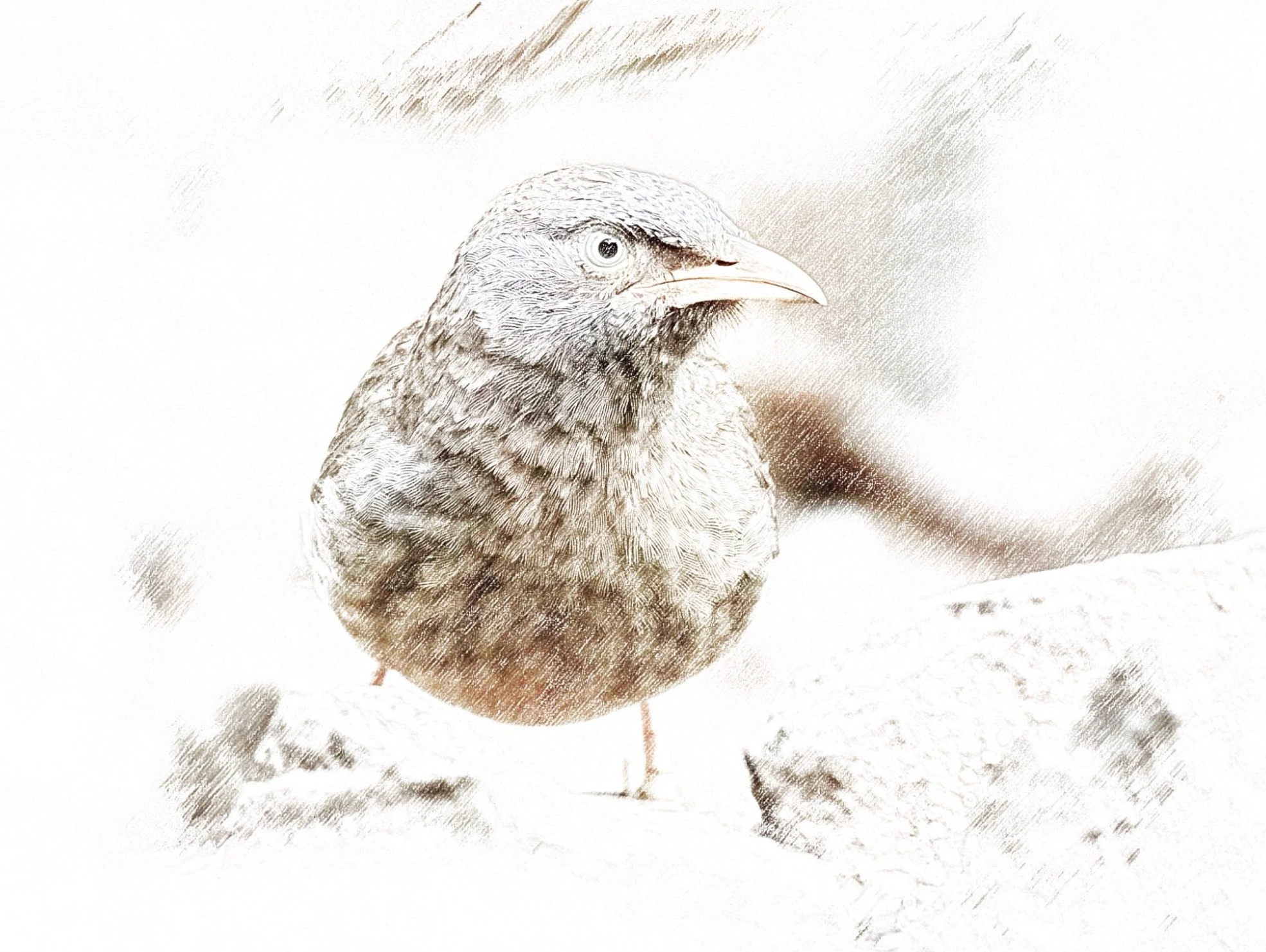
This familiar ash-brown coloured babbler has a yellow bill and a dark brow in front of the eye that contrasts with its pale eye giving it a perpetual “angry” look. It has vague streaking on the upperparts, diffused mottling on its throat, and barring on its tail. The multiple races vary slightly in color and strength of markings except the race somervillei of the NW peninsula which has dark brown outer wing feathers that contrast with the rest of the wing. They are often seen in noisy flocks hopping on the ground and flicking litter in search of food.
The Jungle Babbler is a medium-sized babbler with a compact, sturdy build. It measures approximately 25 cm in length and weighs between 55–84 grams, though males in some regions typically average 59–72 grams. Their overall plumage is a drab brownish-grey, which serves as excellent camouflage against leaf litter. They feature vague dark streaking on the upperparts and soft mottling on the throat.
Some distinguishing features can be easily and clearly observed:
Bill: Conspicuous, slightly curved, and dull yellow to yellowish-white.
Eyes: Adults have distinctive pale creamy or yellowish-white eyes (irises).
An "Angry" Look: A dark line (lore) between the bill and the eye often gives them a perpetual scowl.
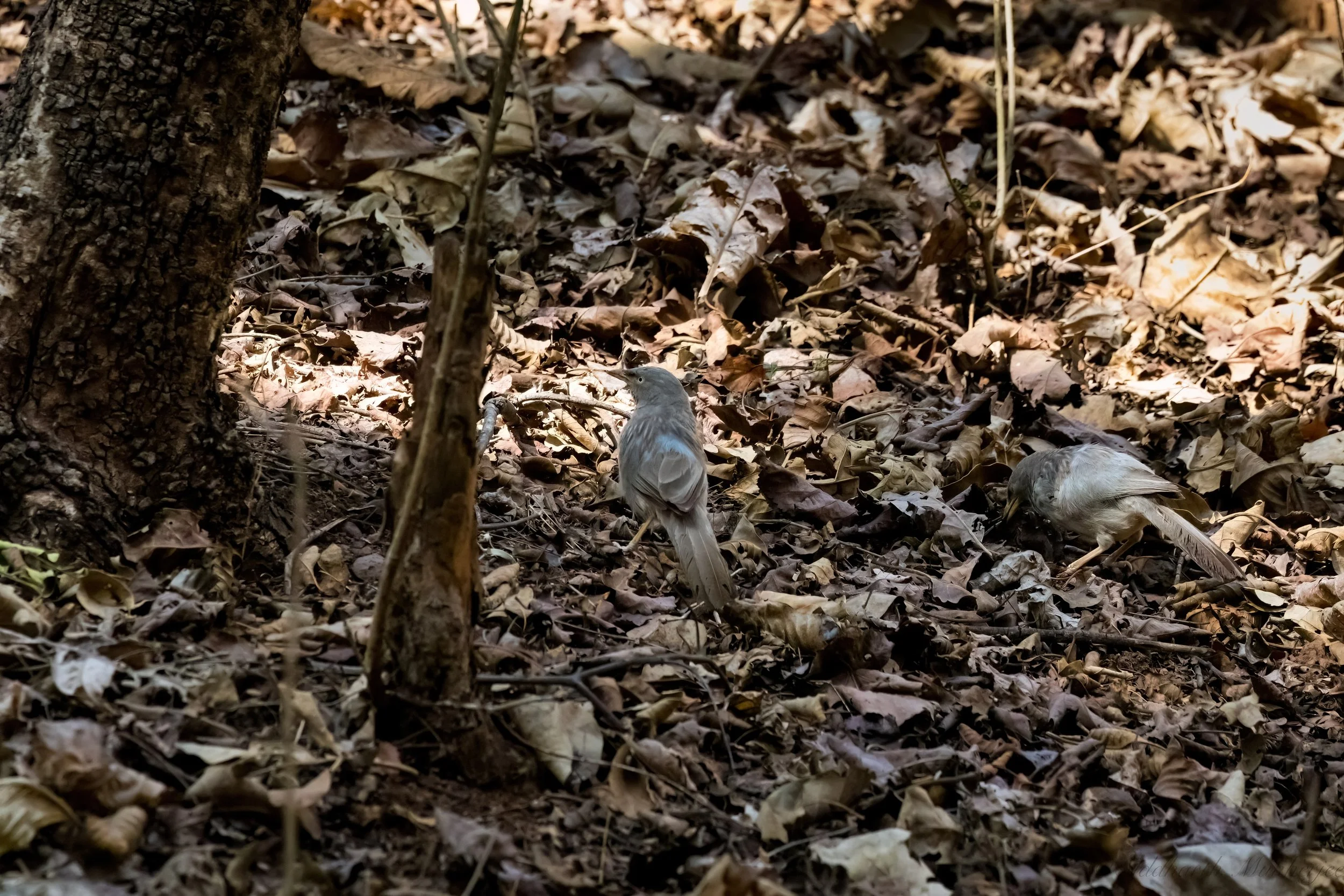
Jungle Babblers are common, widespread and resident throughout lowland India, Bangladesh and northeastern Pakistan, wherever there are trees and scrub. They rarely venture far from trees, so tend to be absent from open agricultural landscapes, or scrub where bushes are less than 3 m in height. Known in Hindi as "sat bhai" (seven brothers), because of they invariably occur in groups of 3-20 (with an average group size close to seven), each group is an extended family consisting of a breeding pair with offspring. The groups defend common territories, in which they live all year round. Most or all group members co-operate in breeding, by guarding the nest and helping to feed the young.
Five subspecies are recognized.
Jungle Babbler (Jungle) Argya striata [striata Group]
Argya striata sindiana - Distributed in Pakistan (R Indus Plains) and NW India (from Himalayan foothills, Punjab and Haryana S to Rann of Kutch). Subspecies sindiana is more ashy above than nominate, and more creamy buff on belly.
Argya striata striata - Distributed in Himalayan foothills from SE Himachal Pradesh E to S Nepal, S Bhutan and W Assam, and S in India to Uttar Pradesh, Bihar, S West Bengal and NE Andhra Pradesh, and Bangladesh.
Argya striata orientalis - Distributed in peninsular India except W and NE.. Subspecies orientalis is like nominate but slightly browner above, with rufous tinge at tail tip.
Argya striata malabarica - Distributed in SW India. Subspecies malabarica is more brownish grey than nominate, particularly on tail.
Jungle Babbler (Black-winged) Argya striata somervillei - Distributed in W peninsular India (from Surat Dangs S to Goa).
Telangana falls within the range of the subspecies Argya striata orientalis, which is found across peninsular India east of the Western Ghats. The subspecies orientalis shows stronger grey tones in its plumage with little to no contrast compared to the nominate northern race (Argya striata striata). In comparison, the Western Ghats' Argya striata somervillei (Black-winged) is more rufous with dark primary flight feathers forming a bold panel on the wing.
Globally the Jungle Babbler is widespread across the Indian subcontinent, from Pakistan through India and Bangladesh to Bhutan and Nepal. In Telangana they are common residents across the state's diverse landscapes, including the Deccan plateau and southern peninsula. Their preferred habitat is open woodlands, secondary forests, scrublands, bamboo groves, and orchards. They are equally at home in urban gardens and parks near human habitation.
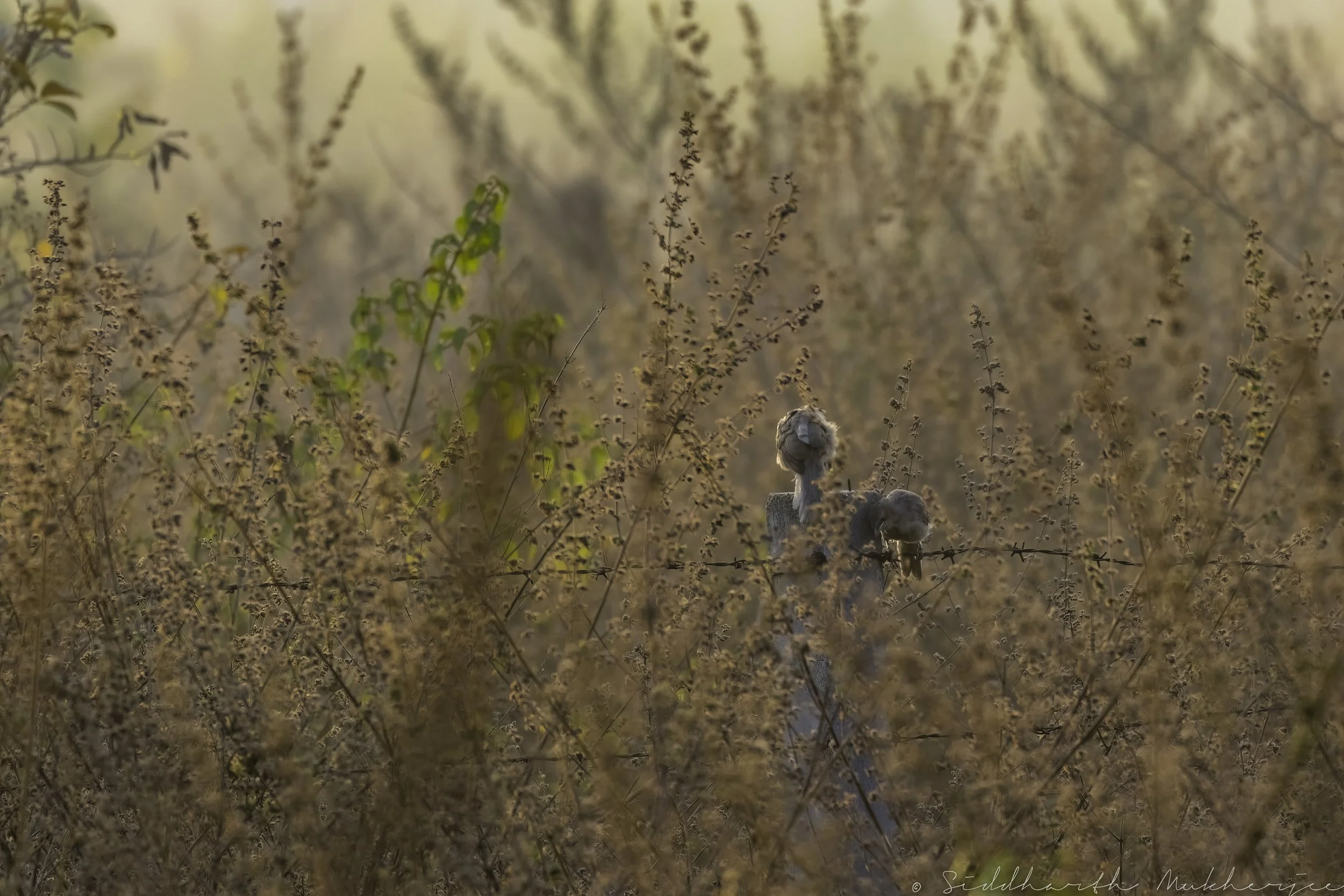
From a behavioral aspect and diet perspective the Jungle Babbler live in permanent territories in cohesive groups of 6 to 10 individuals. While the group forages on the ground, one bird often takes a high vantage point to act as a sentinel, raising the alarm for predators like snakes or hawks. They are famous for "mobbing" predators as a group. They are strictly non-migratory (resident). Their flight is weak and labored due to short, rounded wings; they prefer hopping from branch to branch or scurrying along the ground. Their diet is primarily insectivorous, devouring grasshoppers, beetles, and caterpillars. They also supplement their diet with grains, nectar (from Butea or Erythrina), and berries.
They can breed throughout the year, though peak activity in peninsular India often aligns with the monsoon (April–December). They are cooperative breeders; a single breeding pair is assisted by "helpers" (often offspring from previous seasons) who help feed the young and guard the nest. The nest is a loose cup nest made of grass and twigs is built 2–4 meters high in dense foliage. A clutch typically contains 3–4 deep greenish-blue eggs. Their nests are frequently targeted by the Jacobin Cuckoo and Common Hawk-Cuckoo, which lay their eggs in the babblers' nests.
Field Identification and Photography Tips
ID Tip: In Telangana, look for the yellow bill and pale eye. Unlike the similar Yellow-billed Babbler (Argya affinis), the Jungle Babbler lacks a white cap and has a harsher, nasal "ke-ke-ke" call.
Photography: To photograph them, find a group foraging on the ground. They are relatively habituated to humans; patience near a water source or a fruiting tree will often yield close-up shots of their "angry" facial expressions.
Conservation Status
IUCN Status (2025): Least Concern (LC).
Status Trend: Their population is considered stable. Because they adapt well to human-modified landscapes and serve as natural pest controllers in agriculture, they remain one of the most resilient bird species in India.
Jungle Babbler (Jungle)
Not globally threatened (Least Concern). Common throughout Indus plains of Pakistan, and fairly common in Dera Ismail Khan district, in N. Fairly common in Nepal. Uncommon in Bhutan, where found primarily in W foothills, but relatively common in Phuntsholing area. Common and widespread in India, and abundant in Rajasthan, Uttar Pradesh and Uttaranchal Pradesh; present (“seen quite regularly”) in Rajaji National Park and common in Dudhwa National Park, both in Uttar Pradesh, common in Kalesar Wildlife Sanctuary, in Haryana, abundant on New Forest campus at Dehra Dun and common in Dehra Dun valley, in Uttaranchal, and common in Bhitarkanika Wildlife Sanctuary, in Orissa; present in Buxa Tiger Reserve, in West Bengal, with 5 birds/km² in monoculture plantation and 152·2 birds/km² in scrub; present in Mudumalai National Park, in Tamil Nadu. Common in Bangladesh.
Jungle Babbler (Black-winged)
Not globally threatened (Least Concern). Common. Although this species has a relatively small range, within which its population size has not been quantified, its population trend appears to be stable. There is no evidence for any decline in its numbers or for any significant threats.
‡‡‡‡‡

Related Posts



The Near Threatened Horse-tailed Squirrel is the most colorful and largest of the Sundasciurus tree squirrels. It is a medium-sized squirrel with a head-to-body length of 21.5-25 cm and a tail length of 24-29 cm. It has a grizzled grey head, shoulders, forefeet and body with a whitish, dull orange, or red-brown underbelly. The tail of this squirrel is commonly a glossy black or grey banded with black.
#wildartworks #wildlifephotography #KaengKrachan #jungle #wild #forest #wildlife #conservationphotography #wildlifeonearth #bbcearth #natgeowild #natgeoindia #Thailand #Sundasciurus #KaengKrachanNationalPark #horsetailedsquirrel #squirrel #rodent #NearThreatened