
Oriental Magpie-Robin
Copsychus saularis
Mannanur Forest Range, Amrabad Tiger Reserve
Finding and photographing the Oriental Magpie-robin (Copsychus saularis) in the Nallamala forests of South Telangana is a rewarding experience. Known as the "Doel" or "Dhayal," this bird is celebrated for its melodious songs and striking black-and-white appearance. The Mannanur Forest Range, serving as the gateway to the Amrabad Tiger Reserve, is a dramatic transition zone where the dry plains of South Telangana meet the rugged limestone cliffs of the Nallamala Hills. The environment is defined by its "Ghat" geography—a mix of steep escarpments, deep gorges, and dense deciduous forest.
Located in the central stretch of the Deccan Plateau, Telangana has sub-tropical climate and the terrain consists mostly of hills, mountain ranges, and thick dense forests covering an area of 27,292 km² (10,538 sq mi). The annual rainfall ranges between 1,100 mm to 1,200 mm and the annual temperature varies from 15 C to 45 C. The State is drained by a number of rivers which include Godavari and Krishna.
Telangana is endowed with rich diversity of flora and fauna. It has dense teak forests on the northern part along the banks of river Godavari and to the south along the river Krishna. As per the Champion & Seth Classification of Forest Types (1968), the forests in Telangana belong to three Forest Type groups, which are further divided into 12 Forest Types. The massive greening programme, 'Telangana Ku Harita Haram' in the State aims at achieving the twin objectives of increasing the forest cover and reduce pressure on the existing forest resources, through massive community participation by Vana Samrakshna Samithis (VSS) and Eco-Development Committees (EDCs) in Protected Areas and Watershed Development Committees in the Watershed areas. Recorded Forest Area (RFA) in the State is 26,904 km² of which 20,353 km² is Reserved Forest, 5,939 km² is Protected Forest and 612 km² is Unclassed Forests. Three National Parks and nine Wildlife Sanctuaries constitute the Protected Area network of the State covering 5.08% of its geographical area.
Mannanur Forest Range & the Uma Maheshwaram environs
The area surrounding the Uma Maheshwaram Temple (perched at approximately 500m elevation) is a unique microclimate within the Mannanur Forest Range. This is a temple dedicated to the Hindu god Shiva located around 100 km from Hyderabad on the Hyderabad-Srisailam highway, about 4 kms from the village of Rangapur, Achampet.
Uma Maheshwaram is the northern gateway of Srisailam — one of the jyotirlingas, on a hill surrounded by high trees. Nearby hills shield the Uma Maheshwaram temple and the 500-metre stretch to PapaNasanam from sunlight for most of the day, maintaining a temperature lower than the surroundings through out the year. The area abounds in flora and fauna.
The "Kinnerasani" Cliffside
The temple is built into a massive rock face. The surrounding vertical cliffs provide nesting sites for raptors and are often shrouded in mist during the monsoon, creating a humid pocket that supports lusher vegetation than the parched plains below. A key feature is the "Papanasanam," a perennial spring that trickles through the rocks year-round. This constant water source makes the temple vicinity a magnet for wildlife, especially during the scorching summer months (March–May). The flora is dominated by Teak (Tectona grandis), Anogeissus latifolia (Tiruman), and Boswellia serrata (Anduk). In the wetter ravines near the temple, you’ll find giant Ficus trees and lush ferns that contrast with the scrubbier bamboo thickets of the lower slopes.
The high verticality and varied canopy of Mannanur host a staggering array of life. Beyond the Oriental Magpie-robin, this is a prime spot for the elusive and Vulnerable Yellow-throated Bulbul (found among the rocky boulders) and the Painted Spurfowl. The cliffs are home to the Shaheen Falcon and Critically Endangered Indian Vultures. The forest floor is patrolled by Leopards, Sloth Bears, and ungulates like Chital and Sambhar. The rocky terrain is particularly suited for the Four-horned Antelope (Chousingha), while Langurs are ubiquitous near the temple complex. The leaf litter hides the Indian Rock Python and various pit vipers. The area is also a "butterfly hotspot," particularly after the first rains when Common Mormons and Blue Tigers congregate near the forest streams. The Nallamalas are known for medicinal plants like Pterocarpus santalinus (Red Sanders) and various rare orchids that bloom briefly during the wet season. The air here is noticeably cooler than in Mannanur village, and the soundscape is a constant layer of cicadas and the echoing calls of the Malabar Whistling Thrush in the deeper valleys.
Oriental Magpie-Robin
The Nallamala Experience
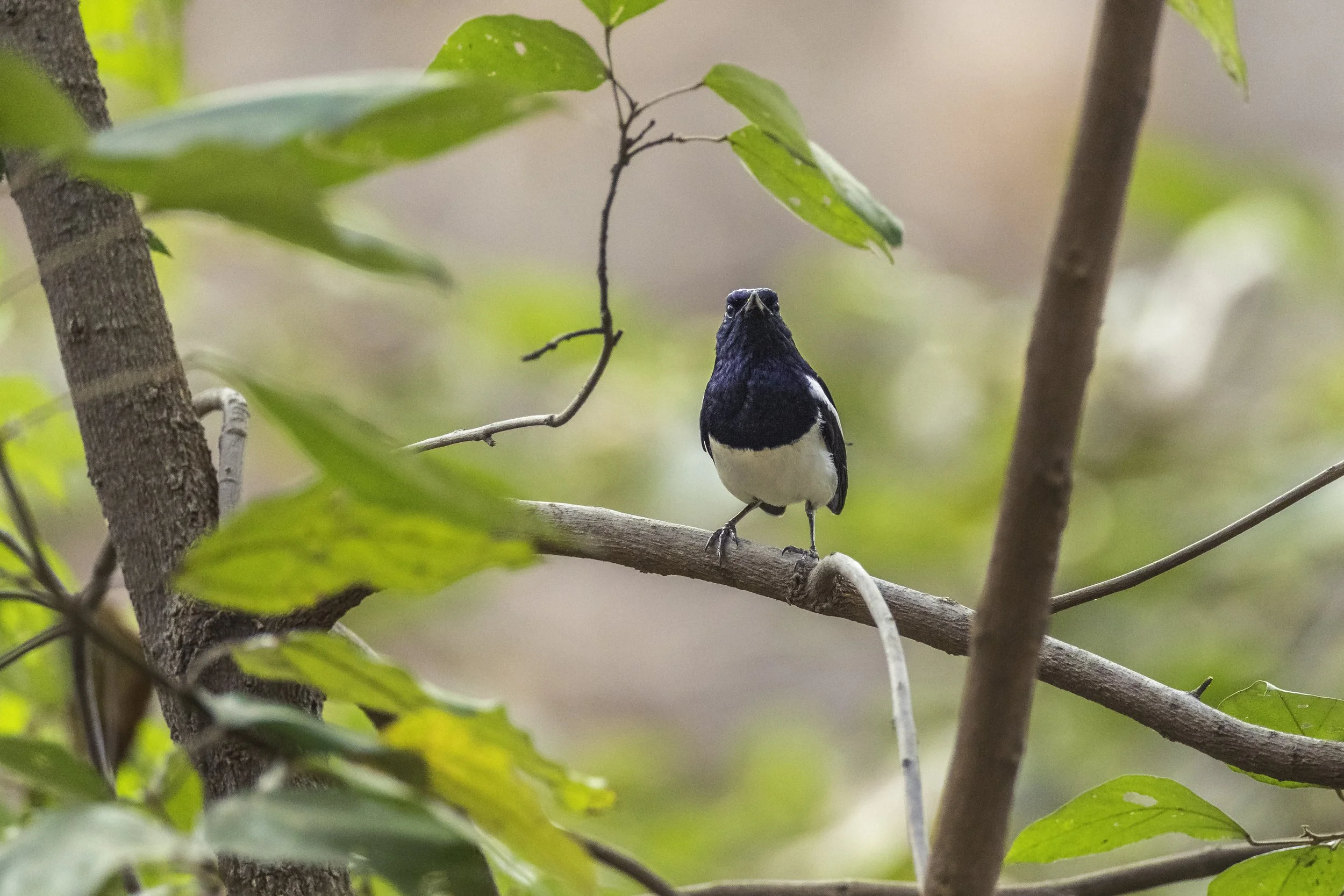
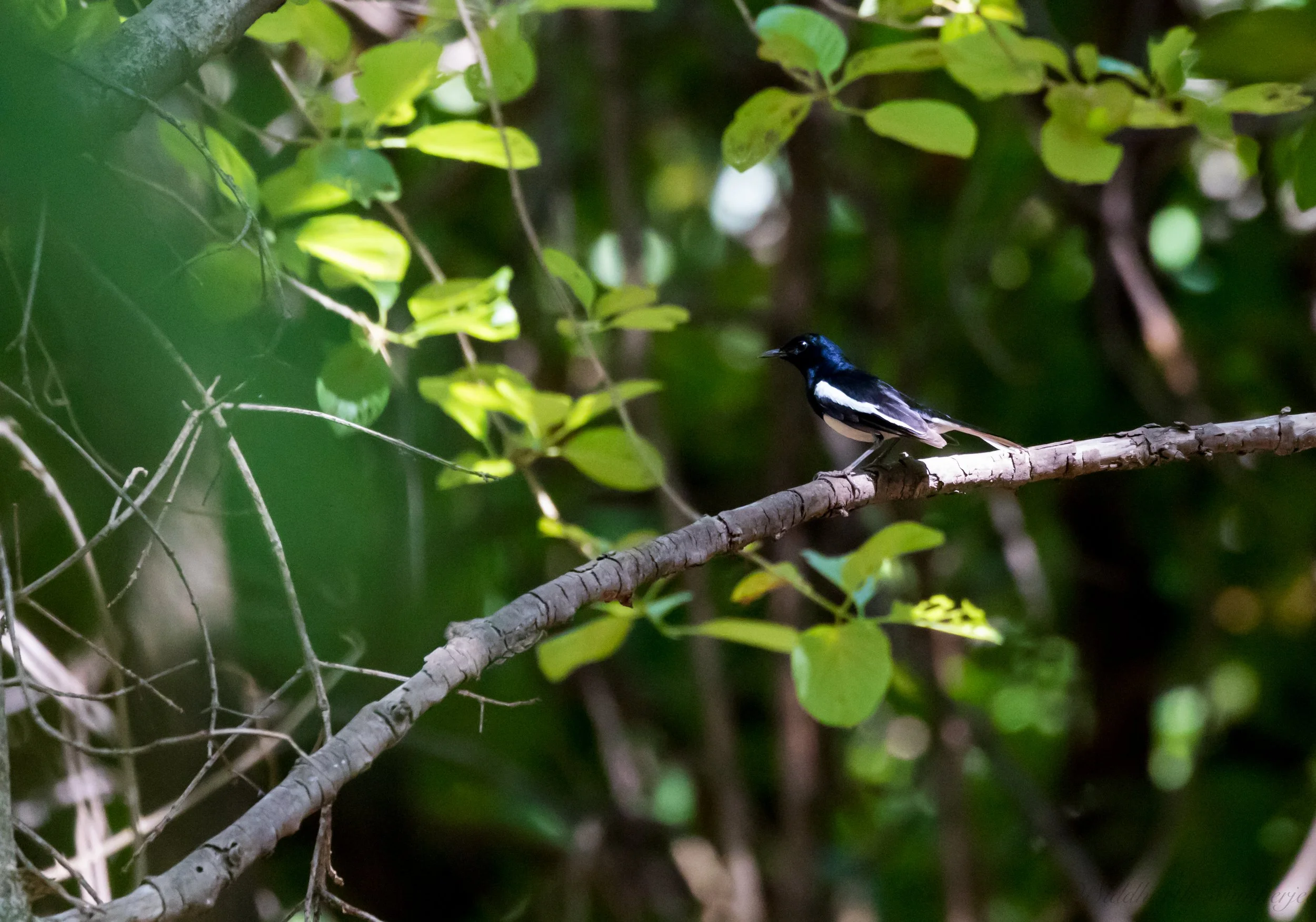
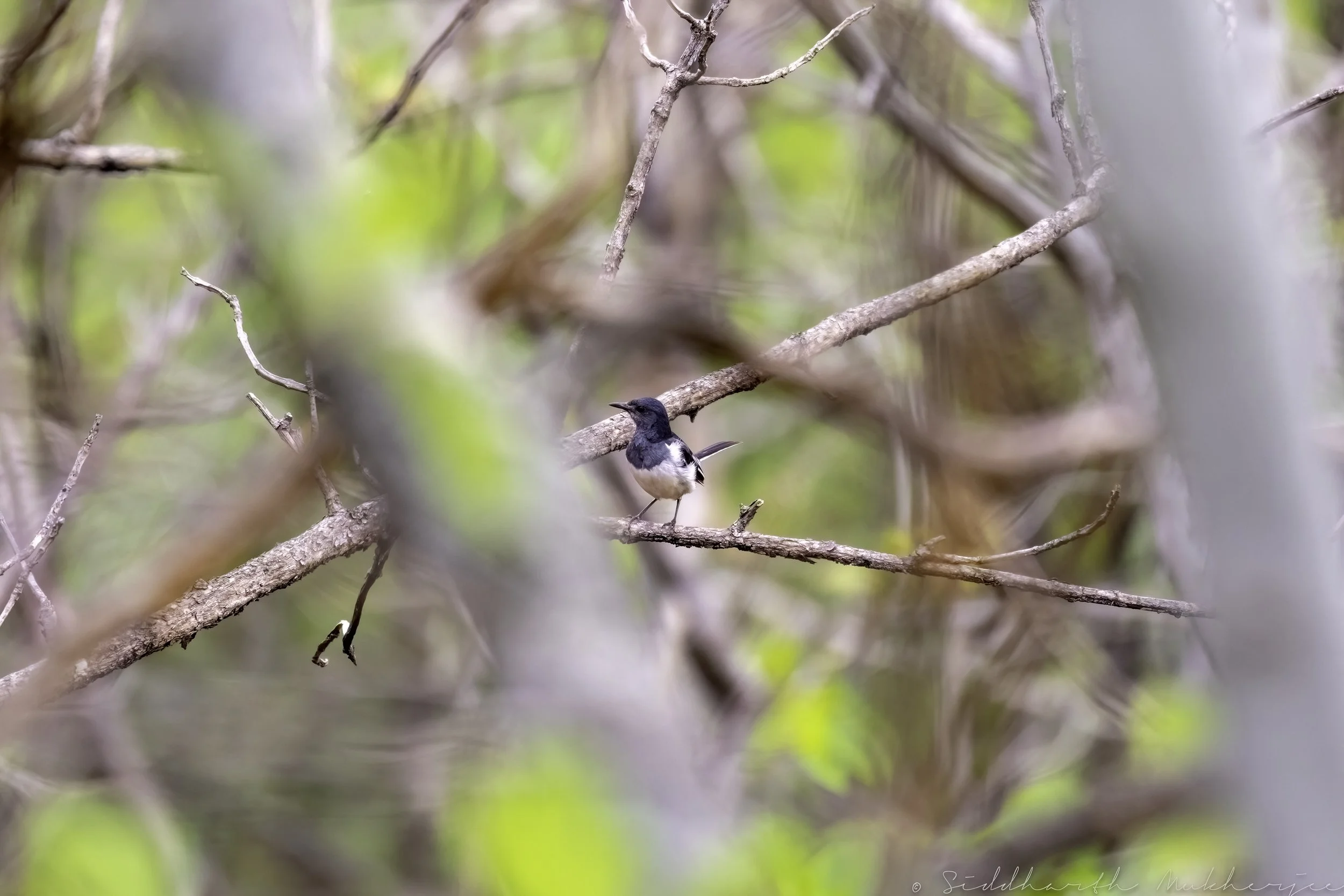
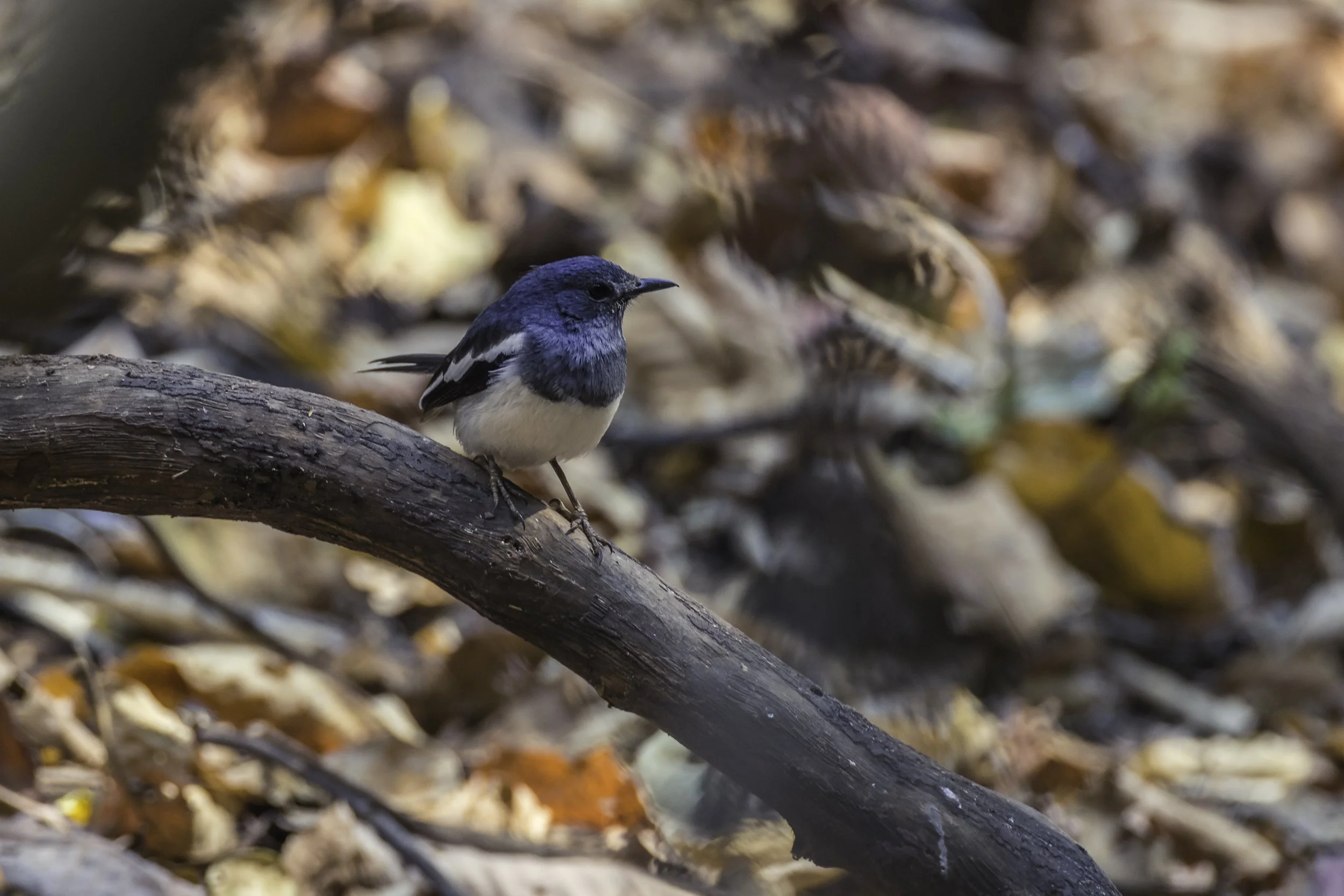
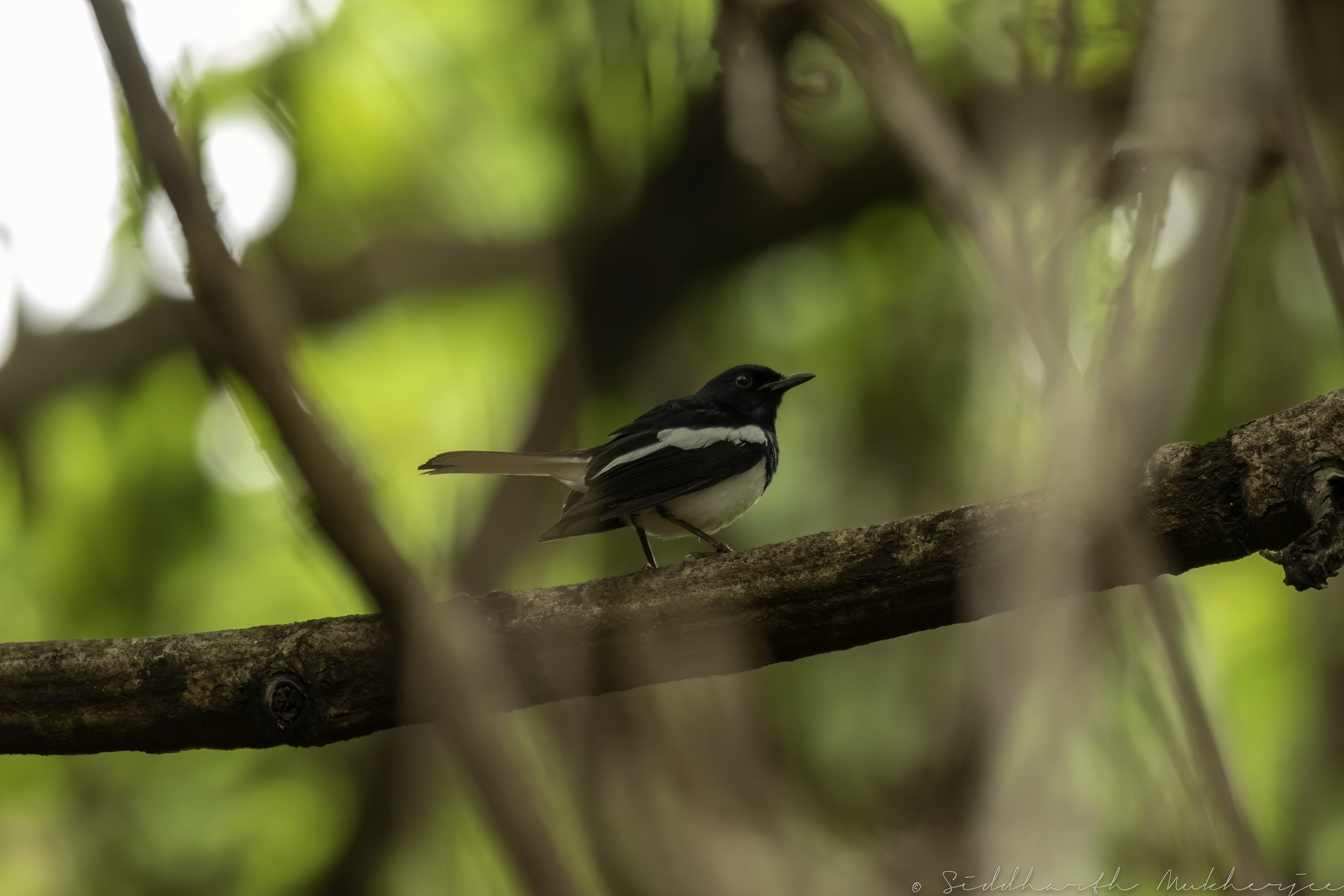
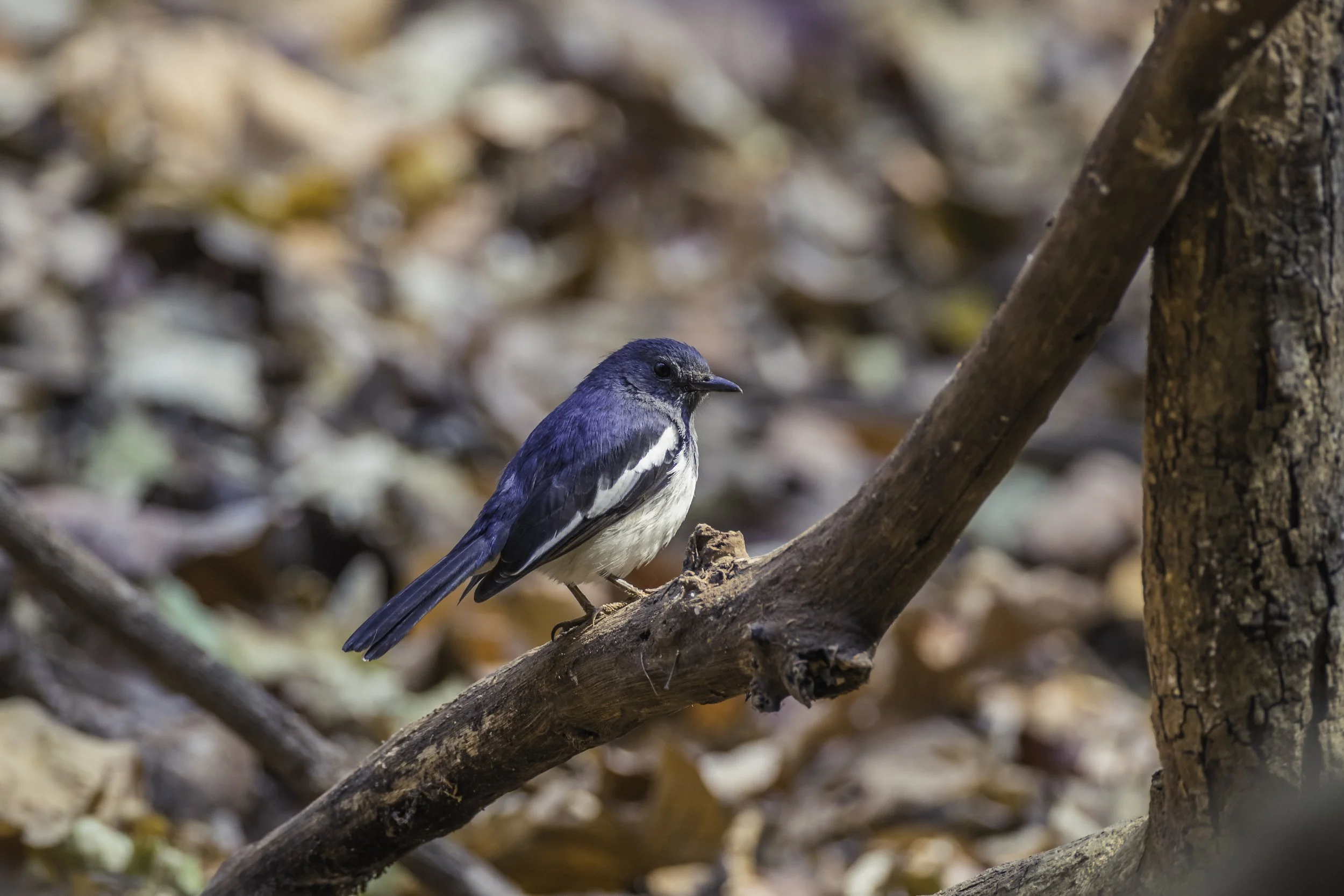
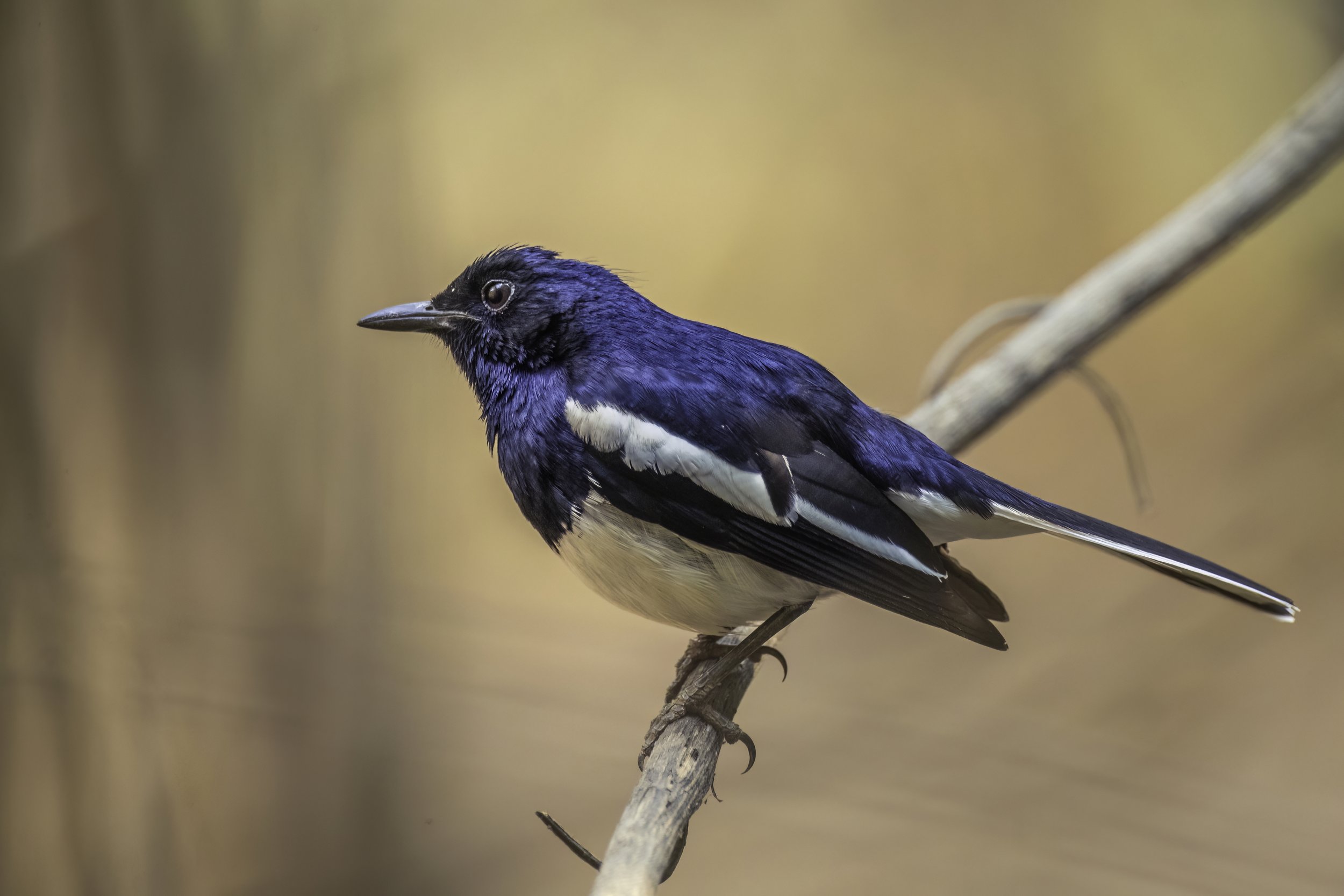
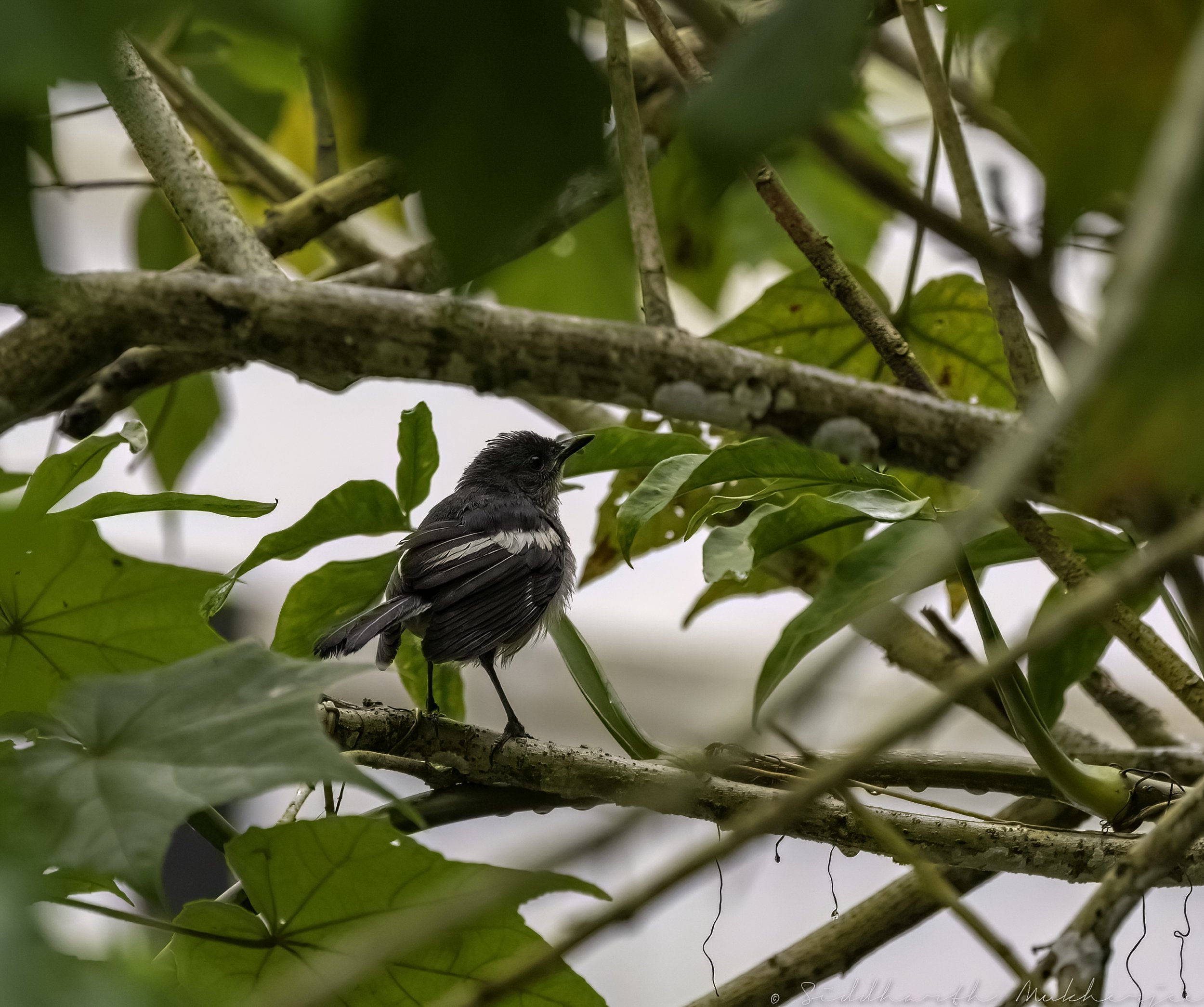
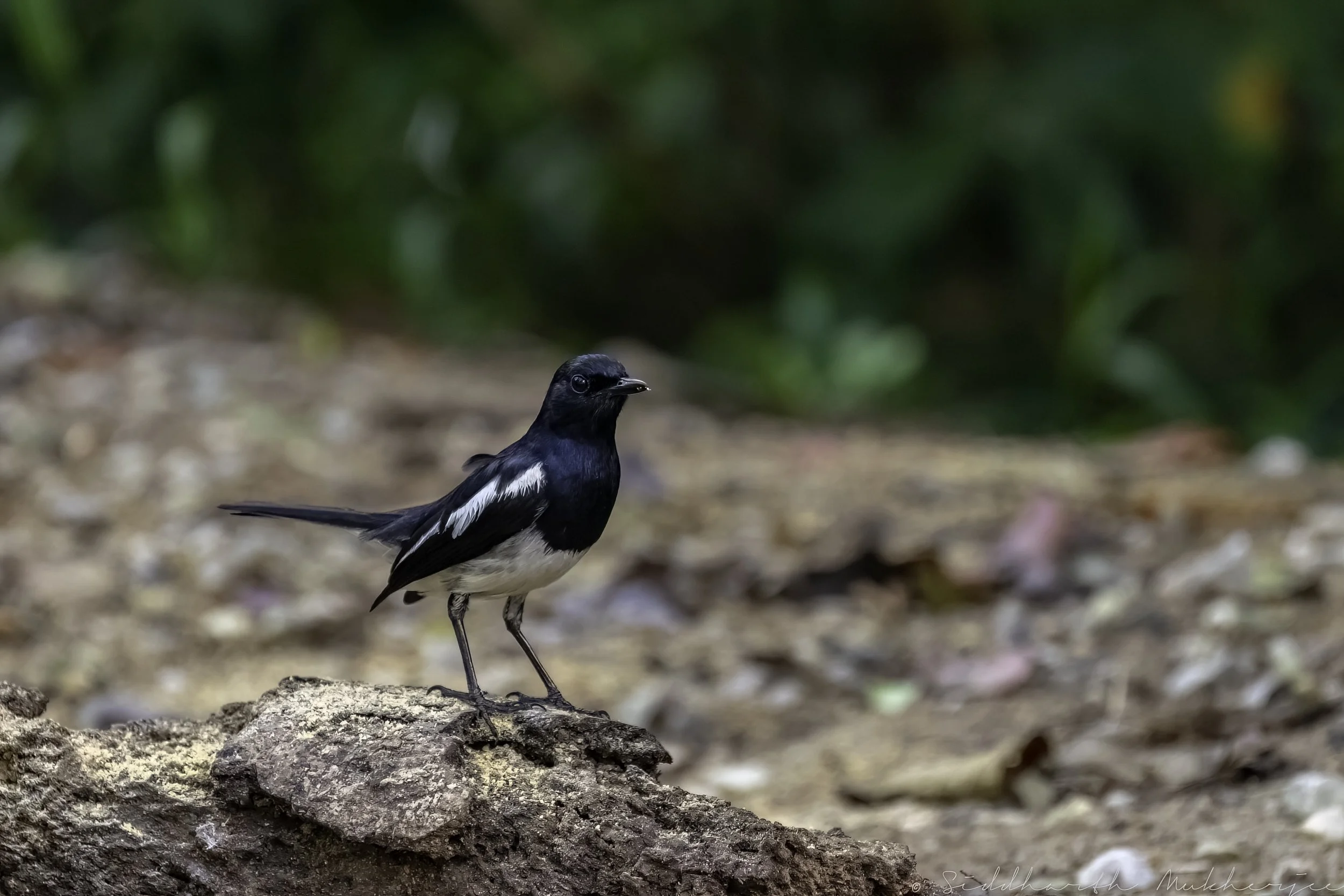
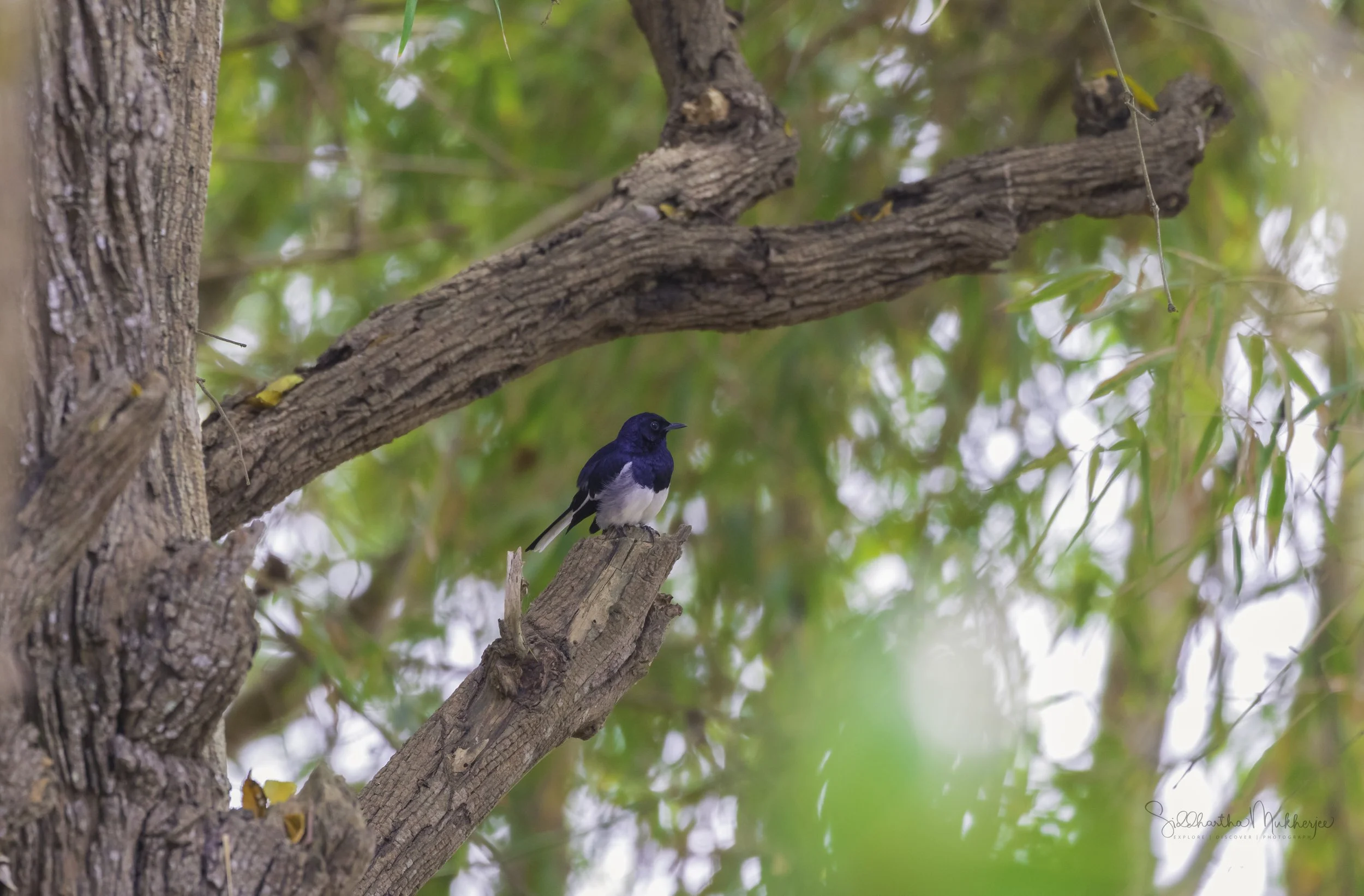
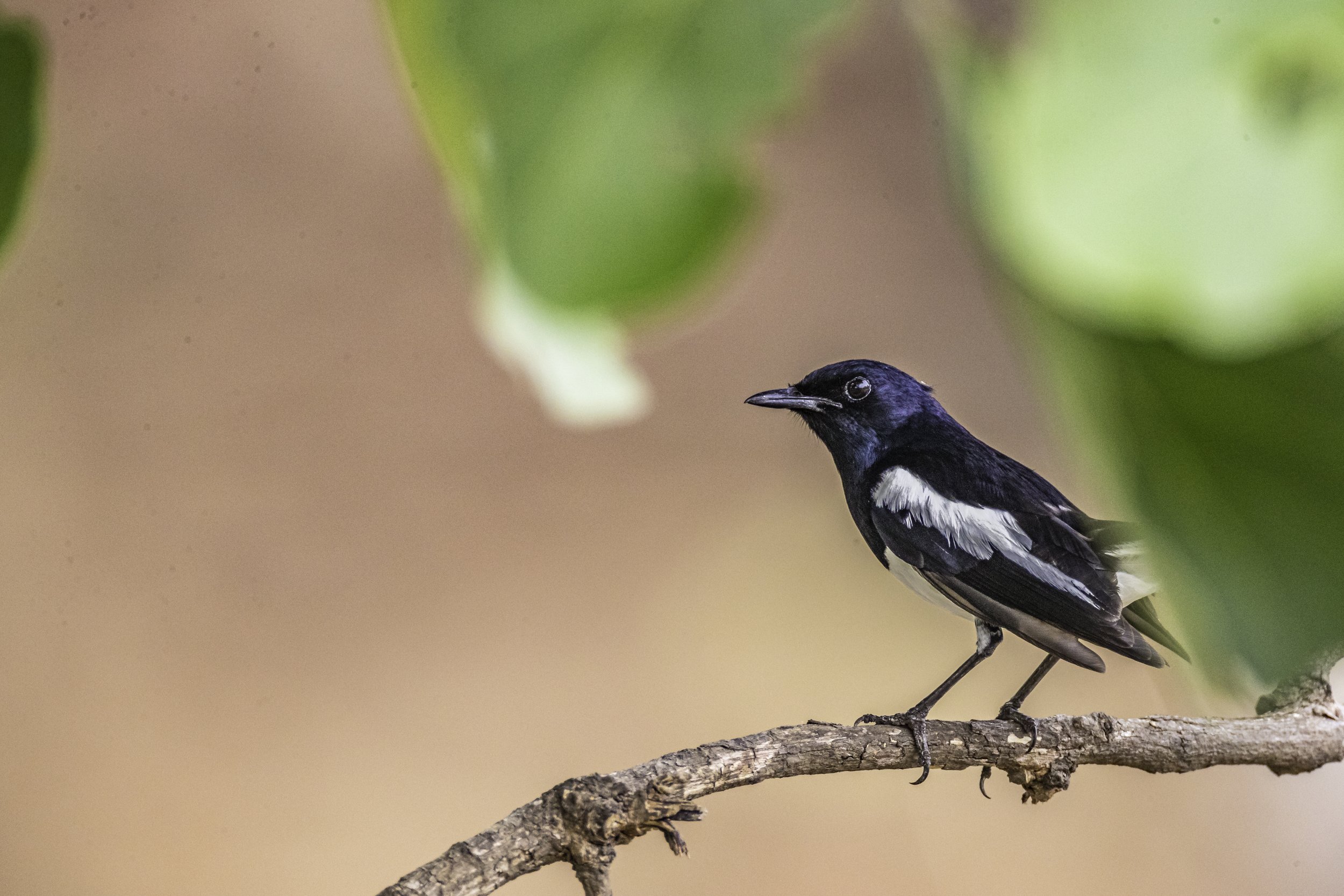
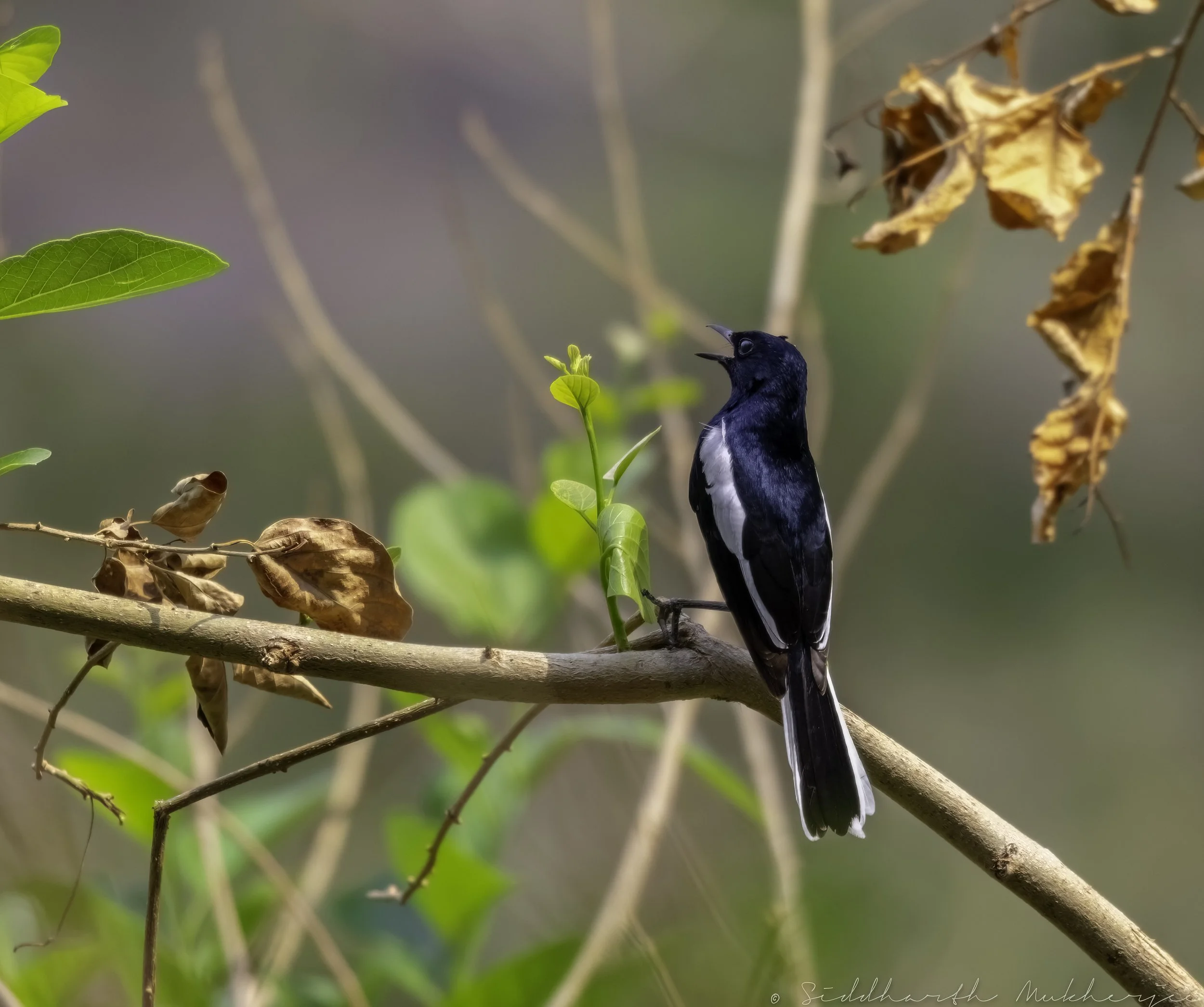
In the Nallamala hills, particularly around areas like the Uma Maheshwara Plateau near Mananur, the Oriental Magpie-robin is a resident species. While it is a common garden bird in urban areas like Hyderabad, in the forest it prefers open woodlands, scrub, and the edges of deciduous patches. They are often found singing from exposed perches—such as the tops of bamboo shoots or dry branches—at dawn and dusk.
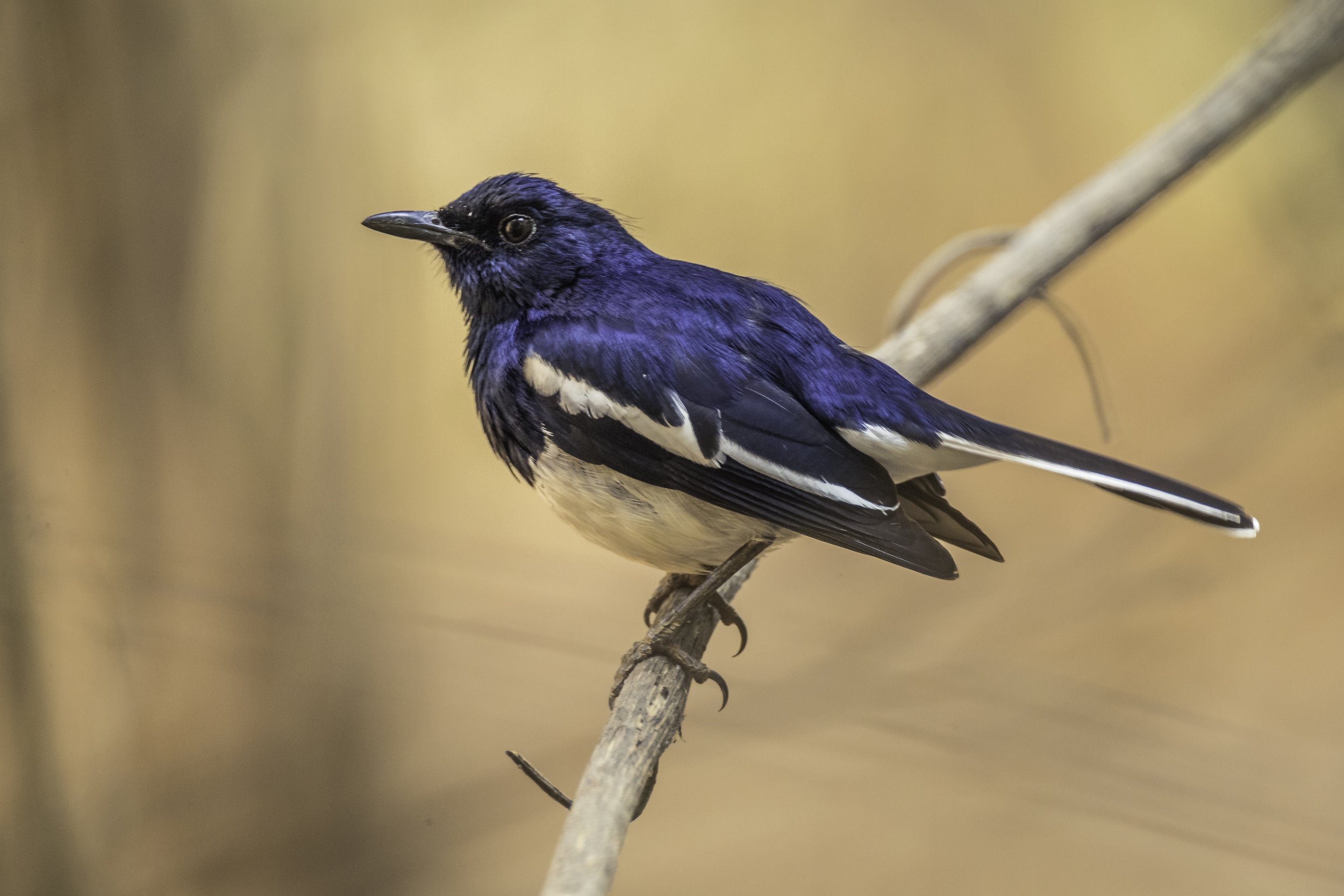
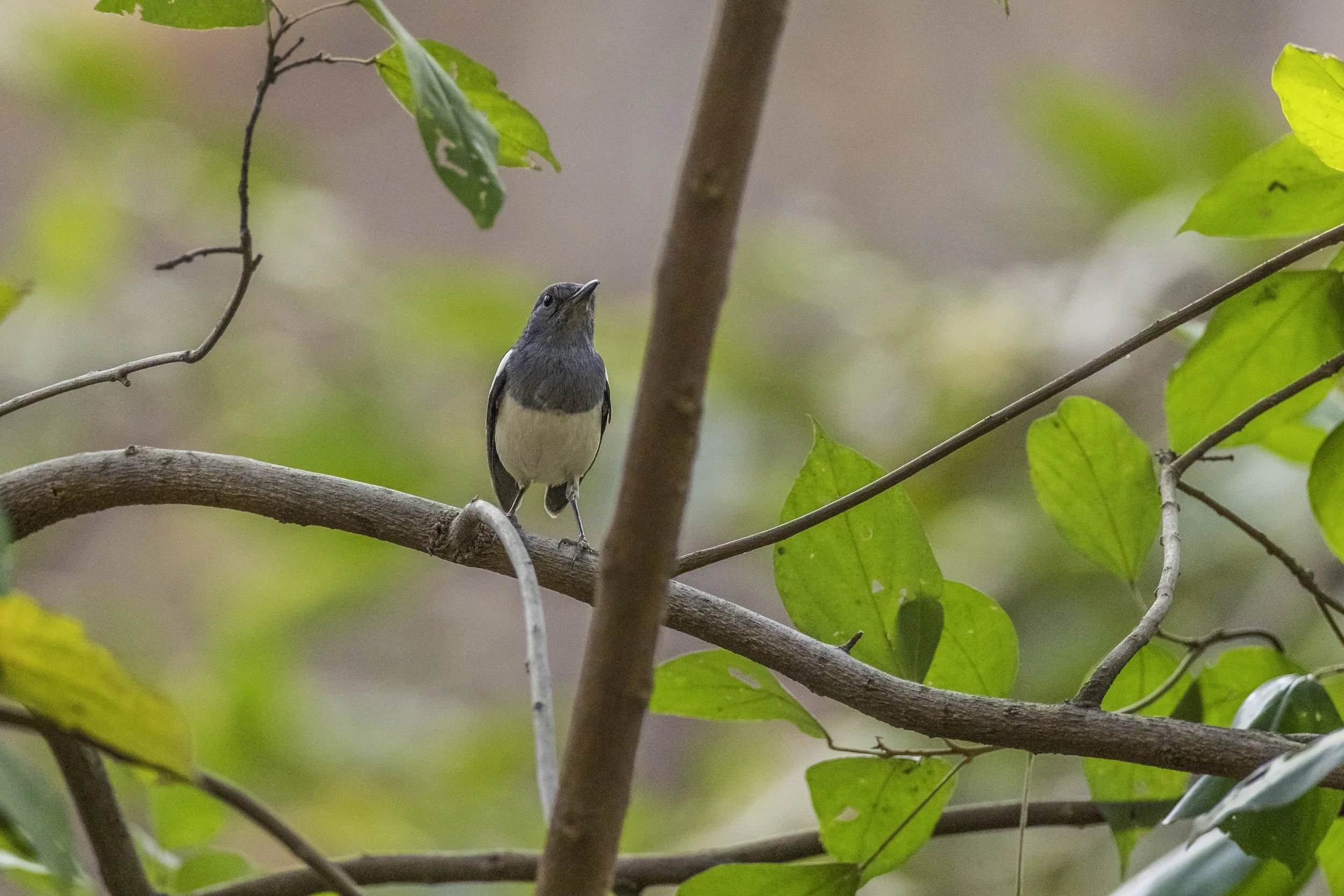
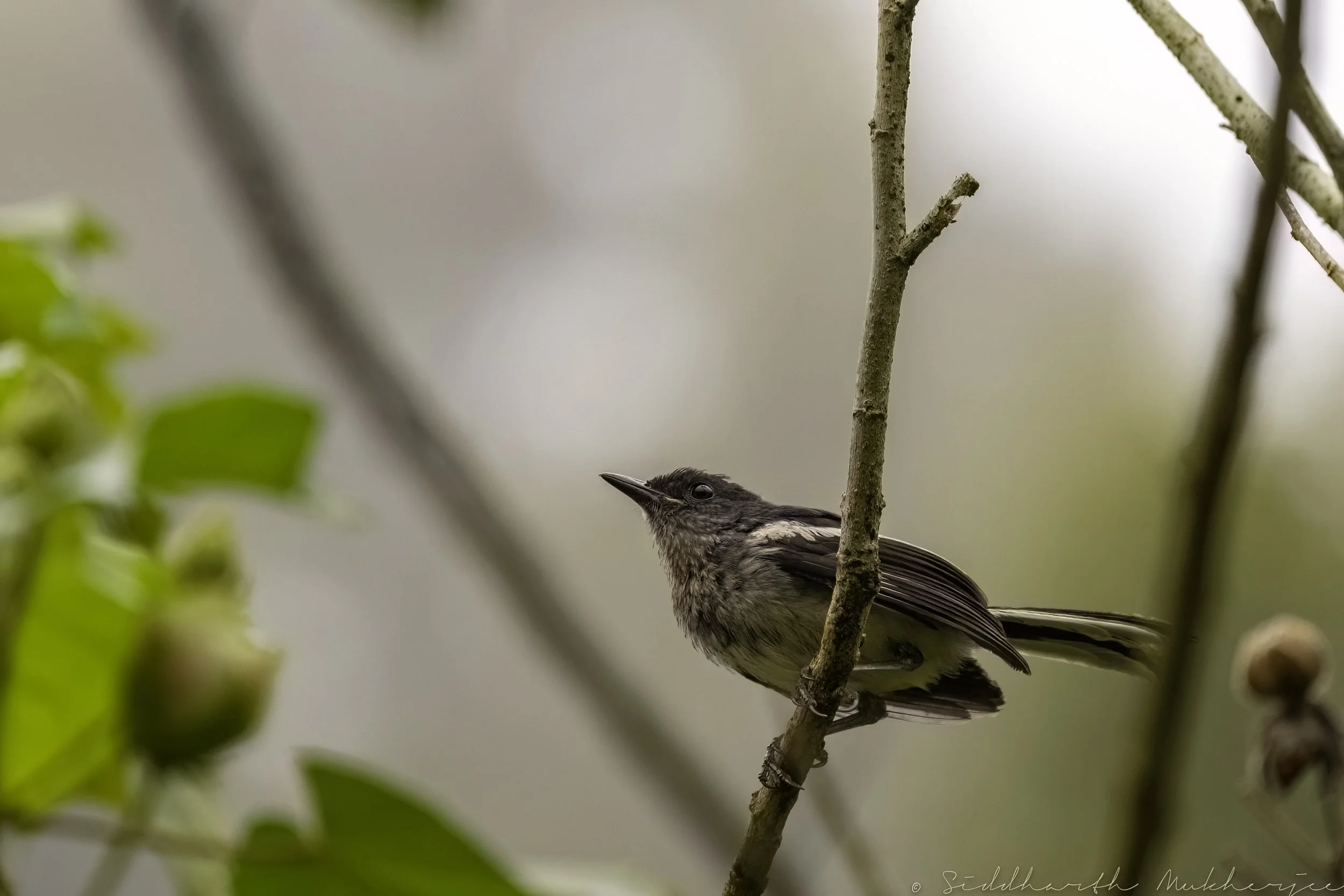
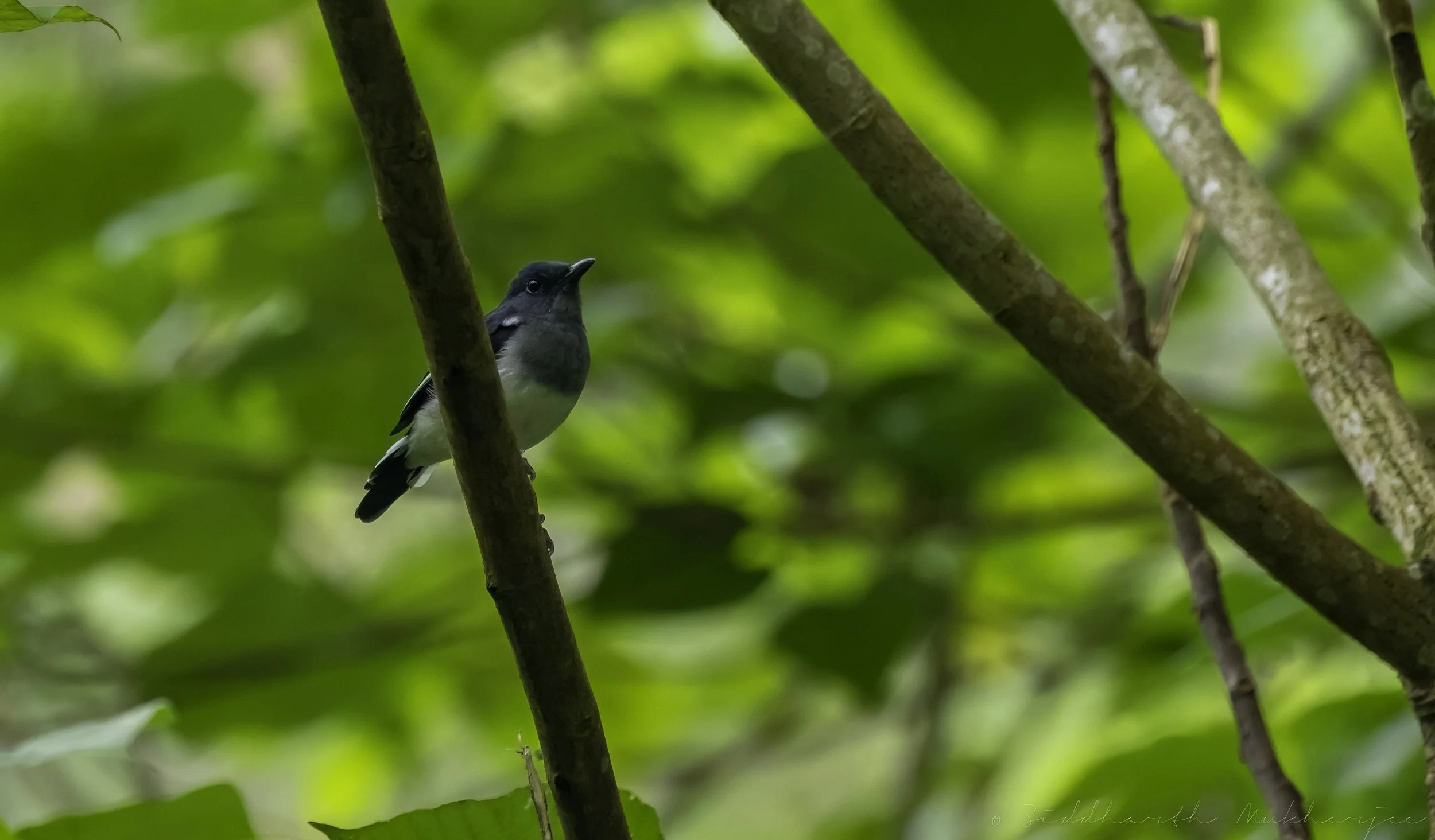
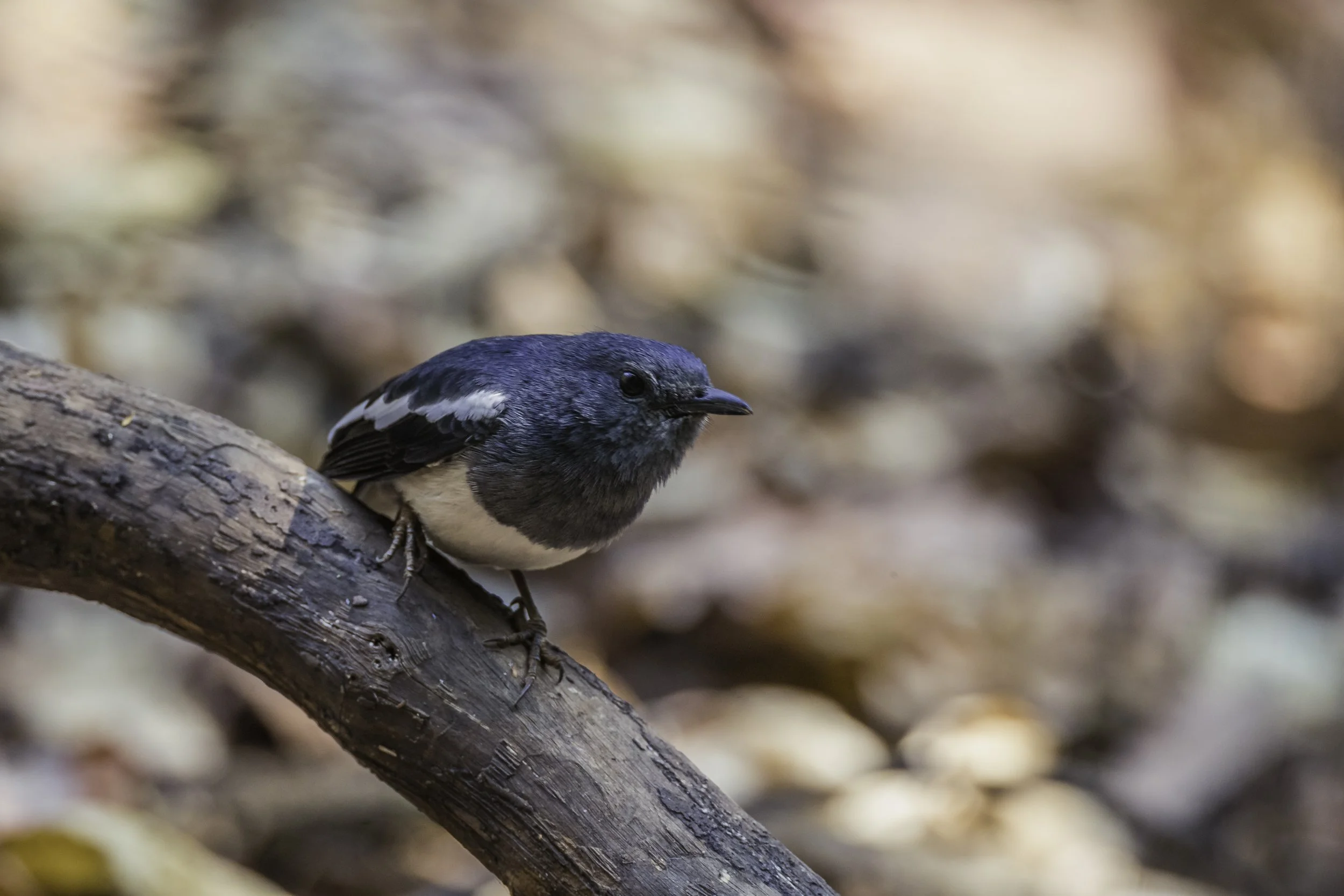
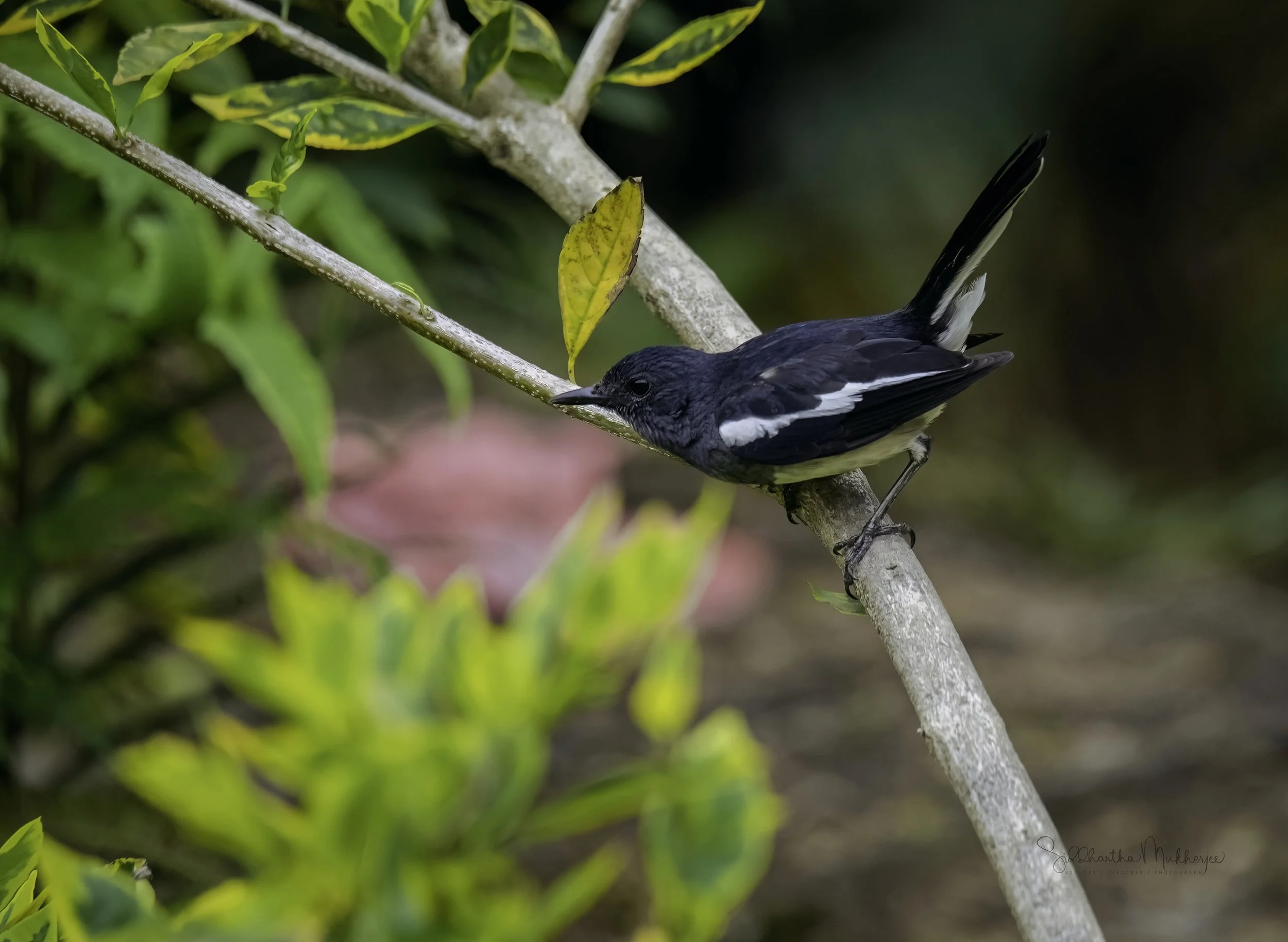
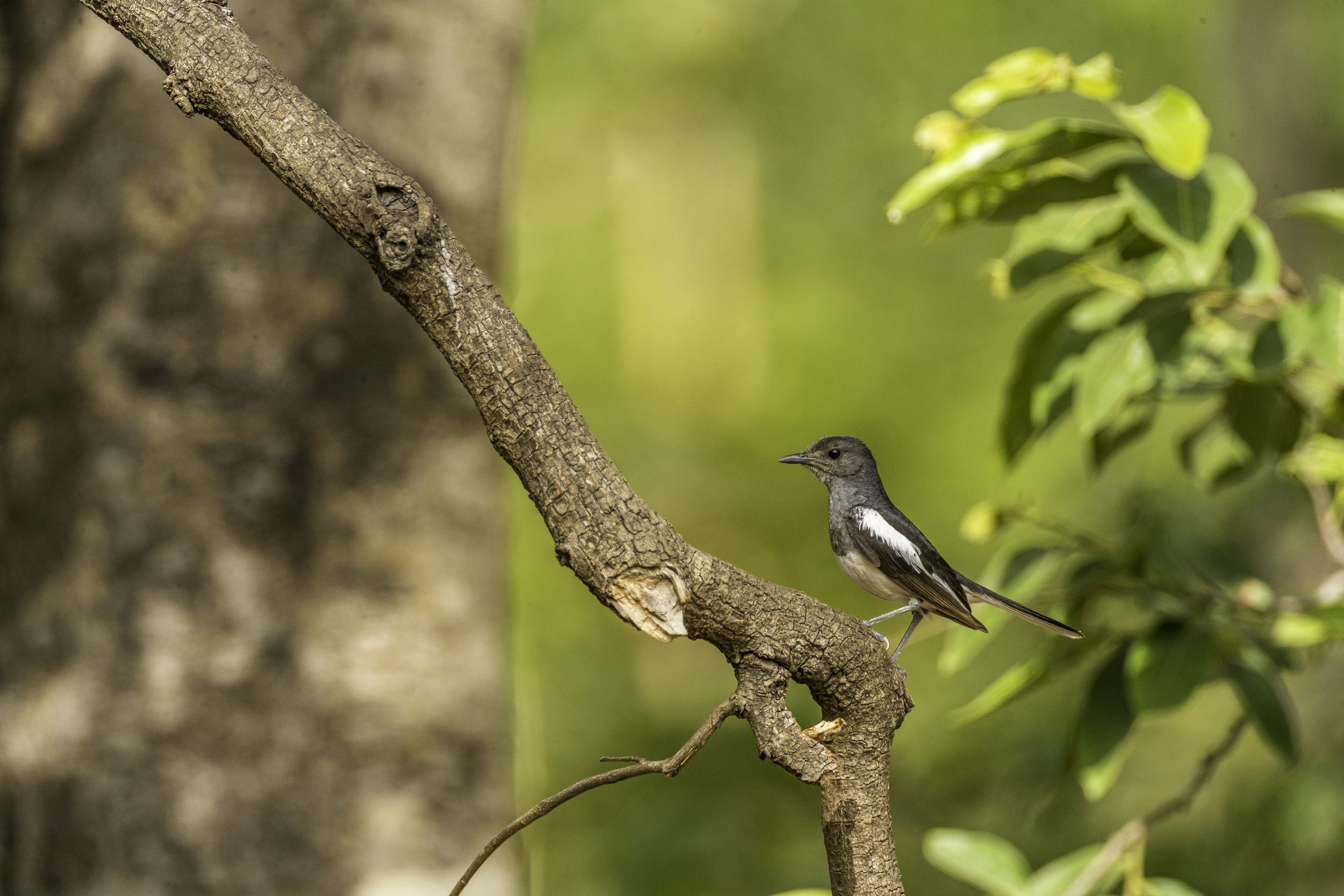
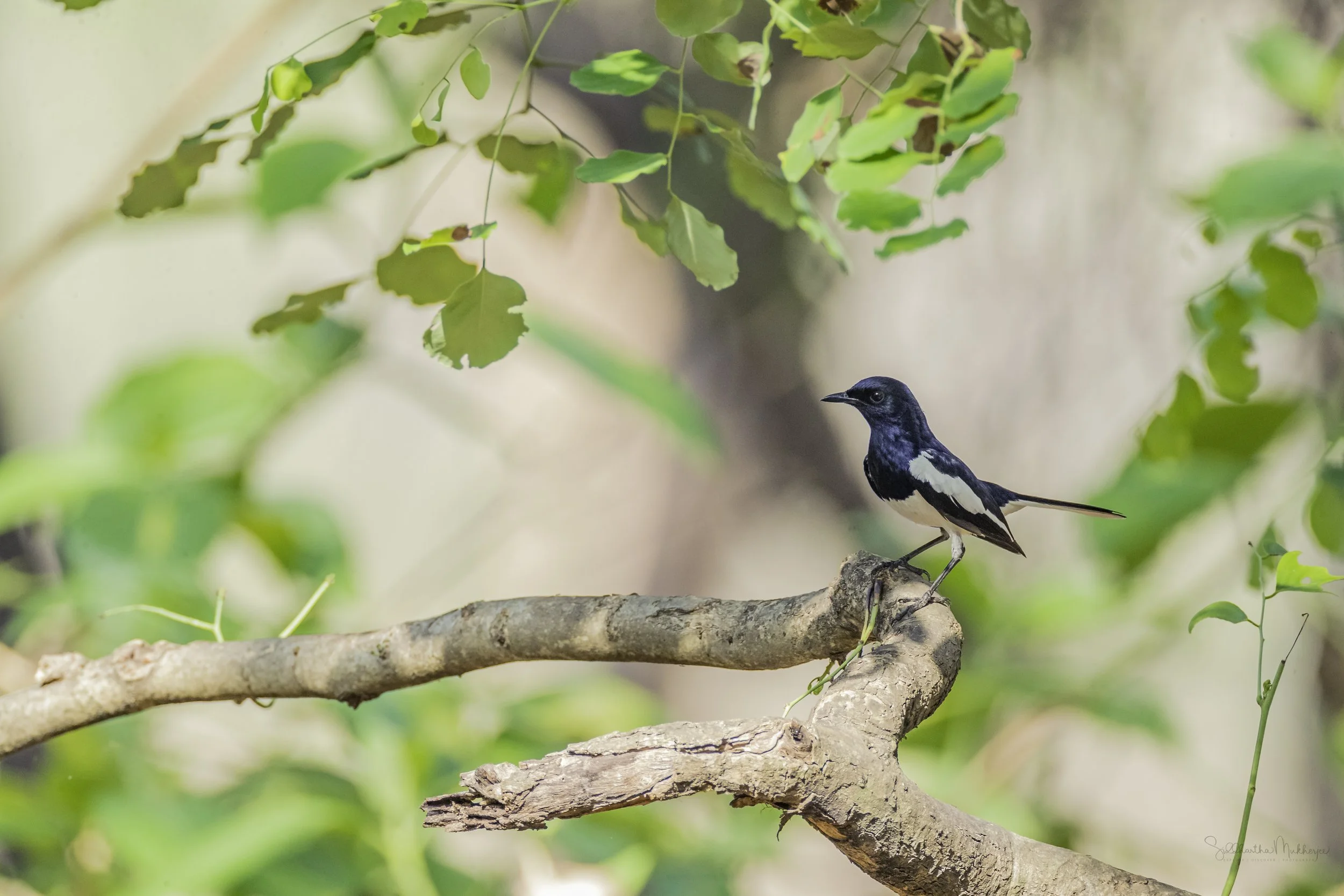
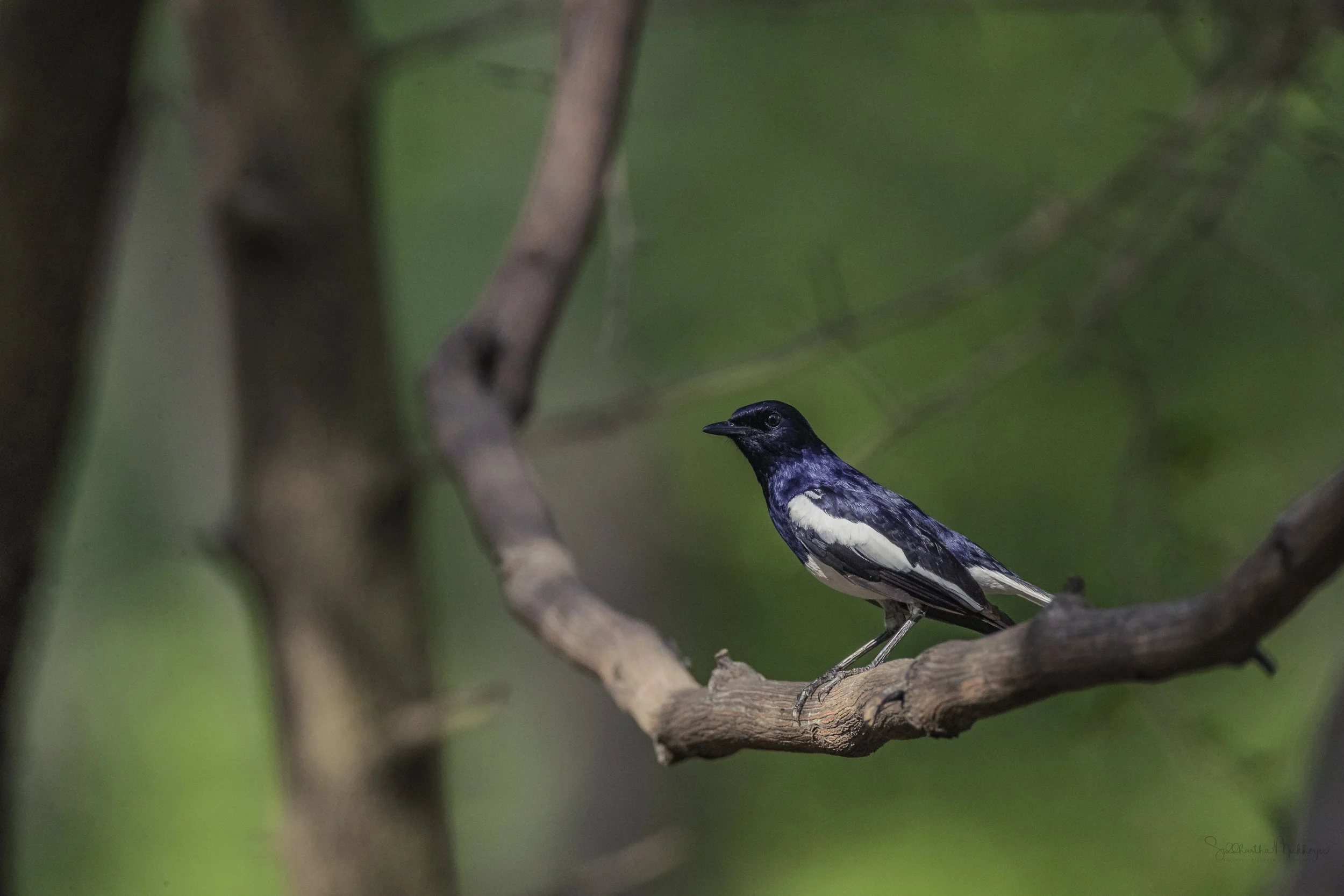
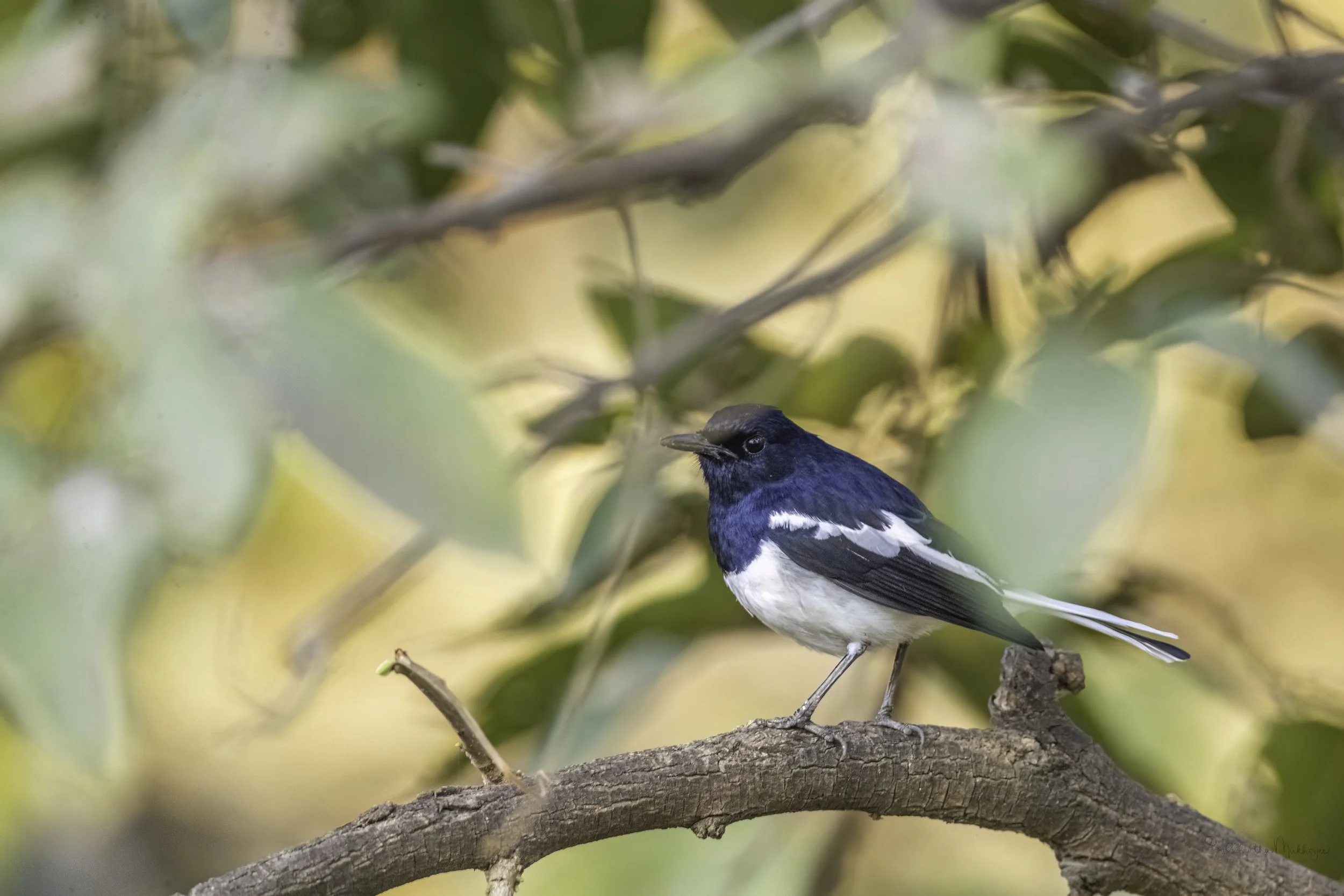
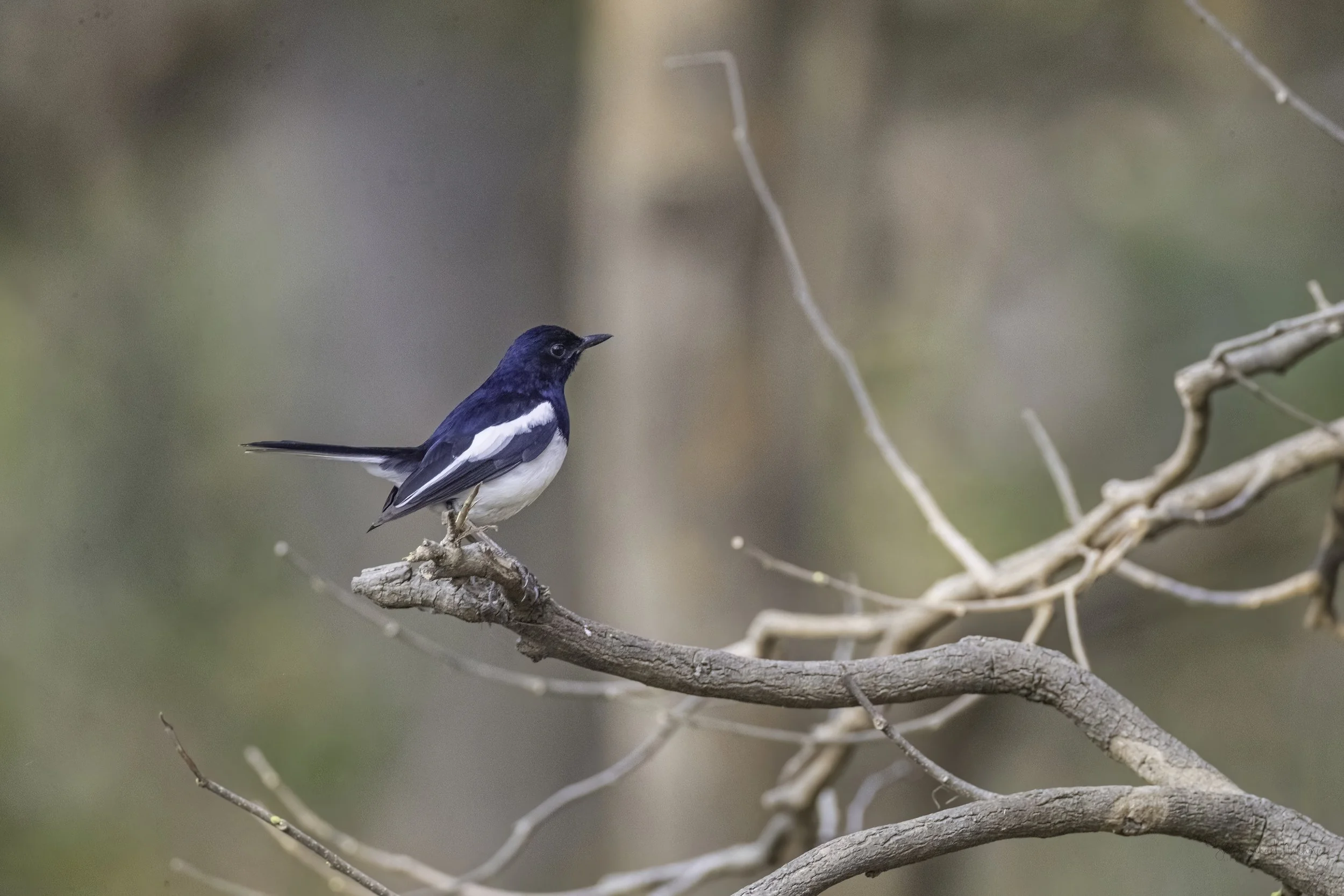
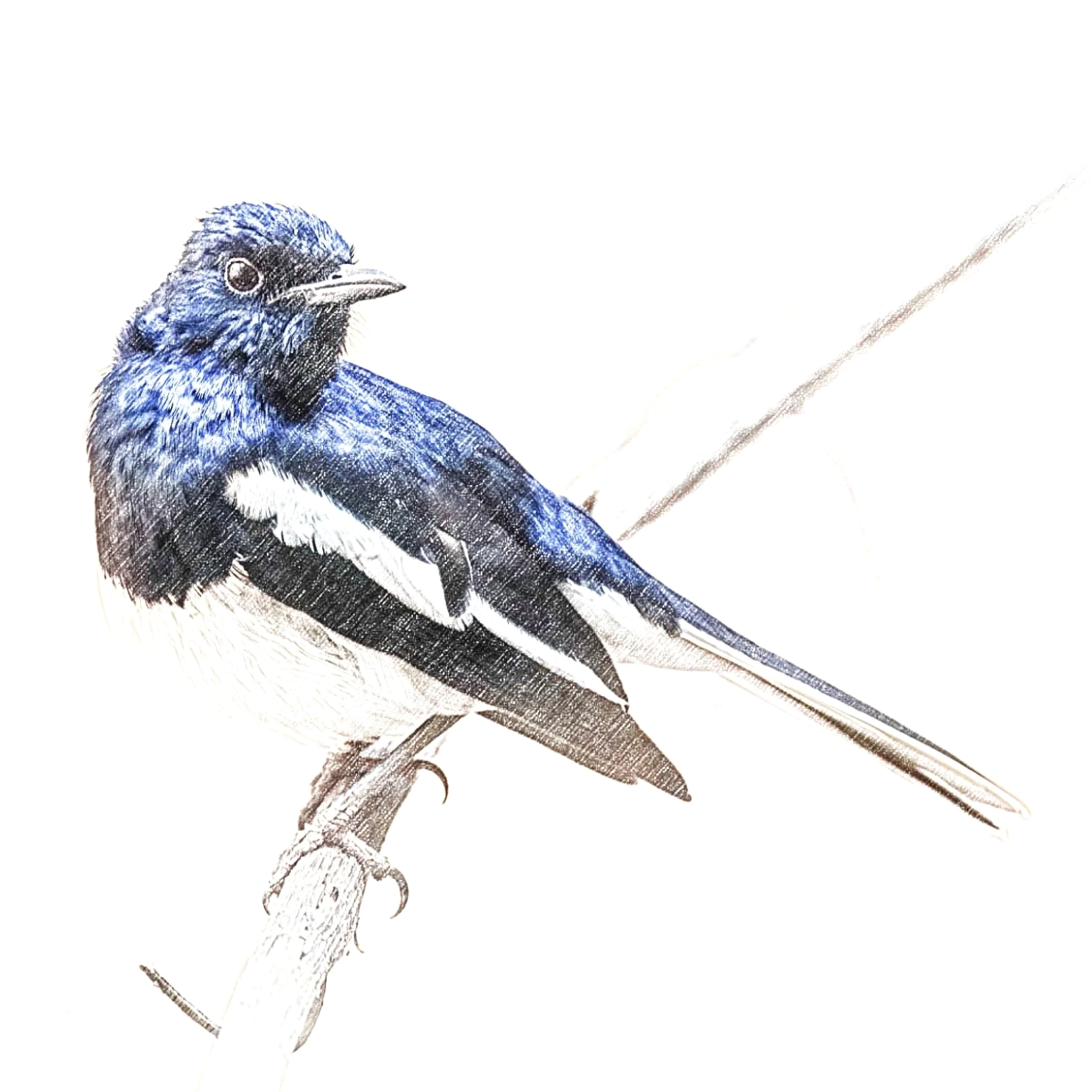
The Oriental Magpie-Robin is approximately 19–23 cm in length, including its long tail and typically weighs between 28 and 51 grams. The males have glossy blue-black upperparts, head, and throat, with a stark white belly and white wing patches. The females are greyish-black or slaty-grey where the male is black, with a greyish-white belly. The juveniles have scaly brown upperparts and heads, resembling duller versions of the female.
Globally they are distributed across South and Southeast Asia, from Pakistan and India through to Indonesia and South China. They are a widespread resident breeder across the Indian subcontinent. Four subspecies are recognised. The nominate race Copsychus saularis saularis is found in most of India, including Telangana. Other recognised subspecies include:
Copsychus saularis ceylonensis: Found in Sri Lanka and Southern India (south of the Kaveri River); females are nearly as dark as males.
Copsychus saularis andamanensis: Found in the Andaman Islands; features a heavier bill and shorter tail.
Copsychus saularis musicus: Found in Myanmar and Southeast Asia.
Their preferred habitat is open woodlands, cultivated areas, gardens, and mangroves. It typically avoids dense, deep forests. They are primarily sedentary, though some Himalayan populations show altitudinal movement. Their diet is mainly insectivorous, preying on beetles, ants, crickets, and dragonflies. They also consume flower nectar, small geckos, and occasionally small fish.
In India, the season typically runs from March to August. They nest in tree cavities, wall holes, or even discarded containers.
In the field these identification tips work well
Tail Movement: Look for its long tail, which is frequently held cocked upright at a 45° angle, especially when foraging on the ground.
Vocalisations: Famous for a rich repertoire of whistles and the ability to mimic other birds.
Flight Pattern: Note the broad white wingbar and white outer tail feathers, which are highly conspicuous during flight.
In Culture
Oriental magpie-robins were widely kept as cage birds for their singing abilities and for fighting in India in the past. They continue to be sold in the pet trade in parts of Southeast Asia. Aside from being recognized as the national bird of the country, in Bangladesh, the oriental magpie-robin is common and known as the doyel or doel (দোয়েল). Professor Kazi Zakir Hossain of Dhaka University proposed to consider the magpie robin as the national bird of Bangladesh. The reasoning behind this is the magpie robin can be seen everywhere in towns and villages across the country. In that context, the magpie robin was declared as the national bird of Bangladesh. It is a widely used symbol in Bangladesh, appearing on a currency note, and a landmark in the city of Dhaka is named as the Doel Chattar (meaning: Doel Square). In Sri Lanka, this bird is called Polkichcha. In southern Thailand, this bird is known locally as Binlha (with another related bird, the White-rumped Shama). They are frequently mentioned in contemporary songs.
This species is considered one of "least concern" globally, but in some areas it is declining. In Singapore they were common in the 1920s, but declined in the 1970s, presumably due to competition from introduced common mynas. Poaching for the pet bird trade and habitat changes have also affected them and they are locally protected by law. This species has few avian predators. Several pathogens and parasites have been reported. Avian malaria parasites have been isolated from the species, while H4N3 and H5N1 infection has been noted in a few cases. Parasitic nematodes of the eye have been described.
Threats: While globally stable, some local populations are declining due to habitat changes and poaching for the illegal bird trade, where they are valued for their singing.
‡‡‡‡‡
For a print of the beautiful birds from my various sojourns click on the button below to read my process and order a limited edition canvas.
‡‡‡‡‡

Related Posts



I return again to the Singalila Ridge, in the Darjeeling district of West Bengal, at an altitude of more than 7000 feet above mean sea level, in search of a colourful long-tailed corvid - the Yellow-billed Blue Magpie. Similar in coloration to the Red-billed, the Yellow-billed is a paler blue overall, with a small white patch at the back of the crown instead of an extensive white stripe, and a bright yellow bill instead of a scarlet one. Primarily found in Himalayan hill forest, with disjunct populations in northwestern Myanmar and northern Vietnam.
#wildartworks, #Canon, #Bird, #Birdinginthewild, #BirdWatching, #Wildlife, #WildBirds, #naturephotography, #your_best_birds, #planetbirds, #earthcapture, #photo_pond, #earthpix, #naturyst, #conservationphotography, #yesbbcearth, #indian_wildlifes, #indianwildlifeofficial, #wildlifeonearth, #bbcearth, #natgeowild, #natgeoindia, @awpc.hk, @globalcapture, #singalilanationalpark, #corvid, #yellowbilledbluemagpie, #tumling, #firefoxexpeditionsindia, #magpie