
Racket-tailed Treepie
Crypsirina temia
Kaeng Krachan National Park, Thailand
Kaeng Krachan National Park is the largest national park of Thailand on the border with Burma, contiguous with the Tanintharyi Nature Reserve. This dense rain forest on the eastern slope of the Tenasserim Mountain Range is where the Pranburi & Phetchaburi Rivers originate. Deep within these ancient, moisture-wicking forests, a silhouette moves through the canopy that looks less like a bird and more like a piece of living calligraphy. The Racket-tailed Treepie (Crypsirina temia) is the crown jewel for many bird photographers—a sleek, oil-slicked corvid that defines "ethereal." Finding this bird is a lesson in patience and photographing it is a masterclass in light management.
The park was declared a reserve in 1964 and on 12 June 1981 it became the 28th national park of Thailand. Originally covering an area of 2,478 km², it was enlarged in December 1984 to include the boundary area between Phetchaburi and Prachuap Khiri Khan Provinces, an additional 300,000 rai. The park has been included in the list of ASEAN Heritage Parks. Since 2011, Thailand has proposed that Unesco designate Kaeng Krachan National Park a world heritage site.
Kaeng Krachan National Park is located in Phetchaburi and Prachuap Khiri Khan Provinces, about 60 km from Phetchaburi and 75 km from Hua Hin. It is bounded by the Tanintharyi Nature Reserve along Myanmar's border to the west and part of the Western Forest Complex that covers 18,730 km² across 19 protected sites between Myanmar and Thailand. There are two main rivers in the park; Phetchaburi and Pran Buri Rivers. Both rivers originate from the Tanaosri Mountain Range. In the north, Phetchaburi River flows into Kaeng Krachan Dam and flows further east all the way out to the Gulf of Thailand. Pran Buri River flows south to Prachuap Khiri Khan Province, into Pran Buri Reservoir and out to the Gulf of Thailand.
The highest elevation in the park is a peak along the Burmese border at around 1,500 meters. The park is popular for wildlife which doesn’t necessarily mean it is easy. The possibilities depend on the seasons and seasonal conditions for various types of animals. Mammals like leopards, clouded leopards, bears, stump-tailed macaques, sambhar, barking deer, elephants, dholes, golden jackal, gaur, serows, crab-eating mongoose and tapirs can be spotted in the park. There also used to be a significant tiger population in the park up until a decade ago, but only a few are left now.
Langurs, stump-tailed macaques, white-handed gibbons, sambhar, mouse deer, porcupines, monitor lizards, civets and black giant squirrel are frequently seen. White-handed gibbons can be seen or heard nearly every day, often seen at the edge of the campsites.
Featured below are some videos from Kaeng Krachan National Park - The Asian Forest Tortoise, Butterfly Puddling, the Spot-bellied Eagle Owl & the sounds of the forest itself. Read more about my owls.
Read about the tigers I have spent time with.
‡‡‡‡‡
Racket-tailed Treepie
Deep within the ancient, moisture-wicking forests of Thailand’s Kaeng Krachan National Park, a silhouette moves through the canopy that looks less like a bird and more like a piece of living calligraphy. The Racket-tailed Treepie (Crypsirina temia) is the crown jewel for many bird photographers—a sleek, oil-slicked corvid that defines "ethereal." Finding this bird is a lesson in patience; photographing it is a masterclass in light management.
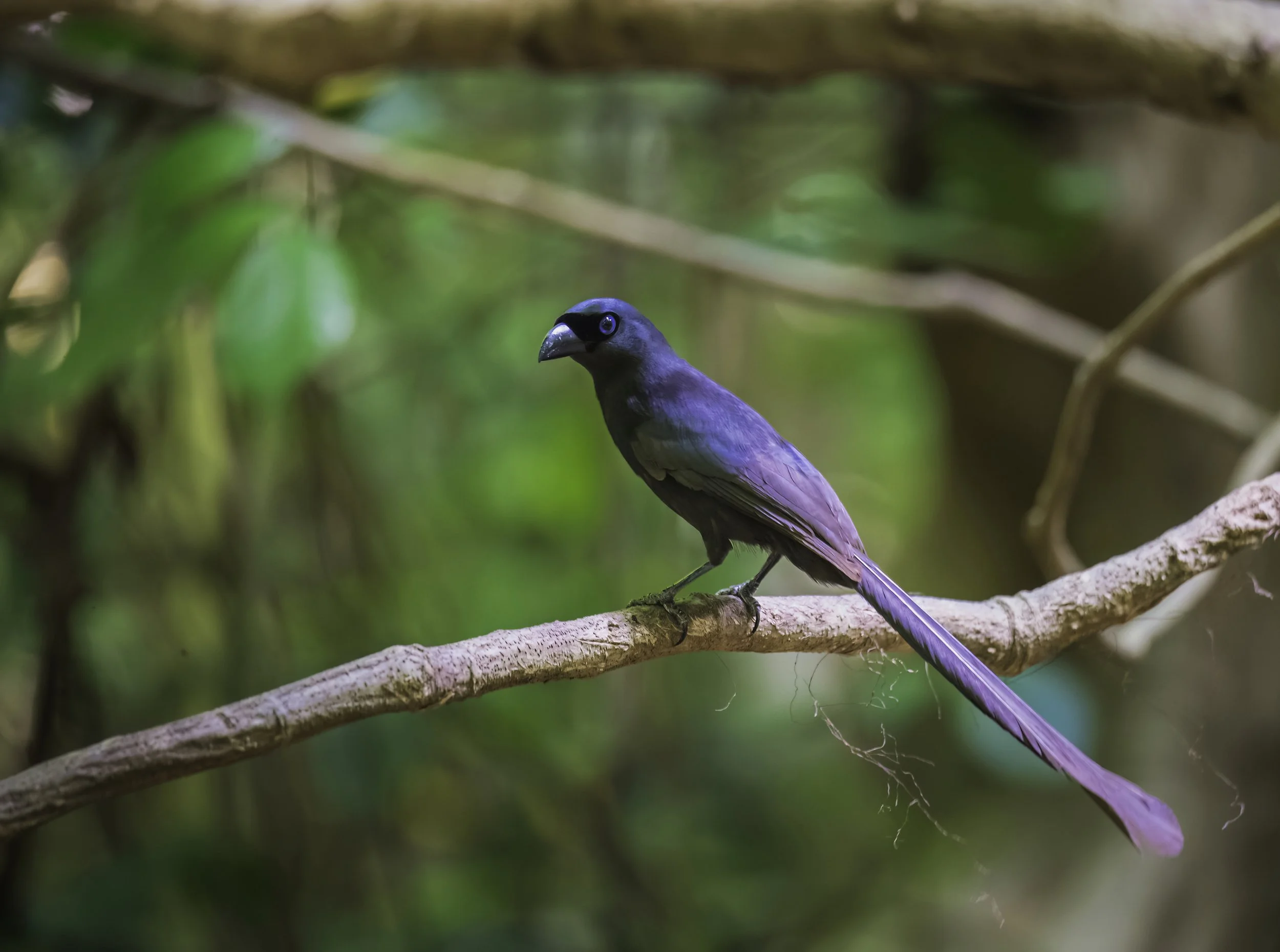
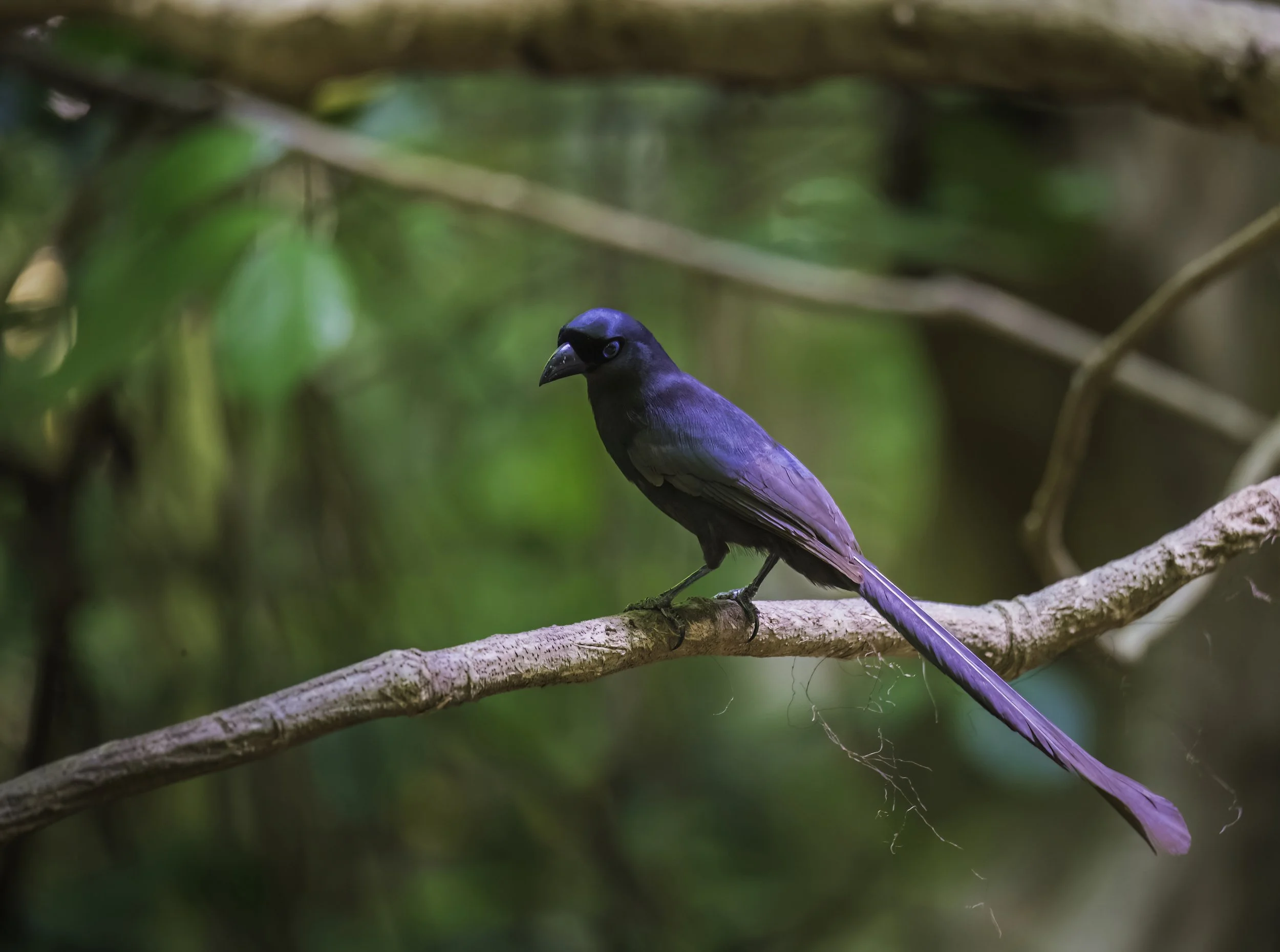
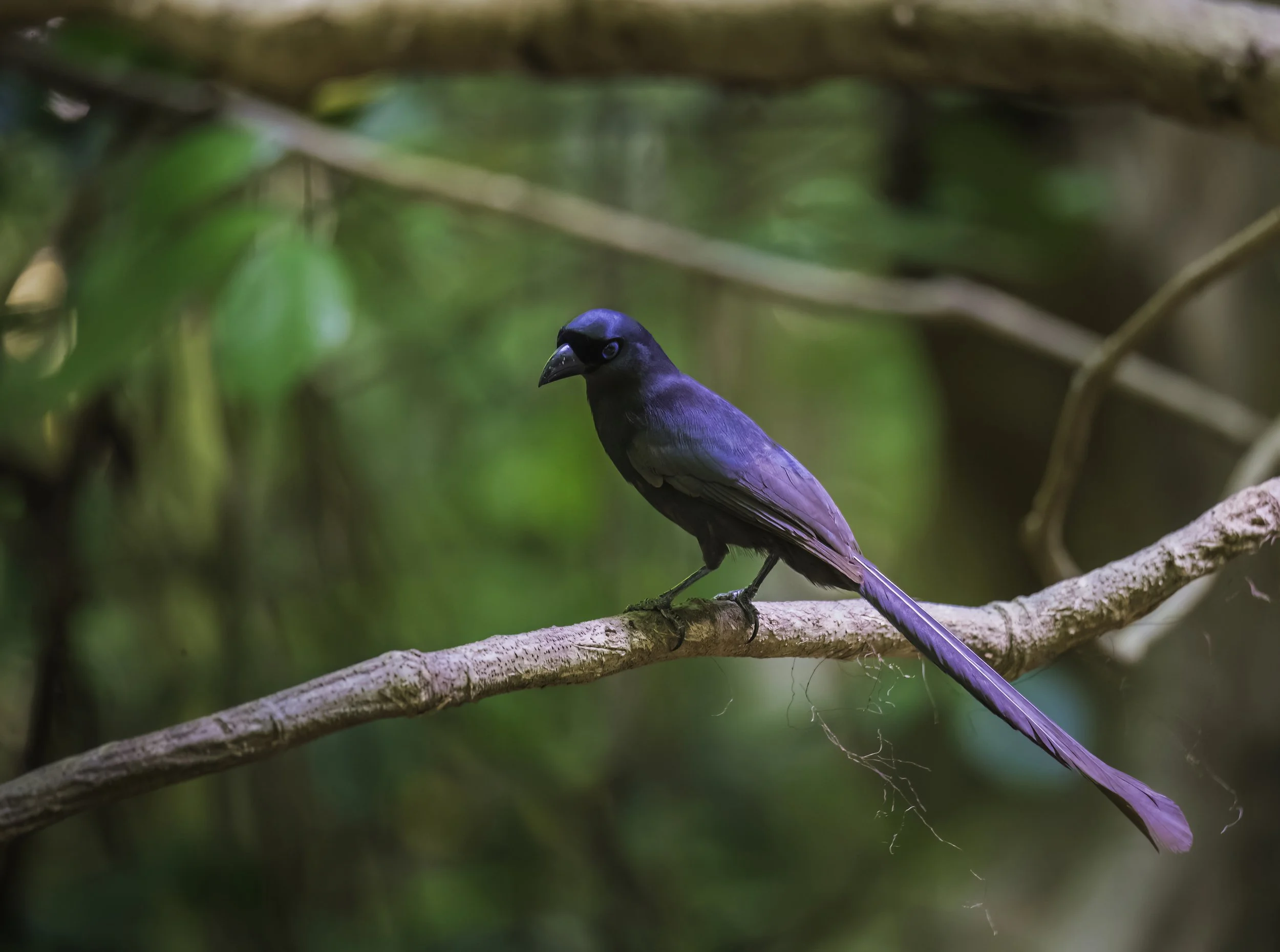
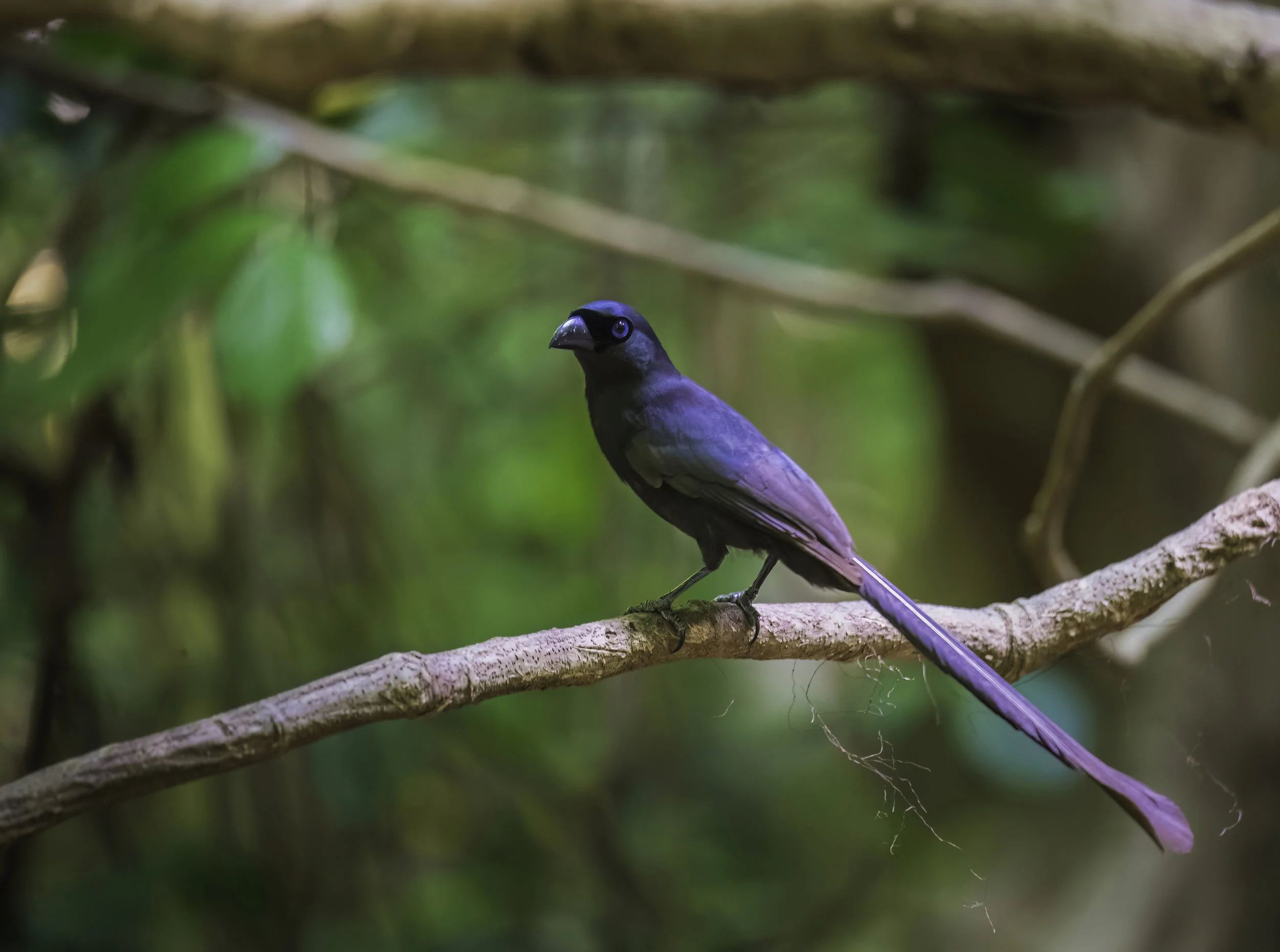
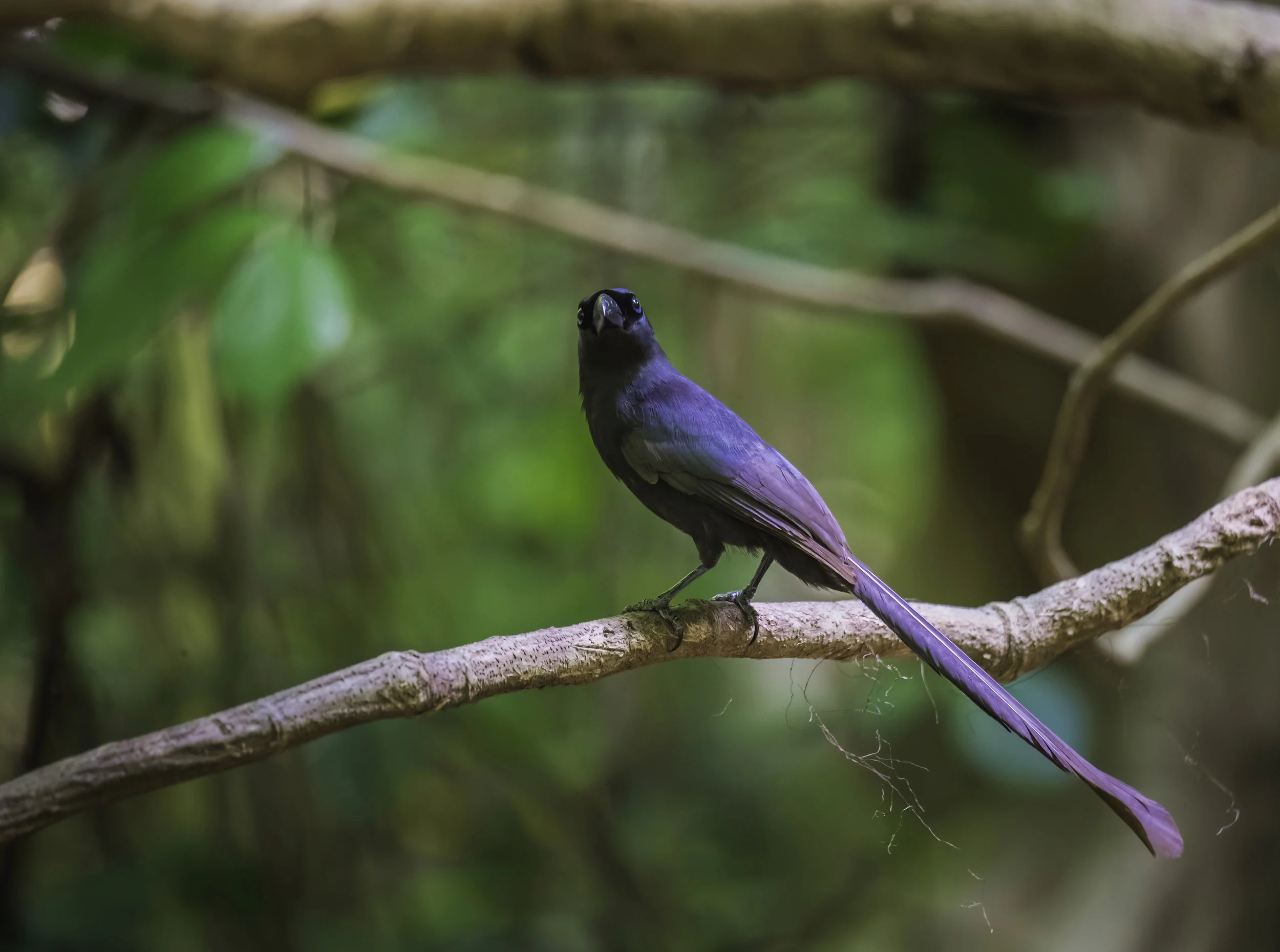
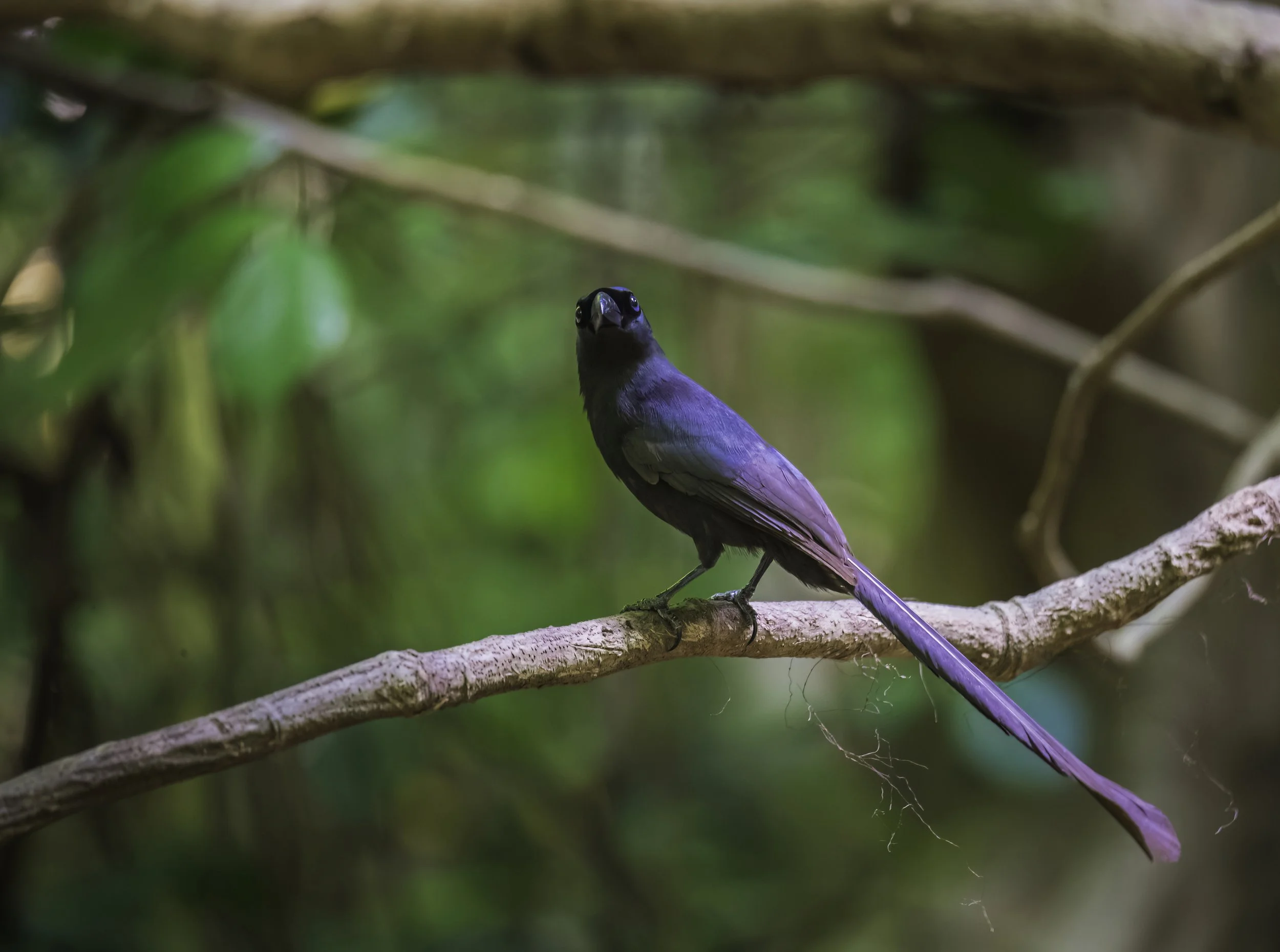
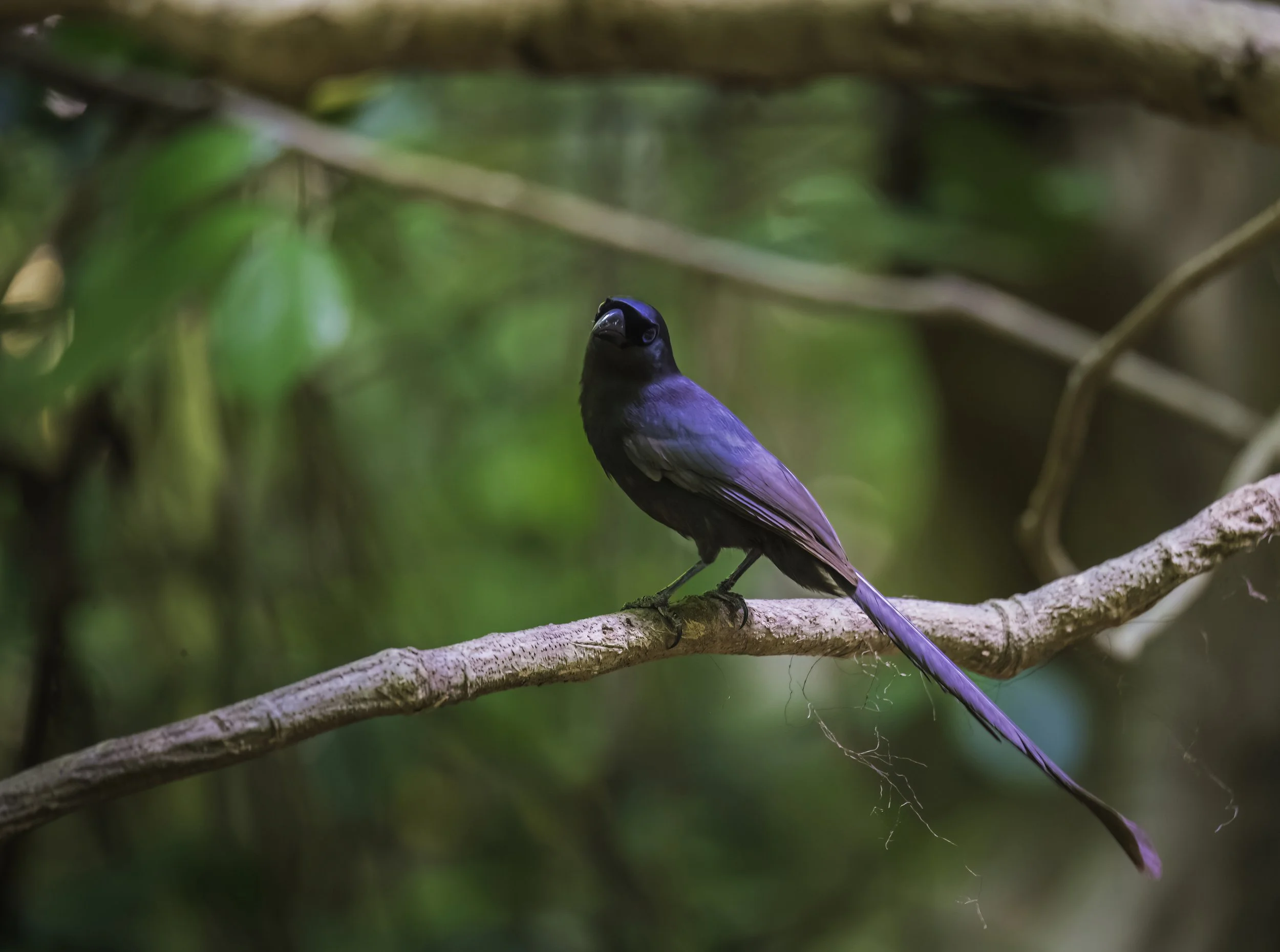
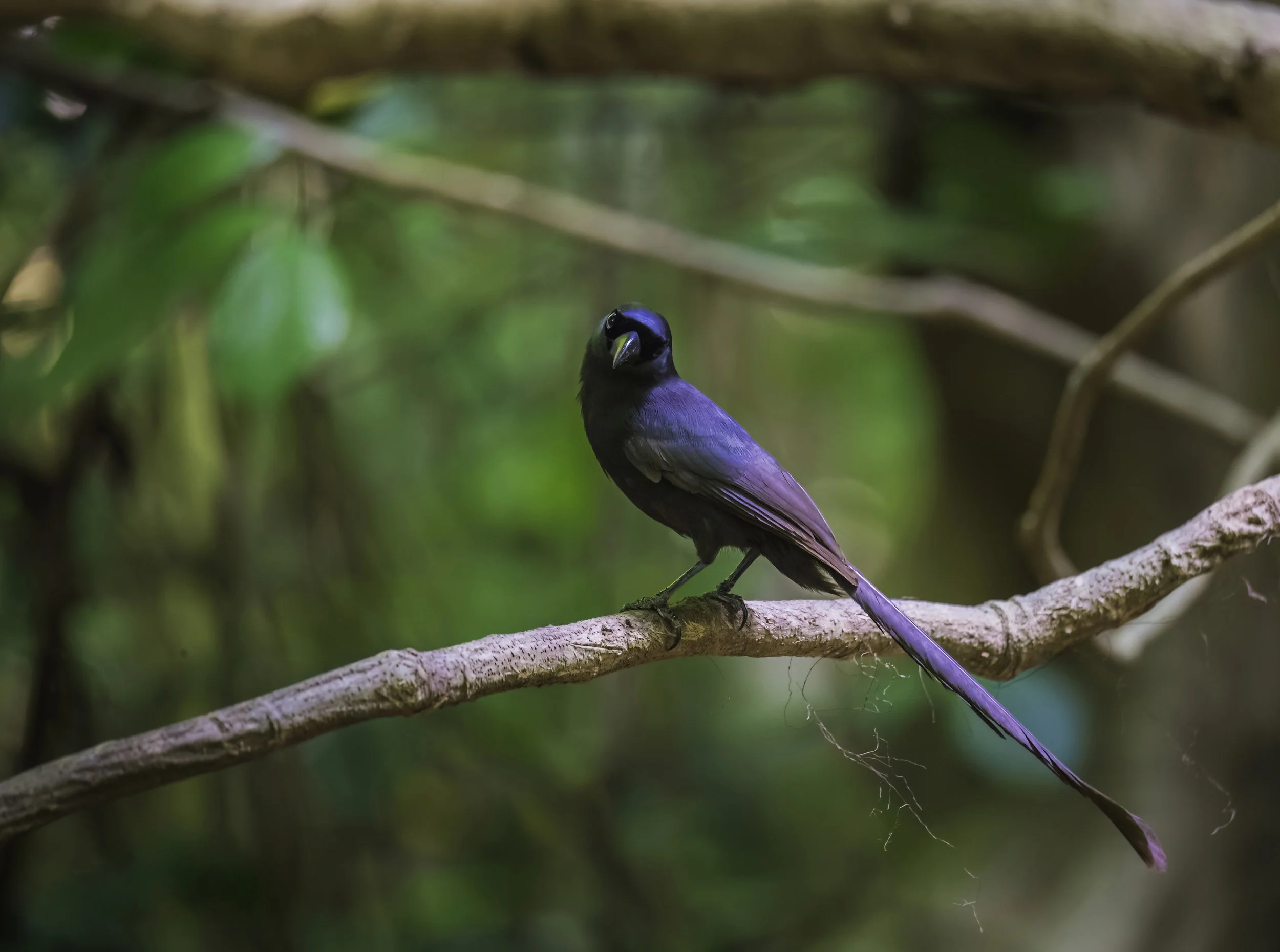
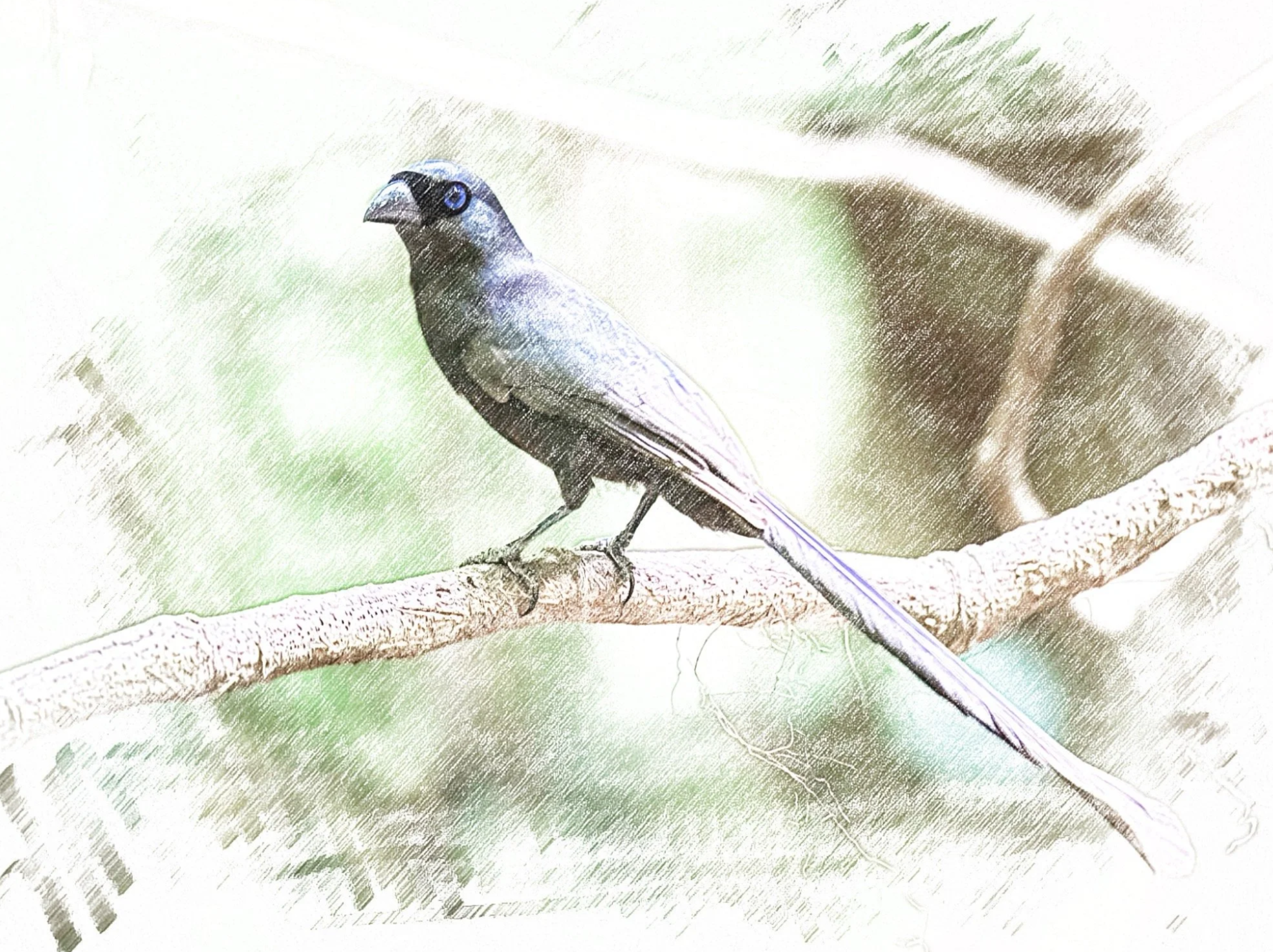
The Racket-tailed Treepie (Crypsirina temia) is an Asian treepie, a member of the crow family, Corvidae. It has a velvety-black forehead of short, plush black feathers with the rest of the bird being an oily green colour, though appearing black in dim light. The tail feathers which in this species are long and broaden at the tail's end are black also with a greenish tinge, as are the wings. The iris of the bird is a turquoise-blue darkening towards the pupil to a very deep or near black. The bill, legs and feet are black.
The Racket-tailed Treepie is a quintessential Southeast Asian species. Its range extends from southern China (Yunnan) through Myanmar, Thailand, Laos, Vietnam, and Cambodia, reaching as far south as Java and Bali in Indonesia. In Thailand, Kaeng Krachan National Park represents one of the most reliable strongholds for the species, where the transition from lowland evergreen forest to deciduous forest provides the perfect ecological niche.
Unlike many wide-ranging birds, the Racket-tailed Treepie is monotypic. There are no currently recognized subspecies. While birds in Java were historically considered for subspecies status, the consensus remains that plumage variations across its range are negligible. What you see in the hills of Phetchaburi is the same velvet-black beauty you would find in the forests of East Java.
The "racket" in its name is no exaggeration. This is a medium-sized bird where the tail does most of the heavy lifting regarding length.
Total Length: Approximately 31–33 cm (nearly half of which is tail).
Weight: Surprisingly light, typically ranging between 30–35 grams.
Plumage: At first glance, the bird appears jet black. However, in the right light, it reveals a deep, bronze-green iridescence that looks like polished metal.
The Face: It features a plush, velvet-black forehead and lores, which contrast sharply with its most striking feature: a brilliant turquoise-blue iris.
The Racket-tailed Treepie is a specialist of open forests, bamboo thickets, and secondary growth. It avoids the darkest, most interior primary rainforests, preferring the "edges" where sunlight can penetrate. It almost always feeds in trees (arboreal) never feeding from the ground though coming down to bathe on occasion. It moves through the trees with great agility and uses its remarkable tail as a balancing organ. It eats mainly insects and fruit.
Movement: They are sedentary (non-migratory). They spend their lives within a relatively small home range. Their flight is weak and undulating, characterized by rapid wingbeats followed by a dip.
Social Life: Usually seen in pairs or small family groups. They are remarkably quiet for corvids, often moving through the mid-canopy like ghosts, making only the occasional dry, clicking sound.
Diet: They are quintessential omnivores but lean heavily toward insects (grasshoppers, mantids) and small invertebrates. They will also supplement their diet with wild figs and berries.
Breeding: They build a cup-shaped nest, often reinforced with thorny twigs for protection, usually situated in dense bamboo or thickets. They typically lay 2–4 eggs. In Kaeng Krachan, the breeding season usually kicks off in April and May.
IUCN Status: Rated as Least Concern. While they are common in protected areas, they are susceptible to the cage bird trade in some parts of Indonesia due to their striking appearance. Fortunately, in Thailand's national parks, they remain well-protected.
Photographing the "Velvet Phantom" is notoriously difficult because of its structural coloration. Because the green sheen is produced by light refraction (rather than pigment), the bird looks "flat black" in the shade but "neon green" in direct sun.
The Photographer’s Challenge: Field Identification Tips
If you are standing on the "Ban Krang" stretch of Kaeng Krachan, look for a bird that moves with a stiff-tailed agility.
The Tail Shape: Look for the "spatulate" tips. The two central tail feathers widen significantly at the ends, resembling small paddles or rackets.
The Eye Glow: In the shadows, the bird is a black blob. Wait for it to turn its head; the bright blue eye will "pop" even in low light, providing your focal point.
The Silhouette: It has a short, thick, slightly hooked bill (typical of crows) and a very upright posture when perched.
The following gallery of the Racket-tailed Treepie is from the single time I have been able to spot and photograph it. The bird was out in the open for a few seconds only and these were the only frames I could make.
‡‡‡‡‡

Related Posts


The Indian Jungle Crow reminds us that every creature plays a vital role in our ecosystems. As human activity continues to change the landscapes of Telangana, the survival and adaptability of this intelligent bird will offer crucial lessons on how wildlife responds to a changing world.
#WildArtWorks #AmrabadTigerReserve #TelanganaTourism #WildlifeConservation #NallamalaHills #EcoTourism #IndiaBiodiversity #Panchgani #UmaMaheshwaram #Kawal #IndianJungleCrow #Crow #intelligentbird