
Legacy of the 4-Mark Tigress
Panthera tigris tigris
ENDANGERED
Tipeshwar Wildlife Sanctuary, Maharashtra
The story of the 4-Mark tigress begins in the southern tropical dry deciduous forests of the Tipeshwar Wildlife Sanctuary. Born in November 2013, she was part of an extraordinary litter spawned by the legendary Pilkhan female and the powerful, indomitable Budha male. That litter consisted of three female cubs whose futures would map the triumphs and tragedies of Central India’s tiger corridors. The second-born cub bore a striking, near-mathematical anomaly on her right cheek: a bold, black numeral "4" etched naturally into her facial stripes. She was designated by researchers as 4-Mark, while her sisters were named Zara (X-Mark) and Zarina (H-Mark).
The wilderness is a harsh auditor of life. While 4-Mark grew into a formidable huntress, her sisters faced the brutal impact of anthropogenic pressures. Zara (X-Mark) spent over eighteen months moving through the undergrowth with a heavy wire snare tightly cinched around her neck. Despite a rescue operation by forest officials to remove the poacher’s trap, she tragically succumbed during capture and medical treatment on March 17, 2019. Zarina (H-Mark) chose a different path, surviving long enough to disperse southward out of Tipeshwar, slipping into the fragmented forest corridors connecting Maharashtra with neighbouring Telangana.
Left to anchor the ancestral grounds, 4-Mark laid claim to her destiny in 2017. She pushed into the Maregaon region of the sanctuary—a territory defined by vast, rolling meadows. Years prior, Maregaon had been a bustling human settlement. Following a successful village relocation initiative by the forest department, the human footprint vanished, allowing nature to reclaim its balance. The abandoned fields transformed into lush, prey-rich grasslands that attracted large congregations of chital, sambar, and nilgai. 4-Mark conquered this paradise, establishing an undisputed rule over the plateau. Because she reigned over these reclaimed grasslands with absolute majesty, she earned her title among trackers, photographers, and conservationists as the Meadow Queen of Maregaon.


Tipai Mata Temple
Tipeshwar Wildlife Sanctuary
Tipeshwar Wildlife Sanctuary, situated within the Satmala and Ajantha hill ranges of the Pandharkawada region, and deriving its name directly from the Goddess Tipai shrine situated on this hill, has emerged as a successful tiger-cradle in the Eastern Vidarbha Landscape (one of the prominent Tiger Conservation Landscapes of India). It has demonstrated the potential to populate nearby tiger reserves like the Kawal Sanctuary in Telangana. However, like almost all other tiger reserves in India, Tipeshwar too, is plagued by the usual suspects – it is surrounded by densely populated and human dominated landscape with all the associated baggage that unhindered human activity brings - poaching, cattle grazing, trespassing etc., development – illegal mining, highway expansion etc., forest and prey-base degradation, human-tiger conflict etc. There are also a number of villages within the sanctuary area and their inhabitants are dependent on the forest for their livelihood.
Until 2014–2015, the core of the sanctuary housed three major human settlements primarily populated by indigenous tribals: Tipeshwar, Pitapungari, and Maregaon. Under conservation programs directed by the National Tiger Conservation Authority (NTCA) and the state forest department, hundreds of families voluntarily moved to outer zones. This allowed the jungle to completely reclaim these areas, transforming them into vital, undisturbed habitats:
Maregaon
Once a bustling village of over 400 families, Maregaon is now completely ruled by tigers and other wildlife. The transformation of this specific zone is visually fascinating:
"Naya Rasta": The old access road once used by local villagers and visitors to reach Maregaon has been entirely taken over by the forest. Instead of human footprints and vehicle tracks, the trail is now heavily used by big cats as a primary patrol and hunting route.
Echoes of Past Habitation: Ghostly markers of human life still stand amidst the dense undergrowth. Old electricity poles, planted Neem trees, and the ruins of a Bajrangbali (Hanuman) temple have been engulfed by vegetation.
Tiger Territory: The reclaimed fields and open spaces of Maregaon have transformed into excellent grasslands. These fields attract large herds of herbivores like Sambhar, Chital and Wild Boar, subsequently turning the old village site into the prime hunting territory of Tipeshwar's famous big cats.
Tipeshwar Village Zone
Located near the center of the sanctuary and situated alongside the Goddess Tipai shrine (from which the forest gets its name), this area was once the epicenter of local logging and cattle grazing. Since the relocation, the anthropogenic biotic stress has disappeared. The forest department has actively reintroduced prey species like Sambhar here, allowing the native teak and red sandalwood trees to grow back aggressively.
Pitapungari (Pitapingri)
Like Maregaon, this former settlement zone was cleared to create an "inviolate space" for wildlife. Devoid of human traffic, it now acts as a quiet sanctuary core where young tigers learn to hunt before dispersing outwards into adjacent forest corridors.
Today, visitors exploring the sanctuary through the Sunna (now called the Tipeshwar Gate), Mathani (now called the Nandai Gate), or Koduri (now called the Bhavankhori Gate) entry gates will see a stark division of landscapes:
The Grassland & Core Reclaimed Zones: The areas where villages like Maregaon once stood now function as central water and grazing meadows. They are critical to keeping the carnivore-prey ratio balanced and reducing human-wildlife conflict along the sanctuary boundaries.
The Dry Deciduous Slopes: Rising above the flat, old village landscapes are undulating basalt hills. They are densely packed with timber, bamboo patches, and scrub forest, providing ideal camouflage for leopards and sloth bears.
Tipeshwar has gone from being a sink, collecting surplus tigers from the larger sanctuaries, to becoming a source, generating increasing tiger numbers with village relocation playing a particularly important part.
Five tribes occupy the Tipeshwar forest region viz., Pardhan, Gond, Kolam, Navbuddha & Kunbi, of which the former three are said to be aboriginal. The total populations of these tribes range from a few hundred to thousand and are seemingly vanishing; these tribes are stricken with poverty with a high mortality rate in infants, and a high incidence of sickle cell disease. Albeit in the recent years the increase in tourism has improved their condition to some degree.
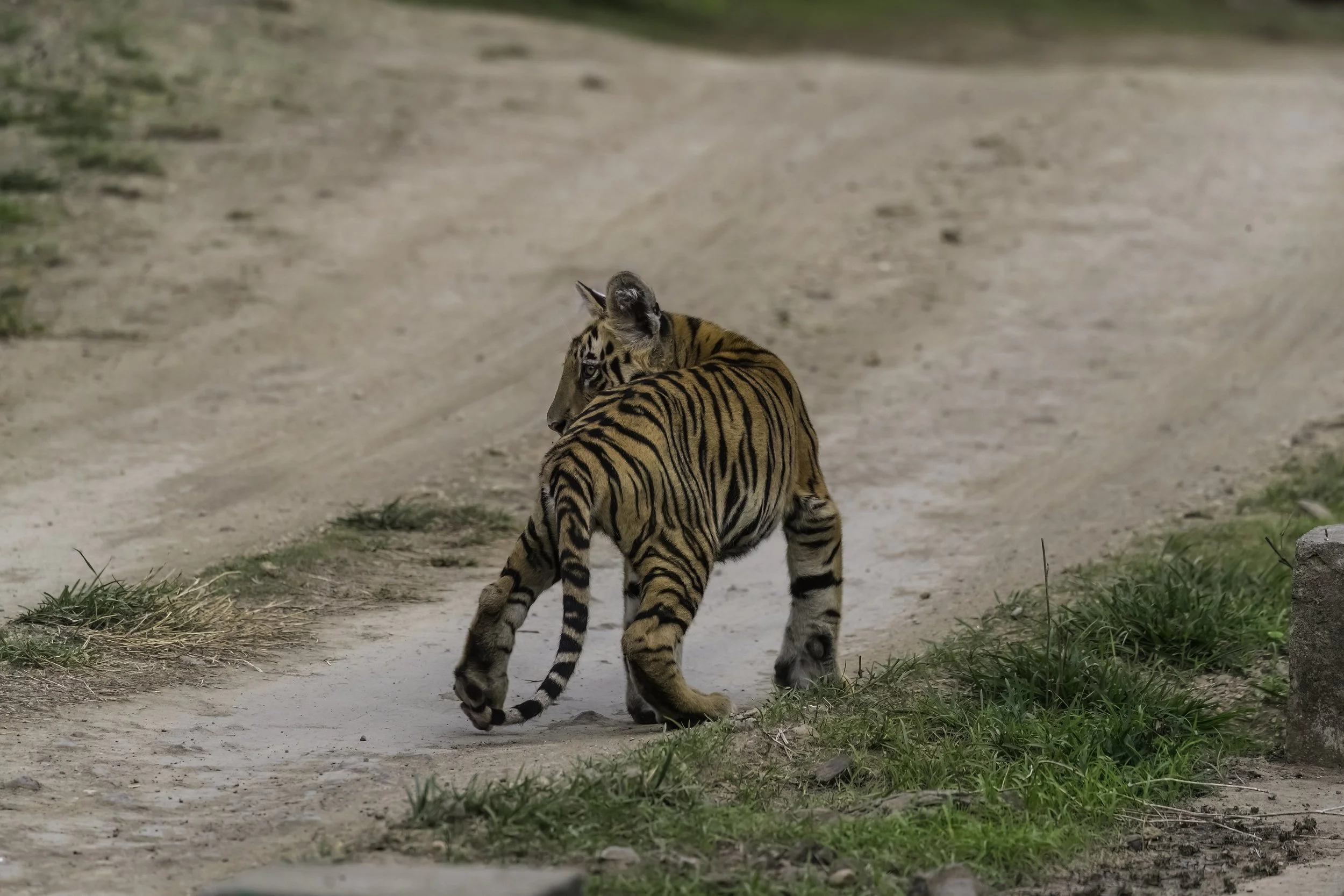
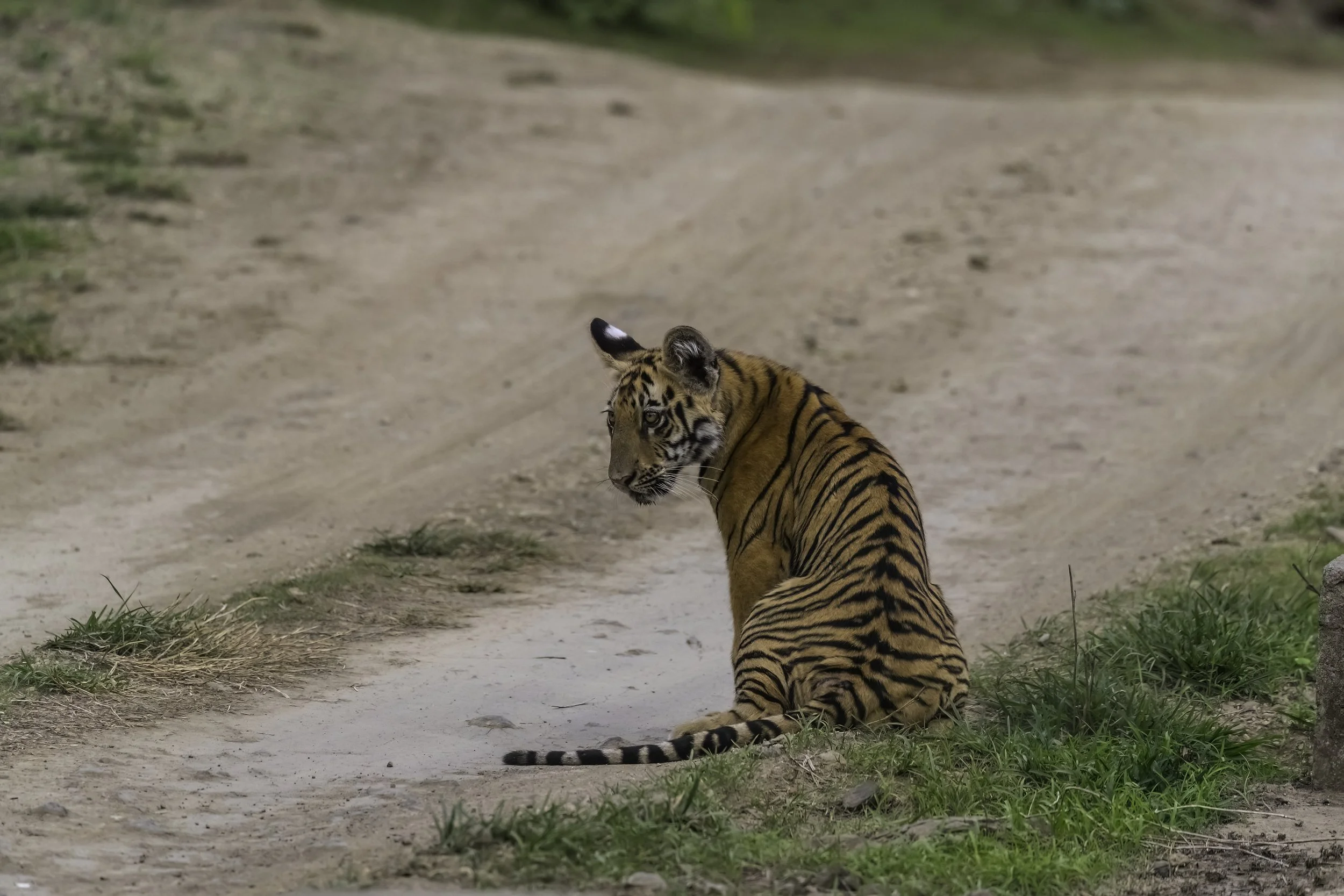
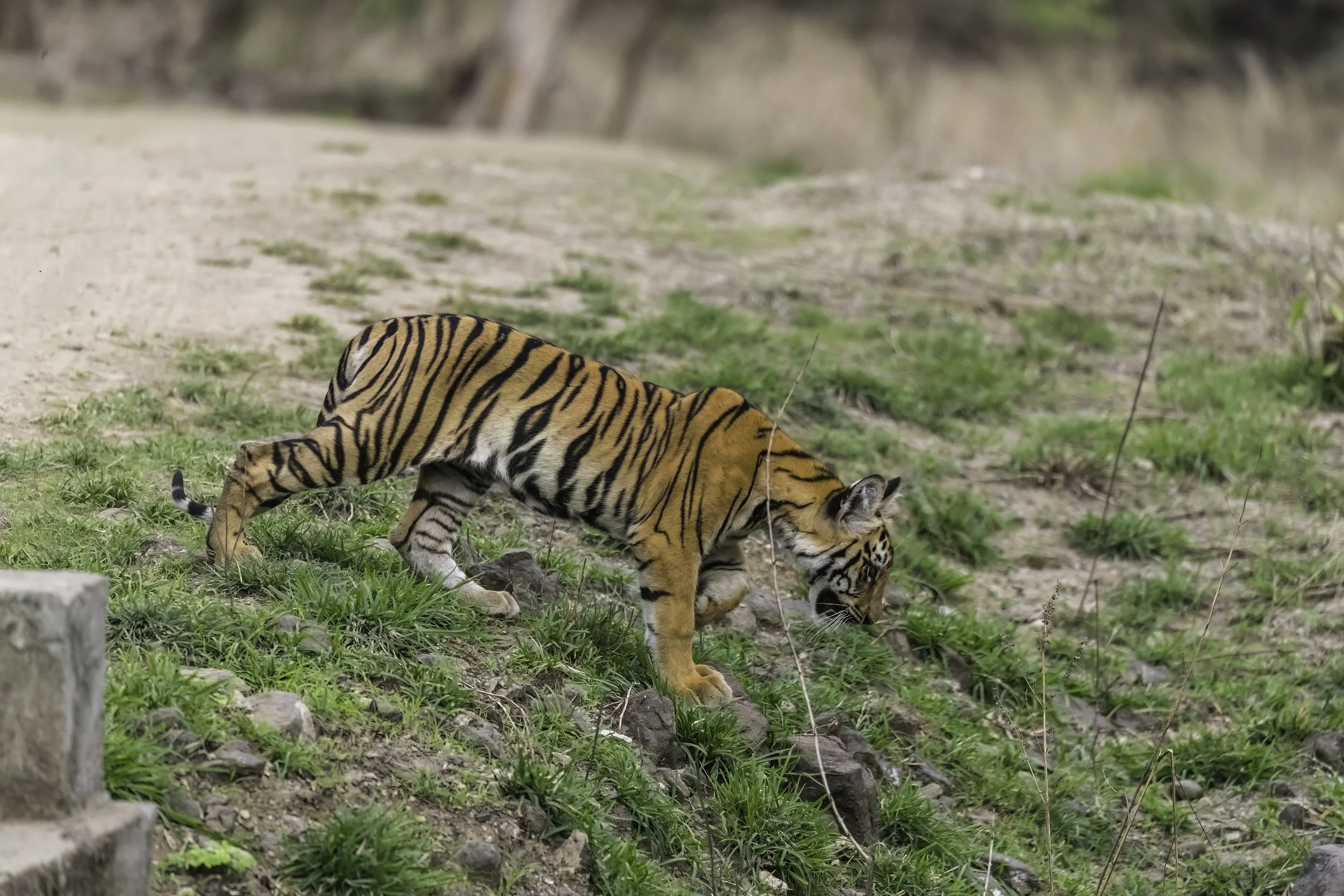
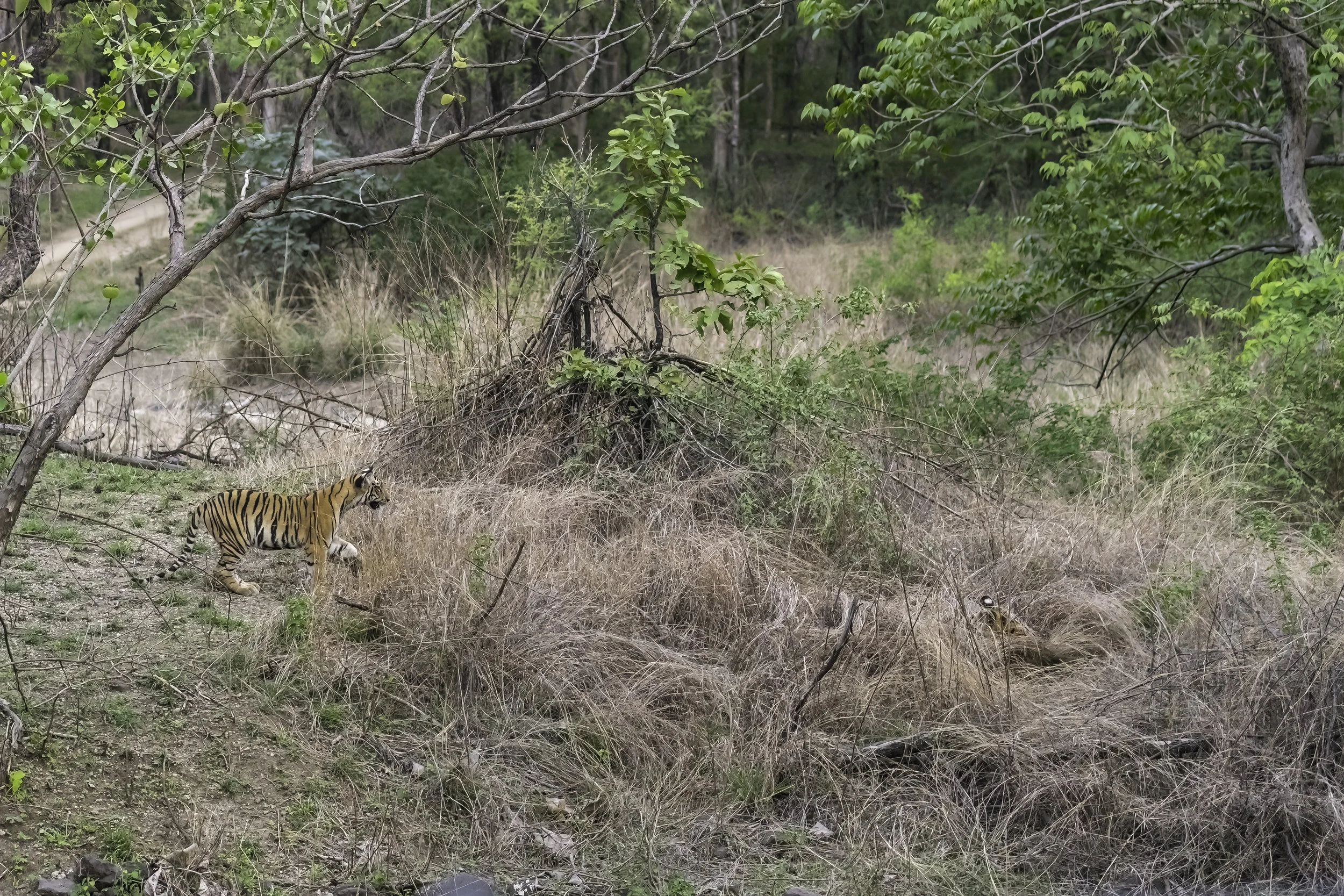
The inviolate spaces created for the tigers through this village relocation exercise and additional measures such as the introduction of prey like Sambhar has helped the increase in the population of tigers. Featured below is the 4-Mark tigress as I watched her make her way down from the top of the Tipai Mata Mandir hill.

The Tipeshwar Sanctuary is also home to a number of rivers like Purna, Krishna, Bhima and Tapti which irrigate the sanctuary. This abundance of water gives the region the moniker - the Green Oasis of Maharashtra. The sanctuary area is primarily composed of basalt from some ancient lava eruptions and boasts immense diversity in both flora & fauna. It is home to some 25 species of mammals, about 182 species of birds, 22 species of amphibians and numerous reptiles like the Indian Cobra, Indian Rock Python, Russel’s Viper & Checkered Keelback. And of these multitude of reptiles 6 are scarce species. Bengal Tigers, Leopards, Sloth Bears, Gaur, Dhole, Hyena, Chital, Black Buck, Sambar, Jackal, Wild Boar, Peacock, Hanuman Langur, Nilgai & wild cats like the Jungle Cat are some of the species seen in this sanctuary.
The Sanctuary is a compact patch of dense forest cover. The major forest type here is the ‘Southern Tropical Dry Deciduous Forest’ and Teak forms up to 60% of the forest composition. And as is the norm with central Indian forests one can also see the Achar (Cordia myxa), the Mahua (Madhuca longifolia), the Lendia (Lagerstroemia parviflora), Bhirra Tiwas (Ougeinia oojeinense) and several other types. Also, approximately 15% of this park consists of the Red Sandalwood (Pterocarpus santalinus), the costliest of all the sandalwoods in India.
There is also a wide variety of herbs & grasses including Kunda, Kadmod, Guhar, Wide, Gokru, etc. Over 250 species of Bamboo serve to make the sanctuary a repository of economical, medicinal, aromatic and ornamental plant varieties. Bamboo groves dominate the undergrowth within the Teak dominated areas.
This is not a reserve where one will say I saw a bengal tiger, here one will say I saw Talab Wali, I saw the powerful and dominant Veer, I saw beautiful Archi with her cubs, I saw the gorgeous “4” Mark & the shy and handsome Teer (Arrowhead) who has now dispersed near the forests of Adilabad in Telangana.
The Padiyali Area
The Padiyali area is a key ecological zone within the Tipeshwar Wildlife Sanctuary, featuring the sanctuary’s characteristic undulating terrain, basaltic soil formations and hilly tracts, which create distinct valleys and micro-habitats based on elevation. Like much of the sanctuary, the Padiyali zone is dominated by Southern Tropical Dry Deciduous Forests interspersed with natural water sources and perennial streams, making it a critical hub for wildlife tracking and safari sightings.
The entire sanctuary serves as a major tiger stronghold, supporting around 20 individual Royal Bengal Tigers. Because Tipeshwar boasts one of the highest tiger densities in India relative to its small geographic size, the Padiyali zone frequently encompasses overlapping territories of multiple big cats. Dominant male tigers such as Veer and prominent resident tigresses along with their growing cubs regularly roam through and hunt within this specific sector.
The biodiversity surrounding the area is incredibly vibrant, characterized by a dominant canopy of Teak wood (making up about 60% of the trees) and valuable Red Sandalwood (~15%). When traversing this zone, visitors can observe a vast array of mammals, birds, and reptiles:
Mammals: Beyond the prominent Royal Bengal Tigers, observers can spot predators like Indian Leopards, Striped Hyenas, Jackals, and Wild Dogs (dholes). Large herbivores like the Nilgai (Asia's largest antelope), Sambhar, Chital and Wild Boars are highly active here, alongside elusive mammals like the Sloth Bear and the Indian Pangolin.
Avifauna: It is a haven for over 250 bird species. Frequently sighted birds include the Peafowl, Crested Serpent Eagle, Black Drongo, Indian Roller, White-throated Kingfisher, Rufous Treepie, and Painted Francolin.
Reptiles & Insects: The park acts as an evolutionary niche for 26 reptile species, including the Indian Rock Python, Russell's Viper, and the extremely rare semi-arboreal Indian Egg Eater Snake. Over 97 species of butterflies can be seen fluttering through the foliage, including the rare Black Rajah and Peacock Royal.
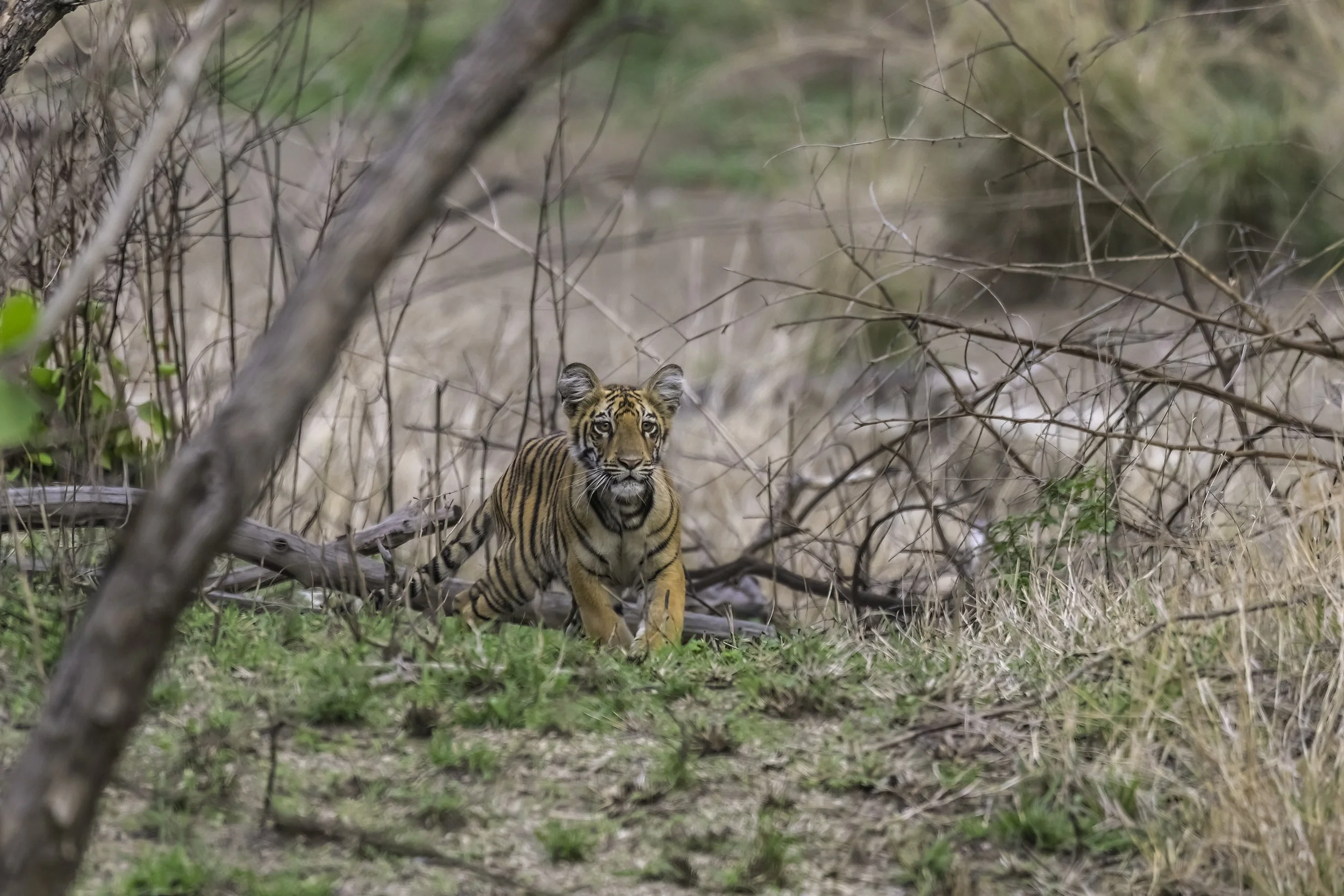
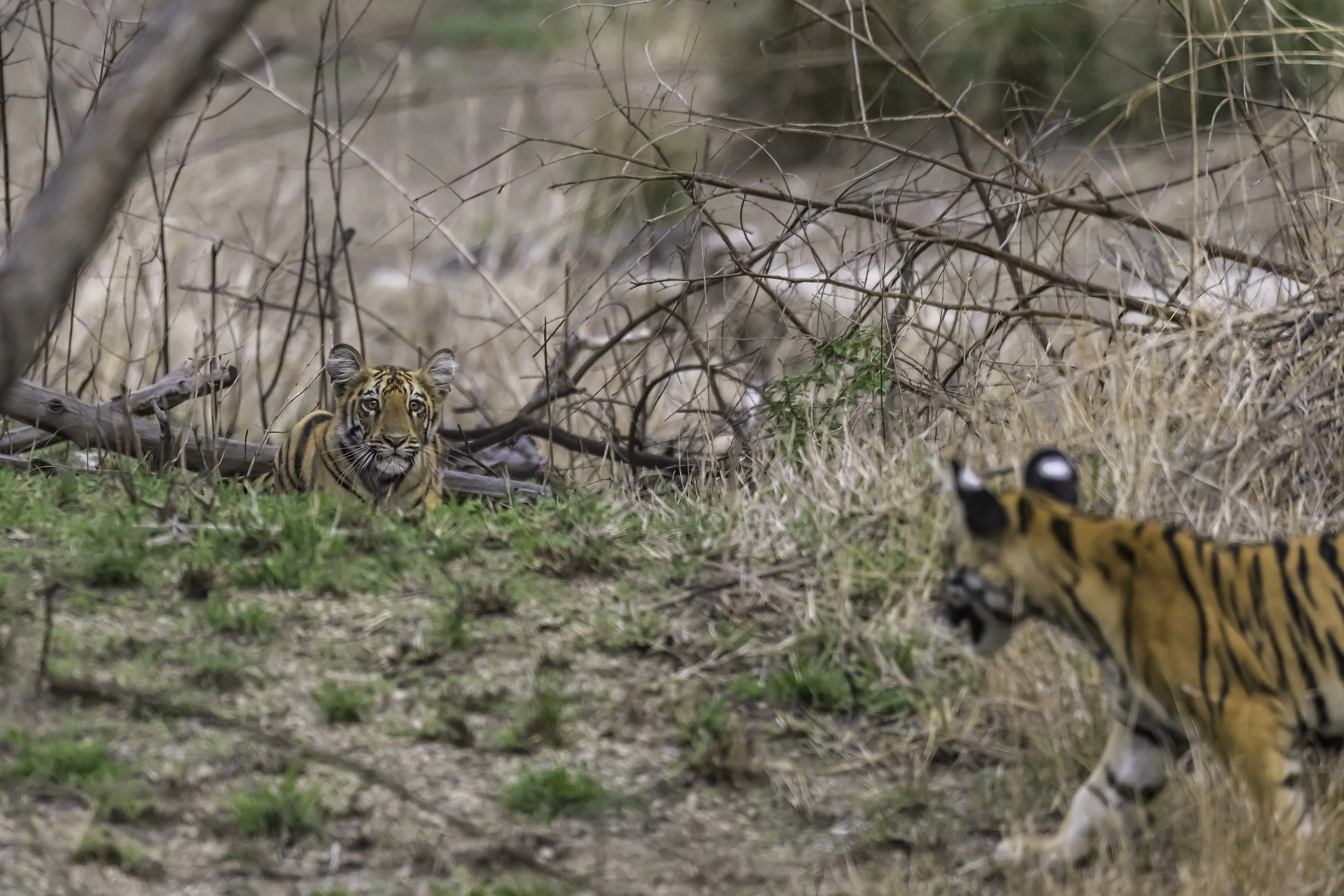
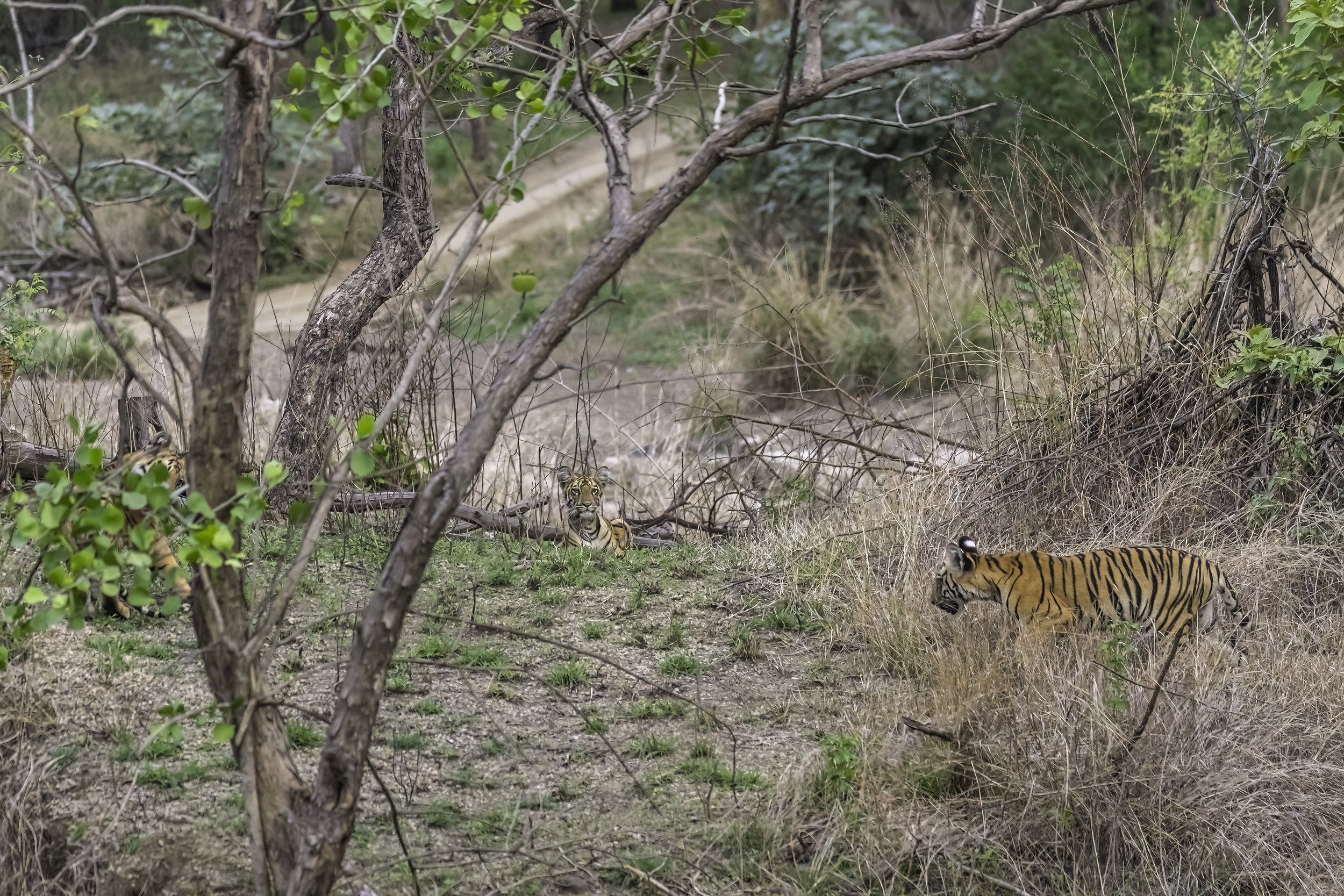
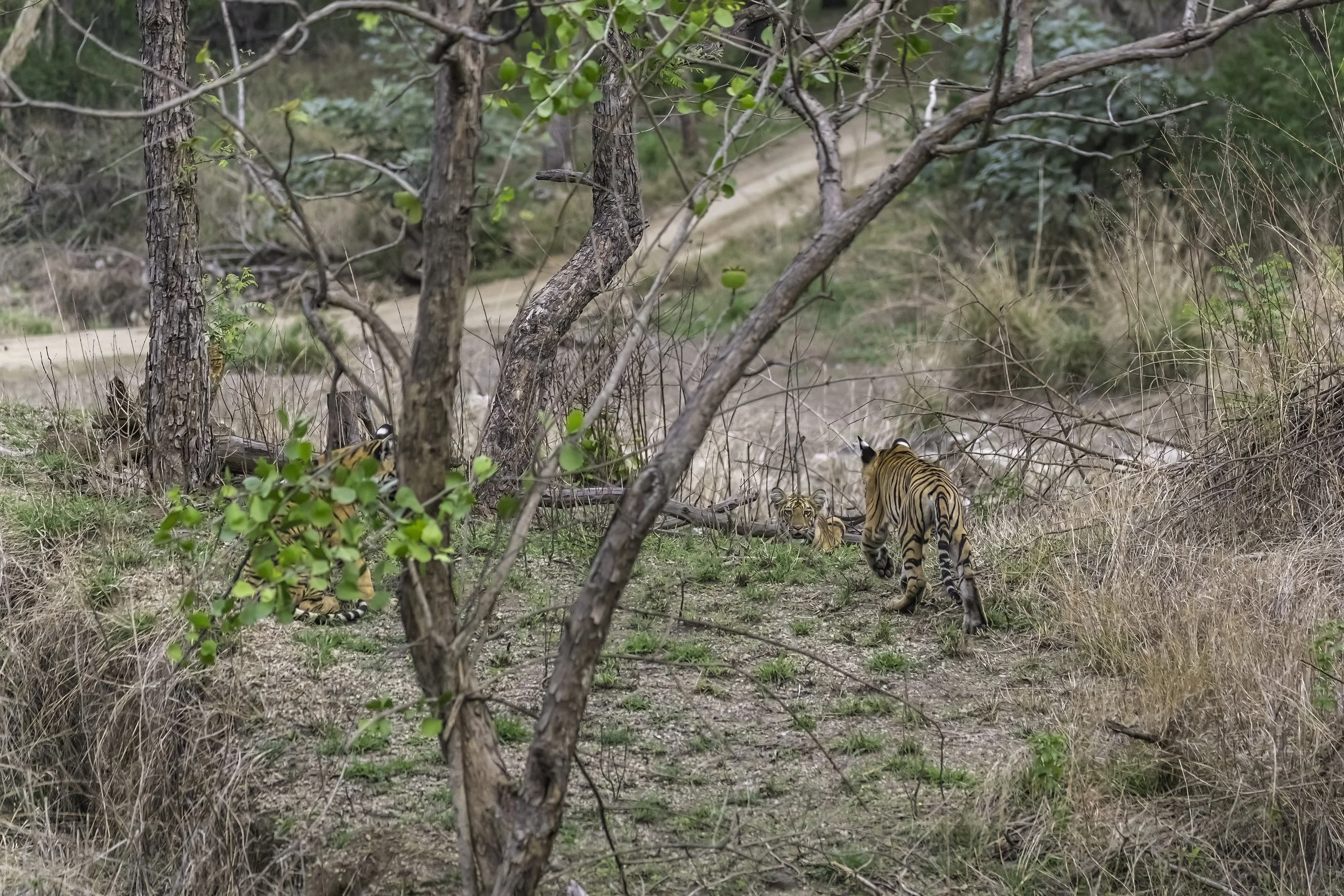
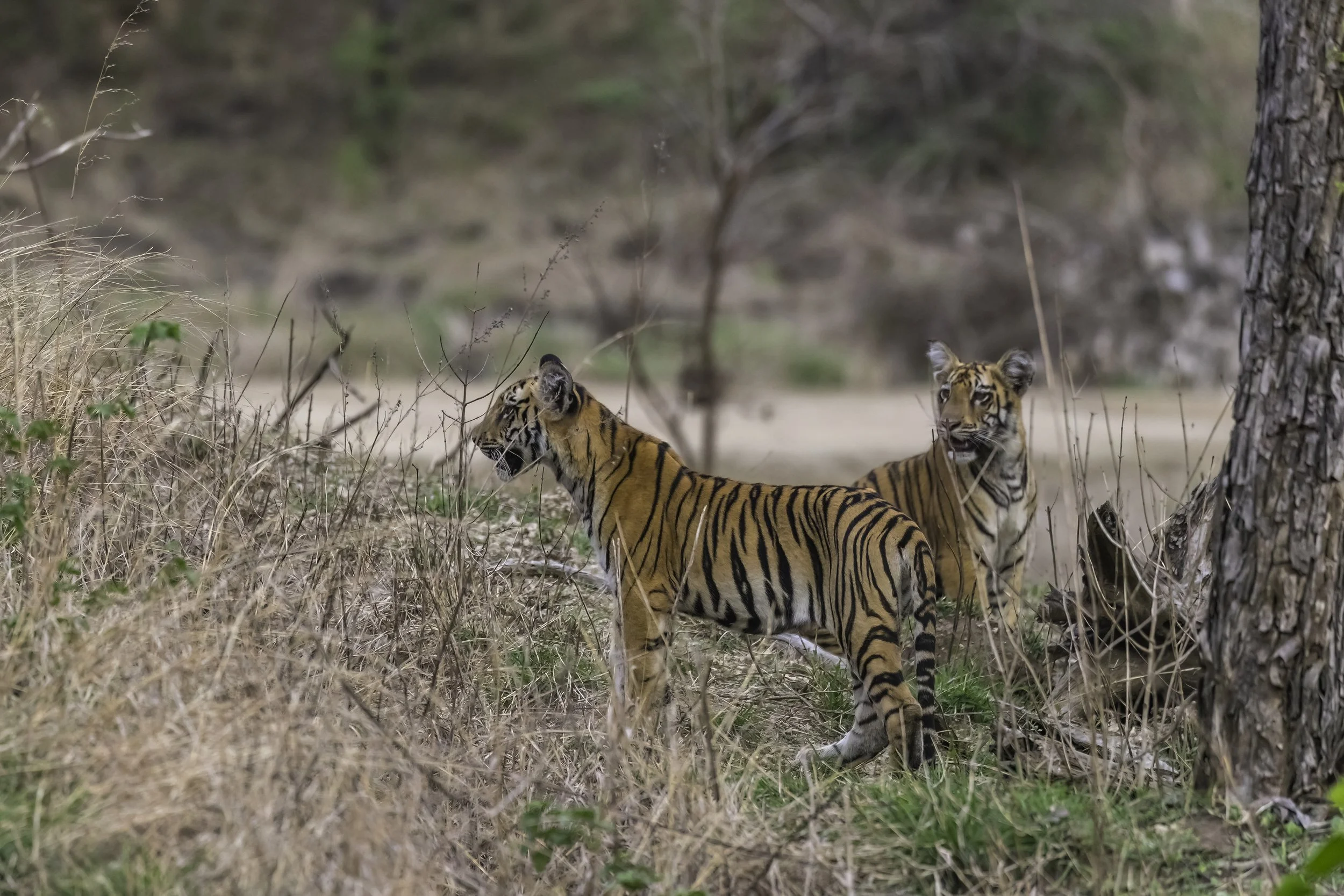
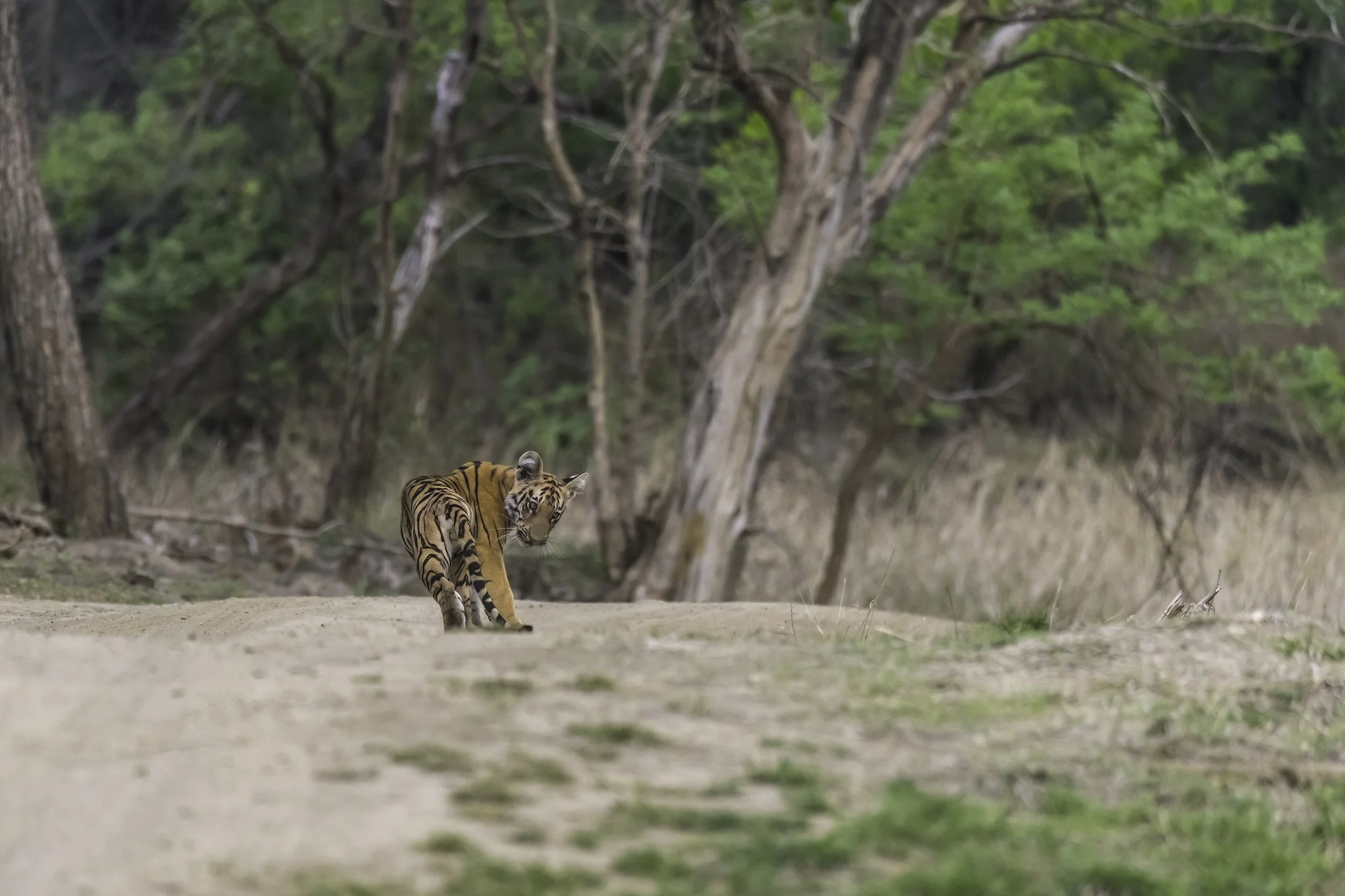
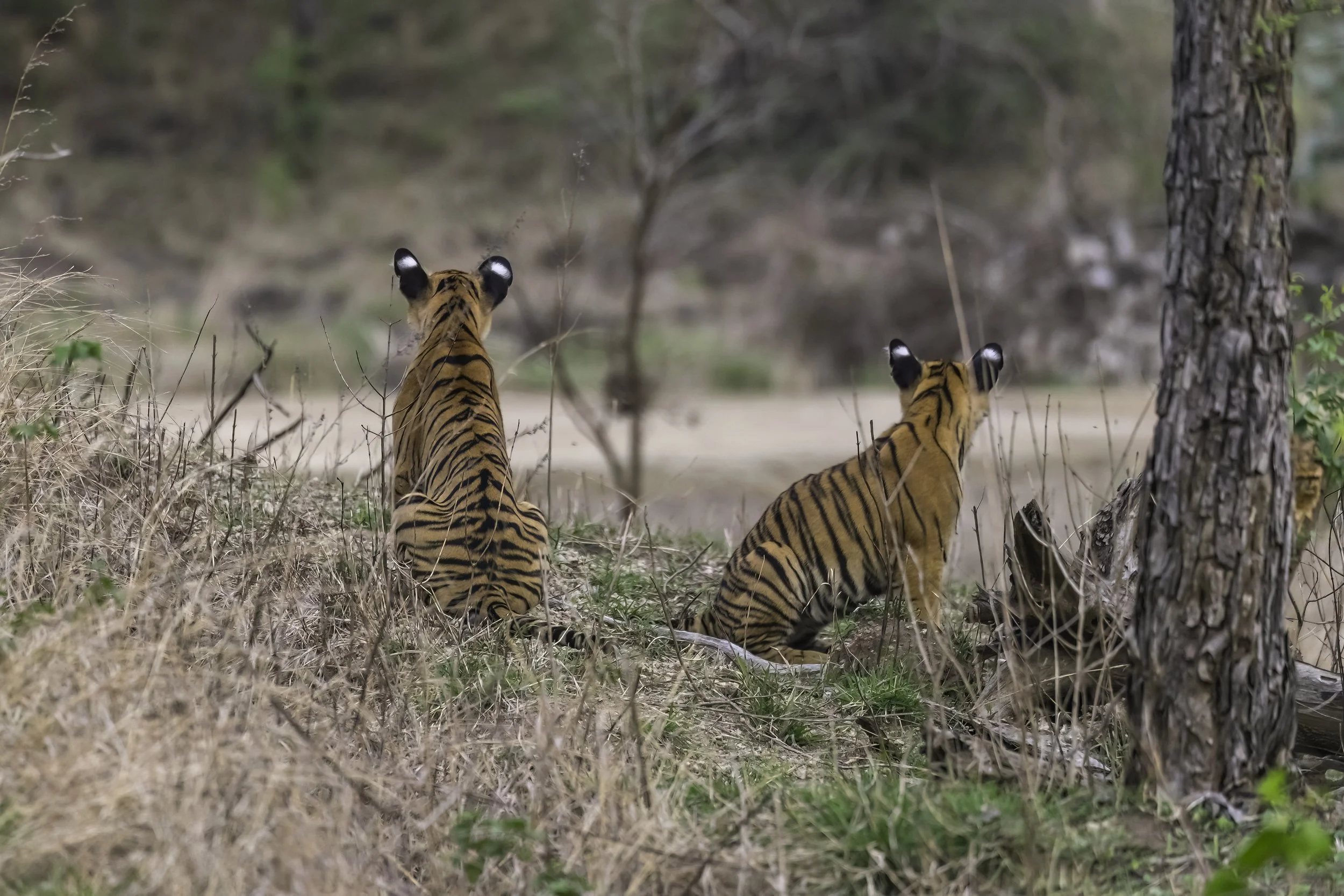
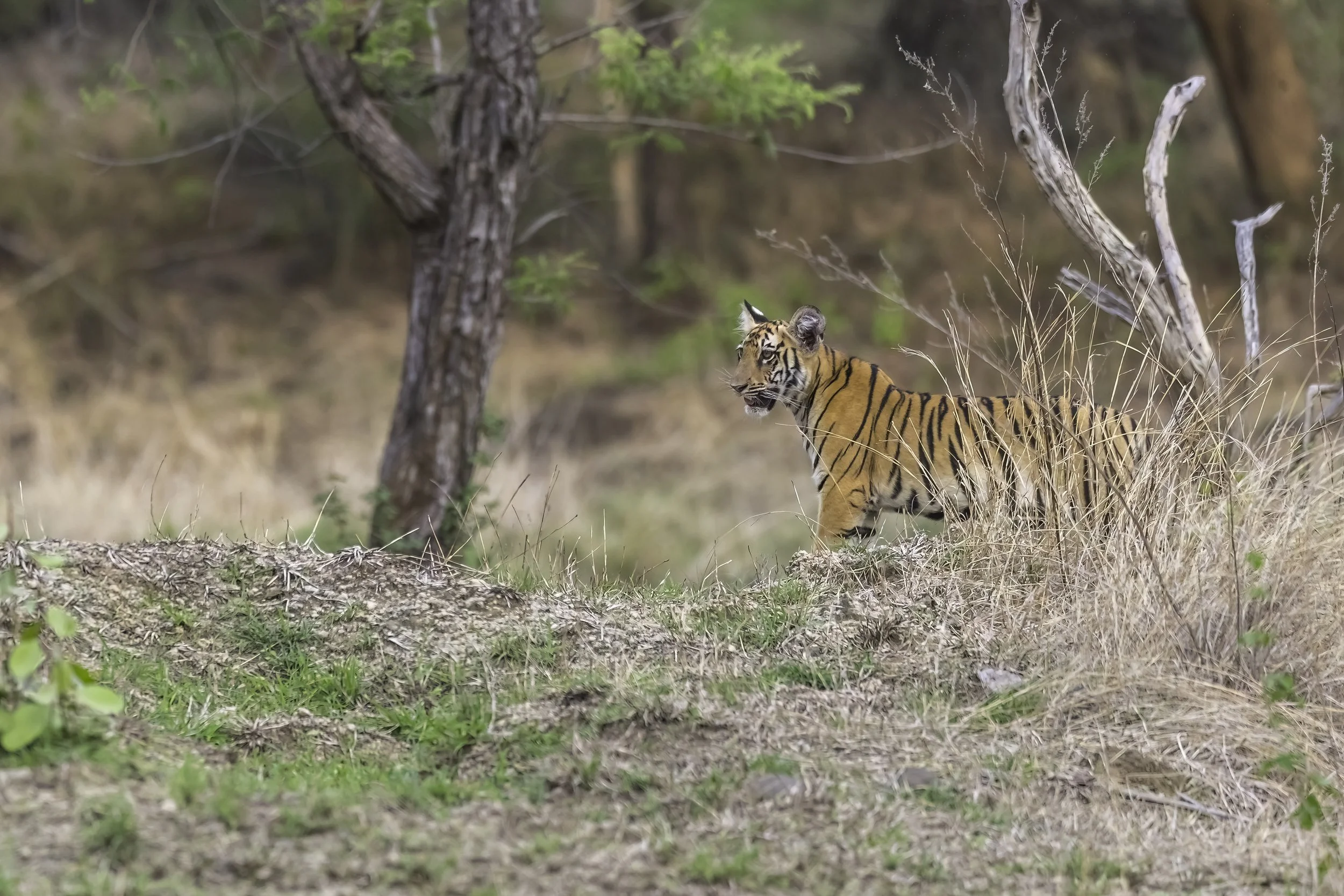
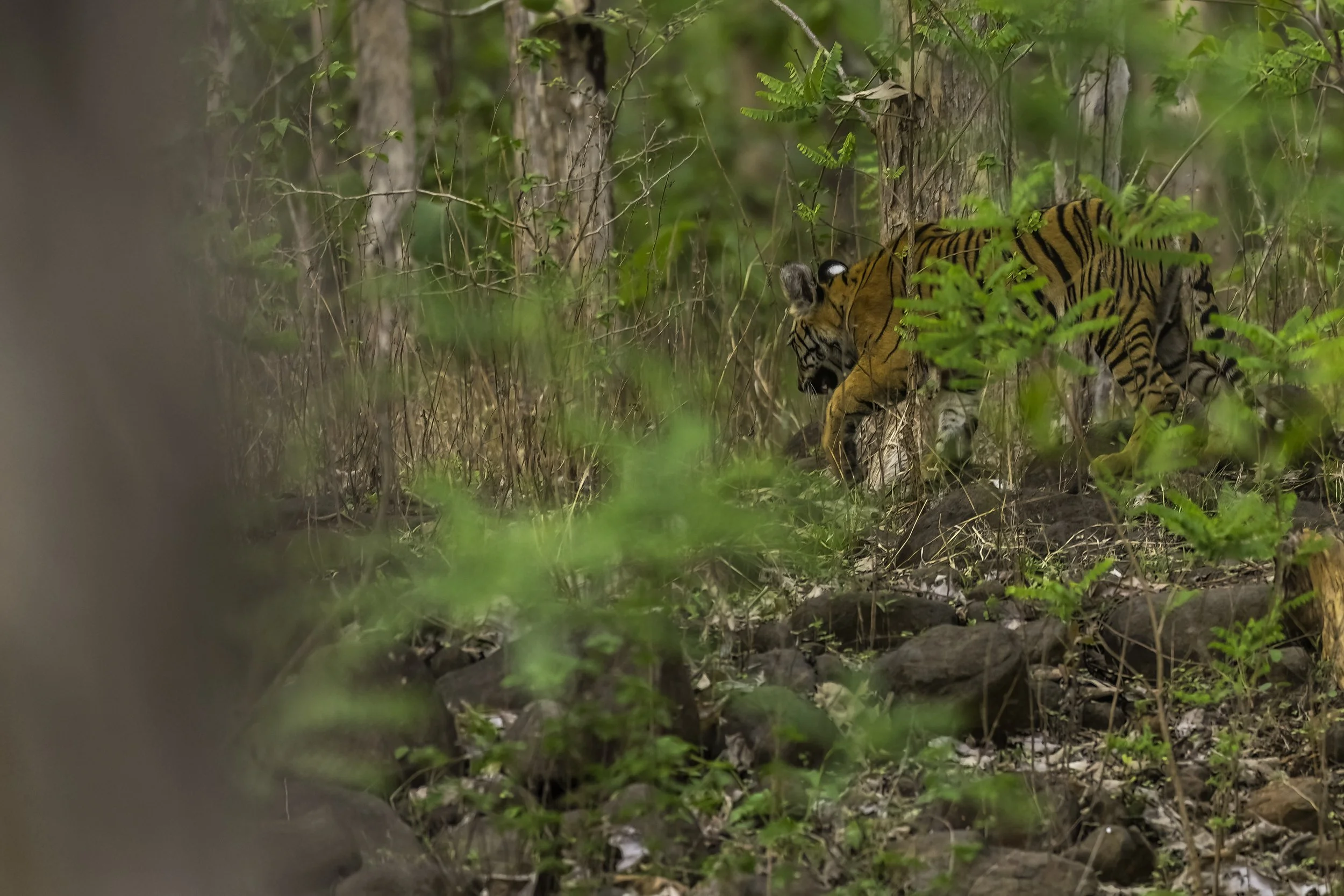
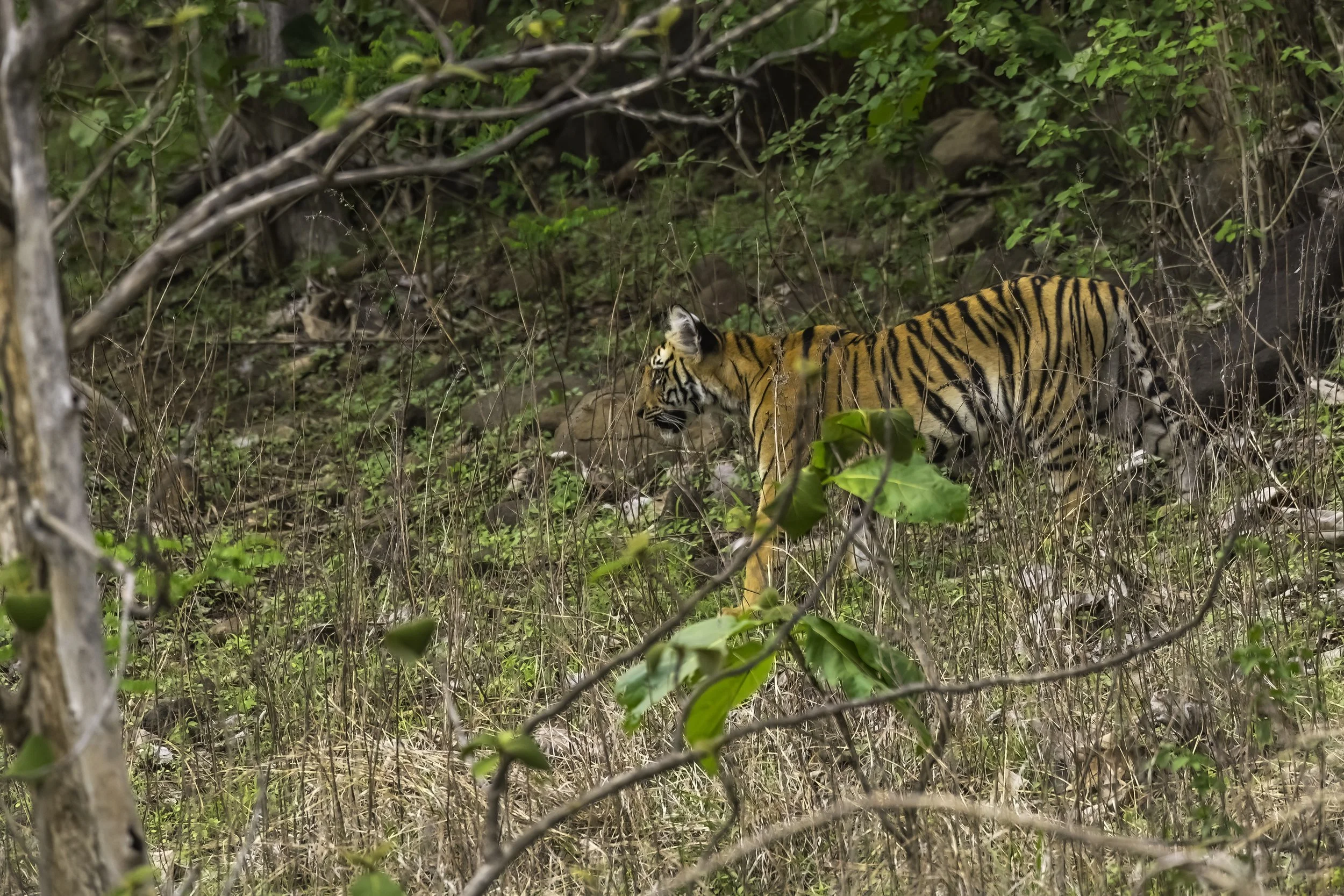
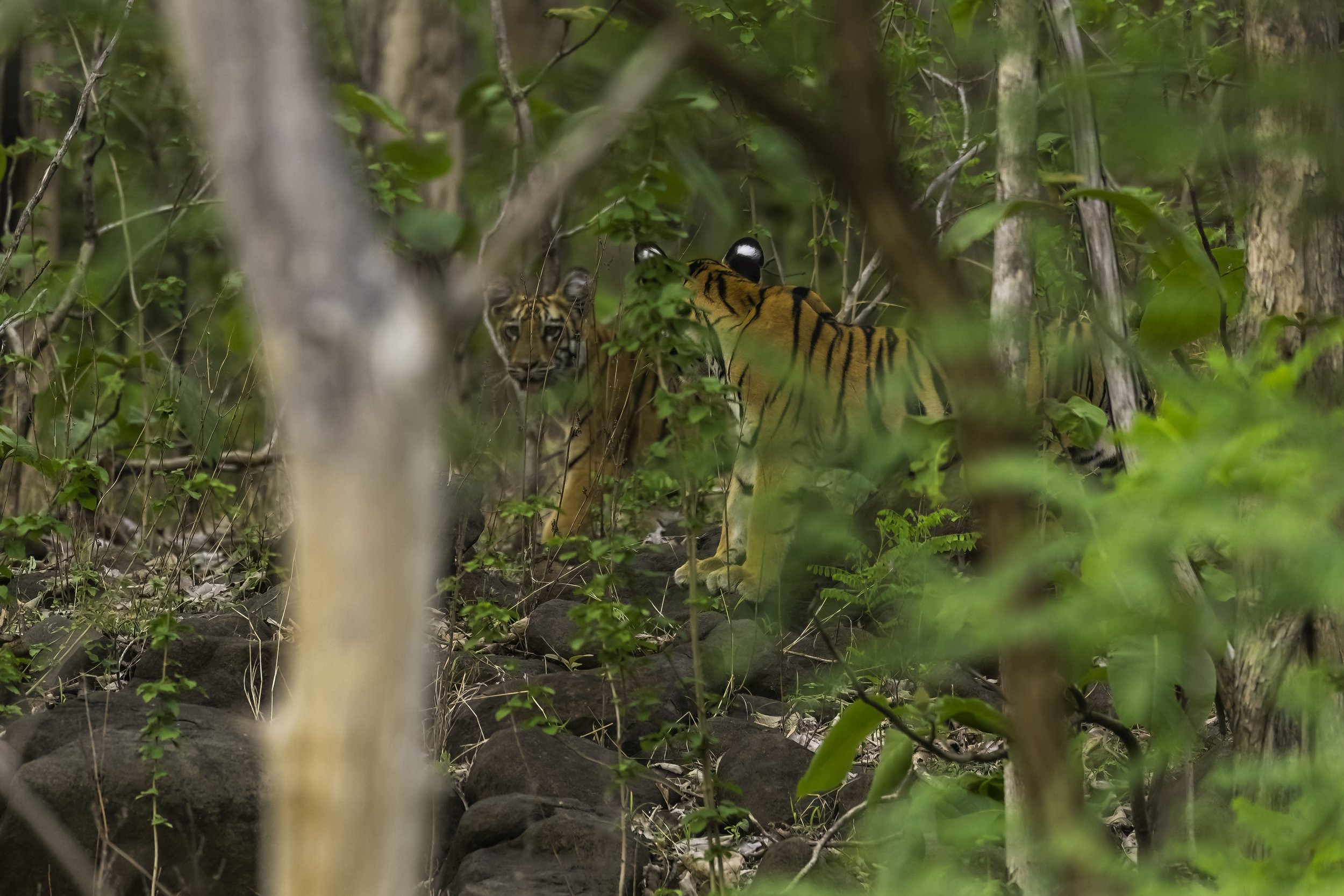
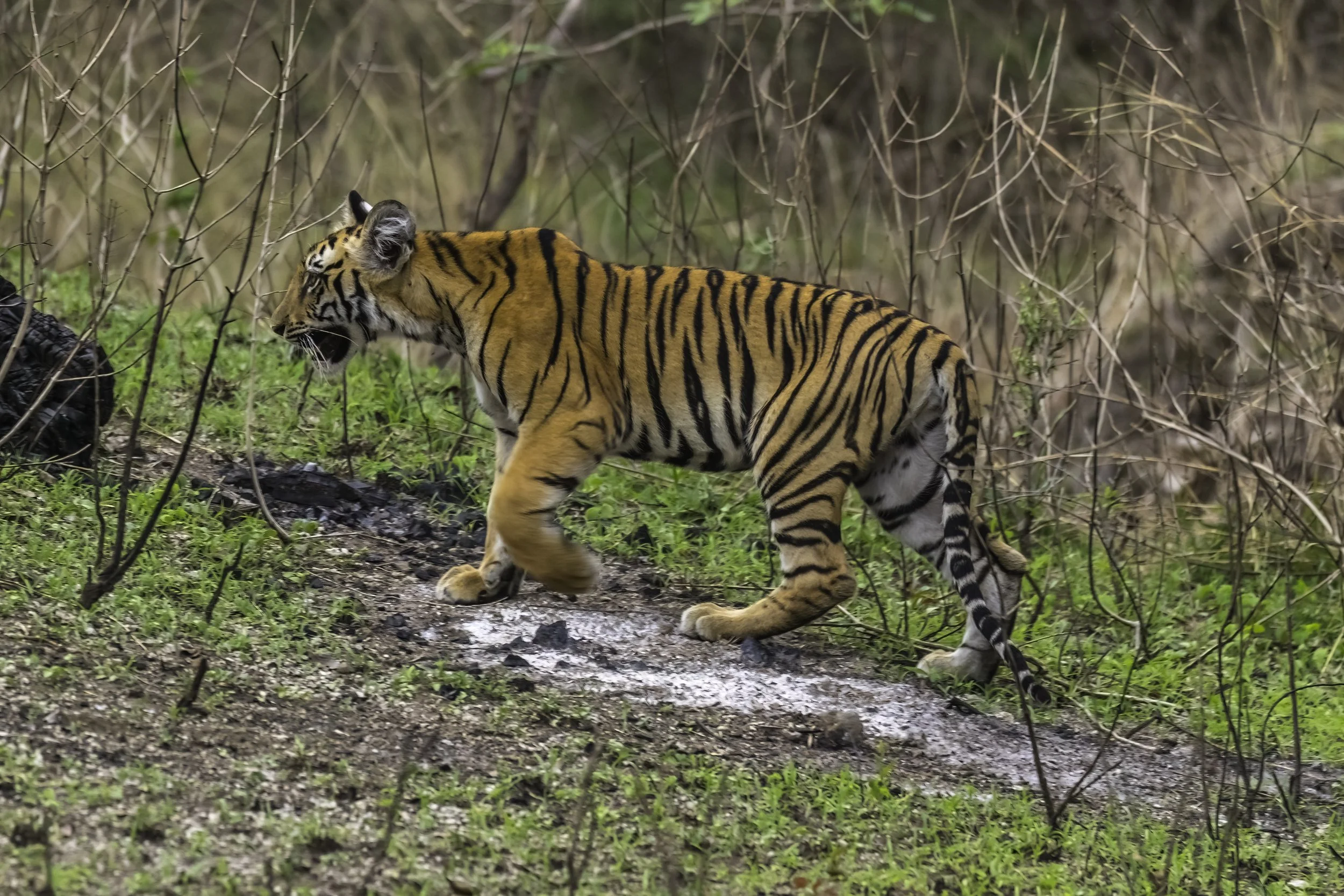
The Padiyali Triad - the three cubs from the 6th litter of 4-Mark
The Padiyali Triad - the three cubs of the “4” Mark Tigress
The morning mist in the Tipeshwar Wildlife Sanctuary does not merely rise; it parts like a heavy velvet curtain to reveal a world ancient, raw, and fiercely guarded. Sprawling across 148.63 km² of basalt terrain and dry deciduous teak forests in the Pandarkawada Forest Division of Maharashtra, this sanctuary feels much larger than its map suggests. It is a fortress of stone, deep nullahs, and golden grasslands reclaimed from human history. Within this fortress, a lineage of royalty has left its indelible mark upon the earth.
To understand the story that unfolded in the extraordinary, secluded rocky folds of the Padiyali area, one must look backward into the annals of Tipeshwar’s golden era. In November 2013, deep within the shadows of the Pilkhan trees, a litter of three female cubs was born to the legendary Pilkhan female and the towering, powerful Budha male. They were a triad of potential: Zara, Zarina, and a second cub whose life would become intertwined with the very soul of the sanctuary. While her sisters bore striping patterns that led humans to call them X-Mark and H-Mark, it was the second cub who carried a spectacular imprint of destiny. Beside her right eye, etched in bold, dark strokes against a coat of rich amber, sat a perfect, unmistakable numeral "4".

She became the 4-Mark Tigress. Her sister Zara and Zarina met tragic ends at the hands of lawless poachers, leaving 4-Mark to carry the genetic weight of her ancestors alone. She did not merely survive; she conquered. As she claimed her territory, she focused her reign around the erstwhile, rehabilitated village of Maregaon. When the village was relocated in 2014–15 to ease human pressure on the sanctuary, nature didn't hesitate to reclaim the vacuum. The cracked mud floors and abandoned fields transformed into a lush, sprawling sea of grass. It was here, amidst the rustling blades of the meadow, that 4-Mark became the undisputed Meadow Queen of Maregaon - a testament to her grace, power, and absolute dominance over the valley.
A queen’s legacy is measured by the footprints she leaves behind and the bloodlines she secures. Over more than a decade of sovereign rule, the Meadow Queen has been a vital engine of tiger conservation, transforming Tipeshwar from a mere ecological sink into a thriving source of apex predators. The lineage of the Meadow Queen is woven through six distinct litters, marked by the cyclical rhythm of life and death in the basalt terrains of Tipeshwar.
First Litter (February 2018): Mating with the then dominant, doting Star male, 4-Mark gave birth to three cubs. This litter achieved a rare 100% survival rate. Among them was a bold young male who bore heavy, chain-like stripes. He would grow up to be the famous Zanjeer male. Zanjeer remained in Tipeshwar, gradually contesting his father's territory to become a dominant apex male of the sanctuary. His siblings dispersed via ancient wildlife corridors, effectively acting as genetic ambassadors to adjacent landscapes.
Second Litter (December 2019): A devastating period for the Meadow Queen. She gave birth to three cubs, but the introduction of transient males and localized pressures resulted in the entire litter being lost to infanticide and environmental stress.
Third Litter (March 2021): History repeated itself cruelly. Another litter of three cubs was documented, but none survived past their first few months. The shifting dynamics of dominant males within the sanctuary’s tight 148.63 km² area created a volatile environment for vulnerable cubs.
Fourth Litter (March 2022): Showing the incredible resilience of her bloodline, 4-Mark gave birth to four cubs. Three survived to sub-adulthood. This litter became famous when 4-Mark, anxious over the aggressive territorial intrusion of a new male tiger, took the extraordinary step of migrating across the state border into Adilabad, Telangana. She moved her cubs across rivers and agricultural fringes twice to keep them safe, demonstrating an unparalleled maternal instinct before returning to the sanctuary core once the threat subsided.
Fifth Litter (August 2023): This litter consisted of two cubs, but once again, the unforgiving nature of the sanctuary’s high tiger density meant that neither survived.
Sixth Litter (September 2024): 4-Mark gave birth to three cubs. As time advanced into mid-2025, this specific litter would draw the attention of the global wildlife community within the secluded, wild valleys of Padiyali and would come to be known as the Padiyali Triad.
The Tale of the Three-Cub Litter of Padiyali
By the dawn of May 2025, the Padiyali region of Tipeshwar—an area characterized by dense bamboo thickets, seasonal forest streams, and steep basalt ridges—became a sanctuary within a sanctuary. Here, hidden deep within the golden lantana and dry teak leaves, the Meadow Queen nurtured her sixth litter. At roughly eight months old, the three cubs were transitioning from fragile infants to spirited, curious juveniles.
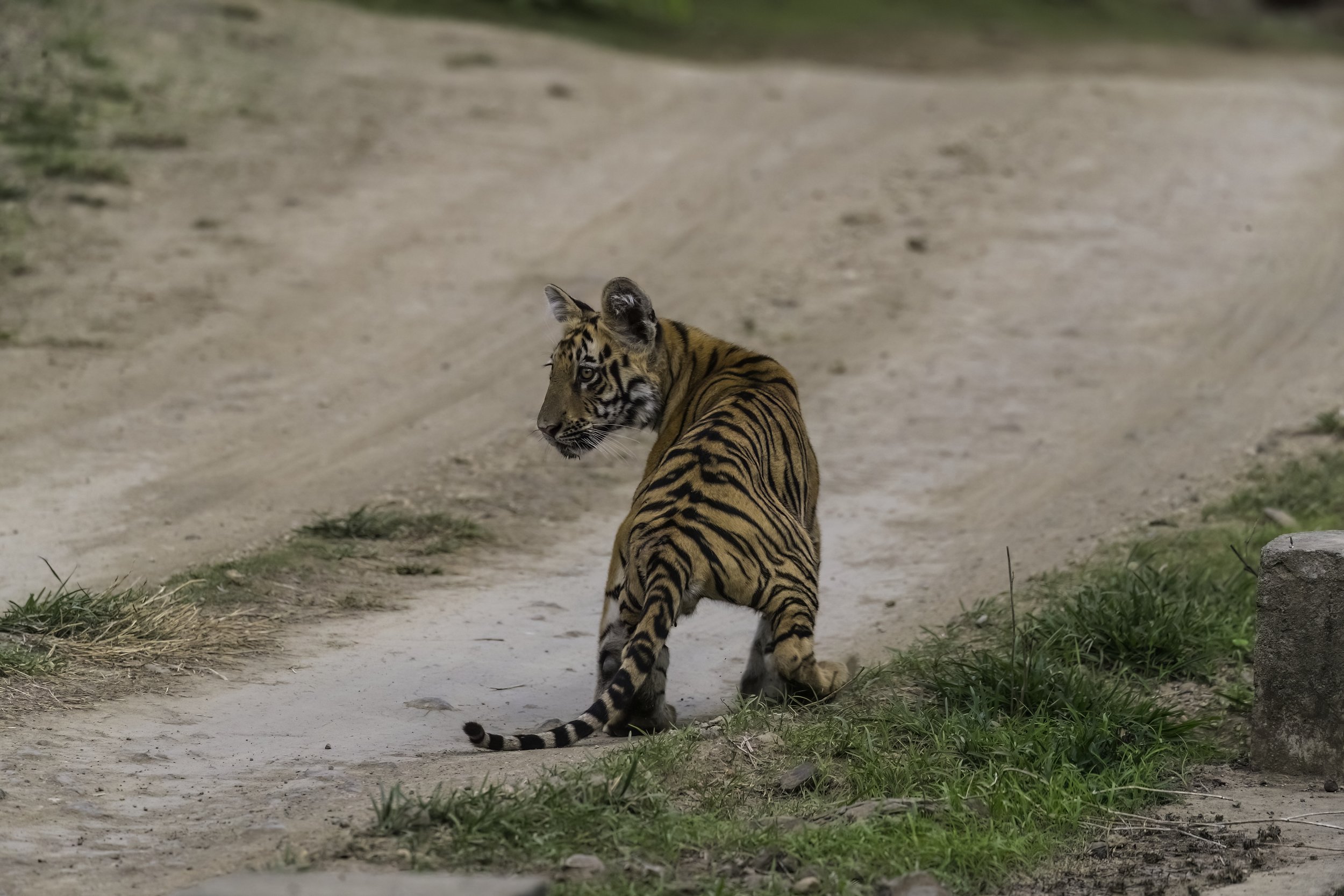
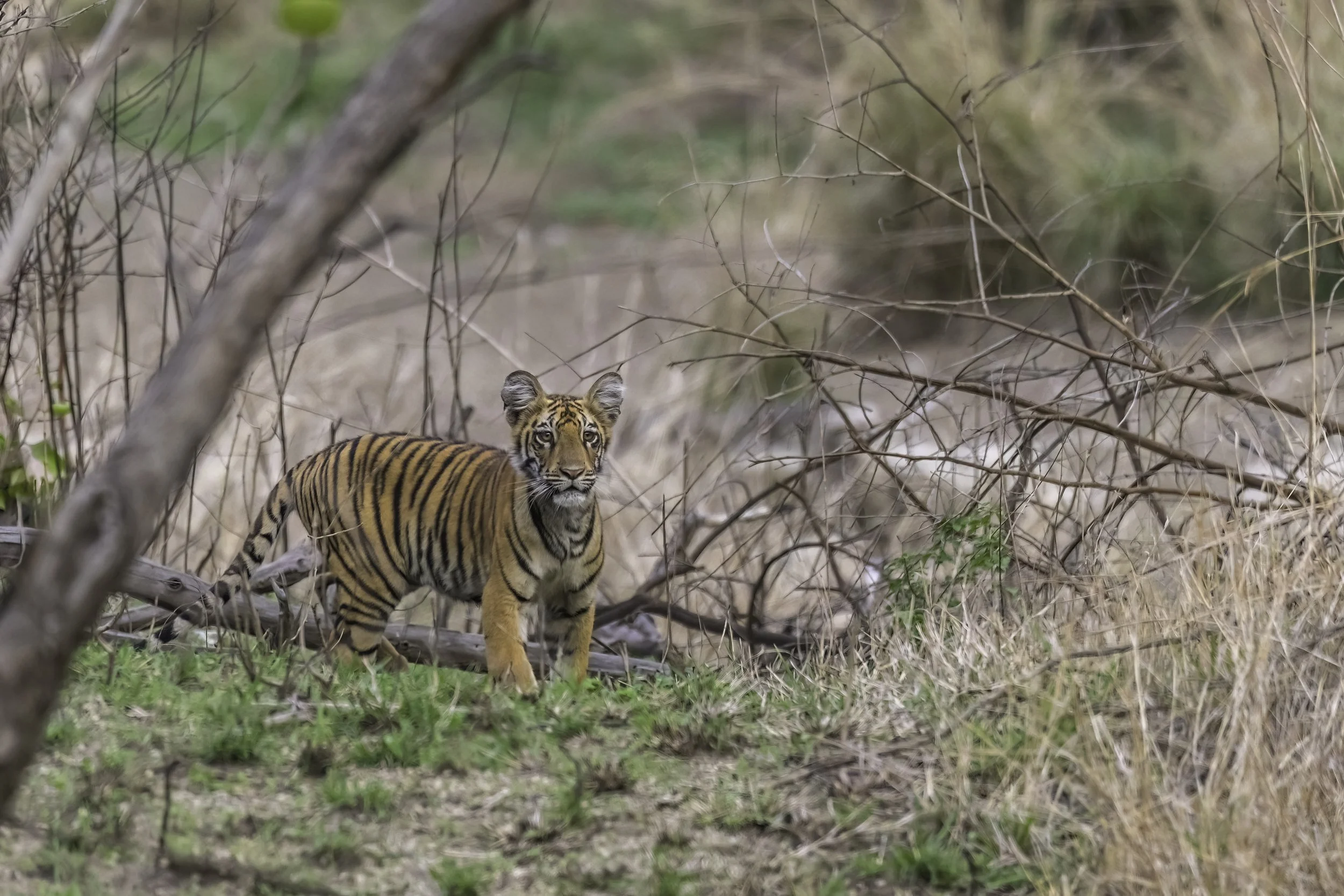
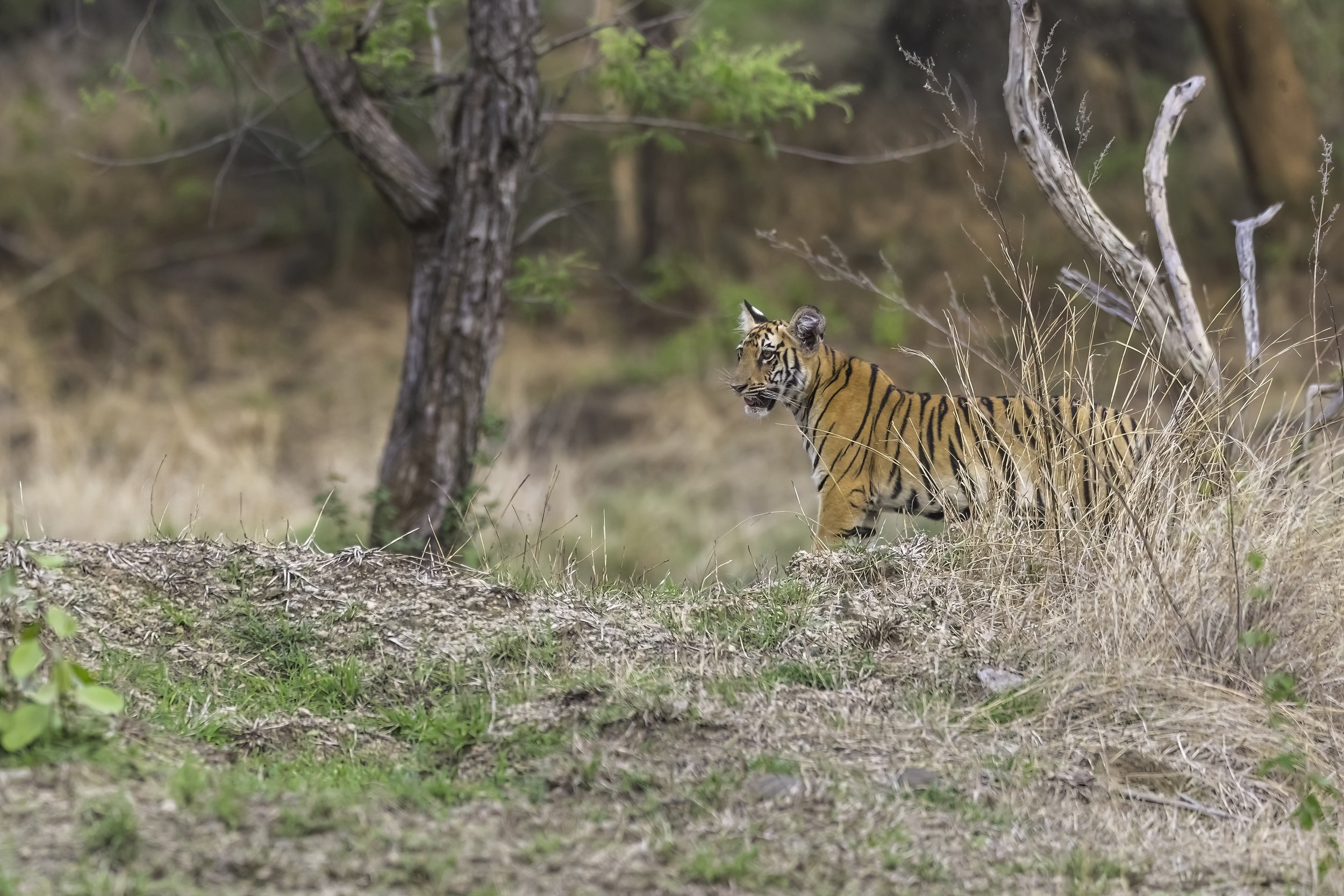
Mornings in Padiyali always began with a lesson in survival. The Meadow Queen would lead her three young charges through the deep labyrinth of bamboo. The cubs, two females and one robust male, exhibited contrasting personalities. The male was bold, frequently stepping out onto the edges of the dry riverbeds, his amber eyes reflecting the unfiltered curiosity of youth. His sisters were more cautious, utilizing the dappled shadows of the teak canopy to camouflage their perfectly patterned coats.
National park archives and field diaries from June 2025 document rare, tender moments of this family. After a successful nocturnal hunt of a wild boar near the sanctuary fringes, 4-Mark would bring her cubs to the waterholes to drink and play. Safari goers lucky enough to witness them captured the cubs wrestling in the tall grass, swatting at each other's tails, and practicing the definitive neck-bites they would one day need to secure their own prey. The Meadow Queen would sit slightly apart, her ears constantly swiveling like radar dishes, decoding the alarm calls of langurs and barking deer. She knew that the Padiyali area was an active corridor for transient males looking to challenge Zanjeer’s absolute rule.
However, the reality of tiger conservation in a small, landlocked sanctuary like Tipeshwar is unforgiving. Spanning just under 150 km², the park suffers from severe spatial constraints. It is an island of wild forest surrounded by agricultural fields, cotton plantations, and expanding human infrastructure. As summer advanced, the pressure intensified. The two female cubs vanished from the records—a grim reminder of the high mortality rates that affect young tigers before they reach independence. Only the single male cub survived the selection of the wilderness. He became his mother’s sole focus, a solitary prince learning the art of governance in the ruins of Maregaon and the shadows of Padiyali.
Documenting a apex predator, particularly a mother bringing up cubs, requires strict adherence to ethical field practices. The surge in wildlife tourism across Central India places immense pressure on resident tigers, making conservation-led photography more critical than ever.
The Critical Bubble of Maternal Space
A tigress raising cubs is operating under extreme psychological and metabolic stress. She must hunt regularly to sustain her milk supply and feed growing juveniles, all while defending her litter from rival predators, wild dogs, and infanticidal male tigers. When tourist vehicles crowd, tail, or surround a tigress, they breach her comfort perimeter. This can result in several negative outcomes:
Forced Abandonment: Stress can cause a tigress to abandon her kill, depriving her cubs of essential nourishment.
Dangerous Relocations: Mothers may feel compelled to move their small cubs through unsafe territories or across sanctuary boundaries into human-dominated areas just to escape vehicular harassment.
Altered Hunting Patterns: Excessive noise and vehicle blockades disrupt the natural movement of prey species, forcing the tigress to hunt during less optimal hours.
To ensure that photography supports tiger conservation rather than hindering it, visitors and photographers must practice patience and field discipline:
The Power of Anticipation: Instead of pursuing a tiger, experienced guides position their vehicles at a distance along predictable travel routes. Allowing the animal to approach on its own terms ensures natural, stress-free behavior.
Engine Decoupling: Engines should be turned off immediately upon sighting a tiger. The vibration and noise of idling diesels disturb the delicate audio environment that tigers rely on to detect threats or prey.
Lens Choice Over Proximity: Photographers should utilize super-telephoto lenses (e.g., 500mm or 600mm) paired with high-resolution sensors. This allows for intimate, detailed portraits of cubs and maternal interactions while maintaining a respectful distance of at least 50 to 100 meters. Smaller focal length lenses can be used in conjunction with extenders to get the desired reach.
Silencing the Gallery: Maintain absolute silence inside safari vehicles. Sudden movements, standing up, shouting or loud whispers can startle cubs, causing them to bolt into thick cover and disrupting their natural routine.
As the timeline moves through 2026, the surviving male cub from the September 2024 Padiyali litter, has reached the critical age of sub-adulthood (approximately 20–22 months old). His transition represents the ultimate success of the Meadow Queen’s maternal care.
Recent camera-trap data and field monitoring by local wildlife societies reveal that the young male has successfully separated from 4-Mark. He has initiated his own dispersal process, carving out a transient territory along the northern buffer boundaries of the Tipeshwar Wildlife Sanctuary. He is developing into a massive feline, inheriting the heavy bone structure of his grandfather Budha and the distinct, confident stride of his mother.
Concurrently, the Meadow Queen of Maregaon, now an aging matriarch at over twelve years old, continues to roam her grass-covered empire. Though her pace has slowed and her facial markings have faded slightly with age, her contribution to the tiger population of Central India remains monumental. Tipeshwar has officially transformed into a source population for the region. The cubs nurtured in its meadows and valleys are actively dispersing outward via forest corridors, crossing over to reclaim the historical tiger lands of Maharashtra and Telangana, ensuring the survival of their species. I am grateful to the Forest Department and the entire team led by RFO Vivek Yewatkar for their help and insights. The RFO is seen here in the center with his entire team.
Tipeshwar Forest Department led by RFO Vivek Yewatkar
Pic Credit: Vivek Yewatkar
‡‡‡‡‡
The tigress is a truly majestic creature. She is the alpha animal in the jungle and for good reason. She moves with a fluid grace that no other animal can match. Padding silently, she can creep up on any creature and kill them with a single swipe of her outsized paws. Once those thorn shaped claws rip at you, it is all but over. She is phantom silent and melts into the bush like molten gold into a cast. When she finds a good ambush site, she lurks in the shadows. Then she waits for prey to pass, observing everything with her glittering, feline eyes. When her target appears, she pounces with a coiled energy that is both fearsome and pitiless.
Understanding what animal calls mean can be hugely beneficial for a wildlife enthusiast, especially since the target subject is a lone master of disguise. When one is in a vast, dense jungle in India, and the tiger one hopes to document could be anywhere in that jungle, the only sense that can be relied on is hearing. Finding paw prints and signs of activity will show what happened on the night’s hunt, but once the animal vanishes into the tangled undergrowth the only way to track it is to stand and listen for a call. Not from the tiger itself, but an alarm call from potential prey alerting their fellow animals to the location of the predator. This is a phenomenon one has to experience, but first, what exactly is an alarm call?
Alarm calls are calls given by animals lower in the food chain, potential prey animals, when they detect the movement of an apex predator. Monkeys, deer and even birds give alarm calls. It is a very short, high pitched and high intensity call. When an apex predator, a tiger or a leopard, is spotted these alarm calls warn the herd that the predator is on the prowl. So when we hear these, we listen for the intensity, how far the call has come from and how reliable it is. What do I mean by reliable? One of the first and most useful vocal indicators are the Bandar Log - Hanuman Langurs, perched in the high branches able to see the predator from afar, who amazingly use a barking alarm call for leopards and a different call for tigers. Their call indicates that a predator is on the move and by finding the direction of their gaze the general direction of the predator can be gauged. Experienced guides can also determine, based on the intensity and tone of the call, whether the predator is a tiger or a leopard. Chital, favourite prey of tigers, quickly respond to the langurs call and begin a persistent barking of their own. And finally one of the most defined calls to listen for when tracking is given by sambar deer, who make a guttural squeak and stamp their feet when they spot the tiger. And when the tiger is out on the hunt this is an explosion of alarm calls from different animals that echoes through the jungle.
With that said hit play, close your eyes and listen to this recording from Tadoba from a few years back. It starts with a Langur hesitantly raising the alarm - maybe he has spotted those dreaded stripes whispering through the tall grass - the dappled light plays tricks. The call is then picked up by the chital and then almost a minute later, a sambhar! Now the tiger has definitely been spotted. The intensity grows, the chital, the sambhar call more fervently and then you hear it!
“One can hear a tiger roar from over a mile away!”
‡‡‡‡‡


Related Posts



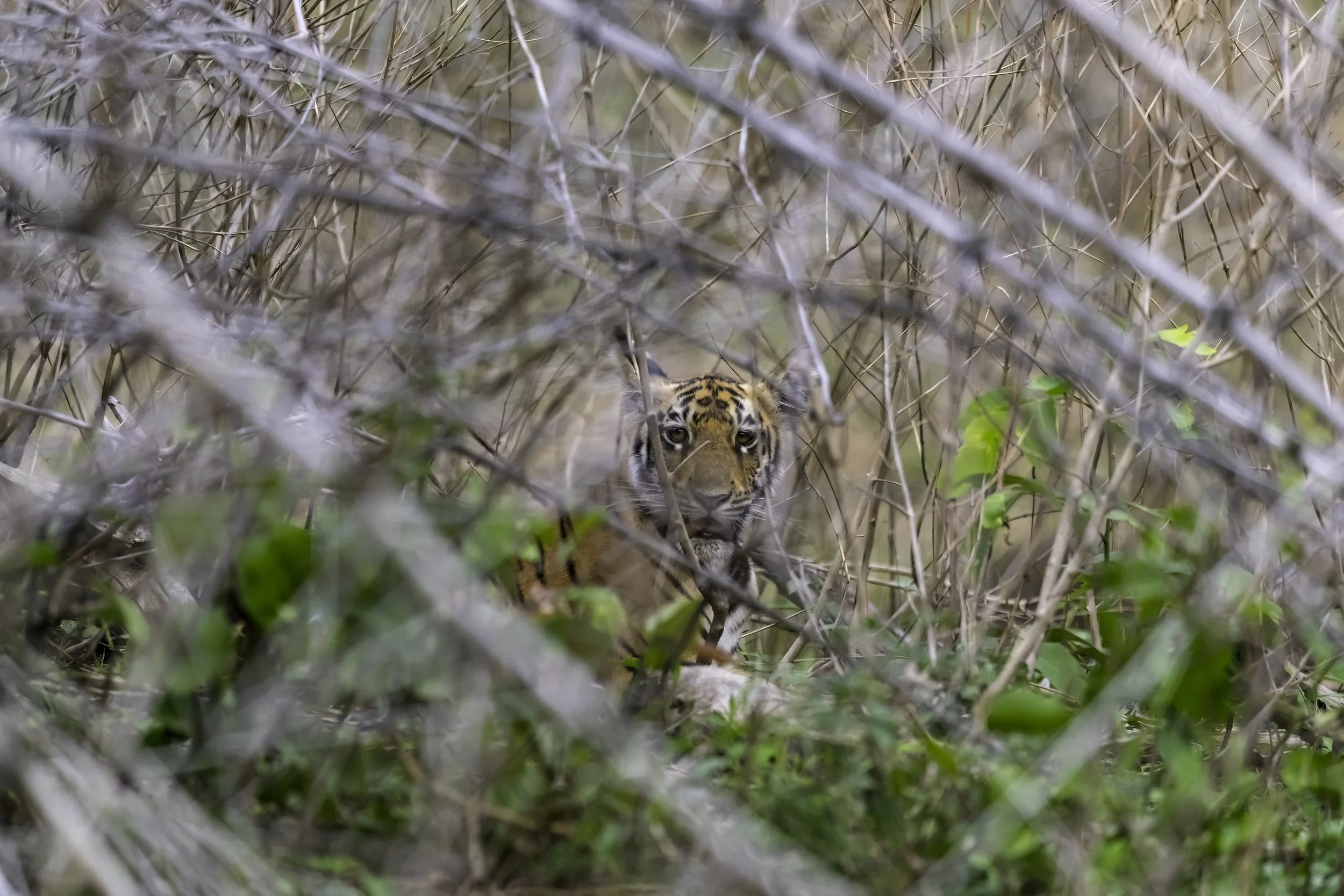
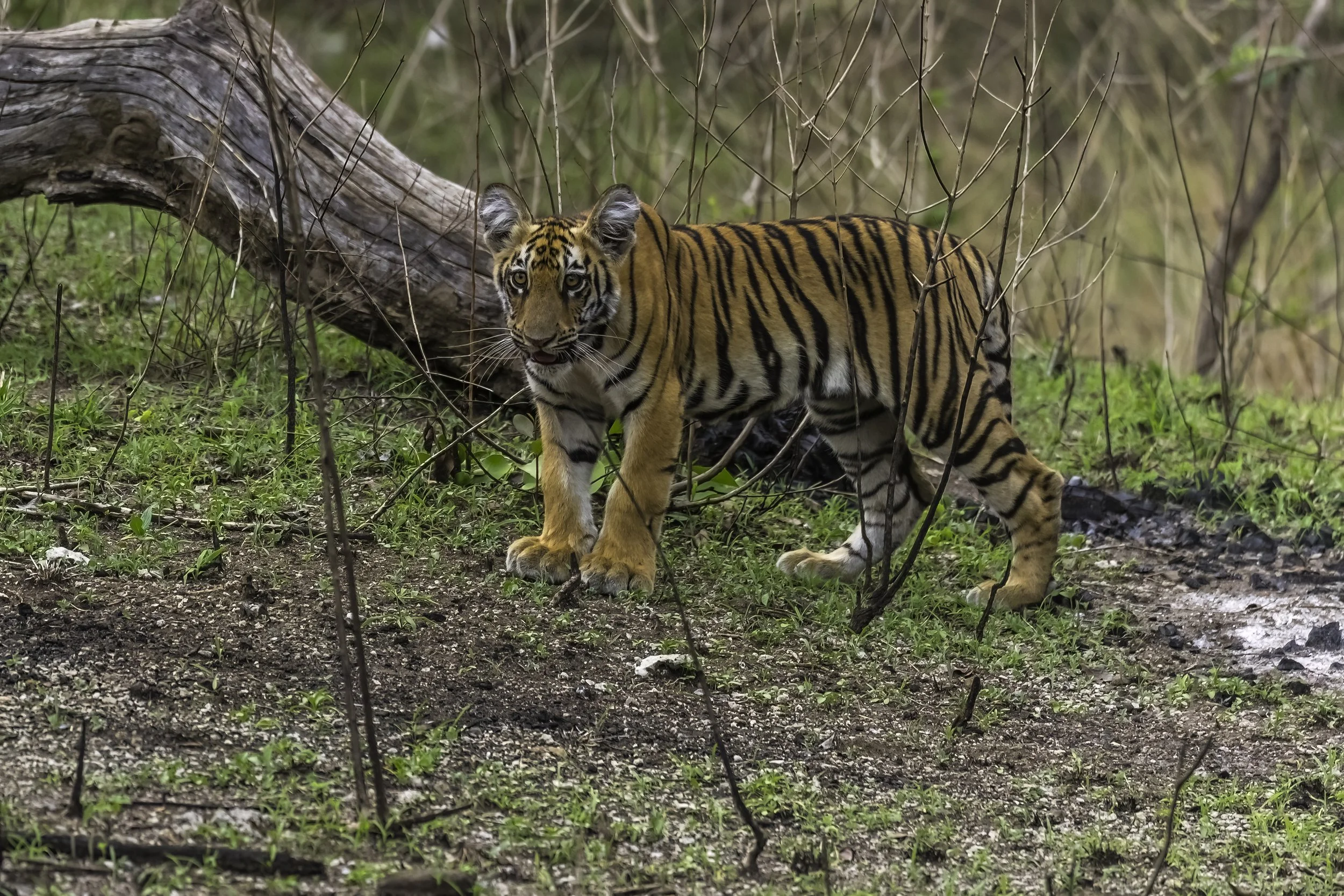
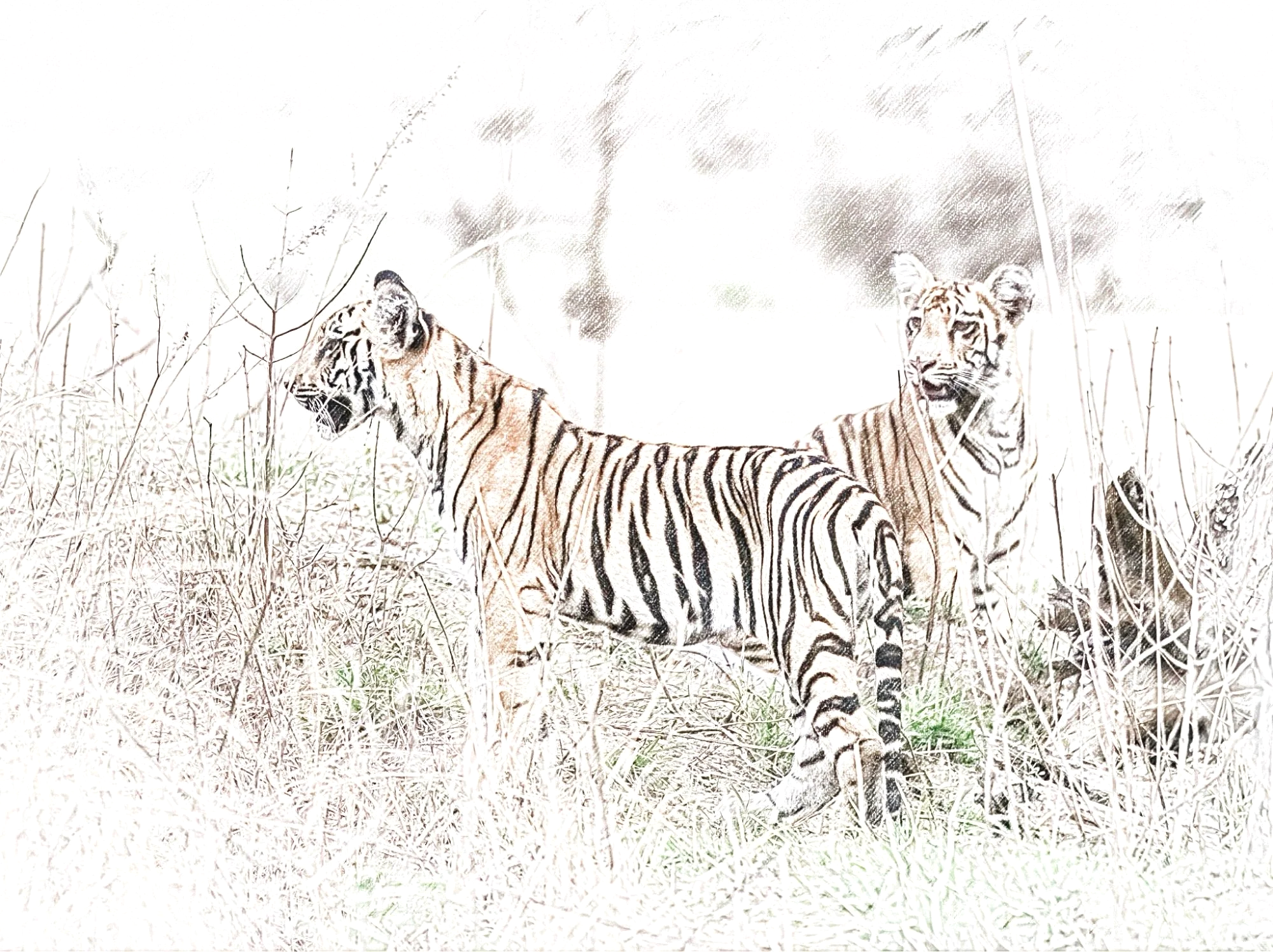
A queen’s legacy is measured by the footprints she leaves behind and the bloodlines she secures. Over more than a decade of sovereign rule, the Meadow Queen of Maregaon has been a vital engine of tiger conservation, transforming Tipeshwar from a mere ecological sink into a thriving source of apex predators.
#wildartworks, #wildlifephotography, #canon, #tiger, #wildlife, #conservationphotography, #indian_wildlifes, #indianwildlifeofficial, #wildlifeonearth, #bbcearth, #natgeowild, #natgeoindia, @awpc.hk, @globalcapture, #maharashtra, #trackingwildlife, #tipeshwar, #Mathani, #MathaniGate, #pantheratigris, #scentmarking, #bengaltiger, #royalbengaltiger, #bigcats, #4MarkTigress, #4mark, #meadowqueenofmaregaon, #tigercubs, #4markcubs,