
Manouria emys
CRITICALLY ENDANGERED
Kaeng Krachan National Park, Thailand
The canopy of Kaeng Krachan National Park hung low and heavy with the moisture of the impending monsoon. Near the Ban Krang Weir, where the Pran Buri River slows into a series of shallow, pebble-strewn pools, the air smelled of damp earth and rotting vegetation. Beneath a dense tapestry of wild ginger plants and fallen dipterocarp leaves, a shadow detached itself from the forest floor.
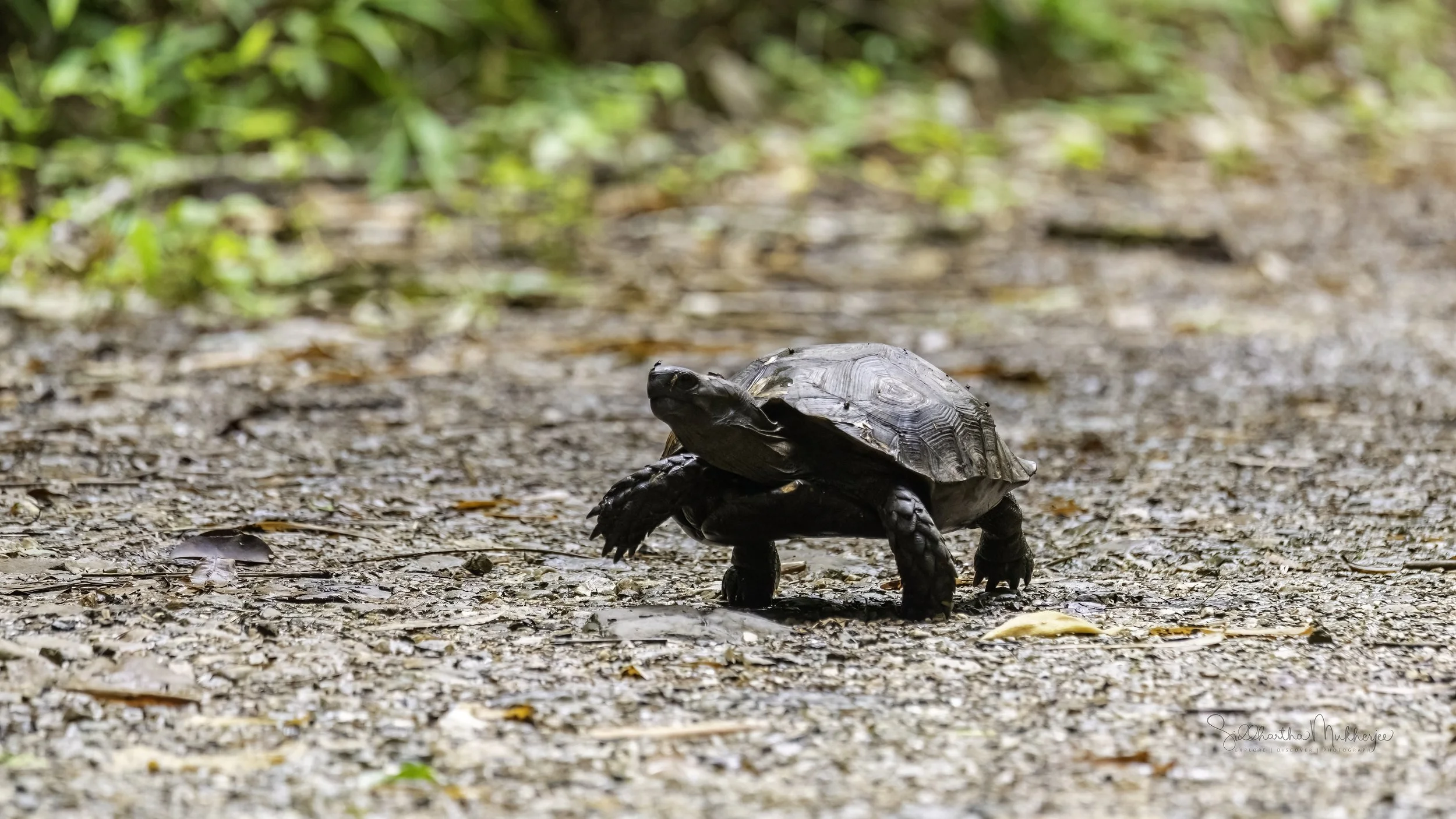
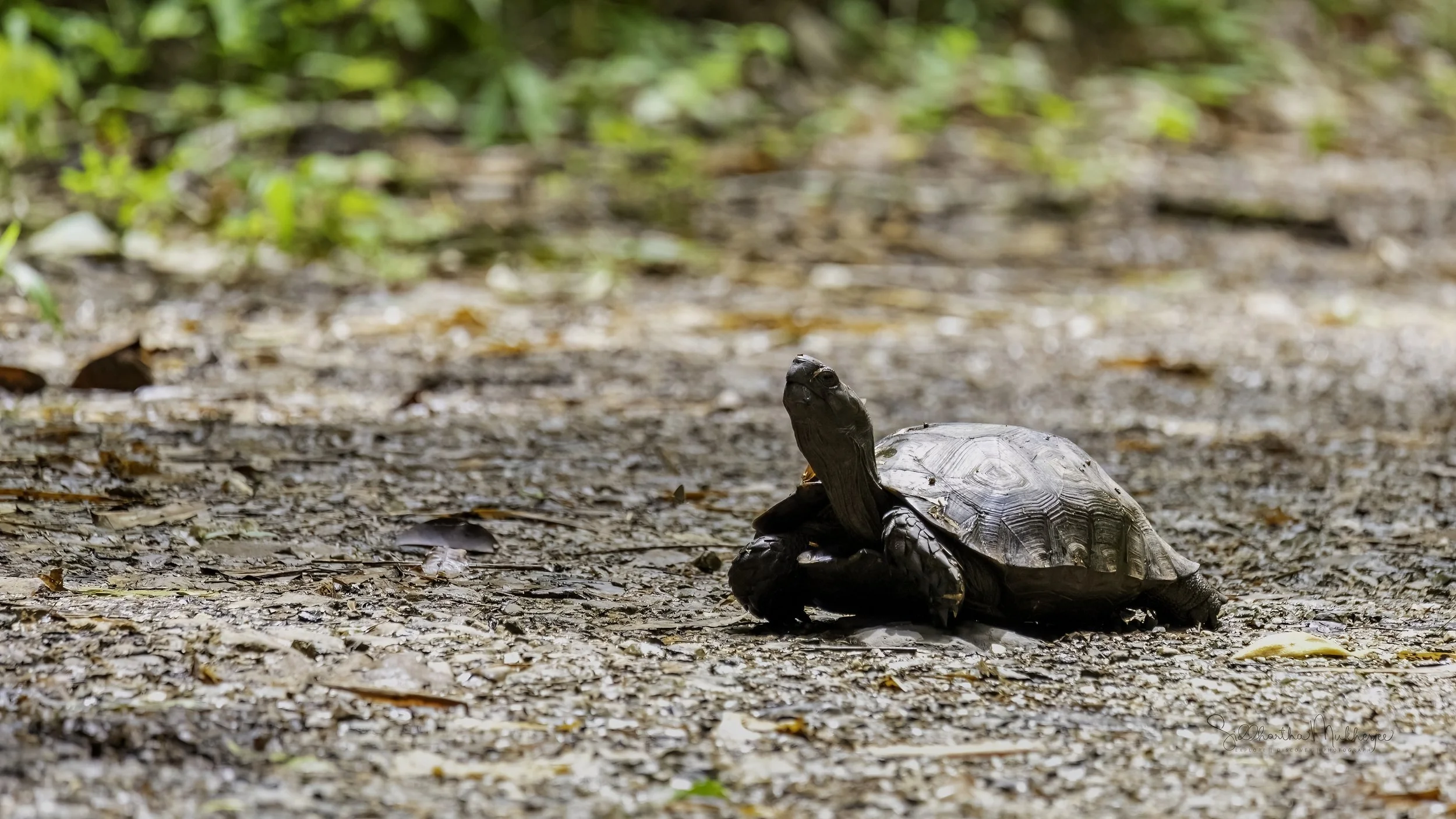
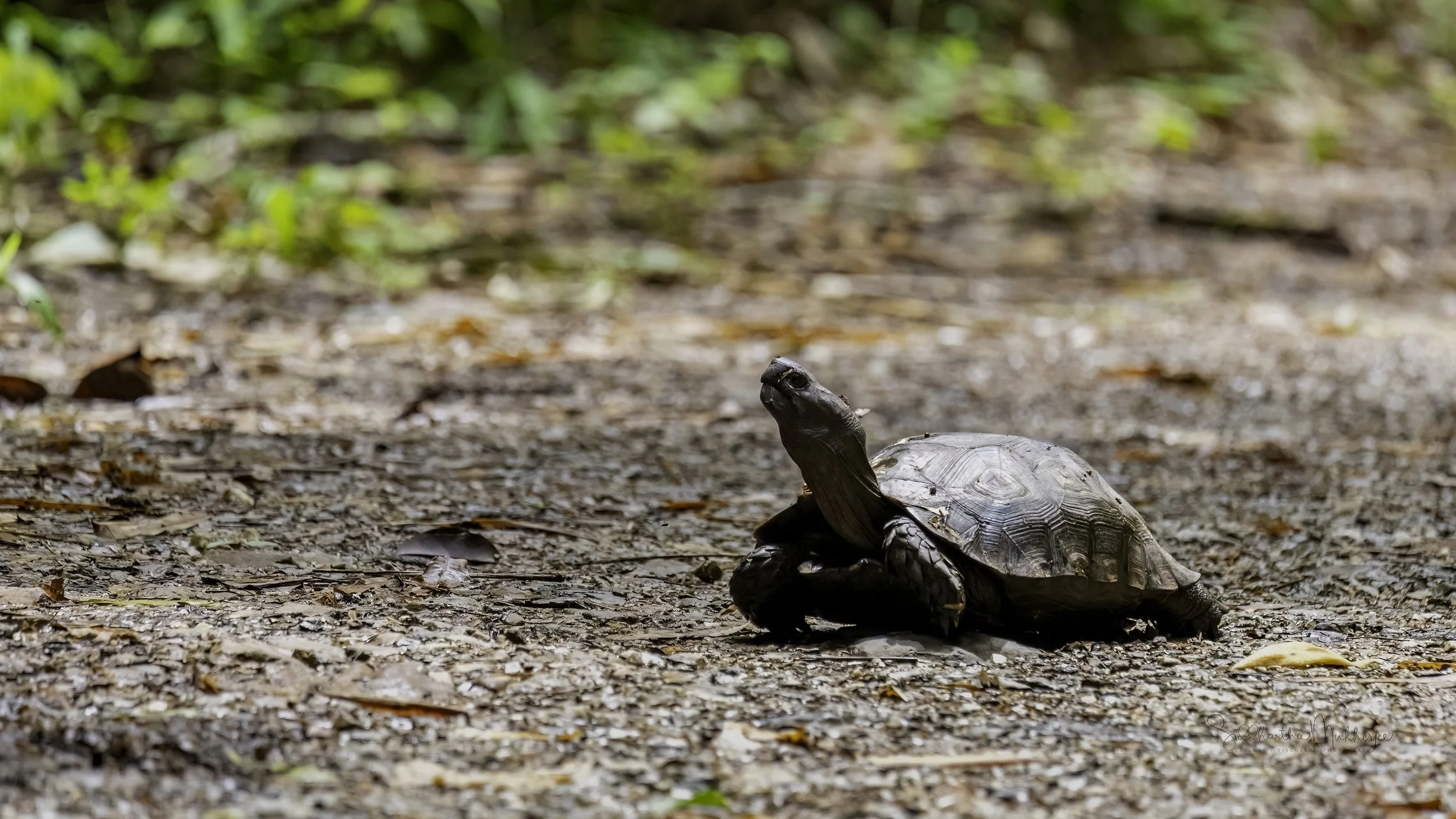
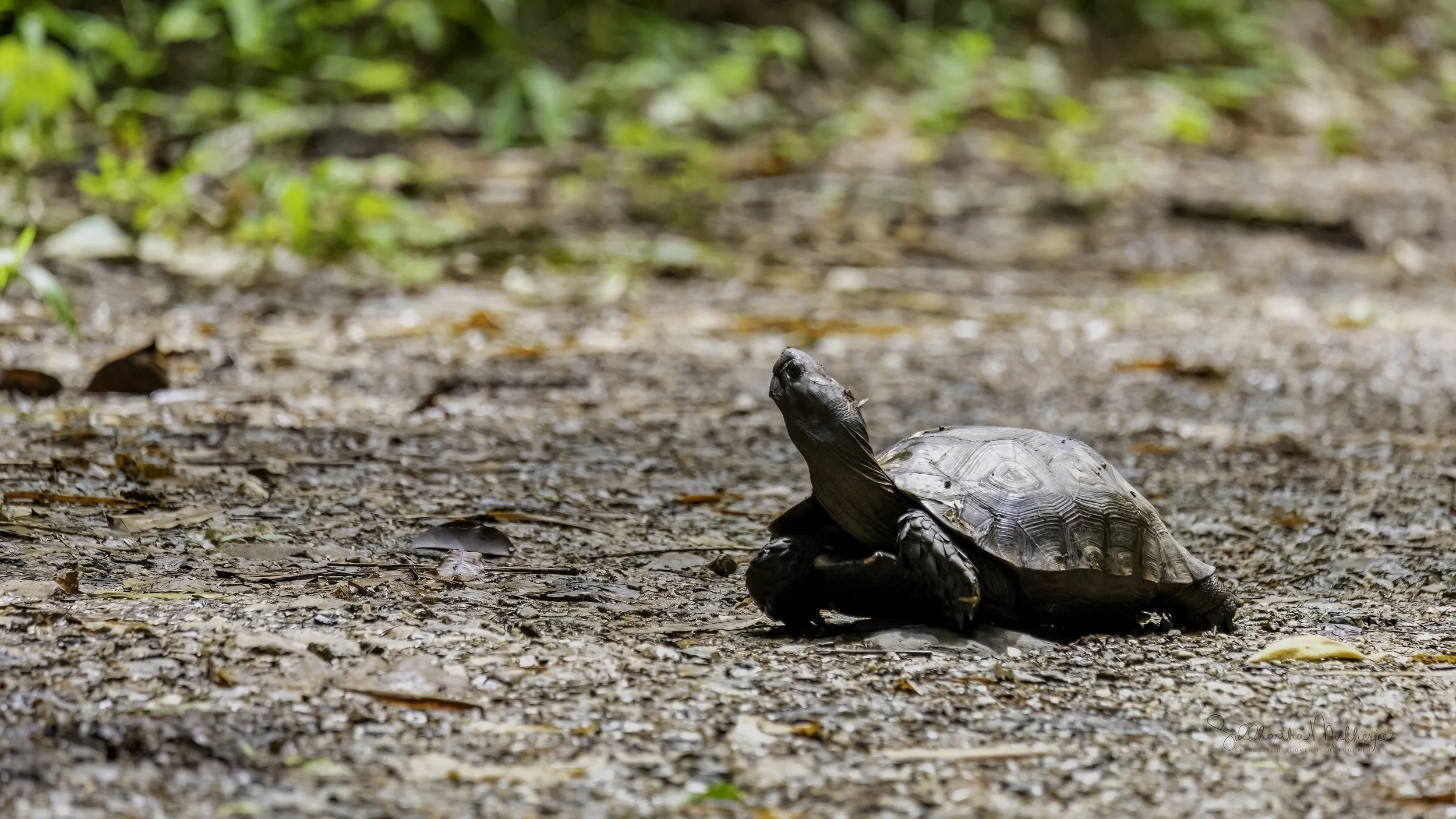
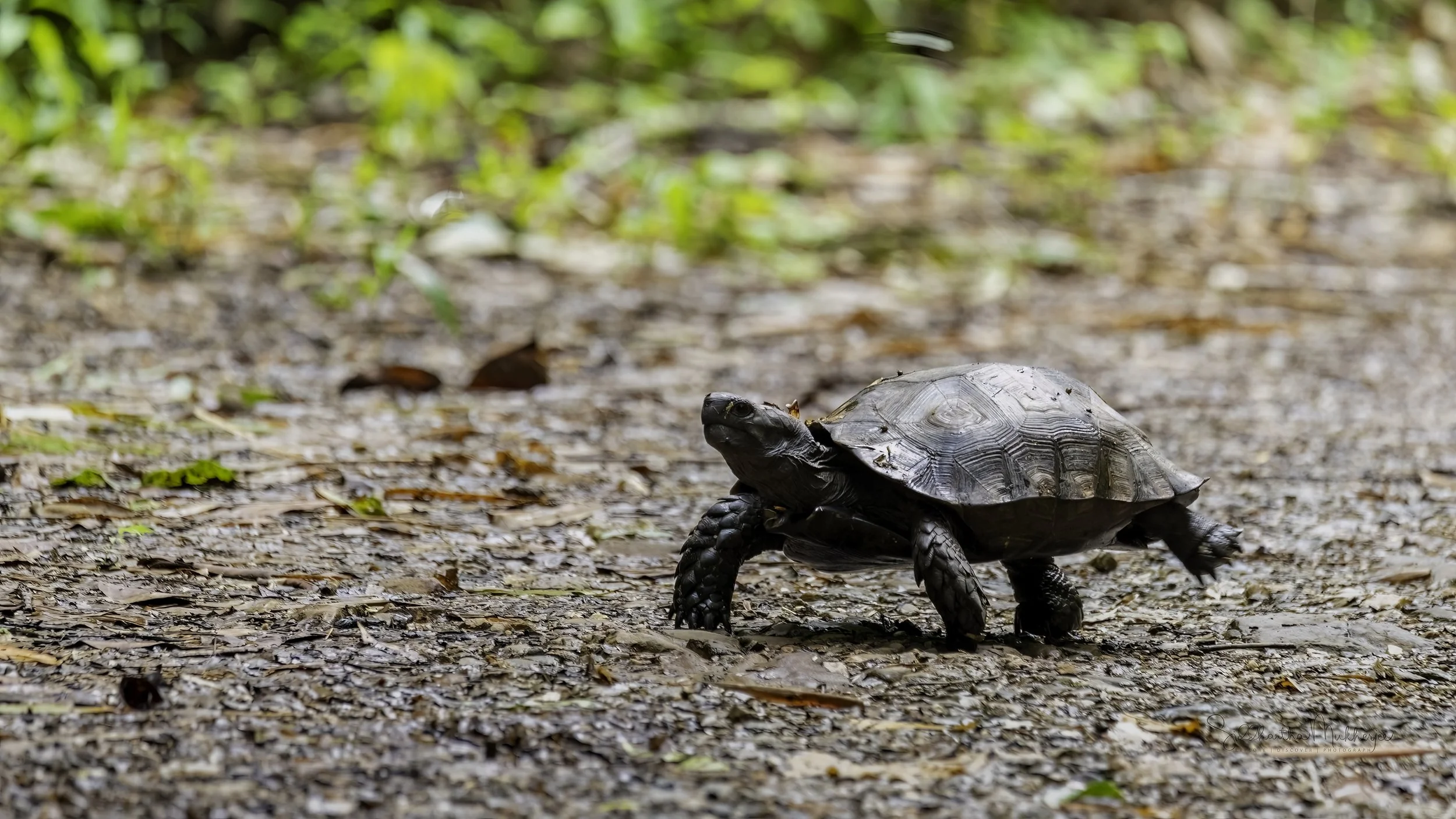
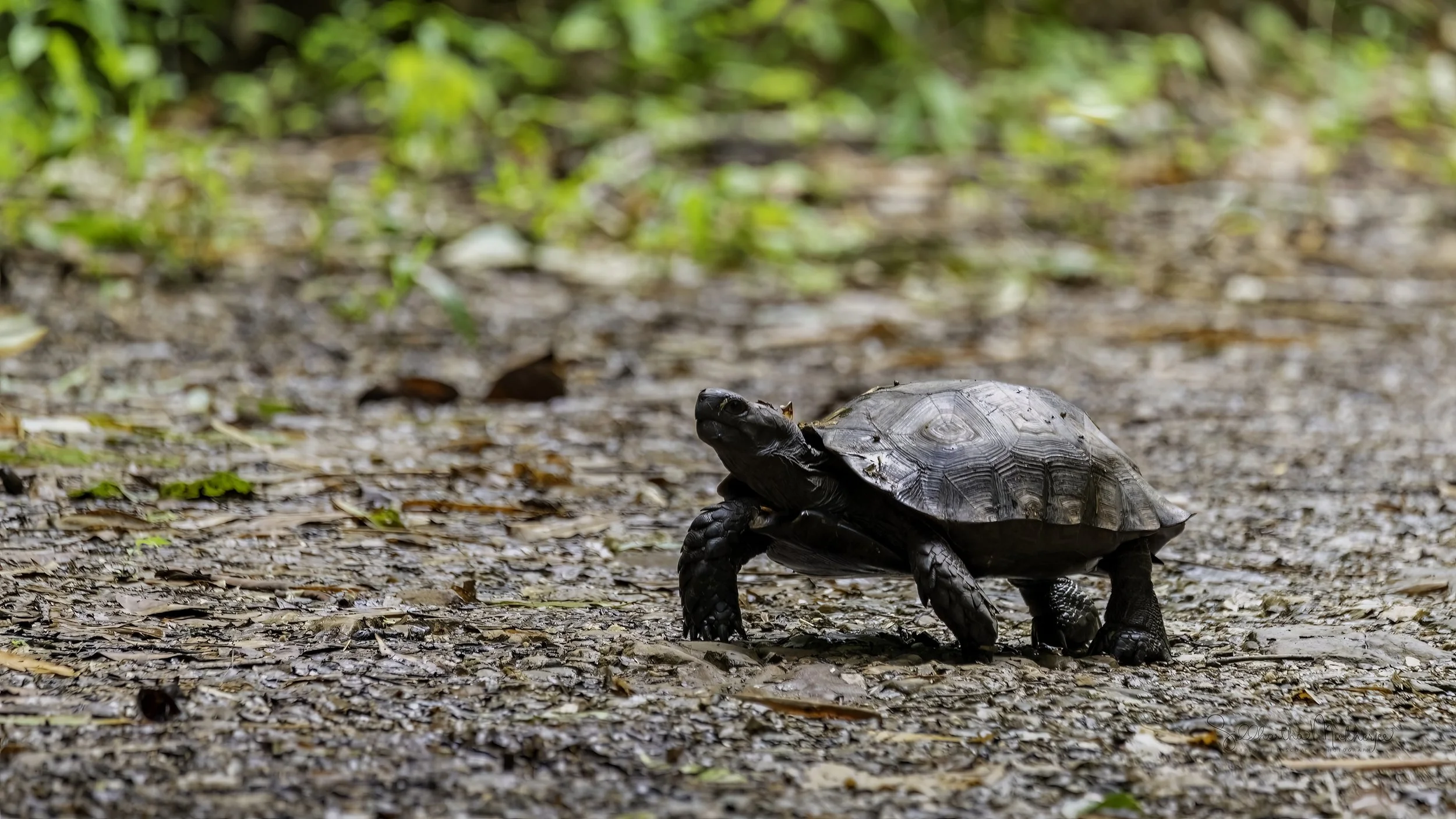
The Critically Endangered Asian Forest Tortoise (Manouria emys), the largest tortoise on the Asiatic mainland, emerged onto a bare patch in the jungle just a few feet away from me.
To see this ancient creature in the wild is to glimpse a living prehistoric relic. Its massive, low-domed carapace glistened with morning dew, showcasing deep, dark brown and black tones that perfectly mimicked the decaying wood around it. This specific individual, a magnificent adult, measured nearly 60 centimetres in straight carapace length and weighed close to 30 kilograms. Its shell was not highly arched like its desert-dwelling cousins but somewhat flattened, an evolutionary adaptation for pushing through the tangled, thorny undergrowth of the Thai rainforest.
Kaeng Krachan National Park, the largest national park of Thailand, is located in Phetchaburi and Prachuap Khiri Khan Provinces, about 60 km from Phetchaburi and 75 km from Hua Hin. It is bounded by the Tanintharyi Nature Reserve along Myanmar's border to the west and part of the Western Forest Complex that covers 18,730 km² across 19 protected sites between Myanmar and Thailand. There are two main rivers in the park; the Phetchaburi and the Pran Buri Rivers. Both rivers originate from the Tanaosri Mountain Range. In the north, Phetchaburi River flows into Kaeng Krachan Dam and flows further east all the way out to the Gulf of Thailand. Pran Buri River flows south to Prachuap Khiri Khan Province, into Pran Buri Reservoir and out to the Gulf of Thailand. The park was declared a reserve in 1964 and on 12 June 1981 it became the 28th national park of Thailand. Originally covering an area of 2,478 km², it was enlarged in December 1984 to include the boundary area between Phetchaburi and Prachuap Khiri Khan Provinces, an additional 300,000 rai. The park has been included in the list of ASEAN Heritage Parks. Since 2011, Thailand has proposed that Unesco designate Kaeng Krachan National Park a world heritage site and in July 2021 it was inscribed as part of the Kaeng Krachan Forest Complex. The complex also covers Kui Buri National Park, Chaloem Phrakiat Thai Prachan National Park, and Mae Nam Phachi Wildlife Sanctuary. It was listed under Criterion (x) for its rich biodiversity, rare species, and critical natural habitats.
The terrestrial biodiversity within the park is equally exceptional, sustaining an intricate matrix of top-tier apex predators and large herbivores. Kaeng Krachan is one of the rare remaining wildernesses that protects a complete suite of native felids, sheltering eight wild cat species including the Indochinese tiger, clouded leopard, and melanistic panthers (black panthers). Large mammals like the Asian elephant, gaur, banteng, Malayan tapir, and the elusive Fea's muntjac navigate the deep valley corridors alongside thriving primate communities, including white-handed gibbons, dusky leaf monkeys, and stump-tailed macaques. Furthermore, the park's primary river systems, the Phetchaburi and Pranburi rivers, act as crucial hydrological lifelines, acting as the last wild refuges for the critically endangered Siamese crocodile. However, this rich habitat faces intense systemic pressures. Deforestation along the park’s periphery and localized forest encroachment—such as a major incident involving over 4,000 rai of land degradation uncovered by the Department of National Parks, Wildlife and Plant Conservation (DNP)—have fractured historical migration corridors. Human-wildlife conflicts, particularly regarding crop-raiding elephants, and sophisticated illegal hunting operations have pressured park authorities to launch aggressive anti-poaching operations like "Operation Honkit" to protect the park's core megafauna. Additionally, historical governance clashes involving the relocation and forced displacement of indigenous Karen communities, who traditionally practiced rotational agriculture, continue to spark intense debates surrounding social equity and ecological preservation.
The deep primary forests of Kaeng Krachan are not merely passive collections of trees; they serve as a dynamic engine driving the ecosystem structure of continental Southeast Asia. These dense woodlands act as a critical watershed area that regulates regional microclimates and mitigates severe weather events, preventing catastrophic downstream flooding during the monsoon season while securing water levels for major reservoirs like the Kaeng Krachan Dam. On a finer scale, the park's flora exemplifies a profound evolutionary symbiosis; continental tree species such as oaksand chestnuts closely intermingle with tropical giants like Dipterocarpus and valuable Hopea trees. This complex botanical layering supports accelerated natural regeneration, where hornbills, primates, and forest squirrels act as essential seed dispersers, dropping seeds across fragmented zones to naturally repair degraded edges. By serving as a continuous genetic corridor that connects with protected areas in Myanmar and adjacent Thai sanctuaries like the Pachee River Wildlife Sanctuary, Kaeng Krachan safeguards large-scale evolutionary processes. Without the massive structural buffer provided by these forests, the region would face rapid ecosystem collapse, crippling the migratory pathways of countless birds and triggering the local extinction of some of Asia's most vulnerable species.
Its geographical position creates a unique ecological crossroads where four major biogeographical realms converge: the Himalayan, Indochinese, Sundaic (Malayan) & Sumatran zones. This intersection fuels a massive variation in altitudinal zones, establishing distinct microclimates across dry evergreen, semi-evergreen, moist evergreen, mixed deciduous, and montane forests. The park’s exceptional avifauna makes it a globally renowned destination for naturalists, boasting nearly 480 recorded bird species. Due to the park's unique layout, many southern avian species hit their absolute northernmost limits here, while northern continental species mark their southernmost boundaries. Notably, it serves as the only sanctuary in Thailand for the highly isolated and rare Ratchet-tailed Treepie, a species separated by nearly 2,000 kilometres from its main populations in Indochina. The dense canopies also echo with the calls of seven distinct hornbill species, including the massive Great Hornbill, the endangered Plain-pouched Hornbill, and the Helmeted Hornbill, alongside a vibrant assembly of broadbills, pittas, and the majestic Grey Peacock-Pheasant.
Discover the birds and wildlife of Kaeng Krachan National Park.
Asian Forest Tortoise
While Kaeng Krachan provides a pristine stronghold, Manouria emys claims a wide but severely fragmented footprint across Asia. It is split into two distinct subspecies:
Manouria emys emys (the Asian Brown Tortoise), found primarily in southern Thailand, Malaysia, Sumatra & Borneo; and
Manouria emys phayrei (the Dark-coloured Forest Tortoise), which represents the northern populations.
Beyond the banks of the Pran Buri River, the species struggles to maintain its footing across its broader geographic range:
Thailand: Viable populations still inhabit the dense, contiguous forests of the Tenasserim Hills, the Western Forest Complex, and remote pockets of the southern rainforests near the Malaysian border.
India: The subspecies Manouria emys phayrei resides in the remote, hilly rainforests of Northeast India, specifically within the states of Assam, Nagaland, Manipur, Mizoram and Tripura. Here, it is often tied to moist river valleys and evergreen hill forests.
Broader Asia: Isolated, dwindling populations can be found in Bangladesh, Myanmar, the Malaysian Peninsula and the Indonesian islands of Sumatra and Borneo.
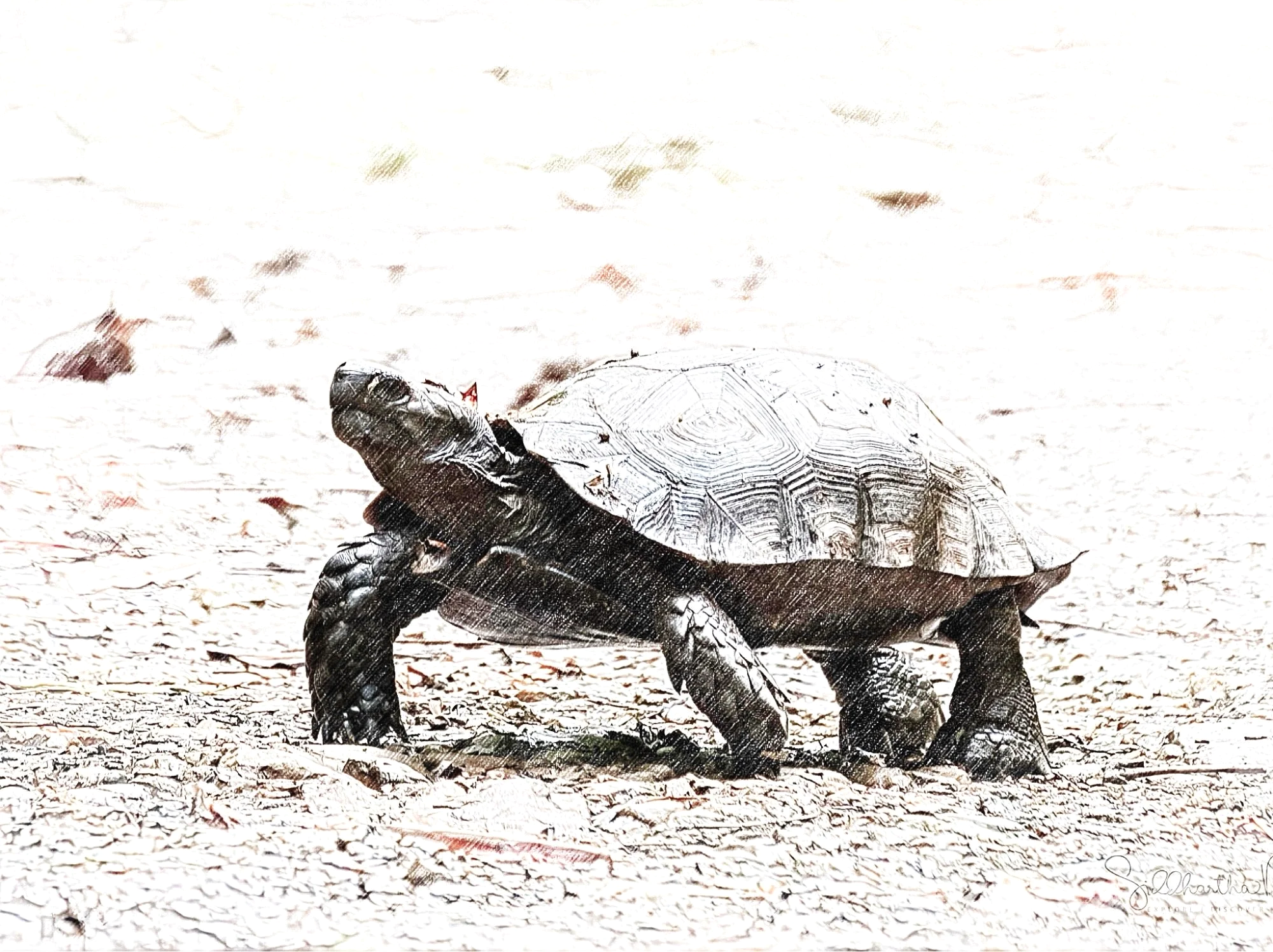
The physical blueprint of the Asian Forest Tortoise is built for power and endurance rather than speed. Its most defining characteristic is the presence of large, pointed, conical spurs on its thighs, giving rise to its alternative name—the Burmese Six-legged Tortoise. Its front legs are heavily armored with large, overlapping, thick scales, functioning like a shield when the tortoise draws its head into its shell. The head itself is broad, with a dark snout and dark eyes that hold an expression of ancient indifference. Unlike birds or lizards, it possesses no colorful plumage or bright scales; its beauty lies in its rugged, earth-toned texture, ranging from deep charcoal to dark chocolate brown.
When contrasted with other forest-dwelling chelonians of India and Southeast Asia, the differences become stark:
| Characteristic | Asian Forest Tortoise (Manouria emys) | Elongated Tortoise (Indotestudo elongata) | Travancore Tortoise (Indotestudo forstenii) |
|---|---|---|---|
| Maximum Size | Up to 60 cm (Carapace length); up to 37 kg. | Rarely exceeds 30 cm. | Seldom exceeds 33 cm. |
| Shell Shape | Low-domed, wide, flattened on top. | Narrow, elongated, distinctly high-domed. | Elongated, depressed along the vertebral line. |
| Colouration | Uniform dark brown, black or dark charcoal. | Pale yellow to caramel, with distinct black blotches. | Olive-brown to yellowish, with scattered black spots. |
| Unique Markers | Prominent conical spurs on thighs; two supracaudal shields. | Single supracaudal shield; pinkish skin around eyes during breeding. | No prominent thigh spurs; restricted to Western Ghats of India. |
The Asian Forest Tortoise is a true creature of the deep jungle. Unlike most tortoises that thrive in arid, dry environments, this species requires high humidity. It prefers wet evergreen forests, bamboo thickets, and hill tracts, almost always staying within close proximity to water sources like the Pran Buri River. It frequently wades into shallow streams, marshes, and wallows in mud to regulate its body temperature and rid itself of parasites.
In the wild expanses of Kaeng Krachan, its habitat occasionally overlaps with the Elongated Tortoise. However, their ecological niches remain separate. While the Elongated Tortoise frequently ventures into drier, deciduous open forests and can tolerate higher temperatures, the Asian Forest Tortoise remains tethered to the damp, shaded forest floor, avoiding sunlight and open fields wherever possible.
Watching the tortoise move through the Ban Krang Weir area reveals its highly specialized lifestyle. It is primarily crepuscular and nocturnal, opting to forage during the cool dawn and dusk hours, or during heavy downpours. Its diet consists of fallen fruits, mushrooms, succulent forest plants, bamboo shoots, and the occasional invertebrate or piece of carrion.
The most extraordinary aspect of Manouria emys—and the behavior that separates it entirely from almost all other tortoise species worldwide—is its nesting ritual.
Most tortoises dig a simple hole in the dirt, drop their eggs, cover them, and walk away forever. The female Asian Forest Tortoise is a dedicated architect and mother. Using her sweeping front legs, she gathers vast quantities of leaf litter, twigs, and loose soil into a massive mound that can measure over a meter wide and half a meter high. Once the mound is constructed, she backs into it, deposits a large clutch of 30 to 50 eggs, and seals the chamber. Instead of abandoning the nest, she remains on top or beside the mound for days, sometimes weeks. She will actively defend the eggs from predators like monitor lizards, wild boars, and macaques, hissing loudly and using her heavily armored body to push intruders away. This level of maternal care is practically unique in the tortoise world.
Historic distribution of Manouria emys in Southeast Asia. Purple lines = boundaries delimiting major watersheds (level 3 hydrologic unit compartments – HUCs); red dots = museum and literature occurrence records based on Iverson (1992) plus more recent data, and the authors' personal data; yellow dots = historic observations where populations have likely been extirpated; broad gray line = approximate boundary between the two subspecies, north of the Thailand–Malaysia border, with M. emys phayrei to the north and M. emys emys to the south and east; green shading = projected historic native distribution based on GIS-defined level 10 HUCs constructed around verified localities and then adding HUCs that connect known point localities in the same watershed or physiographic region, and similar habitats and elevations as verified HUCs (Buhlmann et al. 2009; TTWG 2014), and adjusted based on authors' subsequent data.
Behavioral Shifting Under the Weight of Deforestation
As logging, agricultural expansion, and road construction encroach upon the edges of Kaeng Krachan and similar reserves across Asia, the behavior of this ancient reptile is undergoing distressing shifts. The species is highly sensitive to changes in microclimate; when canopy cover is lost, the forest floor dries out, destroying the humid microhabitats the tortoise relies upon.
In areas fragmented by deforestation, researchers have noted significant behavioral anomalies:
Forced Diurnal Movement: As water sources dry up due to logging, tortoises are forced to travel during the hottest parts of the day to find remaining streams, exposing them to dehydration and predators.
Nest Failure: Without proper leaf litter and canopy shade, the nesting mounds fail to maintain the stable temperature and humidity required to incubate the eggs, leading to massive reproductive failure.
Malnutrition and Altered Diet: The destruction of primary forest floors eliminates their primary food sources—such as specific forest fungi and wild gingers—forcing them to forage near agricultural fringes where they risk exposure to chemical pesticides and human conflict.
Back near the Pran Buri River, the magnificent tortoise slowly pushed its way back into the shadows of the ginger stalks. Protected within the boundaries of Kaeng Krachan, this individual remains a proud symbol of Asia's wild, untouched heart. Yet, across the rest of its fragmented Asian range, the rhythmic scraping of leaves from a nesting mother grows quieter each year, serving as a silent warning of what stands to be lost if these ancient forests disappear.
To rescue the Asian Forest Tortoise (Manouria emys) from extinction, active conservation blueprints have shifted toward community-led rewilding and aggressive ex-situ captive breeding initiatives. Because the tortoise faces different levels of threat across its range, India and Thailand have deployed specialized management strategies tailored to their specific regional threats.
Conservation and Breeding Initiatives in India
In India, where the northern subspecies (Manouria emys phayrei) was estimated to have fewer than 500 wild adults left, conservation efforts have pioneered a highly successful community-stewardship model.
The Indian Turtle Conservation Program (ITCP) Led by the Nagaland Forest Department in conjunction with the Turtle Survival Alliance Foundation India (TSA) and the Wildlife Conservation Society, this multi-partner initiative coordinates habitat protection, regional citizen engagement, and targeted conservation breeding across Northeast India.
Ex-Situ Breeding at Nagaland Zoo The epicenter for multiplying the species in India is the dedicated ex-situ conservation breeding facility at the Nagaland Zoological Park in Dimapur.
Rewilding Milestones: The program has successfully incubated and raised hundreds of juveniles.
Soft Reintroductions: In late 2022 and subsequent phases, captive-bred juvenile tortoises (aged 5–6 years) were fitted with transmitters and reintroduced into the wild to reinforce dwindling populations.
The "Tortoise Guardians" and Community Reserves Rather than relying purely on state-run protected sanctuaries, India’s program focuses on community-owned lands.
Site Selection: Tortoises have been actively released into the Old Jalukie Community Reserve within the Peren district of Nagaland.
Local Stewardship: Indigenous youth from tribes like the Zeliang are explicitly trained as "Tortoise Guardians". They conduct regular radio-telemetry tracking, monitor microclimates, prevent illegal hunting, and run conservation awareness camps within their communities.
Conservation and Breeding Initiatives in Thailand
Thailand hosts both subspecies: Manouria emys emys in the south and Manouria emys phayrei in the west and north. The country’s strategy balances heavy legislative protections with state-managed breeding centers.
Department of National Parks (DNP) Captive Centers
The Royal Thai Government, via the Department of National Parks, Wildlife and Plant Conservation (DNP), operates several wildlife research and breeding stations. Facilities like the Khao Prabang Barat Wildlife Breeding Station maintain insurance colonies of the Asian Forest Tortoise. These centers focus on:
Egg Incubation Optimization: Maximizing hatch rates by artificially controlling humidity and temperature, mitigating the nest failures caused by climate variations and degraded forest canopy covers.
Genetics Management: Ensuring that the northern (phayrei) and southern (emys) lineages are kept separated to maintain the genetic integrity of the respective wild stocks.
Combatting the Illegal Wildlife Trade
Thailand is a major global hub for reptile trafficking. Because Manouria emys is listed under Appendix I of CITES and protected under Thailand's Wild Animal Reservation and Protection Act (WARPA), law enforcement routinely confiscates illegally poached tortoises.
Rescue & Rehabilitation: Confiscated tortoises are sent straight to DNP rescue centers where they are microchipped, health-screened, and added to the official state studbook for future captive breeding or wild release programs.
Habitat Matrix Protection
Within national sanctuaries like Kaeng Krachan National Park, the focal point is habitat preservation. Forest rangers conduct intensive anti-poaching patrols along key river basins like the Pran Buri River. By strictly limiting human encroachment and stopping illegal logging, the park safeguards the critical, high-humidity microclimates required for the species to successfully breed naturally on the forest floor.
The protection of the Asian Forest Tortoise (Manouria emys) from the multi-million dollar illegal wildlife trade relies on a two-tiered legal shield. International trade is regulated by a global treaty, while domestic enforcement relies on strict national laws within its home countries. Together, these frameworks aim to make poaching, transporting, and selling this endangered reptile financially and legally crippling.
The International Framework: CITES Appendix I
The Convention on International Trade in Endangered Species of Wild Fauna and Flora (CITES) is an international agreement between governments. The Asian Forest Tortoise is elevated to Appendix I, the highest possible level of protection.
Total Commercial Ban: Appendix I lists species that are threatened with extinction. CITES strictly prohibits all international trade of these tortoises for primarily commercial purposes.
Rigid Permit System: The movement of an Appendix I species across international borders is legal only under exceptional, non-commercial circumstances (such as scientific research or zoo breeding exchanges). It requires both an Export Permit from the originating country and an Import Permit from the destination country.
Targeting the Exotic Pet Market: Because these tortoises are highly sought after by collectors, the Appendix I listing ensures that any specimen found in international markets without verifiable, multi-government paperwork is automatically treated as contraband. This empowers customs border agents worldwide to seize the animals instantly.
The Thai National Framework: WARPA
While CITES stops the tortoises at international borders, Thailand’s Wild Animal Reservation and Protection Act (WARPA) governs the protection of the species within the borders of Thailand, including protected areas like Kaeng Krachan National Park.
Protected Status: Under WARPA, Manouria emys is classified as a Protected Wild Animal.
Criminalizing Possession and Trade: The law explicitly outlaws hunting, breeding, possessing, selling, or transporting the tortoise or its parts (including its shell and eggs) without a specific state license.
Severe Penalties: Modern updates to WARPA have dramatically increased the penalties for trafficking protected species. Violators face severe prison sentences (up to 10 years) and heavy financial fines reaching up to 1 million Thai Baht ($30,000+ USD).
Empowering Rangers: WARPA gives the Department of National Parks (DNP) the legal authority to raid suspected illegal breeding farms, confiscate animals, and shut down physical or digital marketplaces selling exotic reptiles.
The Indian National Counterpart: The Wild Life (Protection) Act
To complement the global CITES framework, India protects the northern subspecies (Manouria emys phayrei) under its own national law, the Wild Life (Protection) Act (WPA).
Schedule I Status: The tortoise is listed under Schedule I of the WPA. This grants it the highest level of legal protection in India, identical to that given to tigers and rhinos.
Strict Offenses: Hunting or possessing the tortoise carries a mandatory minimum prison sentence of three to seven years.
CITES Harmonization: Recent amendments to the WPA explicitly incorporated CITES provisions into Indian domestic law. This gave local authorities the power to seize not just native wildlife, but also any illegally imported exotic species under the CITES appendices.
How the Legal Frameworks Interlock
If a poacher steals an Asian Forest Tortoise from the Pran Buri River in Thailand with the intent to sell it to an overseas collector:
WARPA is violated the moment the tortoise is removed from the park, triggering local arrest warrants and domestic poaching charges.
CITES is triggered if the trafficker smuggler attempts to move the animal through an airport or shipping port without international permits.
The Destination Country's Laws (such as India's WPA or the US Lacey Act) are triggered upon arrival, allowing foreign customs agents to arrest the buyer and coordinate the tortoise's return to a rescue center.
As the morning shadows lengthen along the Pran Buri River, the Asian Forest Tortoise turns its heavy, ancient frame back toward the protective embrace of the Kaeng Krachan undergrowth. Cloaked in its rugged, earth-toned armor and shielded by rigorous legal frameworks like WARPA and CITES, this remarkable survivor remains a living testament to the primeval beauty of Asia’s rainforests. To truly appreciate the magnificent physical scale, unique conical spurs, and striking dark coloration of the continent's largest mainland chelonian, explore the visual documentation of this prehistoric relic in its natural habitat below from the only time it thought me deserving of the opportunity.
‡‡‡‡‡

Related Posts


Olive Ridley hatchlings complete their miraculous journey to the Arabian Sea from protected, isolated beaches in South Goa. This natural phenomenon, aimed at ensuring the species' survival against predators & environmental hazards, highlights the importance of protecting these vulnerable Turtles.
#wildartworks, #Canon, #Wildlife, #naturephotography, #earthcapture, #conservationphotography, #wildlifeonearth, #marineconservation, #oliveridley, #oliveridleyturtle, #oliveridleyhatchlings, #lastwalkmiracle, #naturedocumentary, #GoaWildlife, #marineconservation, #vulnerable,