
Pachyglossa melanozantha
Doi Inthanon Summit, Chiang Mai, Thailand
Northern Thailand, a key part of the Indo-Burma biodiversity hotspot, possesses the highest proportion of remaining forest cover in the country, characterized by diverse ecosystems influenced by mountainous topography and a seasonal monsoon climate. These forests are a crucial refuge for a vast array of flora and fauna, though they face threats from fragmentation, hunting, and land use change. The forests of Northern Thailand are broadly classified by elevation and rainfall into several major types: Dry Dipterocarp Forests, Mixed Deciduous Forests, Dry and Moist Evergreen Forests, Hill Evergreen / Montane Forests & Pine Forests.
Northern Thailand is a botanical paradise, home to a wealth of plant species with high levels of endemism in the Indo-Burma hotspot. The region hosts the Golden Shower tree (Ratchaphruek), Thailand's national flower, celebrated for its vibrant yellow blossoms. The hill evergreen forests are particularly known for their rich diversity of wild orchids, ferns, and abundant sphagnum mosses that drape the trees. Local ethnic minority communities, such as the Karen people, possess extensive traditional knowledge of the numerous plants used for food, medicine, and construction materials, highlighting the profound link between cultural and biological diversity.
The diverse habitats support a rich array of animal life, though many larger species are now rare or confined to protected areas due to hunting and habitat loss. The forests provide refuge for several mammals, including the elusive clouded leopard, various species of gibbons, Bengal slow lorises, Asian palm civets, and barking deer. Rare populations of larger mammals like Asian elephants and Gaurs still exist in a few sites like Om Koi Wildlife Sanctuary. Northern Thailand is a global hotspot for birdwatching, with over 380-400 species in areas like Doi Inthanon National Park. Noteworthy species include the Green Peafowl (a flagship species of the moist deciduous forests), White-rumped Shama, and various hornbills (Great Hornbill, Rufous-necked Hornbill). The region is equally rich in butterflies (e.g., Common Tiger, Peacock Pansy) and a variety of aquatic life in its rivers and streams.
Forest cover in Northern Thailand has declined significantly over the past decades but remains the region with the highest percentage of forested land in the country. Protected areas, such as national parks and wildlife sanctuaries like Chiang Dao Wildlife Sanctuary and Umphang Wildlife Sanctuary, play a critical role in preservation but face ongoing challenges from fragmentation and human pressures.
Chiang Mai
The word Chiang itself is from North Thai, or Lanna, meaning town or city and Mai means new making Chiang Mai the New City as it was founded later than Chiang Rai, the earlier capital of King Meng Rai. The districts in the province are called amphoe, and sub-districts are called tambon. Another twist is the use of Nakhon (or Nakorn or Nakhorn), derived from the Sanskrit word Nagara, also means city, though strictly speaking it refers to a capital city such as Nakorn Sri Ayutthaya (more on Ayutthaya later). Indeed to emphasise its former status you may sometimes see Chiang Mai referred to as Nakhon Ping. Other common names of geographical features include mae (river) and doi which is north Thai for mountain - for example Doi Inthanon and Mae Ping.
The four Dois we spent our time on were Doi Inthanon, Doi Ang Khang, Doi Luang and Doi SanJu.
Doi Inthanon National Park
Known as the "Roof of Thailand," Doi Inthanon National Park is a protected area in the Chiang Mai Province, home to the country's highest peak at 2,565 meters. The park is a vital watershed area and features a diverse range of ecosystems, from mixed deciduous forests at lower elevations to unique upper montane rain forests and cloud forests near the summit. The climate is generally cool and humid, especially at higher altitudes where temperatures can drop below freezing in winter, a stark contrast to the tropical lowlands. The park is a botanical paradise with over 1,274 plant species. The higher slopes are famous for abundant sphagnum moss, lichens, ferns, wild orchids, and rhododendrons. While large mammals like elephants and tigers have been extirpated due to past hunting, the park is a premier birdwatching destination, boasting over 380-400 bird species. Notable bird species include the Green-tailed Sunbird (endemic to the park), White-browed Shortwing, and Chestnut-crowned Laughingthrush. Smaller mammals like gibbons, civets, and various squirrels can also be found.
Ang Ka Nature Trail
The Ang Ka Nature Trail is a short (approx. 300-360 meter), easy, and wheelchair-accessible boardwalk loop near the mountain's summit. The trail's name means "crow's pond," referring to a small swampy area, and the path winds through a mystical, moss-draped cloud forest. Informative signs are placed along the trail to explain the unique flora and fauna of this high-altitude peat bog ecosystem.
The environment offers a magical and serene setting for photography, but presents unique challenges. The dense canopy and persistent mist/fog create a moody, ethereal atmosphere, which is excellent for creative shots. However, these conditions result in low light, requiring a fast lens, higher ISO settings, or a tripod to get sharp images. Early mornings (6-8 AM) can offer the best balance of mist and soft light when the sun occasionally filters through.
Gear Recommendations & these are all listed in detail in my Kit Bag:
Wide-angle lens: Useful for capturing the dense forest and moss-covered landscapes.
Macro lens: Ideal for capturing the intricate details of the mosses, lichens, ferns, and orchids that cover the trees and ground.
Zoom lens/Binoculars: Essential for birdwatching and photography, as many species are active but can be hard to spot in the dense foliage.
Challenges: Photographers should be prepared for potential moisture (mist, rain) affecting their gear. The cool temperatures at the summit mean bringing a jacket is advisable. Wildlife, especially birds, can be fleeting, so patience and a keen eye are necessary to capture them. The trail can also get crowded later in the day, making early visits ideal for a quieter experience.
We didn’t have the good fortune to see all the species on all the mountains, that would have been impossible, but we did rack up quite a number of species - about 95 of them.
For a print of this beautiful bird click on the button below to read my process and order a limited edition canvas.
‡‡‡‡‡
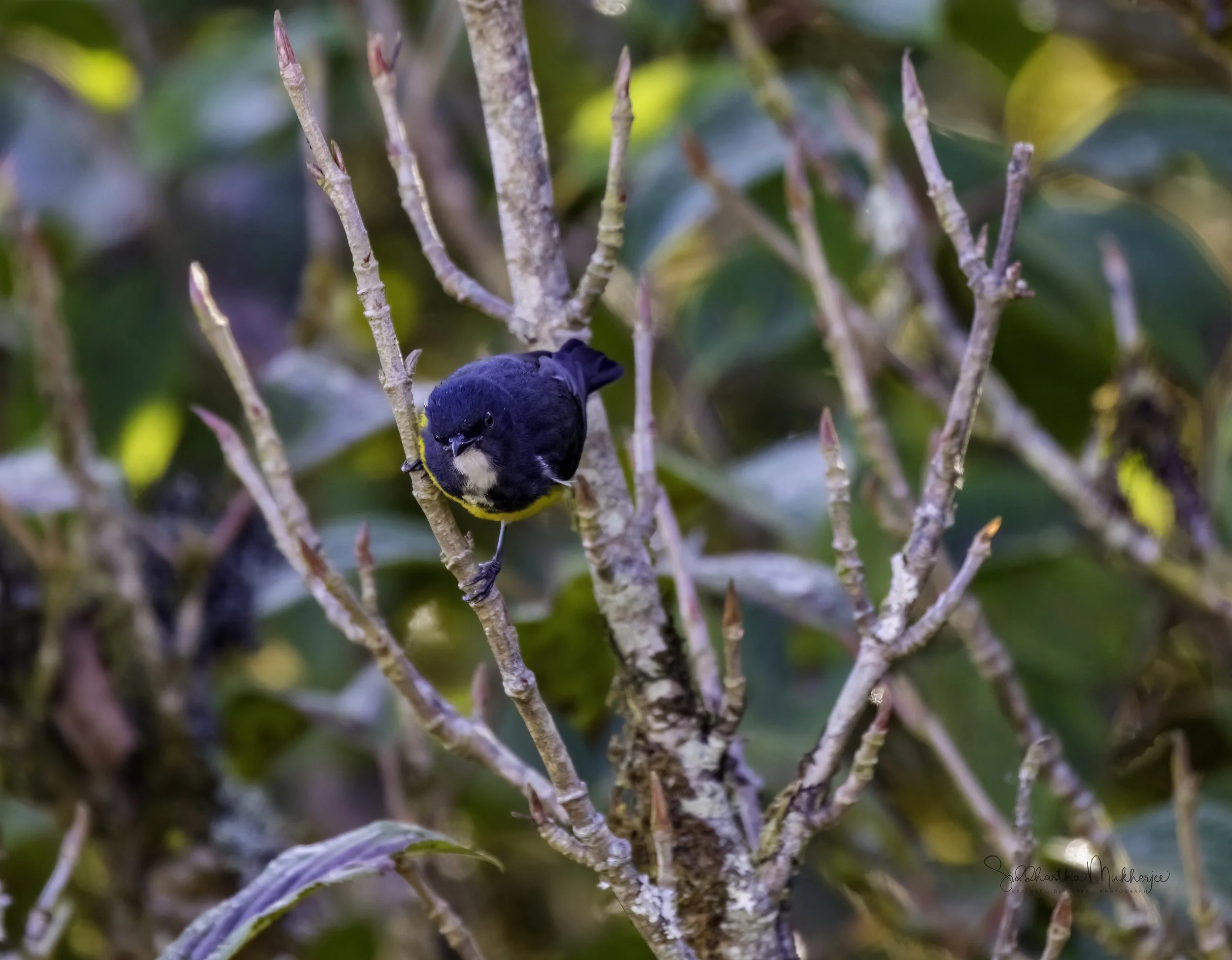
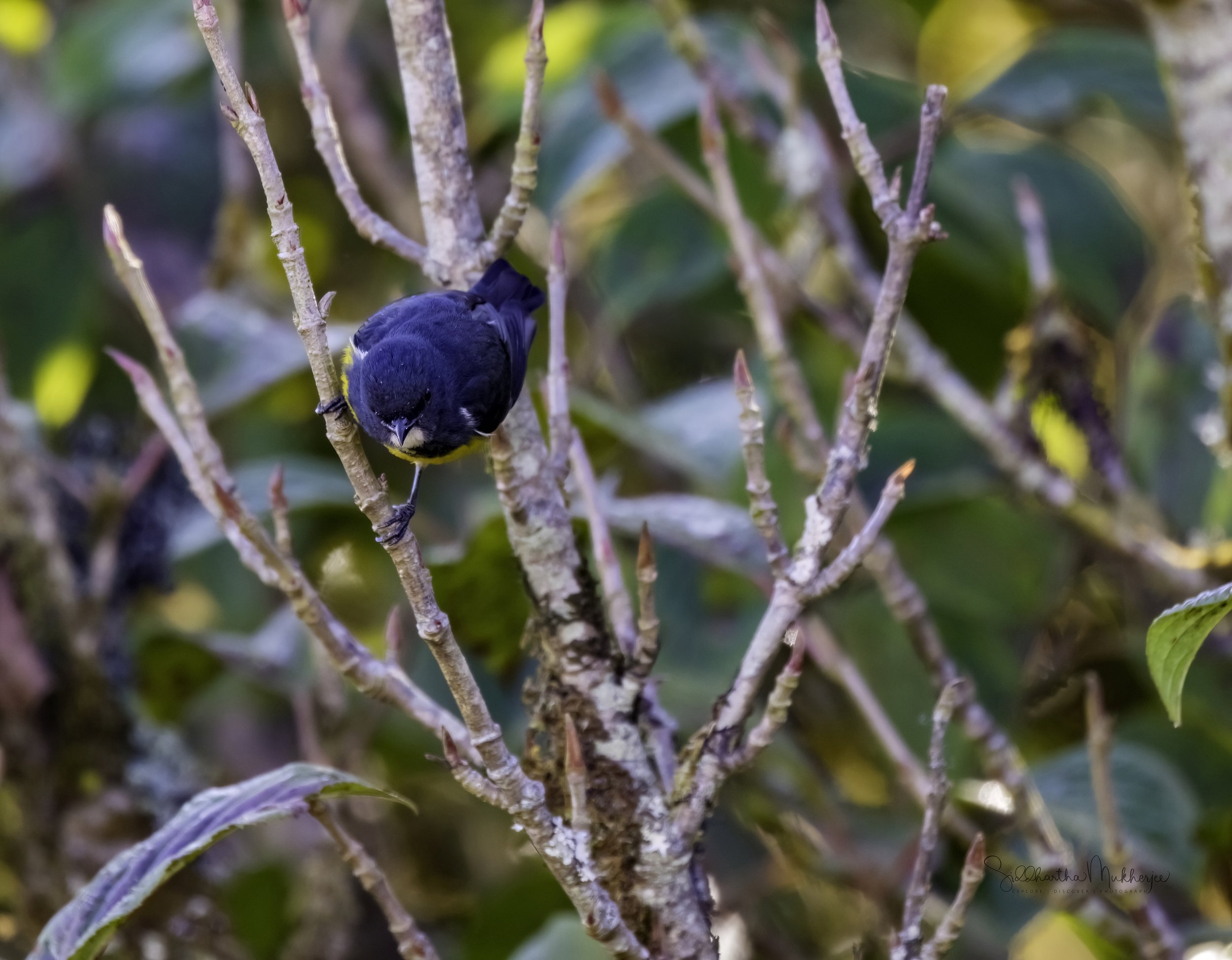
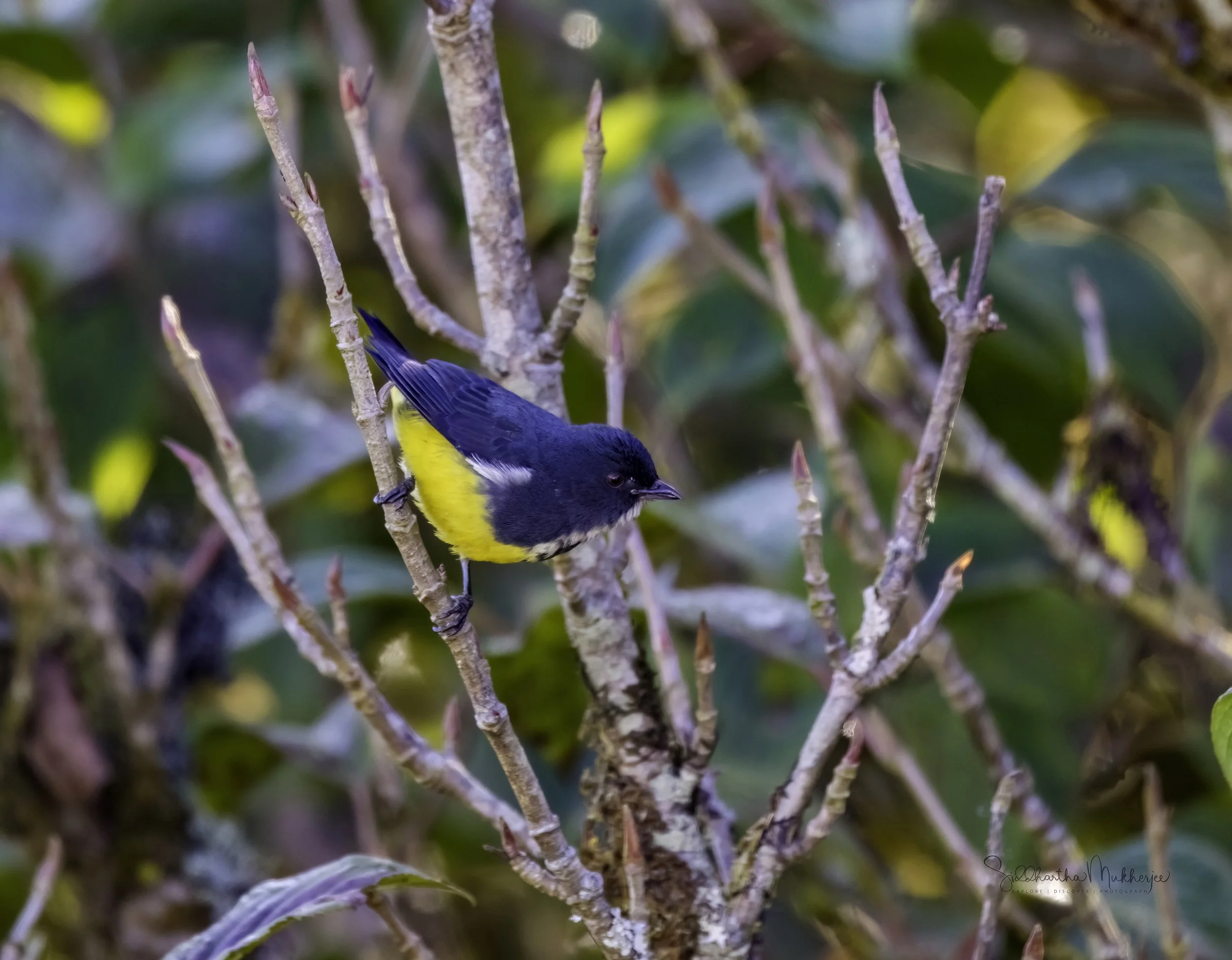
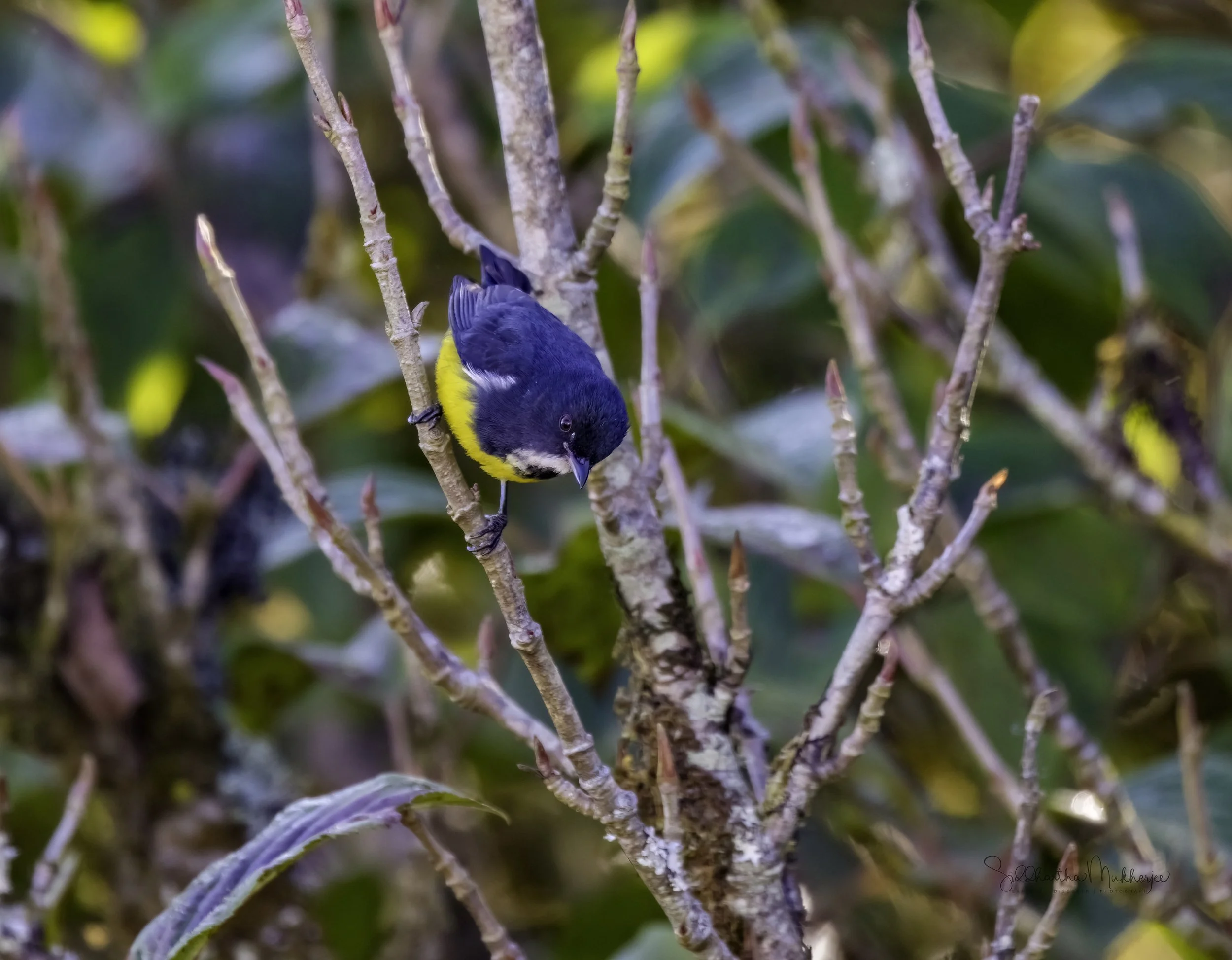
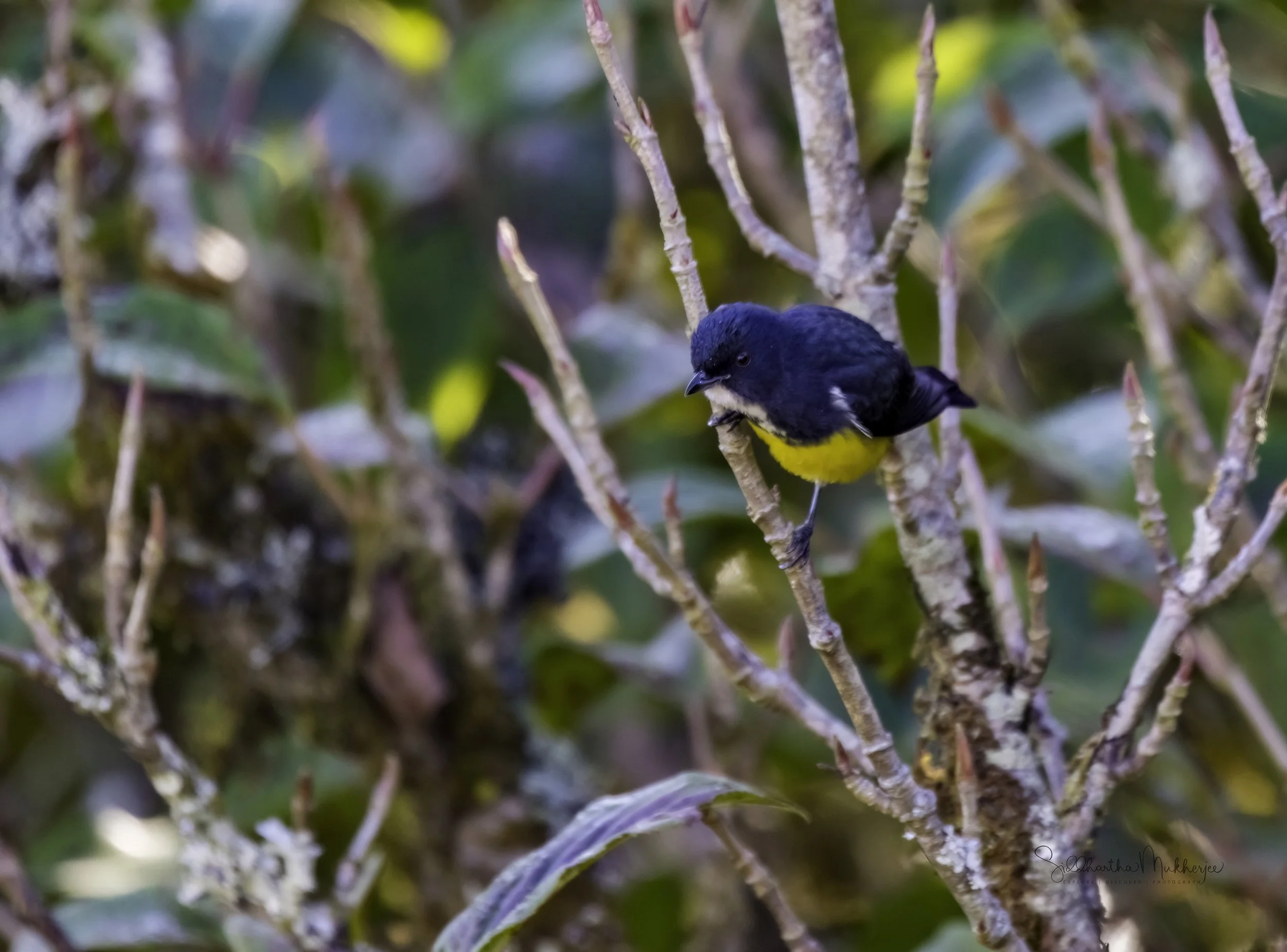
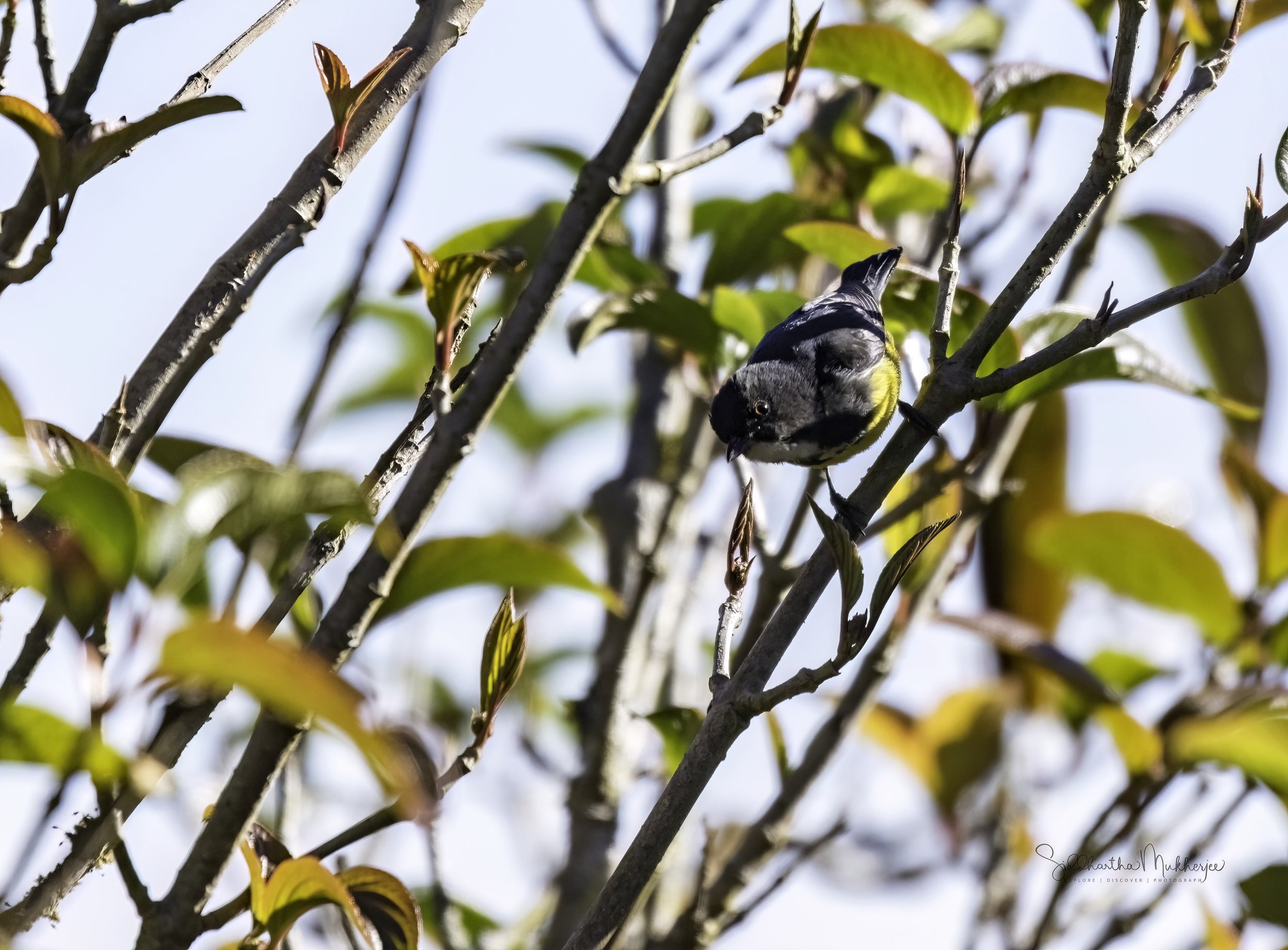
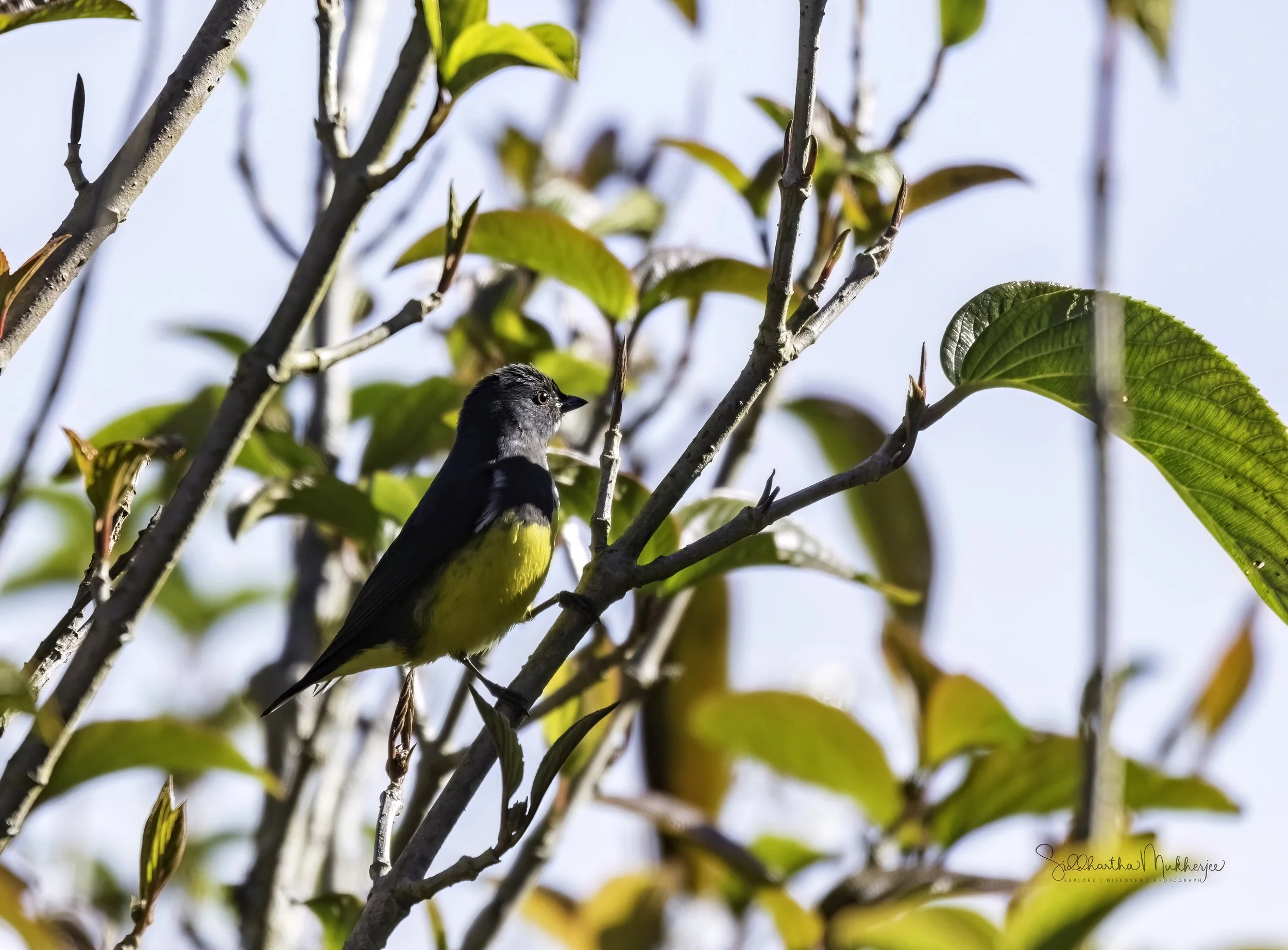
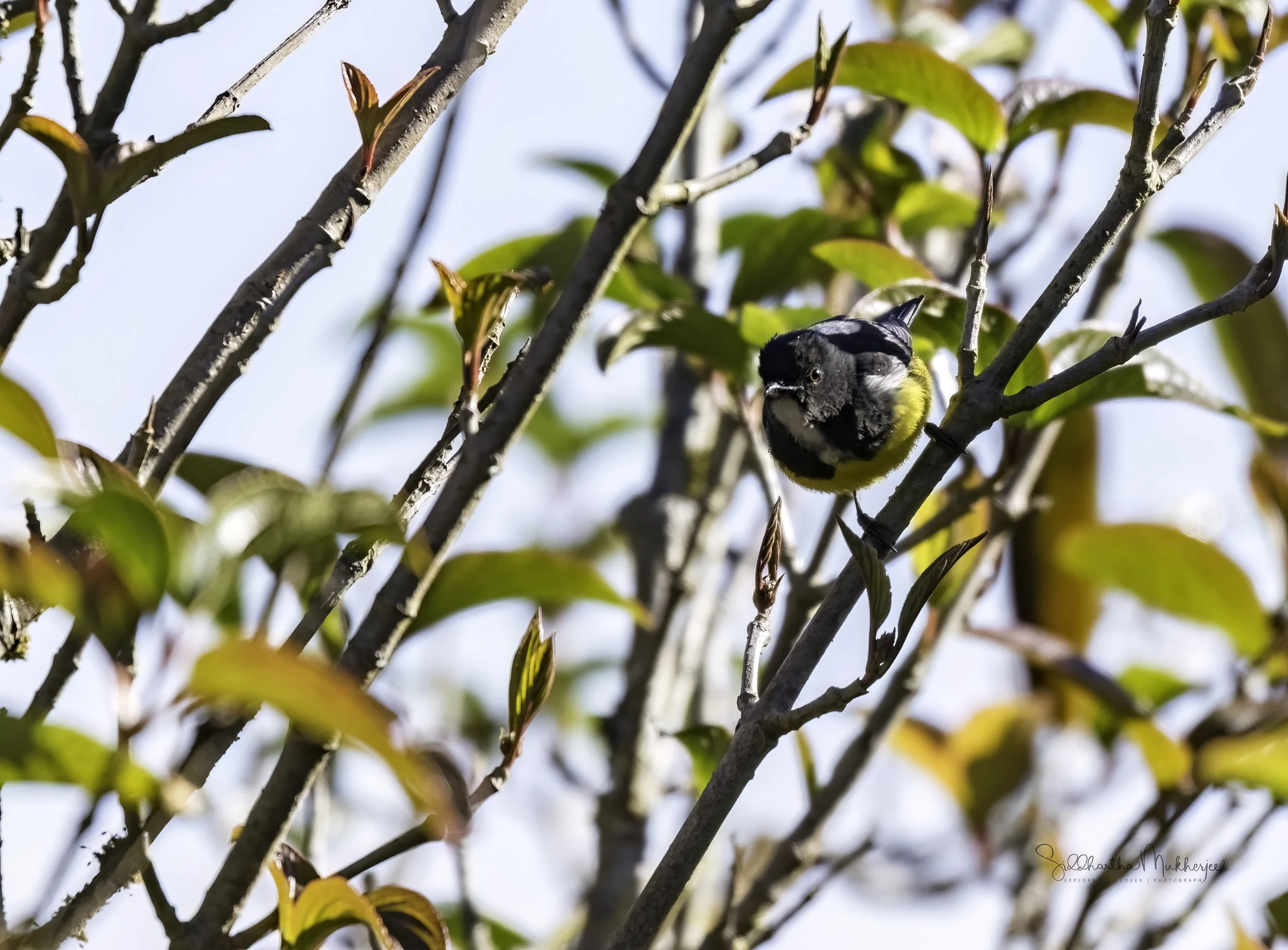
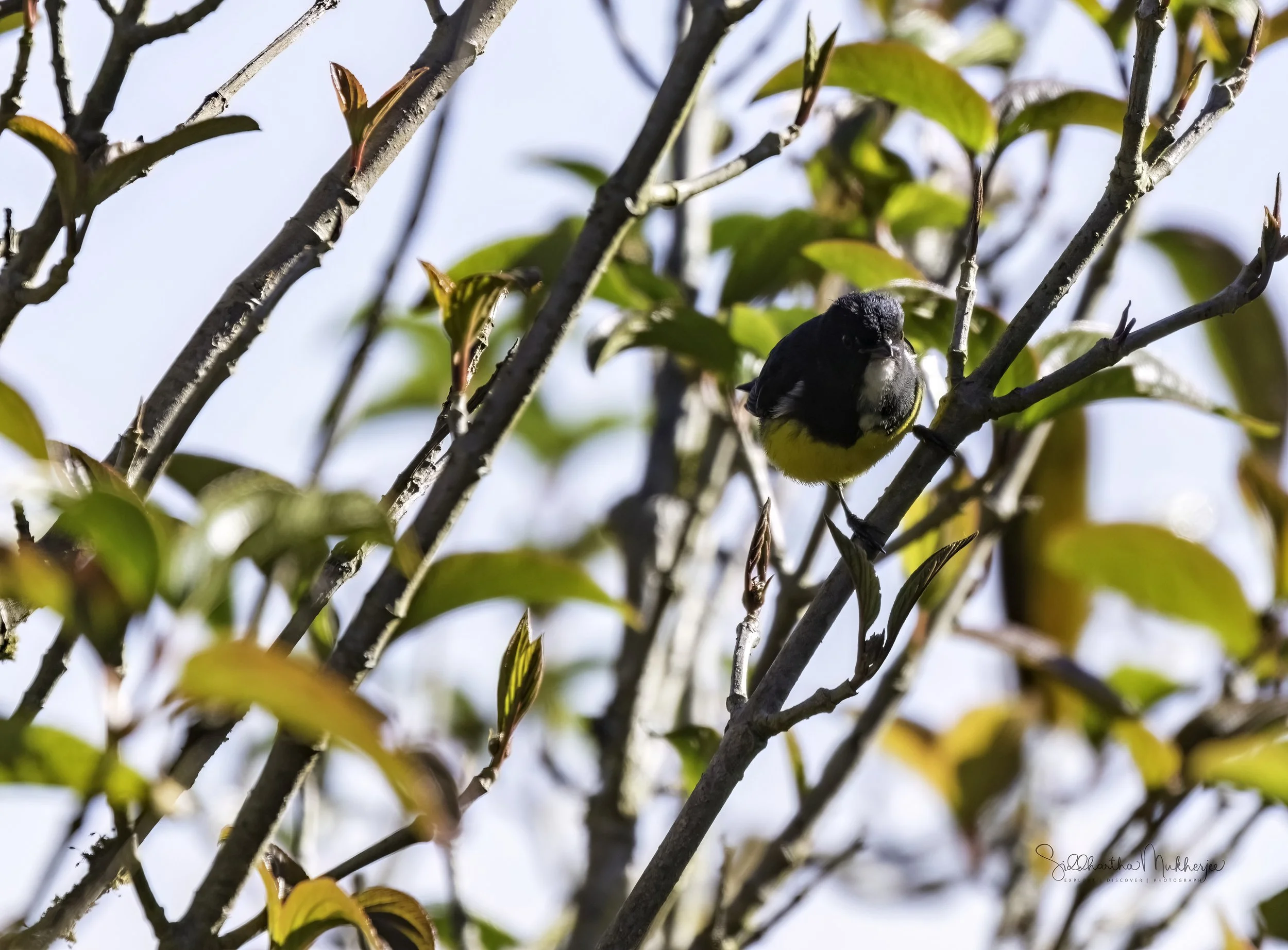
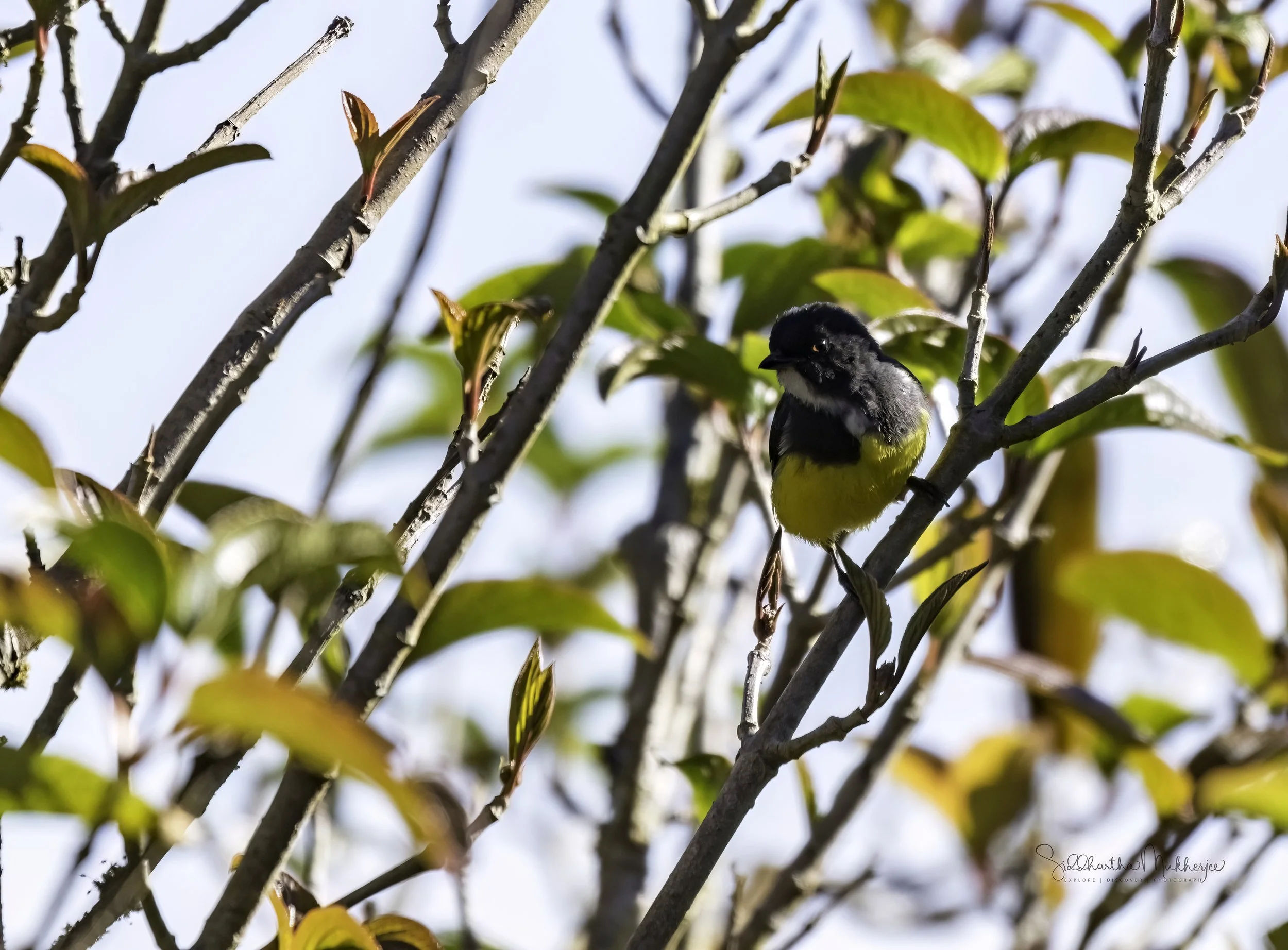
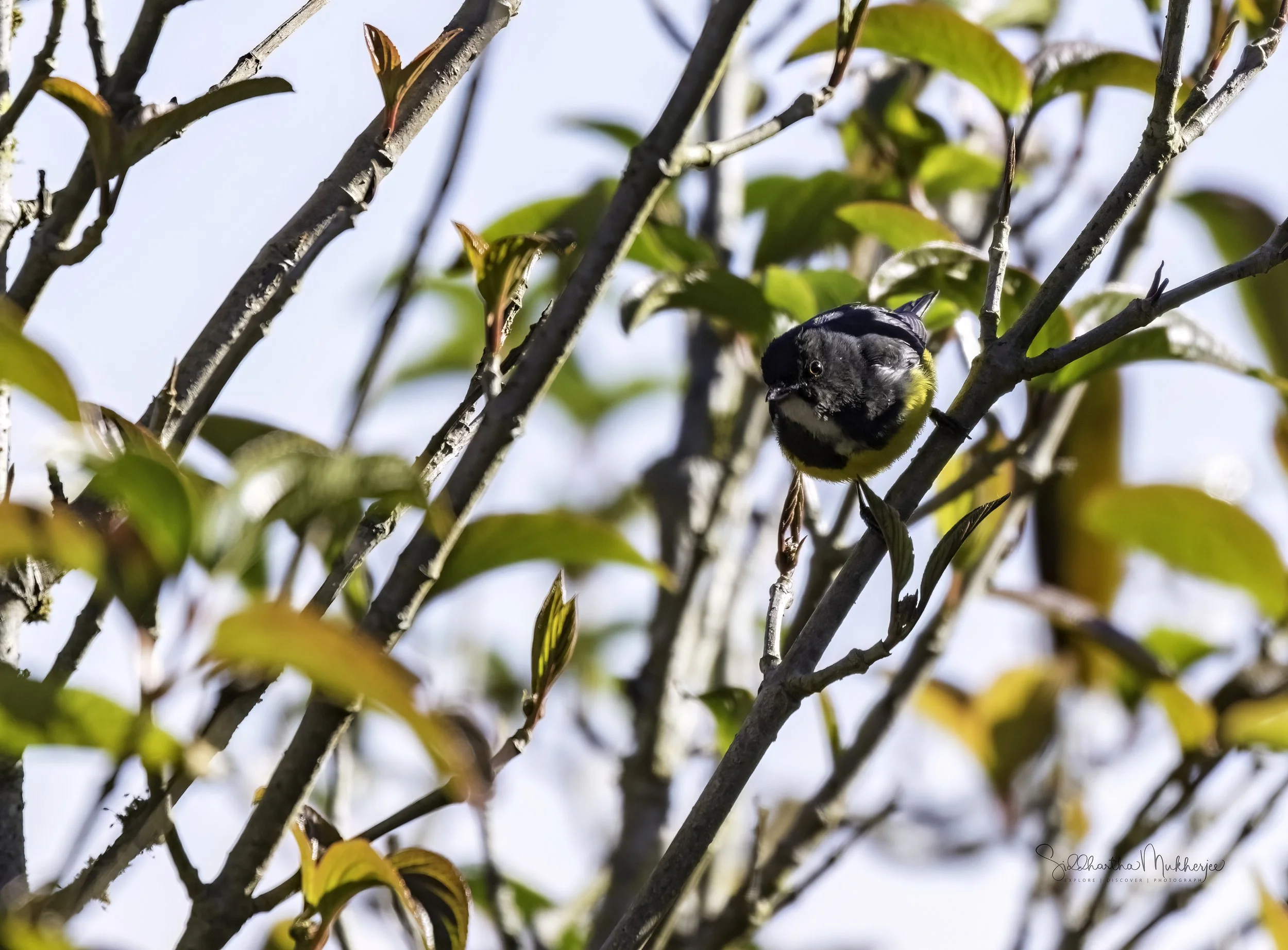
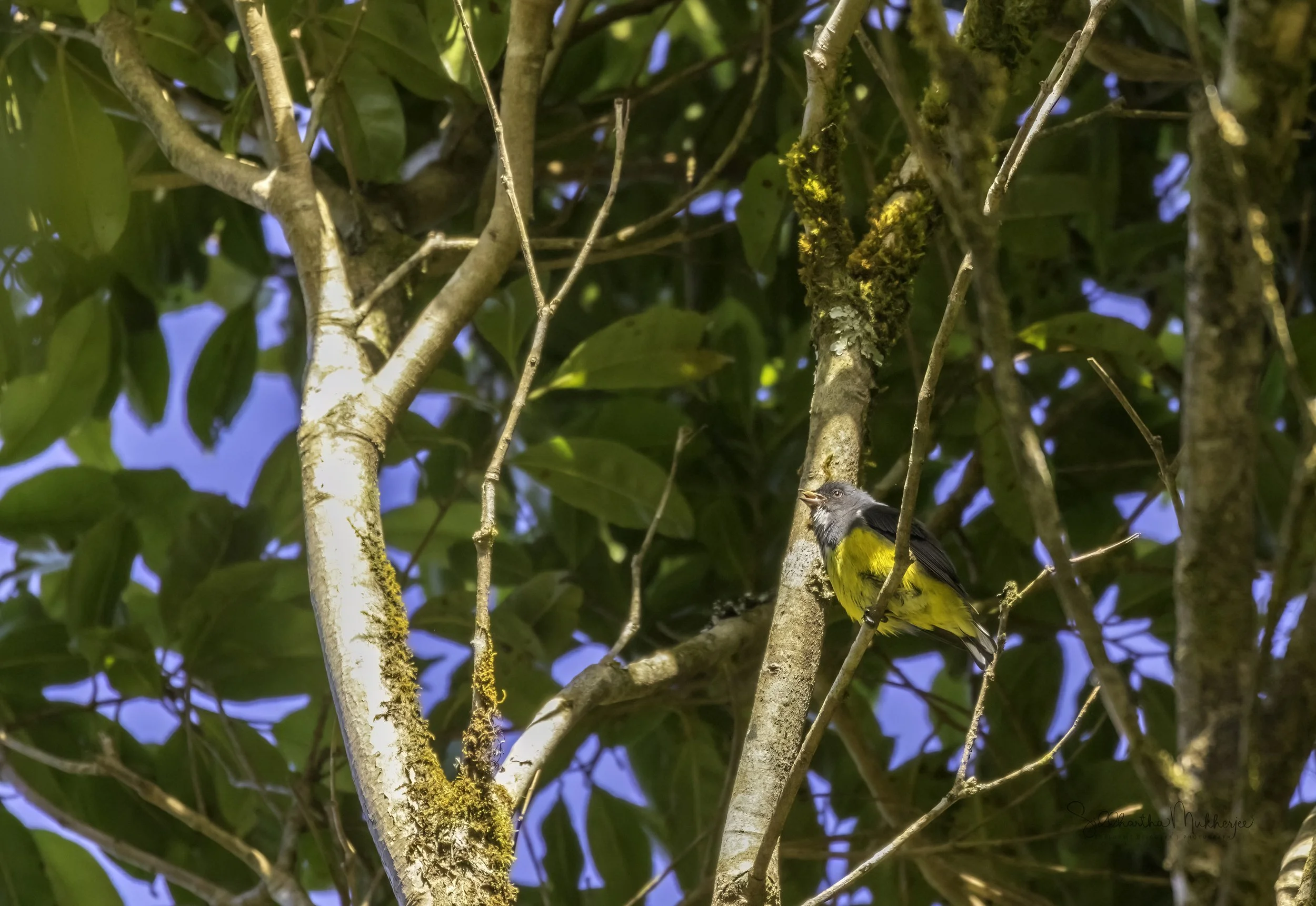
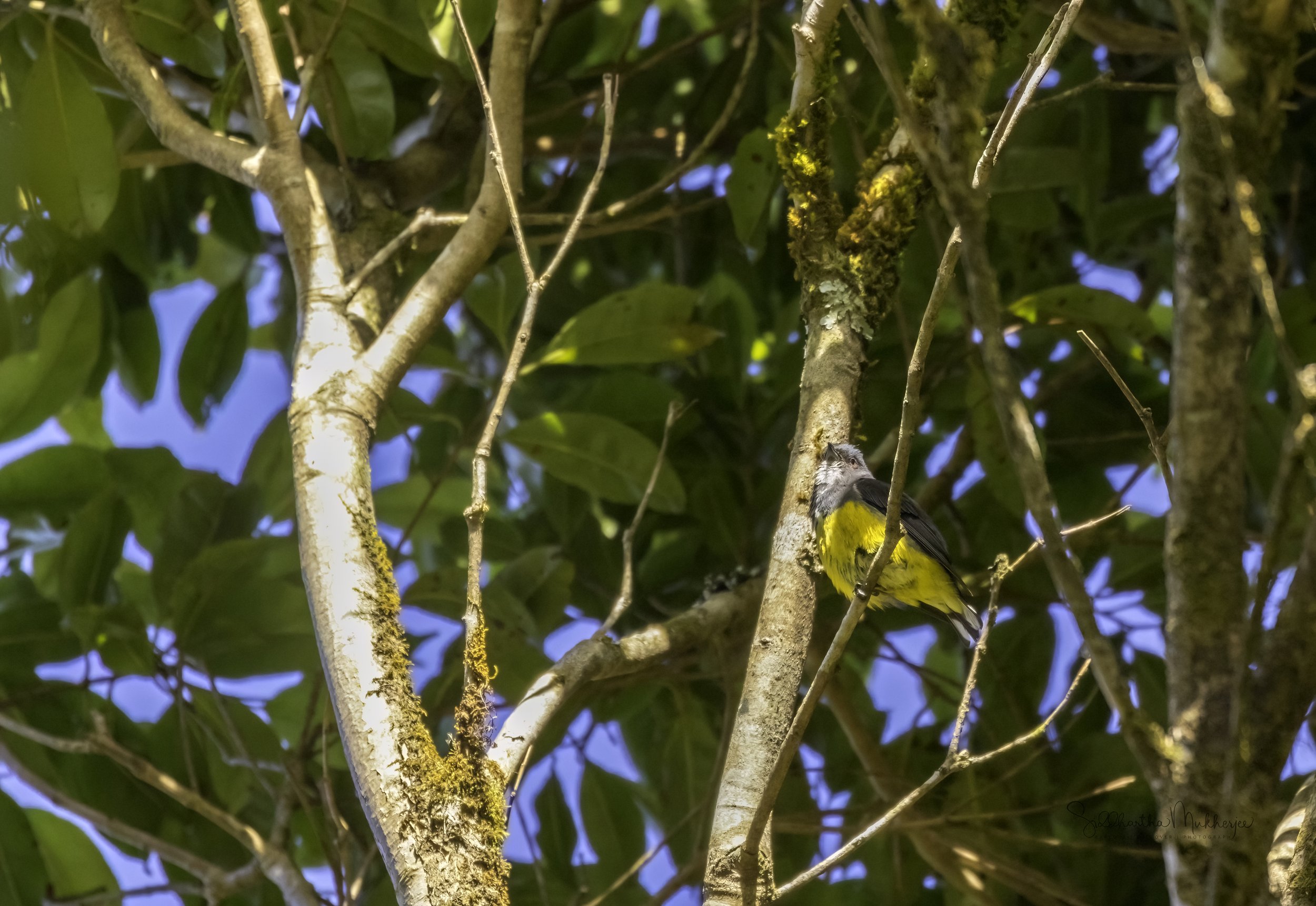
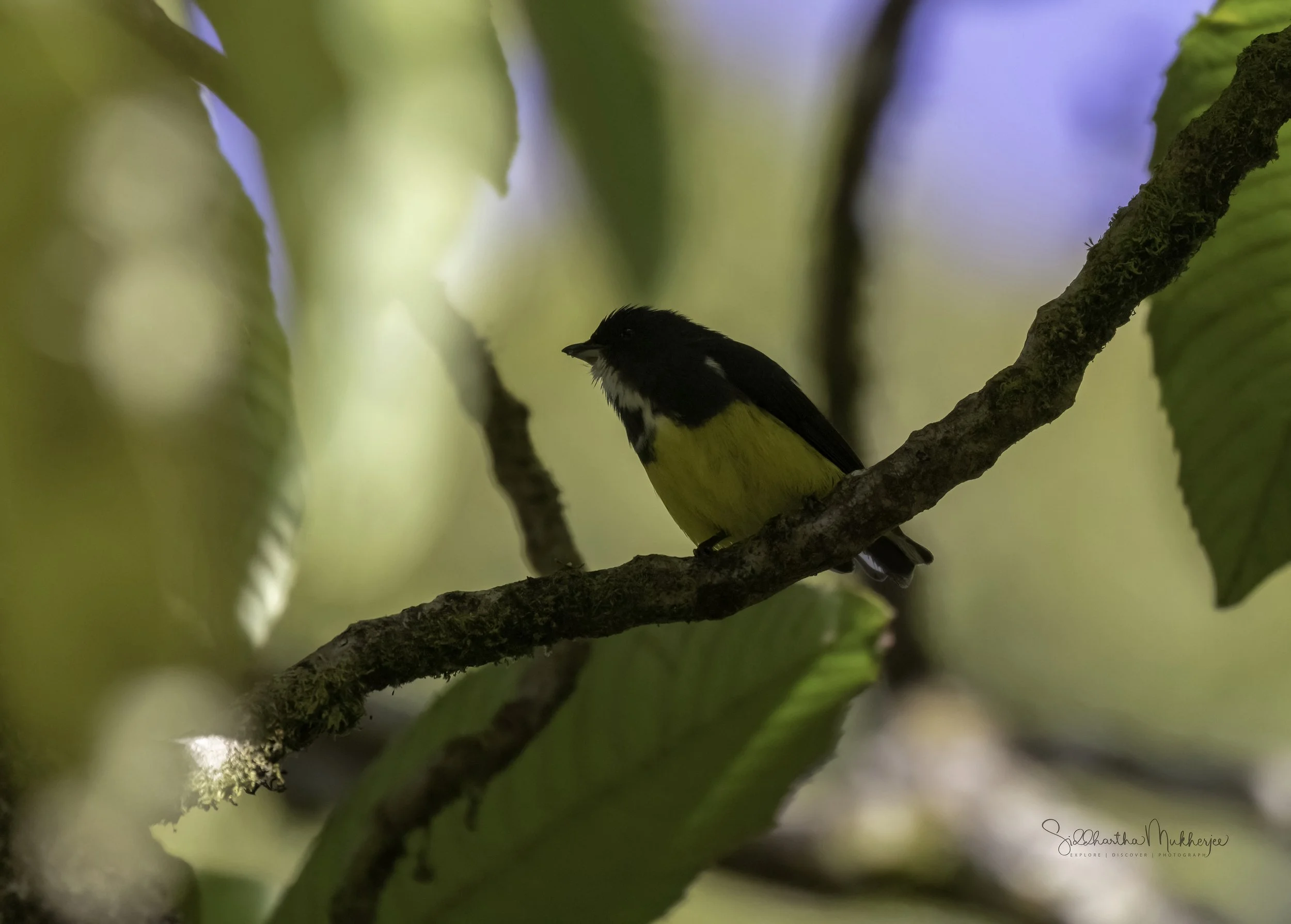
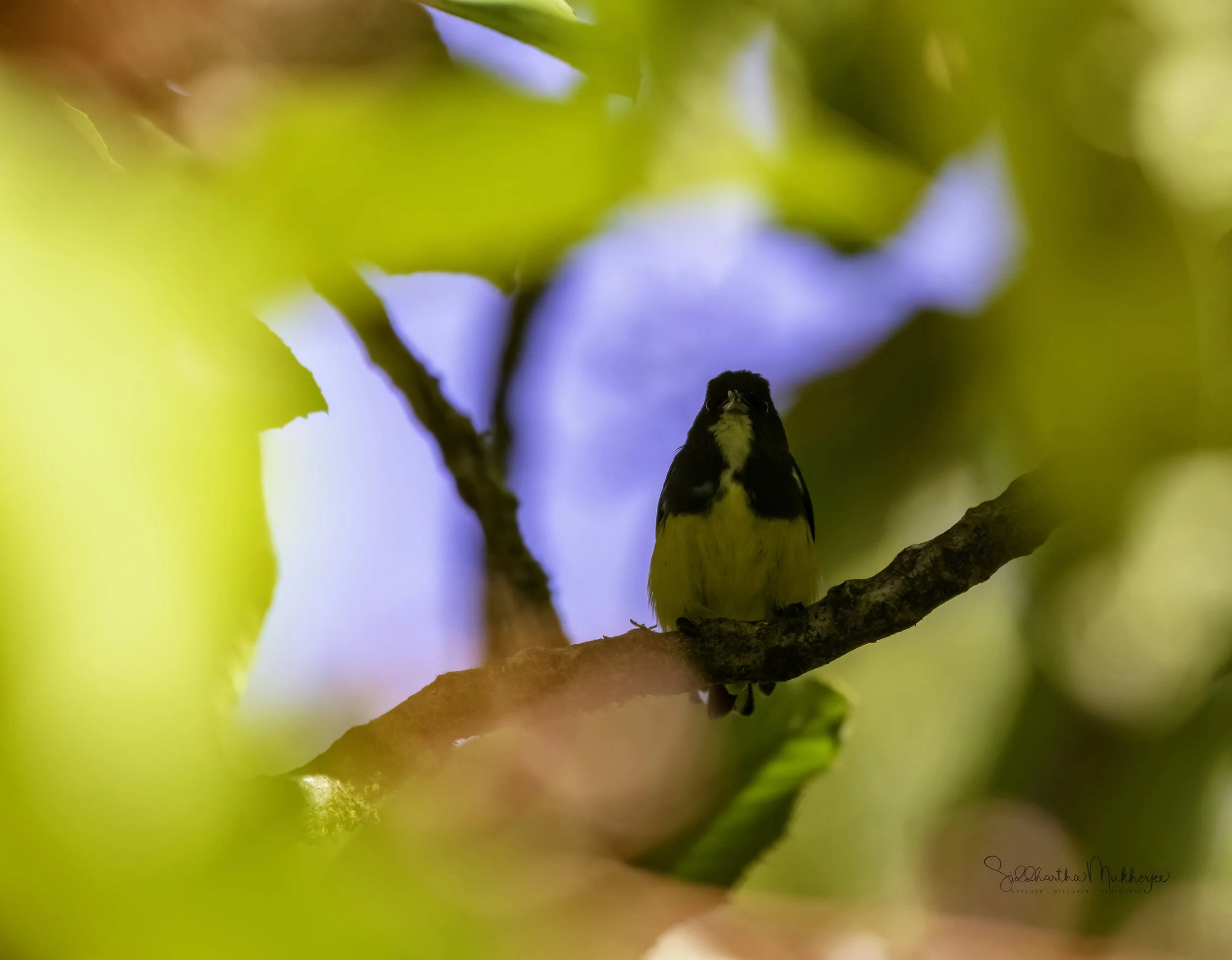
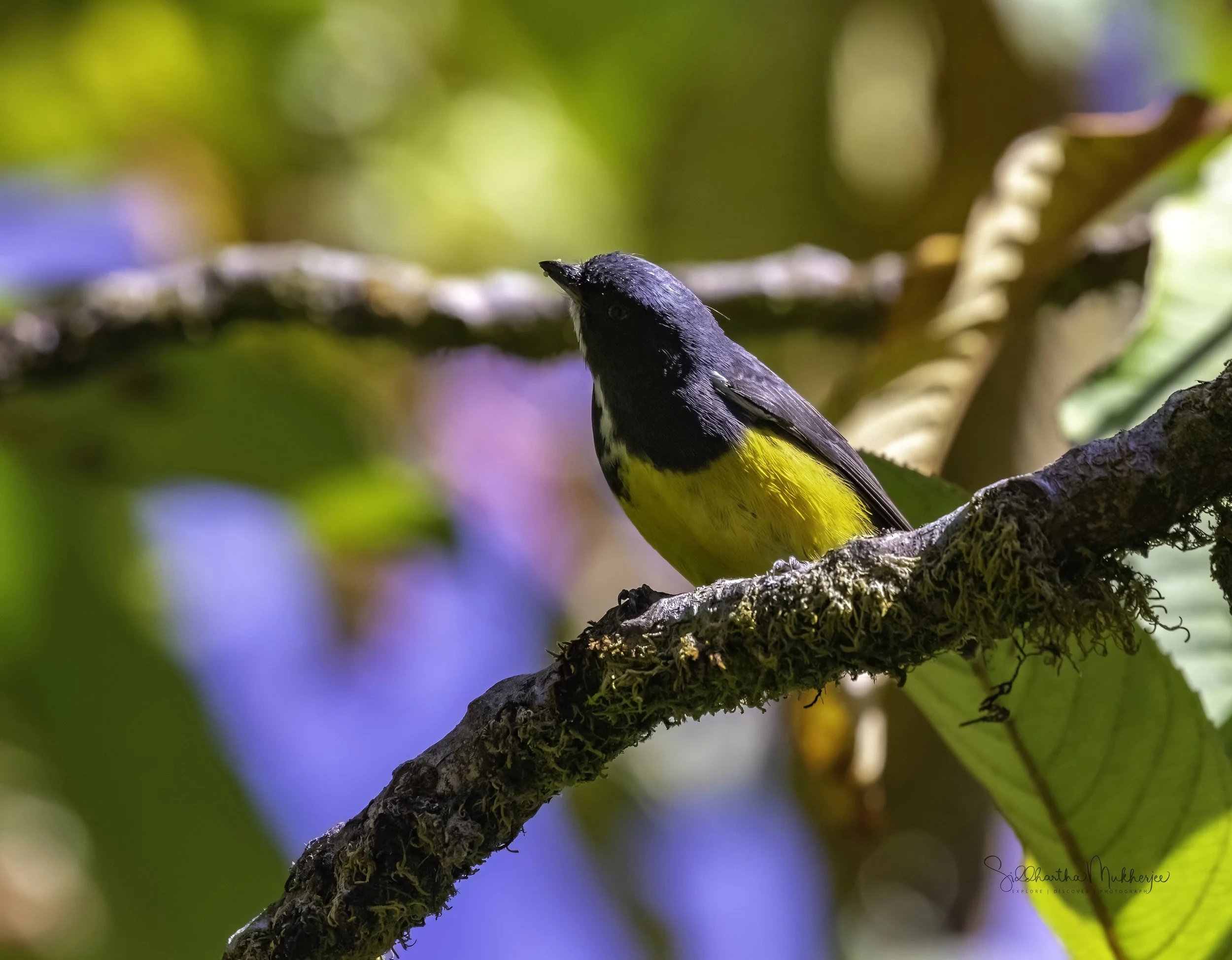
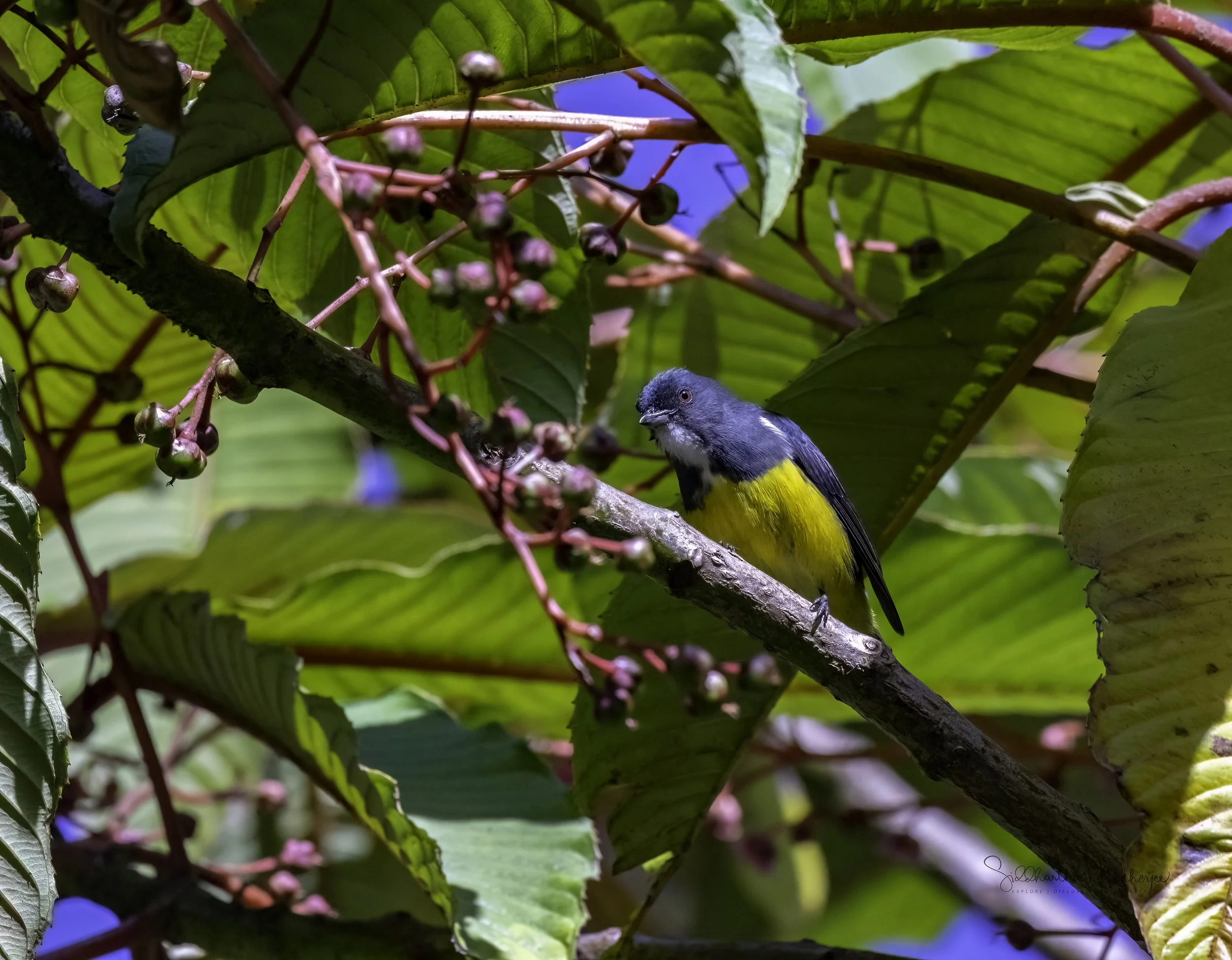
Yellow-bellied Flowerpecker
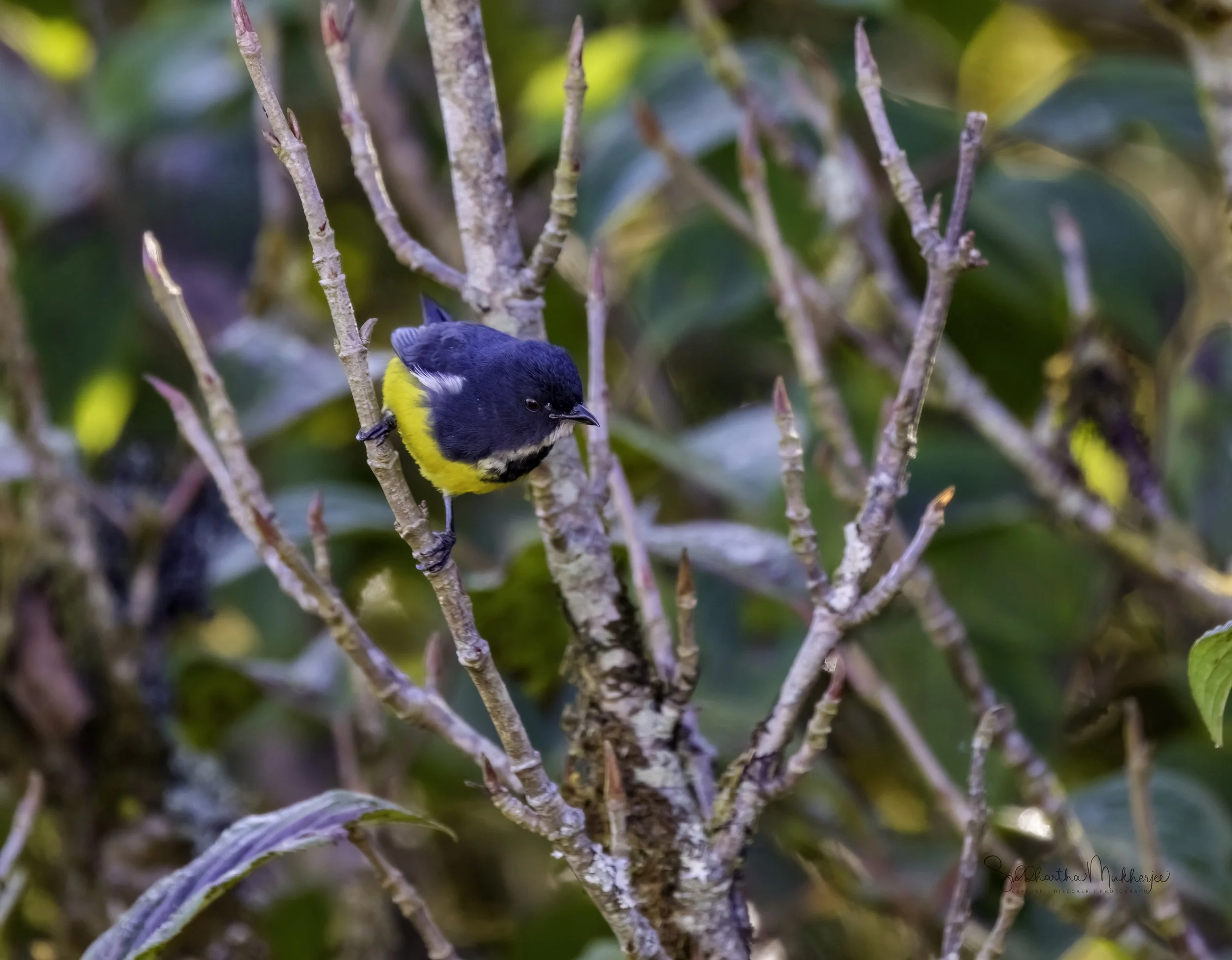
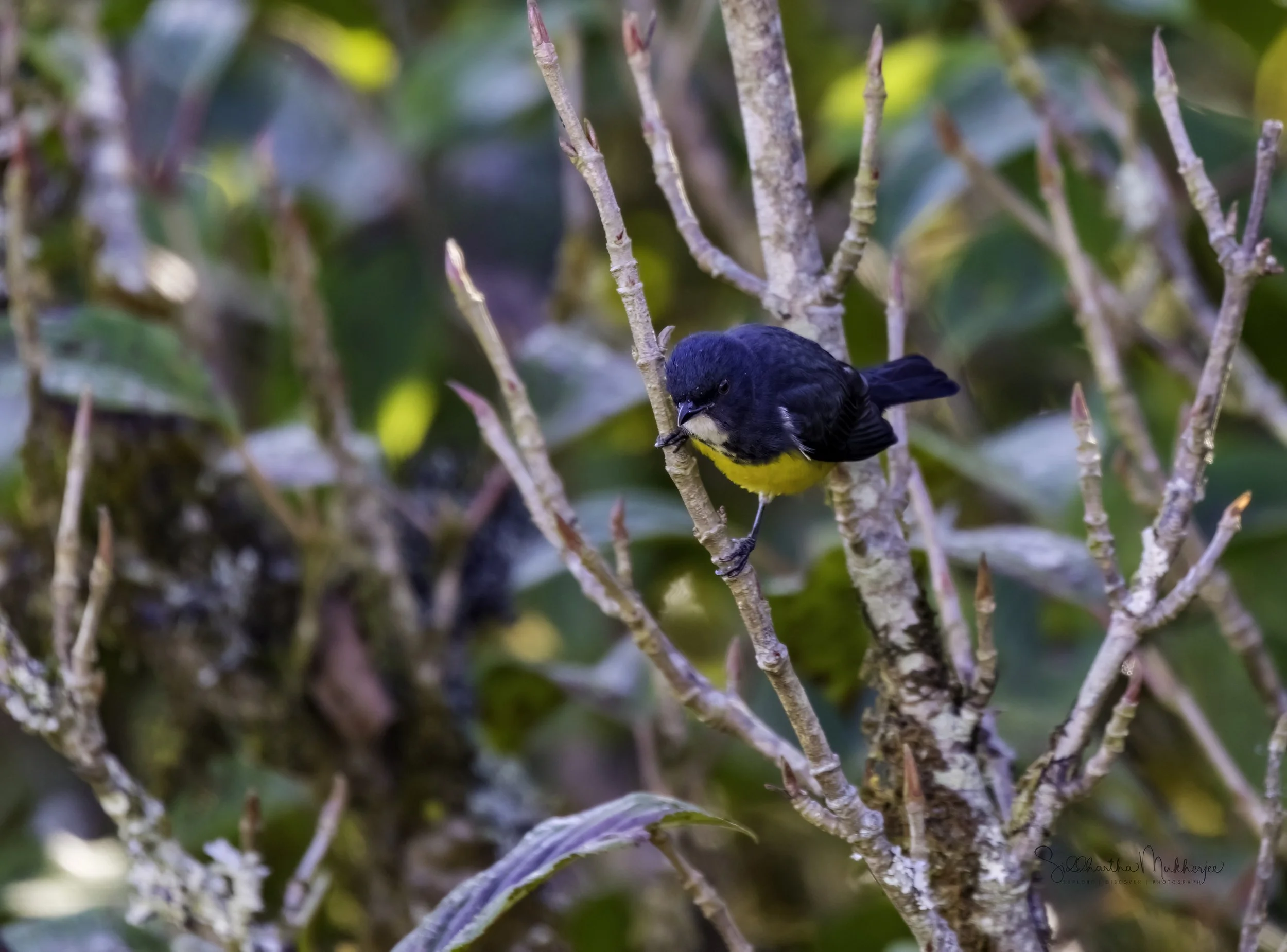
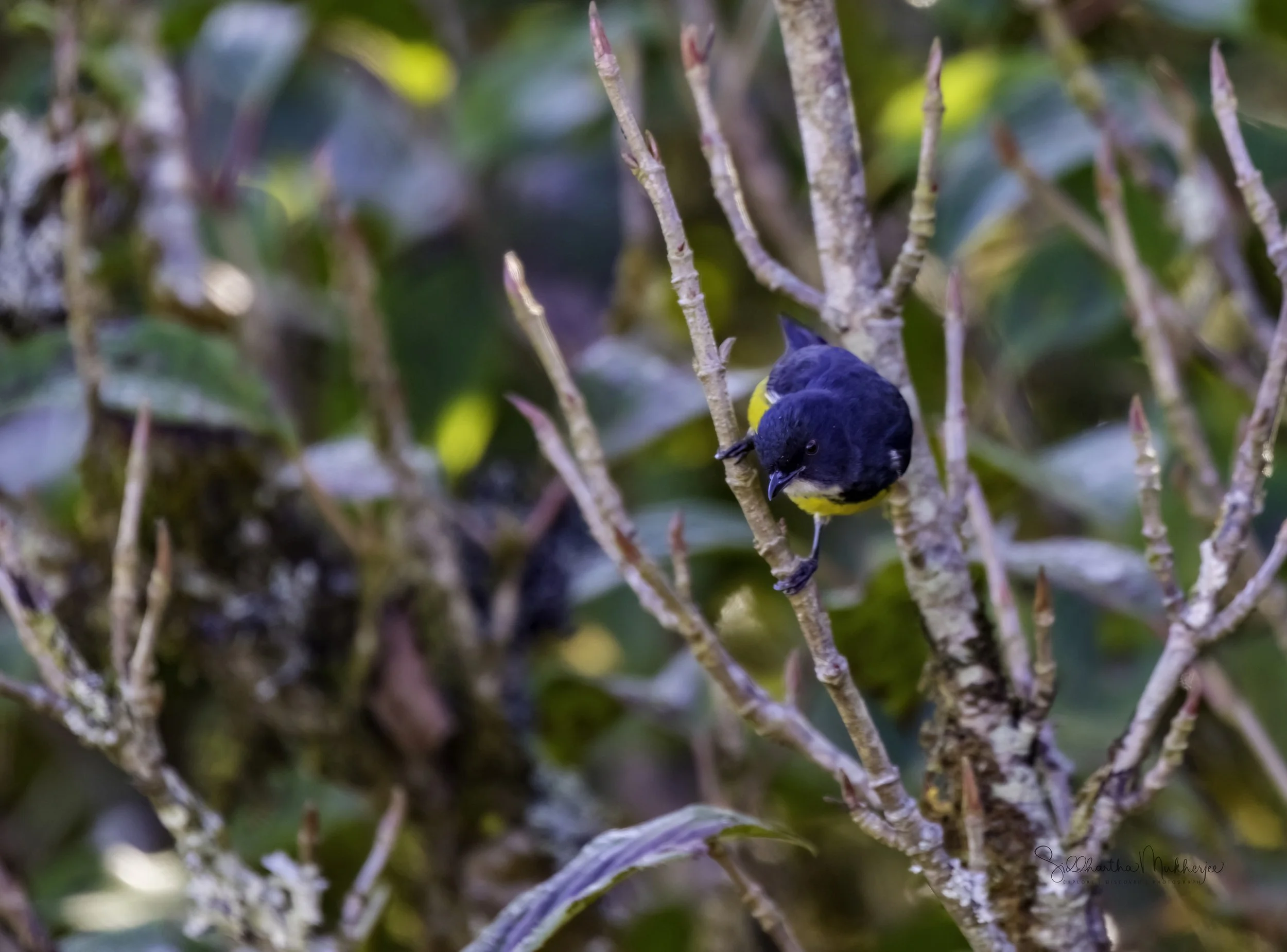
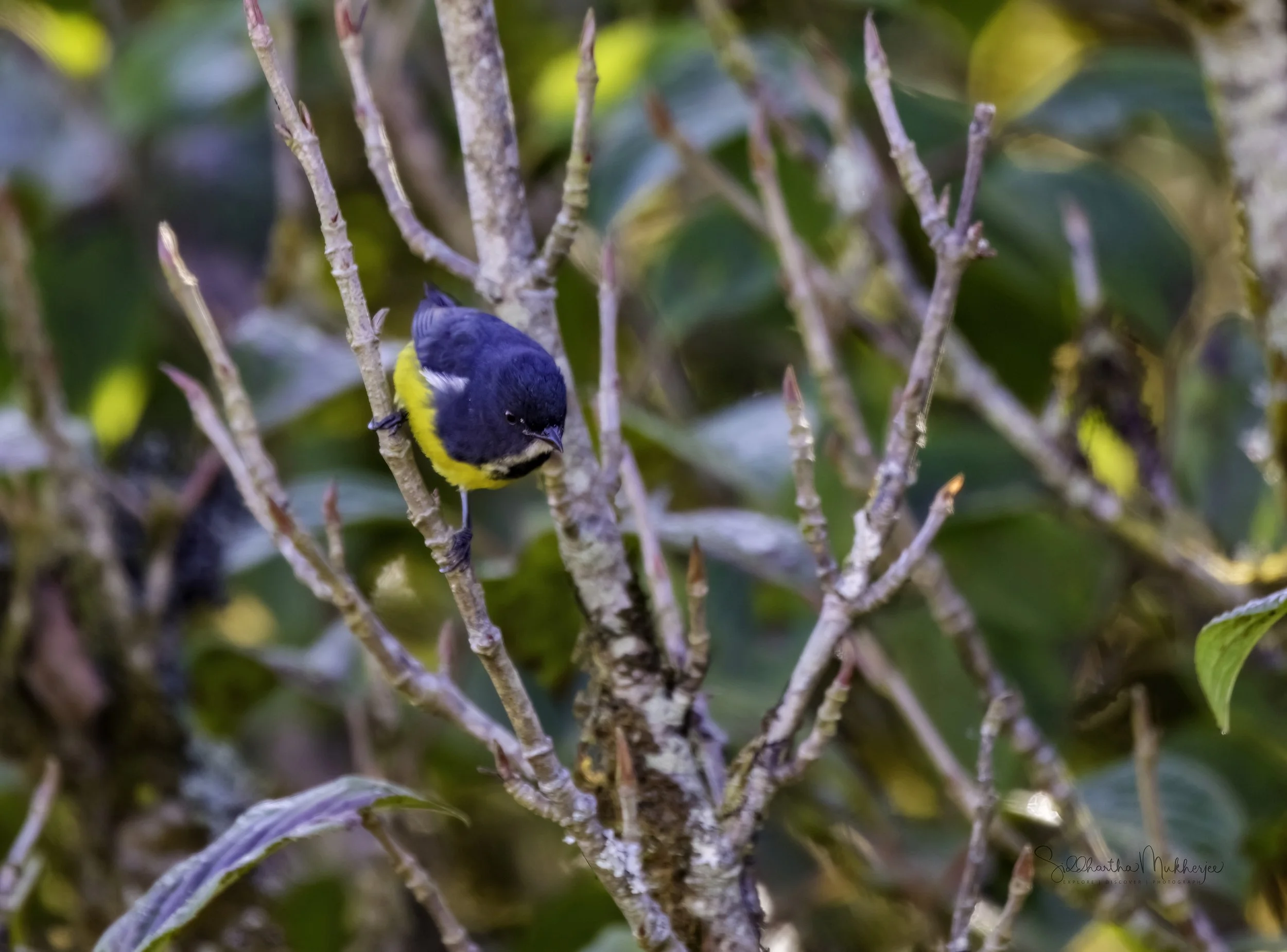
Doi Inthanon, the "Roof of Thailand," is a magnet for birdwatchers, especially during the cool winter months when altitudinal migrants and rare winter visitors flock to its slopes. Among the most sought-after sightings is the Yellow-bellied Flowerpecker (Pachyglossa melanozantha), an elusive gem that provides a thrilling challenge and a rewarding photographic opportunity. The Yellow-bellied Flowerpecker, formerly placed in the genus Dicaeum, is a small, elusive passerine bird found across the Himalayas and Southeast Asia. It is known for its striking sexual dimorphism and strong association with mistletoe plants.
The relationship with Mistletoe plants
The Yellow-bellied Flowerpecker has an obligate and mutualistic relationship with Mistletoe plants, acting as its primary seed dispersal agent and in return relying heavily on the plant for food. Its diet heavily features mistletoe berries, nectar, and possibly leaves. Its presence is so strongly associated with the plant that in some regions, the bird's common name is the same as the mistletoe's name. The bird's digestive system is uniquely adapted to process the waxy, sugary pulp of the mistletoe berry rapidly. The seed itself is covered in a very sticky substance called viscin, which is undigested and passes through the gut quickly, often in just a few minutes. After consuming the berry, the bird deposits the sticky seed onto a tree branch, either by wiping its bill or by "wiping its rear" on a suitable perch. This behavior, known as "directed dispersal," ensures the seed is placed precisely where it can germinate and embed its roots (haustorium) into a new host tree.
This relationship is a classic example of coevolution. The mistletoe depends almost exclusively on flowerpeckers to spread its seeds to new host trees, while the bird ensures a continuous, reliable food supply by propagating the plant. The bird is so tied to the plant that it is usually found in habitats where mistletoe grows abundantly. This unique, specialized interaction highlights how crucial the Yellow-bellied Flowerpecker is to the mistletoe's lifecycle and, by extension, the overall forest ecosystem where the mistletoe provides a keystone resource for other species as well.
Birding on Doi Inthanon is often a game of patience and luck. The Yellow-bellied Flowerpecker is generally a rare winter visitor to Northern Thailand, making a sighting a special event. The birds typically spend their time high in the forest canopy, flitting among the treetops, making eye-level, close-up views difficult to capture.
A few years back, on a winter morning on the mountain, I experienced the thrill of the chase near the Kew Mae Pan area. Despite the misty, cool conditions, I was alert for any movement in the low-fruiting trees that often attract flowerpeckers and thrushes. Suddenly, a flash of bright yellow against slaty-blue appeared. A male Yellow-bellied Flowerpecker had settled on a perch, offering a surprisingly confiding and brilliant view. The moment was brief but memorable, showcasing the beauty of this bird against the backdrop of the temperate forest. The experience highlighted the value of expert local guides like Atiwich Ball, who know the specific spots and behaviors that increase the chances of a successful sighting and photograph.
The Yellow-bellied Flowerpecker is a small bird, typically measuring between 11.5 to 13 cm (4.5 to 5.1 in) in length. The species is found in parts of the Himalayas (northern India, central Nepal, east to Arunachal Pradesh) and extends discontinuously through Northeast Bangladesh, western and eastern Myanmar, and southern China. During winter, its range may extend south to northern Thailand, northern Laos, and extreme northern Vietnam.
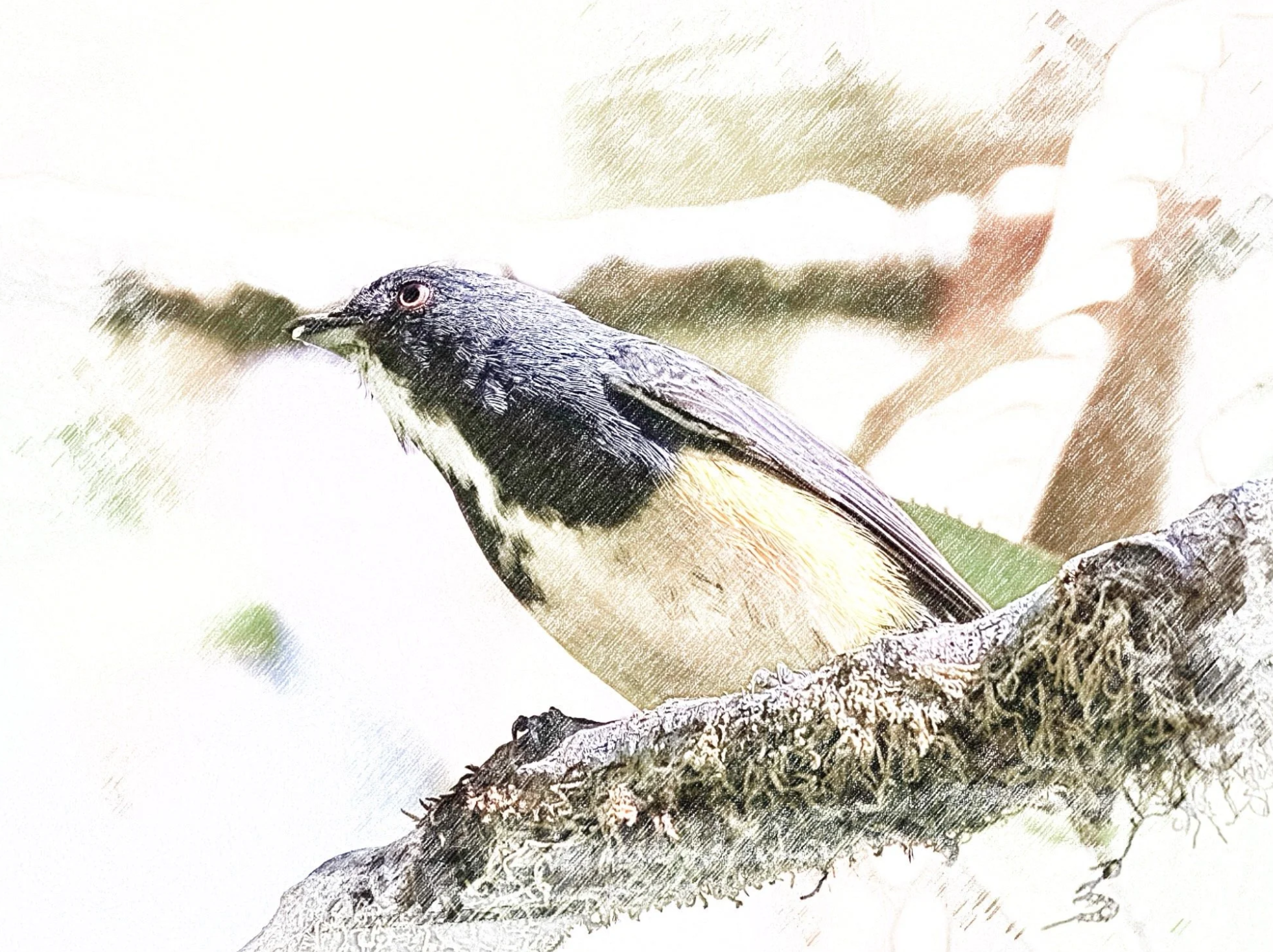
It is a monotypic species with no recognized subspecies and any plumage differences are due to sex and age. The male features slaty blue-black upperparts and head, black wings and tail with white on outer tail feathers. The throat and upper breast are white, with dark gray-black sides giving a "vested" look. The rest of the underparts are bright yellow, with a black bill and red or chestnut iris. The female appears duller with olive-gray upperparts and head, white central throat and breast, and pale yellow belly and undertail-coverts. The juveniles are mostly dull brown with hints of white on the throat and yellow on the belly.
Its habitat includes temperate forests and subtropical or tropical moist montane forests. It is found in pine forests, tall trees, clearings, and forest edges, often associated with mistletoe. Altitude varies seasonally, from 1400–3915 m in summer to 775–1550 m (sometimes up to 2450 m) in winter. The species exhibits seasonal altitudinal movements, moving to lower elevations during winter. It is described as generally more sluggish and elusive than smaller relatives (like the Scarlet-backed Flowerpecker), this bird is often solitary or in pairs. It may perch upright for extended periods and primarily inhabits the canopy but forages at all vegetation levels. Flycatching is also observed. Its diet includes insects caught by gleaning or flycatching, along with fruit, nectar, and pollen. Mistletoe leaves may also be consumed in winter.
Key features for identification are its small size (11.5–13 cm) and the striking sexual dimorphism: the male's slaty blue-black and bright yellow pattern with a "vested" appearance, contrasting with the female's duller olive-gray and pale yellow. Calls include quiet chipping, buzzing, or squeaking notes. Breeding season varies geographically, with nesting observed in Myanmar in April and juveniles in India in June. They lay a clutch of three white eggs. Further details on breeding biology are limited.
The species is listed as Least Concern by the IUCN. While the global population size is not quantified, it is considered common in parts of its range, although habitat loss is a potential threat.
‡‡‡‡‡


Related Posts



One of my first flowerpeckers - the male is brightly-coloured & the female is predominantly brown. This is a lowland species, often found in gardens with flowering and fruiting plants, particularly mistletoe. Often detected through its metallic ticking calls.
Subscribe if you would like to continue reading the stories.
#wildartworks, #flowerpecker, #birdinginthewild, #birdphotography, #conservationphotography, #thailand, #kaengkrachan, #WildBirds, #naturephotography, #your_best_birds, #planetbirds, #earthcapture, #bbcearth, #photo_pond, #earthpix, #naturyst, @bbcearth, @wild.planet, @wildlifeonearth, @earthpix, #best_birds_planet, @discovery, #natgeowild, #kaengkrachannationalpark, #scarletbackedflowerpecker,