
Common Bronzeback Tree Snake/ Daudin’s Bronzeback Tree Snake
Dendrelaphis tristis
Forests of Telangana
The undergrowth of Telangana’s forests is a complex, multi-layered environment shaped by the harsh semi-arid climate and rugged sandstone terrains. Beneath the high, dense canopy of teak and Anogeissus latifolia (Axlewood), the forest floor is dominated by a dense, tangled matrix of seasonal grasses, thorny shrubs like Carissa carandas (wild Karanda), and low-lying wild lime bushes. A soft rustle stirs this leaf litter before transitioning into a fluid, almost weightless ascent up a low-hanging tree. Moving like a ribbon of liquid metal is the Common Bronzeback Tree Snake (Dendrelaphis tristis). This arboreal master of stealth navigates the fragmented dry woodlands of the Eastern Ghats, serving as a vital link in the region's rich biodiversity.
Telangana has sub-tropical climate and the terrain consists mostly of hills, mountain ranges, and thick dense forests covering an area of 27,292 km². The annual rainfall ranges between 1,100 mm to 1,200 mm and the annual temperature varies from 15°C to 45°C. The State is drained by a number of rivers which include the Godavari and the Krishna. It is endowed with rich diversity of flora and fauna (Species Directory). It has dense teak forests on the northern part along the banks of river Godavari and to the south along the banks of the Krishna. As per the Champion & Seth Classification of Forest Types (1968), the forests in Telangana belong to three Forest Type groups, which are further divided into 12 Forest Types. The State Government’s massive greening programme, 'Telangana Ku Harita Haram', aims at achieving the twin objectives of increasing the forest cover and reduce pressure on the existing forest resources, through massive community participation by Vana Samrakshna Samithis (VSS) and Eco-Development Committees (EDCs) in Protected Areas and Watershed Development Committees in the Watershed areas. Recorded Forest Area (RFA) in the State is 26,904 km² of which 20,353 km² is Reserved Forest, 5,939 km² is Protected Forest and 612 km² is Unclassed Forests.
Three National Parks and nine Wildlife Sanctuaries constitute the Protected Area network of the State covering 5.08% of its geographical area. The Amrabad Tiger Reserve - India's second-largest tiger reserve by core area (2,611 km²) - is known for its rugged terrain, deep gorges, and dry deciduous forests. It hosts Bengal tigers, leopards, and over 300 bird species. The river Krishna flows through it, supporting rich biodiversity and the indigenous Chenchu tribes.
Ananthagiri Forest Range
The Ananthagiri Forest Range is located in the Vikarabad district of Telangana. It is one of two major reserve forest blocks of the Vikarabad Forest Range the other one being the Damagundam Forest Reserve and each of these forest blocks is spread over a 10 km² area. While the limits of Damagundam begin from Manneguda, a small town about 60 kms from Hyderabad, Ananthagiri block begins where the limits of Vikarabad end near the railway tracks. The Ananthagiri hills and their dense forests host many wild species like the Nilgai, Sambhar, Black Buck, Chital, Chowsingha, Chinkara, Wild Goats and many more. The streams from these hills flows into Osman Sagar, also known as the Gandipet lake, and Himayath Sagar. It is one of the denser forests in Telangana and is the birthplace (about 5 kilometers from the town of Vikarabad) of the Musi river, also known as the Muchkunda River, which flows through the capital city, Hyderabad. The Musi River after originating in these Ananthagiri Hills, about 90 kilometers to the west of Hyderabad and flowing due east for almost all of its course joins the Krishna River at Wadapally in the Nalgonda district after covering a total distance of about 240 km. Also in these forests is the Sri Anantha Padmanabha Swamy Temple, a Hindu temple dedicated to Lord Vishnu.
According to the Skanda Purana it is believed this temple was installed by Rishi Markandeya in the Dvapara Yuga. Attracted by the peaceful atmosphere of the Ananthagiri Hills Rishi Markandeya came here for yoga sadhana. It is believed that the Rishi, on the strength of his spiritual powers, would visit Kasi daily for a bath in the sacred Ganges through a cave. One day he was not able to visit Kasi because the Dwadasi was in the early hours of the morning. Because of this miss the Lord Vishnu appeared, gave Darshan, in a dream and arranged for the Ganges to flow so the Rishi could take his bath daily without having to travel.
About 400 years back the Nizams of Hyderabad used these forests as their hunting grounds. It is said that the lord Vishnu in the form of Sri Anantha Padmanabha Swamy appeared in a dream & asked the then Nizam, Mir Osman Ali Khan, to build a temple for him. About 20 kilometers from the temple lies the Nagasamudram Lake or Kotipally Reservoir, a masonry dam.
It is one of the earliest habitat areas with ancient caves, medieval fort structures and temples that illustrate the antiquity of this area.
I love these forests as they are home to innumerable bird species, some of which I have photographed and many more which I am yet to photograph. I only hope the so called “bird and nature lovers” who come here to photograph and achieve social media fame adhere to ethical birding practices and refrain from using calls, especially owl calls, and bait. Over the years I have seen the behaviour of the wildlife change in these forests. Birds like nightjars were easily visible without having to venture deep into the dense brush but now the overload of wildlife enthusiasts has pushed these birds deep into the undergrowth. I think, in a way, it is good for the birds because it now requires time and patience to find them which the modern bird lover/ photographer lacks.
Read about the other lovely species I have photographed in the Ananthagiri Forests.
Photo credit Satyajit Tuljapurkar
Common Bronzeback Tree Snake/ Daudin’s Bronzeback Tree Snake
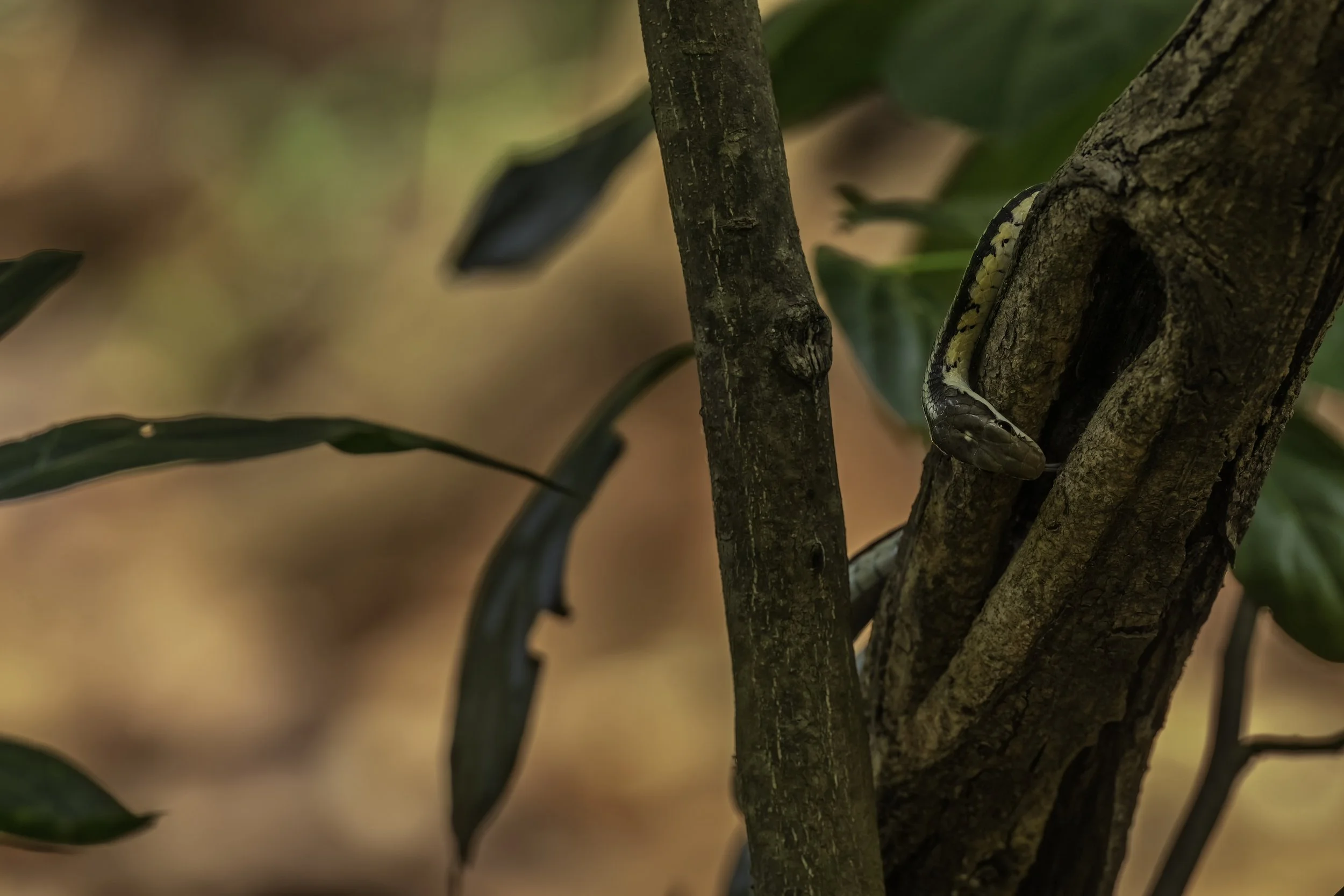
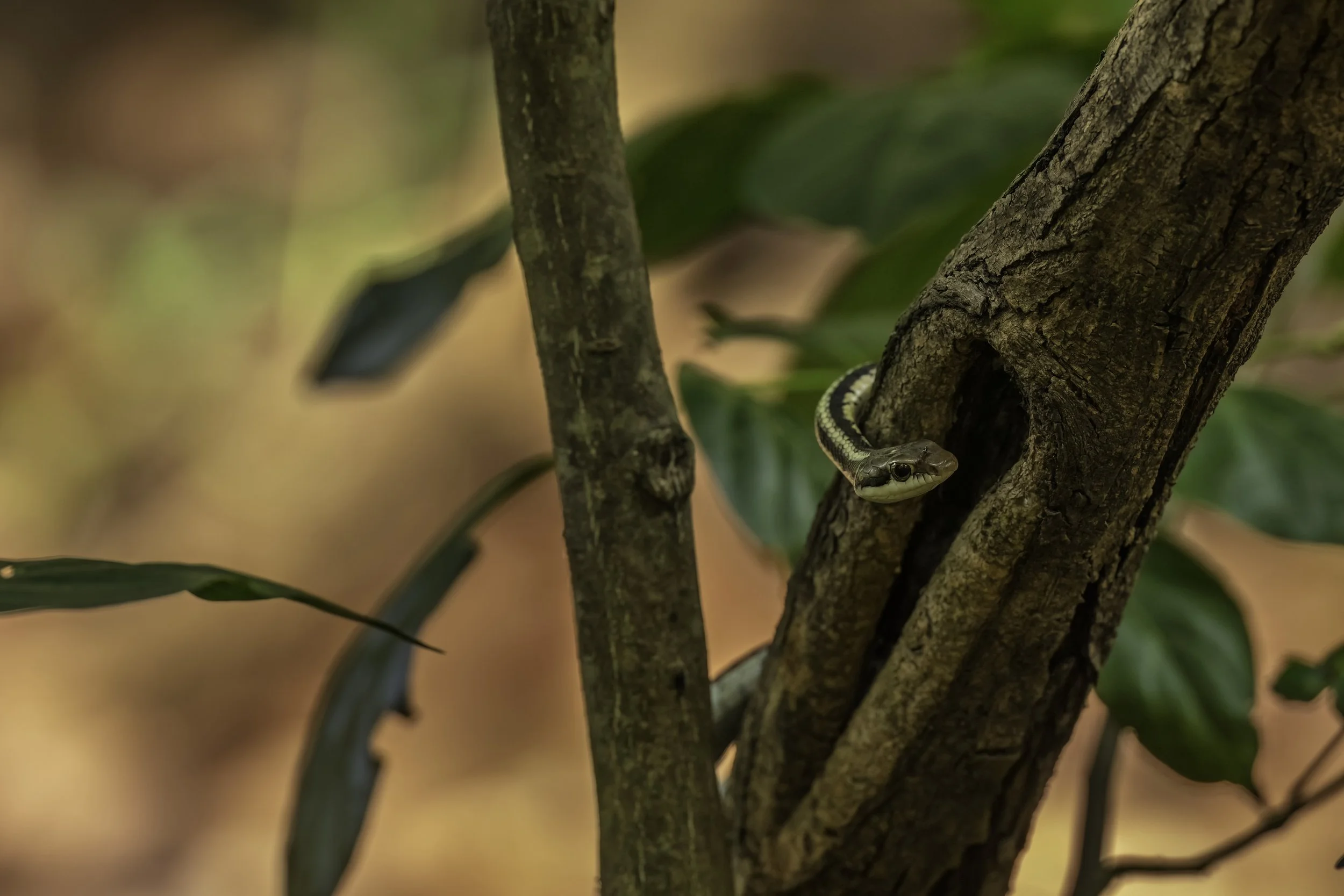
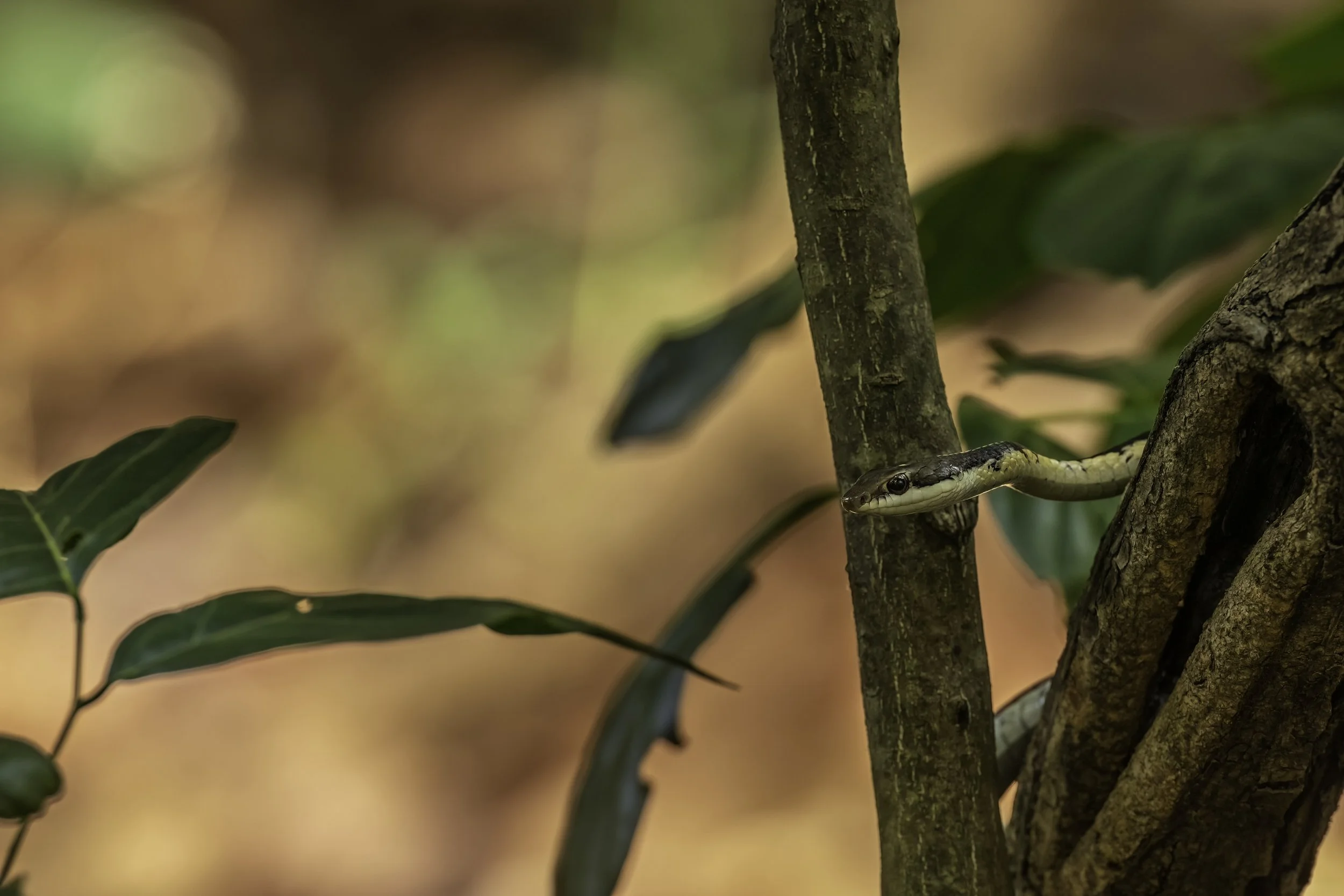
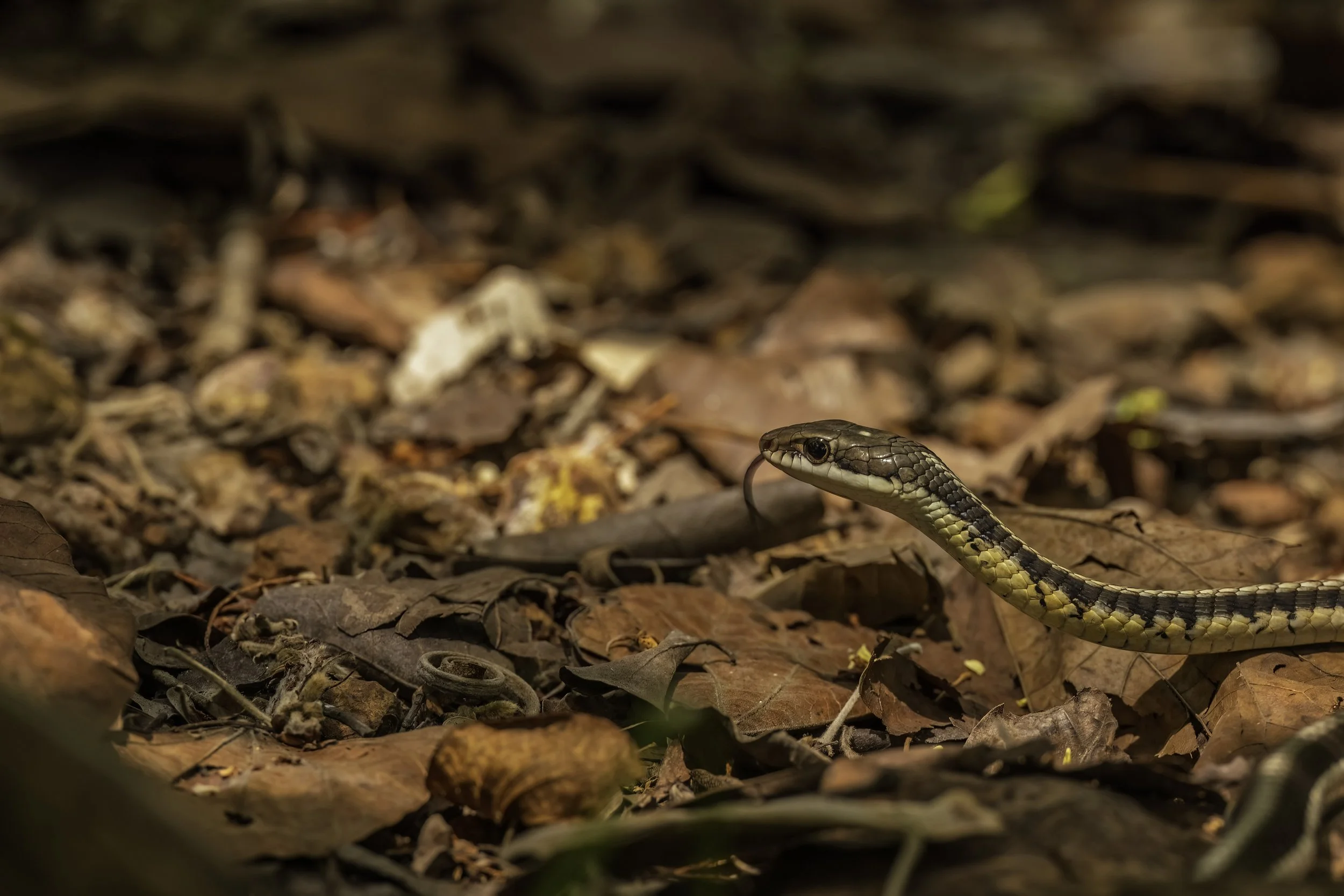
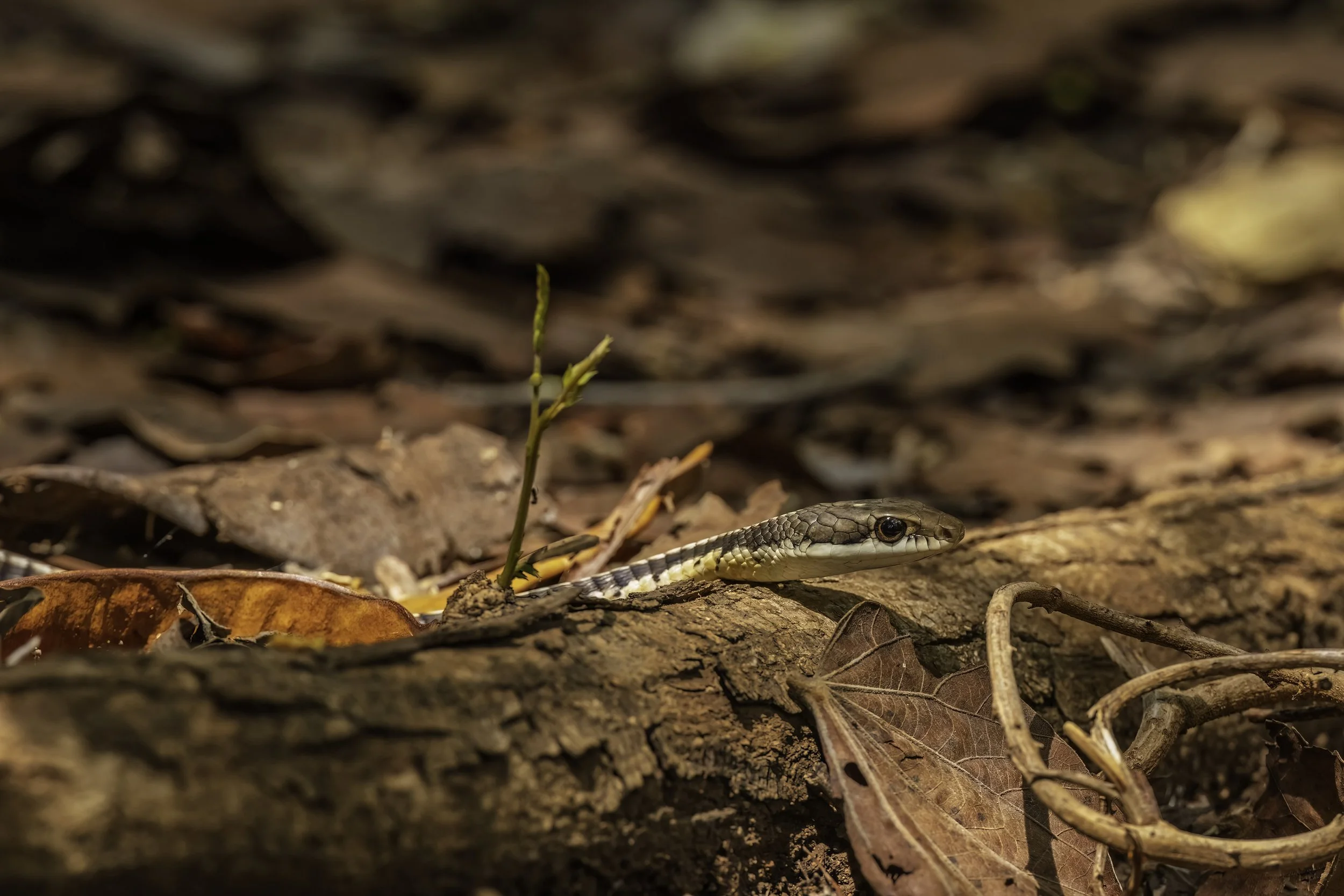
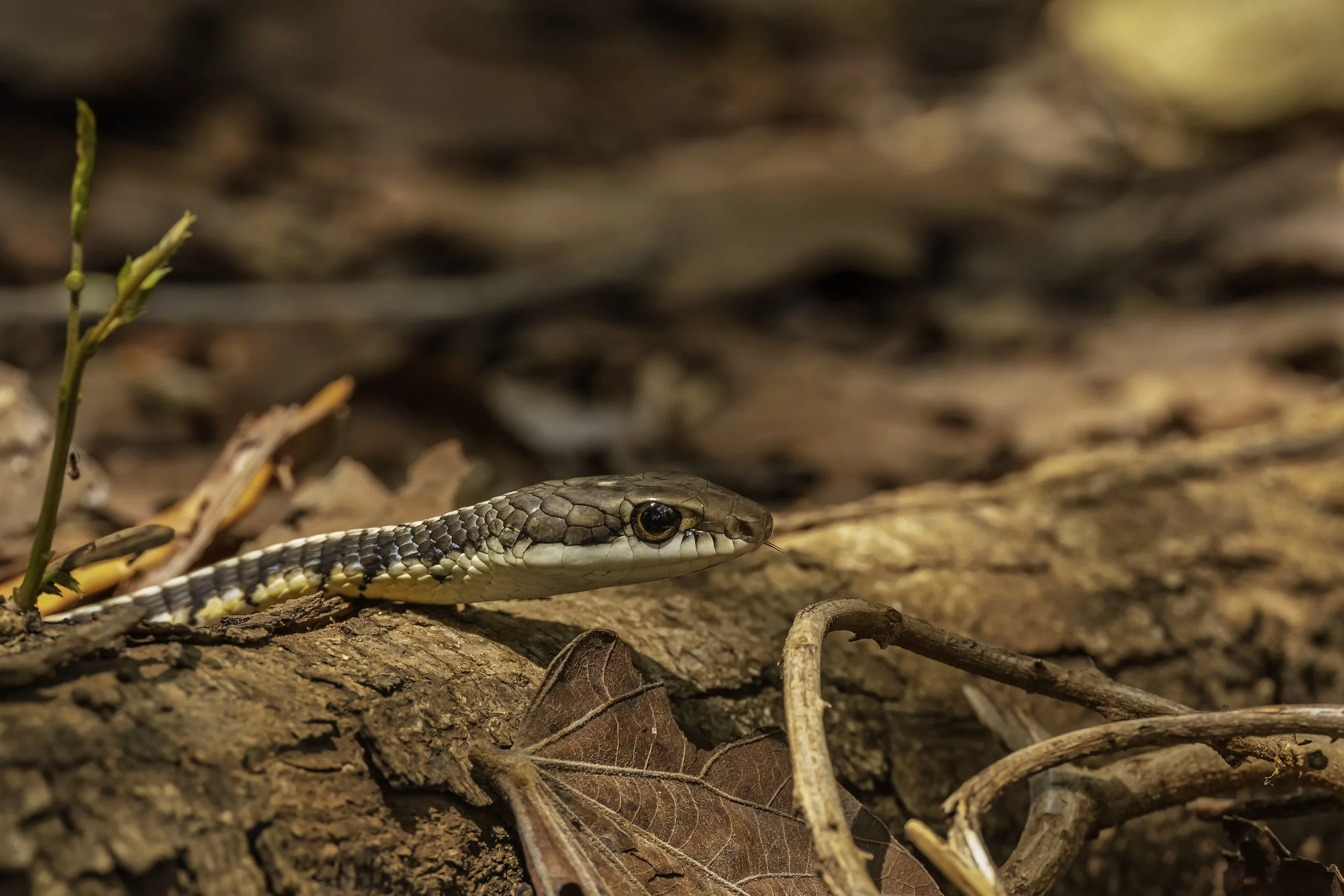
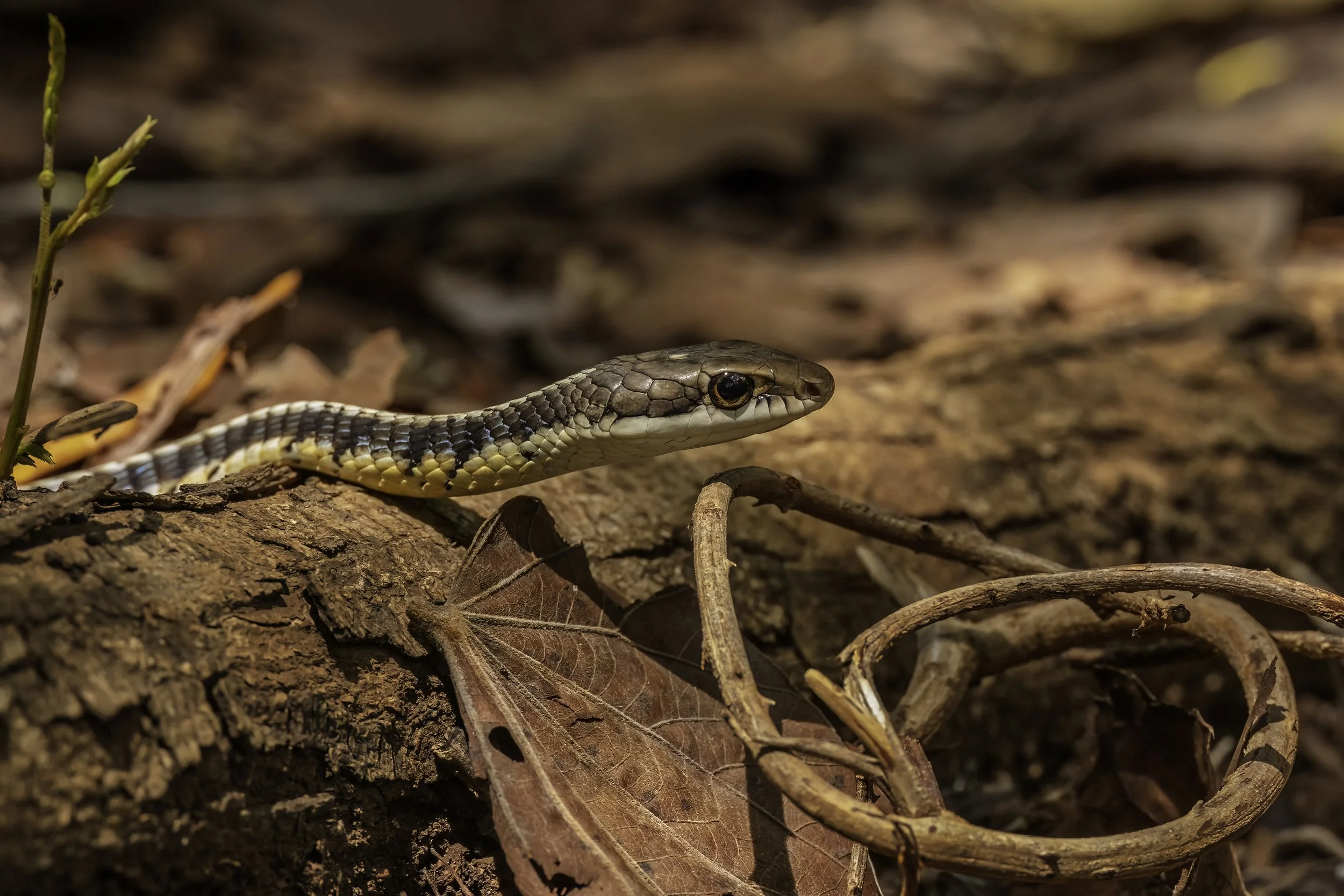
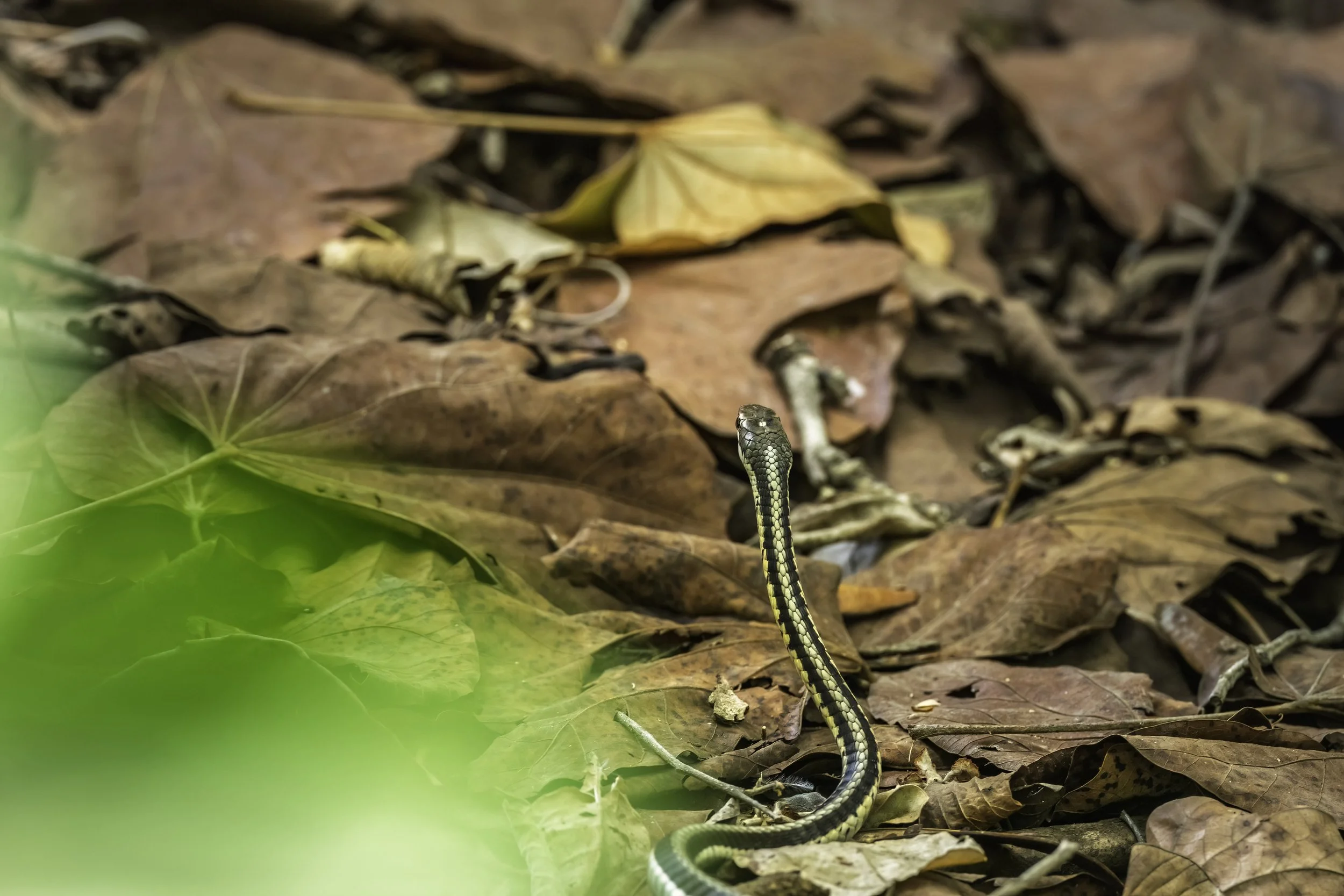
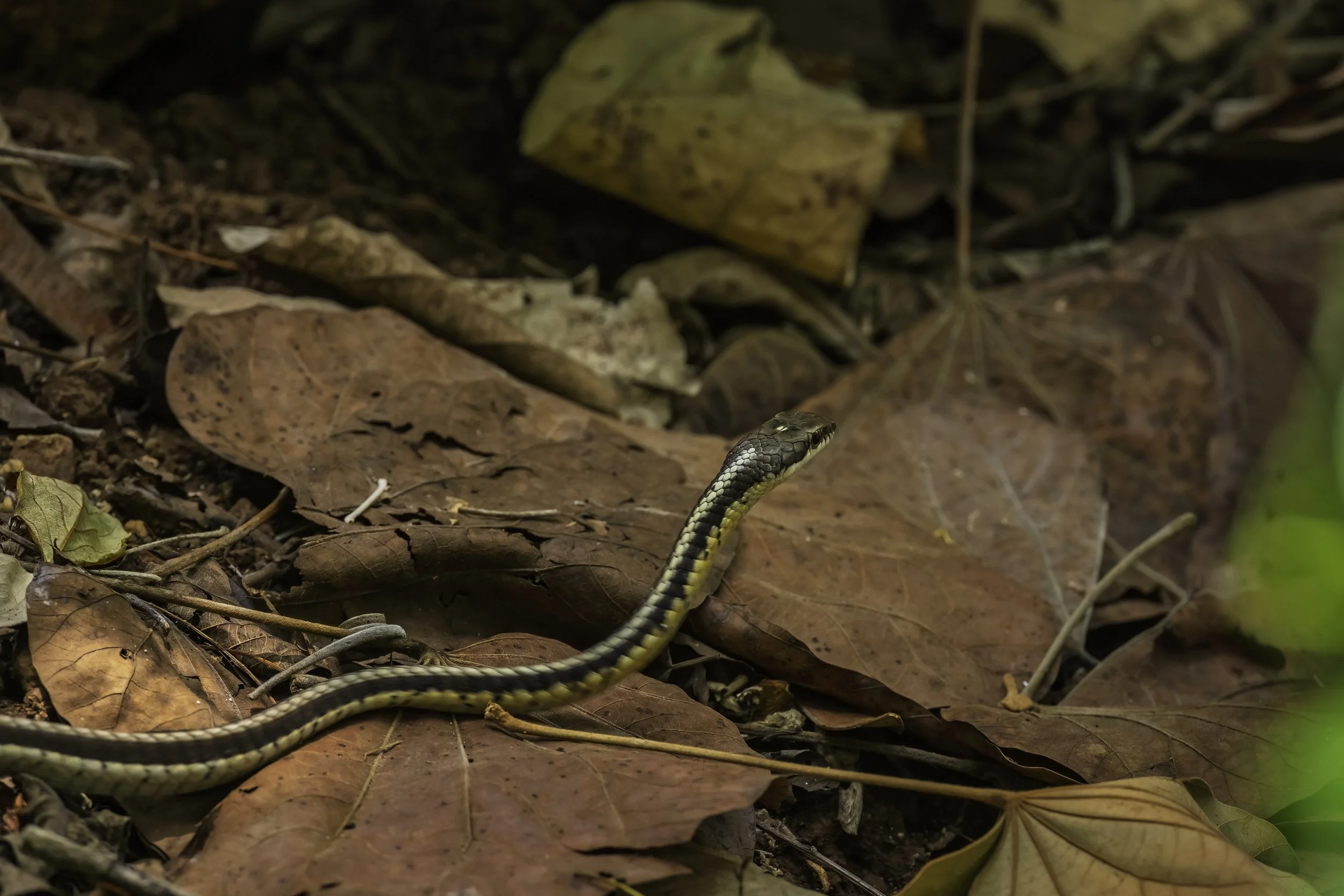
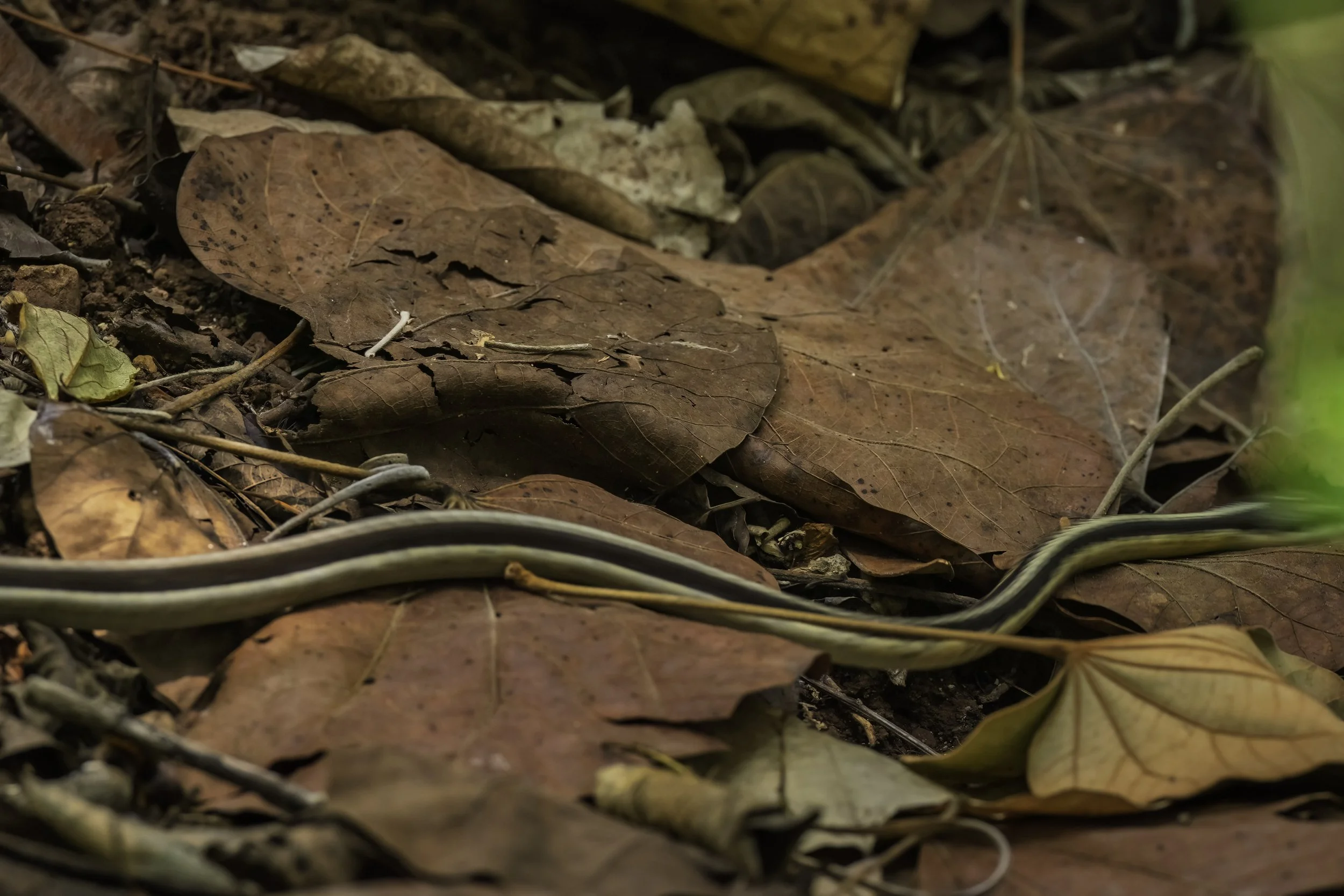
The Common Bronzeback Tree Snake (Dendrelaphis tristis) is an arboreal master of stealth navigating the fragmented dry woodlands of the Eastern Ghats, serving as a vital link in the region's rich biodiversity. It is widely distributed across the Indian subcontinent. It occupies geographic ranges stretching from the Himalayan foothills down to the southernmost tip of peninsular India. In the state of Telangana, this species thrives in protected forest ecosystems, adapting efficiently to varying macro-habitats. The undergrowth of the forests of Telangana is a complex, multi-layered environment shaped by Telangana's harsh semi-arid climate and rugged sandstone terrains. Beneath the high canopy of teak and Anogeissus latifolia (Axlewood), the forest floor is dominated by a dense, tangled matrix of seasonal grasses, thorny shrubs like Carissa carandas (wild Karanda), and low-lying wild lime bushes. During the dry winter and summer months, this undergrowth transforms into a brittle, golden landscape covered in a thick carpet of crisp, decaying leaf litter. When the monsoon arrives, the terrain rapidly changes into a lush green thicket, filled with emerging ferns, sprawling forest vines, and dense bamboo clusters (Dendrocalamus strictus) that crowd the edges of dry seasonal streams and rocky gorges. The Common Bronzeback softly rustles through this leaf litter before transitioning into a fluid, almost weightless ascent up a low-hanging shrub. Moving like a ribbon of liquid metal this arboreal master of stealth navigates the fragmented dry woodlands of the Eastern Ghats, serving as a vital link in the region's rich biodiversity.
This specific architectural mix of undergrowth forms the primary hunting and survival habitat for the Common Bronzeback. The snake relies heavily on the low-lying shrub layer—typically between one and three metres off the ground—where its slender, compressed body allows it to glide silently over delicate twigs that would snap under heavier predators. It uses this dense vegetation to ambush tree frogs, garden lizards, and small birds that seek shelter in the thickets. While the snake is mostly arboreal, the ground-level leaf litter serves as a critical highway for it to move between isolated trees. It also uses rocky crevices beneath the shrubs to lay its eggs and find shade during the scorching midday heat.
The species maintains robust populations across multiple key landscapes in the region:
Amrabad Tiger Reserve: Characterised by rugged, hilly terrain, deep gorges, and dry deciduous forests. The Common Bronzeback tree snake utilizes the dense undergrowth and complex tree canopies flanking the Krishna River basin to hunt and avoid apex predators.
Kawal Tiger Reserve: Located in the northern sector of Telangana, this reserve features dry teak forests mixed with bamboo thickets. The dense, interwoven bamboo branches provide ideal networks for this fully arboreal hunter.
Other State Locations: Beyond large tiger sanctuaries, fragmented populations exist in the scrub forests of the Pakhal Wildlife Sanctuary, the rocky terrains around Ananthagiri Hills, and rural agricultural edges surrounding Hyderabad.
National Standing: The Common Bronzeback is classified under the "Least Concern" category on the IUCN Red List. It is considered relatively common and stable across India, unlike localized endemic species of the Western Ghats.
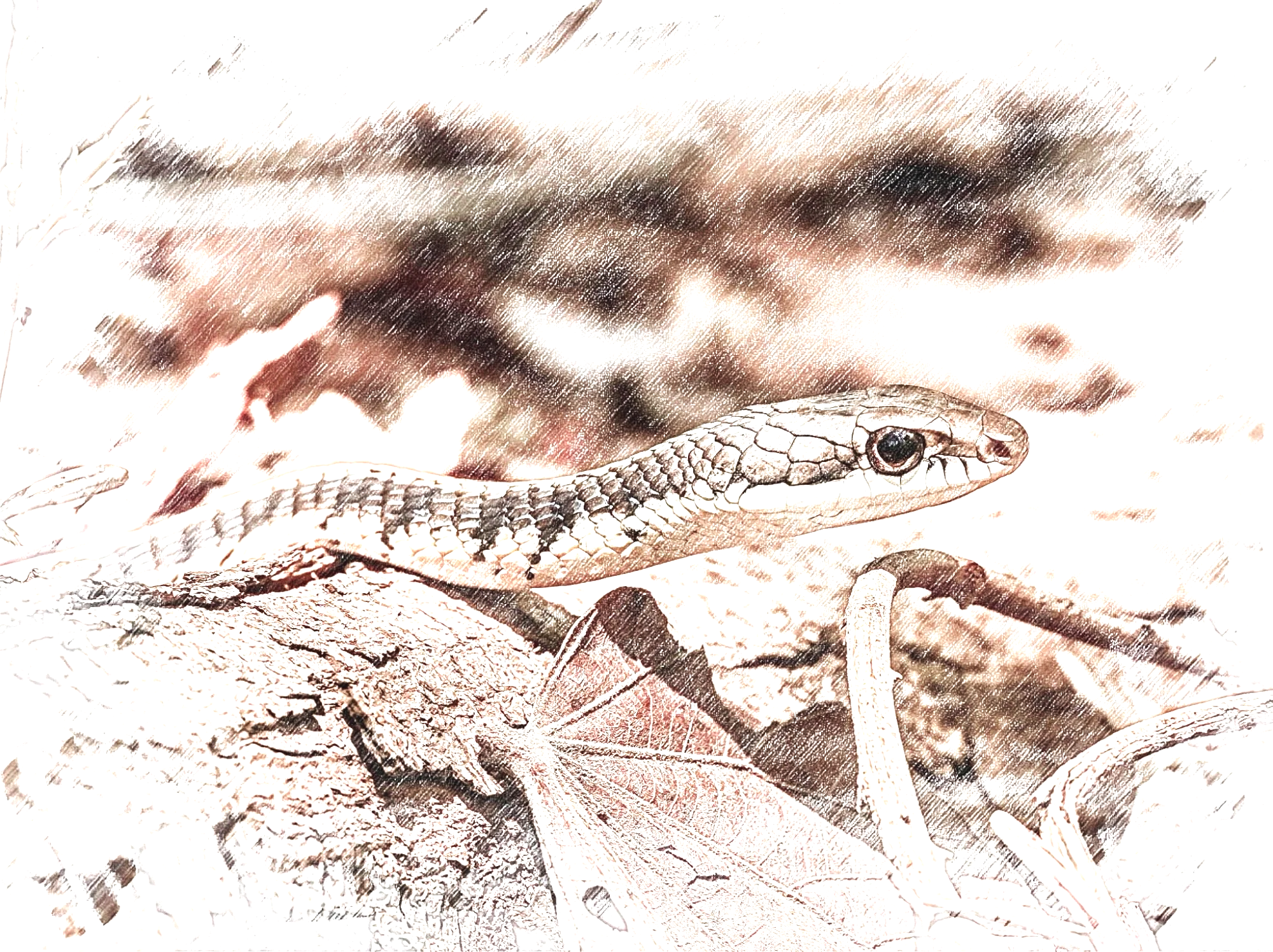
The anatomy of Dendrelaphis tristis represents an evolutionary adaptation for life among tree branches. It possesses a remarkably slender, elongated, and laterally compressed body that allows for highly efficient weight distribution during arboreal locomotion. Adult specimens typically average between 90 cm and 120 cm in total length, though exceptional individuals can reach a maximum length of up to 169 cm. The tail is notably long and whip-like, accounting for roughly 30% to 33% of the total body length, serving as an essential counterweight and prehensile balancing tool. Despite its length, its body weight remains minimal, ranging between 170 grams and 350 grams depending on sex and seasonal condition. Females are generally stouter and heavier when gravid, while males retain a highly compressed profile. There is a rounded whitish-yellow patch between its parietal scales and it has 15 rows of smooth, obliquely arranged mid-body scales.
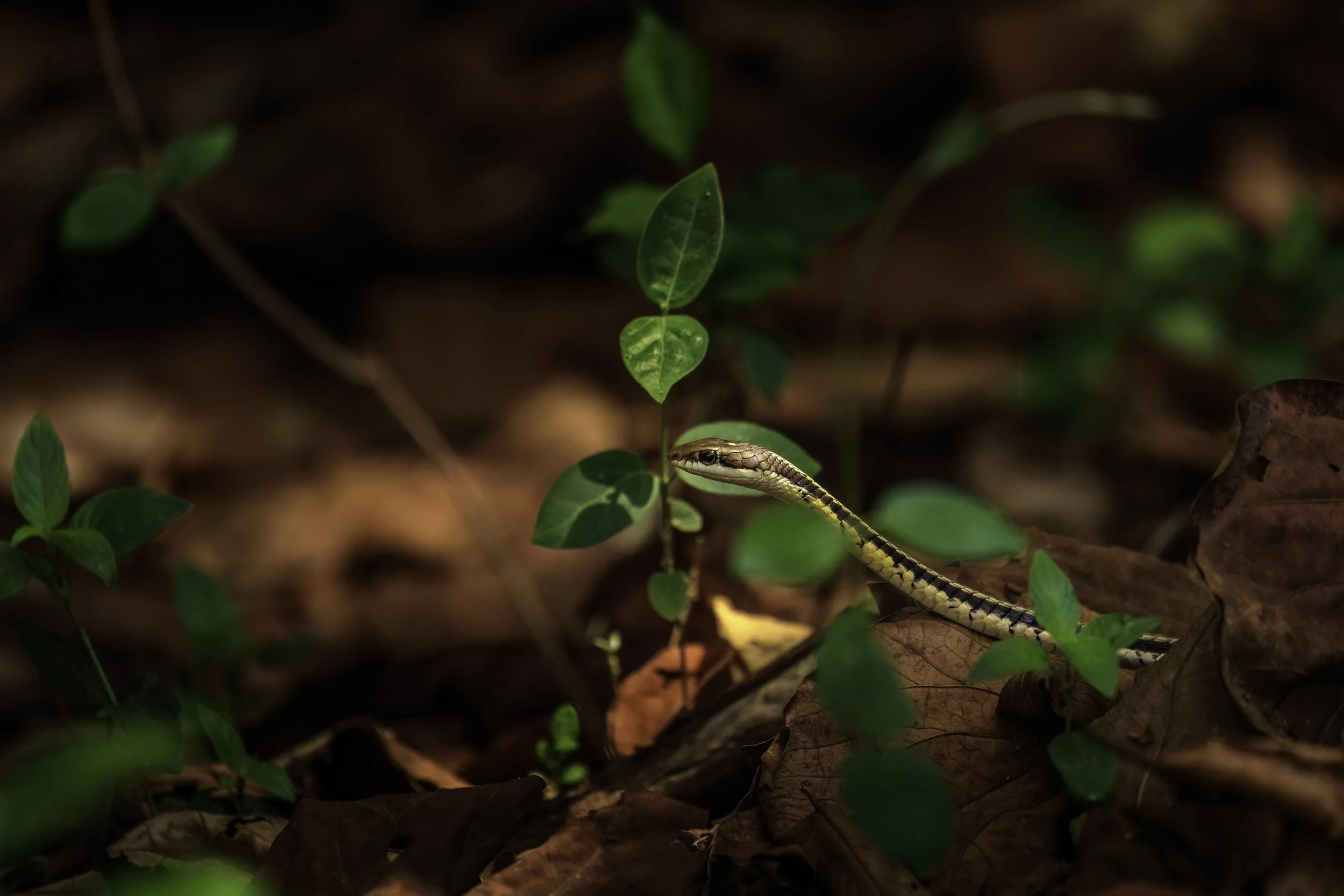
The dorsal surface features a uniform grey-brown, ruddy bronze, or deep olive-brown hue that provides effective camouflage against bark and dried leaves. A prominent, wide, metallic bronze-coloured stripe runs continuously down the center of the back along the vertebral ridge, becoming highly reflective under direct sunlight. The head is flat, distinctively elongated, and significantly broader than the slender neck. It features exceptionally large eyes with round pupils that provide sharp, stereoscopic, diurnal vision. A key diagnostic feature for field identification is a distinct, rounded whitish-yellow spot located directly on top of the head between the parietal scales. The lower flanks and ventral surface transition into a clean, pale cream, yellowish-white, or light greenish-yellow tone.
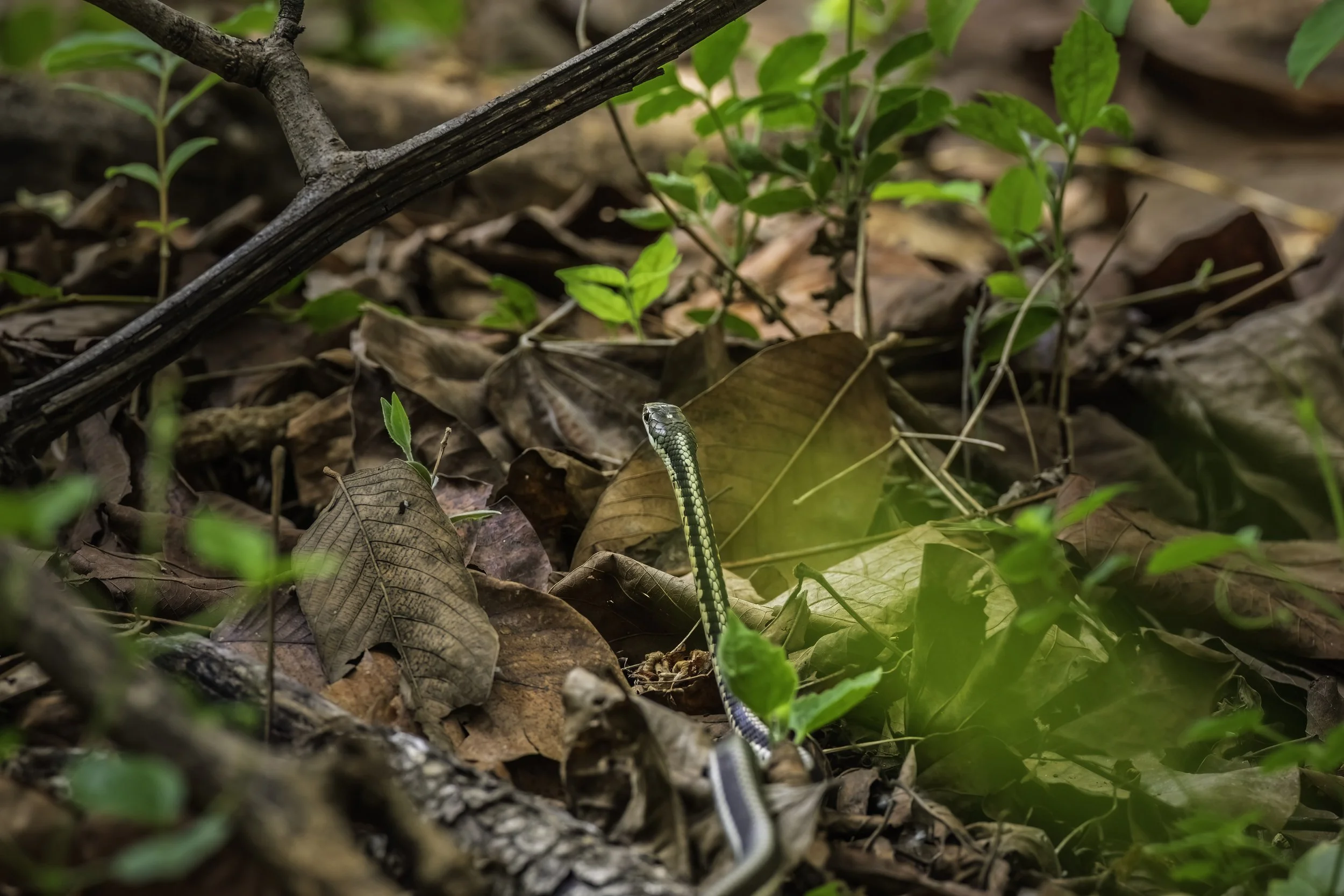
While snakes do not possess avian plumage, the Common Bronzeback exhibits a dynamic "scale display". The lower half of the dorsal scales, particularly on the fore body, is tipped with a vibrant sky-blue or turquoise color visible in these photographs. In a resting state, these scales overlap completely, rendering the blue entirely hidden beneath the uniform bronze camouflage.
The Common Bronzeback is completely non-venomous and entirely harmless to humans. It belongs to the family Colubridae and lacks any form of venom delivery apparatus or toxic secretions. When confronted by humans or potential predators, its primary strategy is rapid escape. If cornered or restricted, it exhibits a distinct aposematic defensive display. The snake inflates its neck and the front half of its body laterally, expanding the gaps between its scales to reveal the bright, hidden sky-blue pattern beneath. This sudden transformation alters its appearance, making it look larger and more intimidating to deter attackers. Even if forced to bite in self-defense, the puncture wounds from its tiny, uniform teeth cause only minor, superficial scratches that require basic antiseptic cleaning.
The species is exclusively diurnal, concentrating its activity from early morning until late afternoon. It is a highly active, restless hunter that relies on excellent visual acuity and high-speed locomotion to capture prey. Its diet consists primarily of tree frogs, garden lizards (Calotes), geckos, small birds, and occasionally avian eggs.
The Common Bronzeback occupies specific micro-habitats within dry deciduous forests, thorn scrublands, and rural plantations:
Arboreal Strata: It spends the majority of its life history in low-to-moderate forest strata, moving between bushes, low tree limbs, and thick vines.
Terrestrial Foraging: While fully arboreal, it will descend to the forest floor to pursue frogs or cross open gaps between isolated stands of trees, moving across the ground with exceptional speed.
Roosting and Reproduction: The snake is oviparous, laying a clutch of 6 to 8 elongated eggs during the peak summer month of April. These clutches are selectively deposited inside deep tree hollows, rocky crevices, or within dense accumulations of decaying leaf litter to regulate moisture and temperature.
Environmental Behavioral Changes
Natural factors such as temperature fluctuations and seasonal monsoons alter the snake's daily routines. During the hot dry summers of Telangana, the snake restricts its activity to the early morning hours, retreating deep into shaded tree hollows or dense canopies during the midday heat. The onset of the monsoon triggers heightened activity, as the emergence of breeding frogs and young lizards increases prey availability. Increased moisture also prompts the snakes to forage lower in the scrub layer, bringing them into temporary contact with terrestrial ecosystems.
Distinguishing Dendrelaphis tristis from its regional relatives and other sympatric snake species requires close observation of its markings and scale arrangements.
| Species Name | Primary Dorsal Colour | Key Lateral / Head Markings | Vertebral Feature | Scale Row Count |
|---|---|---|---|---|
| Common Bronzeback (Dendrelaphis tristis) | Grey-brown / bronze | Whitish-yellow spot on top of head; no bold black side-stripes | Thick bronze vertebral stripe | 15 rows at midbody |
| Painted Bronzeback (Dendrelaphis pictus) | Olive-brown or bright bronze | Strong black stripe through eye; bold yellow lateral line on lower flanks | Less pronounced vertebral contrast | 15 rows at midbody |
| Eastern Bronzeback (Dendrelaphis proarchos) | Golden brown | Confined to Northeast India/Bangladesh; distinct black temporal streaks | Darker borders along the spine | 15 rows at midbody |
| Common Vine Snake (Ahaetulla nasuta) | Vibrant leaf-green | Elongated, pointed snout; horizontal, keyhole-shaped pupils | Lacks any bronze striping | 15 rows (oblique) |
Distinguishing from Venomous Species
In the leaf litter or lower branches of Telangana's forests, inexperienced observers can sometimes mistake the fast-moving Common Bronzeback for venomous species, leading to unnecessary conflict:
Common Krait (Bungarus caeruleus): While the Krait is nocturnal, slow-moving by day, and possesses a dark blue-black body with stark white cross bands, a panicked glance at a moving Bronzeback’s dark flanks can cause confusion. The Bronzeback lacks any white body bands and features a distinctly broad head with large eyes, whereas the Krait has a narrow head with tiny, indistinct eyes.
Spectacled Cobra (Naja naja): Cobras can expand a broad cervical hood vertically when threatened. The Bronzeback expands its neck laterally and displays bright sky-blue skin between its scales, lacking the characteristic spectacle mark of the cobra.
Herpetological Checklist
To truly appreciate the niche that the Common Bronzeback occupies, one must look at the broader reptile community of Telangana. The reserves of the state are a sanctuary for a highly diverse herpetofaunal assembly. Field surveys within this landscape reveal a distinct distribution of snakes across three main classifications:
Highly Venomous Species (The “Big Five“)
Spectacled Cobra (Naja naja): Adaptable terrestrial snake found in dry forests and around forest villages.
Common Krait (Bungarus caeruleus): Nocturnal predator that primarily feeds on other snakes in leaf litter.
Russell's Viper (Daboia russelii): Large, heavy-bodied terrestrial viper that relies on camouflage in dry grass.
Saw-scaled Viper (Echis carinatus): Small, aggressive viper found in rocky outcroppings and dry scrub.
Bamboo Pit Viper (Trimeresurus gramineus): Green, arboreal viper restricted to moist bamboo clusters near streams.
Mildly Venomous (Mildly Toxic/Rear-Fanged)
Common Vine Snake (Ahaetulla nasuta): Diurnal, highly arboreal snake that mimics green twigs.
Forsten's Cat Snake (Boiga forsteni): Large, nocturnal arboreal species that targets roosting birds and lizards.
Common Cat Snake (Boiga trigonata): Nocturnal, tree-dwelling snake with zigzag markings mimicking vipers.
Non-Venomous Species (Sympatric with the Bronzeback)
Indian Rock Python (Python molurus): Large apex reptile found in rocky caves and near permanent water bodies.
Indian Rat Snake (Oriental Ratsnake / Ptyas mucosa): Large, fast terrestrial hunter present across all habitats.
Trinket Snake (Coelognathus helena): Constrictor with beautiful checkered patterns, found in low bushes.
Common Wolf Snake (Lycodon aulicus): Terrestrial, nocturnal species often found around rocky forest camps.
Checkered Keelback (Fowlea piscator): Semi-aquatic snake abundant near the Krishna riverbeds and forest pools.
Common Sand Boa (Eryx conicus): Heavy, slow-moving burrower found in loose, sandy soil and leaf litter.
Field Notes: Photographing the Bronzeback
Documenting the Common Bronzeback within the reserves of Telangana requires patience, fast camera settings, and a steady hand. On a morning trek along the rocky trails near the edge of the forest reserve, a slight movement in the leaf litter caught our attention. Sheltered within the leaves sat an adult Bronzeback, its metallic dorsal line gleaming under the morning sun.
To photograph a species known for its quick movements, we configured a telephoto setup to maintain a respectful distance. This kept the snake relaxed and prevented it from triggering its defensive posture or fleeing into the upper canopy. Operating in manual mode, we selected a fast shutter speed to compensate for potential sudden movements, keeping the aperture at the lowest possible to create a clean, isolated depth of field against the blurred & messy forest background.
We tracked its large, gold-rimmed eye and round pupil. As we moved slightly to clear a blocking leaf, the snake shifted, smoothly sliding across the thin twigs with its light body weight. For a brief moment, it paused in an open patch of sunlight, highlighting the distinctive white spot on its crown and revealing a hint of the bright blue scales along its neck before the snake glided into the upper canopy, leaving the bush still and showing why it is one of the true masters of the Eastern Ghats treescapes.
‡‡‡‡‡

Related Posts


Where the Godavari breathes, ancient Muggers glide through shadows of gold & grit. A haunting prayer for a future where they don’t just endure, but truly belong. 🐊✨
Muggers in the Godavari are surviving, not adapting. Pollution & mining threaten these ancient reptiles. We owe them a future, not a struggle.
#wildartworks, #Canon, #Wildlife, #naturephotography, #earthcapture, #conservationphotography, #wildlifeonearth, #bbcearth, #natgeowild, #natgeoindia, #nirmal, #wildtelangana, #Boath, #telanganawildlife, #waterbodies, #Godavari #WildlifeConservation #MuggerCrocodile #Telangana