
Indian Pitta
Pitta brachyura | పొడ పిట్ట | नवरंग
Nallamala Hills, Amrabad Tiger Reserve
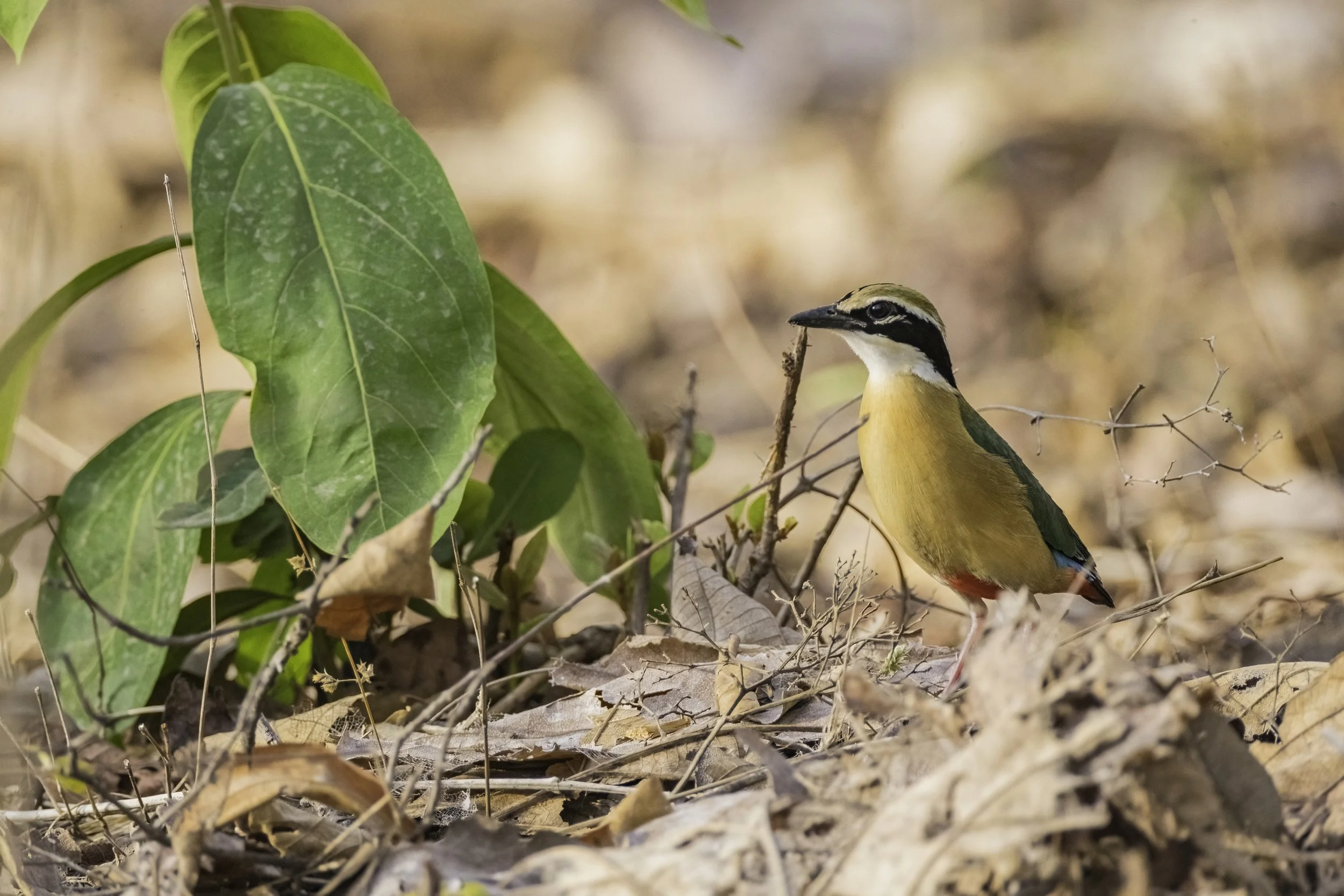
The pre-dawn air in the Amrabad Tiger Reserve is thick with the scent of damp earth and crushed teak leaves. High up in the canopy of the Nallamala Hills, a Malabar Whistling Thrush tunes its flute, but on the forest floor, the world remains draped in shadows. Then, as the first spear of golden sunlight pierces the dense deciduous canopy of Telangana’s wilderness, a sound breaks the stillness—a sharp, clear, musical two-note whistle. Wheet-tieu. It is the unmistakable whistle of the Pitta brachyura, the Indian Pitta. Locally celebrated in Telugu as the Poda Pitta (పొడ పిట్ట) (the spotted bird), this vibrant creature is the ultimate prize for birdwatchers and photographers alike, acting as a living kaleidoscope hidden in the subcontinent’s leaf litter. The Indian pitta also known as Navrang (नवरंग) in Hindi because its plumage displays an incredibly vibrant, rainbow-like array of nine distinct colors. "Nav" translates to nine, and "rang" translates to color. This spectacular spectrum includes Green (upperparts), Blue (vibrant shoulder and wing patches), Bright Red (under the tail/vent area), Yellow/Buff (throat, underparts, and crown stripe) along with striking accents of black, brown, white, and orange across its head and wings. These brilliant colors are particularly striking when the bird takes flight but despite its vivid appearance, it is a secretive bird that spends most of its time hidden in the undergrowth of forest floors.
Located in the central stretch of the Deccan Plateau, Telangana has sub-tropical climate and the terrain consists mostly of hills, mountain ranges, and thick dense forests covering an area of 27,292 km². The annual rainfall ranges between 1,100 mm to 1,200 mm and the annual temperature varies from 15°C to 45°C. The State is drained by a number of rivers which include the Godavari and the Krishna.
Telangana is endowed with rich diversity of flora and fauna (Species Directory). It has dense teak forests on the northern part along the banks of river Godavari and to the south along the banks of the Krishna. As per the Champion & Seth Classification of Forest Types (1968), the forests in Telangana belong to three Forest Type groups, which are further divided into 12 Forest Types. The State Government’s massive greening programme, 'Telangana Ku Harita Haram', aims at achieving the twin objectives of increasing the forest cover and reduce pressure on the existing forest resources, through massive community participation by Vana Samrakshna Samithis (VSS) and Eco-Development Committees (EDCs) in Protected Areas and Watershed Development Committees in the Watershed areas. Recorded Forest Area (RFA) in the State is 26,904 km² of which 20,353 km² is Reserved Forest, 5,939 km² is Protected Forest and 612 km² is Unclassed Forests.
Three National Parks and nine Wildlife Sanctuaries constitute the Protected Area network of the State covering 5.08% of its geographical area and our focus area today is within the north western fringe of the Nallamalla forest - the Amrabad Tiger Reserve - India's second-largest tiger reserve by core area (2,611 km²). Known for its rugged terrain, deep gorges, and dry deciduous forests, it hosts Bengal tigers, leopards, and over 300 bird species. The river Krishna flows through it, supporting rich biodiversity and the indigenous Chenchu tribes.
Achampet Forest Range, Amrabad Tiger Reserve
The Amrabad Tiger Reserve (ATR), sprawling across the rugged Nallamala Hills of the Eastern Ghats in Telangana, stands as one of India’s largest and most ecologically significant wildernesses. Central to the administration, protection, and ecological preservation of this pristine landscape is the Achampet Forest Range. Operating under the Nagarkurnool forest division, the Achampet range serves as a vital sanctuary for the region’s apex predators, a crucial watershed, and a vibrant cultural landscape where nature and ancient indigenous traditions intertwine.
Geographically, the Achampet Forest Range is defined by its highly dramatic and punishing terrain. The landscape features elevated plateaus—most notably the Farahabad plateau—broken up by sheer cliffs, deep gorges, and steep, winding valleys. This fractured topography acts as a natural fortress, isolating the deep interior areas from intensive human disturbance. The range experiences a warm tropical climate, receiving the majority of its life-giving rainfall during the Southwest monsoon. Crucially, the complex network of seasonal and perennial streams weaving through Achampet’s valleys empties directly into the Krishna River basin, forming a critical catchment zone that feeds the massive Srisailam and Nagarjuna Sagar dams.
The vegetation of the Achampet range is dominated by tropical dry deciduous forests mixed with dense undergrowths of bamboo and tall native grasses. The canopy includes valuable and sturdy tree species like teak, sal, and acacia, alongside a vast repository of rare, endemic medicinal herbs traditionally preserved by the local Chenchu communities.
This dense floral mosaic supports a thriving wildlife population. The Achampet division, particularly around the high Farahabad plateau, holds a major portion of the Royal Bengal Tiger population within Telangana. Alongside the tiger, the range protects co-predators such as Indian Leopards, Sloth Bears, and packs of endangered Wild Dogs (Dholes). These carnivores track a robust prey base of herbivores, including Sambhar, Chital (spotted deer), Nilgai, and the elusive and shy Four-horned antelope (Chousingha).
Furthermore, the skies and canopies of Achampet host over 300 avian species, making it a vital regional stronghold for bird conservation.
The Achampet Forest Range is unique for its deep anthropological roots. It is the ancestral home of the Chenchu tribe, an indigenous group that has lived symbiotically within the Nallamala forests for centuries. The Chenchus possess deep traditional knowledge of the forest's ecology and work closely with forest authorities in conservation and anti-poaching operations. Mechanically tied to the landscape are also deep historical and spiritual landmarks. The range houses the ancient Uma Maheshwaram Temple, a historic stone shrine built on a cliffside that is traditionally revered as the northern gateway to the sacred pilgrimage site of Srisailam.
Preserving the wilderness of Achampet requires a delicate balancing act by the Telangana Forest Department. The range faces continuous anthropogenic pressures, including forest fires, the spread of invasive weeds like Lantana camara, and habitat fragmentation caused by state highways slicing through the reserve. To mitigate these pressures and provide a legal economy for the Chenchu people, authorities have promoted regulated eco-tourism. Controlled jungle safaris, community-run stays, and environmental education camps around Farahabad allow visitors to witness the raw beauty of Telangana's wild heart without disrupting its ecological balance. Through strict management and local partnership, the Achampet Forest Range remains a defensive shield for India's natural heritage.
Read more about the Chenchu Sacred Groves.
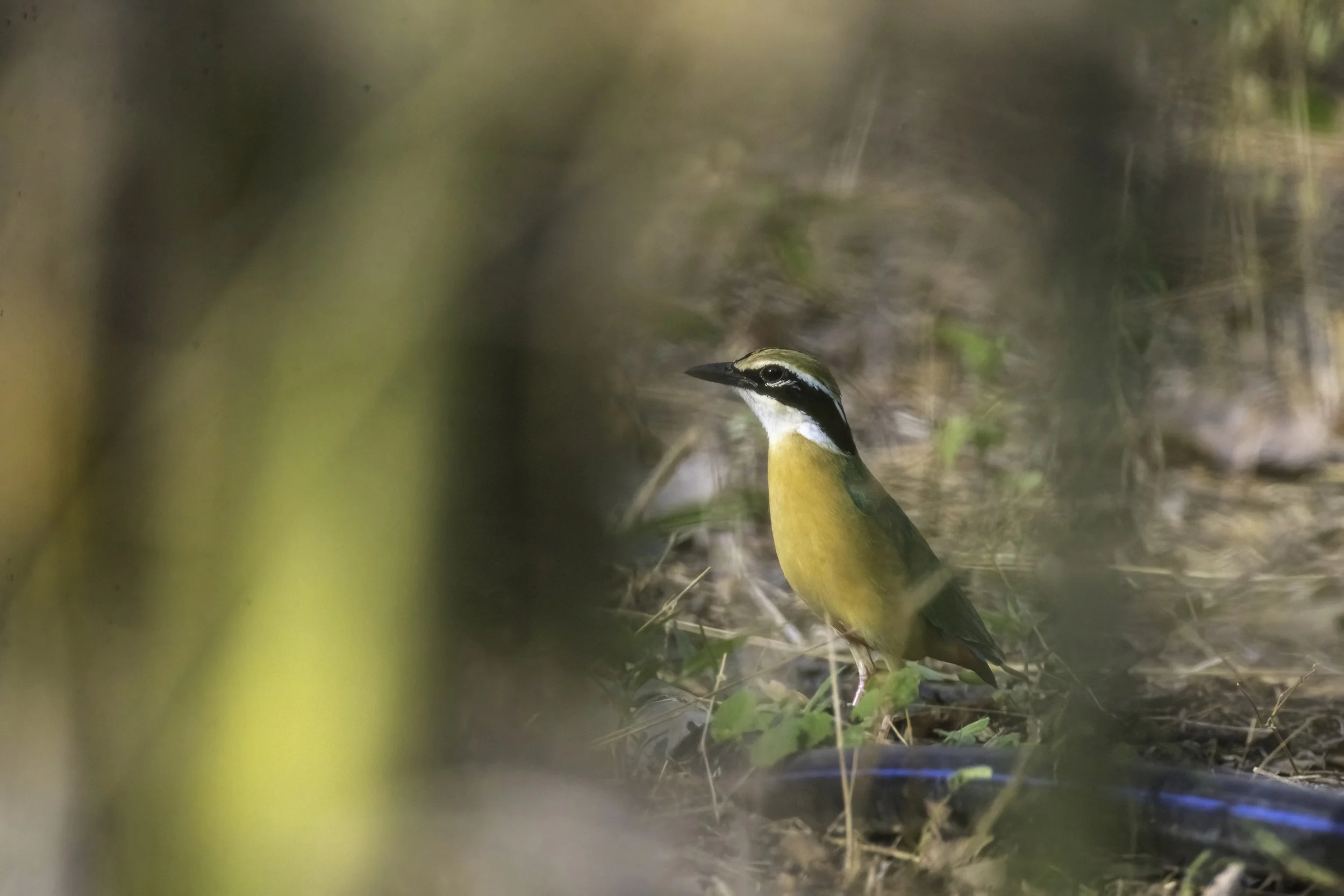
Indian Pitta
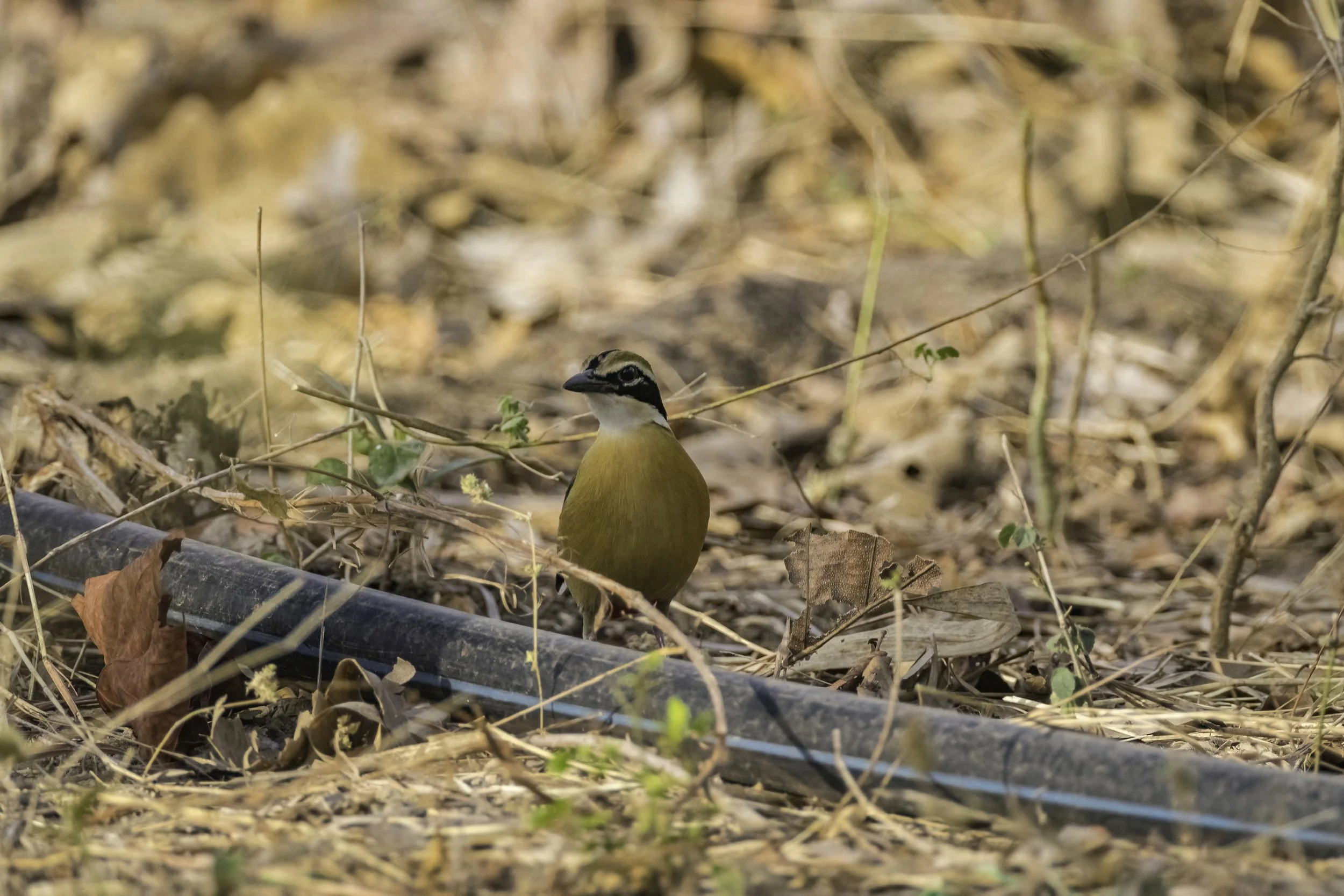
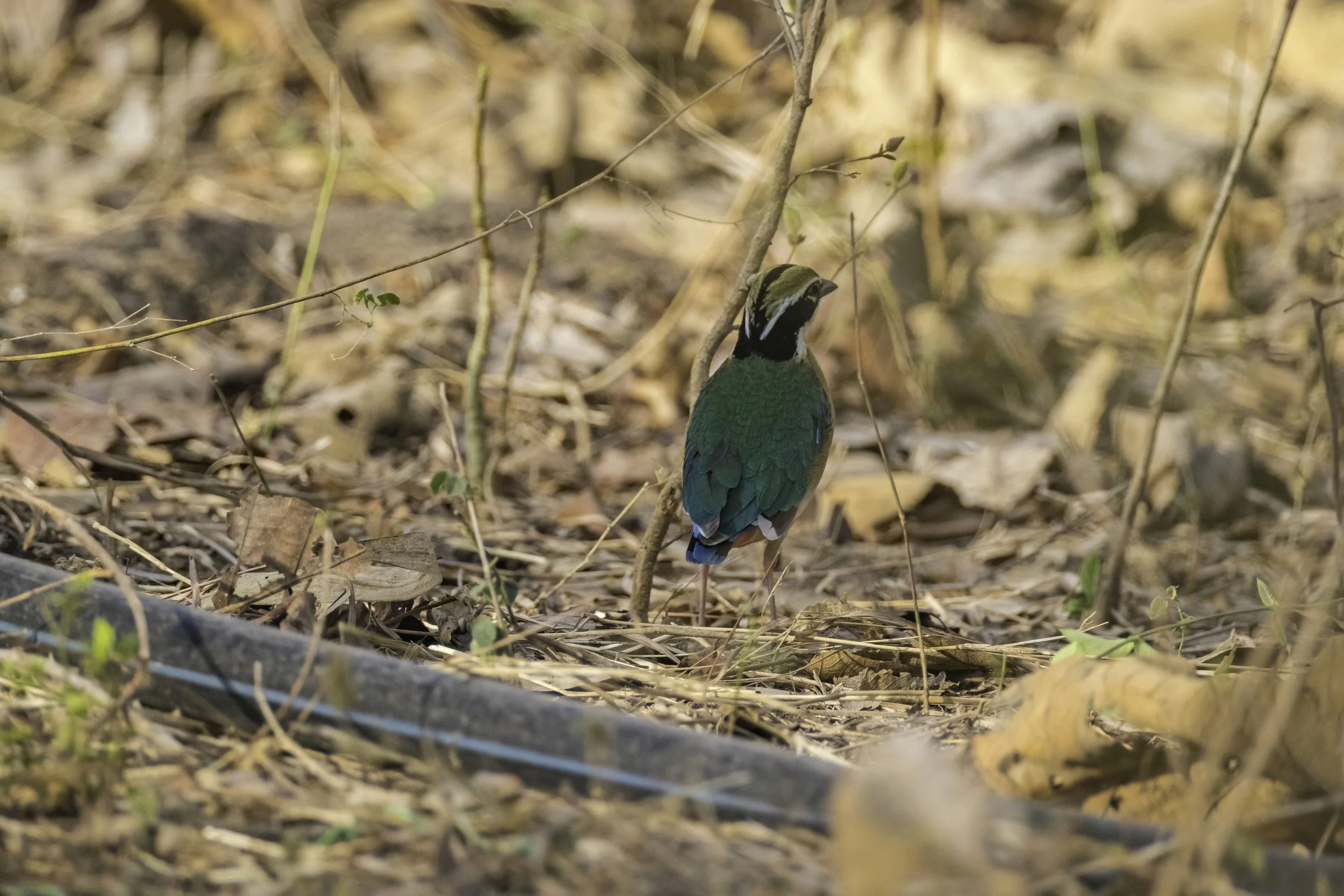
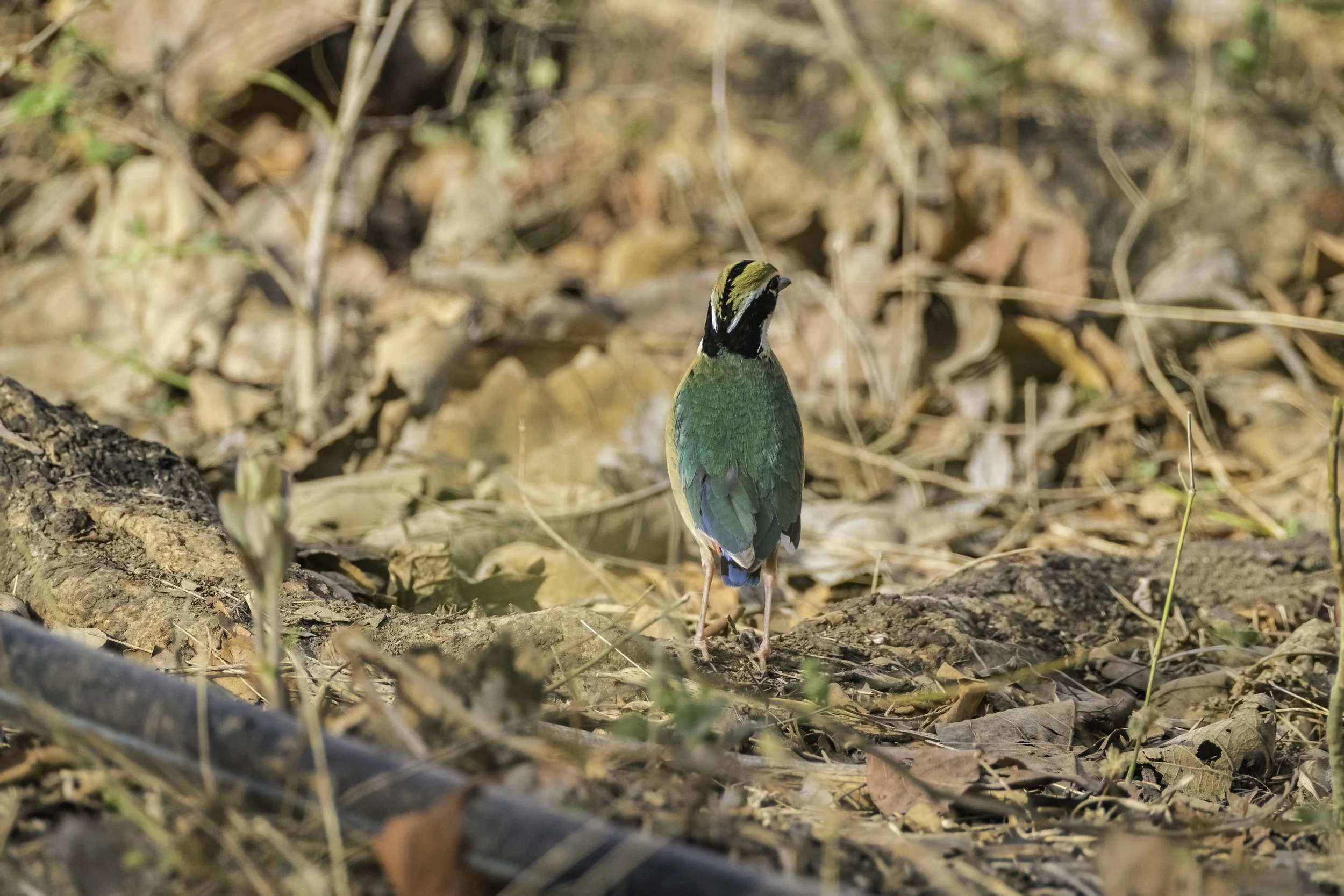
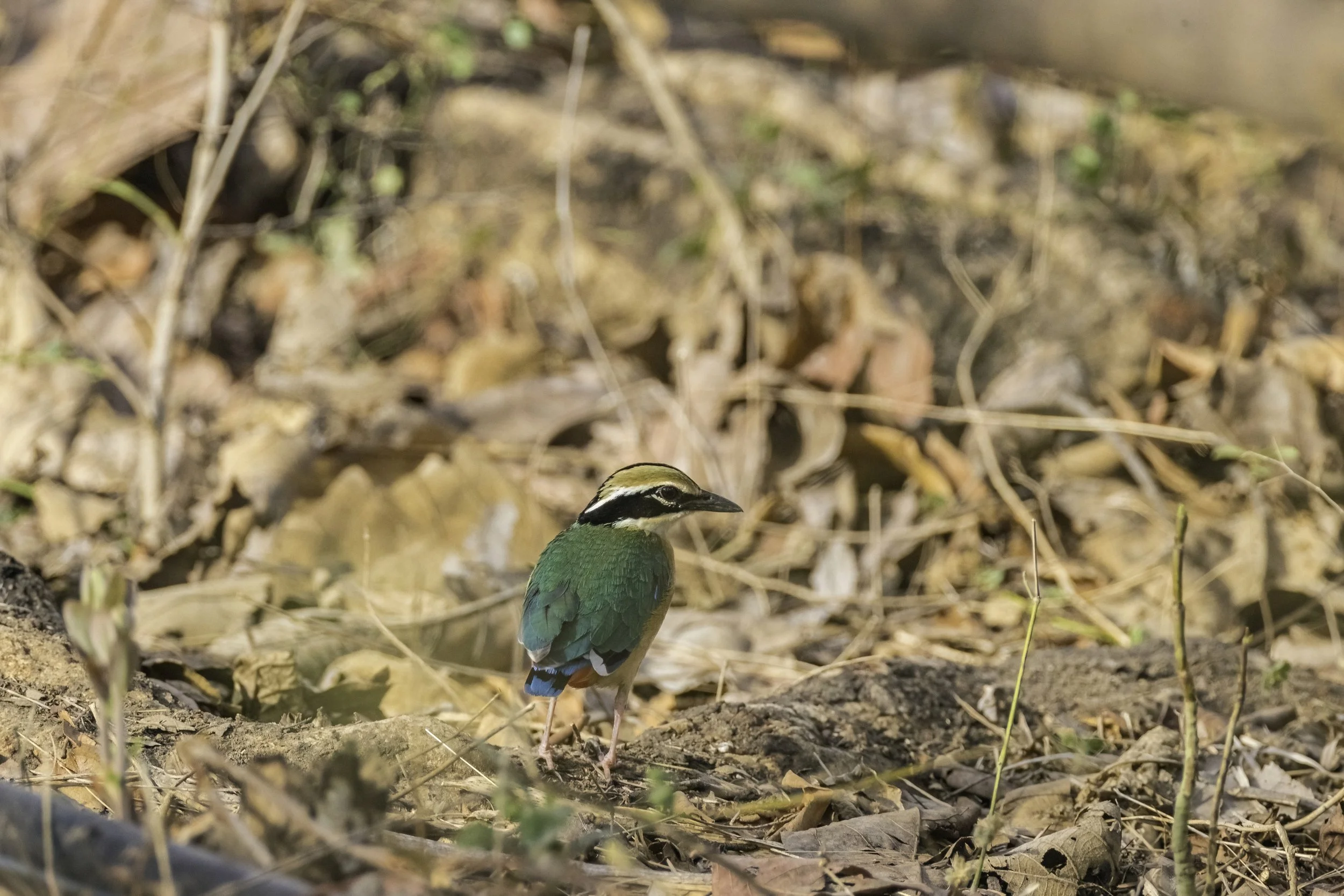
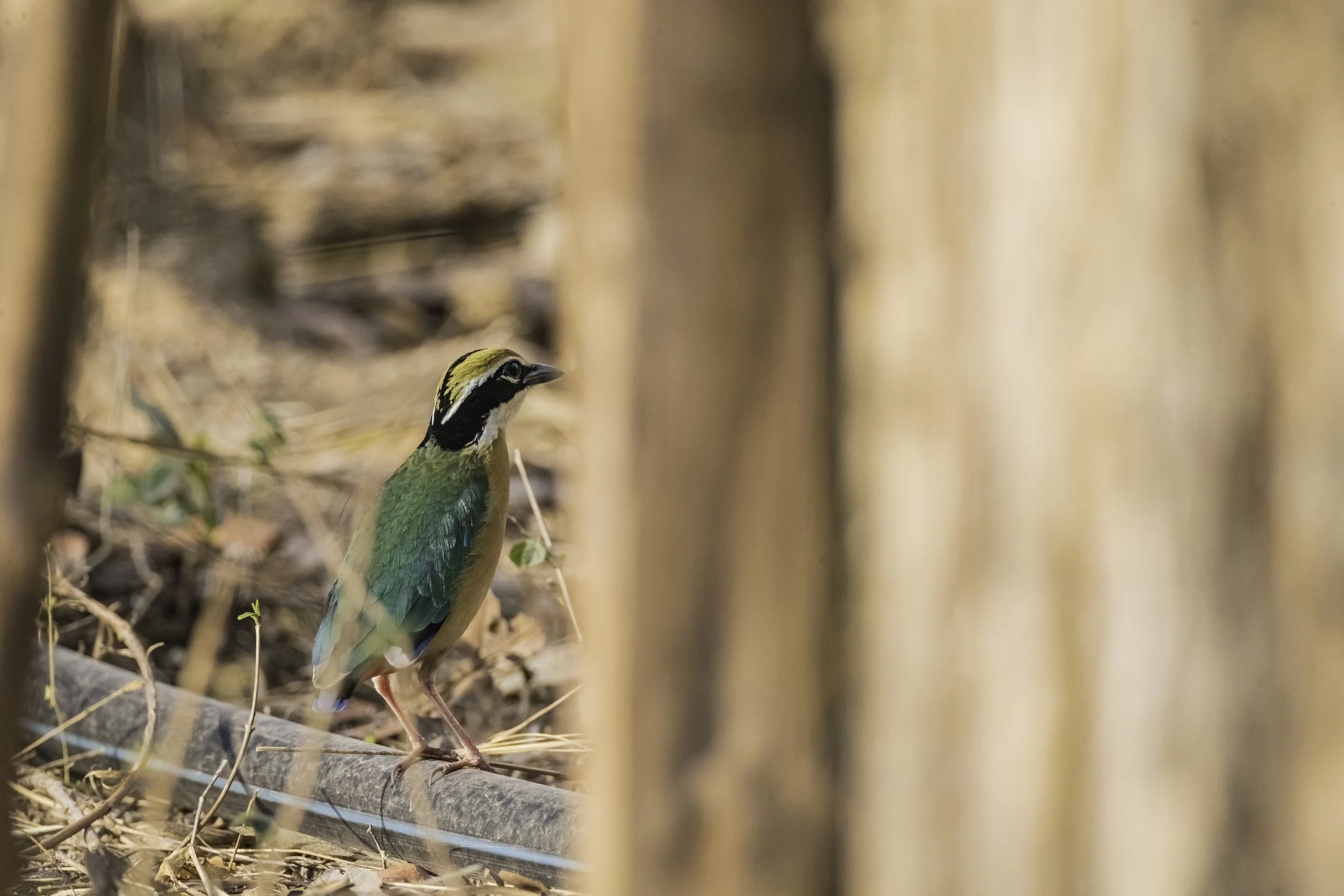
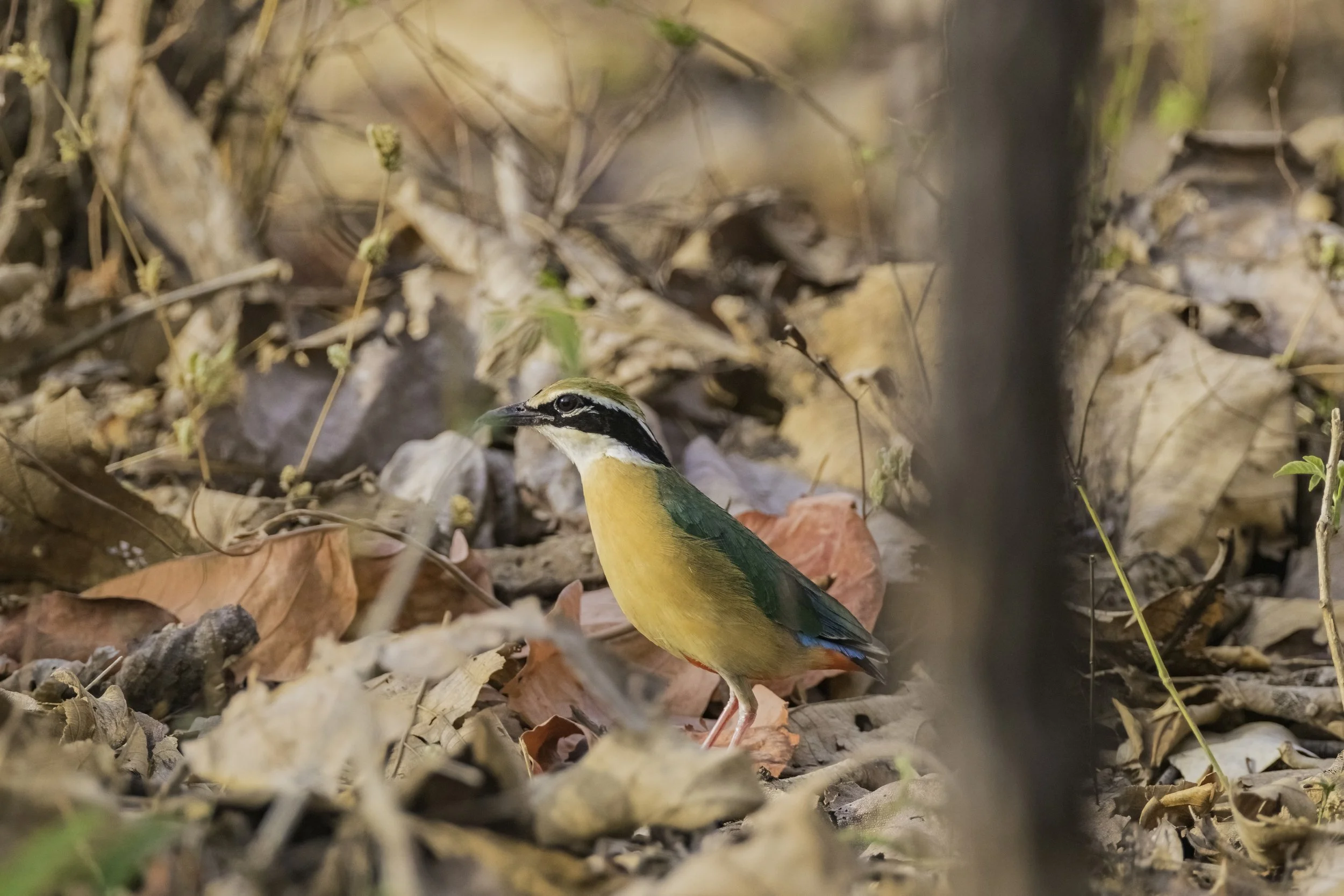
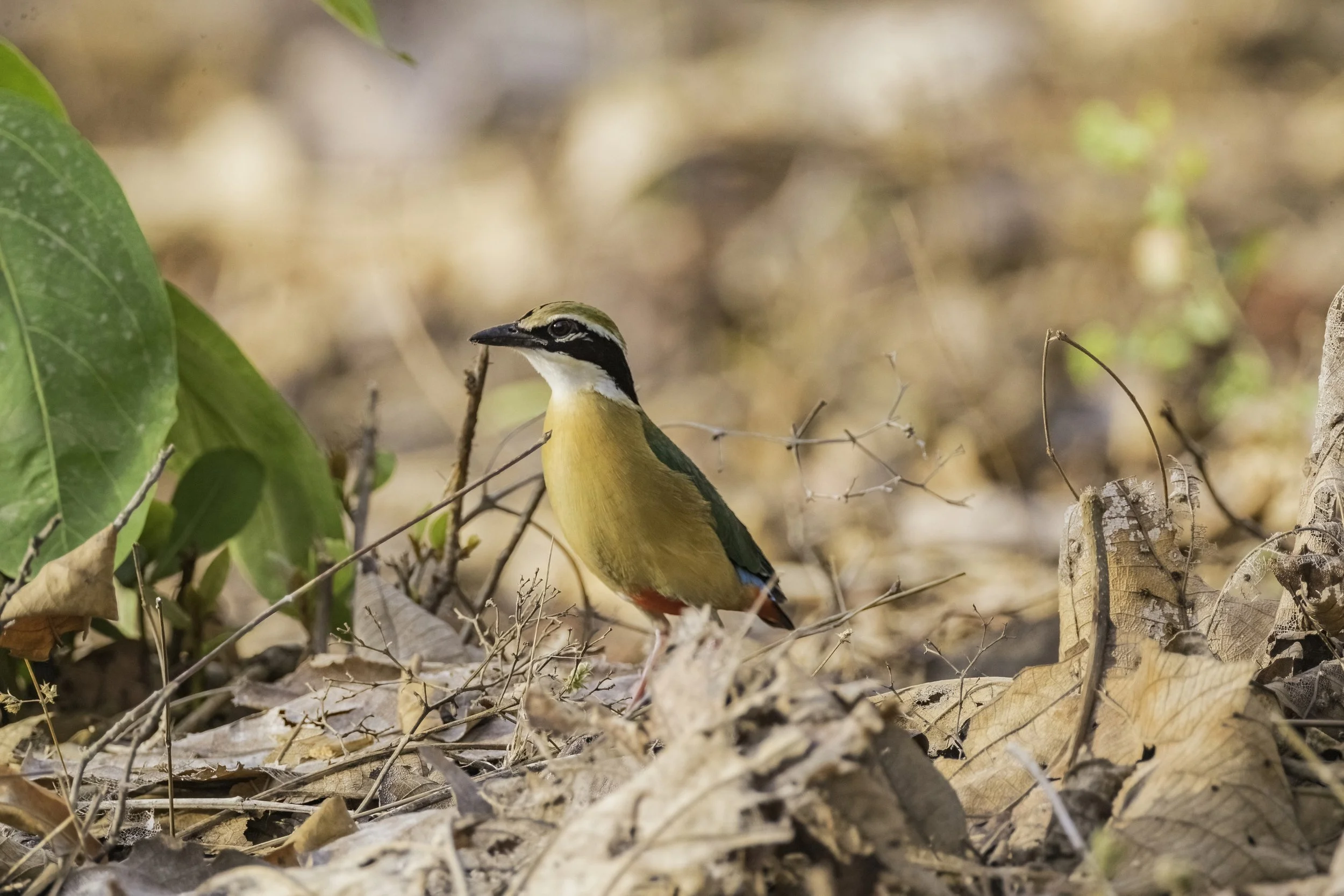
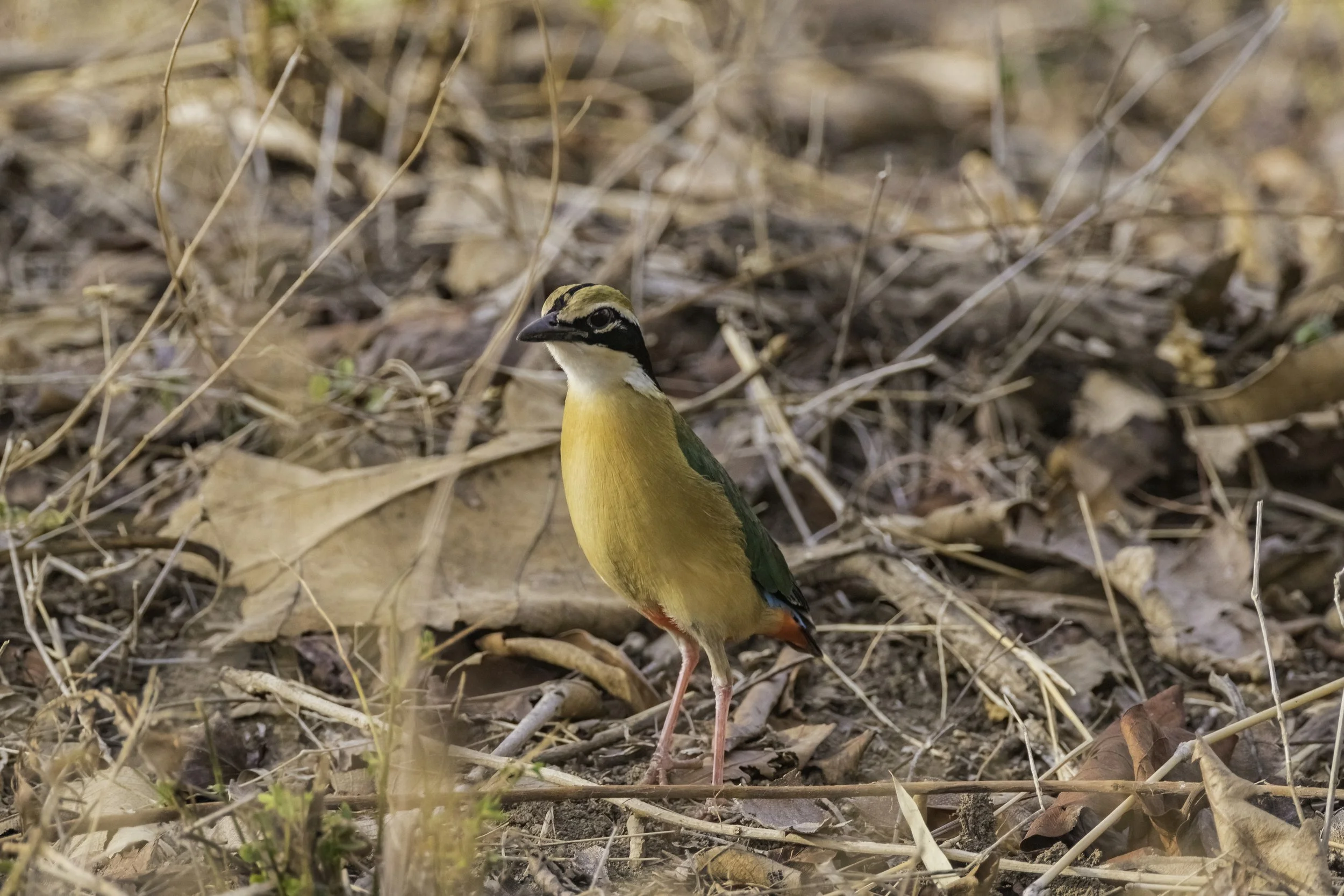
To see an Indian Pitta for the first time is to witness an explosion of impossible colours against a dull forest floor. It is a small, stubby, almost tailless bird, roughly the size of a common starling or a thrush. It has a total length of 18 to 20 centimetres from the tip of its bill to its truncated tail. Its wingspan is between 30 to 35 centimetres and its weight ranges between 45 to 65 grams. Despite its stout, plump appearance, the bird possesses long, powerful pale-pink or flesh-coloured legs. This structural adaptation elevates its body off the forest floor, allowing it to spring gracefully over fallen logs and bound through thick leaf litter with extraordinary agility.
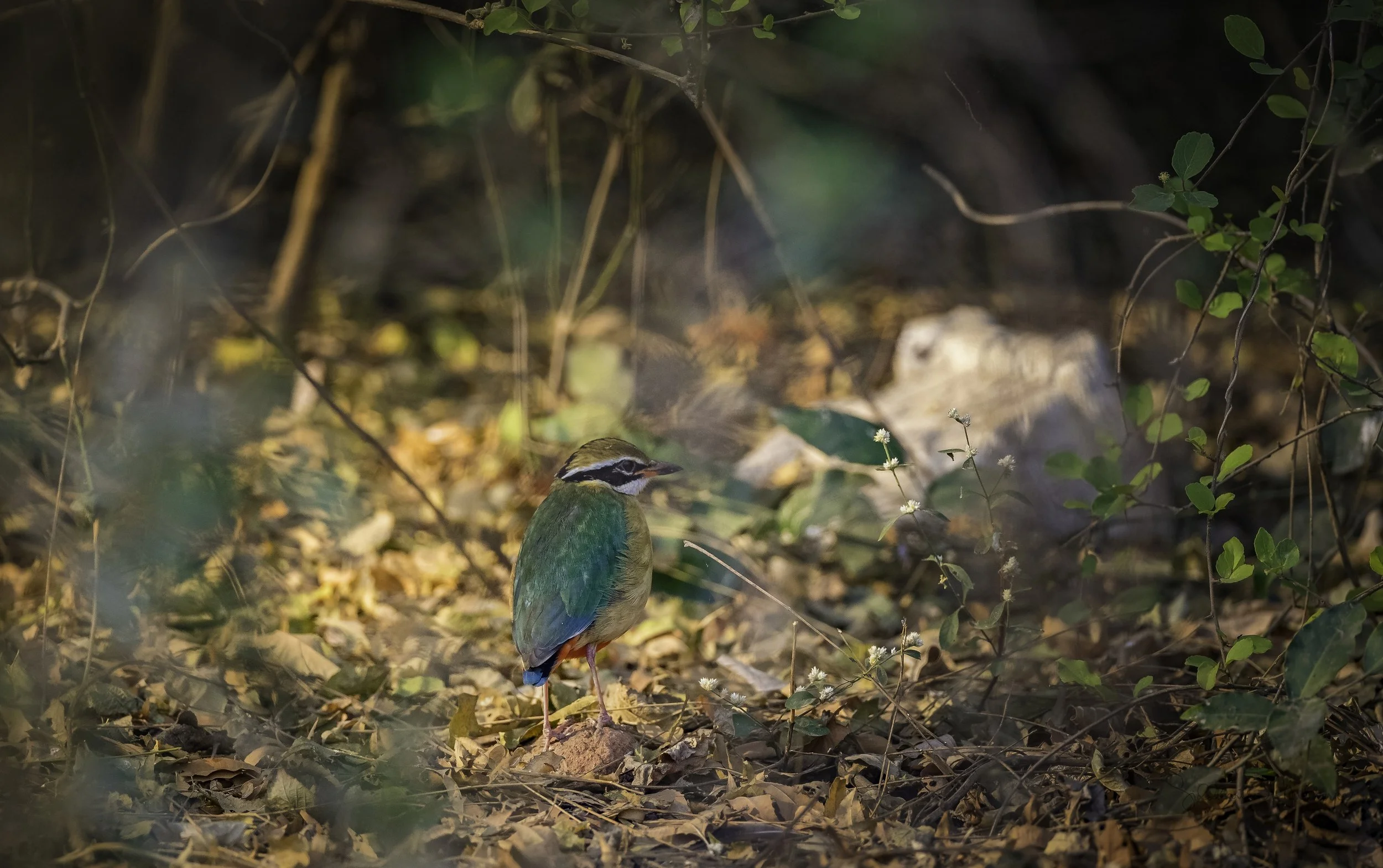
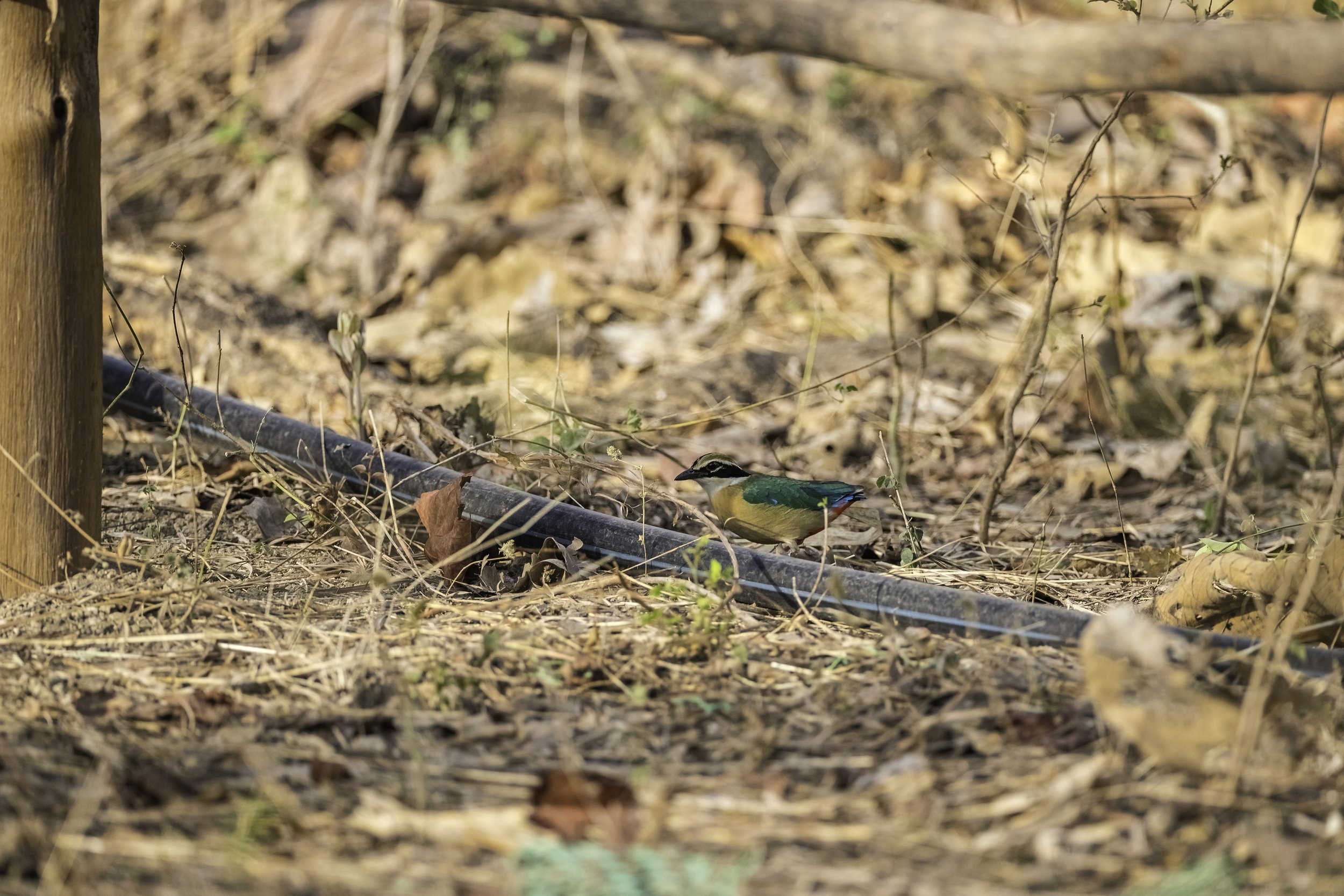
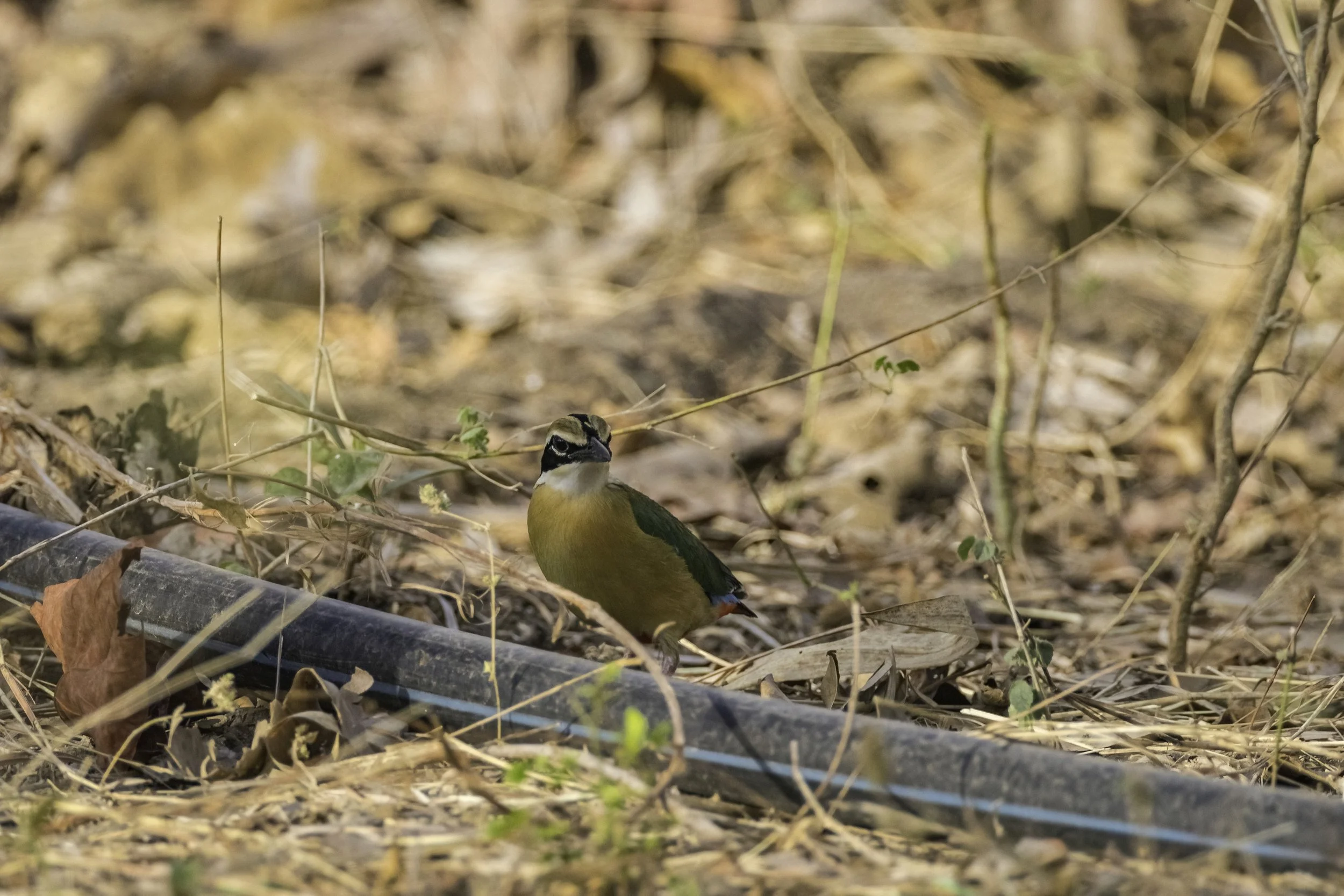
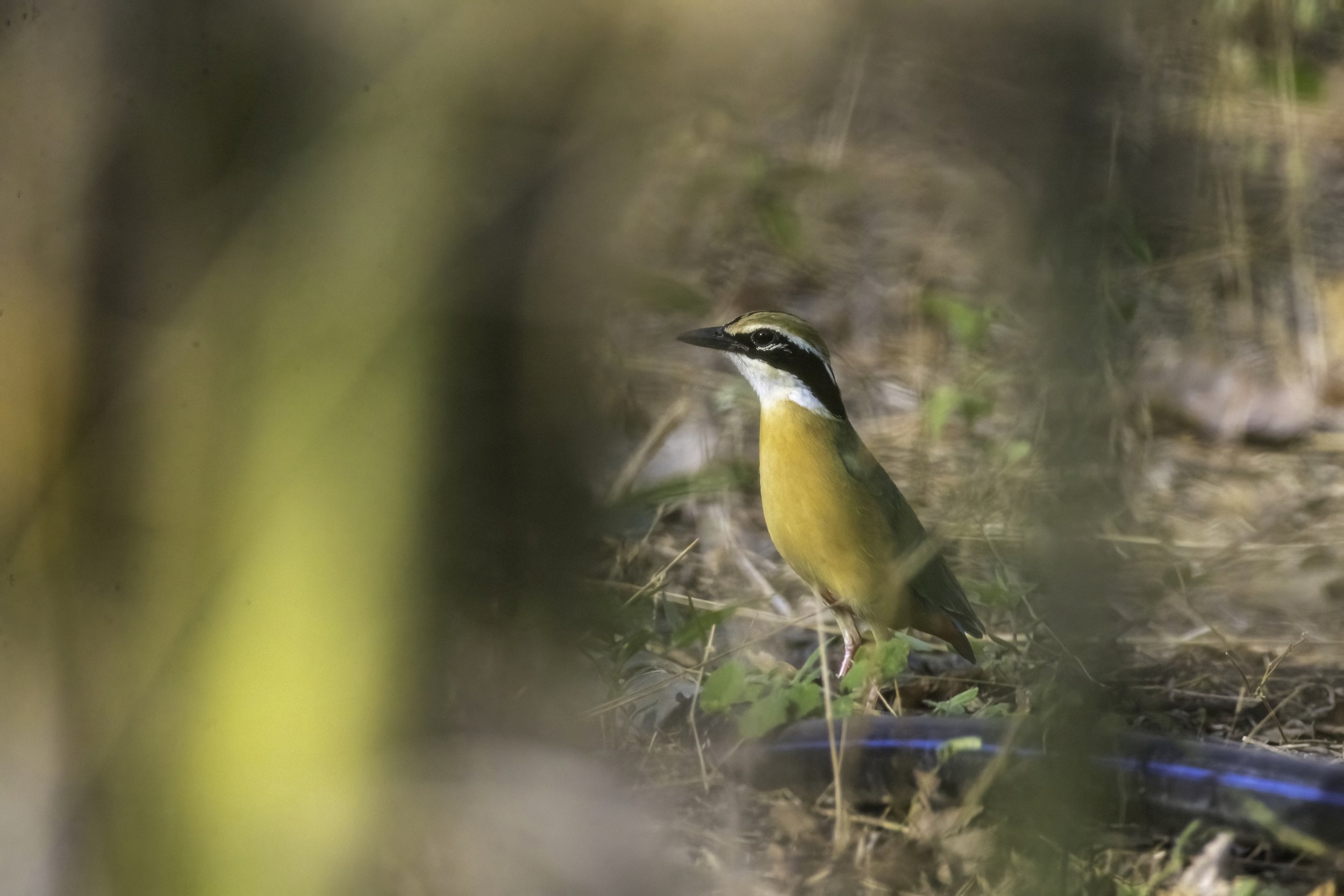
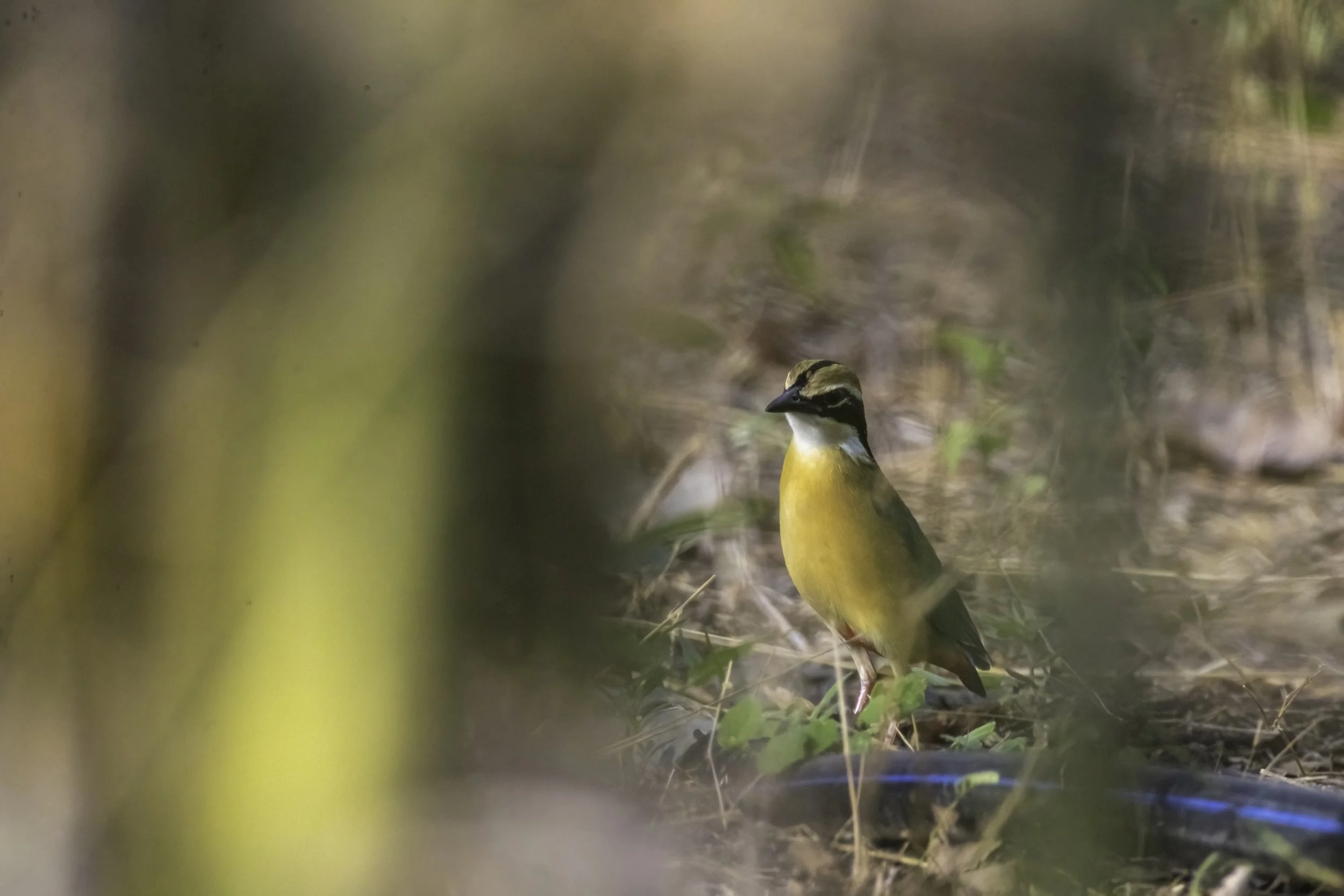
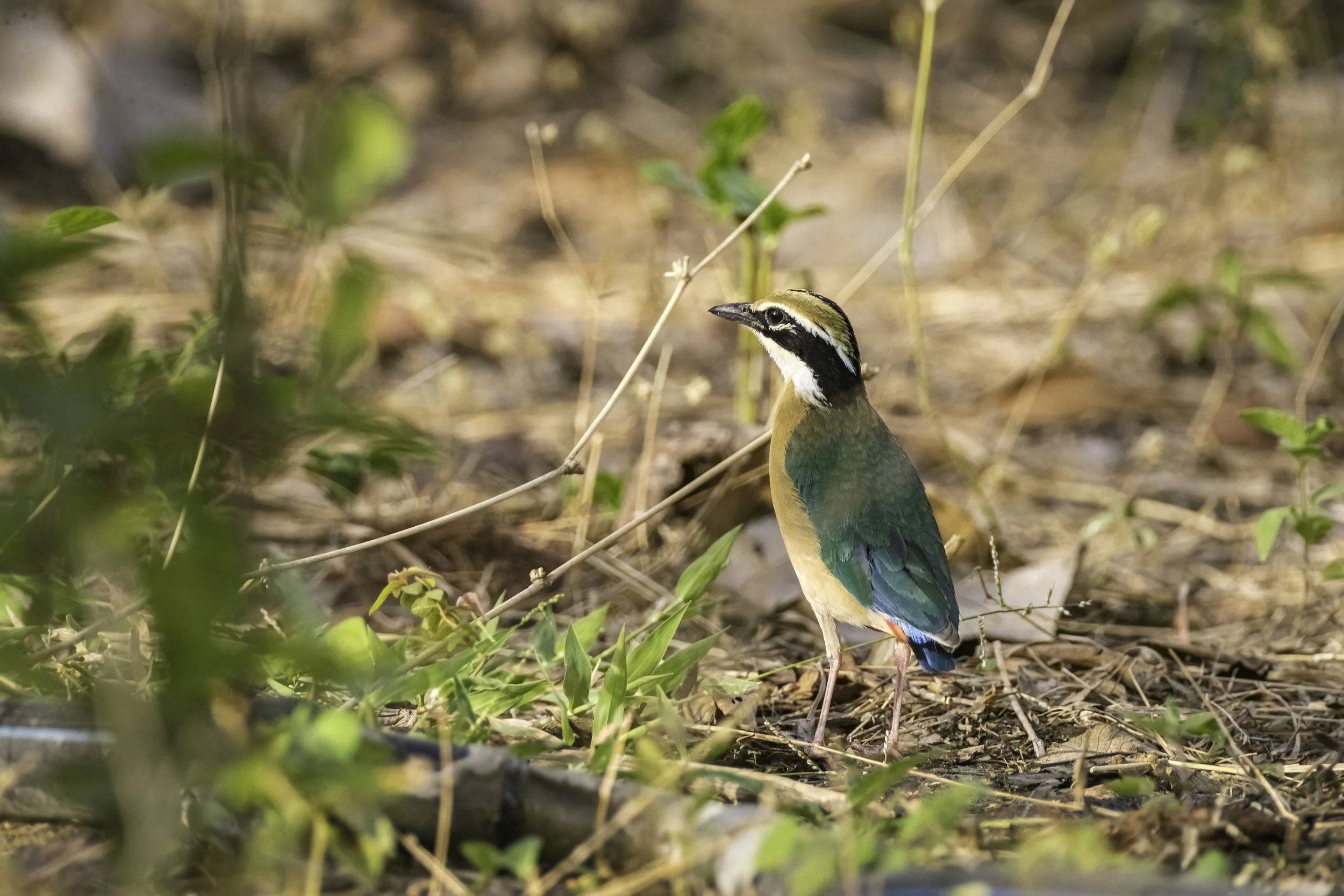
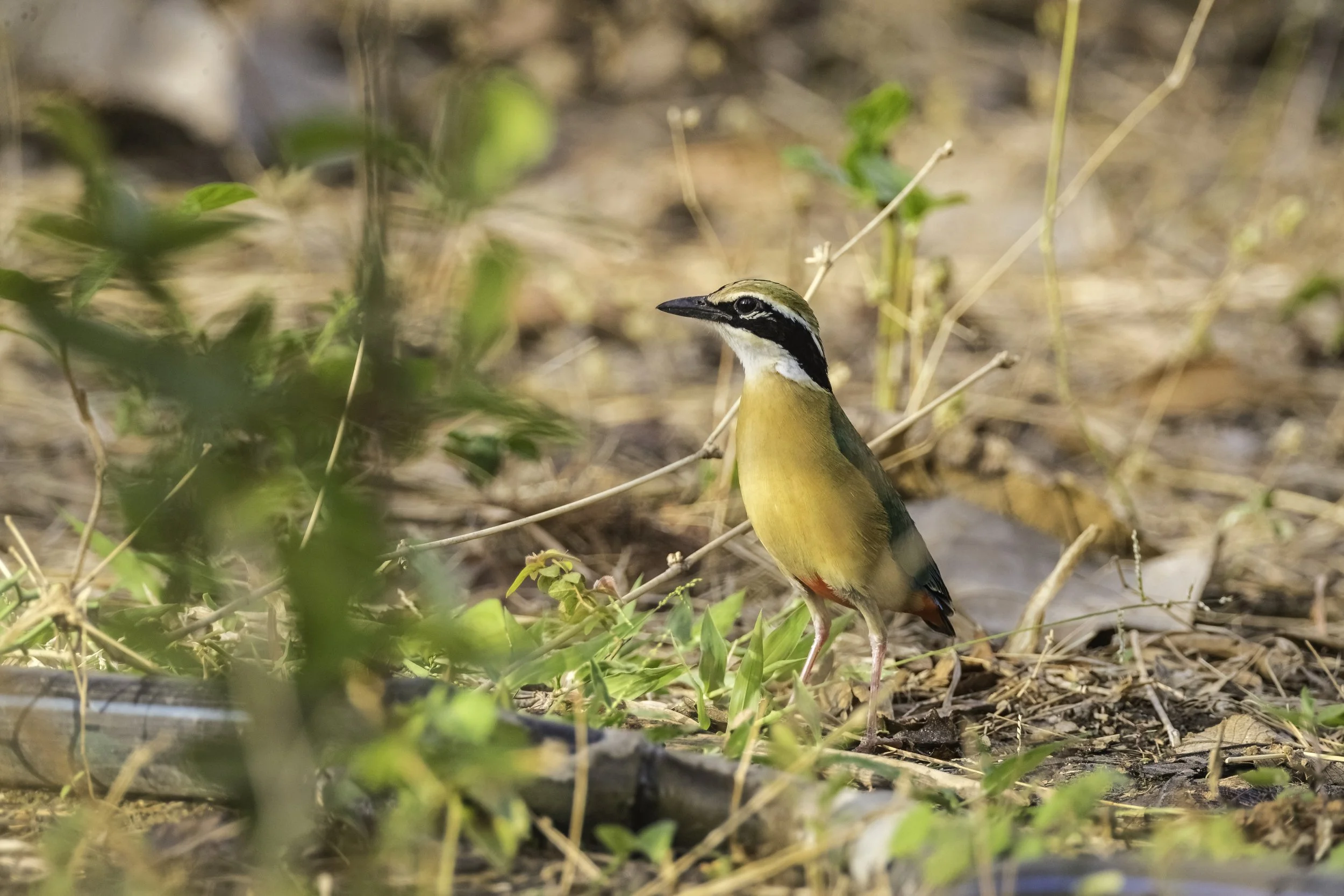
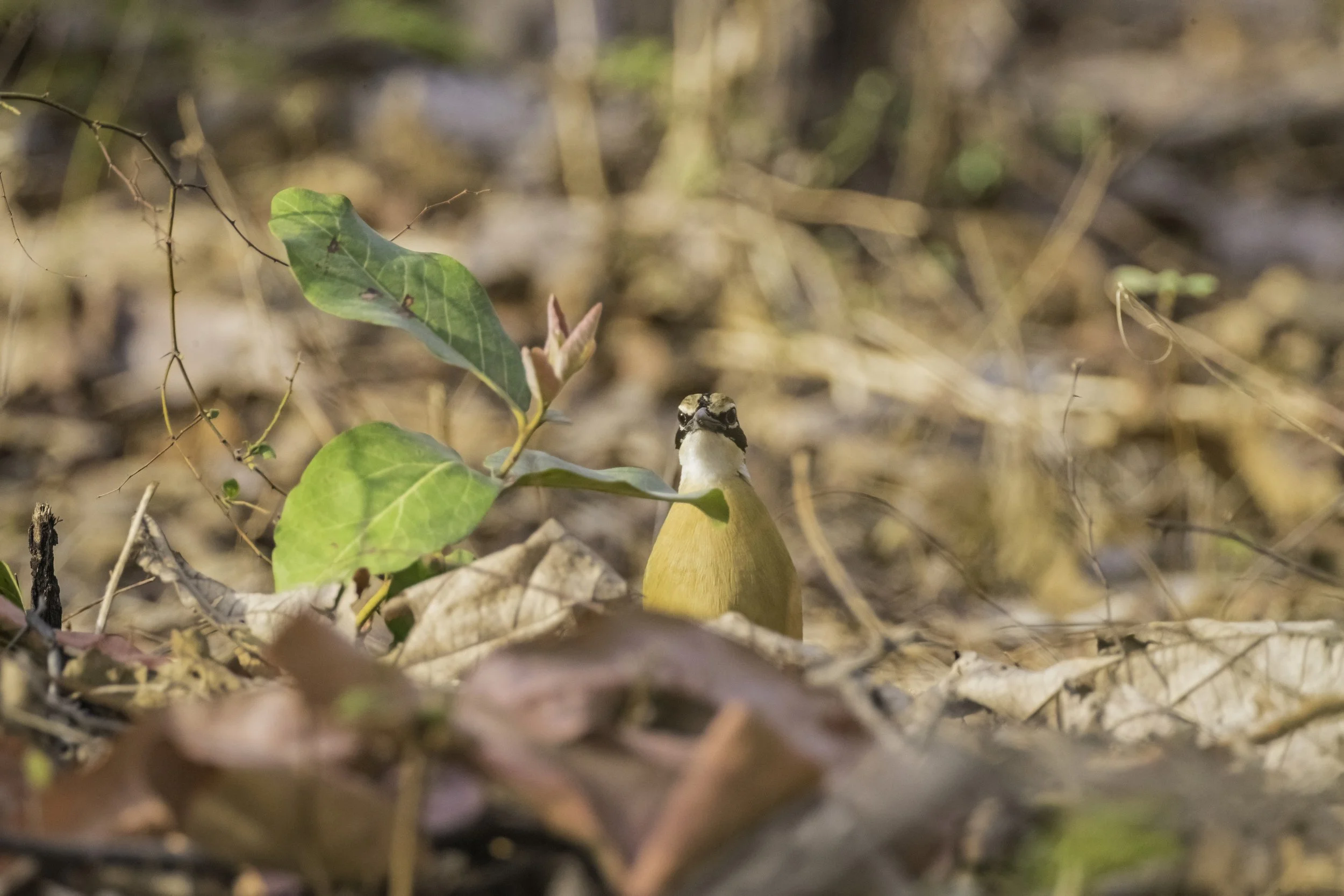
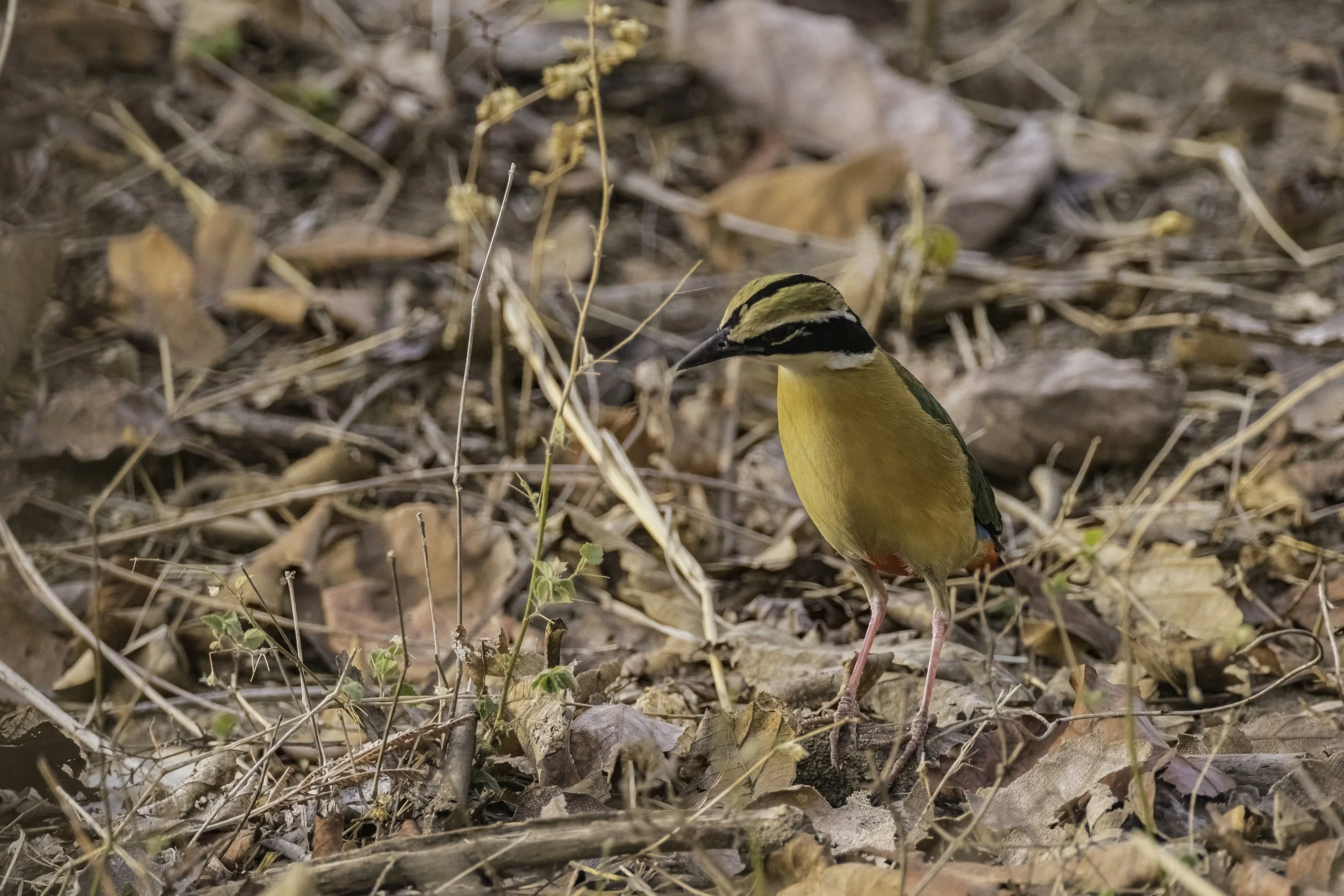
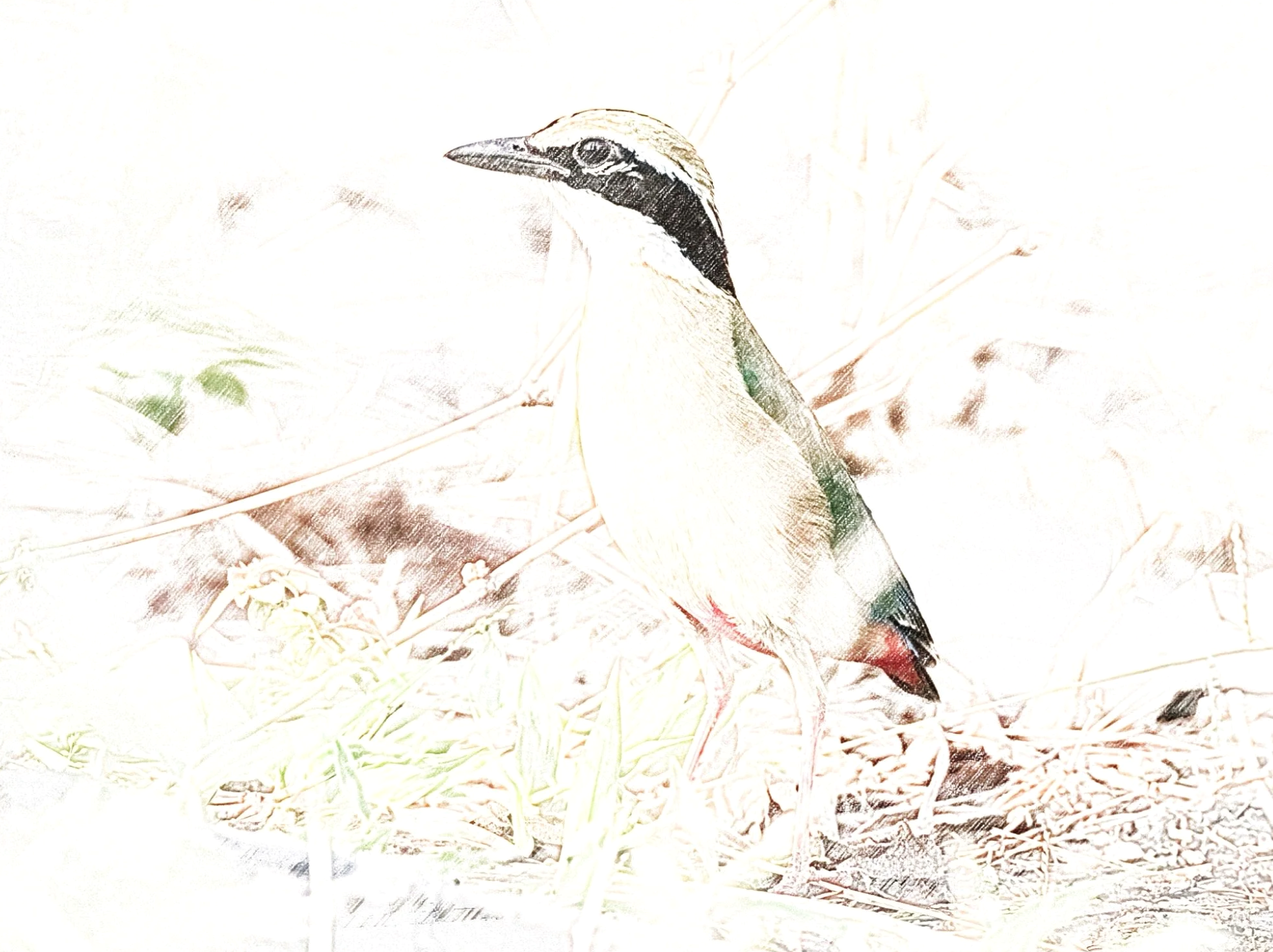
In Hindi, the bird is known as the Navrang, meaning "nine colours," a name that accurately describes its spectacular plumage. Its crown and head has a broad, buff-fawn crown stripe running down the center of the head, bordered by fine black lines. A striking, thick black mask stretches from the base of the bill, envelopes the large, dark liquid eyes, and extends down the sides of the neck. This mask is offset by a neat, creamy-white supercilium (eyebrow) and a spotless white throat. The upperparts starting with the mantle, back, and scapulars are a rich, solid moss-green, blending seamlessly into the foliage when the bird is viewed from above. The underparts like the breast and flanks are washed in a warm, rich buff-ochre or deep cream. The most dramatic colours are reserved for the highlights. The lesser wing coverts and rump flash a brilliant, luminous turquoise-blue. When the bird takes flight, it reveals a bold white round patch on its black primary wing feathers. And finally the vent - the under-tail coverts and the lower belly are a shocking, vibrant scarlet-crimson, resembling a splash of fresh red paint.
Unlike many brightly coloured avian species, the Indian Pitta is sexually monomorphic. Males and females look identical to the human eye, sharing the same brilliant coloration and size. Juveniles, however, are noticeably duller. Their upperparts are a muddy green, the crimson on their vent is replaced by a pale, washed-out pink, and their bills lack the sharp, horn-coloured definition of the adults, often showing a yellowish or reddish gape at the corners.
Pittas of the Subcontinent & Southeast Asia
India is home to several members of the Pittidae family, yet the Indian Pitta holds a unique ecological and physical niche. Understanding its distinctiveness requires comparing it to its regional cousins and look-alike birds. Within the Indian subcontinent, the Indian Pitta can be distinguished from its relatives by its specific colour configuration and geographic distribution:
Blue-winged Pitta (Pitta moluccensis): A Southeast Asian species that occasionally drifts into eastern India. It looks similar but features a much larger bill, a darker green back, and a solid black crown rather than the buff-striped crown of the Indian Pitta.
Mangrove Pitta (Pitta megarhyncha): Found strictly in the coastal mangrove forests of India’s Sundarbans and further east. It is larger, has a disproportionately long, heavy black beak suited for cracking crabs, and lacks the bright buff tones on the breast, opting for a darker olive-brown hue.
Hooded Pitta (Pitta sordida): Inhabits the foothills of the Eastern Himalayas and northeast India. It is entirely different in appearance, sporting a rich chestnut crown, a completely black head and throat, and a vibrant green body.
Blue Pitta (Hydrornis cyaneus): Found in the dense woods of the northeast. It exhibits strong sexual dimorphism, with the male displaying a stunning blue back and a distinct orange hindneck, completely lacking the white wing patches and scarlet vent of the Navrang.
To an untrained eye, a brief glimpse of a hopping bird on the dark forest floor might cause confusion with the Indian Pitta.
Thrushes: The Orange-headed Thrush (Geokichla citrina) shares a similar undergrowth-foraging habit and warm orange tones on its body. However, thrushes have noticeably longer tails, lack the turquoise wing coverts, and do not possess the brilliant crimson under-tail patches or the striking black facial mask.
Pittas vs. Emerald Doves: The Asian Emerald Dove (Chalcophaps indica) displays a flash of green on its back when running through the undergrowth, but its larger size, long tail, and uniform vinous-pink underparts instantly set it apart from the stubby pitta.
The Indian Pitta is near-endemic to the Indian subcontinent. It breeds primarily in the foothills of the Himalayas, central India, and parts of the Western Ghats, migrating southwards to the southern peninsula and Sri Lanka for the winter. It is classified as a species of Least Concern by the IUCN, yet it is highly localized and considered an uncommon to locally common seasonal visitor across various states.
The Telangana Landscape
Telangana acts as a crucial ecological corridor for this species. The state’s unique topography—dominated by the Deccan Plateau, broken by rocky hills, and sliced by the Godavari and Krishna river basins—creates the ideal mix of dry and moist deciduous forests that the pitta requires.
Amrabad Tiger Reserve: Spanning the districts of Nagarkurnool and Nalgonda, Amrabad is one of the largest tiger reserves in India. It comprises deep valleys, gorges, and a forest dominated by teak, bamboo, and Anogeissuslatifolia. Within Amrabad, the Indian Pitta seeks out deep, shaded nullahs (ravines), bamboo thickets, and areas with thick leaf litter near perennial water sources like the Krishna river tributaries. The broken canopy creates the perfect microclimate: humid, dark, and rich in humus.
Kawal Tiger Reserve: Situated in the northern part of Telangana along the Godavari river basin, Kawal presents a flatter but equally dense teak-dominated landscape. Here, the pittas occupy the dense riparian zones and undisturbed forest patches. The extensive bamboo brakes of Kawal provide excellent nesting sites and protective cover from raptors.
Other Locations Across Telangana: Beyond these famous tiger reserves, the Indian Pitta records are scattered across the state:
Kinnerasani Wildlife Sanctuary: The moist pockets around the Kinnerasani dam reservoir host breeding pairs.
Eturnagaram Wildlife Sanctuary: The riverine forests along the Godavari provide perfect foraging grounds.
Urban and Semi-Urban Oases: During their migration phases, pittas surprise birders by showing up in urban green zones in Hyderabad, such as Kasu Brahmananda Reddy (KBR) National Park, the Osmania University campus, and various suburban orchards and lake fringes like the Ameenpur & Kudikunta Lakes, using them as brief stopover points to rest and refuel.
Behavior, Habitat Nuances & Environmental Adaptations
The Indian Pitta is an terrestrial bird that spends the vast majority of its day on the ground. Its behavior is characterized by a rhythmic, repetitive pattern of foraging. It hops deliberately through dry leaves, stops, tosses a leaf aside with a swift flick of its sharp bill, and stabs at the exposed soil. The pitta’s diet is predominantly insectivorous. It consumes termites, ants, beetles, grubs, crickets, and small earthworms. Occasionally, it will tackle larger prey like small snails, millipedes, and even tiny frogs or lizards. It uses its strong bill to smash shelled prey against stones or hard roots before swallowing.
Despite its bright colours, the Indian Pitta is a master of camouflage. When it senses danger, it does not immediately fly. Instead, it freezes. The green back mimics the fallen leaves, and the broken patterns of its head mask distort its outline in the dappled forest light. If pressed, it hops away with astonishing speed into the deepest brush.
During the breeding season, which coincides with the onset of the southwest monsoon (late May to August), its behavior shifts dramatically. The birds become intensely territorial. Males ascend to the mid-canopy or a high dead branch, usually in the early morning and late evening, to deliver their loud, ringing territorial calls. They throw their heads back and point their bills skyward with every whistle, flashing their white throat patches to rivals.
Migratory Instincts and Environmental Stressors
The Indian Pitta is a true long-distance altitudinal and latitudinal migrant within the subcontinent. As the scorching summer heat of central India gives way to the pre-monsoon showers in May, thousands of pittas leave their wintering grounds in Sri Lanka and Southern Western Ghats to travel northward to breed.
However, this migratory journey is increasingly fraught with peril due to anthropogenic factors:
Light Pollution and Disorientation: Pittas migrate primarily at night. The expanding bright light footprints of cities like Hyderabad disorient the birds, leading to fatal collisions with glass buildings and overhead wires.
Dehydration and Exhaustion: Delayed monsoons and rising summer temperatures across Telangana cause smaller forest streams to dry up completely. Migrating pittas arrive exhausted, only to find a lack of water and hard, unyielding soil that prevents them from digging for worms. This forces them to alter their behavior, venturing closer to human settlements, agricultural wells, and village ponds, which increases their vulnerability to domestic predators like cats and feral dogs.
Read more about the devastating impact of uncontrolled and uninhibited Light Pollution and how it is impacting entire ecosystems, wildlife and their habitats across Telangana and India.
A Field Experience in Amrabad
The pursuit of photographing the Indian Pitta in the Amrabad Tiger Reserve is a lesson in patience, endurance, and sensory immersion. It is June, and the first pre-monsoon showers have cracked the parched earth of Amrabad, releasing the rich fragrance of geosmin or as it is better known - petrichor. The forest floor is a carpet of wet brown teak leaves. I sit motionless in the safari vehicle near a dry, boulder-strewn stream bed. The humidity is stifling, and mosquitoes hum persistently around my ears, but any sudden movement will ruin hours of waiting. My camera is mounted on a tripod, pre-focused on a leaf and moss-covered area where I had spotted a bird foraging the previous evening.
For an hour, there is nothing but the rustle of a common Langur moving in the trees above. Then, the distinct wheet-tieu echoes from just twenty feet behind me. My heart rate quickens. I watch the leaf litter and soon a flash of turquoise-blue catches the light. The Indian Pitta hops into view. It moves with a bouncing, springy gait. It stops right in the leaf strewn area. The bird tilts its head sideways, listening intently for the subterranean movement of grubs. In the dappled sunlight, its colours are mesmerizing: the green mantle blends into the background, but the glowing crimson vent looks like a burning ember against the earth.
I wait for the bird to settle before touching the shutter. The pitta hops closer, finding a large beetle. It thrashes the insect against the wood with sharp, violent jerks of its head. I gently track it through the lens, maintaining a wide aperture of f/4 to isolate the bird from the complex, cluttered forest background, keeping the shutter speed at 1/500th of a second to freeze its sudden, jerky movements.
The camera clicks. The bird freezes, its large dark eye locked in the direction of the vehicle. For a few seconds, it holds its breath, its body perfectly still, displaying its magnificent facial mask and cream-coloured breast. Satisfied that the sound is no threat, it swallows the beetle, gives a swift shake of its feathers—revealing a blinding flash of its turquoise rump—and bounds away into the safety of the dense bamboo thicket. Behind the camera, I am left with a memory card full of pixels, and a profound sense of awe for the painted jewel that keeps the secrets of Telangana's wild heart.
The best season to spot the Indian Pitta across India and Telangana is during the pre-monsoon and breeding season from May to July, when the birds are highly vocal and active. To help you plan your birdwatching trip, here is a detailed guide to the peak seasons and specific forest trails where you have the highest chance of encountering this magnificent bird.
📅 Best Seasons for Spotting
Breeding Season (May to July) — Peak Activity
Why: This is the absolute best time. The birds arrive in central and northern India from their wintering grounds to breed.
Behavior: Males are highly territorial and vocal. They sit on low canopy branches or exposed rocks to call out (wheet-tieu) to mates, making them incredibly easy to locate by ear.
Wintering Season (October to March) — Undergrowth Foraging
Why: The birds migrate to the southern peninsula of India (Western Ghats) and Sri Lanka.
Behavior: They are completely silent during this period. Finding them requires immense patience as they quietly forage through thick leaf litter on the forest floor.
Top Forest Trails in Telangana
The dry and moist deciduous forests of Telangana host a massive influx of breeding pittas during the summer-monsoon transition.
Amrabad Tiger Reserve (Nagarkurnool/Nalgonda Districts)
Amrabad’s deep valleys and bamboo-rich ravines offer premier pitta habitats.
Farahabad Gate to Viewpoint Trail: A core forest track surrounded by dense deciduous canopy. Look for them in the dense undergrowth alongside the trail tracks where leaf litter is thick. This is only possible from within the Safari Vehicle.
Uma Maheshwaram Temple precincts: In and around the Uma Maheshwaram temple the terrain is rocky and ideal for the pitta to forage. But given the footfalls of the devotees it requires a higher degree of patience.
Mallela Theertham Waterfalls Trail: The humid microclimate, constant mist, and rocky, shaded streamside ravines near the waterfalls are highly favoured by the pittas for nesting.
Saileshwaram Valley Trail: A deep limestone gorge with perennial water pools. Walk along the base of the valley where dense vegetation blocks direct sunlight.
Kawal Tiger Reserve (Mancherial/Asifabad Districts)
Kawal’s flatter terrain is compensated by massive riverine networks and bamboo brakes. Check the margins of the forest department paths that cut through older teak plantations and bamboo thickets. Near Jannaram there are riparian trails alongside seasonal forest streams. Scan the lower branches of the trees overhanging the dry or damp stream beds.
Other Hotspots in Telangana
Ananthagiri Hills Trail (Vikarabad): Easily accessible from Hyderabad. Follow the muddy walking trails that branch away from the main temple forest into the deeper, shaded valley pockets.
KBR National Park Trails & lakes like the Ameenpur Lake (Hyderabad): During their migratory transit in May and October, check the quiet, wooded inner walking loops early in the morning.
Major Pan-India Trails for Indian Pitta:
If you are looking to travel outside Telangana, these locations are globally famous for high-density Indian Pitta sightings.
Central India: Kanha Tiger Reserve (MP) - Mukki Zone Bamboo Thickets
Satpura National Park (MP) - Madhai Riparian Trails
Western Ghats - Thattekad Bird Sanctuary - Salim Ali Bird Trail
Bhagwan Mahavir (Goa) - Tambdi Surla Forest Paths
Himalayan Foothills - Jim Corbett National Park - Bijrani & Dhikala Buffer Zones
Some pro-tips for the trail:
Wear clothing that helps you blend into the surroundings. Avoid bright colors and avoid sudden, sharp movements.
Listen First: Do not rely on your eyes. Use Xeno-Canto to identify and download the call of the Indian Pitta beforehand. Walk slowly, stop every 50 metres, and listen for the sharp, whistled wheet-tieu call.
Look Up to Find Down: If you hear the call, look 10–15 feet up into the lower tree canopy. The bird will usually be calling from a branch before it drops to the floor to forage.
Stay Low: Use the natural bends of forest roads or tree trunks as cover. Once a pitta spots a human standing fully upright, it instantly sprints into dense brush.
‡‡‡‡‡

Related Posts
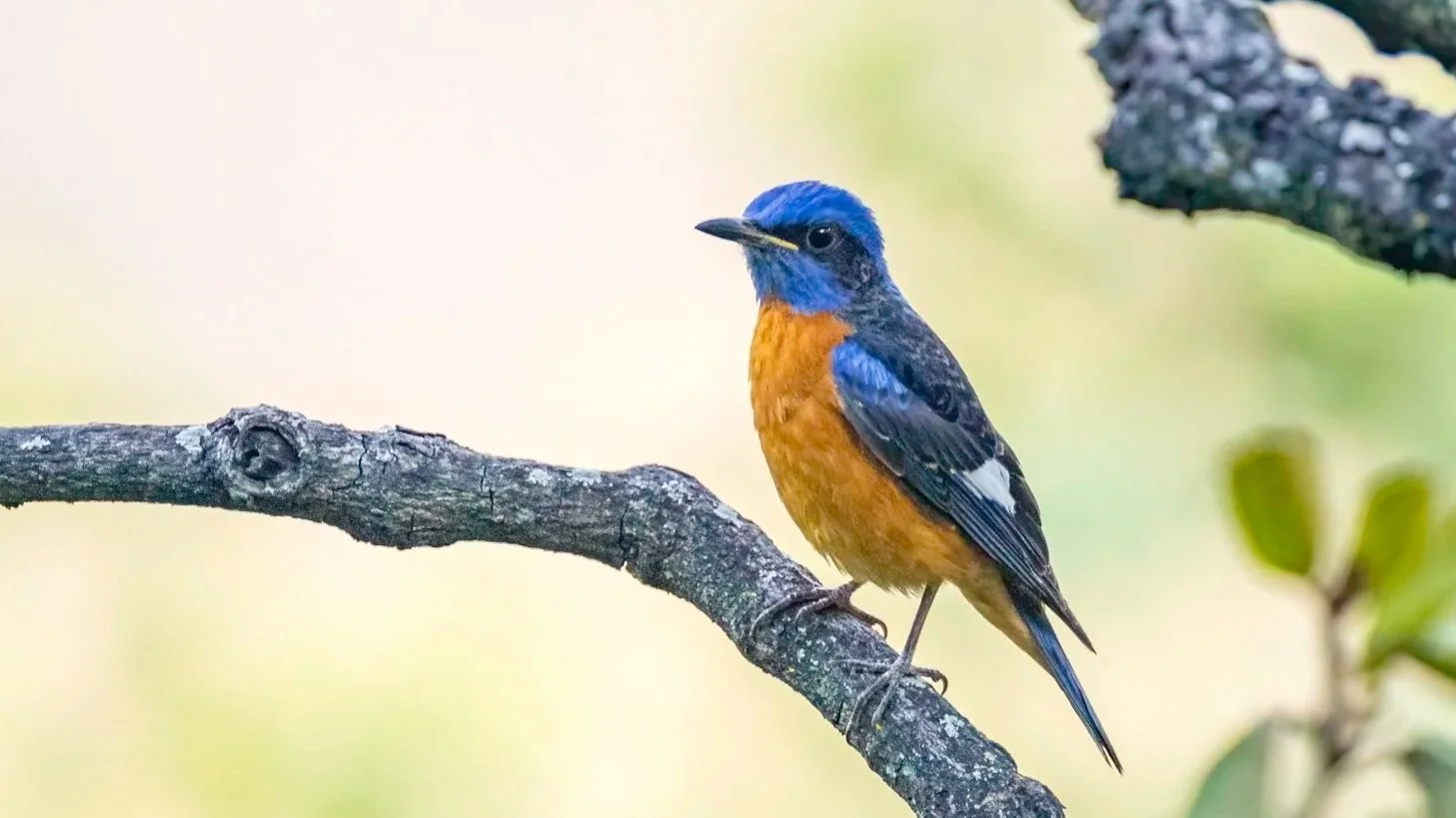
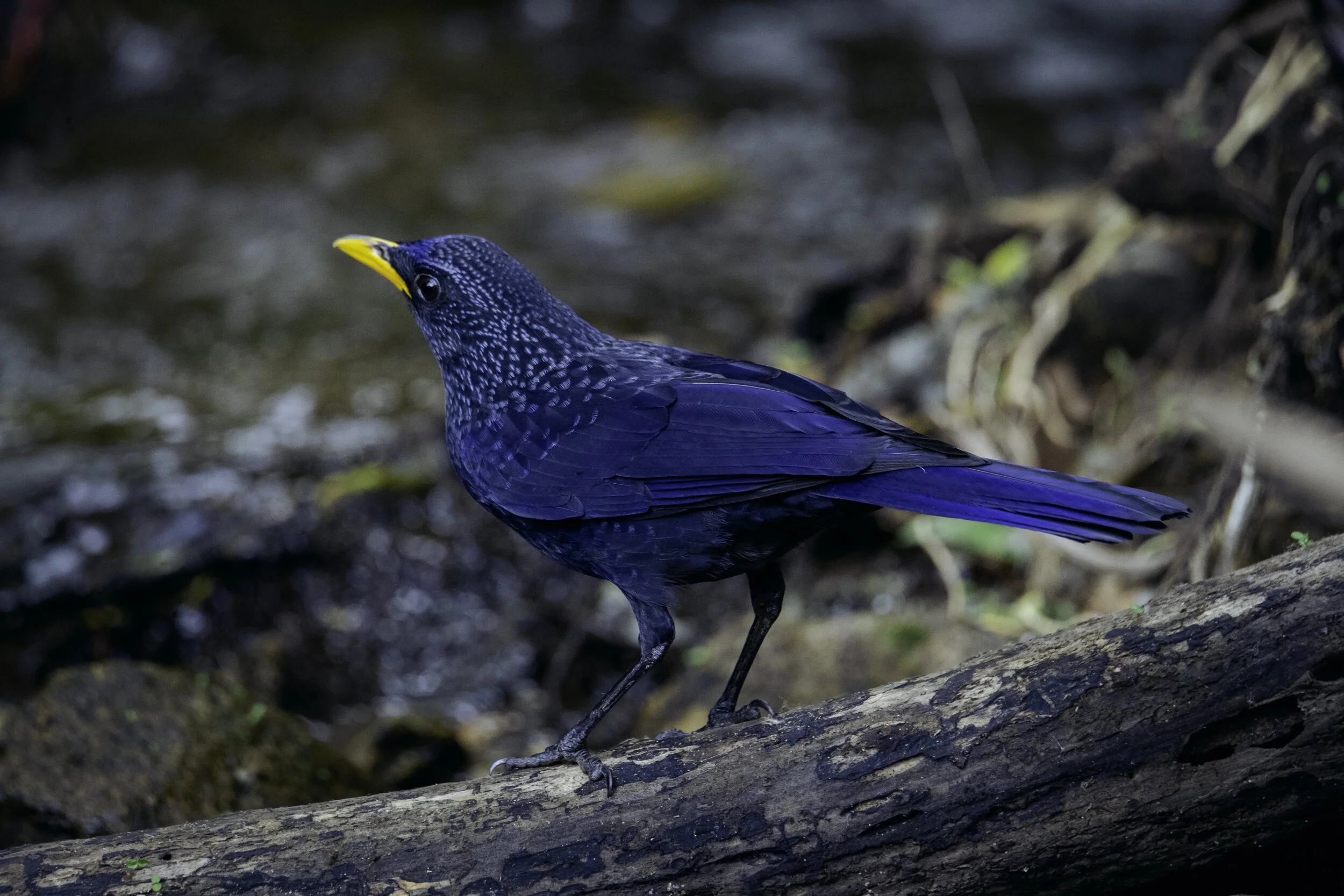

The orange-headed thrush is a resident bird in the thrush family. It is common in well-wooded areas of the Indian Subcontinent & Southeast Asia. The species shows a preference for shady damp areas, and like many Geokichla and Zoothera thrushes, can be quite secretive.
#wildartworks, #Canon, #Bird, #Birdinginthewild, #BirdWatching, #Wildlife, #WildBirds, #naturephotography, #your_best_birds, #planetbirds, #earthcapture, #photo_pond, #earthpix, #naturyst, #conservationphotography, #yesbbcearth, #wildlifeonearth, #bbcearth, #natgeowild, #natgeoindia, #india, #telanganabirds, #ananthagiri, #ananthagiriforestrange, #vikarabad, #orangeheadedthrush, #thrush, @wildtelangana