
Lophura leucomelanos lineata
Kaeng Krachan National Park, Thailand
The mist hung heavy over the dense canopy of Kaeng Krachan National Park, where the rugged eastern slopes of the Tenasserim Mountain Range drop sharply toward the Thai-Myanmar border. In this untamed wilderness, two historical lifelines—the Pranburi and Phetchaburi rivers—begin their journeys as mere trickles, carving steep, moisture-wicking valleys through the ancient earth. The air here carries the thick scent of damp loam, decaying vegetation, and wild ginger. Down on the dim leaf litter of the forest floor, where only a fraction of daylight pierces the triple-tier canopy, a sudden metallic glimmer breaks the monochromatic shadows. It is the Kalij Pheasant (Lophura leucomelanos lineata), a ghost of the understory, moving with a cautious, high-stepping grace that has fascinated naturalists for centuries.
To encounter this bird in the wild is to step into a complex evolutionary narrative that stretches across the vast mountain systems of South and Southeast Asia. From the rugged foothills of the Indian Himalayas to the limestone karsts of Indochina, the Kalij Pheasant serves as an ecological anchor, bridging the gap between the high-altitude forests of the north and the tropical, humid jungles of the south.
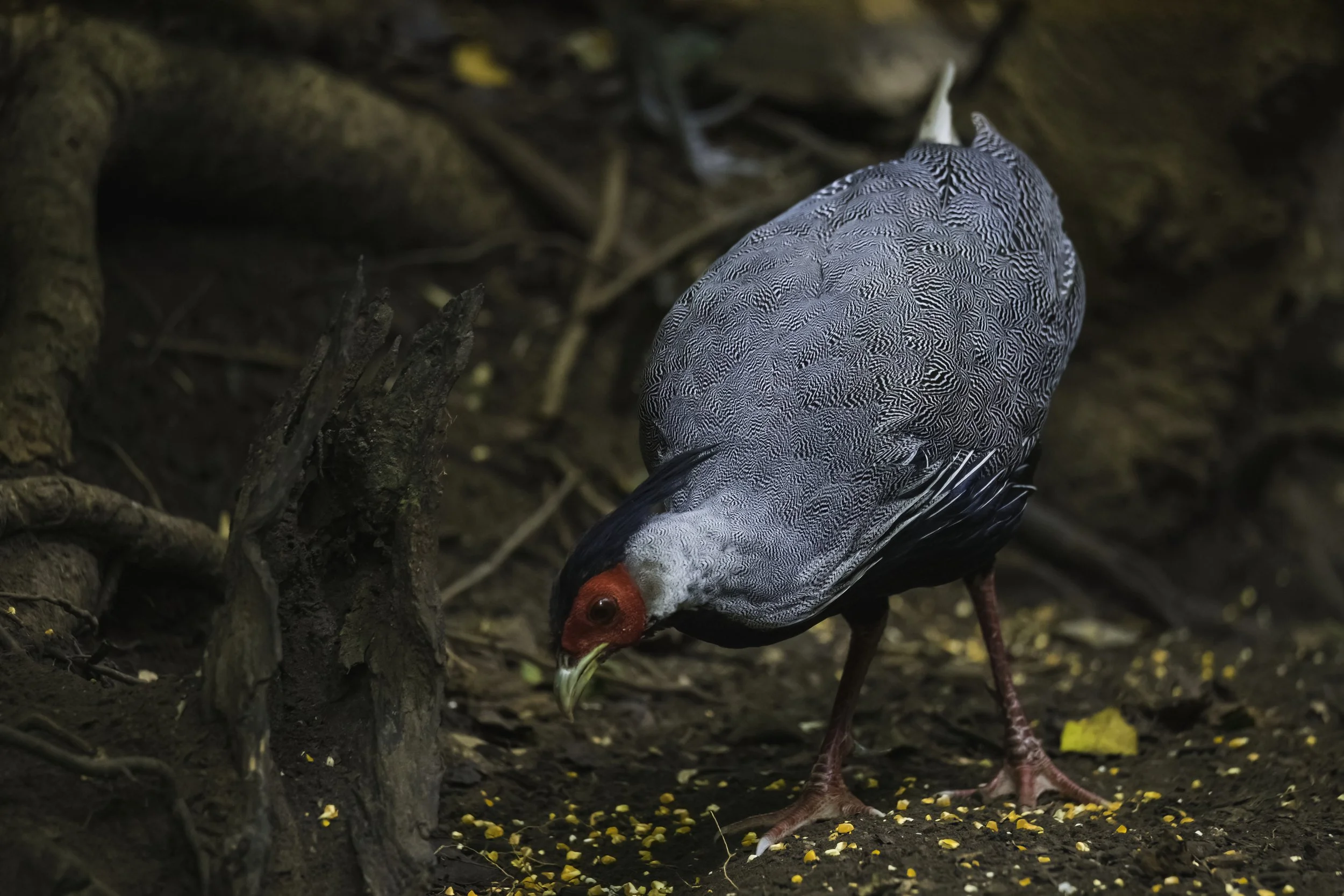
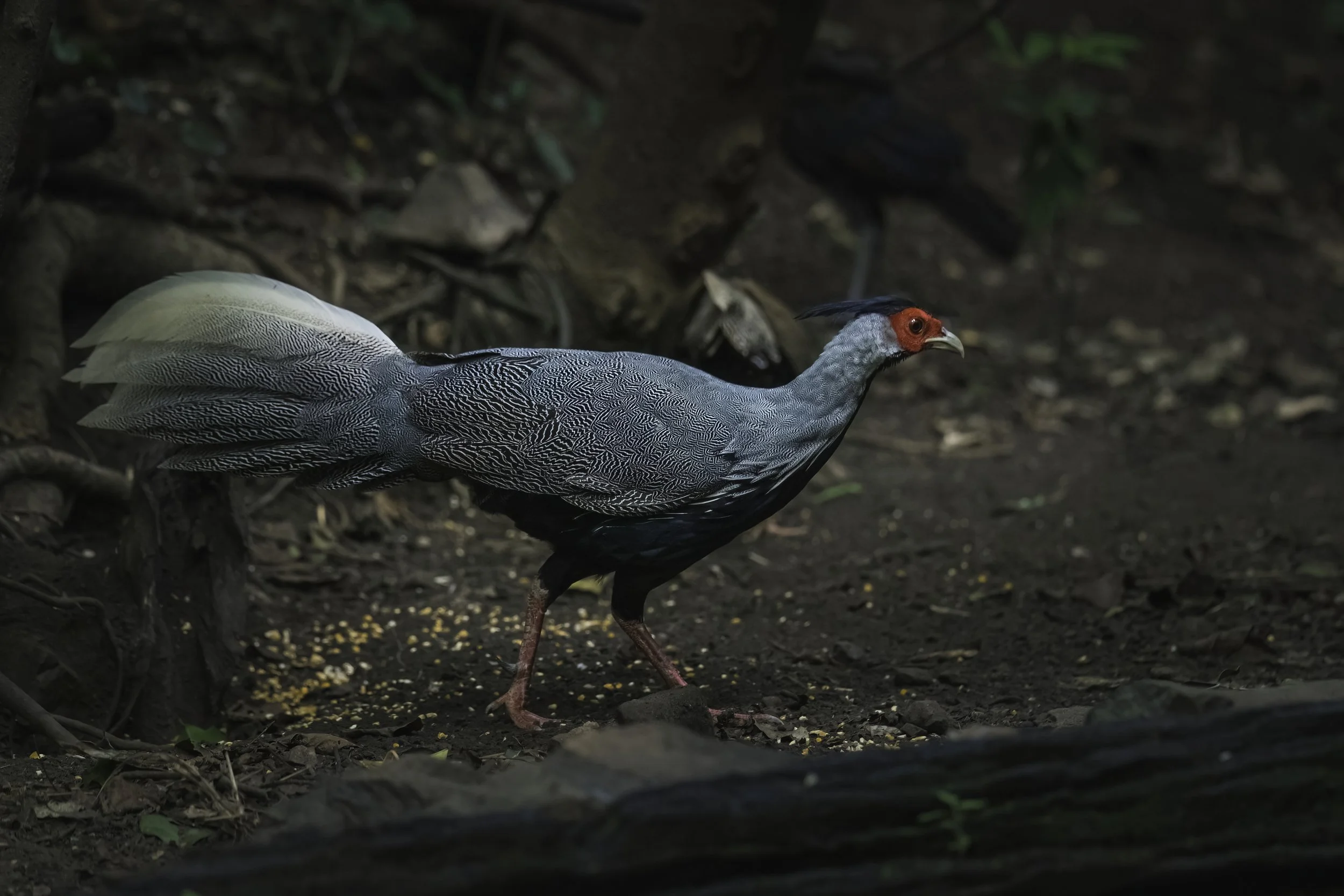
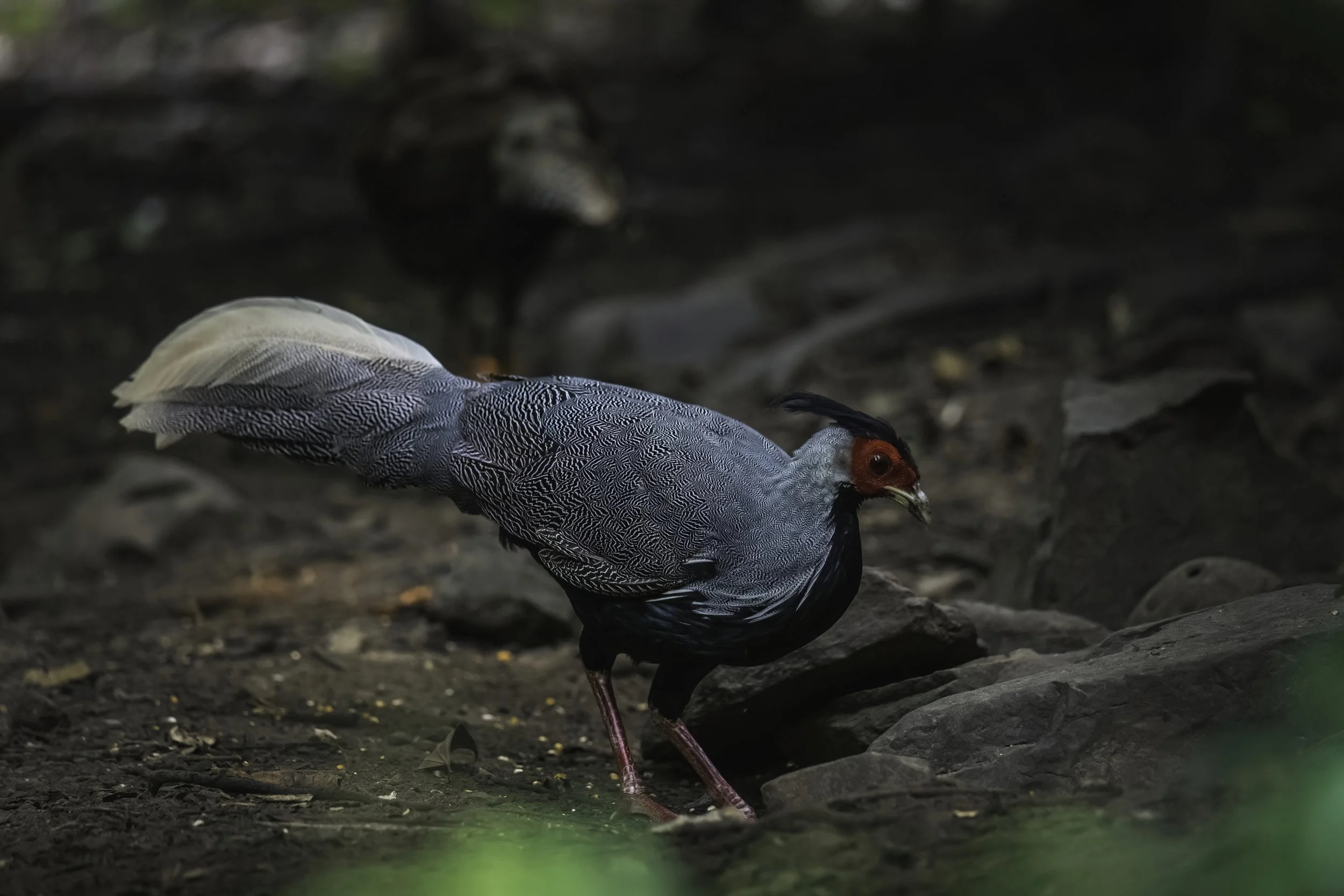
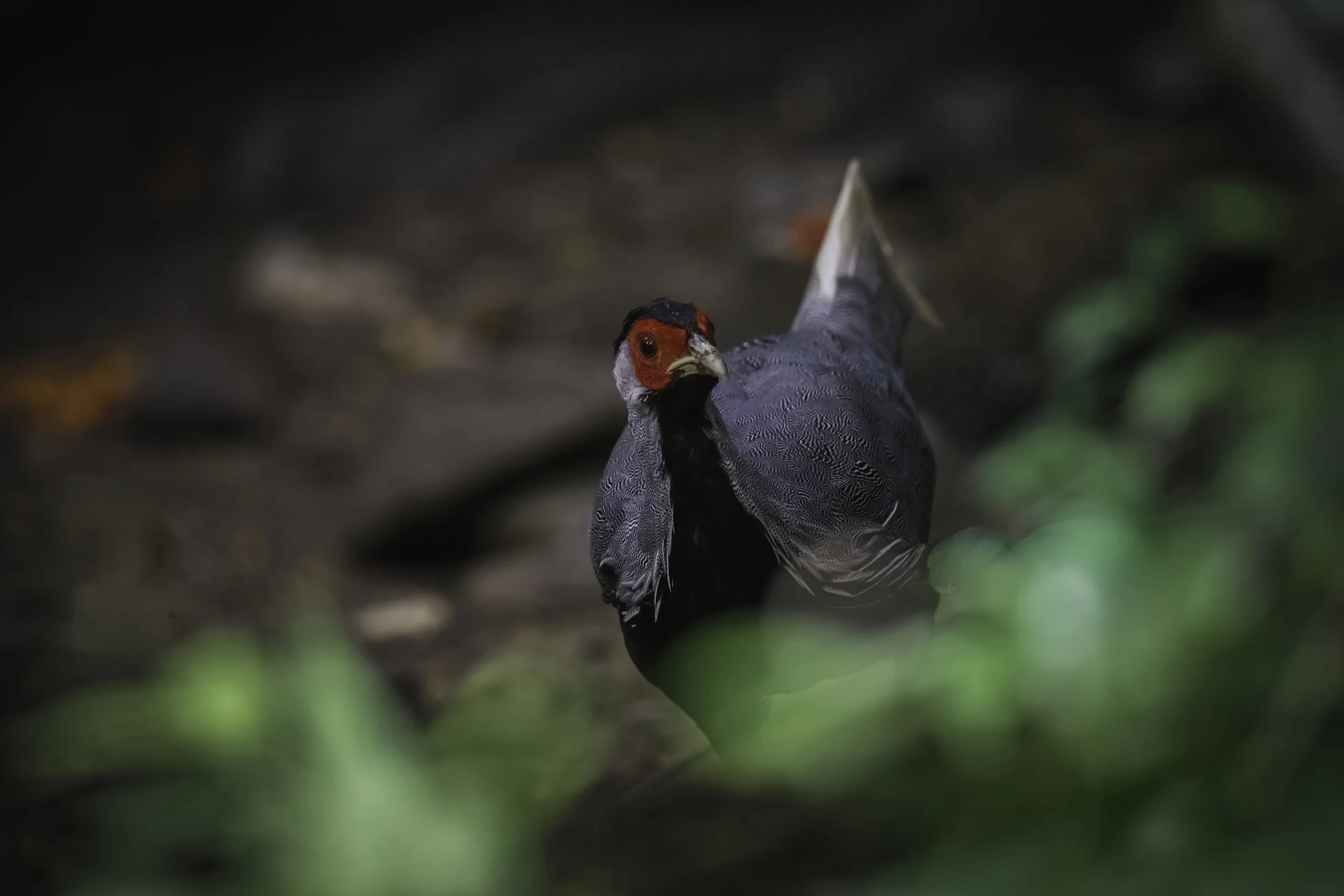
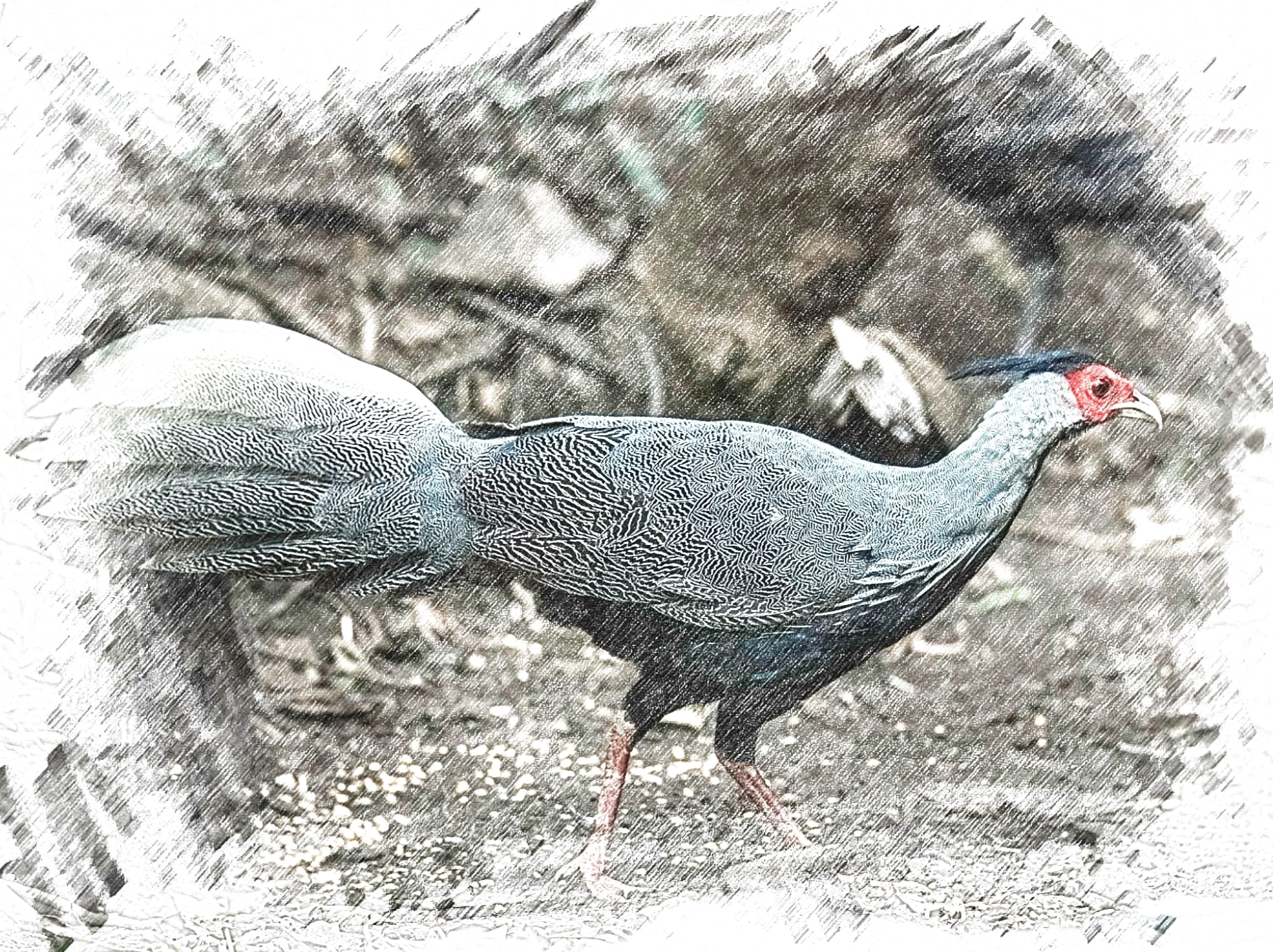
Kalij Pheasant (Male)
Kaeng Krachan National Park is located in Phetchaburi and Prachuap Khiri Khan Provinces, about 60 km from Phetchaburi and 75 km from Hua Hin. It is bounded by the Tanintharyi Nature Reserve along Myanmar's border to the west and part of the Western Forest Complex that covers 18,730 km² across 19 protected sites between Myanmar and Thailand. There are two main rivers in the park; Phetchaburi and Pran Buri Rivers. Both rivers originate from the Tanaosri Mountain Range. In the north, Phetchaburi River flows into Kaeng Krachan Dam and flows further east all the way out to the Gulf of Thailand. Pran Buri River flows south to Prachuap Khiri Khan Province, into Pran Buri Reservoir and out to the Gulf of Thailand.
The highest elevation in the park is a peak along the Burmese border at around 1,500 meters. The park is popular for wildlife which doesn’t necessarily mean it is easy. The possibilities depend on the seasons and seasonal conditions for various types of animals. Mammals like leopards, clouded leopards, bears, stump-tailed macaques, sambhar, barking deer, elephants, dholes, golden jackal, gaur, serows, crab-eating mongoose and tapirs can be spotted in the park. There also used to be a significant tiger population in the park up until a decade ago, but only a few are left now.
Langurs, stump-tailed macaques, white-handed gibbons, sambhar, mouse deer, porcupines, monitor lizards, civets and black giant squirrel are frequently seen. White-handed gibbons can be seen or heard nearly every day, often seen at the edge of the campsites.
Read about the tigers I have spent time with.
‡‡‡‡‡
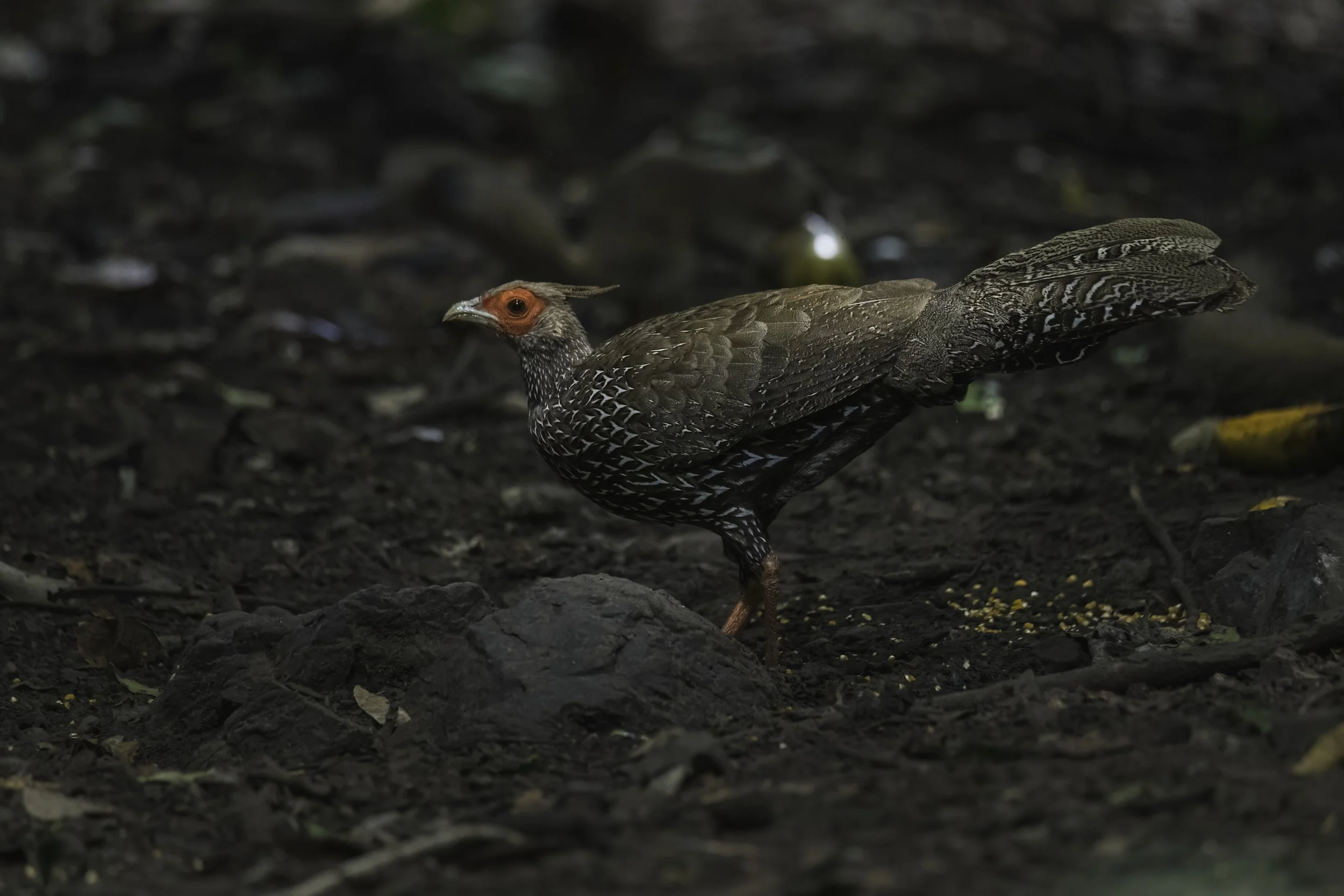
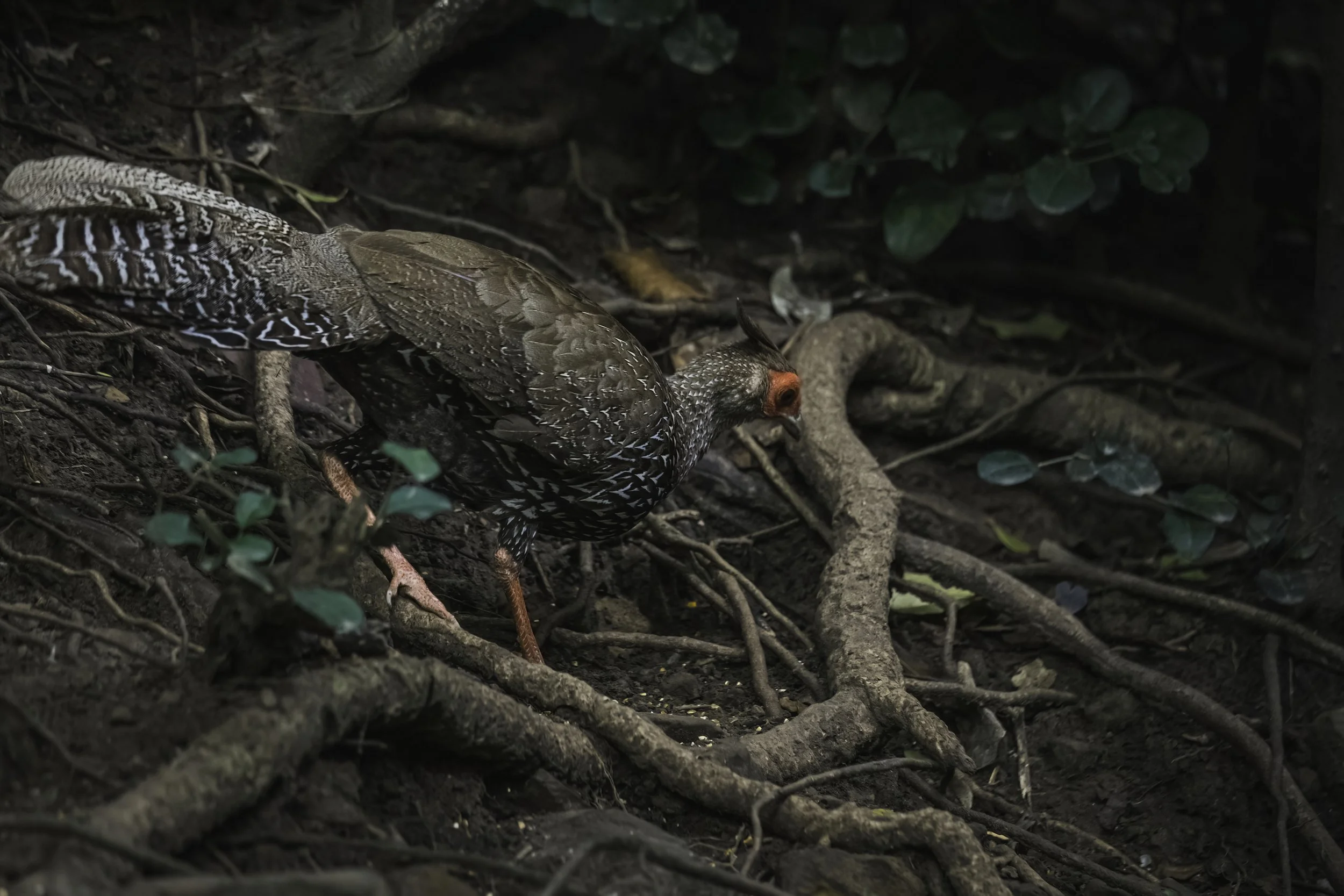
Kalij Pheasant (Female)
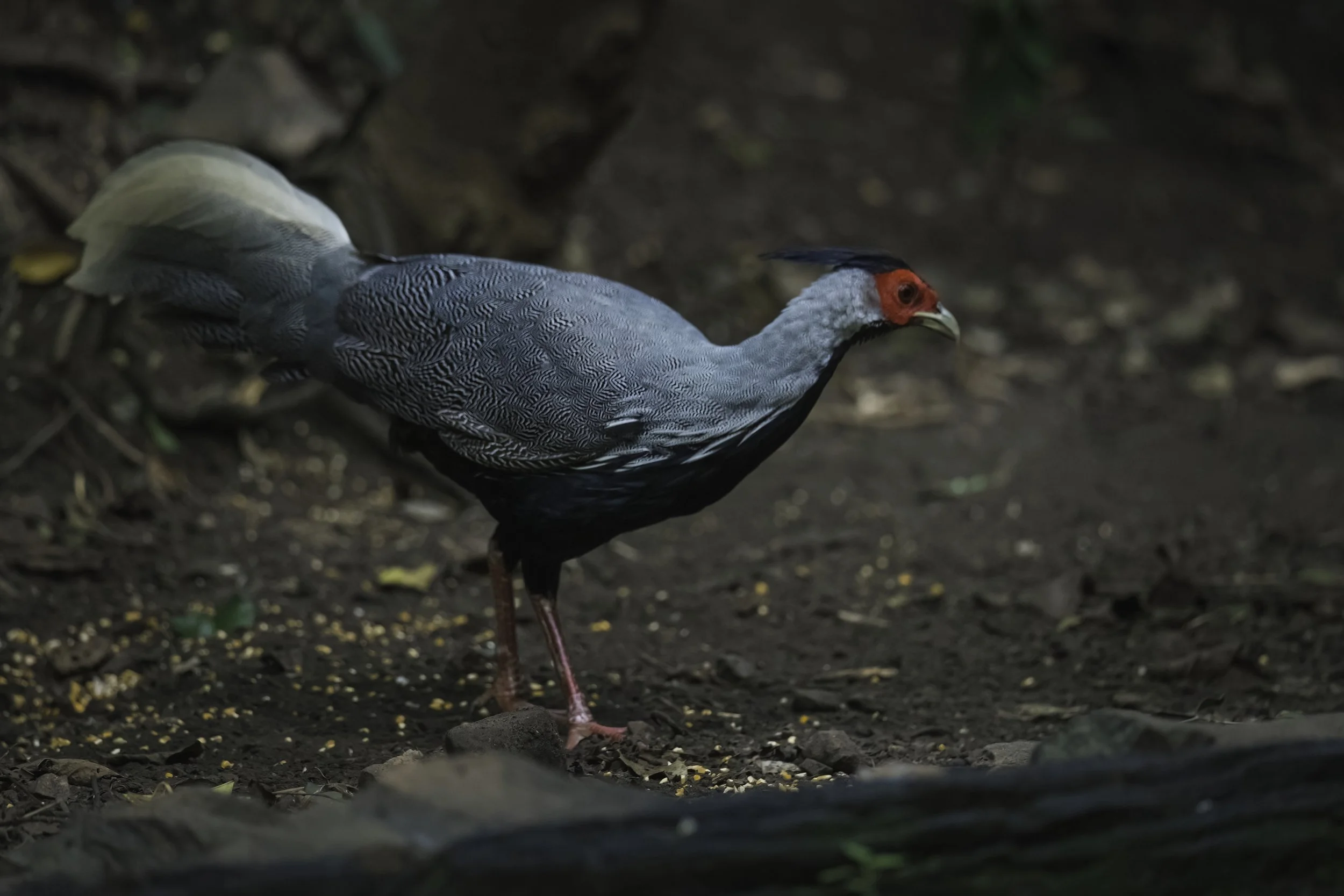
Kalij Pheasant
The Kalij Pheasant (Lophura leucomelanos), or simply Kalij, is a pheasant found in forests and thickets, especially in the Himalayan foothills, from Nepal, Pakistan to western Thailand. Males are rather variable depending on the subspecies involved, but all have at least partially glossy bluish-black plumage, while females are overall brownish. Both sexes have a bare red face and greyish legs (the latter separating it from the red-legged silver pheasant). It is generally widespread, though three of its eastern subspecies (Lophura leucomelanos oatesi, Lophura leucomelanos lineata & Lophura leucomelanos crawfurdi) are considered threatened & Lophura leucomelanos moffitti is virtually unknown in the wild.
The name is also spelled kaleege in old texts, such as Game Birds of India and Asia by Frank Finn, though no longer in his Indian Sporting Birds. On 21 October 2021, the Government of Jammu and Kashmir declared the Kalij Pheasant as bird of the Union Territory of Jammu and Kashmir.
It is a distinctive pheasant with bare red facial skin, a backward-pointing crest, and a vertically compressed tail. Males are iridescent black and silver while females are grayish-brown. Coloration varies considerably throughout its range, with northeastern birds averaging the darkest. Occurs in forested areas, usually in hilly or mountainous regions. It overlaps with the Silver Pheasant in the north of its range, with which it produces confusing intergrades. It is native to South and Southeast Asia and introduced to the Hawaiian Islands of Hawaii and western Oahu.
The distribution of the Kalij pheasant is a testament to its evolutionary adaptability, tracing a massive arc across the Asian continent. In India, the species acts as a sentinel of the sub-Himalayan belt. It is found reliably from Jammu and Kashmir in the west, moving eastward through Himachal Pradesh, Uttarakhand, and into the wet, subtropical forests of Nepal, Bhutan, and Northeast India. In these northern ranges, the Kalij is a familiar presence in oak, rhododendron, and sal forests, often venturing near hill stations and terraced agricultural edges.
However, as the species pushes southeastward into Myanmar, southwestern China, Thailand, and Laos, its relationship with the landscape shifts. It transforms from a bird of the open montane woodland into a creature of the deep, unbroken rainforest. The Tenasserim Range, which forms the mountainous spine of the Malay Peninsula, represents a crucial transition zone. Within Kaeng Krachan National Park, the Kalij inhabits an environmental crossroads where northern temperate flora meets southern Sundaic rainforest.
Here, the complex topography created by the headwaters of the Pranburi and Phetchaburi rivers provides the perfect microclimate for the species. The steep valleys trap humidity, fostering a dense undergrowth of bamboos, ferns, and evergreen shrubs. In these damp slopes, the Kalij finds both refuge from predators and an endless supply of forage, occupying a niche that demands absolute stealth.
Physically, the Kalij pheasant is a masterpiece of cryptic ornamentation, built structurally for life on the ground rather than sustained flight. It is a medium-sized pheasant, with adult males measuring between 63 and 74 centimetres in total length, though a substantial portion of this dimension is dedicated to its vertically compressed, arched tail. Females are noticeably smaller and more compact, averaging 50 to 60 centimetres in length. An adult male typically weighs between 800 and 1,100 grams, possessing a muscular, low-slung build that allows it to burst through thick brush with explosive speed when threatened.
The plumage of the male Kalij is a study in shifting tones. At a distance, it appears almost entirely black, a perfect camouflage in the deep shade of the rainforest. However, as it steps into a stray beam of sunlight, its feathers erupt into a brilliant palette of glossy steel-blue, purple, and iridescent dark green. The upper body is dominated by these lanceolate, lance-shaped feathers, which form a sleek, armor-like coating over the back and wings. Depending on the subspecies—of which there are several distinct variations across its range—the lower back and rump may feature crisp, white feather margins that create a striking scalloped effect.
The bird’s most defining facial feature is its bare, intensely vivid crimson-red facial skin, which surrounds a dark, intelligent eye. This patch of skin contrasts sharply with a long, backward-pointing crest of hair-like feathers that crowns the head. The breast feathers are distinctively long and pointed, ranging from a pale, dirty white to an ashy grey or deep charcoal, giving the chest a streaked, textured appearance.
In stark contrast, the female Kalij is clad entirely in shades of rich brown, tan, and buff. Each of her feathers is delicately edged with a lighter trim, providing a highly effective camouflage that renders her virtually invisible when nesting on the forest floor. Her tail is shorter and less arched than the male's, and while she also possesses the red facial skin, it is less expansive and lacks the fierce intensity of her mate’s.
When compared to its close relatives, the structural nuances of the Kalij become clear. It is frequently confused with the Silver Pheasant (Lophura nycthemera), with which it readily hybridizes where their ranges overlap in eastern Myanmar and western Thailand. However, the Silver Pheasant is characterized by its bright white upperparts and long, flowing white tail feathers, contrasting with the dark, brooding coloration of the Kalij. The Kalij is also structurally distinct from the larger, more ornate true pheasants (Phasianus) or the spectacular, eye-spotted Argus Pheasants, relying on a compact, agile framework designed for navigating tangled undergrowth rather than showing off massive, trailing trains.
Preferred Habitats and the Overlapping Shadows
The Kalij pheasant is a generalist within a specialist’s world. While it prefers the dense, evergreen rainforests on the eastern slopes of the Tenasserim, it is highly adaptable regarding altitude and forest composition. In Kaeng Krachan, its preferred habitat consists of primary and secondary moist evergreen forests, particularly areas rich in wild bamboo groves and rocky ravines near active waterways.
In these habitats, the Kalij shares its territory with a variety of other avian ground-dwellers. It frequently overlaps with the Red Junglefowl (Gallus gallus), the wild ancestor of the domestic chicken. While both species forage on the ground, the Junglefowl prefers more open forest edges, clearings, and secondary scrub, whereas the Kalij remains resolutely within the darker, interior forest.
The Kalij also shares the Tenasserim understory with various species of partridges and the elusive terrestrial coucals, such as the Greater Coucal (Centropus sinensis). While a casual observer might mistake a quick glimpse of a dark bird running through the brush for a coucal, the differences are profound. Coucals are members of the cuckoo family, possessing entirely different structural dimensions. They feature heavy, curved, black bills, long and broad flat tails, and a clumsy, hopping gait. Unlike the sleek, terrestrial strides of the Kalij, coucals frequently clamber into low bushes and vines to hunt for large insects and small vertebrates, and they lack the distinct game bird profile, crest, and red facial wattles of the pheasant.
Behaviour, Adaptation, and the Cost of Deforestation
The daily rhythm of the Kalij pheasant is governed by the sun, yet it avoids the heat of midday. It is an omnivorous dust-bather, spending its morning and late afternoon hours scratching at the damp leaf litter with strong, greyish legs. Its diet is incredibly varied, consisting of fallen berries, seeds, young shoots, roots, ferns, and an abundance of invertebrates, including termites, ants, beetles, and earthworms.
The social structure of the Kalij is typically based on small family units or pairs, though solitary males are common outside the breeding season. During the spring breeding cycle, the rainforest echoes with the male’s territorial displays. Unlike many birds that rely solely on vocalizations, the male Kalij produces a unique "wing-whirring" sound. By standing erect and rapidly vibrating its wings against its body, it generates a low, drum-like, vibrating hum that vibrates through the humid air of the ravines, signaling its presence to rivals and potential mates.
However, these age-old behaviours are facing severe pressure due to anthropogenic changes in their environment. Habitat loss, fragmentation, and deforestation have significantly altered the Kalij's way of life. When logging roads pierce the heart of dense parks like Kaeng Krachan, the canopy is broken, allowing sunlight to dry out the forest floor. This microclimatic shift eliminates the damp leaf-litter environment that breeds the insects and fungi the Kalij relies on for food.
In response to habitat fragmentation, naturalists have noted unusual shifts in Kalij behaviour. Once an incredibly shy bird that fled into the brush at the slightest sound, the Kalij is increasingly forced to forage along the edges of dirt roads and hiking trails within national parks, exposing itself to greater predation by raptors and mammals.
More concerning is the increased rate of hybridization with the Silver Pheasant. As deforestation breaks down the natural geographic and ecological barriers that once kept these species in separate forest types, they are forced into the same remaining pockets of habitat. This genetic mixing threatens the purity of specific localized subspecies, altering the evolutionary trajectory of the Tenasserim populations.
The Photographer's Vigil: An Encounter in Kaeng Krachan
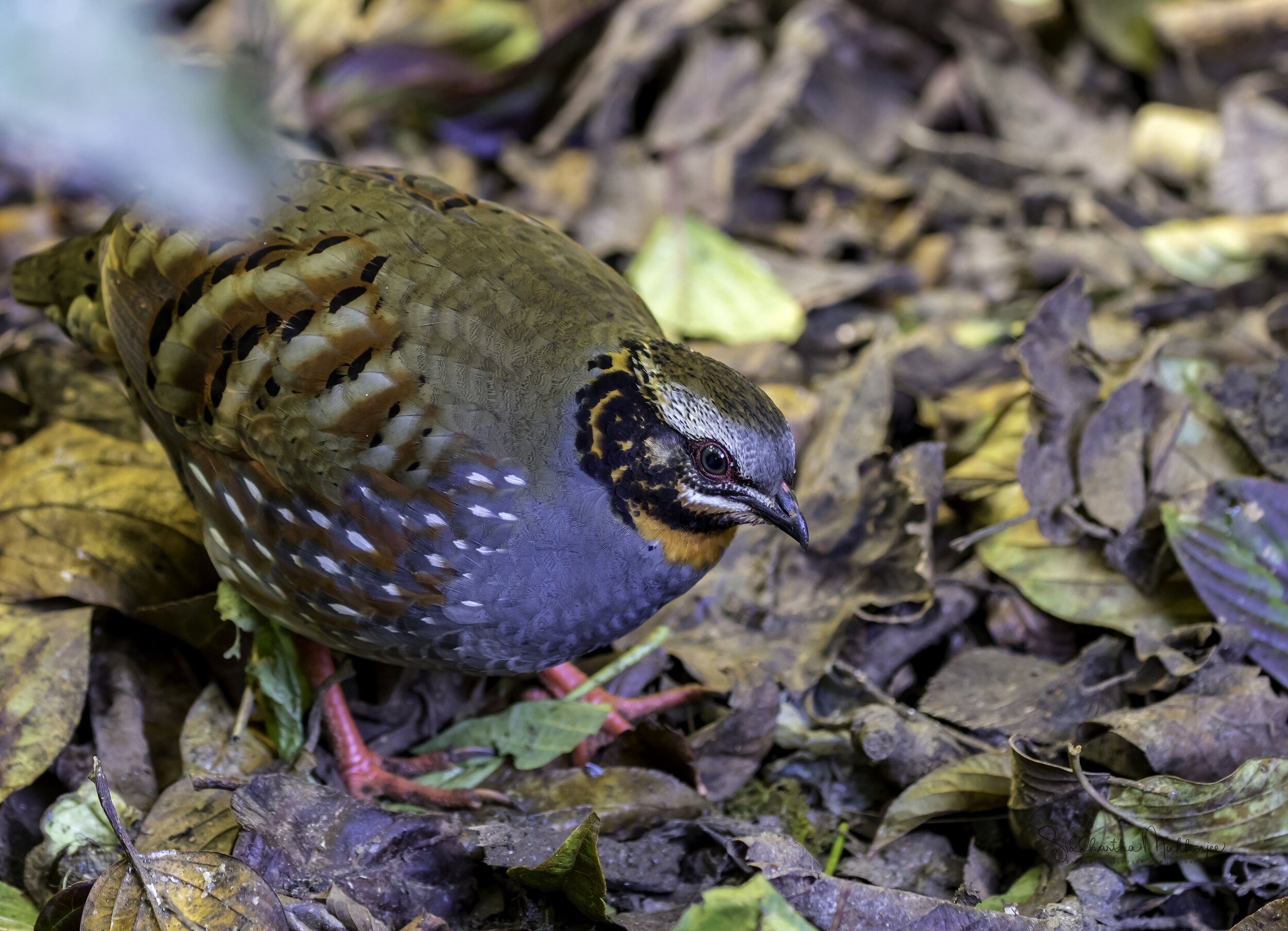
Photographing the Kalij Pheasant in the dense rainforests of Southeast Asia is an exercise in extreme patience, endurance, and humility. The environment itself is an adversary. Inside the valleys of Kaeng Krachan, the humidity regularly hovers near 100%, coating all equipment in a persistent sheen of condensation and causing lenses to fog instantly. Leeches crawl actively through the leaf litter, and the light is a photographer’s nightmare—a dim, green-tinted twilight that forces cameras to their technical limits. You can these manifested in my photos of this Kalij.
The process begins long before dawn. To have any chance of a clear sighting, one must set up a camouflage hide near a known foraging trail or a natural clearing along a stream bank near the Phetchaburi River. Inside the small fabric blind, the air quickly becomes stifling. You sit in absolute silence, watching the forest slowly awaken through a narrow mesh window. For hours, there is nothing but the calls of distant gibbons, the deep whoosh of a hornbill’s wings overhead, and the constant hum of cicadas. Then, without a sound, the forest floor seems to shift. The Kalij Pheasant does not walk into a clearing so much as it materializes out of the shadows.
Your breath catches. Through the viewfinder, the bird at first looks like a dark silhouette against the mottled brown of the earth. But as it steps into a thin shaft of morning light filtering through a gap in the canopy, the true magic of the species is revealed. The dull black plumage instantly ignites into a rich, deep midnight-blue. The crimson skin around the eye glows like a hot coal against the dark forest backdrop.
Every movement of the bird is deliberate, a calculated step that avoids snapping twigs. It lowers its head, scratches the earth twice, and looks up, its crest catching the light. The camera shutter fires—a soft, dampened click. The Kalij freezes, its dark eye locking onto the origin of the sound. For a second, time stands still in the heart of the Tenasserim jungle. Satisfied that the danger is minimal, but unwilling to risk exposure, the pheasant melts back into the thick bamboo forest as silently as it arrived, leaving behind only the memory of its iridescent beauty and the soft murmur of the river nearby.
‡‡‡‡‡

Related Posts


The Near Threatened Mrs. Hume's pheasant, also known as Hume's pheasant or the bar-tailed pheasant, is a large, dashingly plumaged, long-tailed terrestrial forest pheasant. The male has a chestnut body, steely blue neck & wing patches, white wing bars, and a long black-and-white banded tail. The brownish female is shorter-tailed, with black-spotted upperparts and red facial patch. They are usually found singly, in pairs, or in trios in forest openings, meadows, and along rural roadsides, typically in the early morning.
#wildartworks, #wildlifephotography, #wildlifecentral, #your_best_birds, #nuts_about_birds, #planetbirds, #earthcapture, #bbcearth, #feather_perfection, #nuts_about_wildlife, @wild.planet, @wildlifeonearth, @discovery, #wildbirdtrust, #natgeowild, #Thailand, #BirdWatching, #Wildlife, #WildBirds, #Wild, #NorthThailand, #chiangmai, #DoiTonPhueng, #mrshumespheasant, #humespheasant, #bartailedpheasant, #pheasant, #forestpheasant, #nearthreatened, #manipur, #Singalila, #SingalilaNationalPark