
Small Niltava
Niltava macgrigoriae
Doi Ang Khang, Chiang Mai, Thailand
Finding and photographing the Small Niltava (Niltava macgrigoriae) on Doi Ang Khang in northern Thailand is a pursuit defined by patience and reward. This tiny, shy flycatcher, a true "jewel of the hills", requires one to slow down, blend into the montane forest, and wait for that fleeting moment when its brilliant blue plumage catches a stray beam of sunlight. The experience is one of quiet anticipation, culminating in the thrill of capturing the essence of this elusive bird.
The Niltava is a genus of seven species of Old World flycatchers found across South and Southeast Asia, as well as China. These birds are known for their striking sexual dimorphism, where males display brilliant blue plumage and females have more subdued brown tones. They typically inhabit subtropical and tropical moist montane forests, often foraging in the lower and middle layers of vegetation for insects and small fruits. Most species are classified as Least Concern by the IUCN due to their wide ranges.
I have, earlier, written about the Large Niltava which is linked below. The main difference between the two is size.
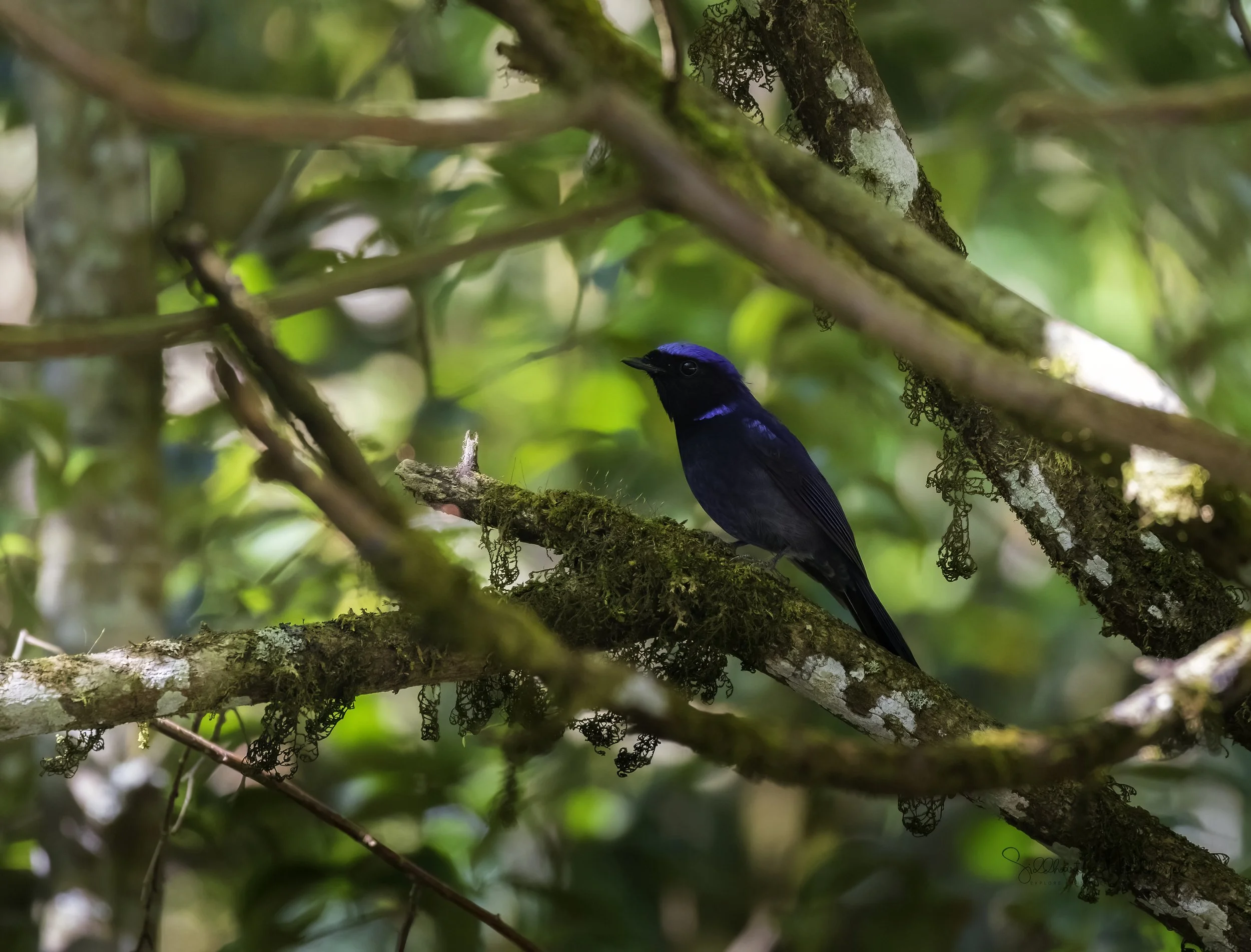
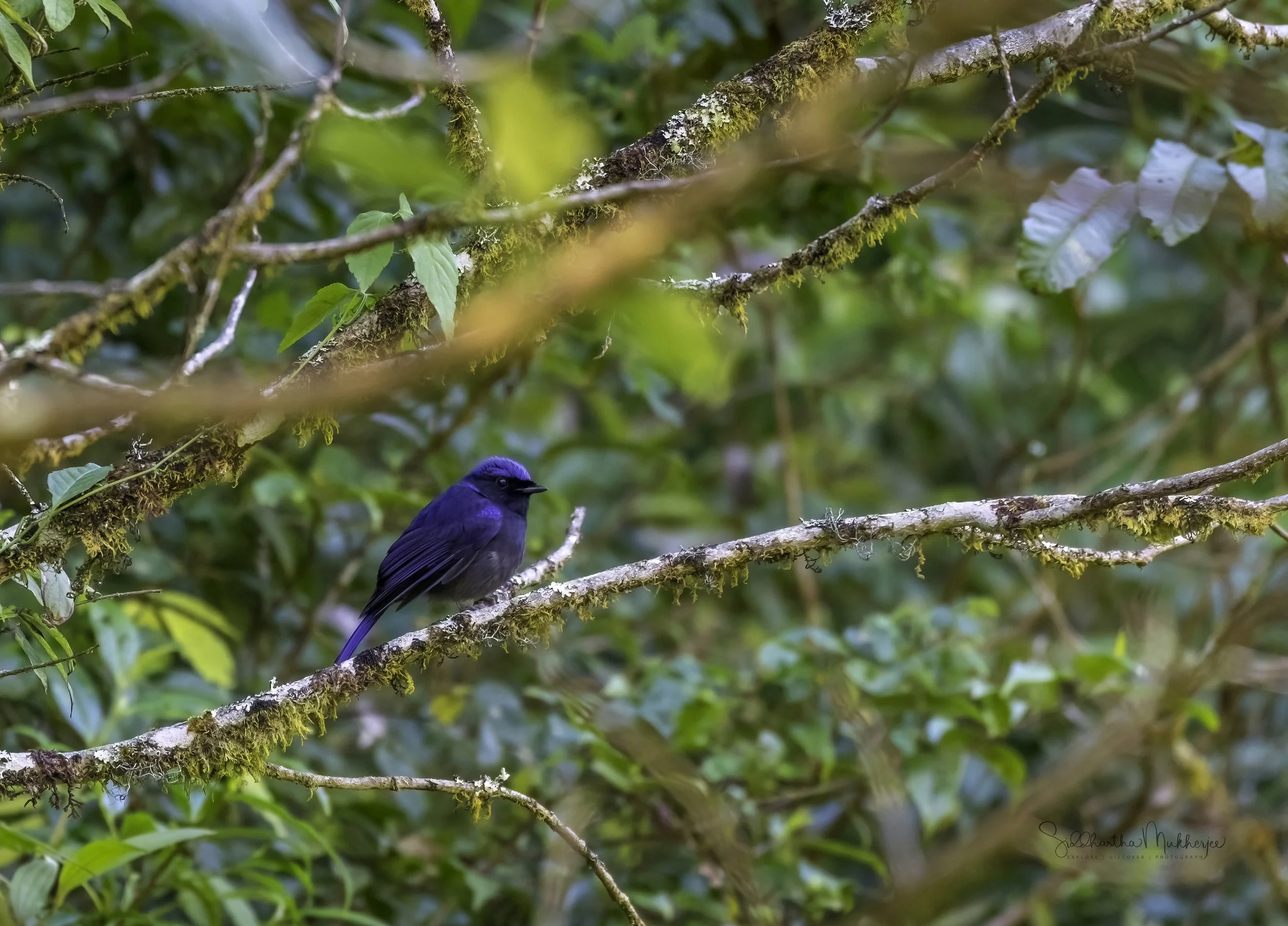
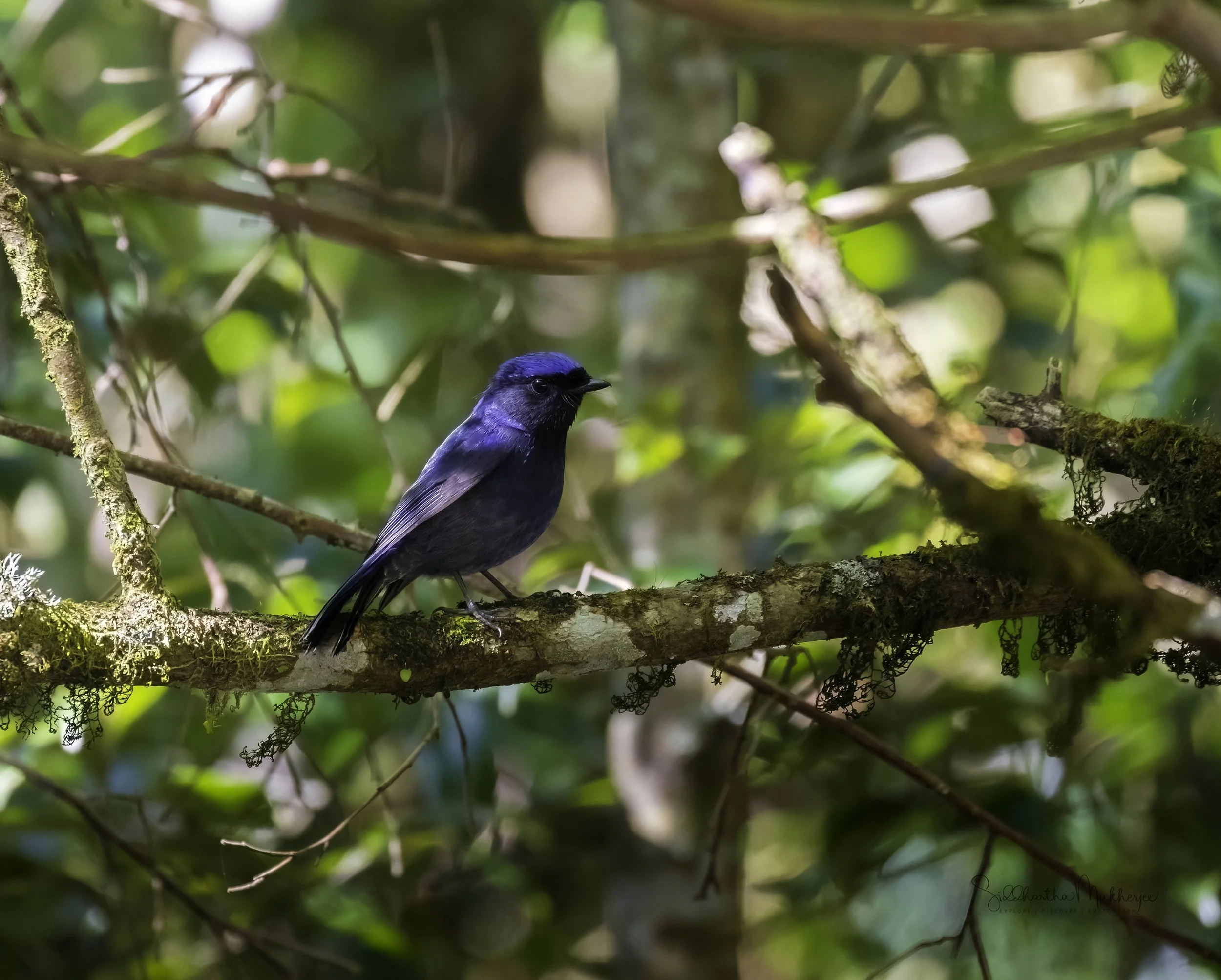
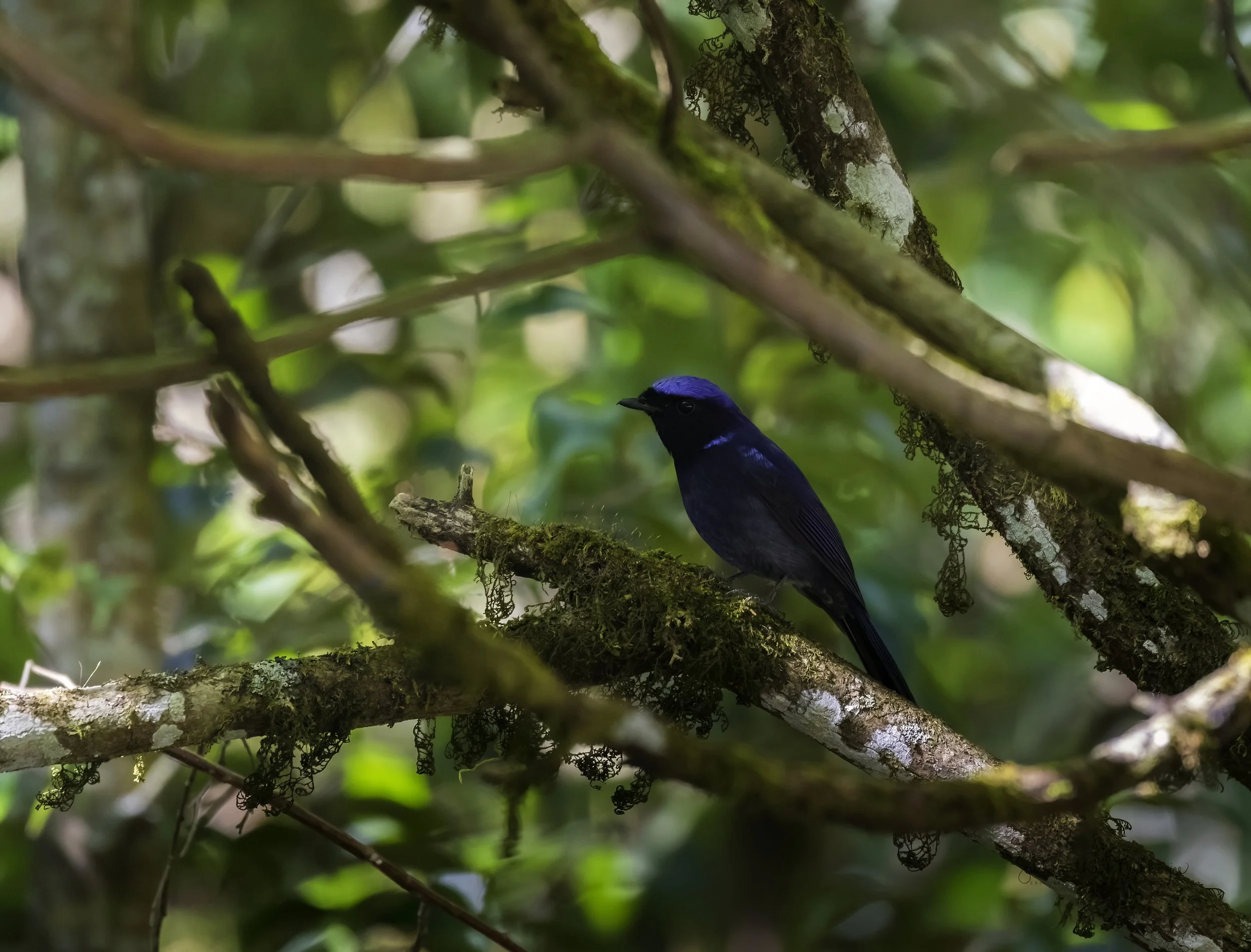
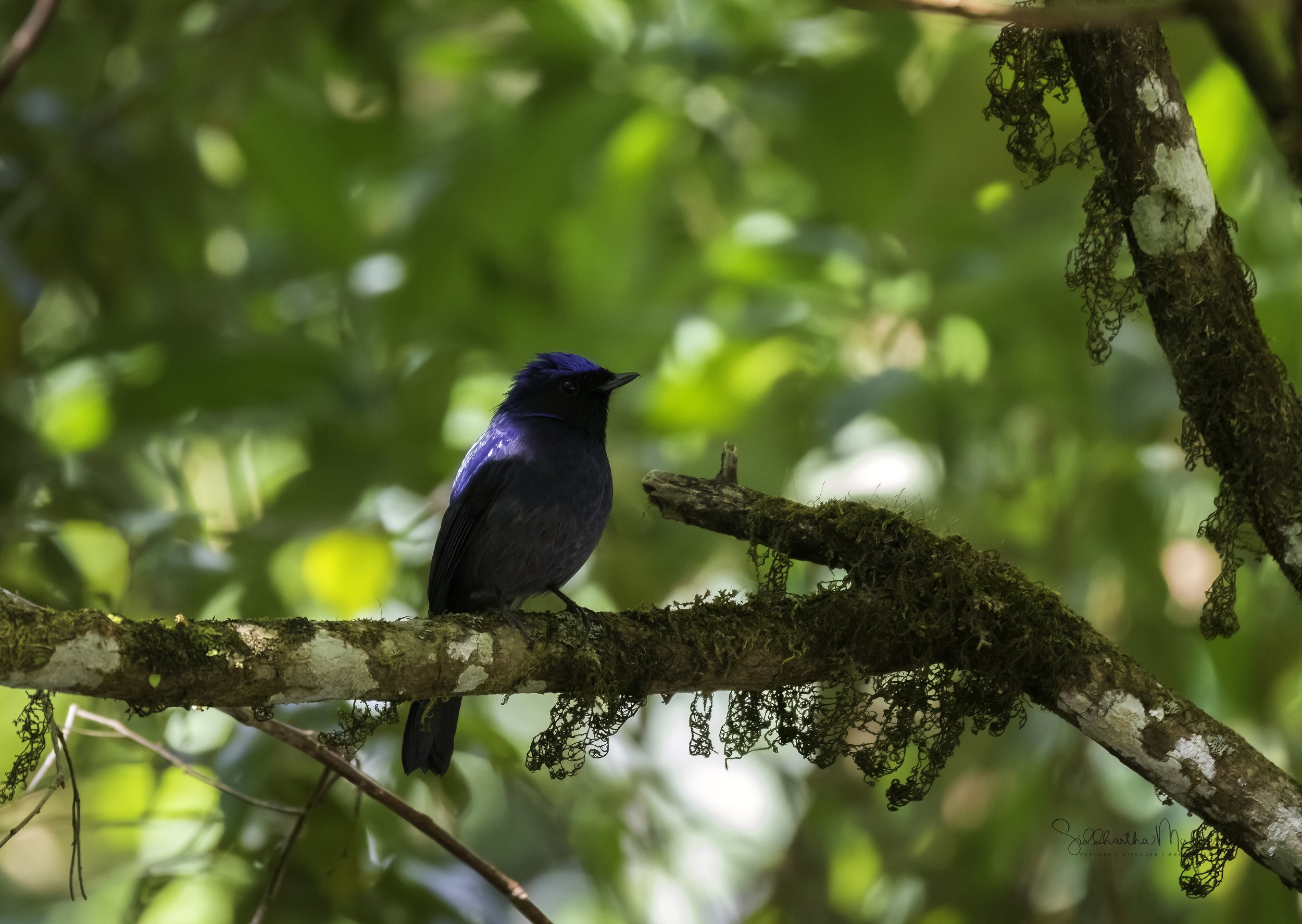
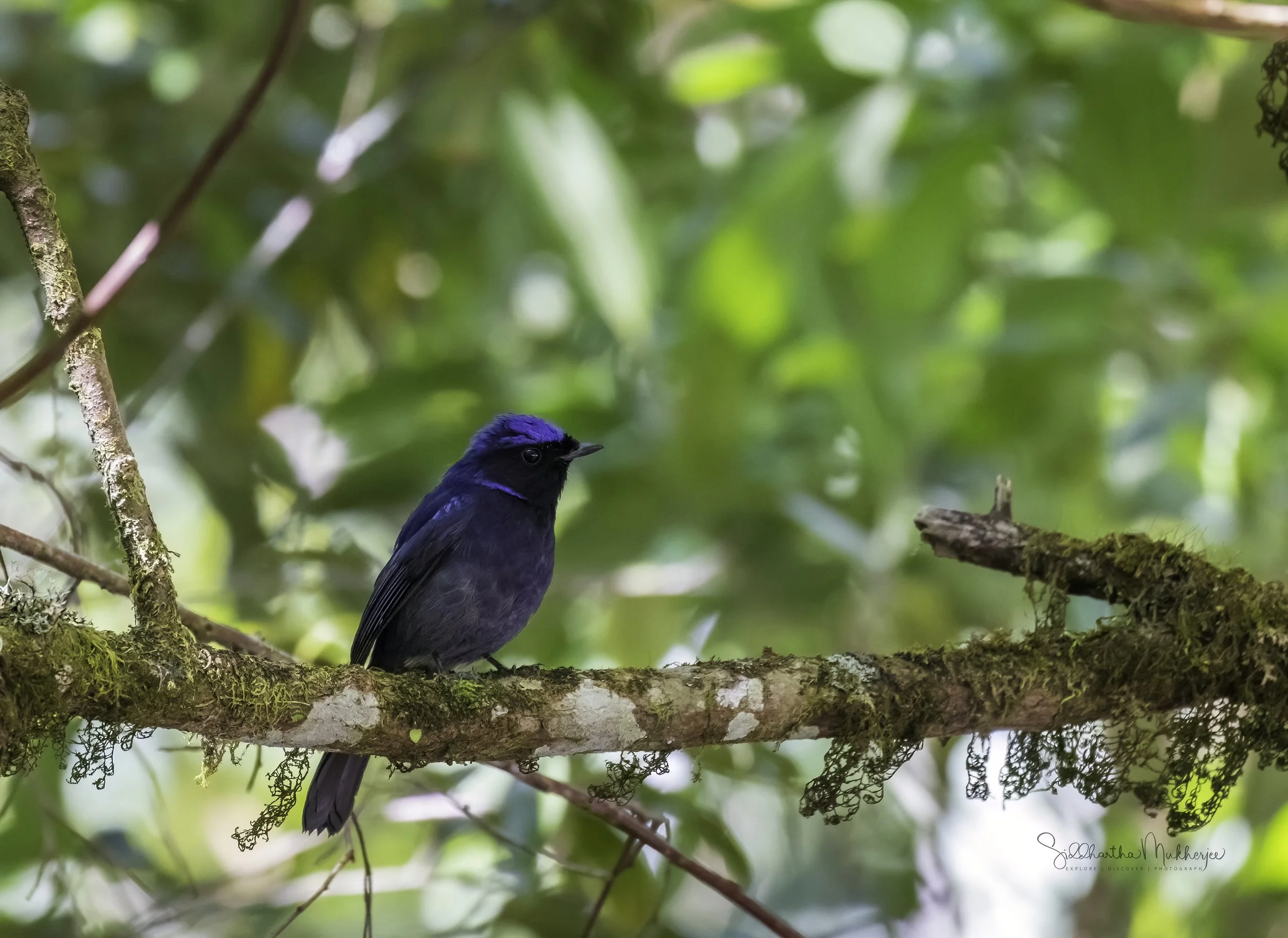
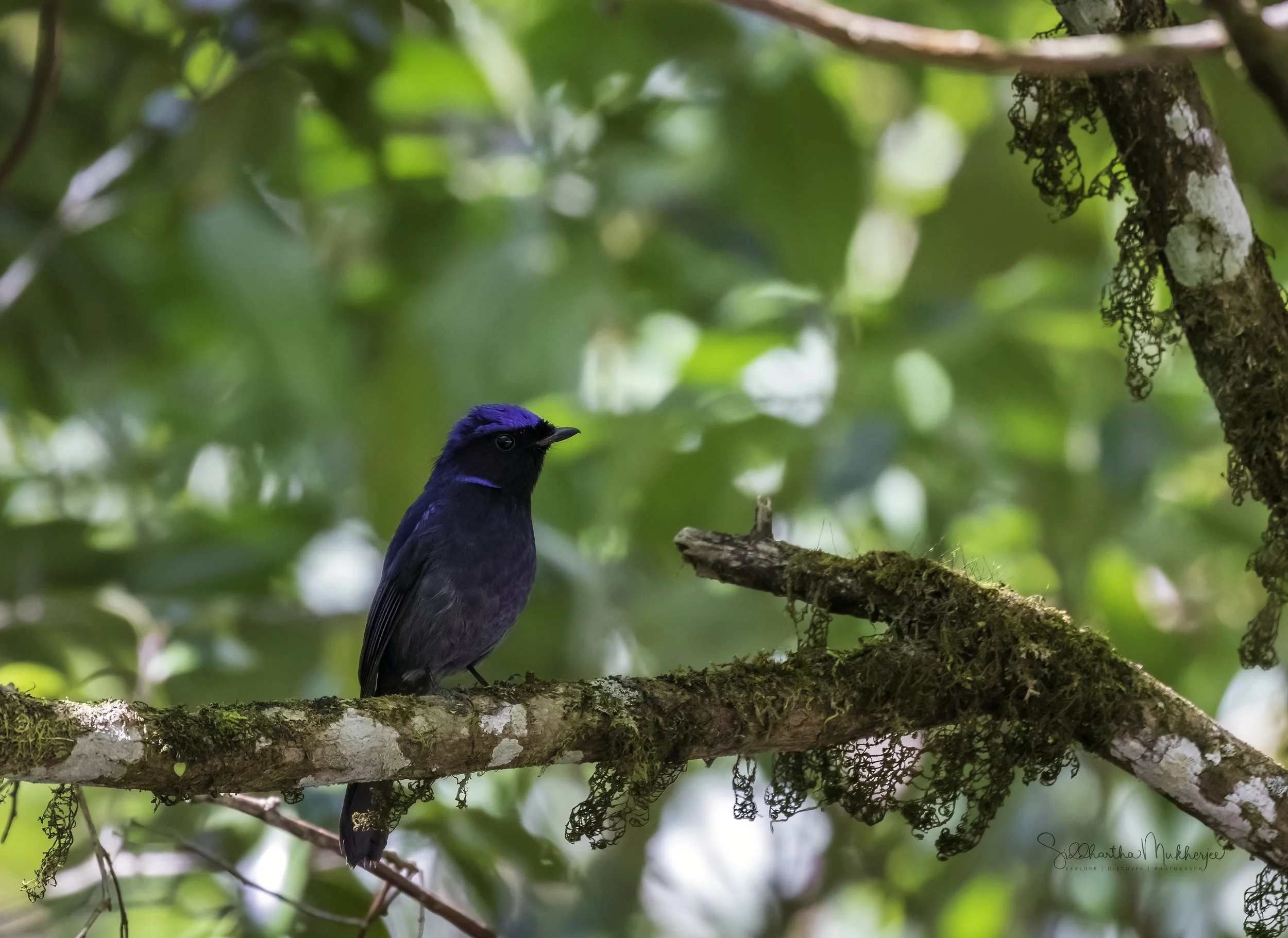
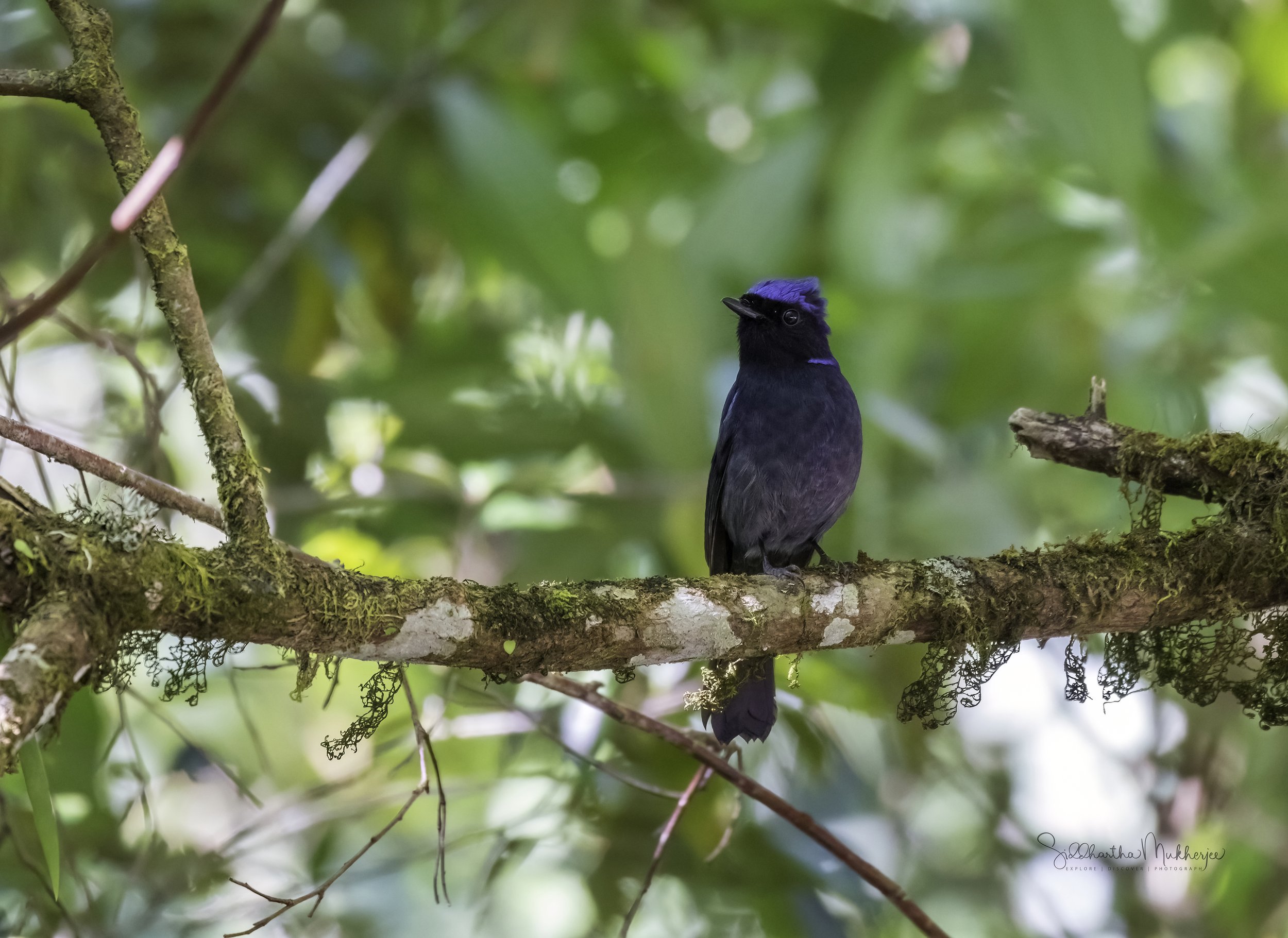
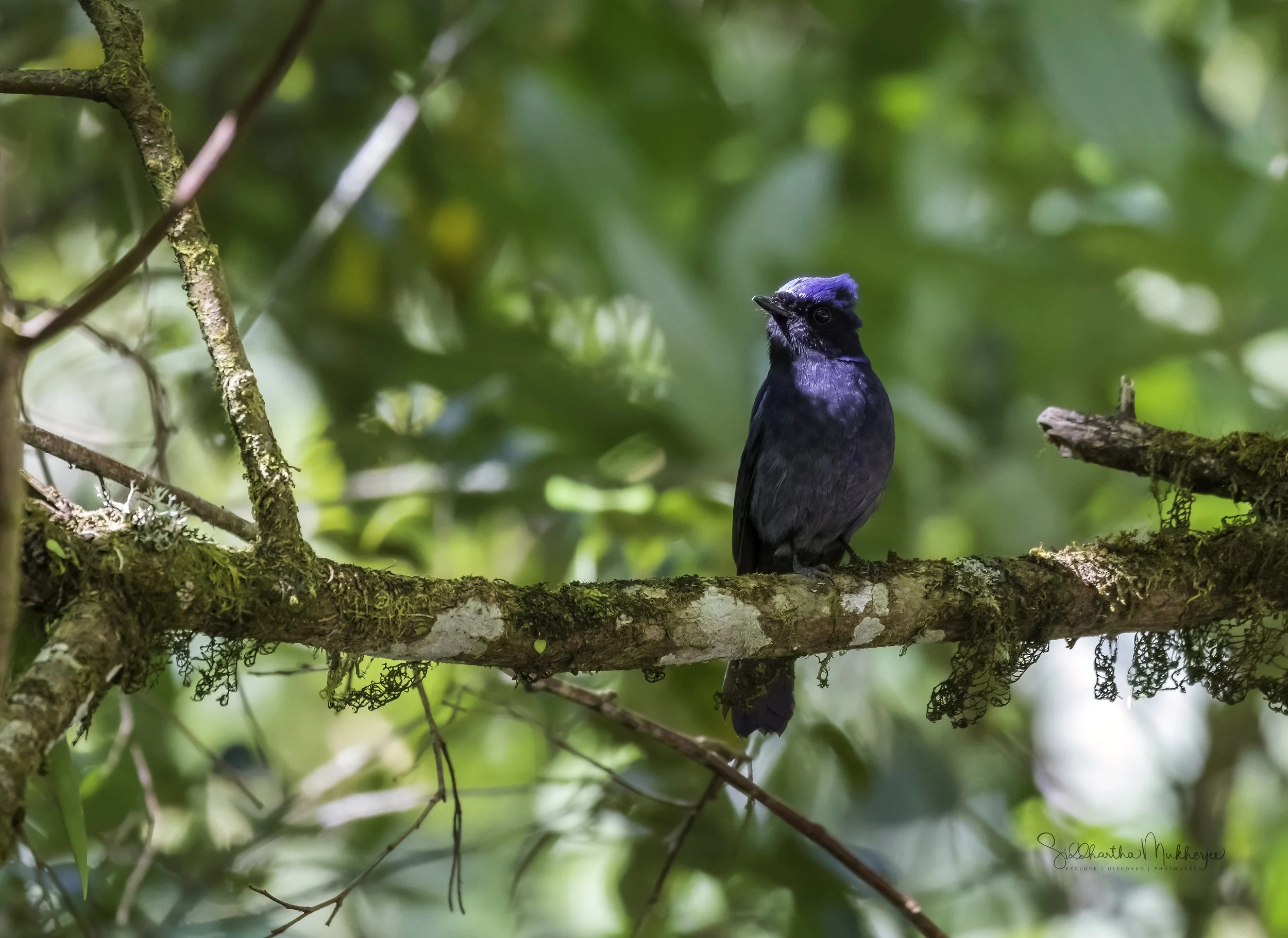
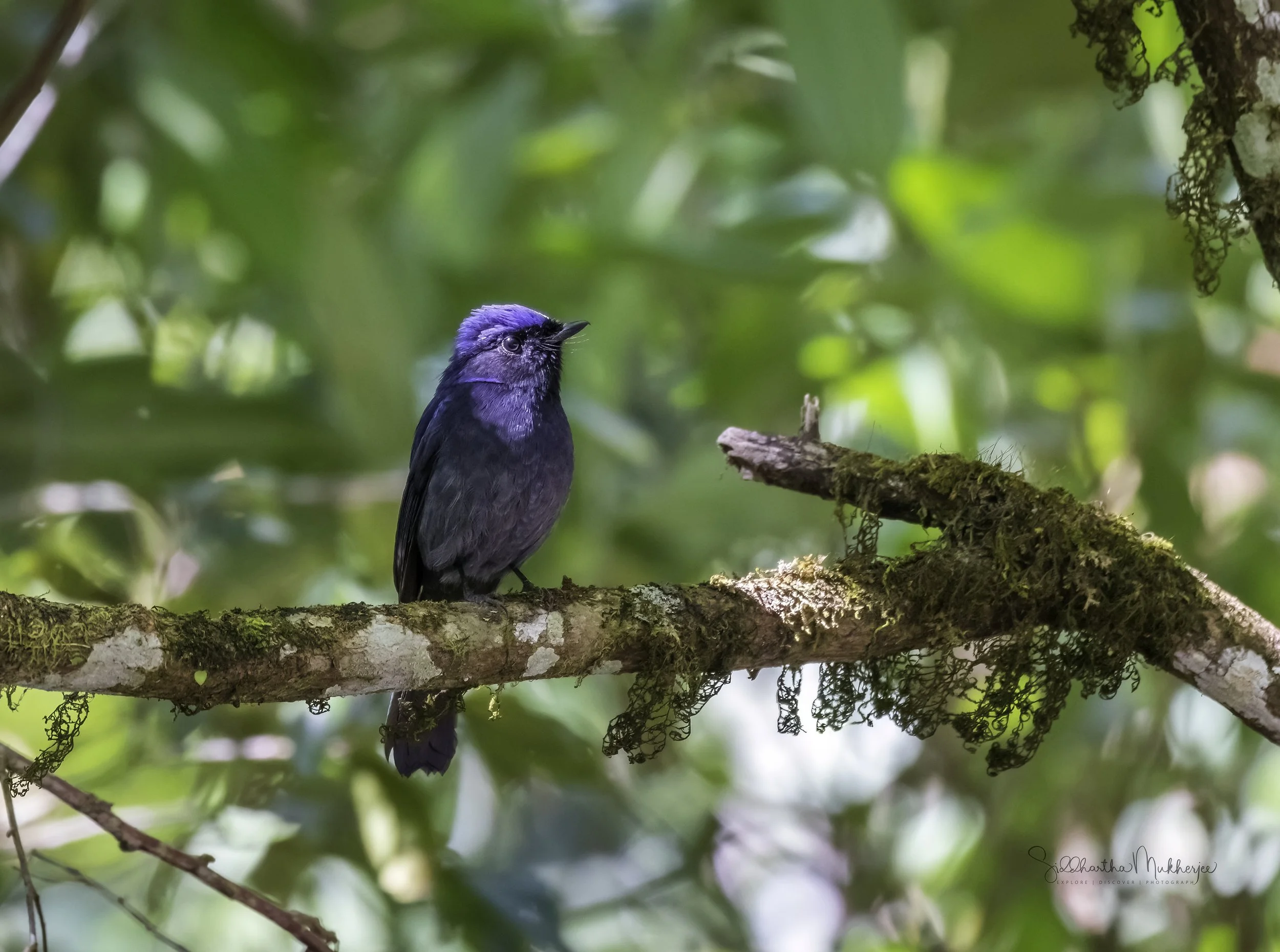
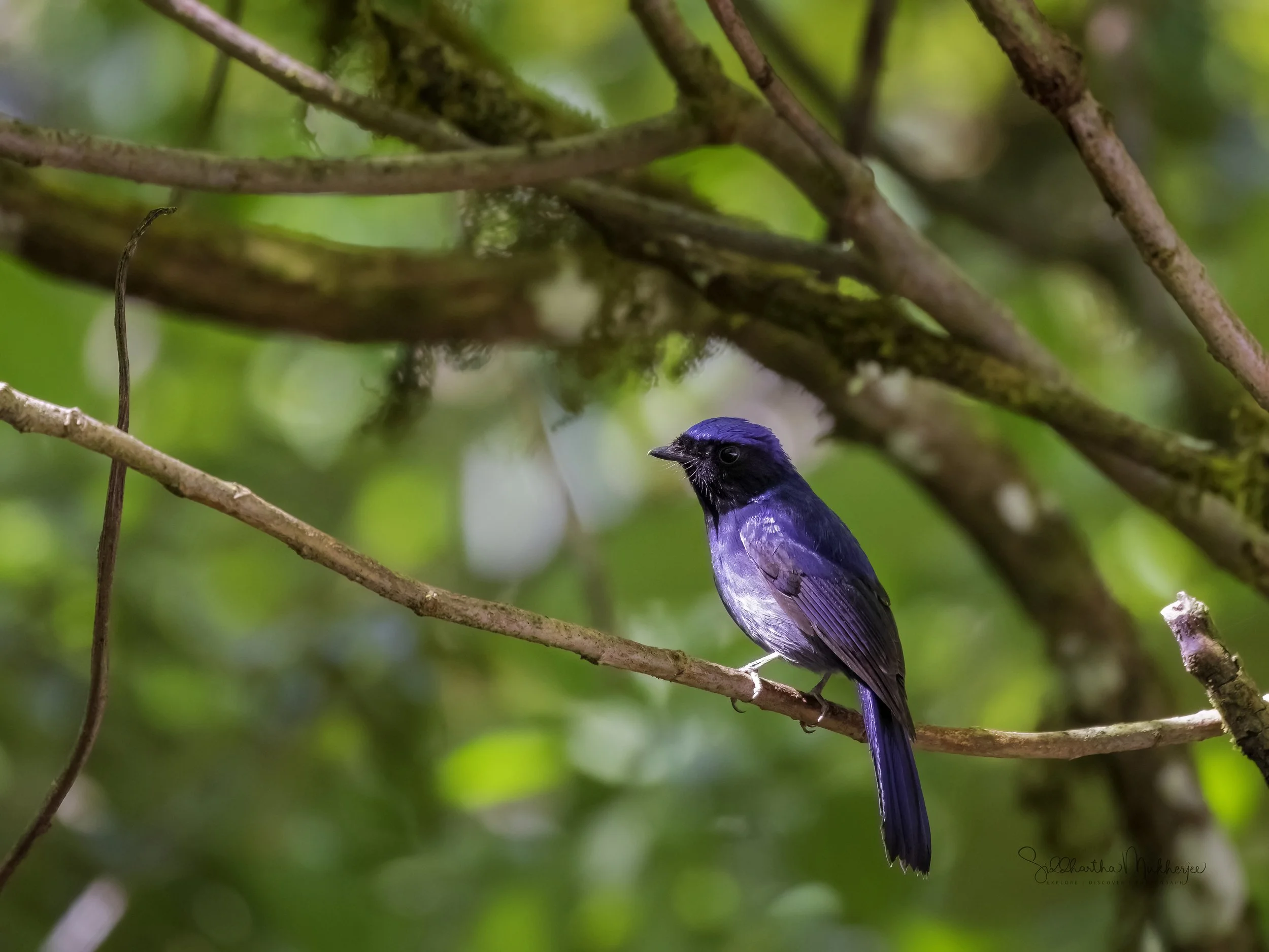
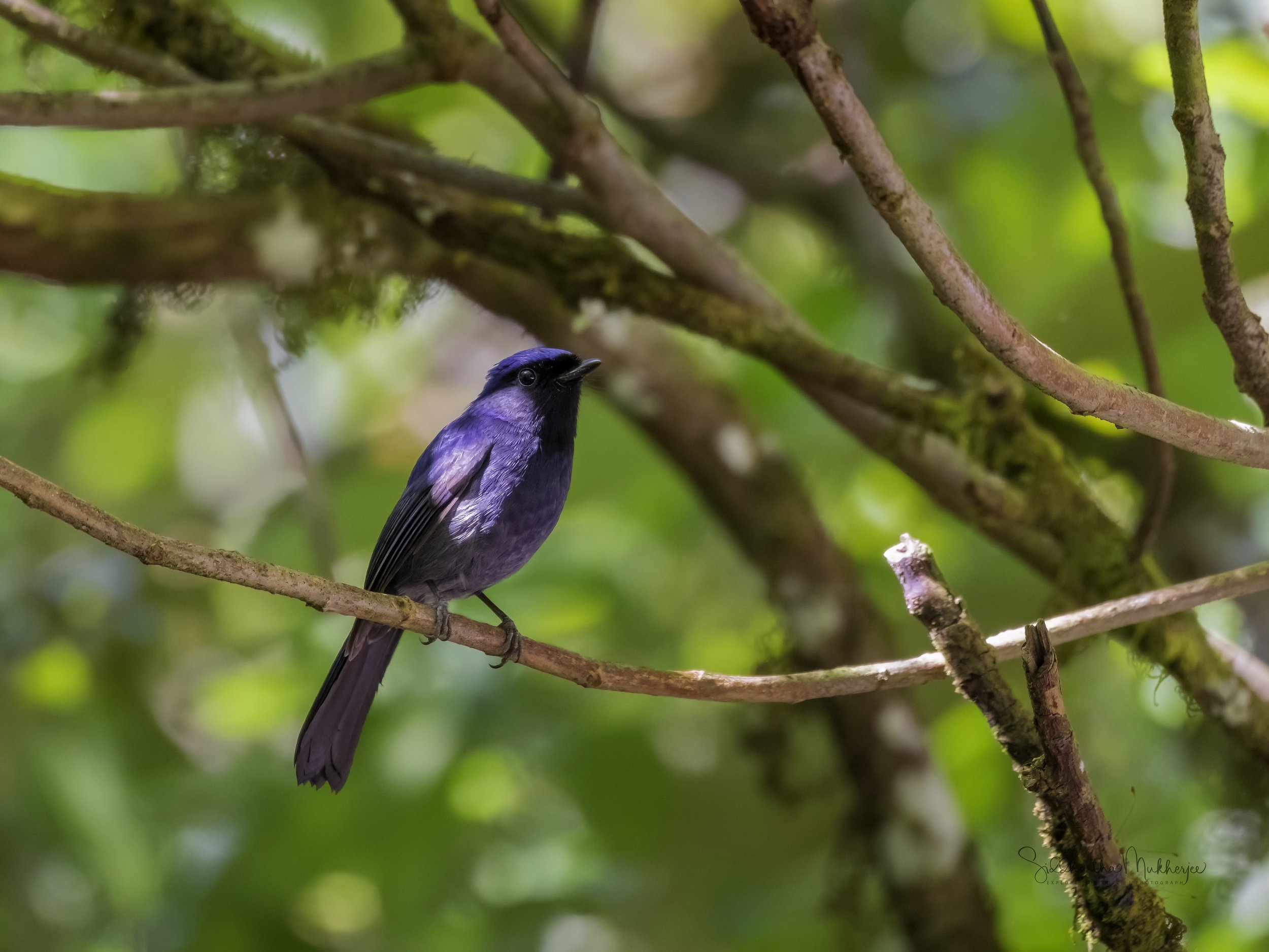
Small Niltava (Male)
The Dois of northern Thailand have been very kind to me from a birding perspective. There are so many I have already talked about and so many still remaining. I have written an overview here on the Birds of the Dois and have now started to break them up into individuals like the Gray-backed Shrike, Long-tailed Shrike, Spectacled Barwing, Siberian Rubythroat, the stunning Mrs. Gould’s Sunbird and the numerous other birds I have seen here.
Doi Ang Khang, a mountain peak in the Daen Lao Range near the Myanmar border, is a renowned birdwatching destination. The optimal time for spotting species like the Small Niltava is often early in the morning as the sun begins to hit the treetops. The terrain consists of humid submontane and montane broadleaf evergreen forests, an ideal habitat for this species. One must be patient, exploring the edges, clearings, and shrubberies along paths and trails where the Niltava forages. The agricultural station area also offers various spots, with specific stakeouts (like a small waterfall where mealworms are provided for other species) sometimes drawing in a variety of birds, including flocking species the Niltava may associate with.
The highest point is 1,928 metres. Although chiefly deforested, this is still one of Northern Thailand’s most prominent birdwatching areas, due to more and rarer bird species being in residence, as well as being a popular resting point for numerous migratory birds. Examples of rare and beautiful birds inhabiting this area include the Mountain Bamboo Partridge, Spot-breasted Parrotbill and the Red-faced Liocichla. It is not so uncommon to spot the Red-tailed Laughing Thrush here. Around The Royal Agricultural Project Station you can find Brown, Burmese and Long-tailed Shrike and also Fire-capped Tits and Silver-eared Mesia, White – tailed Robin & Maroon Oriole.
We didn’t have the good fortune to see all the species on all the mountains, that would have been impossible, but we did rack up quite a number of species - about 95 of them.
Photographing the Niltava presents unique challenges. The birds often remain in the shady undergrowth, making good lighting difficult. Success often means waiting for the bird to move into a better-lit area or using equipment that performs well in low light conditions to capture the vivid hues of the male's plumage.
A B&W rendition of a path on Doi Ang Khang well before sunrise with fog enveloping and creating an atmosphere of mystery and expectation.
Read about the other birds from these beautiful mountains. These are only a few of the huge number I have spotted and recorded there.
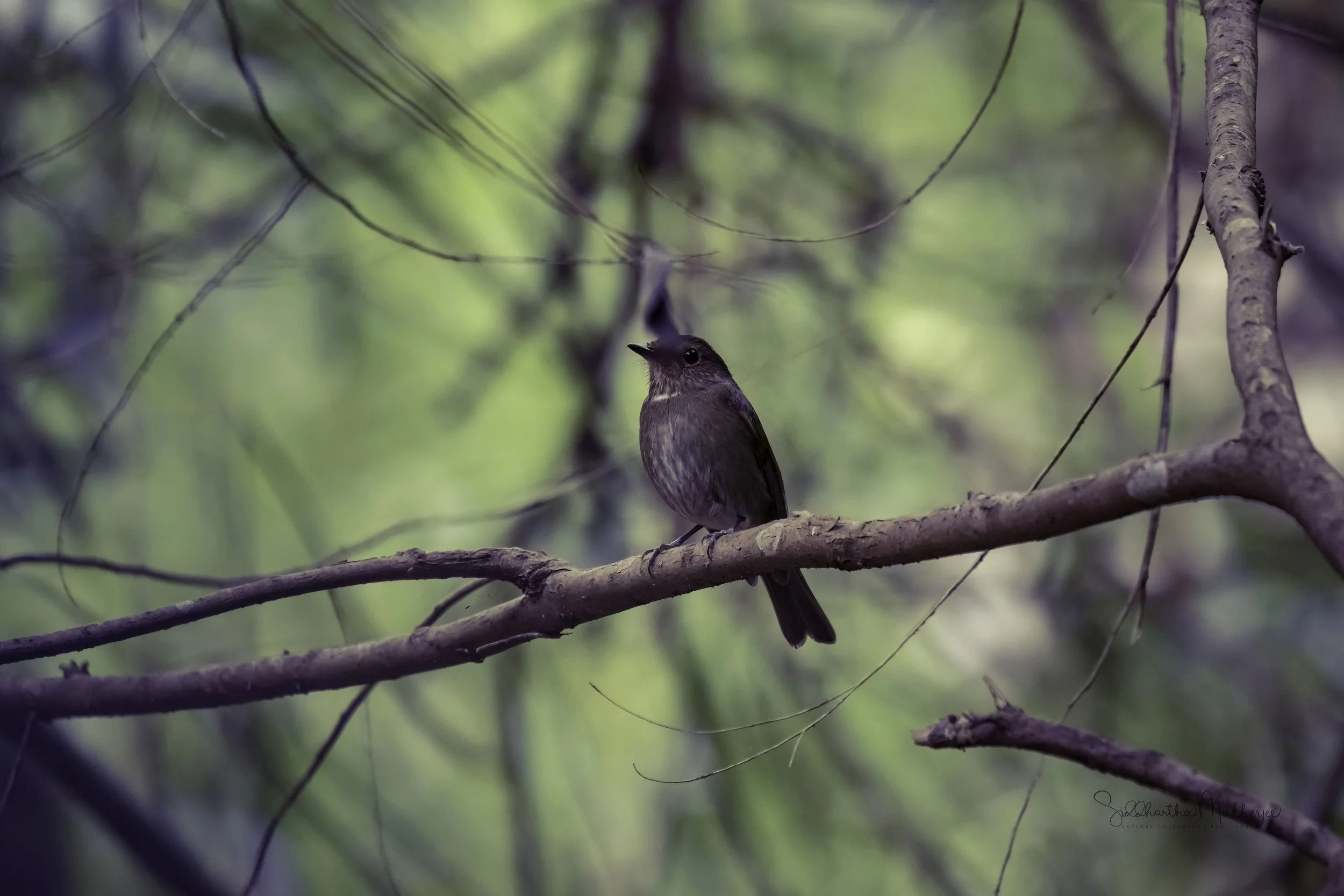
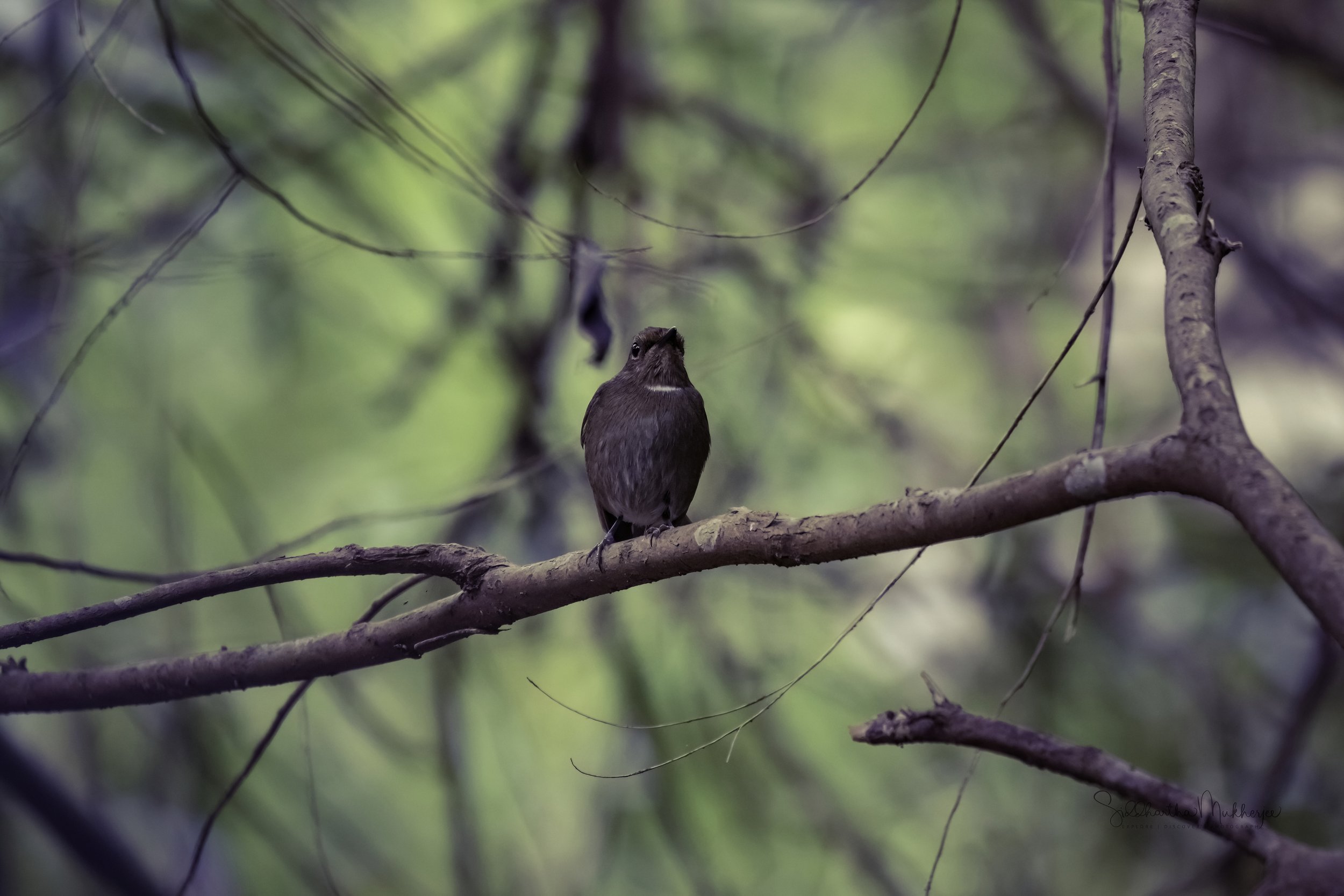
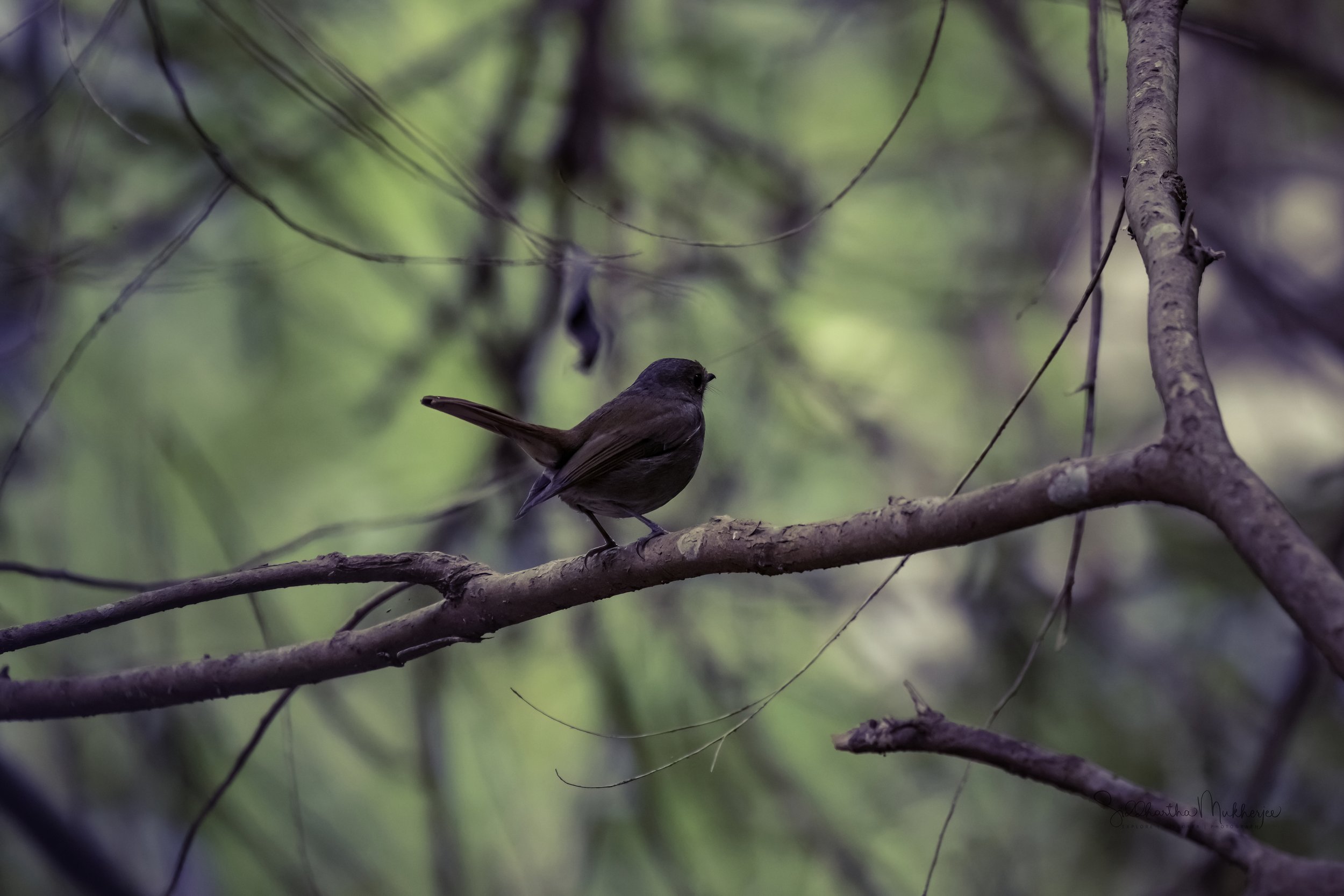
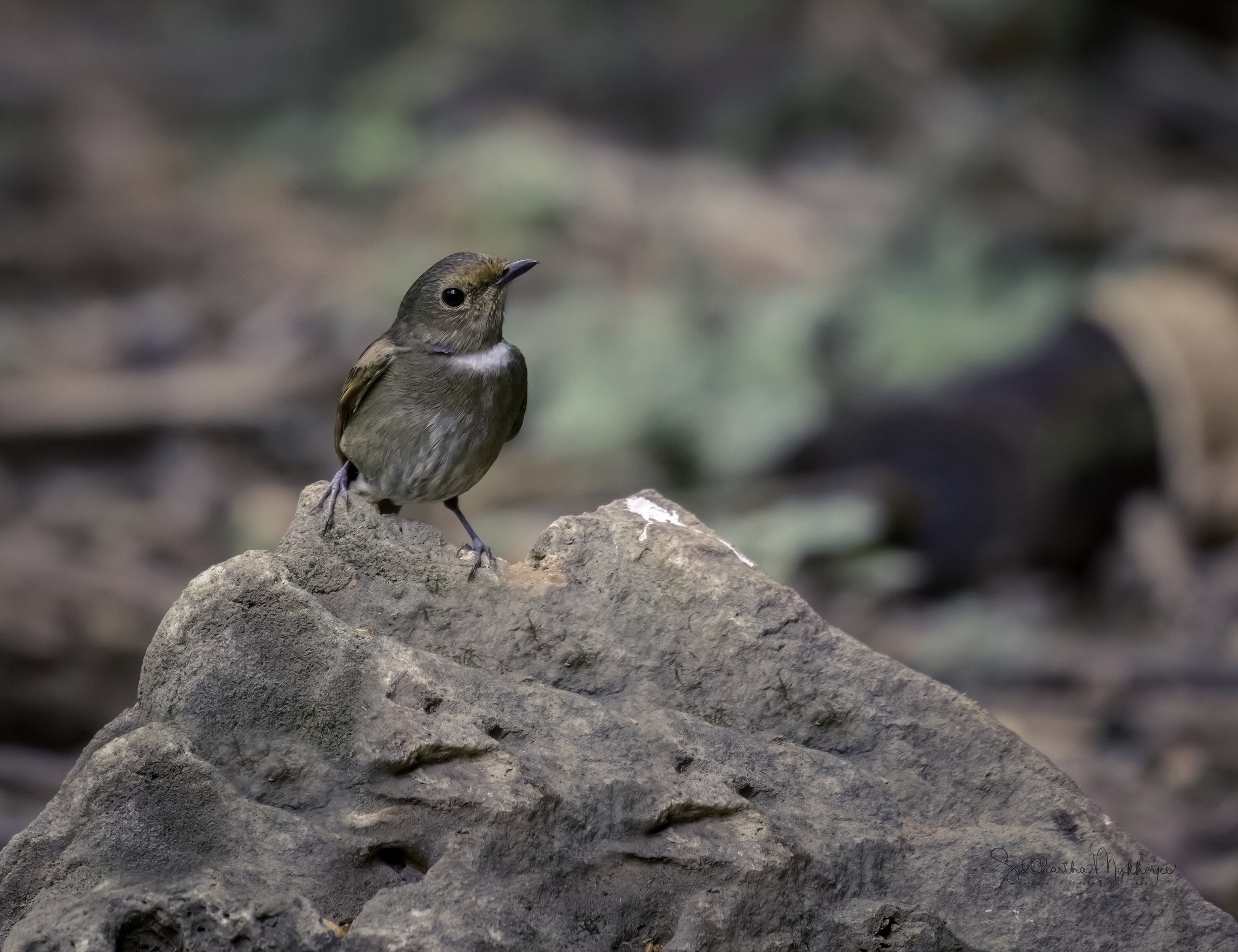
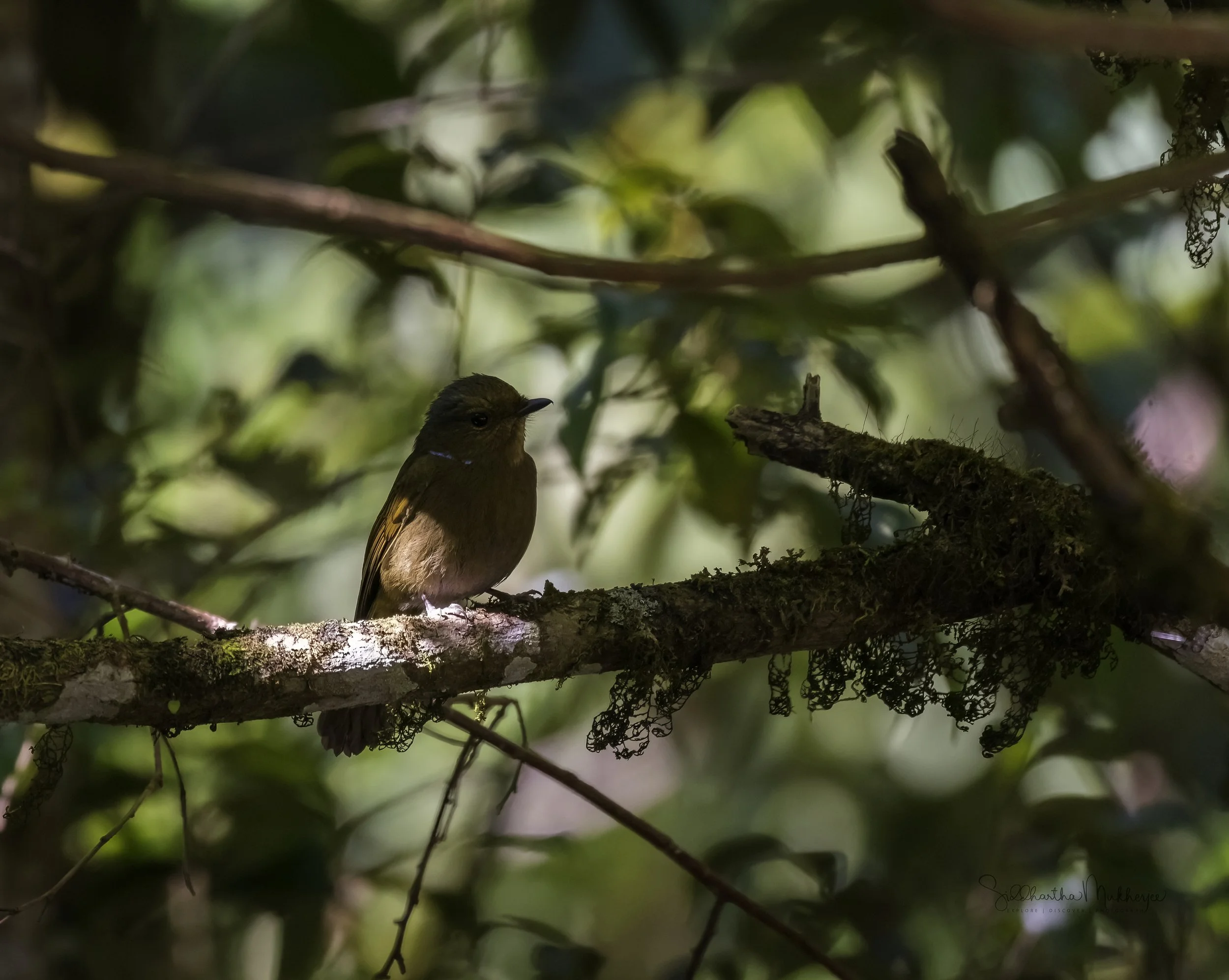
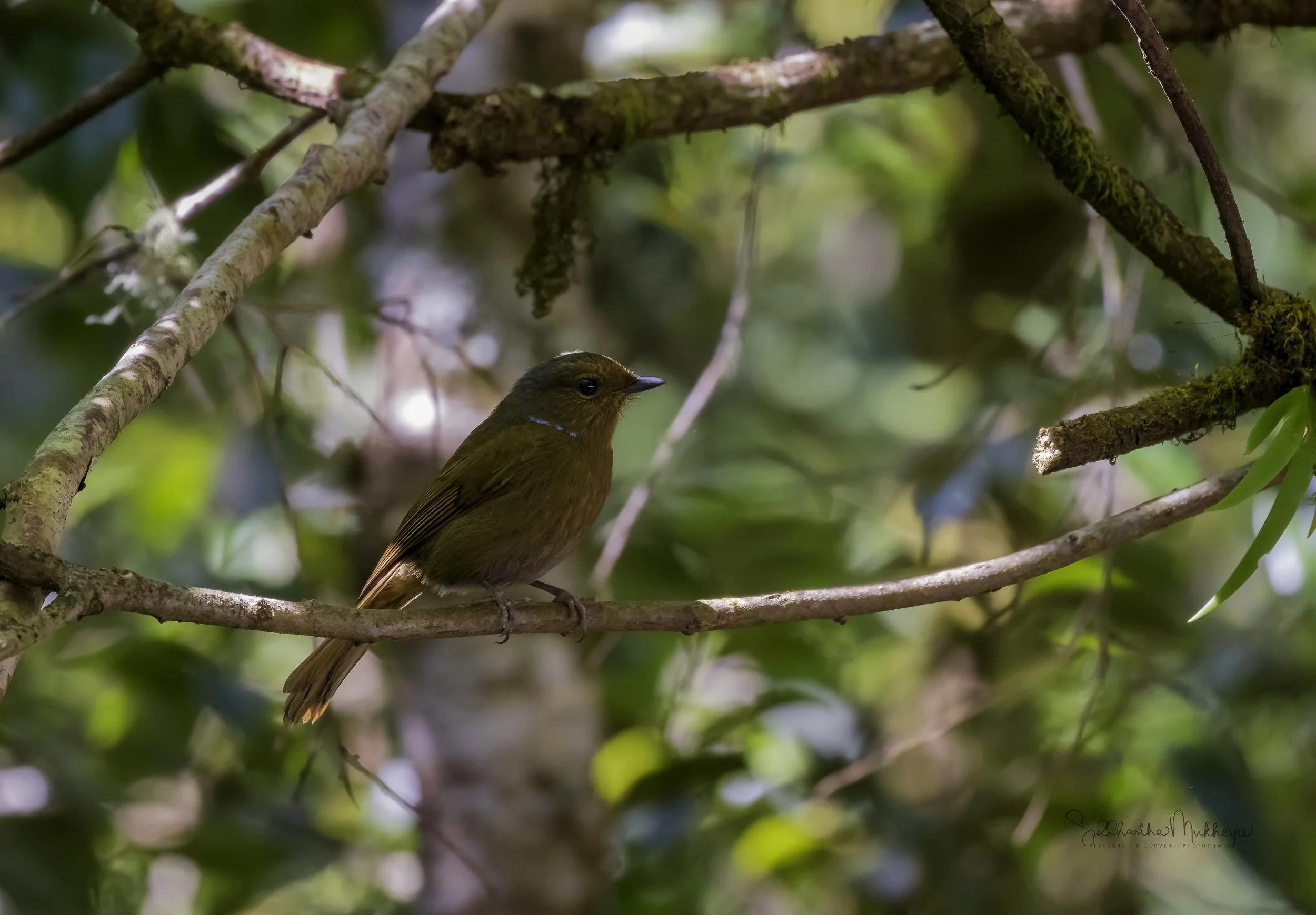
Small Niltava (Female)
Small Niltava
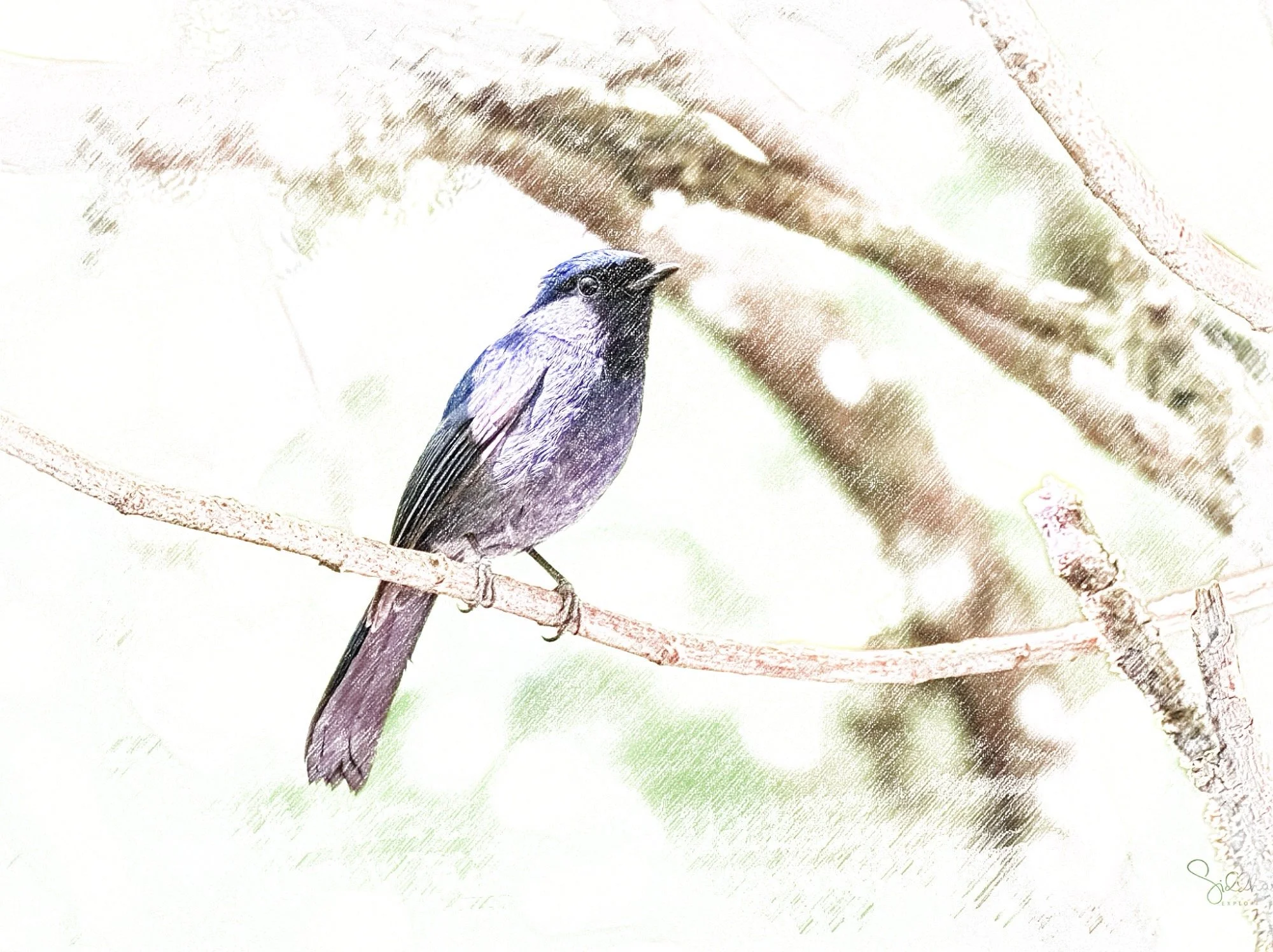
The Small Niltava is a petite bird, measuring between 11–14 cm in length and weighing 11–13 g. Its size is a key differentiator from the similarly plumaged but much larger (double the size) Large Niltava (Niltava grandis). The male boasts spectacular deep purplish-blue upperparts, with the brightest, most shining patches on the forehead, neck sides, and shoulders. It has a dark bluish-black face mask and a blue breast, becoming whitish or greyish-white on the belly. The female is more subdued, with olive-brown upperparts and a buffish forehead and throat. A key field mark is her distinct white eyering and rufous-brown edges to the tail and wings, along with a small blue patch on the side of the neck.
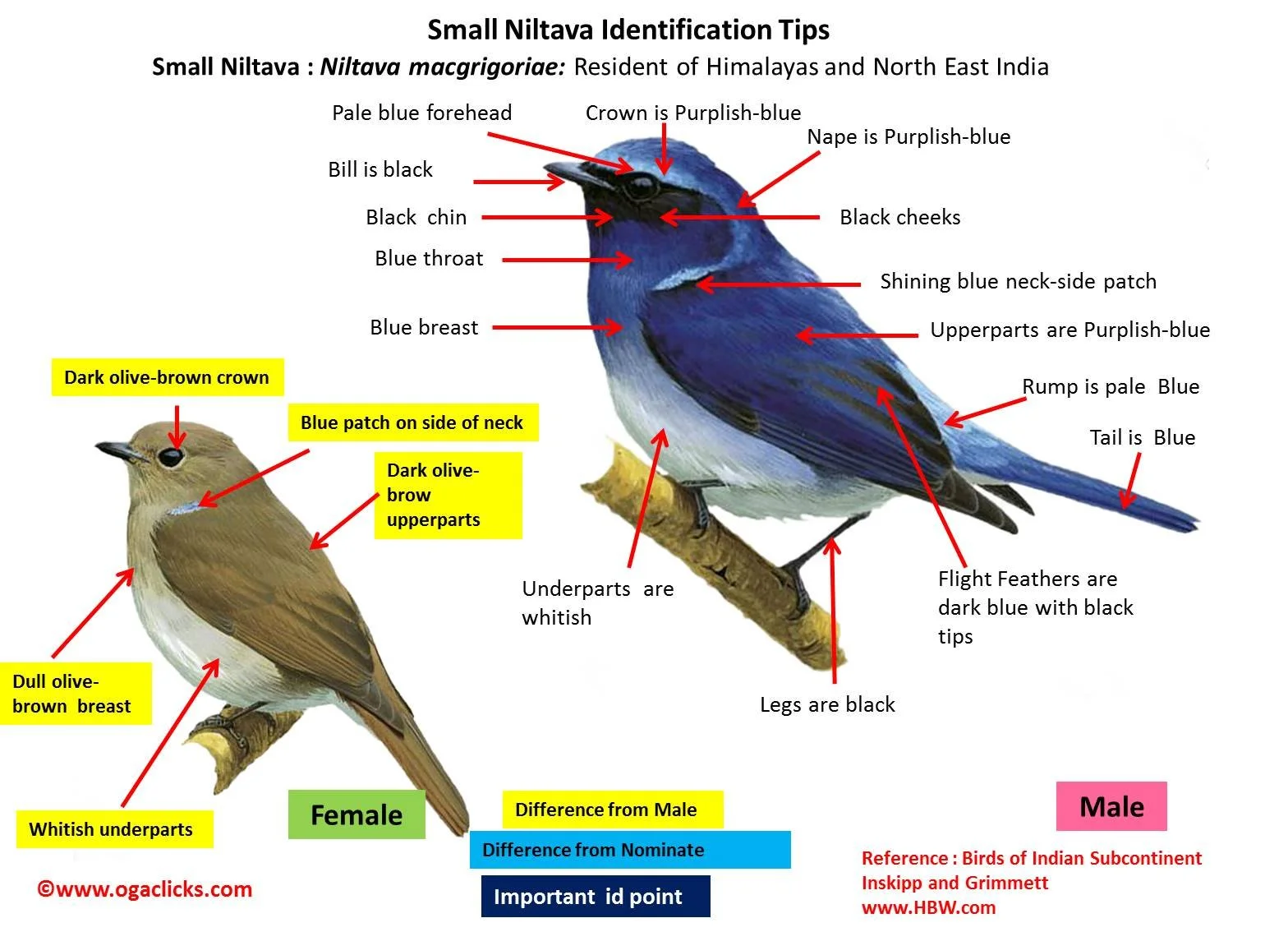
Small Niltava - Field Identification - Source: www.ogaclicks.com
The Small Niltava is found across the Indian subcontinent and Southeast Asia, with its range spanning Bangladesh, Bhutan, India, Laos, Myanmar, Nepal, Thailand, Tibet, and Vietnam. Only two subspecies are generally recognized: the nominate race (Niltava macgrigoriae macgrigoriae) and Niltava macgrigoriae signata, the latter of which is very similar but the male has a greyer belly to undertail coverts.
The species is a resident of subtropical or tropical moist montane forests, preferring edges, clearings, shrubberies, and bushes along streams or trails. They are typically found at elevations between 1,000 and 2,000 meters in the Himalayas, descending to lower elevations (down to 270m in Nepal) during the non-breeding season in an altitudinal migration pattern.
Small Niltavas are generally shy and inconspicuous, often found alone or in pairs. They are most active during the early morning and late afternoon/evening (partly crepuscular). They forage primarily in the lower to middle forest strata, actively sallying out from a low perch to catch insects mid-flight. Their diet consists mainly of small invertebrates (like flies) and some small fruits or berries. Their song is a thin, high-pitched, musical whistle, often described as a descending "wee-dee-dee" or a rising and falling "twee-twee-ee-twee".
While often solitary, Small Niltavas may associate with mixed-species feeding flocks, or "bird waves," particularly during the non-breeding season. These waves often include other small babblers and flycatchers, moving quickly through the forest undergrowth. The presence and calls of species like the Grey-cheeked Fulvetta often indicate an active bird wave in the area.
The breeding season for the Small Niltava is from March to August. The female builds a cup-shaped nest primarily of moss, well hidden in a natural hollow, stream bank, or among boulders. Both sexes share incubation duties for a period of about 12 days, producing a clutch of 3-5 eggs. Nests are known to be parasitized by cuckoos, including the Lesser Cuckoo and the Large Hawk-cuckoo. I have written about the very similar Common Hawk-Cuckoo.
The Small Niltava has an extremely large range and a seemingly stable population trend, leading to it being classified as Least Concern by the IUCN Red List. It is considered fairly common in most of its range, though it can be uncommon in places like Northwest Thailand.
It was a very pleasant morning with a nice breeze and beautiful diffused light. The conditions were perfect for photography and while we were photographing the Ultramarine Flycatcher, I noticed the Small Niltava foraging in a mimosa tree in the background. These are some of the photos of the Small Niltava I took that morning on the slopes of Doi AngKhang.
‡‡‡‡‡

Related Posts



The common hawk-cuckoo, popularly known as the brainfever bird, is a medium-sized cuckoo resident in the Indian subcontinent. It bears a close resemblance to the Shikra, even in its style of flying and landing on a perch. Males have ashy-gray upperparts, white underparts with rufous streaking and barring, a broadly barred tail, and a distinct yellow eye rim. Females and juveniles are browner with bolder streaking below. During their breeding season males produce a loud, repetitive three note call. Common Hawk-Cuckoos feed mainly on insects and are specialised feeders that can handle hairy caterpillars. The species is arboreal and rarely descends to the ground. Mainly a brood parasite of babblers. Found in gardens, groves, and deciduous and semi-evergreen forests.
Subscribe if you would like to continue reading the stories.
#wildartworks, #Canon, #Wildlife, #naturephotography, #earthcapture, #photo_pond, #earthpix, #naturyst, #conservationphotography, #yesbbcearth, #indian_wildlifes, #indianwildlifeofficial, #wildlifeonearth, #bbcearth, #natgeowild, #natgeoindia, #Manjeera, #ManjeeraWildlifeSanctuary, #Ananthagiri, #AnanthagiriForestRange, #commonhawkcuckoo, #hawkcuckoo, #brainfeverbird, #cuckoo, #telanganabirds,