
Indian Blackbird
Turdus simillimus nigropileus
Nallamala Hills, Amrabad Tiger Reserve
The morning mist in the Nallamala Hills does not merely drift; it clings to the ancient teak and bamboo, weaving a silver shroud over the rugged valleys of the Amrabad Tiger Reserve. In this quiet theater of the Eastern Ghats, a melody begins—a series of clear, fluting whistles that seem to mimic the very spirit of the forest. This is the call of the Indian Blackbird (Turdus simillimus nigropileus), a bird that carries the essence of India’s wild highlands in its soot-coloured wings.
Located in the central stretch of the Deccan Plateau, Telangana has sub-tropical climate and the terrain consists mostly of hills, mountain ranges, and thick dense forests covering an area of 27,292 km². The annual rainfall ranges between 1,100 mm to 1,200 mm and the annual temperature varies from 15 C to 45 C. The State is drained by a number of rivers which include the Godavari and the Krishna.
Telangana is endowed with rich diversity of flora and fauna (Species Directory). It has dense teak forests on the northern part along the banks of river Godavari and to the south along the banks of the Krishna. As per the Champion & Seth Classification of Forest Types (1968), the forests in Telangana belong to three Forest Type groups, which are further divided into 12 Forest Types. The State Government’s massive greening programme, 'Telangana Ku Harita Haram', aims at achieving the twin objectives of increasing the forest cover and reduce pressure on the existing forest resources, through massive community participation by Vana Samrakshna Samithis (VSS) and Eco-Development Committees (EDCs) in Protected Areas and Watershed Development Committees in the Watershed areas. Recorded Forest Area (RFA) in the State is 26,904 km² of which 20,353 km² is Reserved Forest, 5,939 km² is Protected Forest and 612 km² is Unclassed Forests.
Three National Parks and nine Wildlife Sanctuaries constitute the Protected Area network of the State covering 5.08% of its geographical area and our focus area today is within the north western fringe of the Nallamalla forest - the Amrabad Tiger Reserve - India's second-largest tiger reserve by core area (2,611 km²). Known for its rugged terrain, deep gorges, and dry deciduous forests, it hosts Bengal tigers, leopards, and over 300 bird species. The river Krishna flows through it, supporting rich biodiversity and the indigenous Chenchu tribes.
Mannanur Forest Range & the Uma Maheshwaram environs
The area surrounding the Uma Maheshwaram Temple (perched at an elevation of approximately 500m) is a unique microclimate within the Mannanur Forest Range. This is a temple dedicated to the Hindu god Shiva located around 100 kms from Hyderabad on the Hyderabad-Srisailam highway, about 4 kms from the village of Rangapur, Achampet. Uma Maheshwaram is the northern gateway of Srisailam — one of the jyotirlingas, on a hill surrounded by high trees. Nearby hills shield the Uma Maheshwaram temple and the 500-metre stretch to PapaNasanam from sunlight for most of the day, maintaining a temperature lower than the surroundings through out the year. The area abounds in flora and fauna (Species Directory).
The "Kinnerasani" Cliffside
The temple is built into a massive rock face. The surrounding vertical cliffs provide nesting sites for raptors and are often shrouded in mist during the monsoon, creating a humid pocket that supports lusher vegetation than the parched plains below. A key feature is the "Papanasanam," a perennial spring that trickles through the rocks year-round. This constant water source makes the temple vicinity a magnet for wildlife, especially during the scorching summer months (March–May). The flora is dominated by Teak (Tectona grandis), Anogeissus latifolia (Tiruman), and Boswellia serrata (Anduk). In the wetter ravines near the temple, you’ll find giant Ficus trees and lush ferns that contrast with the scrubbier bamboo thickets of the lower slopes.
The high verticality and varied canopy of Mannanur hosts a staggering array of life. This is a prime spot for the elusive and Vulnerable Yellow-throated Bulbul (found among the rocky boulders) and the Painted Spurfowl. The cliffs are home to the Shaheen Falcon and Critically Endangered Indian Vultures. The forest floor is patrolled by Leopards, Sloth Bears, and ungulates like Chital, Sambhar & the elusive Chinkara. The rocky terrain is particularly suited for the Four-horned Antelope (Chousingha), while Langurs are ubiquitous near the temple complex. The leaf litter hides the Indian Rock Python and various pit vipers. The area is also a "butterfly hotspot," particularly after the first rains when Common Mormons and Blue Tigers congregate near the forest streams. The Nallamalas are known for medicinal plants like Pterocarpus santalinus (Red Sanders) and various rare orchids that bloom briefly during the wet season. The air here is noticeably cooler than in Mannanur village, and the soundscape is a constant layer of cicadas and the echoing calls of the Malabar Whistling Thrush in the deeper valleys.
There are also numerous Chenchu sacred groves in the vicinity. These “Sacred Groves”, hidden "islands" of dense, untouched vegetation that serve as the spiritual anchors for the Chenchus in their small, bee-hive shaped, traditional settlements, known as pentas. These groves are more than just clusters of old-growth trees; they are the spiritual sanctuaries of the tribe, acting as living temples where deities like Garelamai Sama, the goddess of the forest, are believed to dwell. The tribe, which has 26 distinct gotras (clans), performs rituals for deities like Garelamai Sama and Gangamma (the Water Goddess), often during the month of Shravan.
Because these patches of land are considered the residence of the divine, hunting and logging are strictly forbidden within their boundaries. This traditional belief system has created accidental but vital biodiversity hotspots, preserving rare flora and fauna that thrive under the tribe’s spiritual protection. The Chenchus live by a strict ethos of reciprocity—taking only what is necessary, such as leaving honey larvae behind to ensure the bees return, maintaining a perfect balance between man and nature. To step into a Chenchu Sacred Grove is to enter a space where human law bows to divine order. No axe is ever raised here & even the collection of fallen wood is often forbidden, ensuring these pockets remain pristine refuges for rare medicinal plants and the very wildlife the reserve seeks to protect.
Read more about the Chenchu Sacred Groves.
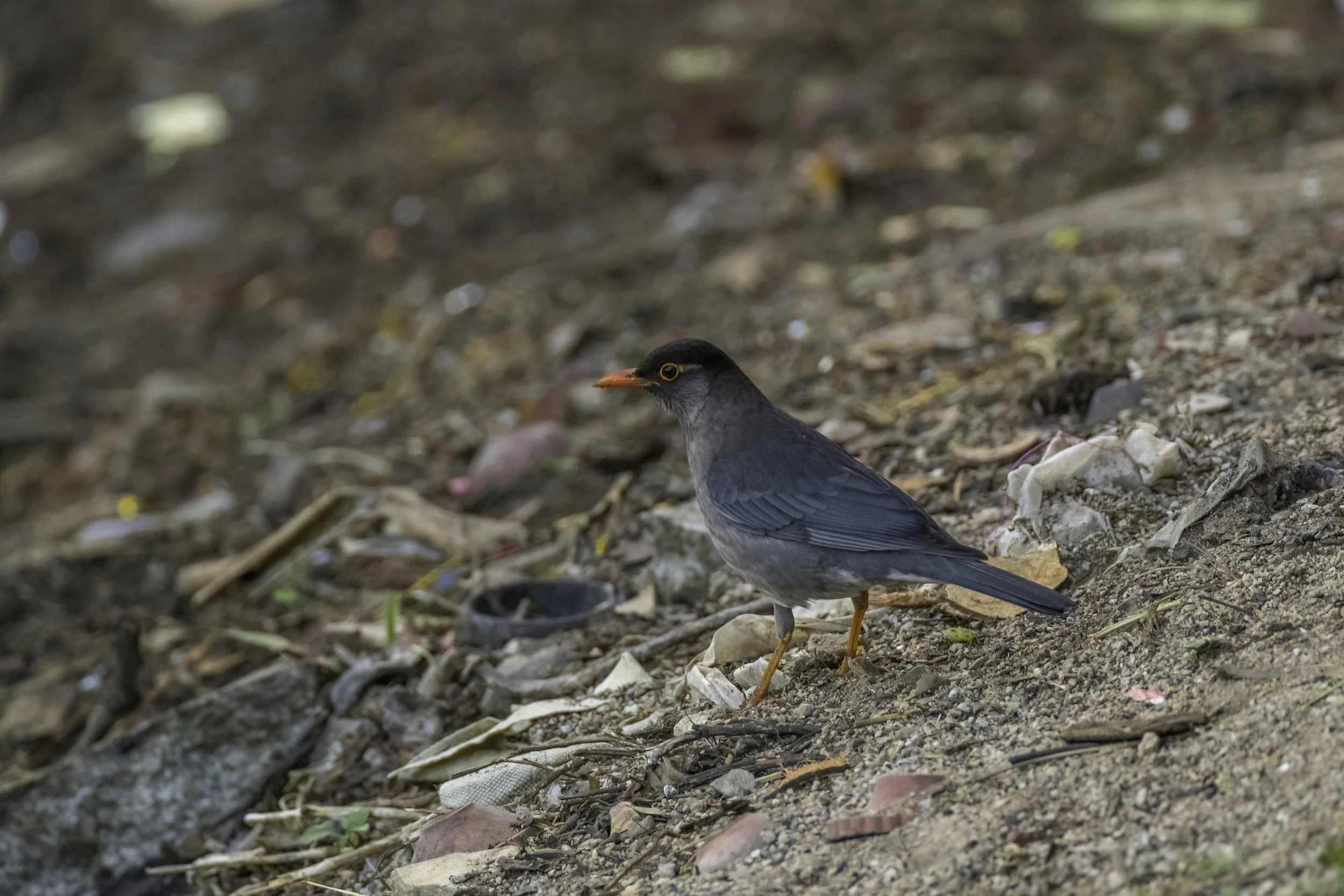
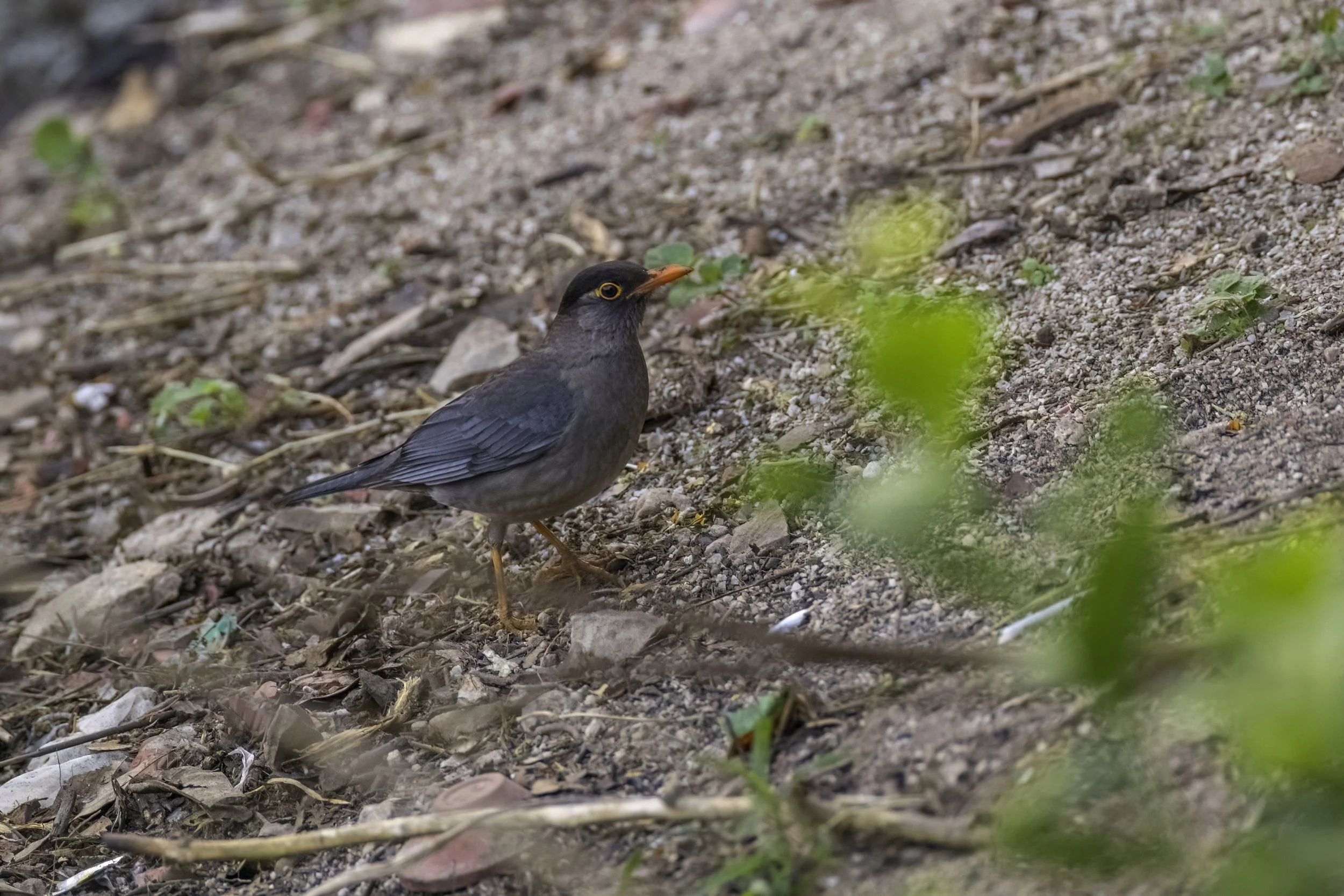
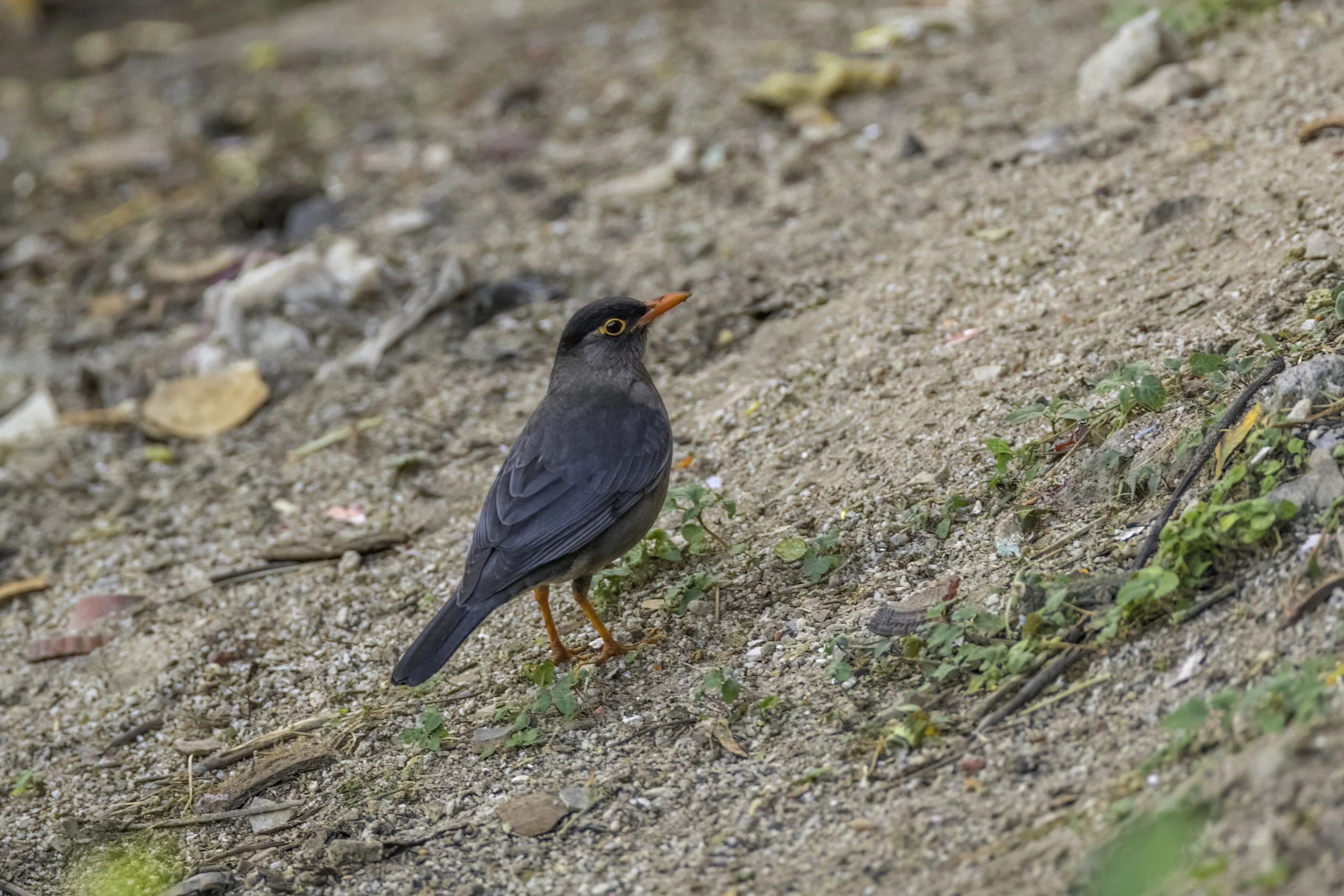
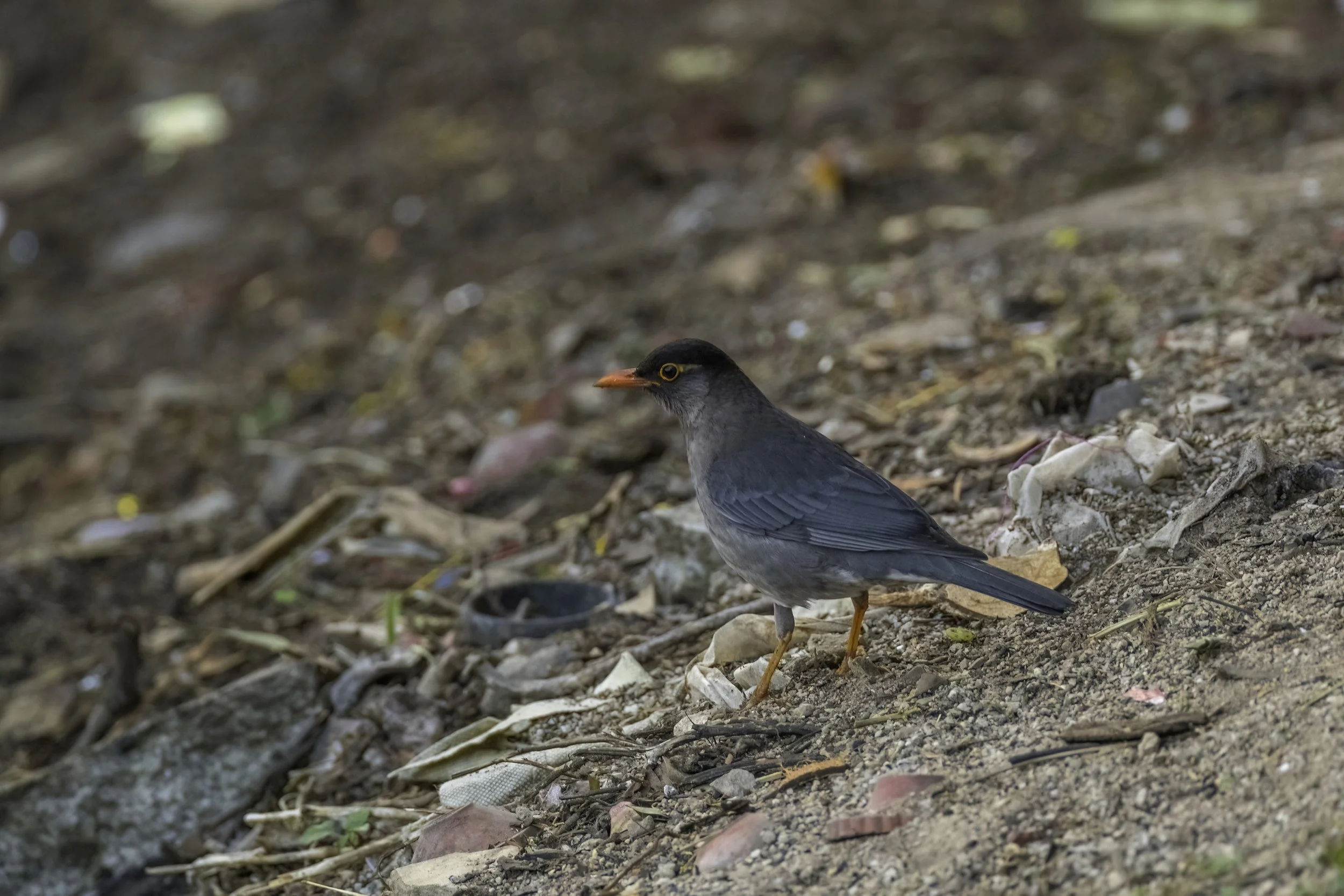
Indian Blackbird
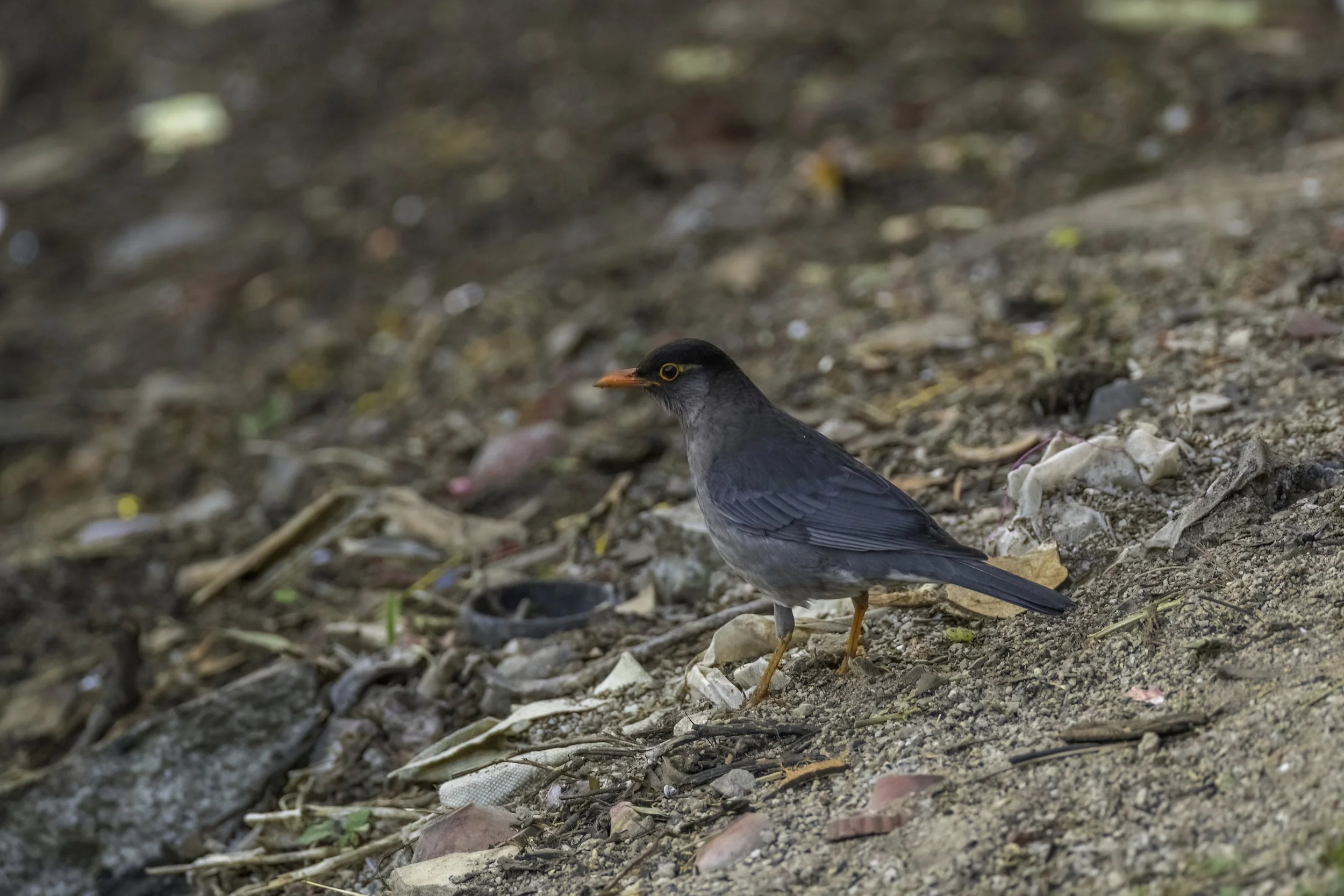
To the untrained eye, the Indian Blackbird might seem like a simple creature of darkness, but a closer look reveals a masterclass in subtle shading. A medium-sized thrush, it typically measures between 19 and 22 centimetres in length. It is built for the forest floor—robust yet agile, weighing between 60 and 94 grams.
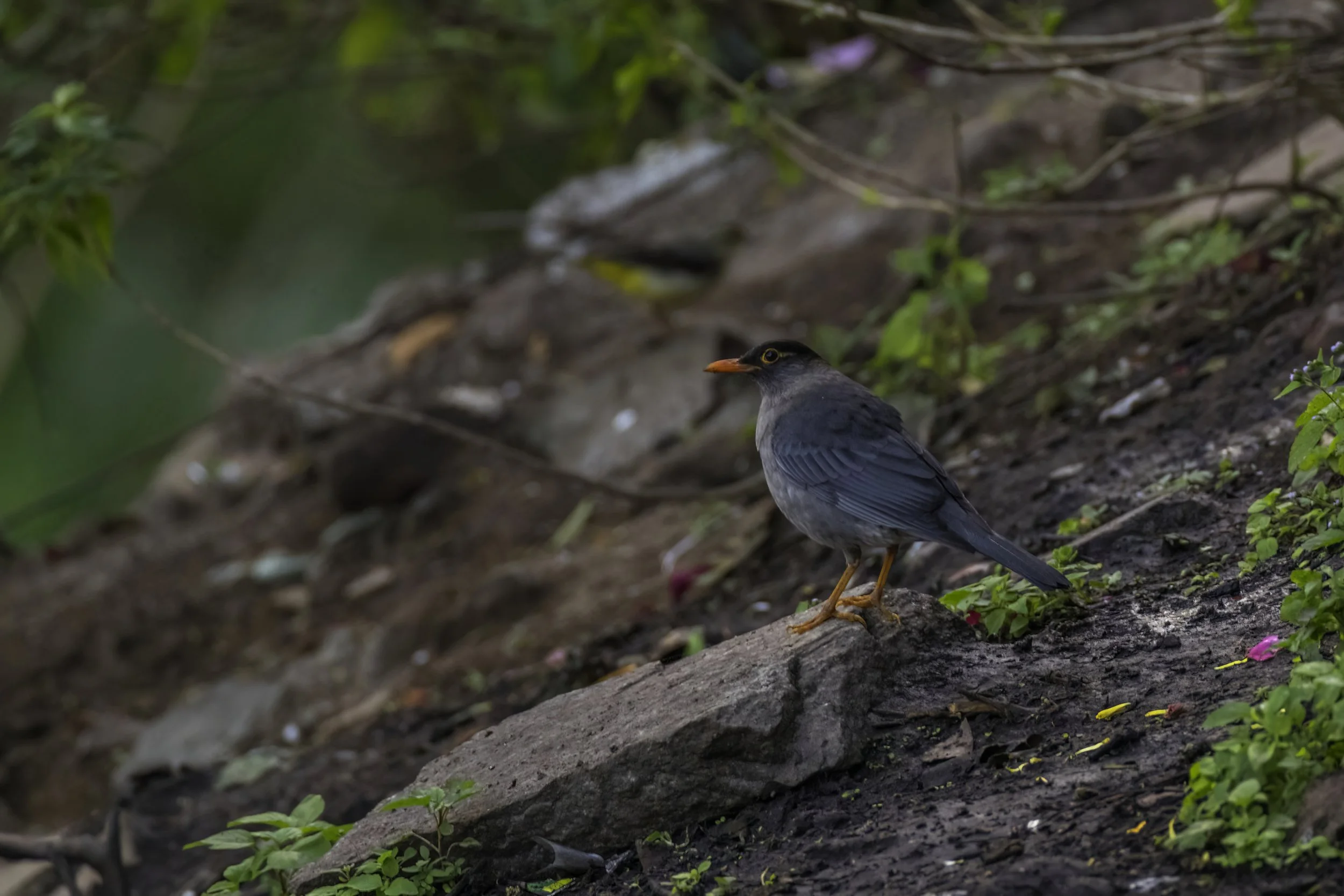
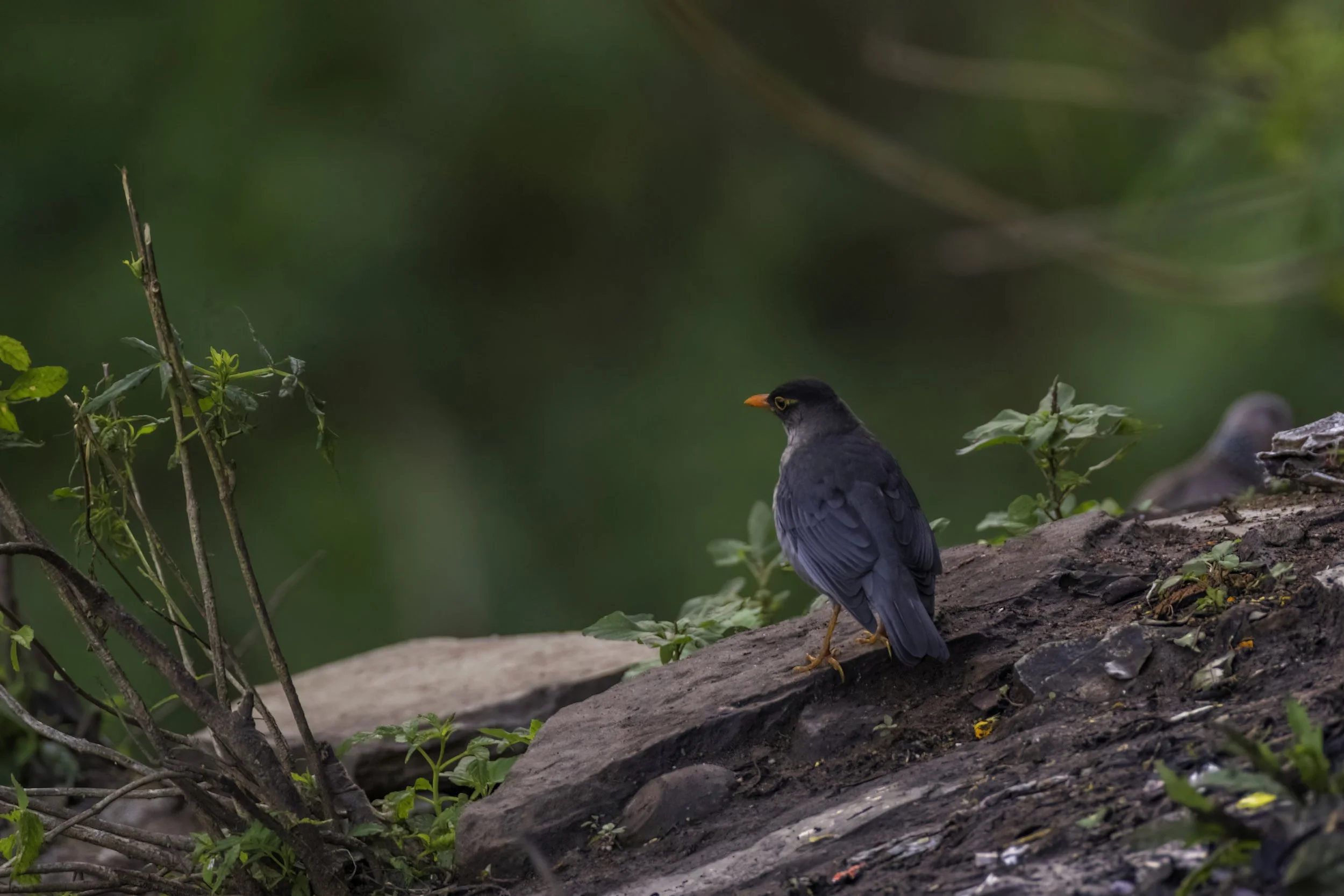
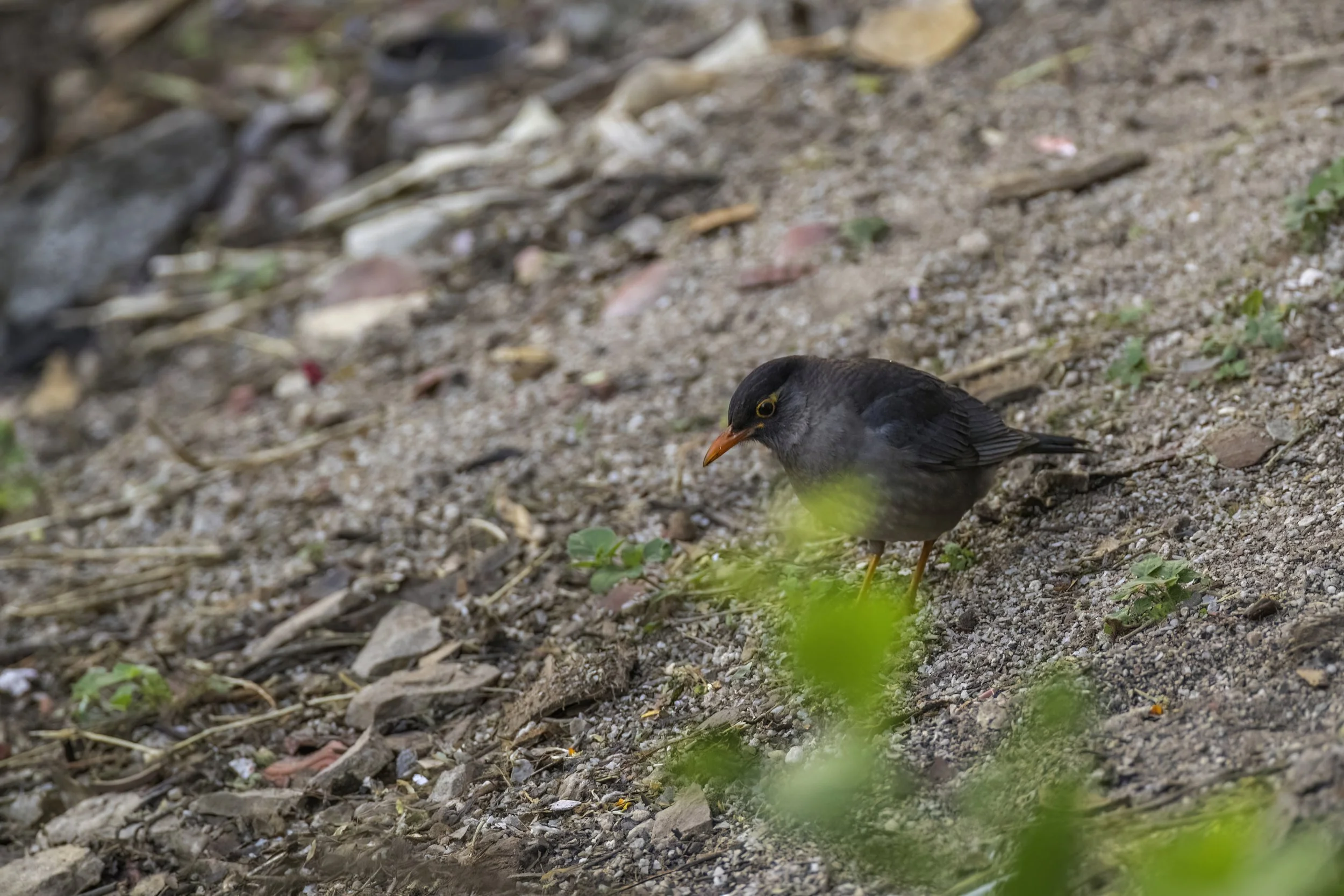
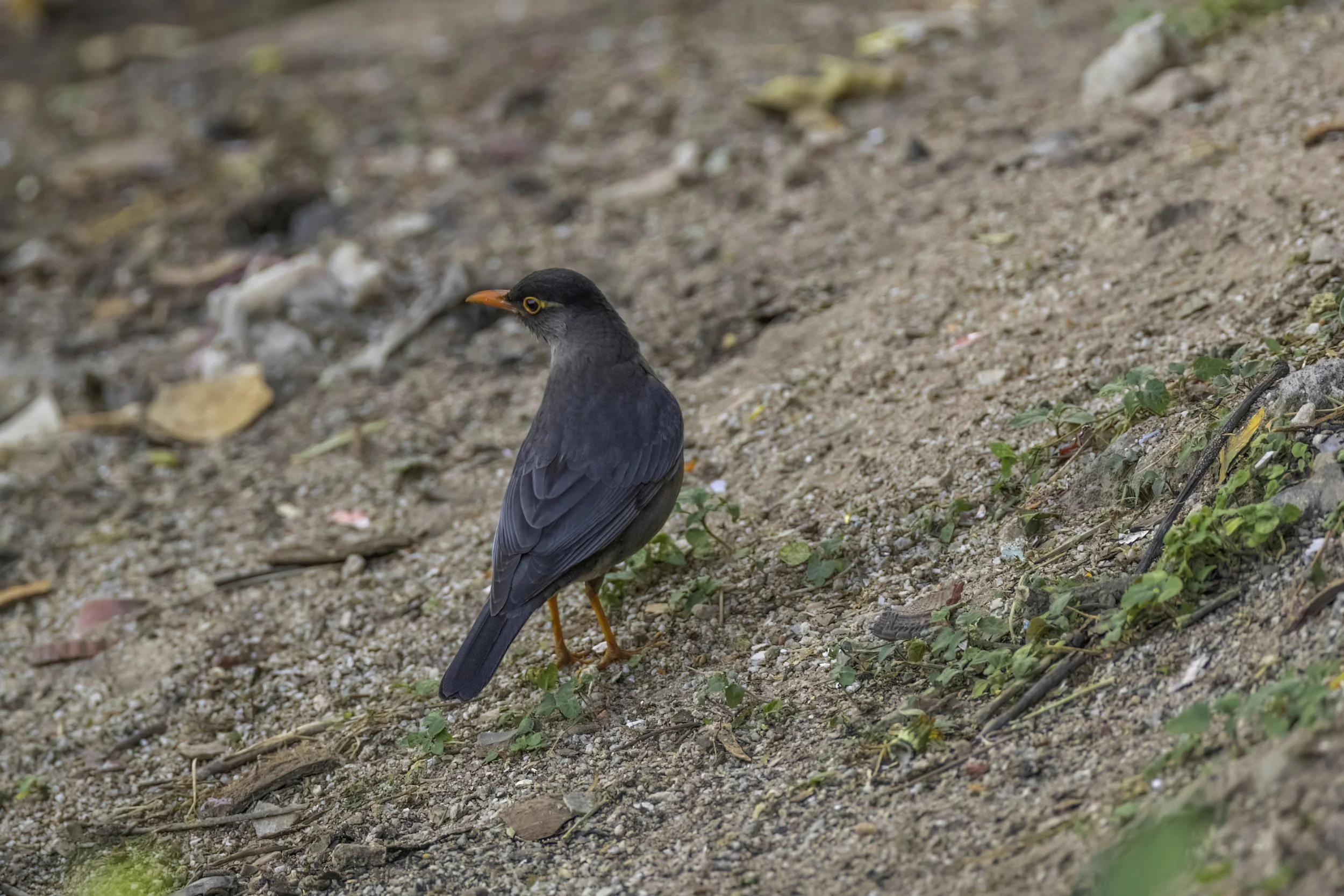
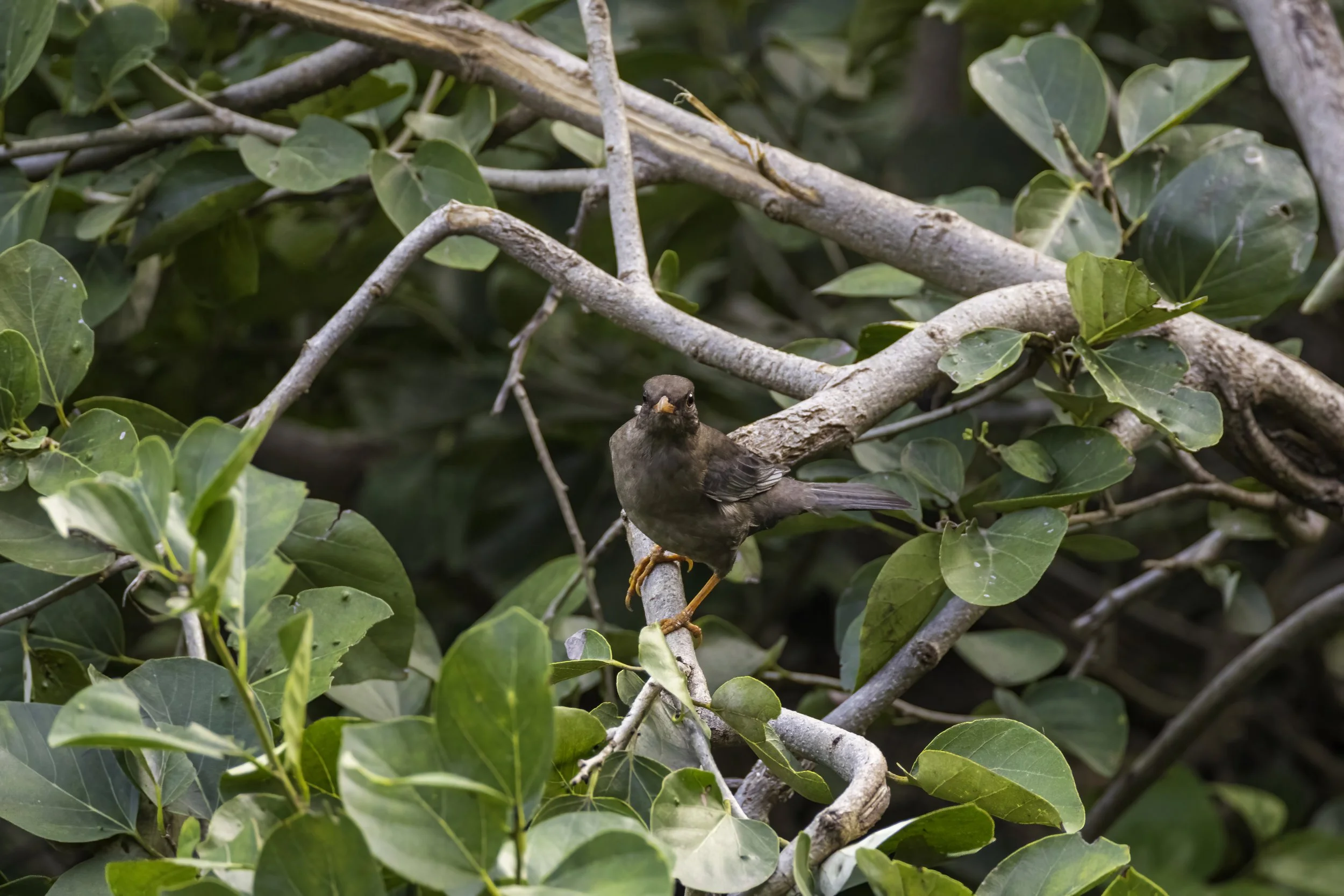
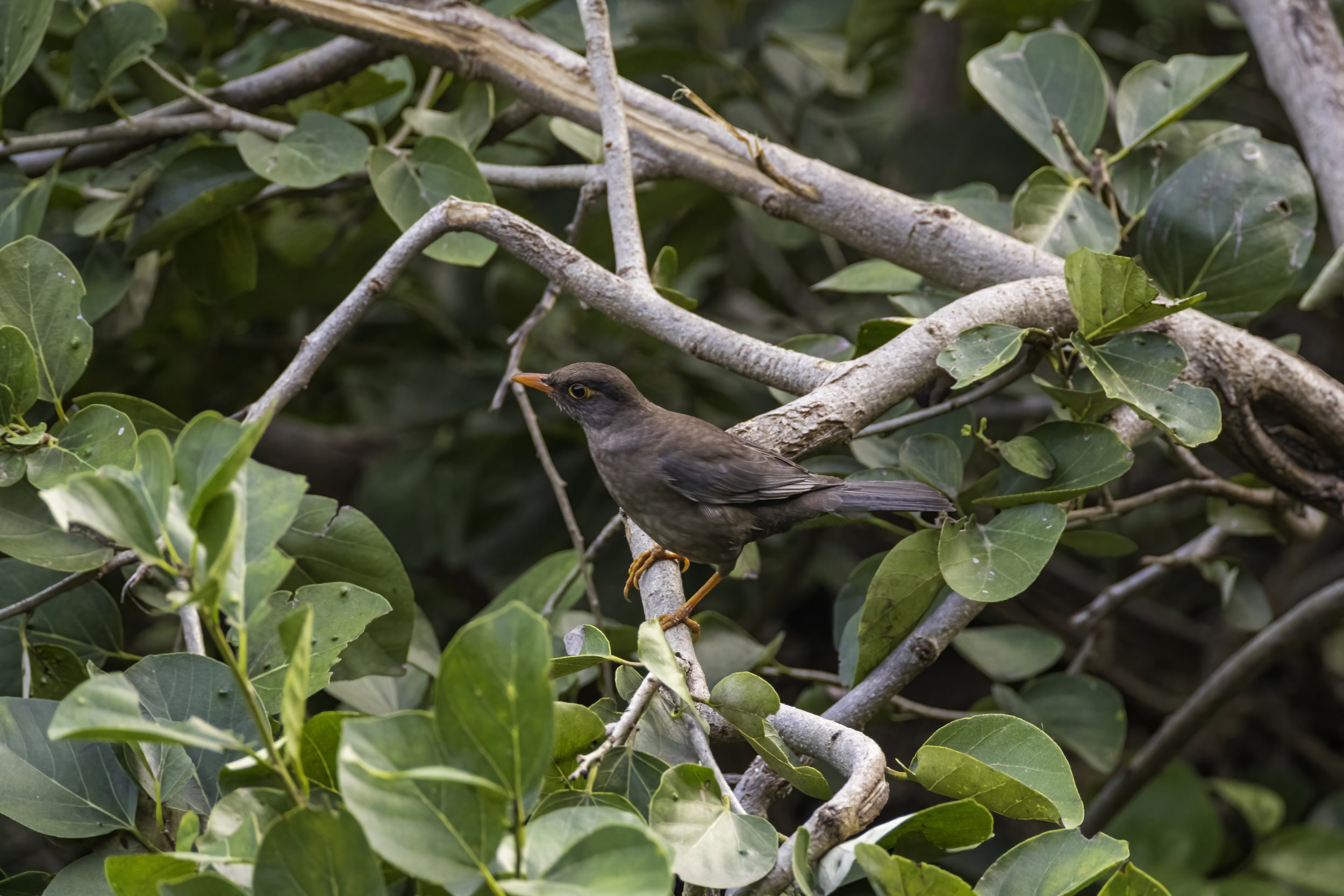
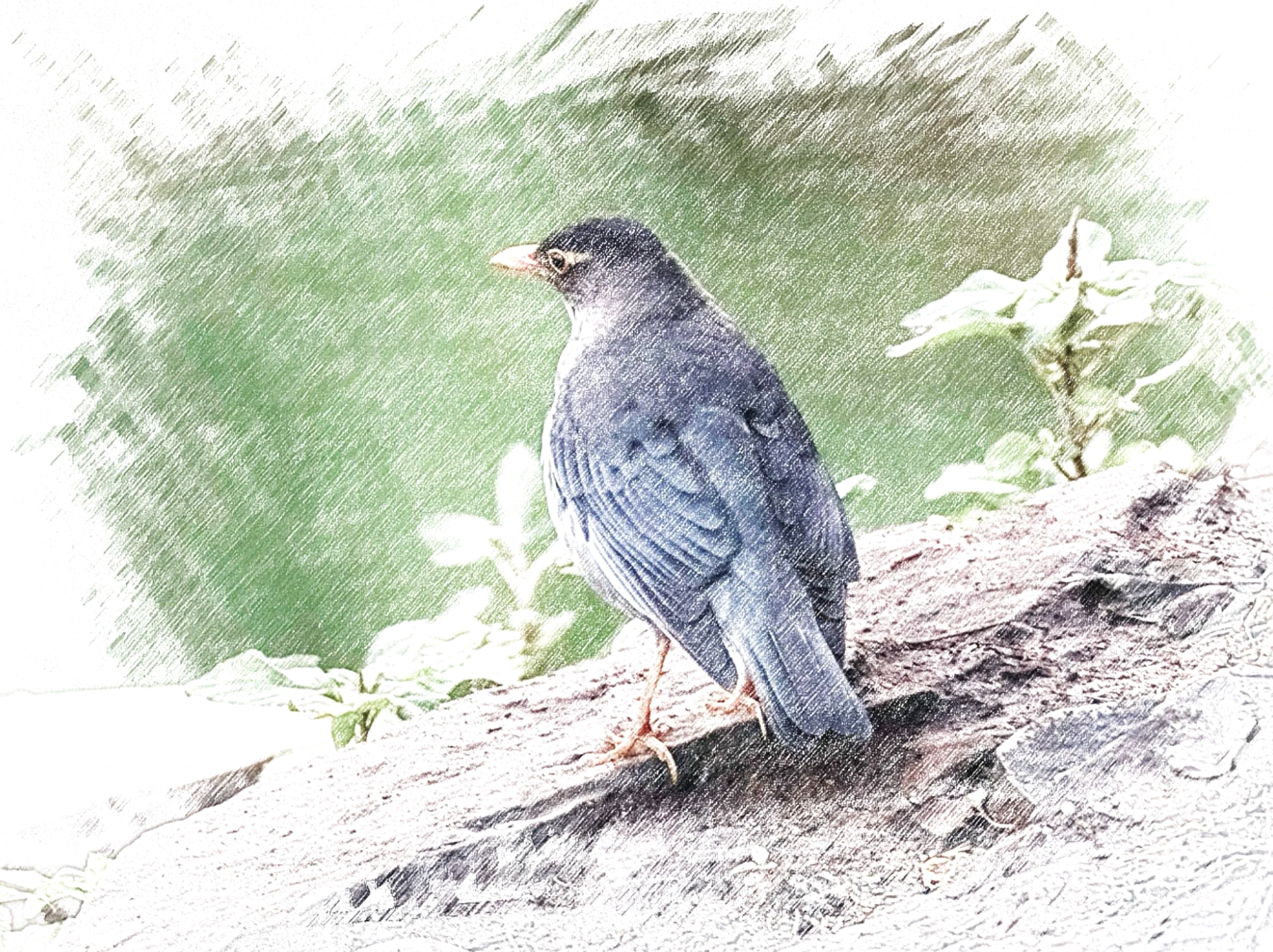
The male is a striking figure of "brownish slate-grey," often appearing almost black in the dim light of the canopy. Its most defining feature is a dark, blackish cap that contrasts with its slightly paler body, a characteristic most prominent in the Turdus simillimus nigropileus subspecies found in central and western India. Against this dark canvas, its bright orange-yellow bill and matching eye-ring glow like embers. The female, by contrast, is a study in camouflage, wearing a coat of mid-brown that fades to a paler hue on her underparts, allowing her to vanish into the leaf litter.
Unlike its famous cousin, the Common Blackbird (Turdus merula) of Europe, the Indian Blackbird is a specialist of the subcontinent and Sri Lanka. While the European bird is a familiar sight in urban gardens from London to Berlin, the Indian species is more reclusive, preferring the moist deciduous and evergreen forests of India’s hill ranges. In Telangana, it finds sanctuary in the state’s two largest protected areas. In the Amrabad Tiger Reserve, it haunts the northern reaches of the Nallamala Hills, where the diverse habitat of waterfalls and deep ravines provides the perfect stage for its song. Further north, in the Kawal Tiger Reserve, it can be found among the teak-dominated landscapes near the Godavari River. While it is considered a resident in these hills, it is often described as uncommon or local, requiring patience to spot in the dense undergrowth.
The distinction between the Indian Blackbird and the Common Blackbird is more than just geography. The Indian species is notably smaller and possesses a broader, more teardrop-shaped eye-ring. Its voice, too, is distinct—a richer, more varied song that lacks some of the repetitive phrases of the European variety. Within the subcontinent, it is often compared to the Nilgiri Blackbird (Turdus simillimus simillimus). While both belong to the same species complex, the Nilgiri variant is a resident of the high-altitude Shola forests of the Western Ghats. In the Nallamala Hills of Telangana, the population is often attributed to the nigropileus race, which is known for its more distinct black cap compared to the uniform slate-brown of southern races. Four subspecies recognized.
EBIRD GROUP (POLYTYPIC)
Indian Blackbird (Indian) Turdus simillimus simillimus/bourdilloni
Turdus simillimus simillimus: Distributed in South West India (Nilgiris and surrounding hills).
Turdus simillimus bourdilloni: Distributed in the hills of South India (South of the Palghat Gap).
EBIRD GROUP (MONOTYPIC)
Indian Blackbird (Black-capped) Turdus simillimus nigropileus: Distributed in western, central, and southeastern India (mainly in the northern Western Ghats, Satpuras, and Eastern Ghats)
EBIRD GROUP (MONOTYPIC)
Indian Blackbird (Sri Lanka) Turdus simillimus kinnisii: Distributed in Sri Lanka.
The Indian Blackbird is primarily a resident or altitudinal migrant. When the monsoon fades and the mountain air turns sharp, populations from higher elevations descend to the plains and lower foothills to find food. This seasonal movement is not a grand cross-continental journey but a tactical shift to warmer, fruit-rich woodlands. They are ground-feeders by nature, often seen hopping through leaf litter with a "start-stop-start" rhythm, flicking aside debris to find insects, earthworms, and fallen berries. However, they are sensitive to change. Habitat fragmentation and the shrinking of forest edges in India’s hill stations have altered their traditional breeding grounds, making them increasingly dependent on protected reserves like Kawal and Amrabad.
Capturing the Indian Blackbird on camera in the Nallamala Hills is an exercise in auditory tracking. You hear them long before you see them—a liquid, fluting trill that echoes through the "Pentas" (small tribal settlements) of the Chenchu people. To photograph them, one must sit still in the shade of a mahua tree, waiting for that moment when a male hops into a sun-dappled patch of the forest floor. The challenge is the "black-on-black" detail; getting the camera to resolve the texture of the charcoal feathers while not overexposing the brilliant orange of the bill. When the shutter finally clicks, you don't just capture a bird; you capture a piece of the Nallamala’s living shadow—a reclusive singer that remains one of India’s most understated avian treasures.
‡‡‡‡‡

Related Posts
The orange-headed thrush is a resident bird in the thrush family. It is common in well-wooded areas of the Indian Subcontinent & Southeast Asia. The species shows a preference for shady damp areas, and like many Geokichla and Zoothera thrushes, can be quite secretive.
#wildartworks, #Canon, #Bird, #Birdinginthewild, #BirdWatching, #Wildlife, #WildBirds, #naturephotography, #your_best_birds, #planetbirds, #earthcapture, #photo_pond, #earthpix, #naturyst, #conservationphotography, #yesbbcearth, #wildlifeonearth, #bbcearth, #natgeowild, #natgeoindia, #india, #telanganabirds, #ananthagiri, #ananthagiriforestrange, #vikarabad, #orangeheadedthrush, #thrush, @wildtelangana