
Ashy Drongo
Dicrurus leucophaeus
A bird that carried the essence of woodsmoke in its feathers - Amrabad Tiger Reserve
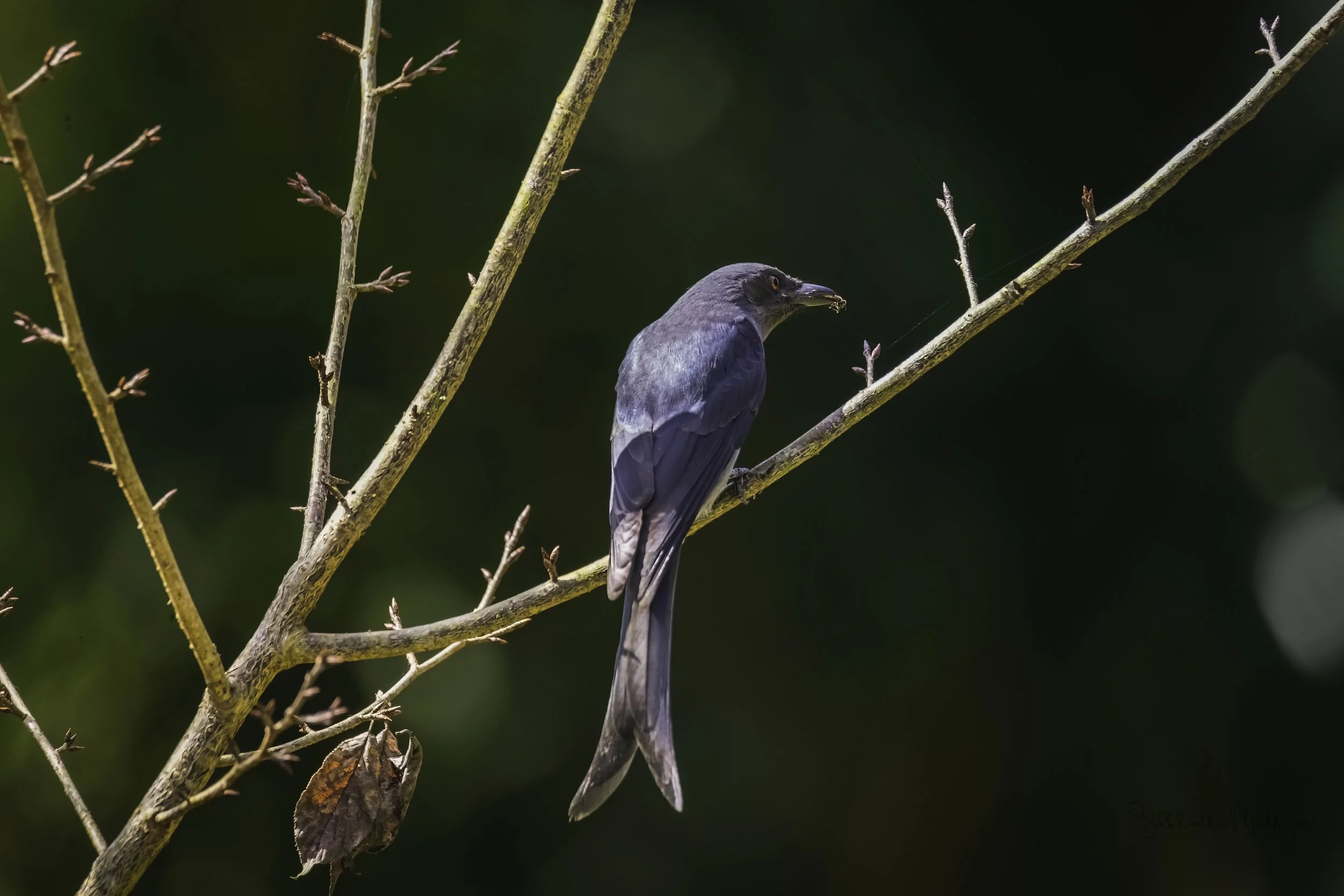
The morning mist hung heavy over the Nallamala Hills as I stepped into the core of the Amrabad Tiger Reserve in Telangana. While most visitors scan the undergrowth for the flick of a tiger’s tail or the spotted hide of a leopard, I had my binoculars and cameras trained higher. I was searching for a master of the air, a bird that carries the essence of woodsmoke in its feathers: the Ashy Drongo (Dicrurus leucophaeus).
Telangana's landscape is dotted with ideal habitats, from the urban oases of Ameenpur Lake, Osman Sagar, HImayat Sagar, Kistareddypet Lake near Hyderabad to the sprawling Singur Dam, the Sri Ram Sagar Reservoir and the Dindi Reservoir. Renowned for its extensive natural resources, breathtaking scenery, and rich cultural legacy Telangana is the eleventh largest state in India situated on the south-central stretch of the Indian peninsula on the high Deccan Plateau. It is the twelfth-most populated state in India with a geographical area of 112,077 km² of which 21,214 km² is forest cover. The dry deciduous forests ecoregion of the central Deccan Plateau covers much of the state, including Hyderabad. The characteristic vegetation is woodlands of Hardwickia binata and Albizia amara. Over 80% of the original forest cover has been cleared for agriculture, timber harvesting, or cattle grazing, but large blocks of forest can be found in the Amrabad Tiger Reserve and elsewhere. The more humid Eastern Highlands moist deciduous forests cover the Eastern Ghats in the eastern part of the state. The Central Deccan forests have an upper canopy at 15–25 meters, and an understory at 10–15 meters, with little undergrowth.
The dry sub-humid zone or Dichanthium-cenchrus-lasitrrus type of grasslands are prevalent here and cover almost the entirety of peninsular India except the Nilgiris. One sees thorny bushes like the Acacia catechu or Khair as it is known in Hindi, Mimosa, Zizyphus (Ber) and sometimes the fleshy Euphorbia, along with low trees of Anogeissus letifolia or Axle Wood, Soymida febrifuga - the Indian Redwood - and other deciduous species. Sehima (grass) which is more prevalent on gravel is about 27% of the cover and Dichanthium(grass) which flourishes on level soil is almost 80% of the coverage.
Nallamala Hills & forest range
The Nallamala Hills and forest range is a significant geographical feature within the Eastern Ghats of southern India, located in Telangana and stretching into Andhra Pradesh. This ~430 km long range, parallel to the Coromandel Coast, features rugged hills and deep valleys and hosts one of the largest contiguous forest areas in the region, encompassing a significant portion of the Nagarjuna Sagar Srisailam Tiger Reserve. The rugged, sparsely populated hills are composed for the most part of jumbled quartzites and slates and exemplify the mountain scenery of the Eastern Ghats. The range is known for its rich biodiversity, eco-tourism opportunities, and important religious sites like the Srisailam temple. It is bounded by the Krishna River to the north and the Pennar River to the south. The region includes important religious sites like the Srisailam Temple, one of the twelve Jyotirlingas. The Nallamala region has faced threats from proposed uranium mining projects, which would jeopardize the Tiger Reserve and the Chenchu's traditional way of life. Organisations like HYTICOS and local tribes have actively campaigned against these projects to protect the delicate ecosystem.
In the Nallamalla Hills and forest range the predominant vegetation is dry deciduous forest, with species such as Terminalia (తెల్ల మద్ది, అర్జున, ఎర్రమద్ది), Hardwickia (ఏపీ, నరేపీ), and Pterocarpus (ఏగిస, పెద్దగి and ఎర్ర చందనం). The forest also has a variety of medicinal plants. The forest is home to various mammals like Tigers, Leopards, Sloth Bears, Wild Boar, Sambhar, Blackbucks, and Pangolins. A variety of birds, including rare and migratory species, inhabit the sanctuary. Read about some of the species here. It is also host to diverse reptile species, including the King Cobra and Indian Rock Python and the forest is known for unique spider species like the critically endangered Gooty Sapphire Ornamental Tarantula (Poecilotheria metallica). The Chenchus, a forest-dwelling tribe, are the indigenous inhabitants of the Nallamala forest. They traditionally live a semi-nomadic, hunter-gatherer lifestyle and have remained largely cut off from modern society. The Chenchus have a unique, symbiotic relationship with the forest and play a key role in its conservation.
Uma Maheshwaram is the northern gateway to Srisailam — one of the jyotirlingas, on a hill surrounded by high trees. The Uma Maheshwaram temple is dedicated to the Hindu god Shiva located in the Nallamala Forest around 100 km from Hyderabad on the Hyderabad-Srisailam highway, about 4 kms from the village of Rangapur, Achampet. Nearby hills shield the temple and the 500-metre stretch to PapaNasanam (a mysterious spring of unknown source from which water can be drawn continuously through the year) from sunlight for most of the day, maintaining a temperature lower than the surroundings during the entire year. The area abounds in flora and fauna like the beautiful and Vulnerable Yellow-throated Bulbul.
‡‡‡‡‡
For a print of the beautiful wildlife from my various sojourns click on the button below to read my process and order a limited edition canvas from the catalog.
Ashy Drongo
The Ashy Drongo is a traveler. Unlike its cousin, the Black Drongo, which is a permanent fixture of our sun-scorched plains and telegraph wires, the Ashy Drongo is a bird of the woods. In India, it is a partial migrant. Many populations breed in the Himalayas and move south to the peninsula during the winter months.
Across Telangana, Amrabad serves as a vital wintering ground. The reserve’s undulating terrain, characterized by southern dry deciduous forests and teak-laden valleys, provides the perfect vertical structure the Ashy Drongo loves. It isn't just a local resident; it is a global citizen. Beyond the Indian subcontinent, this species stretches across Southeast Asia. One of the most fascinating places to witness them is in the montane forests of North Thailand, such as Doi Inthanon. In those high-altitude evergreen forests, the Ashy Drongos are often more permanent, darting through the moss-covered oaks in a landscape that feels worlds away from the heat of Telangana, yet linked by the wingbeats of this single species.
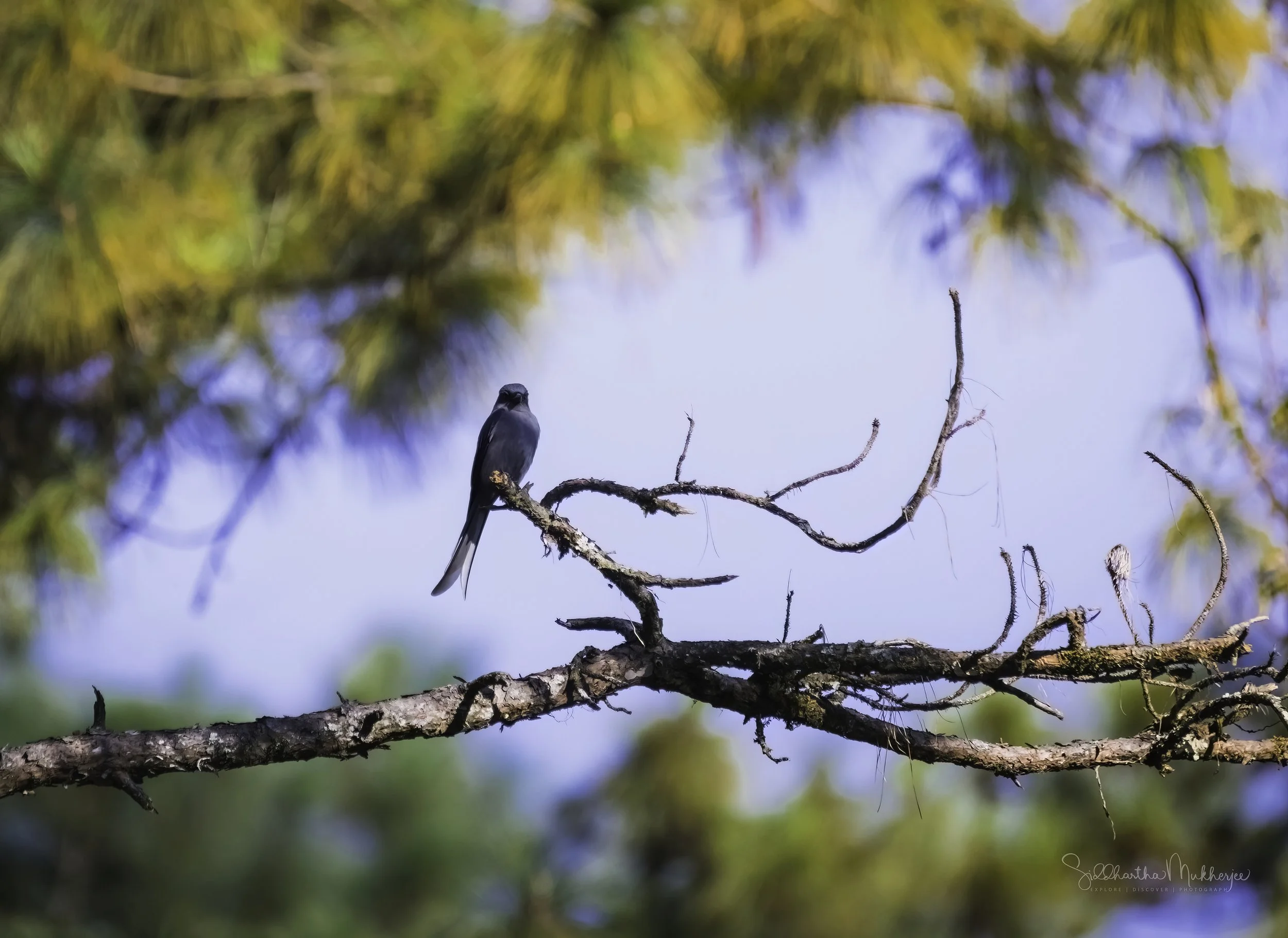
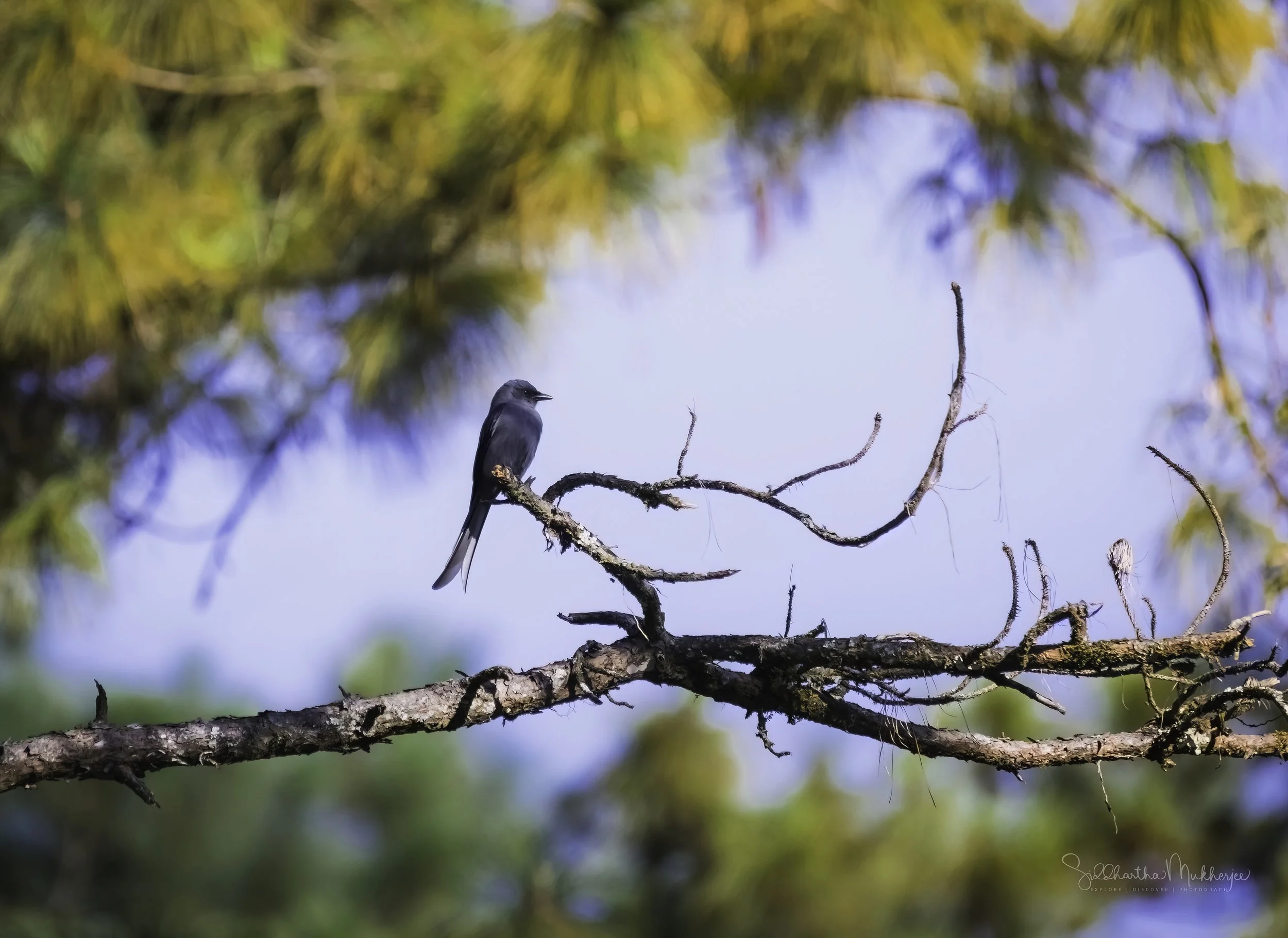
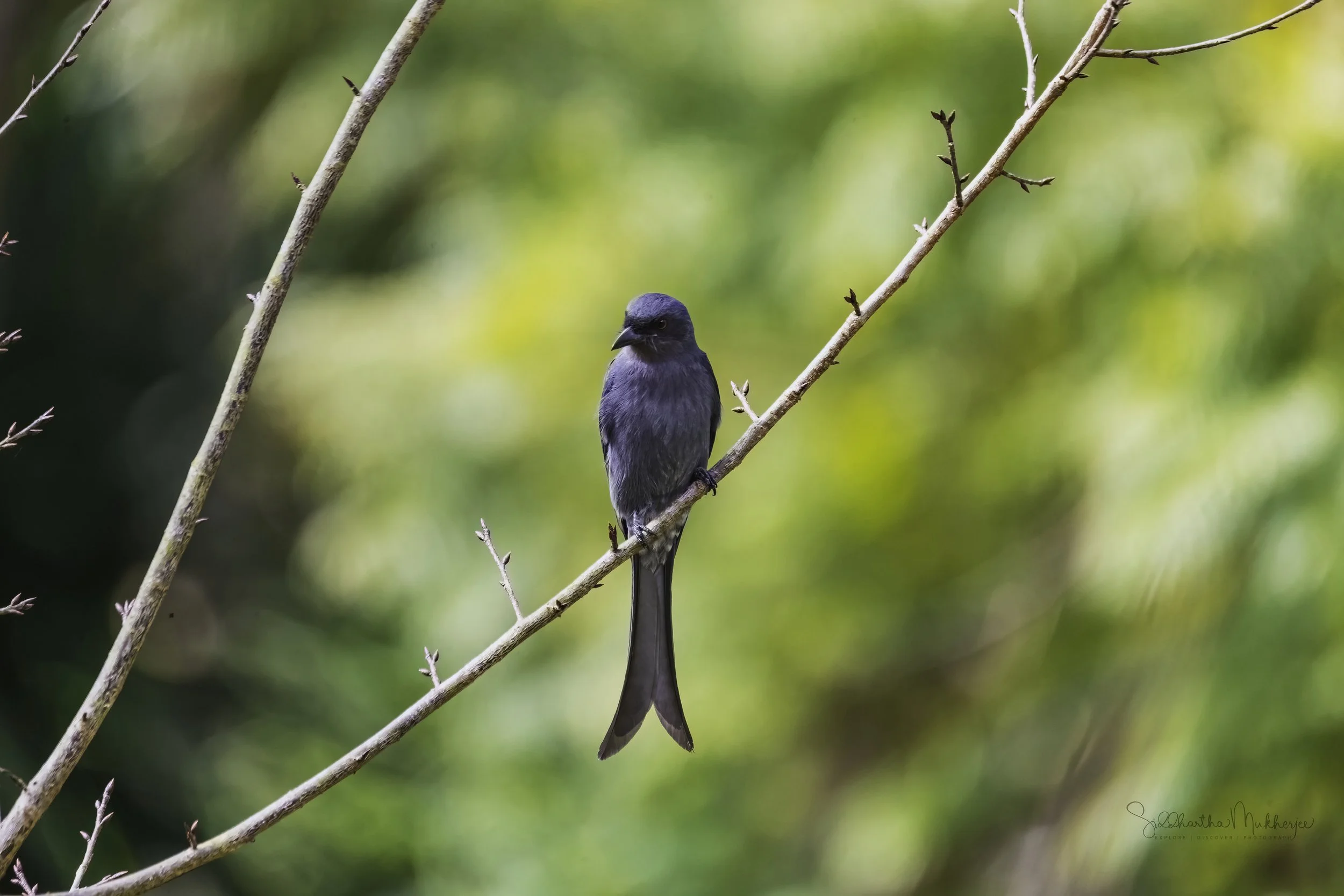
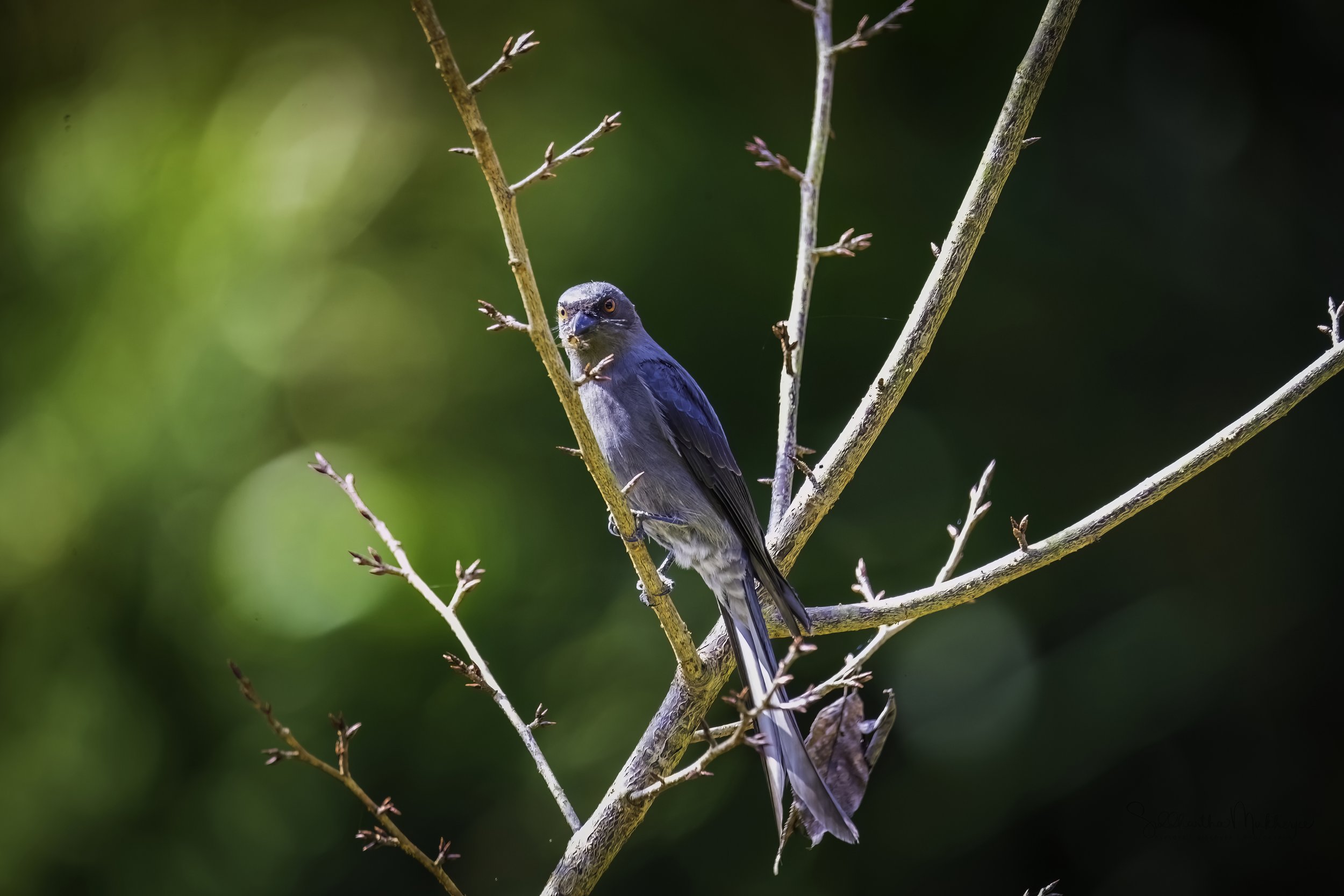
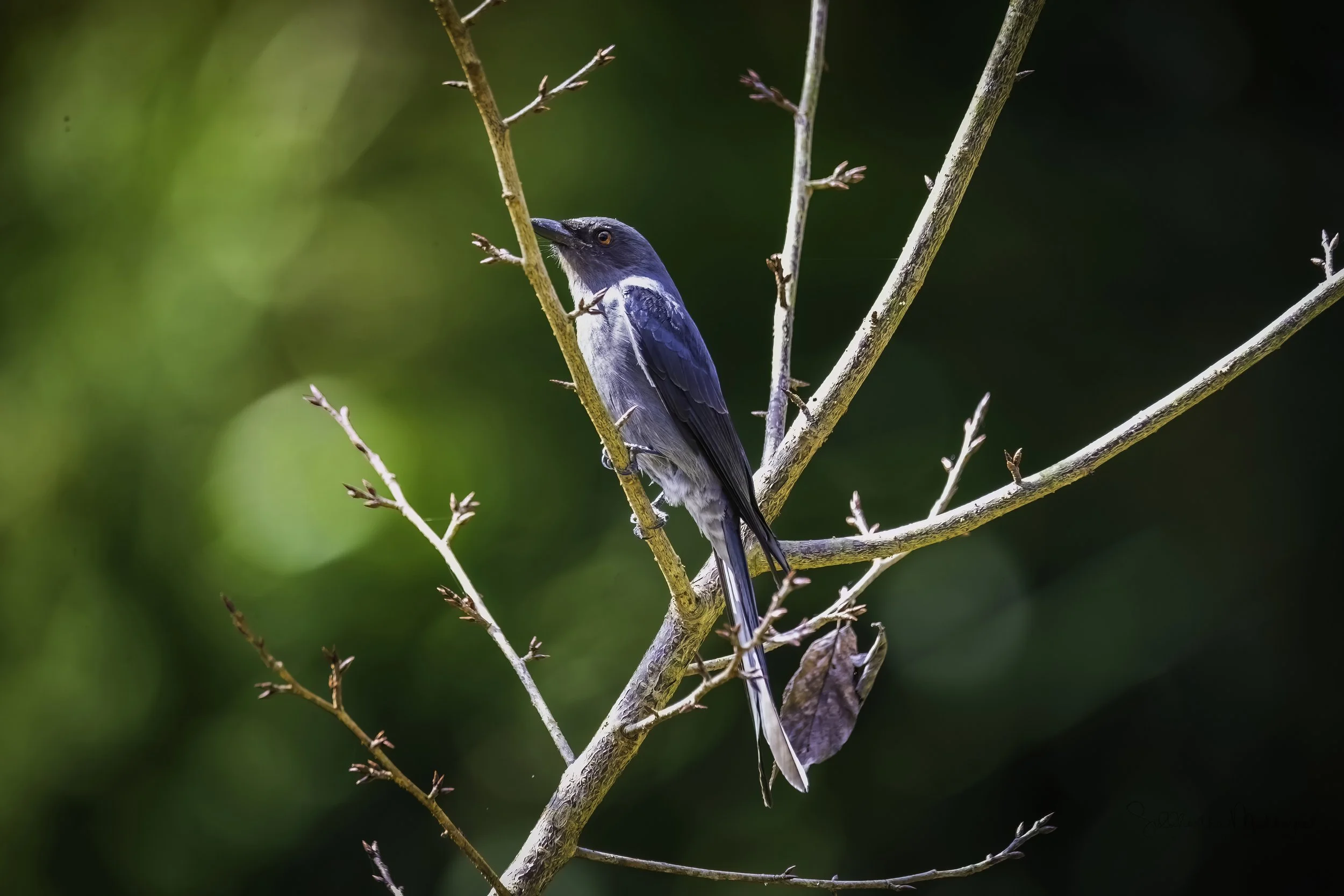
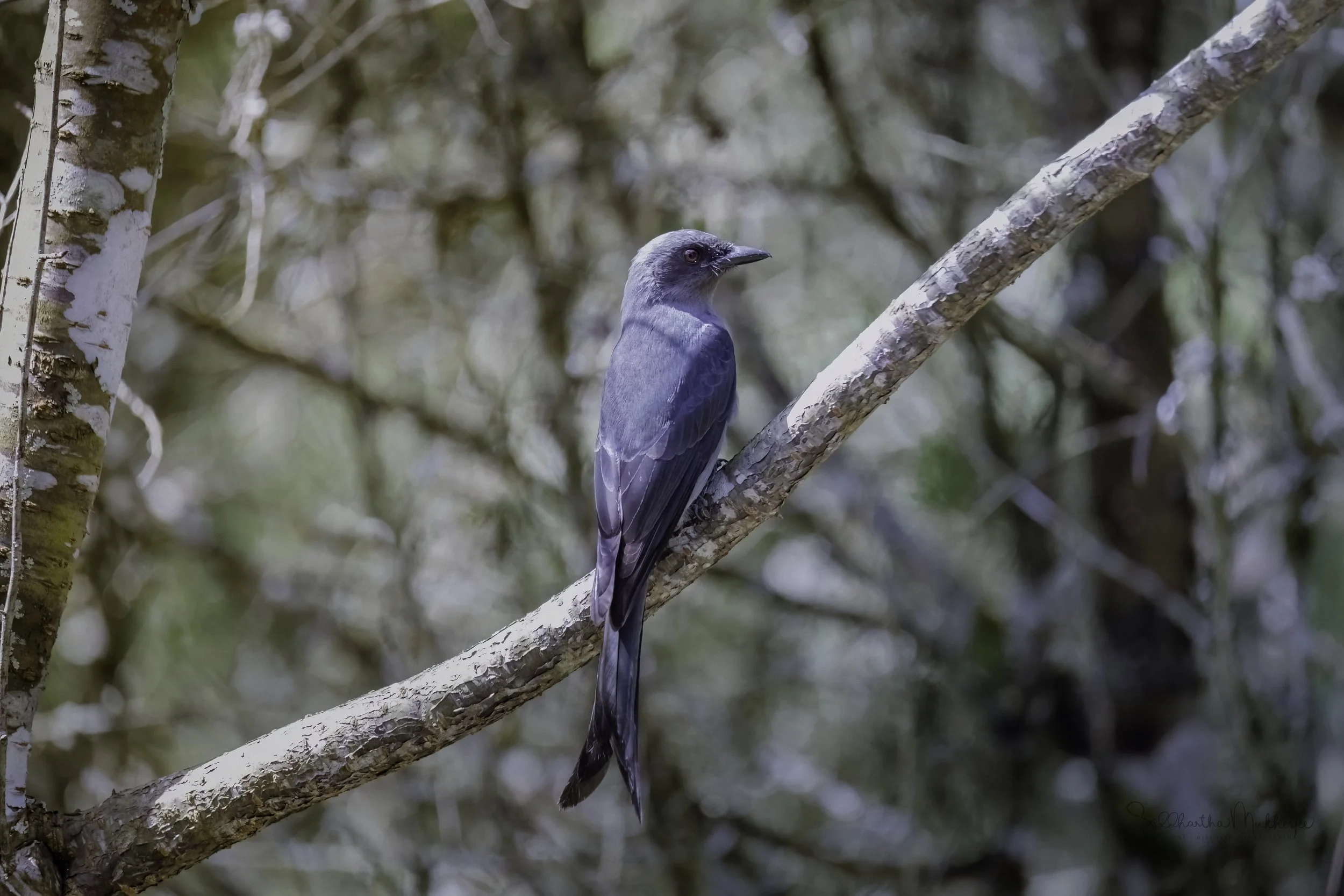
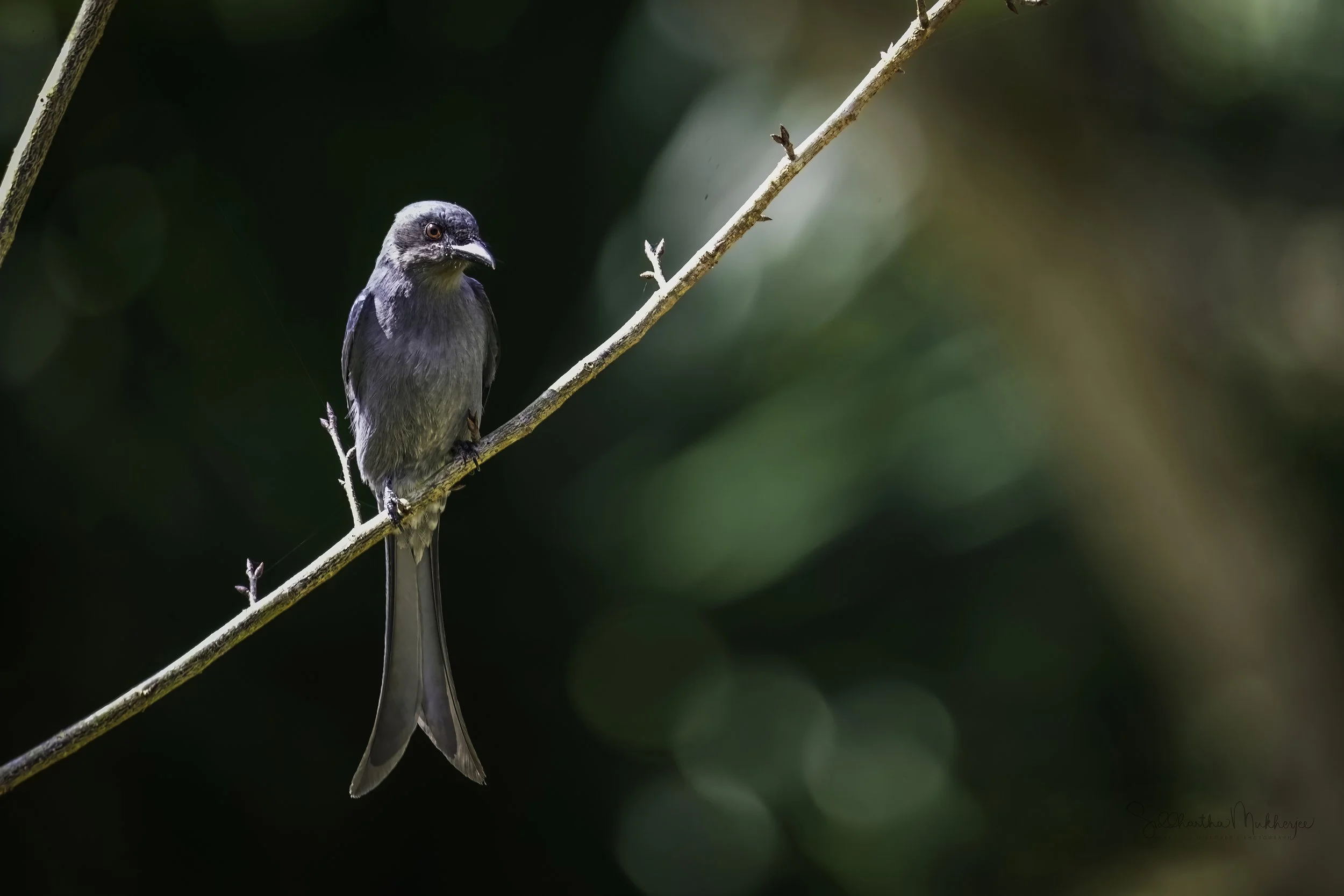
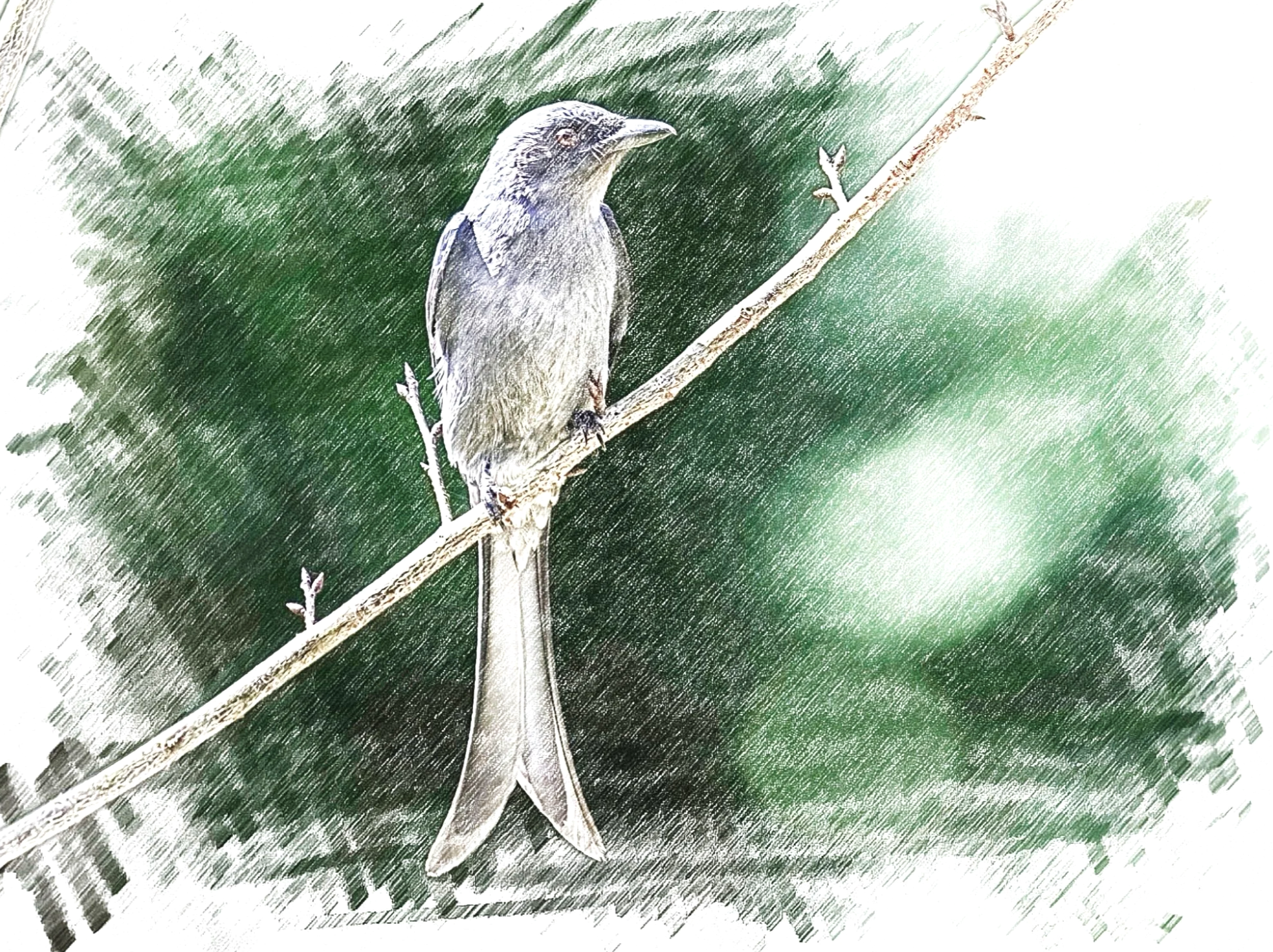
To see an Ashy Drongo is to see a study in slate and charcoal. It is a medium-sized bird, typically measuring between 26 - 30 centimetres in length. Much of this length is attributed to its magnificent, deeply forked tail, which acts as a rudder during its acrobatic hunts. Despite its visual presence, it is a lightweight athlete, usually weighing between 32 and 55 grams. Its wingspan is impressive for its size, allowing it to execute "sallying" maneuvers—launching from a high perch to snatch an insect mid-air before returning to the same branch.
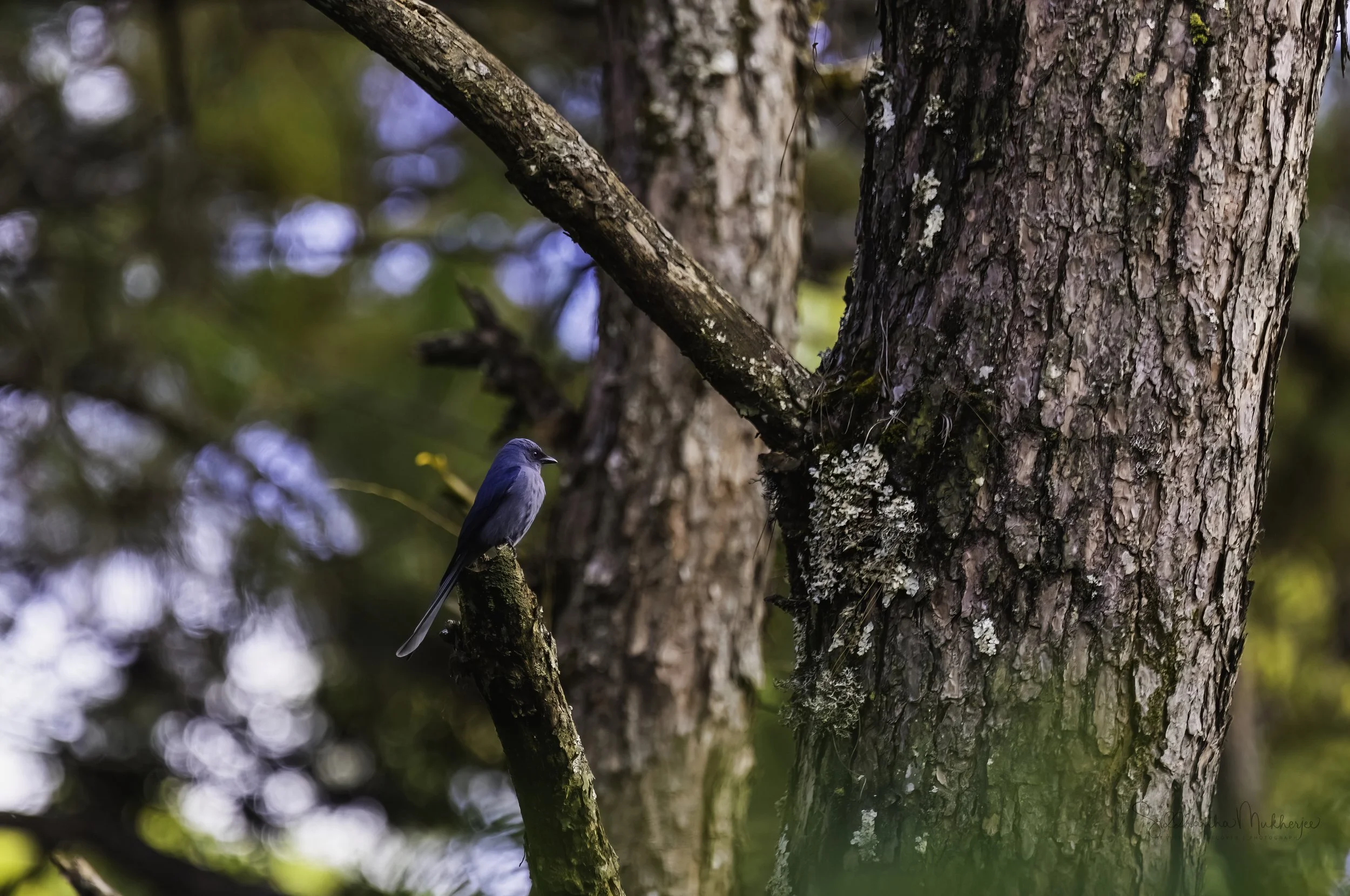
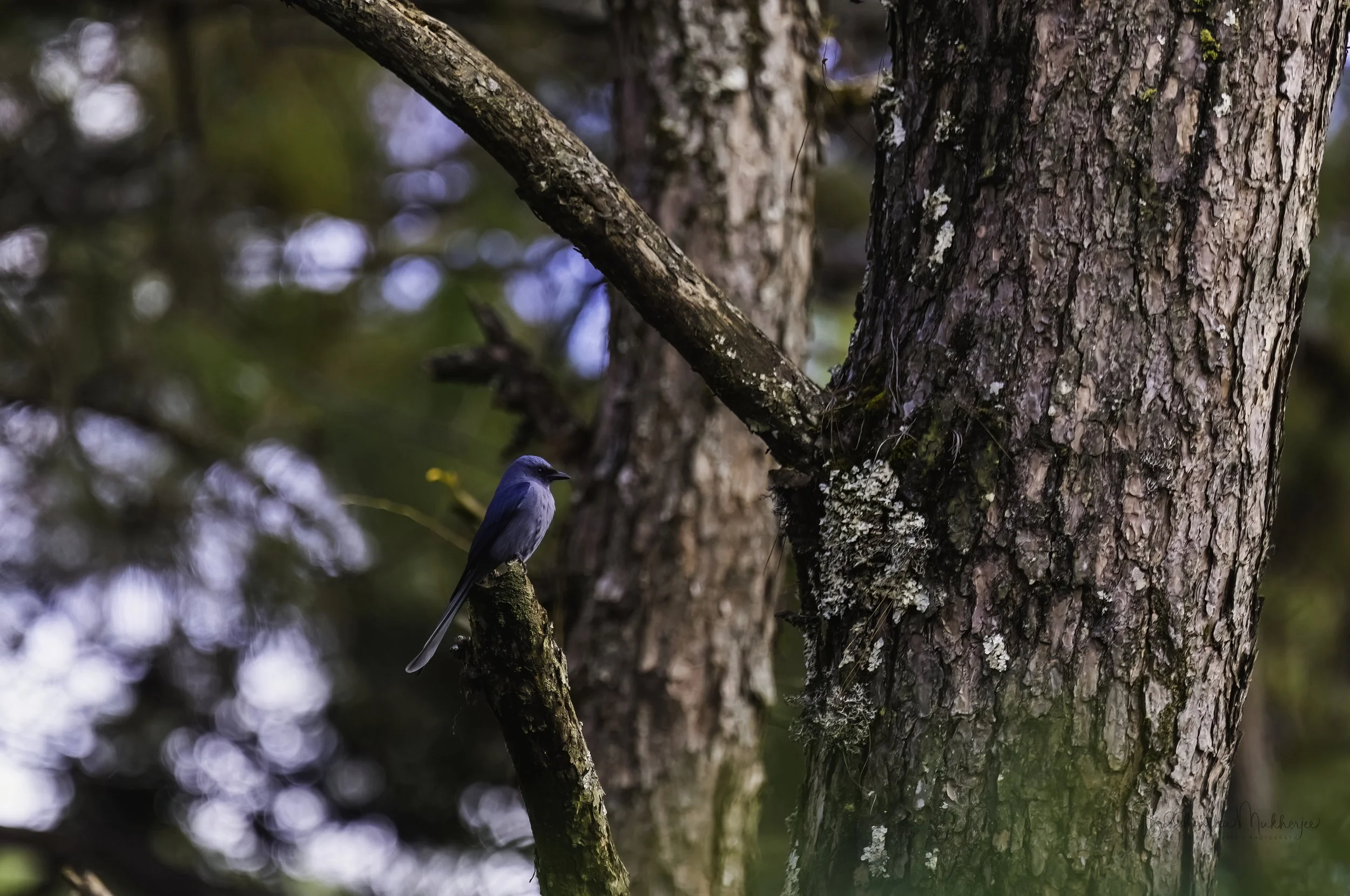
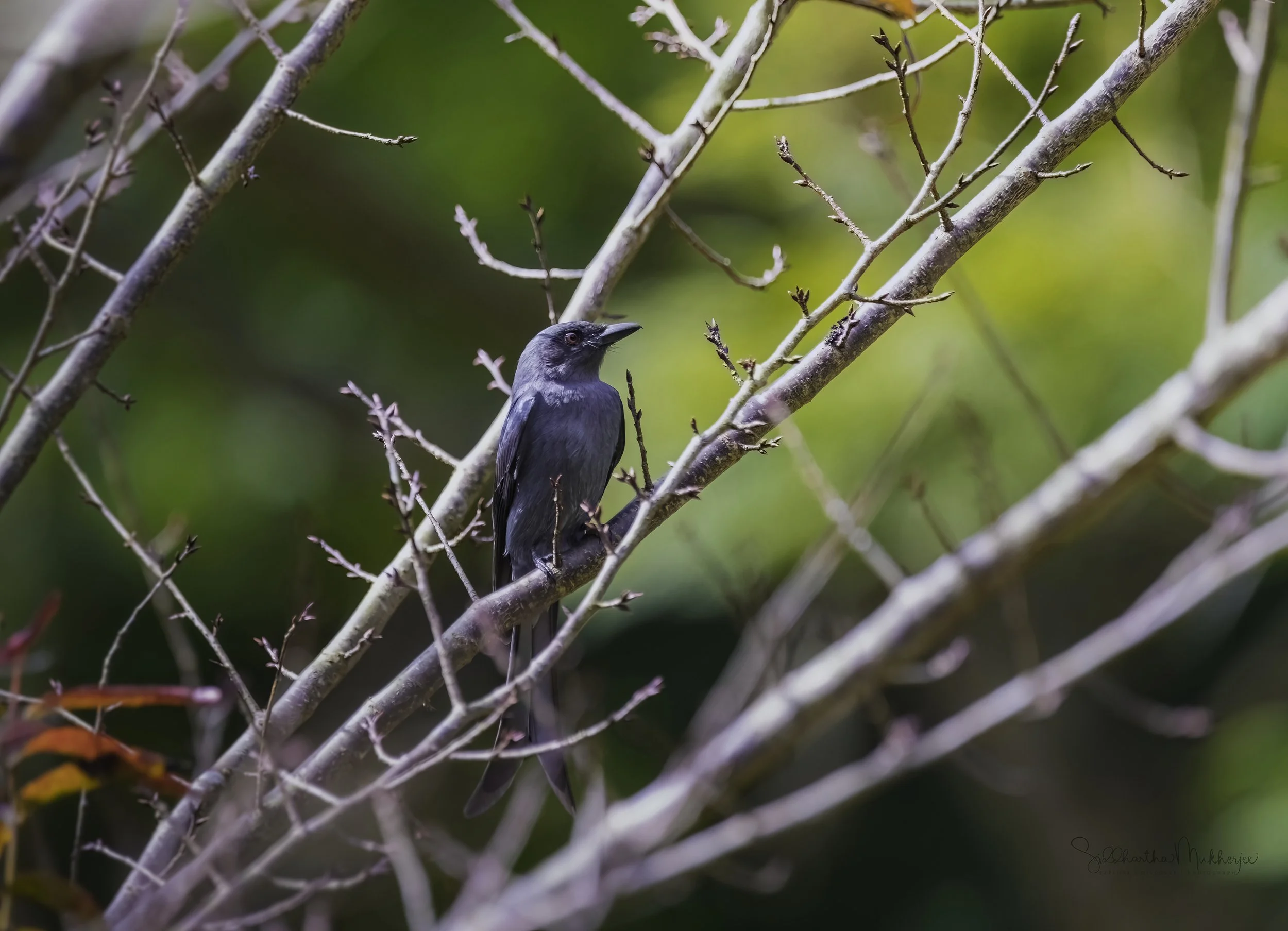
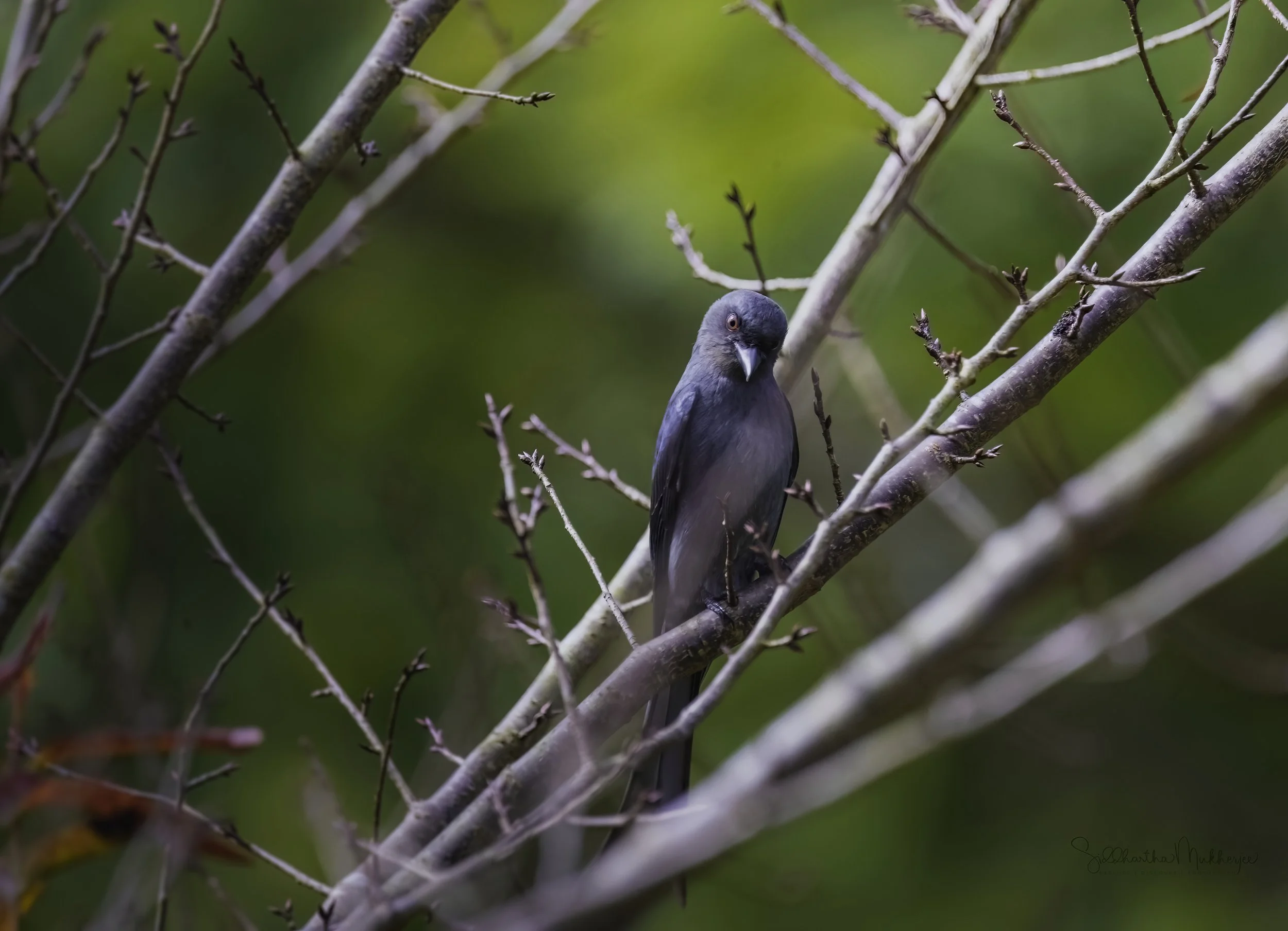
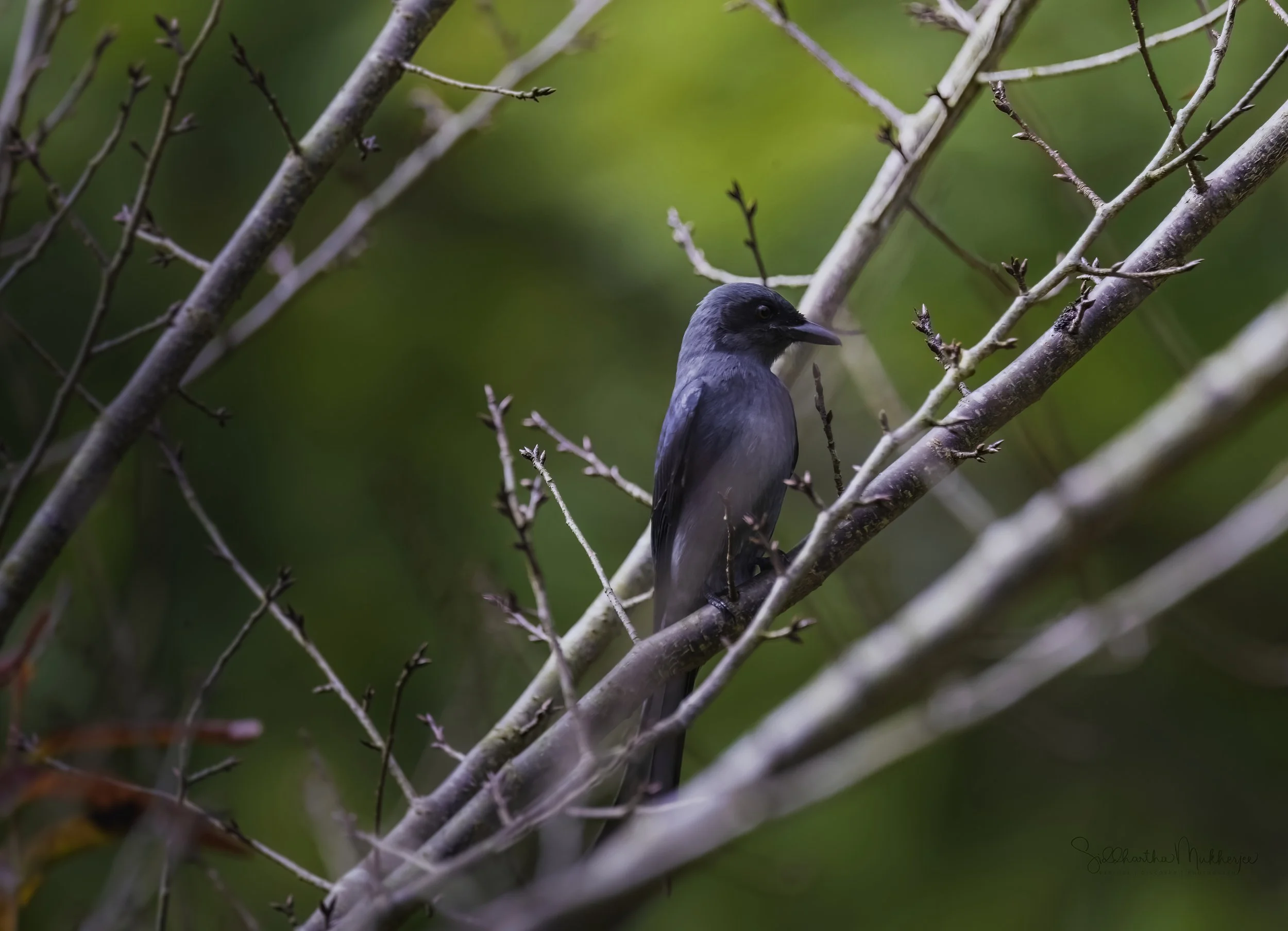
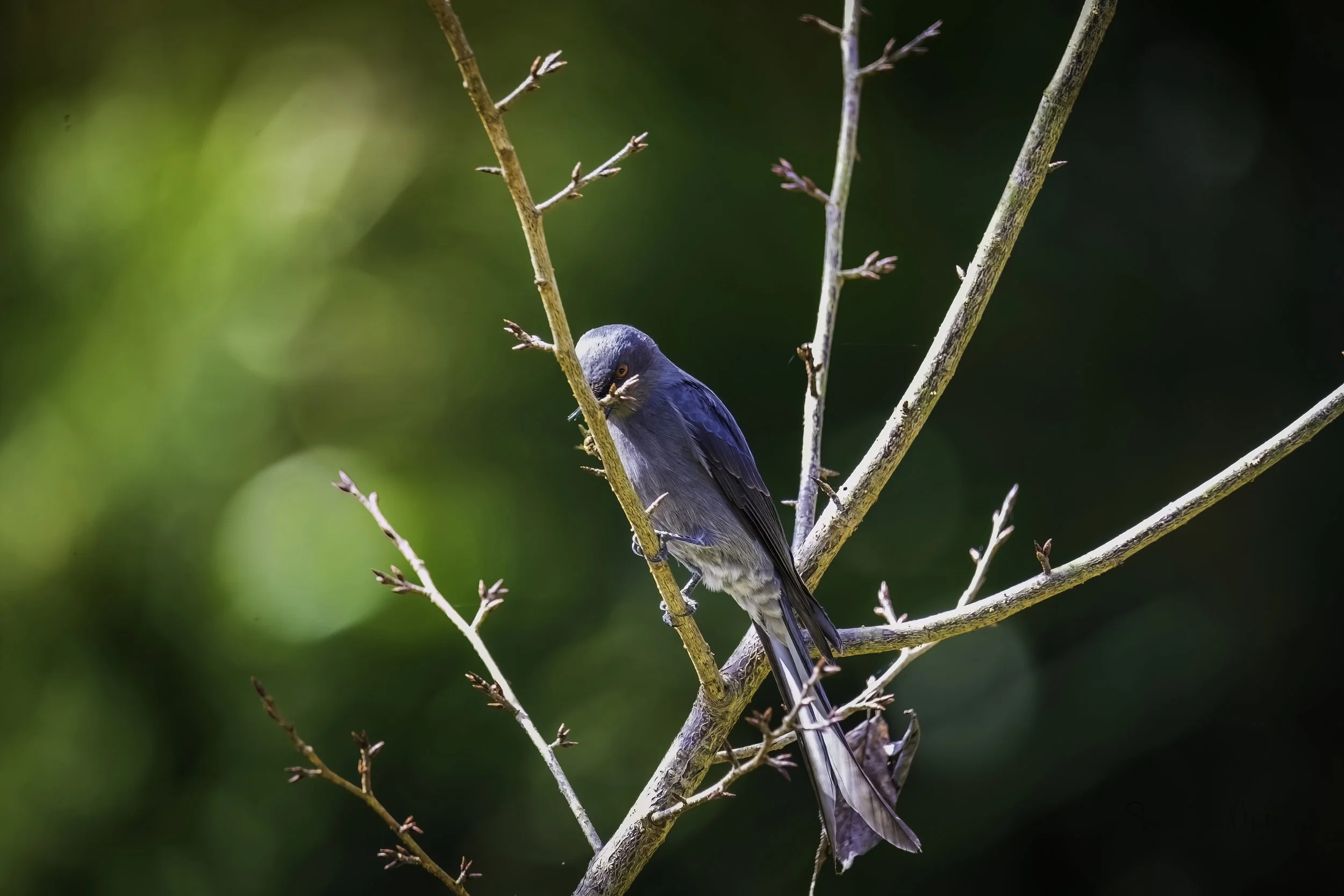
The "Ashy" moniker is perfectly descriptive. Unlike the ink-black shimmer of other drongos, this bird wears a coat of mid-grey to dark slate-grey. However, its plumage is highly variable depending on the subspecies.
The Upperparts: A clean, matte grey that can look almost blue-tinted in the sharp morning light.
The Underparts: Usually a slightly lighter shade of grey.
The Face: Some subspecies, particularly those found in Southeast Asia, sport a distinct white patch around the eye, making them look like they are wearing a theatrical mask.
The Eyes: Perhaps its most striking feature is the iris, which ranges from a piercing crimson red to a deep brownish-red, contrasting sharply against its smoky face.
Fifteen subspecies are recognized.
Ashy Drongo (Blackish) Dicrurus leucophaeus [longicaudatus Group]
Dicrurus leucophaeus longicaudatus: Distributed across the Southern Himalayas from extreme eastern Afghanistan east to Bhutan and hills of Madhya Pradesh; non-breeding at lower altitudes and through the Indian peninsula (except Punjab, Sind, and arid parts of Rajasthan and Gujarat) south to Sri Lanka.
Dicrurus leucophaeus hopwoodi: Distributed across the Eastern Himalayas (east from Bhutan), eastern Tibet through southwestern and southern China (to southern Guangdong), northern and central Myanmar east to northern Vietnam; migrates south to West Bengal, southern Assam, Bangladesh, southern China (Hainan), and southern Myanmar, northern, and eastern Thailand and southern Laos.
Dicrurus leucophaeus nigrescens: Distributed in Southern Myanmar (Tenasserim) and the Malay Peninsula (west of Main Range) south (including Phuket Island and Pinang Island) to Johor; post-breeding dispersal south to Singapore.
Ashy Drongo (Sooty) Dicrurus leucophaeus [leucophaeus Group]
Dicrurus leucophaeus mouhoti: Distributed in Central, southwestern, and eastern Myanmar, northern and eastern Thailand, and central Indochina; migrates to southern Myanmar, southern Thailand, and Cambodia.
Dicrurus leucophaeus celaenus: Distributed in Simeulue (off western Sumatra; 10)
Dicrurus leucophaeus bondi: Distributed in Western and eastern Thailand, Cambodia, southern Laos, and southern Vietnam.
Dicrurus leucophaeus leucophaeus: Distributed in Java, Bali, Lombok, Palawan, Calamian, and Balabac islands
Ashy Drongo (White-cheeked) Dicrurus leucophaeus leucogenis:Distributed in Eastern and central China from Liaoning south (east from northern Gansu and Sichuan) to northeastern Guangdong; migrates to southern China, northern Laos, eastern Thailand, Cambodia, Tenasserim, and Malay Peninsula (both western and eastern coastal plains).
Ashy Drongo (White-lored) Dicrurus leucophaeus salangensis: Distributed in Southeastern China south of Yangtze River (to Fujian–Guangdong border); migrates south to Hainan, southern Indochina, eastern, central, and southern Thailand, and Malay Peninsula.
Ashy Drongo (Hainan) Dicrurus leucophaeus innexus: Distributed in Hainan.
Ashy Drongo (Sumatran) Dicrurus leucophaeus [periophthalmicus Group]
Dicrurus leucophaeus periophthalmicus: Distributed in Sipura and Pagai Islands, off western Sumatra.
Dicrurus leucophaeus siberu: Distributed in Siberut, off western Sumatra.
Dicrurus leucophaeus batakensis: Distributed in Northern Sumatra (Aceh and Batak Highlands).
Dicrurus leucophaeus phaedrus: Distributed in Central and southern Sumatra.
Ashy Drongo (Bornean) Dicrurus leucophaeus stigmatops: Distributed in Borneo.
The Drongo Comparison: A Subcontinental Trio
In the forests of Amrabad, identification can be tricky. You are likely to encounter three main species, and telling them apart requires a keen eye for detail.
Ashy Drongo vs. Black Drongo: The Black Drongo (Dicrurus macrocercus) is the bird of the open fields. It is jet-black with a noticeable white rictal spot (a tiny white dot at the base of the beak). The Ashy is strictly grey and prefers the interior of the forest or well-wooded edges. If you see a drongo perched on a cow's back in a field, it’s a Black Drongo; if it’s deep in the teak forest of Amrabad, it’s likely an Ashy.
Ashy Drongo vs. White-bellied Drongo: The White-bellied Drongo (Dicrurus caerulescens) is a common resident of Telangana’s forests. As the name suggests, it has a starkly white abdomen and vent, whereas the Ashy Drongo is grey all the way down. The White-bellied is also slightly smaller and has a more "velvety" black appearance on its upperparts.
The Ashy Drongo is not endemic to India; its range is vast, spanning from eastern Afghanistan to South East Asia. However, it is commonly seen in the right habitat during the winter months (October to March) in South India. It frequents hill forests, wooded gardens, and tea plantations. It avoids the deep, dark interior of rainforests but thrives in "edge" habitats—places where the forest meets a clearing. In North Thailand, they are staples of the montane evergreen forests, often seen in mixed-species foraging flocks, acting as the "sentinels" that scream alarms at the sight of a hawk.
Photographing drongos in the Amrabad Tiger Reserve is an exercise in patience and lighting. One afternoon, near the Farahabad viewpoint, I found a White-bellied Drongo perched on a low, leafless branch. The challenge with drongos is their dark plumage; without the right angle of light, they become mere silhouettes. I waited until the "golden hour" when the sun dipped low, hitting the bird's breast. The camera finally captured the transition from the steely grey-black throat to the snowy white belly. Later, near a small forest pond, a Black Drongo put on a show. It was "hawking" dragonflies, its forked tail twisting like a pair of scissors in the air. Capturing that movement—the split-second pause at the apex of its flight—is the holy grail for a bird photographer. But the Ashy remains one of my favorite subjects. There is something ethereal about its grey form blending into the shadows of the Nallamala teak trees. It doesn’t demand attention with flashy colours, but when the sun catches that ruby-red eye, you realize you are looking at one of the most sophisticated predators of the Indian sky.
As the sun set over the Mannanur plains, the Ashy Drongos began their final hunts of the day. They are the quiet sentinels of our forests, a bridge between the high Himalayas and the rugged hills of Telangana, reminding us that even the smallest creatures have stories that span continents.
‡‡‡‡‡

Related Posts
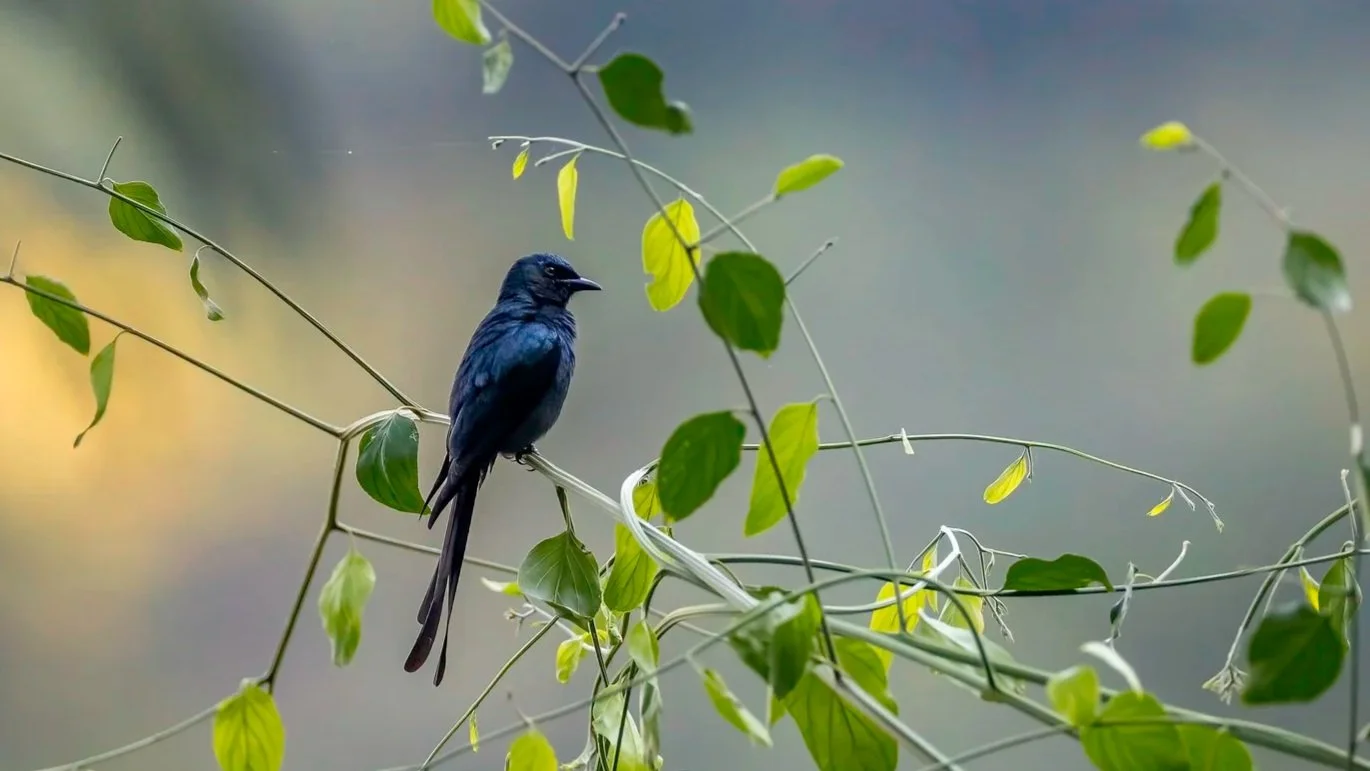

A small drongo with a dull-black back & a relatively short, distinctively forked tail. The “white-bellied” form has an extensively white belly diffusely demarcated from the dark gray throat and breast. It is found in dry and open forests across the Indian subcontinent.
#wildartworks, #Canon, #Bird, #birdinginthewild, #wildlifeonearth, #KawalTigerReserve, #AmrabadTigerReserve, #wildtelangana, #telanganawildlife, #drongo, #whitebellieddrongo,